

6 Groundbreaking Science Fiction Novels from Across the World
The science fiction genre is vast, diverse and transcends boundaries, particularly geographic ones. As the field continues to gain prestige among critics and academics, more attention is also being paid to speculative fiction traditions from outside the United States. The rest of the world reads and writes science fiction, resulting in an explosion of viewpoints and perspectives.
For years, the science fiction field was dominated by men, and seen as subpar in terms of literary quality. When science fiction’s “New Wave” began in the 1960s, these notions were upended. Thanks to practitioners such as JG Ballard and Ursula K. LeGuin, science fiction began to take on more “literary” qualities, as well as receive favorable reviews from critics. This period also saw women and persons of color make inroads into the field. Finally, science fiction from outside America finally made its way to grateful and receptive readers.
Today, some of these international authors are also bestsellers in America, while others still toil in relative obscurity. Some of these authors have had their work translated into English, while many others have not. Finding a good international science fiction classic can be daunting, but what follows are six of the best, and most accessible, examples of the genre.
6 Solaris (Poland)
Stanislaw Lem’s Best Known Book Challenges Our Perceptions of Alien Contact
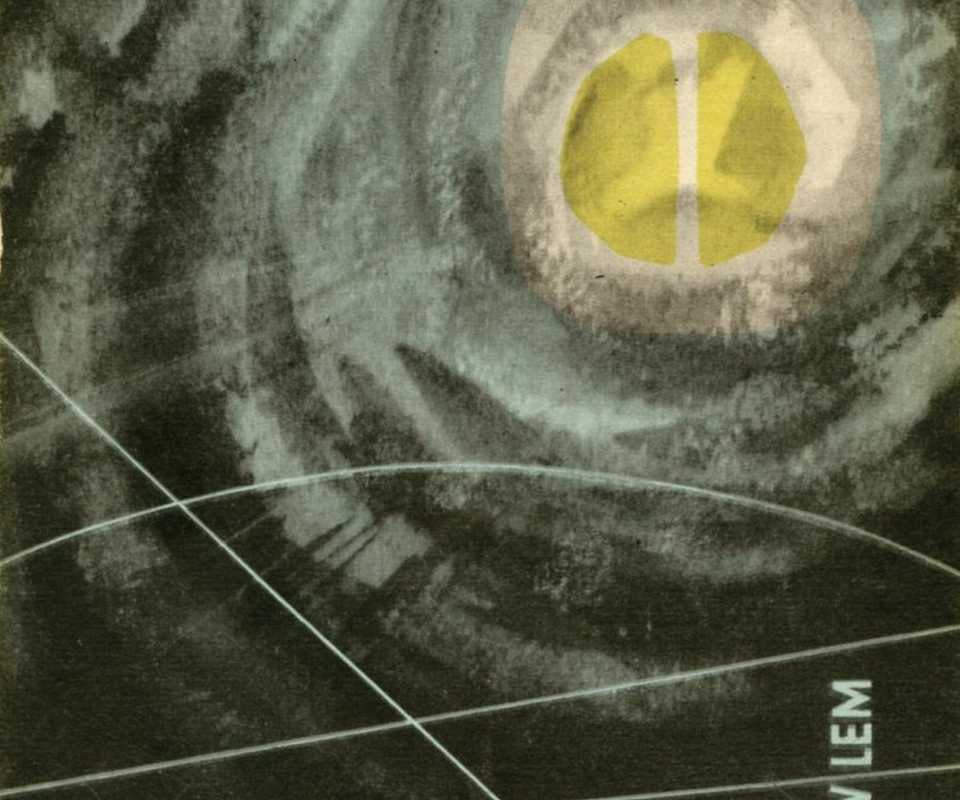
Polish science fiction writer Stanisaw Lem wrote challenging novels. They forced the reader to think long and hard about human nature and our species’ place in the cosmos. Lem often mused that contact with an alien race would be next to impossible, for a number of reasons stretching simply beyond the language barrier. Aliens will have different thought processes than us, ultimately making them unknowable. Lem’s 1961 masterpiece Solaris expresses this view best of all.
Scientist Kris Kelvin is dispatched to a space station orbiting the sentient ocean world called Solaris. The crew of the station has begun acting strange, and Kelvin is sent to investigate. Kelvin learns the “visions” the crew was having were manifested by the planet, showing it has power beyond humans. Throughout the book, Lem peppers in bits of history and analysis of the planet Solaris, giving readers a better understanding of the events transpiring.
Lem hated both Tarkovsky and Soderberg’s versions, saying they missed the point of the book.
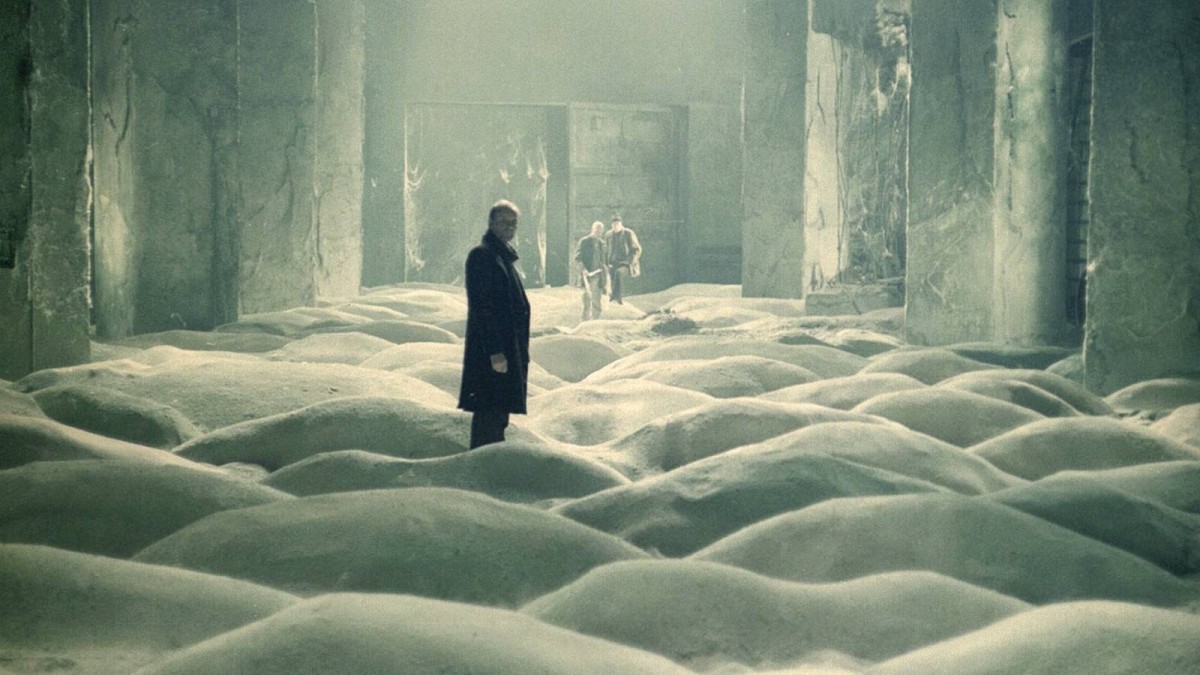
Solaris has been adapted to other media many times. There are three film versions, starting with a 1968 Soviet television movie. Then, in 1972, acclaimed Russian auteur Andrei Tarkovsky gave the world his version of the book. 30 years later, Steven Soderbergh reinterpreted the book for a Hollywood audience. Lem hated both Tarkovsky and Soderberg’s versions, saying they missed the point of the book.
5 The Three-Body Problem (China)
Liu Cixin’s Award Winning Novel Upends the Alien Invasion Narrative
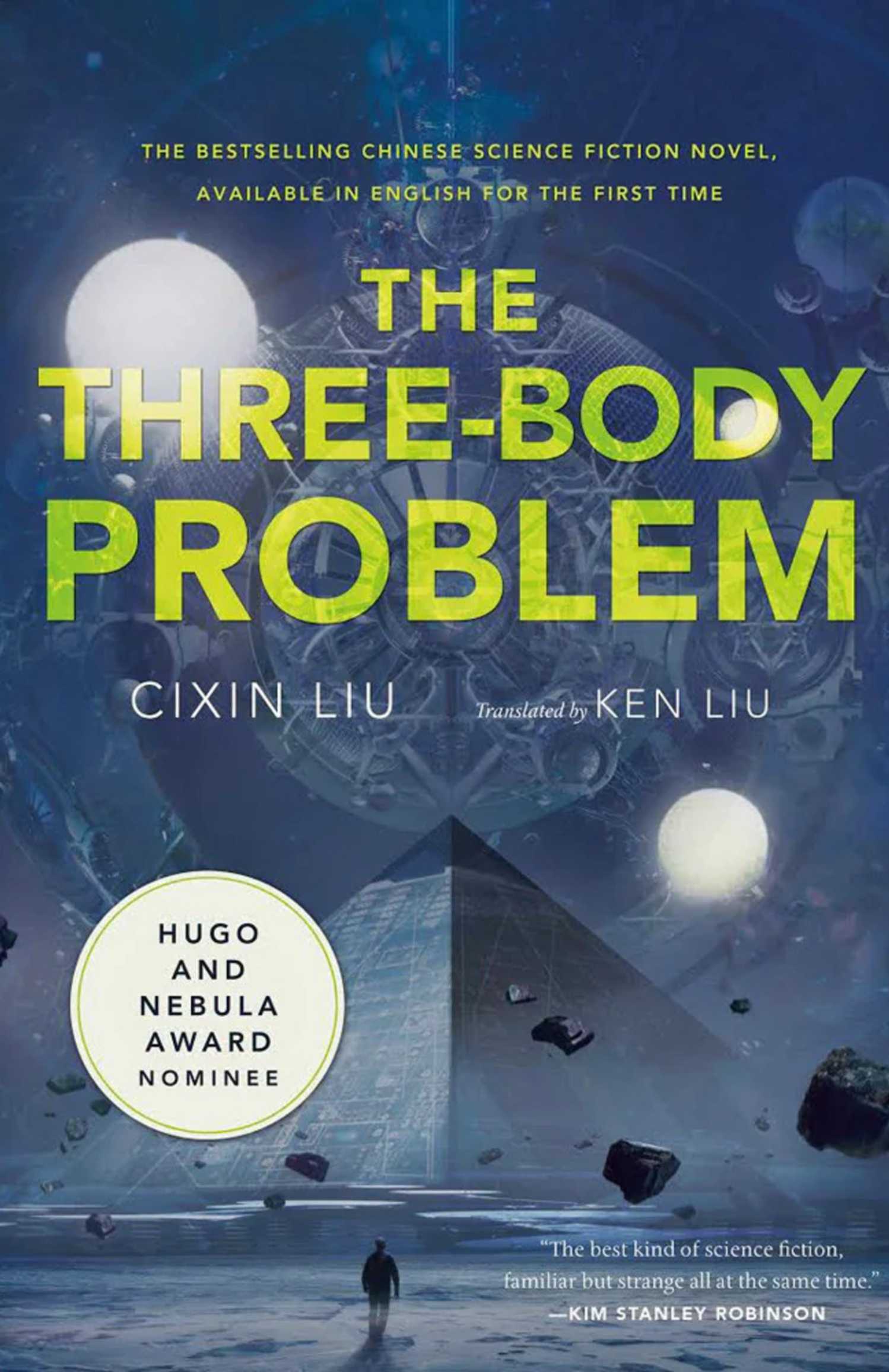
One of China’s biggest bestsellers, The Three Body Problem is a grand subversion of the “alien invasion” trope. An astrophysicist, named Ye, discovers the existence of an alien race on a planet orbiting a nearby star. Reasoning that a potential first contact could finally bring humanity together, she and others throw their lot in with the enigmatic aliens, who call themselves “Trisolarans.” The two species form an alliance that could spell the end of life on Earth.
“First contact” scenarios are common in science fiction, but how they affect people differs. Star Trek posits that such an event will trigger an evolution within humanity, yet none of this sentiment is present in The Three-Body Problem. Ye willingly allies herself with aliens who are bent on colonizing the planet, a complete 180 from Trek. The Trisolarans do not come in peace.
The first book in the Remembrance of Earth’s Past series, The Three Body Problem captivated readers worldwide with not only its clever concept, but also by building a sense of dread as the Trisolaran invasion fleet draws near. The fleet will not reach Earth for 450 years, giving humanity a golden opportunity to prepare. While the humans worry about the invasion, the Trisolarans are more concerned with Earth potentially getting the upper hand.
4 Hard-Boiled Wonderland and the End of the World (Japan)
Haruki Murakami’s “Metaphysical Detective Novel” Will Make Readers Think

Haruki Murakami, one of Japan’s most popular novelists, has dipped his toes into several genres, but it is the speculative fiction tradition that he seems to work best, and Hard-Boiled Wonderland and the End of the World, from 1985, is proof. Considered by some to be an international representative of the “cyberpunk” movement, Hard-Boiled Wonderland is essential reading for fans of that genre, and readers as a whole.
Hard-Boiled Wonderland and the End of the World is split into two sections, one set in the “hard-boiled wonderland” and another at “the end of the world.” The protagonist of the wonderland is a human data processor who will cease functioning in a day. Meanwhile, a new person arrives at the end of the world. The two sections wind their way around each other before coming together in a beautifully ambiguous fashion.
A new translation, titled End of the World and Hard-Boiled Wonderland, was released in 2025.
Murakami was on the eve of commercial success in his home country of Japan when Hard-Boiled Wonderland appeared. It was a bestseller, and even earned its author a major Japanese literary award. Hard-Boiled Wonderland was one of Murakami’s first books to reach the Western world, and foreshadowed the many classics still to come.
3 Roadside Picnic (Russia)
Brothers Arkday and Boris Strugatsky Was Adapted Into Russia’s Best Science Fiction Film

Hailing from the former Soviet Union, Arkady and Boris Strugatsky wrote some of their country’s most-loved science fiction classics, including Roadside Picnic. Much like the aforementioned Solaris, Roadside Picnic is a unique take on the “first contact” scenario. Aliens visit Earth, but only for a little while. In their wake, they leave behind “Visitation Zones,” where the laws of the natural order seem to break down. A man, known as a “stalker,” enters one of the Zones, looking for alien objects he can sell.
Just as Solaris showed the futility in trying to understand and rationalize with alien intelligences, Roadside Picnic demonstrated that humans are nothing next to extraterrestrials, particularly in terms of technology.
Just as Solaris showed the futility in trying to understand and rationalize with alien intelligences, Roadside Picnic demonstrated that humans are nothing next to extraterrestrials, particularly in terms of technology. No one on Earth saw the “Visitors,” only learning about them after the discovery of the Zones. Earth was invaded, and the planet never knew it.
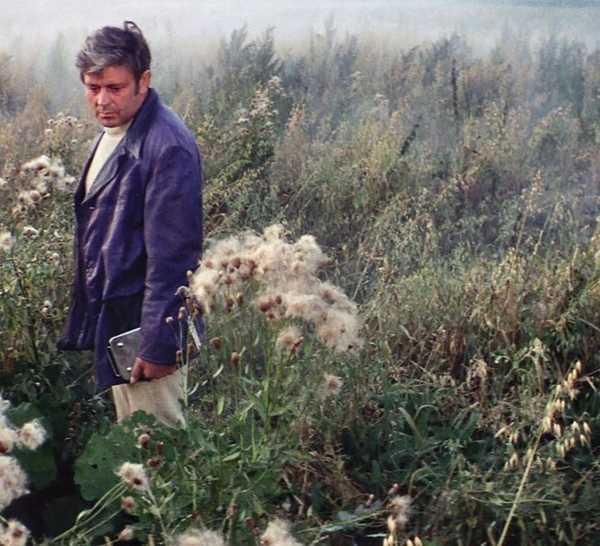
The Strugatksy Brothers wrote many classics that are still read and appreciated today, but Roadside Picnic remains their best known work. In 1979, Andrei Tarkovsky, who helmed a film version of Solaris just a few years prior, adapted Roadside Picnic into what is arguably the finest Soviet-era science fiction movie: Stalker. While Roadside Picnic was honored in its time, even by the Western literary establishment, Stalker helped introduce it to a wider readership.
2 Planet of the Apes (France)
Pierre Boulle’s Novel Is Quite Different Than the 1968 Film Version

French author Pierre Boulle took readers in his home country to the Planet of the Apes for the first time in 1963, and an English translation appeared a year later. Most know the Planet of the Apes film series, which launched just a few years after the book’s publication. However, those reading Boulle’s novel for the first time will be stunned to see a number of differences between the book and film.
The first Planet of the Apes film has one of the best surprise endings in movie history, a real gutpunch that remains chilling to this day. Writer Rod Serling, of The Twilight Zone fame, wanted an unforgettable ending that drove home the folly of war. The image of the destroyed Statue of Liberty is seared into a generation of moviegoers.
Except the novel really does not play out that way at all. Instead, three astronauts travel to a planet orbiting the star Betelgeuse, where they discover a planet of talking apes. One astronaut manages to escape the clutches of the apes, and manages to even make it back to Earth. And while the ending may lack the heft of Serling’s take, it still leaves the reader speechless.
1 Iraq + 100 (Iraq)
This Landmark Anthology Gives Iraqi Writers a Voice

Iraq+100 is the newest entry on this list, and it may be the most relevant. Billed as the “First Anthology of Science Fiction to Have Emerged From Iraq,” the book is a watershed moment in the genre. Published 13 years after the beginning of the United States’ illegal invasion of Iraq in 2003, the book finally gives those displaced by the war a voice.
As one can imagine, the invasion hangs large over Iraq+100. Each story is set roughly 100 years after the war, in 2103, and runs the gauntlet of emotions, ranging from defeat to defiance. In one story, titled “The Corporal” (written by Ali Bader and translated by Elisabeth Jaquette), readers are presented with an alternate history where Iraq, Iran and Saudi Arabia become democratic nations, while the United States falls into theocratic fascism. Inversions like this are common throughout the collection.
Iraq+100 was praised upon its publication, receiving accolades from within and outside the science fiction community. By bringing Iraqi writers to Western readers for the first time, the anthology has opened a new vein in science fiction, one that will hopefully yield gold down the line. The science fiction genre is universal, and books like Iraq+100 show why this is true.
What's Your Reaction?
 Like
0
Like
0
 Dislike
0
Dislike
0
 Love
0
Love
0
 Funny
0
Funny
0
 Wow
0
Wow
0
 Sad
0
Sad
0
 Angry
0
Angry
0











Comments (0)