

A Close Look at the Extremely Rare, Foveon-Powered Polaroid X530
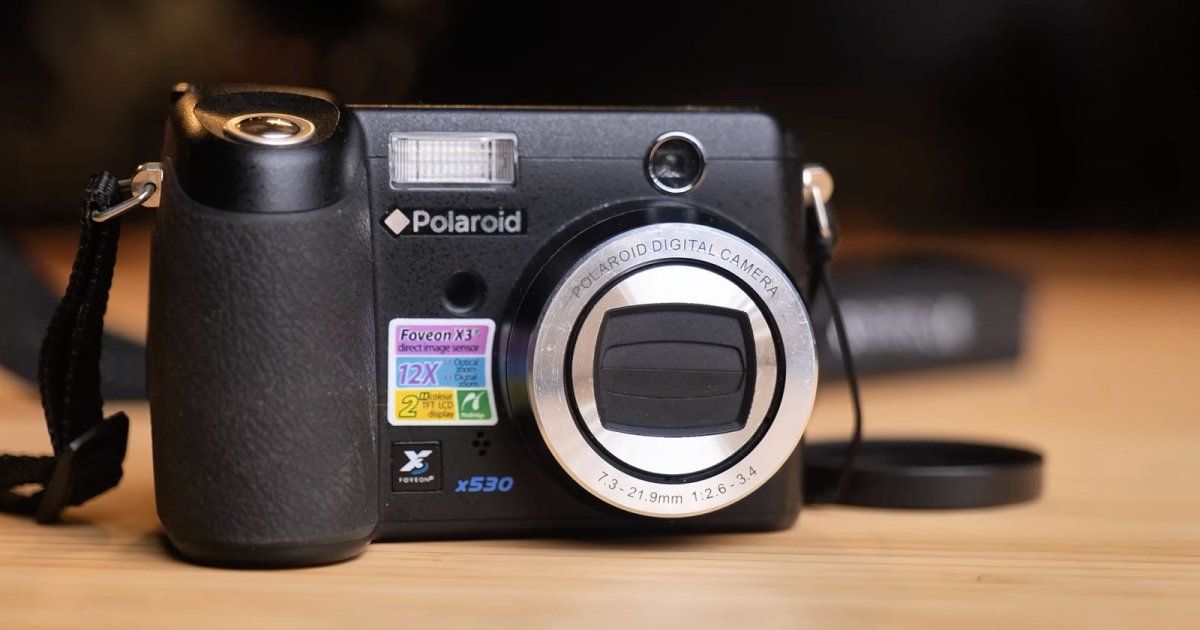
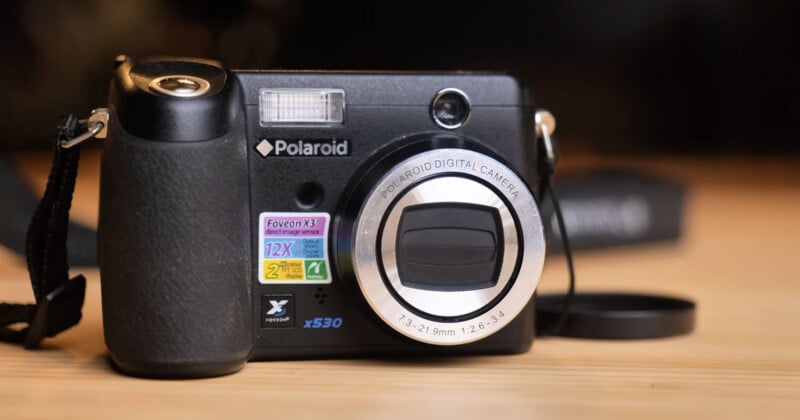
As promised, photographer James Warner, known for his YouTube channel snappiness, created a full-length video about his ultra-rare Polaroid X530 compact camera. The weird 2004 digital camera has a Foveon X3 image sensor, marking the first and only time a Foveon sensor was utilized by a non-Sigma digital camera.
As Warner describes, it’s hard to know precisely how rare the Polaroid X530 actually is, but it’s definitely a weird camera. Various, difficult-to-verify online sources suggest fewer than 100 of these Polaroid X530 cameras were ever sold to customers, while others still claim it was never actually officially released.
The most common story floating around about this 22-year-old Foveon-powered camera is that fewer than 40 units were inadvertently sold by the British retailer Argos before the camera was recalled due to technical issues and delayed until the following year. However, that promised later launch reportedly never actually happened, which would mean the only Polaroid X530 cameras that ever hit the market were the ones accidentally sold in the United Kingdom.

However, Warner did some internet archive sleuthing and found evidence that Polaroid itself was selling the X530 online for at least a couple of years, and there were, at one time, hundreds of them in stock. It’s impossible to know precisely how many were purchased and even harder still to know how many survive to this day.
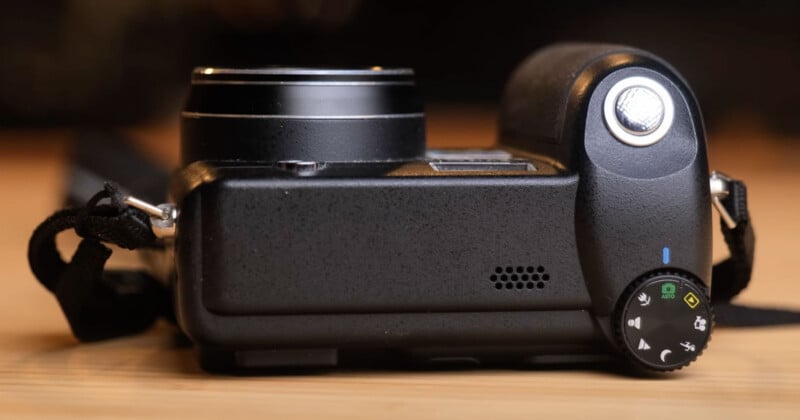
In any event, no matter what the truth of the matter is, the Polaroid X530 is extremely difficult to find. When Warner first showed the camera off a few weeks ago, there were no units available for sale online, and that remains true now.
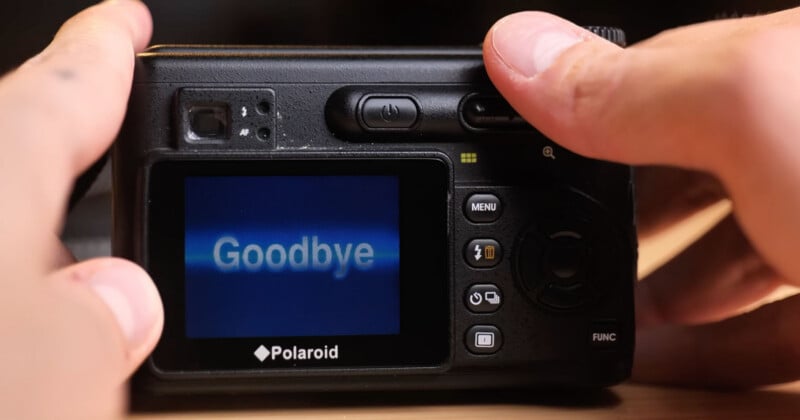 The X530 even says “goodbye” when you power it down. Cute.
“This is an extremely rare camera, certainly one of the hardest I ever tracked down,” Warner says. He had Google and eBay alerts set up for two years before one of them finally pinged.
From the outside, the X530 looks like many other cameras released in that era and is nothing to write home about. But it’s what’s inside that counts; that’s what makes the Polaroid X530 so special.

It has a unique Type 1/1.8 Foveon X3 5M image sensor. It is technically a 1.5-megapixel sensor, but due to the Foveon’s distinct three-layer pixel structure, it promises resolution similar to a 4.5-megapixel camera, which was reasonably good at the time for a $400 compact digicam.
Foveon has rightly been associated with Sigma for nearly as long as Foveon image sensors have existed. Starting in 2002, two years before the Polaroid X530 was unveiled, Sigma cameras featured Foveon image sensors. In 2008, Sigma purchased Foveon and brought it into the Sigma family. While Foveon sensors have essentially disappeared from Sigma’s current lineup, the company remains steadfast in its commitment to make the first-ever full-frame Foveon image sensor, a project in the works for eight years and marred by issues. However, earlier this year, Sigma told PetaPixel it is making genuine progress with the sensor.

As Warner notes, while branded and sold as a Polaroid camera, the X530, like many Polaroid-branded products of the era and still today, was actually made by a licensee that bought the rights to use the Polaroid name. In this case, it was World Wide Licenses Ltd. For even crazier Polaroid digital camera history, Warner’s video from two years ago, shown below, explains the story of a Polaroid camera that never saw the light of day due to a wild legal showdown.
“Once you find out that companies do this all the time, and mostly to classic film-era camera companies, it just destroys your faith in branded cameras,” Warner laughs, although he is serious.
“This camera looks and feels cheap, because it is cheap,” Warner says of the Polaroid X530.
Aside from the Foveon X3 image sensor, the X530 is a fairly standard camera. It does have some neat in-camera editing features, though, including cropping, color, and contrast adjustments.
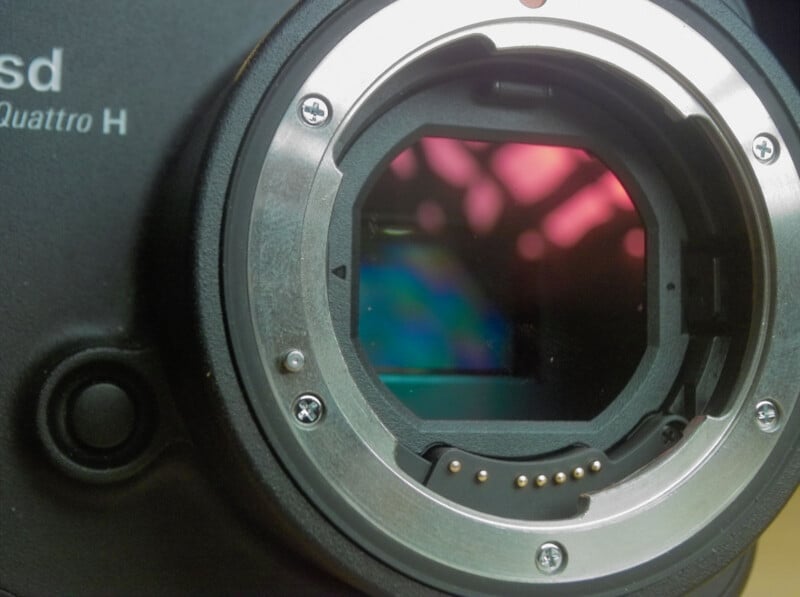
Ultimately, the star of the show is the Foveon X3 image sensor. As Warner shows, the Foveon sensor slows the camera down considerably, especially when shooting RAW files. However, it can still deliver highly detailed photos, even with such a small sensor size.
Warner positively describes the Foveon’s color rendering, praising its interesting greens and blues. However, the sensor, beyond being sluggish, is extremely poor at ISO settings above base. It gets noisy very fast.
 It is not good at high ISO, and high ISO is anything about base ISO.
Is the Polaroid X530 a good camera? Probably not, no. Is it worth the high price it would cost if someone could ever actually track one down? Negative. Is it an awesome piece of digital photography history? Absolutely.
 While the X530’s RAW files work in old Foveon software, opening the files in modern software, like Affinity, leads to some weird results.
Warner has been kind enough to let PetaPixel borrow his Polaroid X530 camera, and we will be doing a video review of it as well, letting, or perhaps forcing, Chris Niccolls and Jordan Drake to put it through its paces. Yes, the X530 does shoot video, for some reason.
Image credits: James Warner (@snappiness)
What's Your Reaction?
 Like
0
Like
0
 Dislike
0
Dislike
0
 Love
0
Love
0
 Funny
0
Funny
0
 Wow
0
Wow
0
 Sad
0
Sad
0
 Angry
0
Angry
0








Comments (0)