

10 Dune Quotes That Prove Frank Herbert Was Ahead Of His Time

While Frank Herbert's Dune has always been a staple of science fiction, the franchise has garnered unprecedented attention in recent years thanks to Denis Villenueve's modern film adaptations, HBO's new Dune: Prophecy series, as well as video game adaptations such as the open-world survival RPG, Dune: Awakening, among others.
And though these modern Dune titles certainly have their merits, nothing quite compares to the impeccable stylings of Frank Herbert himself, whose writing is as poignant and relevant now as it was when the original novel was first published over 60 years ago in 1965. The book is packed with quotable moments and sage philosophy that, even out of context, strikes a chord for modern audiences.
There are, of course, lines from the original novel that have become universally recognizable, such as "Fear is the mind killer." These quotes are nothing compared to some of the gems included in the larger work, and there are countless examples that prove Herbert was by all accounts way ahead of his time and was in a league of his own.
These quotes are referenced from the ACE NY editions of Dune published by Berkley, an imprint of Penguin Random House.
10 "Once, men turned their thinking over to machines..."

"Once, men turned their thinking over to machines in the hopes that this would set them free. But that only permitted other men with machines to enslave them."
This is one of the best early quotes in Dune that often gets overlooked due to the "Fear is the mind killer" line that comes just a couple pages earlier, but it's arguably much more significant, both in the book itself and in a modern context as well. The Reverend Mother Gaius Helen Mohiam says this to Paul after his gom jabbar test while explaining the Butlerian Jihad and why humanity outlawed machines that imitate human thought.
The quote is especially pertinent nowadays, given the rise of generative AI and overreliance on technology, the proliferation of algorithm-driven content, and the growing tendency to outsource human judgment to automated systems.
9 "In our society, people shouldn't be quick to take offense..."
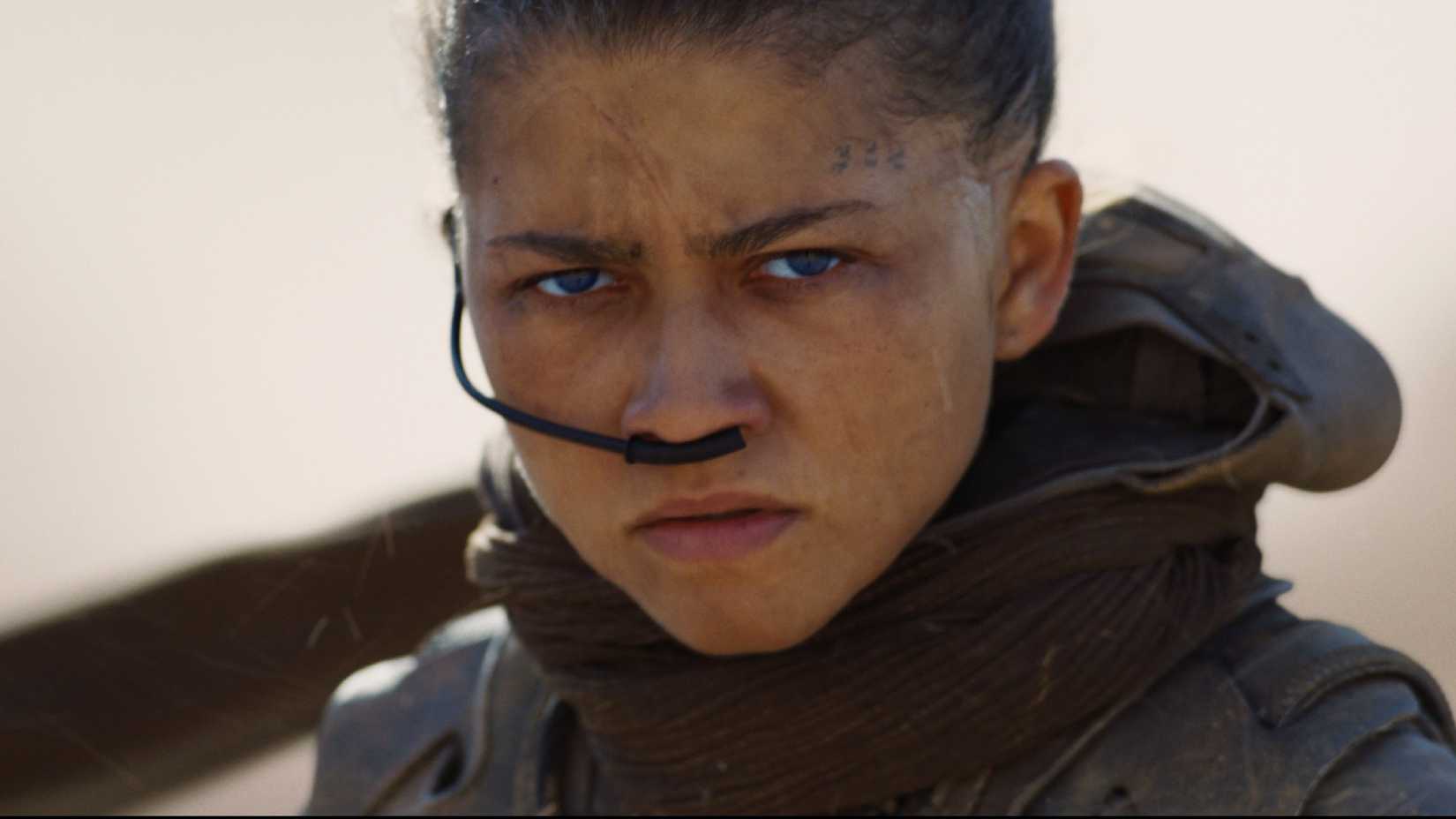
"[The] drowning man who climbs on your shoulders to save himself is understandable—except when you see it happen in the drawing room.... In our society, people shouldn't be quick to take offense. It's frequently suicidal."
During the Atreides dinner party in Arrakeen, Paul tells a pointed story about a drowning fisherman to rebuke a hostile Guild banker whose behavior he likens to someone sacrificing others for his own advantage. When the banker takes offense and the confrontation threatens to turn violent, Gurney Halleck warns that in their society, reacting too quickly to an insult can be deadly.
Here, Herbert recognizes how emotion, status, and perceived insult can be manipulated within systems of power, and seems to imply that in a competitive society, reacting impulsively to provocation can make a person easier to manipulate or even contribute to their downfall. This notion feels especially relevant in the age of social media outrage, political polarization, and reputation-driven public discourse.
8 "There is no escape—we pay for the violence of our ancestors."
 Credit: Warner Bros. Pictures
Serving as one of the various sage epigraphs in Dune Book One, this quote is pulled from the "Collected Sayings of Muad'Dib" by the Princess Irulan, framing the Atreides' present danger as another consequence of conflicts inherited from their earlier generations.
In the chapter that follows, a drunken Duncan Idaho inadvertently reveals that Thufir Hawat suspects Jessica of being a Harkonnen agent, prompting a tense confrontation in which Jessica realizes that their enemies are exploiting distrust within House Atreides as part of the long-running Atreides-Harkonnen feud.
Herbert’s observation remains strikingly relevant today, as the consequences of past wars and violence, colonialism, political conflicts, and decades of historical injustices continue to shape societies generations after the people who initiated them are long gone.
7 "There should be a science of discontent..."

Image via Max
"There should be a science of discontent. People need hard times and oppression to develop psychic muscles."
This line appears as yet another epigraph to Book One from the same source mentioned above, and introduces Herbert’s idea that adversity can strengthen a person's capacity to endure and adapt. Jessica awakens bound and gagged after the Harkonnen takeover, discovers Yueh’s betrayal and the Emperor's involvement, and then escapes into the desert with Paul by relying on their training and ability to stay calm under extreme pressure.
Herbert's "psychic muscles" metaphor and concept of a "science of discontent" feel like they could've come from any number of contemporary works of fiction. The quote serves as an observation of the human capacity for resilience, not necessarily wishing pain or struggle upon people, but highlighting the ability for us to learn from and persevere through our hardships.
6 "...respect for the truth comes close to being the basis for all morality..."

"My father once told me that respect for the truth comes close to being the basis for all morality. 'Something cannot emerge from nothing,' he said. This is profound thinking if you understand how unstable 'the truth' can be."
This epigraph introduces a chapter centered on Thufir Hawat, who is hiding in the desert with the remnants of the Atreides forces after the Harkonnen assault and ironically remains convinced (incorrectly) that Jessica betrayed House Atreides. As Hawat encounters the Fremen and discovers how badly he misjudged both the scale of the Harkonnen attack and the Fremen’s military strength, the chapter demonstrates how even a brilliant Mentat can construct a false understanding of reality from incomplete or manipulated information.
There's no way Herbert could have predicted just how important this idea would be in our current post-truth environment, where misinformation, a lack of trust in institutions, partisan politics, and "fake news" have made the distinction between objective fact and fabricated truth damn near impossible to parse.
5 "Too few individuals, and a people reverts to a mob."
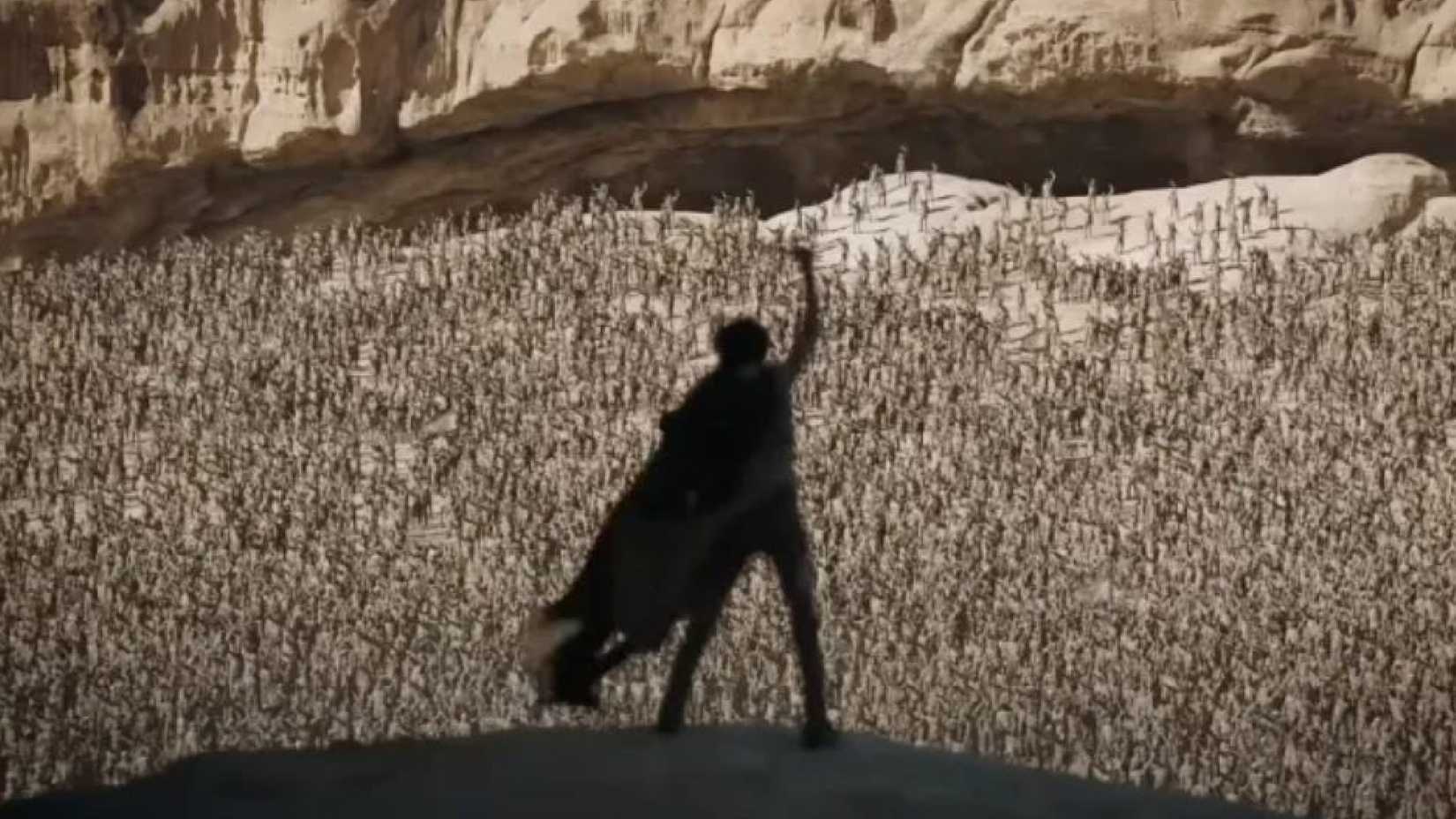
"A leader, you see, is one of the things that distinguishes a mob from a people. He maintains the level of individuals. Too few individuals, and a people reverts to a mob."
In Book Two, Stilgar speaks to Jessica while leading her and Paul toward Sietch Tabr, and as they discuss Fremen ideas about authority, Stilgar has technically given her grounds to challenge his leadership. He explains that Fremen leaders earn their position by serving the people’s needs, particularly by providing security and helping the community survive.
According to Stilgar, even abstract ideals like justice may sometimes be secondary to what people need in a particular moment. The quote sums up Stilgar's (and by extension Herbert's) idea that good leadership preserves the individuality of the people, preventing a community from collapsing into an unthinking mob. It's a particularly crucial lesson in a world where good leaders have become especially hard to come by.
4 "When religion and politics travel in the same cart, the riders believe nothing can stand in their way."

"When religion and politics travel in the same cart, the riders believe nothing can stand in their way. Their movement becomes headlong—faster and faster and faster. They put aside all thought of obstacles and forget that a precipice does not show itself to the man in a blind rush until it's too late."
Jessica quotes this Bene Gesserit proverb to Paul after beginning to worry he's become a bit too messianic among the Fremen, with the people starting to refer to Muad'Dib simply as "Him" and Paul beginning to blur the lines between his politics and religion. Paul recalls the conversation while preparing for his first solo sandworm ride. And when Jessica warns that "nothing about religion is simple," he argues that religion unifies the Fremen and provides the "mystique" necessary for his movement.
The warning directly foreshadows the danger Paul already senses in his future, exemplifying how the faith surrounding Muad'Dib will inevitably become uncontrollable and ultimately fuel the violent jihad he is so desperately trying to avoid. It's a poignant message that Herbert likely never would have imagined would be so relevant so many years later.
3 "Who are the rabble and who are the ruled?"

"'If you want profits, you must rule.' There is truth in these words, but I ask myself: 'Who are the rabble and who are the ruled?'"
This line appears as an epigraph in Book Three, and is attributed to "Muad'Dib's Secret Message to the Landsraad" from "Arrakis Awakening" by the Princess Irulan. It expands on Emperor Shaddam IV’s maxim that controlling money and the courts is more important than directly controlling the masses.
The chapter that follows centers on Jessica and Alia in the Fremen sietch while Paul undertakes his sandrider test, with increasing pressure among the Fremen for Paul to challenge Stilgar and formally assume leadership. In this context, Paul’s question about who is really ruling who becomes particularly apt. He is acquiring enormous political authority, yet he is also being pushed along by Fremen customs, expectations, and the religious movement growing around him.
Given current concerns about political lobbying, regulatory capture, and wealthy interests gaining disproportionate influence over public institutions, it's as if Herbert knew how things would pan out over the next 60 years.
2 "It's as easy to be overwhelmed by giving as by taking."

"There is in each of us an ancient force that takes and an ancient force that gives. A man finds little difficulty facing that place within himself where the taking force dwells, but it's almost impossible for him to see into the giving force without changing into something other than man. For a woman, the situation is reversed.... The greatest peril to the Giver is the force that takes. The greatest peril to the Taker is the force that gives. It's as easy to be overwhelmed by giving as by taking."
Paul delivers this reflection after awakening from his near-fatal ingestion of the Water of Life, an ordeal that confirms he has become the Kwisatz Haderach and can perceive the psychic territory that the Bene Gesserit Reverend Mothers cannot access. When Jessica asks whether he is therefore a "Giver" or a "Taker," Paul replies that he is "at the fulcrum," suggesting that his exceptional nature lies partly in his ability to confront and balance both forces rather than remaining confined to the traditionally male or female one.
The passage is particularly interesting through the lens of modern gender norms because, despite Herbert's assumption that men naturally "take" while women naturally "give," he simultaneously insists that both impulses exist within every person.
Paul's ability to move beyond that division also makes the novel's conception of the Kwisatz Haderach partly about transcending a rigid masculine/feminine binary, an idea that resonates with contemporary challenges to narrowly prescribed gender roles.
1 "All life is in service of life."

"You see in this beauty a dynamic stabilizing effect essential to all life. Its aim is simple: to maintain and produce coordinated patterns of greater and greater diversity... All life is in service of life. Necessary nutrients are made available to life by life in greater and greater richness as the diversity of life increases. The entire landscape comes alive, filled with relationships and relationships within relationships."
Part of Appendix I, The Ecology of Dune, Kynes' lecture attempts to give the Fremen a new way of understanding their planet as an interconnected system in which organisms, nutrients, climate, and landscape are all dependent on each other. That philosophy ultimately becomes the foundation for the generations-long Fremen project of accumulating water and gradually making Arrakis more habitable.
Herbert's foresight is especially striking here in terms of ecological stability, an idea that has only become more urgent amid modern concerns about biodiversity loss, global warming, and ecosystem collapse. Written in 1965, the passage feels remarkably timeless in recognizing that environmental health depends not merely on preserving individual species, but on protecting the intricate relationships among them, the very relationships that allow an ecosystem to sustain itself.
This message about diversity and interconnectedness extends beyond an ecological one, relevant to the human condition as well, especially as society and culture evolve and become more interdependent. It's a core takeaway from Dune that exemplifies Herbert's writing chops and philosophical insight, and is arguably one of the most powerful messages in the entire novel.

Created by Frank Herbert
Movie(s) Dune, Dune, Dune: Part Two, Dune: Part Three
What's Your Reaction?
 Like
0
Like
0
 Dislike
0
Dislike
0
 Love
0
Love
0
 Funny
0
Funny
0
 Wow
0
Wow
0
 Sad
0
Sad
0
 Angry
0
Angry
0










Comments (0)