

After ‘Whalefall’ Flops, Can Imagine Entertainment Return to Box Office Glory with ‘How to Rob a Bank’?
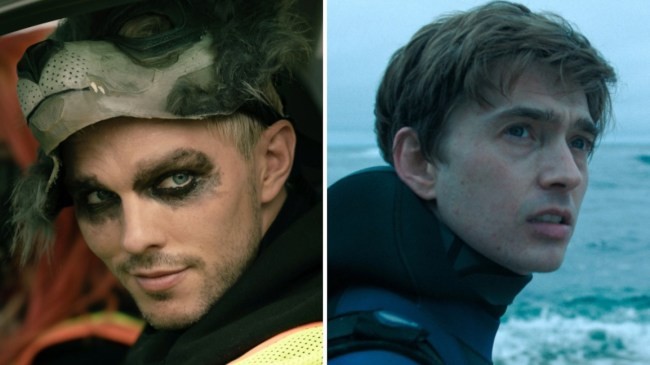
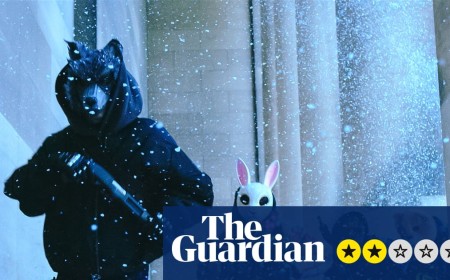
“How to Rob a Bank” may benefit from doing just that. With career-low reviews for director David Leitch, the Amazon MGM Studios release has been tracking poorly and now looks unlikely to crack $10 million from 2,810 theaters in its domestic debut.
For the film’s production banner, Imagine Entertainment, it is shaping up to be a second theatrical non-starter after its high-concept survival thriller “Whalefall” — about a scuba diver trapped in the belly of a marine mammal — got beached after its October opening with just a $39 million total worldwide. Neither “How to Rob a Bank” nor “Whalefall” marks an auspicious wide release homecoming for Imagine, even if Amazon and Disney, respectively, fronted the budget and marketing spend on the films.


The two features are Imagine’s first to play across more than 2,000 domestic screens in more than eight years; the last was Lionsgate’s buddy comedy “The Spy Who Dumped Me” in 2018. That’s practically an epoch for Imagine, which was founded by Ron Howard and Brian Grazer and spent its early years asserting itself as a theatrical force with hits like “Kindergarten Cop,” “Liar, Liar,” “The Nutty Professor,” and Howard’s own films, like “Apollo 13” and “How the Grinch Stole Christmas.” A spokesperson for the banner declined to comment for this report.
But Imagine, as with much of the industry, saw its focus on original, often adult-oriented programming hit diminishing returns in the past 20 years. The company’s biggest hit after 2010 was the 2016 Dan Brown adaptation “Inferno,” which, at $220 million global, earned less than half the gross that its 2009 predecessor “Angels & Demons” did.
Around that time, Imagine hitched its wagon to the then-burgeoning streaming industry, expanding its focus on television projects and aggressively branching into the documentary market, as theatrical features fell by the wayside. Packages for narrative features like “Tick, Tick… Boom!” and “The Beanie Bubble” were sold off to streaming services. But with an industrywide reawakening to the benefits of theatrical (which has even drawn in Netflix), along with a waning demand for unscripted programming, Imagine is now at the start of its return to wide-release, big-screen features.
There were some false starts along the way. Notably, Howard’s own 2022 rescue thriller “Thirteen Lives” had originally been set up at MGM before the studio’s acquisition by Amazon, which then executed an extremely limited theatrical release and opted out of reporting box office. The film’s star Viggo Mortensen later slammed the decision. Then there was Howard’s island-set thriller “Eden,” which sold to the mostly digital-focused distributor Vertical after debuting to withering reviews. And Luca Guadagnino’s post-#MeToo morality thriller “After the Hunt” never cracked 1,300 theaters from Amazon MGM after critics ripped it apart at Venice Film Festival. Many of these films carried hefty price tags — “Eden” had a $35 million net budget, while “After the Hunt” cost $80 million to produce.
“How to Rob a Bank,” co-produced by director Leitch’s 87North, faces a significant climb to any theatrical success with a $40 million production budget and intense Thanksgiving season competition incoming. Imagine has a more promising (though less novel) plan to lean further into IP in 2027. Another Amazon MGM release, the legacy sequel comedy “Spaceballs: The New One,” will come in April. And Universal is distributing a Snoop Dogg biopic, which Imagine developed along with the rapper’s own Death Row Pictures. Can Imagine find the same success with Snoop’s story that it did with “8 Mile”?
More original is the Adam Driver military thriller “Alone at Dawn,” directed by Howard himself, which shot in 2025 and is slated for a Christmas 2027 theatrical release from Amazon MGM. Further down the line, Imagine is developing a sequel to “How the Grinch Stole Christmas,” with Jim Carrey tapped to return. The first film was the top-grossing North American release of 2000 and remains a high watermark for Imagine’s commercial success.
Imagine Entertainment’s future of theatrical IP also comes after years of murmurs that the banner was fielding suitors amid its rise in the documentary space, including a Variety report of a 2021 valuation around $800 million and a 2022 report from TheWrap that a $700 million valuation deal with Centricus Asset Management Ltd. had fallen through. But more recently, TheWrap reported on October 1 that majority stakeholder The Raine Group, which came aboard for $100 million in 2016, was in talks to sell its 51 percent ownership to private equity; an Imagine representative issued an emphatic denial of the claim in the piece.
After a boom among independent production banners to start the decade, the business has faced growing instability over recent years, with shrinking valuations and sharp cutbacks in content spending. For decades, Imagine has been one of the industry leaders in the space, but “How to Rob a Bank” and “Whalefall” are the first test of whether it can reassert itself as a theatrical hitmaker. If the poor tracking for “Rob a Bank” pans out, it’ll then look to “Spaceballs” for, as the joke in Mel Brooks’ 1987 goes, “The Search for More Money.”
What's Your Reaction?
 Like
0
 Dislike
0
 Love
0
 Funny
0
 Wow
0
 Sad
0
 Angry
0










Comments (0)