

A Doctored Photo Left People Recalling Details of a Balloon Ride That Never Happened
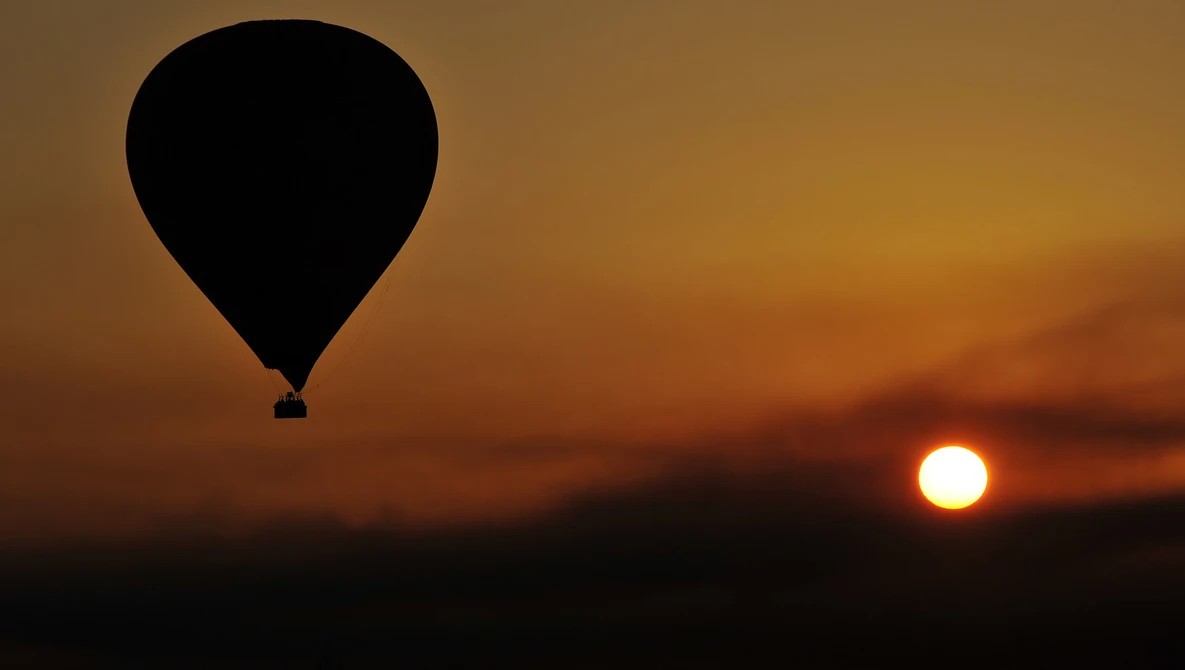
The fake was always the third page. Twenty adults in Wellington, New Zealand, sat down with a booklet of four grayscale prints, each one 150 mm square inside a thin black border, and by the end of the third interview, half of them were describing a childhood hot air balloon ride that had never happened. The picture that started it was assembled on a Macintosh G3 in Adobe Photoshop 4.0.
What the Study Actually Did
Kimberley Wade, Maryanne Garry, J. Don Read, and D. Stephen Lindsay reported it in Psychonomic Bulletin & Review in 2002, under the title "A Picture Is Worth a Thousand Lies." Twenty confederates each recruited a family member who had never been in a hot air balloon, was at least 18, and had never taken a psychology class. The 20 subjects were 10 men and 10 women, aged 18 to 28, students at Victoria University of Wellington and other local universities, paid $20 each.
Each confederate handed over a stack of childhood photos. The researchers digitized three real ones showing the subject between the ages of four and eight at birthday parties and family holidays, then cut the subject and at least one family member out of another picture and pasted them into a stock shot of a hot air balloon basket. Balloon riding was chosen precisely because it is available all over New Zealand and yet memorable enough that a parent or sibling could state flatly that it never happened.
The interviews ran three times over 7 to 16 days, using a modified step-wise protocol borrowed from investigative interviewing. Subjects gave a free narrative for each photo, answered clarifying questions, then answered questions about what the remembering itself felt like. When someone drew a blank on the balloon, which was almost everyone at first, the interviewer reassured them that people often can't retrieve a childhood event they haven't thought about in years, gave them a few quiet minutes, and then walked them through guided imagery: close your eyes, picture being in the basket, think about who was with you, what the weather was like, what you saw when you looked over the side. The photo stayed in front of them the entire time. They took the booklet home and were asked to spend a few minutes each night working on the forgotten event.
The transcripts were sorted into four categories, and the definitions carry the whole result. A clear false memory required the subject to report memories of the balloon ride and to consistently elaborate with information that was not visible in the photograph. A partial false memory meant the subject consistently elaborated on the photo, reporting feelings or who was present, without indicating a memory of taking the ride itself. Describing images of the event while stopping short of claiming them as memories was scored as trying to recall. No attempt at all was scored as no memory. Five raters classified all 20 transcripts, agreed on 85% of them, and pushed every disputed case into the more conservative category.
At the end of the first interview, one subject had a clear false memory, six had partial ones, three were trying to recall, and 10 had nothing at all: 7 of 20, or 35%. By the third interview, 4 subjects had clear false memories and 6 had partial ones. That is the famous 50%, and it is 10 people out of 20, split 20% clear and 30% partial. Confidence tracked the split. Subjects who recalled the balloon ride averaged 44.5% confidence that it had happened, and the four with clear memories averaged 66.7%. For true events they actually remembered, average confidence was 90.8%. Half the room reported some memory of an event that never occurred, and most of that half was not sure. The two categories are not the same claim. A clear false memory meant describing the balloon ride itself with detail beyond the photograph; a partial one meant elaborating on the picture, the feelings, who was there, without indicating a memory of taking the flight.
That still beat the paradigm it was built on. Elizabeth Loftus and Jacquie Pickrell's 1995 experiment, the lost-in-the-mall study, told 24 people they had once been separated from their family in a shopping mall as a child, and 25% came to report memories of it. Across the narrative studies published before 2002, the weighted mean was 30%.
A Norwegian team rebuilt the whole procedure two decades later, swapping the balloon for a Viking ship ride to keep the fake event culturally plausible. Eight of their 20 subjects, 40%, reported partial or clear false beliefs or memories. The effect is not a fluke of one lab or one country.
What the Photograph Actually Contributed
The version of this study that circulates online says the doctored photo implanted the memory, and that photographs are uniquely dangerous because seeing is believing. Wade and her coauthors put numbers on that, and the photograph turned out to account for less than a third of the detail in what subjects said.
They broke every memory report into clauses and asked, for each detail, whether it could have been extracted from looking at the photograph. At both interviews, for both true and false events, fewer than 30% of detail clauses came from the picture. By the third interview, the false reports contained less photo-derived detail than the true reports did. Most of what subjects said about the balloon ride, the weather, the fairground, the $10 ticket, the mother standing on the ground taking the picture, came from guided imagery, imagination, and real memories of other days. The photograph did not supply the content. Wade's team read it as supplying something else: accepted as authoritative evidence that the event had happened, it planted the seed, and it prompted subjects to go searching their own memories for anything that fit.
Nothing in the 2002 design could separate the photograph from the guided imagery that came with it, since every subject got both, and the authors said so in the paper: they could not tell whether photographic suggestion is more potent than verbal suggestion. Garry and Wade then tested the assumption head-on. In a 2005 follow-up, published under the title "Actually, a Picture Is Worth Less Than 45 Words," they gave 44 subjects the same balloon ride, half of them as a doctored photograph and half as a personalized 45-word written description. At the final interview, 82% of the narrative group reported at least some information about the ride, images or memories, against 50% of the photo group. Text beat the picture. The photo subjects also tended to stay in whatever category they started in, while the narrative subjects moved around and moved upward. A written sentence, the authors argued, leaves more room for your imagination to furnish the scene.
No manipulation was involved in the most uncomfortable result in this line of work. In 2004, Lindsay, Lisa Hagen, Read, Wade, and Garry gave 45 undergraduates a false narrative about putting a blob of Slime in their first- or second-grade teacher's desk. Twenty-three of them also received their genuine, unaltered school class photo from that year. The photo showed the subject's own class, teacher included. It did not show the prank, and nothing in it was faked. By the second session, 65.2% of the photo group were judged to be reporting memories of the prank, with another 13% reporting images, for a combined 78.2%. In the no-photo group, the comparable numbers were 22.7% and 22.7%. A real photograph, honestly made and silent on whether the prank had ever happened, produced what the authors called a rate of false-memory reports substantially higher than the rate in any previously published study. The danger is not confined to composites. It attaches to the authority a photograph lends to whatever story is sitting next to it.
A Photo That Proves Nothing Still Moves Belief
The everyday version of the effect is smaller, faster, and far more common. Eryn Newman, Garry, Daniel Bernstein, Justin Kantner, and Lindsay named it truthiness, after Stephen Colbert, and measured it across four experiments published in 2012.
In the first two, 92 students in Wellington and 48 in Victoria, British Columbia, saw celebrity names on a screen and had three seconds to judge either "This famous person is alive" or "This famous person is dead." Half the names appeared with a photo of that celebrity at work, a politician at a podium, that sort of thing. A picture of someone standing at a microphone tells you nothing about whether they are still breathing. It shifted people toward "true" anyway, most strongly for names they didn't recognize. The same photos inflated belief in the alive claims and the dead claims alike, which rules out a simple bias toward "alive" and leaves a bias toward "true."
A third experiment moved to trivia. Seventy students judged general knowledge statements, half of them paired with a photo of the statement's subject and nothing more. People were more likely to call "Macadamia nuts are in the same evolutionary family as peaches" true when a bowl of macadamia nuts sat next to it. The effect was strongest on the hard claims, the ones where people had no idea and had to go with a feeling.
The same researchers narrowed their own claim twice. A separate experiment in that 2012 paper showed that purely verbal information produced the same inflation, so the effect is not special to photographs. A 2015 follow-up in the Journal of Experimental Psychology: Learning, Memory, and Cognition found that only related photos produce truthiness, while unrelated ones did nothing and in one design pushed judgments the other way. In a fully between-subjects version, where each person saw the same kind of trial from start to finish, neither effect appeared at all. The photo has to feel like it belongs to the claim, and it has to arrive against a run of claims that do not come with one. Once both hold, it works without proving anything.
Why the Rules Are Written the Way They Are
Photojournalism's compositing rules read as fussy to anyone outside the field. The National Press Photographers Association's code of ethics puts it plainly in its sixth standard: "Editing should maintain the integrity of the photographic images' content and context. Do not manipulate images or add or alter sound in any way that can mislead viewers or misrepresent subjects." World Press Photo's current entry rules are more specific still. Rule 17 requires that photographs "must not be altered by adding, rearranging, reversing, distorting or removing people and/or objects from within the frame," with cropping and sensor dust the only exceptions, and finalists have to hand over the camera-original files for two independent analysts to compare against what they submitted. Generative fill and synthetic images are disqualifying.
Read that against the memory research, and the strictness stops looking like ceremony. Removing a distracting shadow does not change what a viewer can learn from a frame. It changes how much the frame vouches for the caption. The Slime study is the clean demonstration: a photograph that contained no false information at all, showing only the subject's real class from the correct year, nearly tripled the rate at which people were judged to be remembering a prank they never pulled. No study has run an honest photograph against a composite under matched conditions, so nobody can say which is worse. What the honest picture shows is that the trouble was never confined to composites: a photograph lends its authority to whatever claim is sitting next to it, and the audience has no way to tell an honest frame from an assembled one.
Wade's team saw the legal version coming in 2002. They quoted an FBI photographic documents agent warning that an overzealous or dishonest officer could photograph a crime scene, load the images into an editing program, and undetectably insert a damning piece of evidence into them. That warning was published in 1997.
The Same Composite, Now a Menu Command
Everything Wade's lab did by hand is now automated. Sky replacement is a single command, and the results are good enough that plenty of working landscape photographers keep a library of skies on hand for exactly that purpose. Google shipped the sharper case in August 2024, when the Pixel 9 launched with Add Me: you shoot the group, hand the phone to someone else, step into the frame yourself, and the phone merges the two exposures so everyone appears together. Google describes it as combining two pictures taken during the same session and in the same scene so that everyone, including the person who took the original shot, is in the photo.
That is the balloon photograph, built in a second, on a phone, by a person who is not lying to anyone. Nobody is deceived about who was there. Google does tag the file. Since October 2024, Add Me and Best Take shots carry IPTC metadata marking them as composed from multiple photos, and Google Photos shows that line in the image details. But the artifact that comes out is still a photograph of a moment that did not exist as a single moment, the metadata does not survive a screenshot or a print and is stripped by some export and upload paths, and the file will sit in a camera roll for 30 years while nobody thinks to check its details. Someday somebody will look at it and remember standing there.
The science has its own live argument about how much of this counts. A reanalysis by Andrews and Brewin went back over a large Irish replication of the original lost-in-the-mall study, which ran 123 participants and found 35% reporting distorted beliefs or memories, and concluded that only about 4% of them had developed genuinely false memories, since so much of what they reported was drawn from real experience. Wade, Loftus, and three coauthors pushed back hard in Applied Cognitive Psychology in 2025, arguing that remembering is reconstructive by nature and that reports built partly from real fragments are exactly what a false memory looks like. Nobody in that exchange disputes that suggestion distorts what people report. They are arguing about how much of a report has to be invented before it counts as a false memory.
None of this makes compositing wrong. It makes the caption the load-bearing part. The rule that separates a sky replacement from a lie is not a rule about pixels: it is whether the person looking at your picture knows what they are looking at. Write the caption for the version of your viewer who will still have this file in 2056, when nobody left alive can say what the sky looked like that afternoon.
Lead image by Marcosleal, denoised by Pro2, CC BY-SA 3.0. Source.
What's Your Reaction?
 Like
0
 Dislike
0
 Love
0
 Funny
0
 Wow
0
 Sad
0
 Angry
0











Comments (0)