

America, You Can’t Get This Powerhouse Phone. It’s a Shame
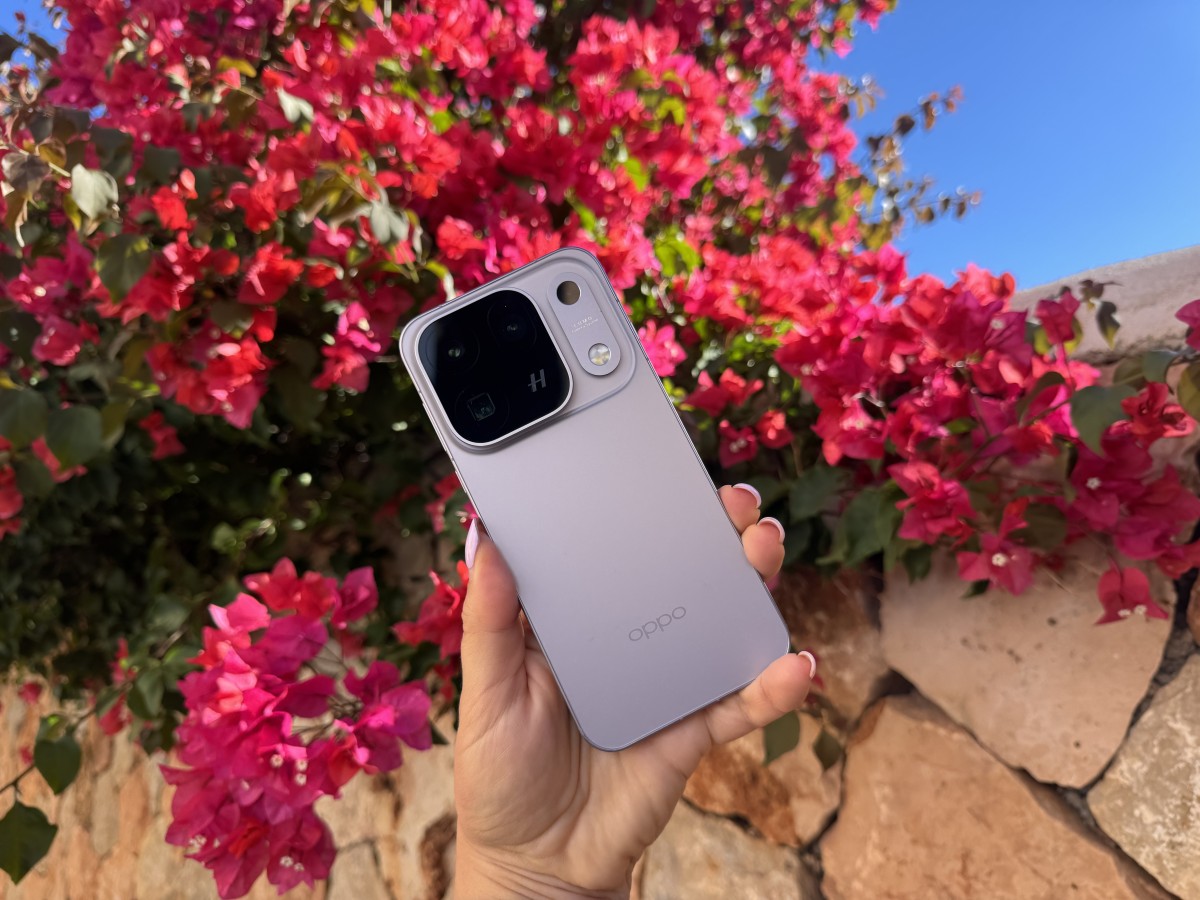
If the only two names that pop into your head when you think about the best phones on the market are Apple and Samsung, frankly, you’re thinking too small.
Chinese phone-makers aren’t just making phones that rival those from Apple and Samsung; in some respects, they’re surpassing the iPhones and Galaxys — in batteries and fast charging, and especially when it comes to cameras.
On Wednesday, Oppo launched its latest photography-focused high-end phones, the Find X10 and Find X10 Pro, on the sun-bleached Spanish island of Mallorca. A finca covered in bougainvillea and surrounded by gnarled olive groves and roving wild goats might at first glance seem like an offbeat choice for a Chinese tech giant to stage a global launch event, but the decision is far from random. Spain is Oppo’s biggest European market, and it’s only getting bigger.
It’s a story we’re seeing repeat itself around the world. According to researchers Counterpoint and Omdia, Oppo was the fourth-largest phone-maker globally by shipments in the first half of this year. Already well established in China, the company is now seeing growth across the globe, and in Europe in particular.
It’s an impressive feat given that growing a smartphone business is harder than it’s ever been. It’s no secret that RAMageddon, the ongoing memory shortage, is pushing up phone prices and causing a massive drop in shipments.
Phone-makers might be putting on a brave face as they release new devices to the world, but behind the scenes they’re scrambling to draw up new strategies that will hopefully see them through in both the short and long term.
Growing sales of flagship and premium phones will be key to their survival, said Runar Bjorhovde, principal analyst at market research firm Omdia, during a briefing at the Oppo event. Compared with the budget and midrange segments, the high-end segment is relatively resilient.
You might think that means more exciting (if expensive) phones everywhere – witness the launch of Apple’s folding iPhone Duo, which starts at $1,999 – particularly in wealthy countries such as the US. But that’s not exactly the case.
Bad news for US phone buyers
When it comes to premium phone markets, none is larger or more profitable than the US. And yet Oppo and other Chinese smartphone-makers are steering well clear.
There are several reasons for this. Firstly, they don’t have Apple’s and Samsung’s long-standing carrier relationships that would facilitate their phones being presented as solid options to buyers. Together with the geopolitical roadblocks affecting Chinese tech companies, this makes the US simply too tricky and precarious right now to make that investment worthwhile.
“The barriers to enter make it almost impossible to go in and actually scale there unless you have lots of money to invest,” said Bjorhovde. Instead, the money they do have to invest is being poured into Europe. (Oppo said it will increase its investment in its European business by 30% over the next three years.)
This is bad news for Americans, who simply don’t and won’t be able to benefit from the full array of choices on offer to people in Europe and beyond, including the Find X10 Pro. In CNET’s review of the device, Editor at Large Andrew Lanxon described it as “a powerhouse phone that’s well worthy of its flagship title,” praising its cameras as the best on the market alongside the iPhone 18 Pro and Xiaomi’s Leitzphone.
 Oppo has nailed its camera system.Katie Collins/CNET
Of these three, only one is on sale in the US, but Europeans can take their pick.
“It definitely feels like US consumers are missing out by not having the latest and greatest smartphones from the leading Chinese manufacturers,” said Ben Wood, chief analyst at FDM CCS. It’s especially noticeable when it comes to some of the cutting-edge foldable phones from companies like Honor, Oppo and Xiaomi, he added.
Breaking the duopoly
The Apple-Samsung duopoly that dominates the American market also exists in Europe, albeit to a lesser extent. But Elvis Zhou, Oppo’s European CEO, wants to see it broken completely.
“People deserve more exciting options,” he said in a briefing with journalists. When it comes to picking a premium phone, he thinks people should have a choice between three or four brands, rather than just two.
This reflects the more diverse array of successful phone brands in China, he added. In his company’s home country, there are only a few percentage points difference between Huawei, Apple, Oppo, Vivo, Xiaomi and Honor.
Xiaomi, Honor and Vivo are all now vying with Oppo for a slice of the European pie. One sign of intensifying competition is the shrinking gap between products being launched in China and Europe, which has historically spanned months. Zhou says that’s changing — the Find X10 series launched in China only a month ago.
When it comes to choosing a premium phone, Omdia’s research shows that buyers place more importance on camera quality than do people buying budget and midrange devices, but also “softer” values, including preferred brand, perceived status and aesthetics. Oppo has nailed its camera system, but the same isn’t necessarily true of the latter values.
Zhou isn’t worried, though. Oppo is squarely targeting Gen Z with the Find X10 series (Omdia research shows that people under 35 are most likely to buy premium phones), and he thinks they’re savvy enough to look beyond ads to first-person recommendations and chatbots that will provide specs-based advice to discern which product will offer the best value.
 Oppo is targeting savvy young Europeans with the Find X10 Pro.Katie Collins/CNET
“We want to focus on the young generation because … they know how to make the decision very logically – they will not make the decision only following the brand name,” he said. “Young people really care about the product itself, and they can get all the information they want from AI and from social media. It’s a good opportunity for me.”
The company has already found success using this strategy for the Find X9 series, which saw its share of the premium European market quadruple between 2025 and 2026, according to Omdia.
But while Oppo might have made headway in Europe, it might be difficult to sustain this effort over time, said Wood — especially given that all of its Chinese rivals are adopting a very similar strategy at the very same moment.
Competition might be fierce, but Oppo is ready to play the long game. “We’re very patient,” Zhou said with a wry smile. “We’re not rushing here in Europe.”
Editors’ note: Katie Collins’ travel costs were covered by Oppo. The judgments and opinions of CNET are our own.

Katie Collins
Principal Writer
Katie is a UK-based news reporter and features writer. Officially, she is CNET's European correspondent, covering tech policy and Big Tech in the EU and UK. Unofficially, she serves as CNET's Taylor Swift correspondent. You can also find her writing about tech for good, ethics and human rights, the climate crisis, robots, travel and digital culture. She was once described a "living synth" by London's Evening Standard for having a microchip injected into her hand. See full bio
What's Your Reaction?
 Like
0
 Dislike
0
 Love
0
 Funny
0
 Wow
0
 Sad
0
 Angry
0










Comments (0)