

Andrew Garfield Massively Helps Neon’s ‘Artificial’ Gamble Pay Off on the Awards Front
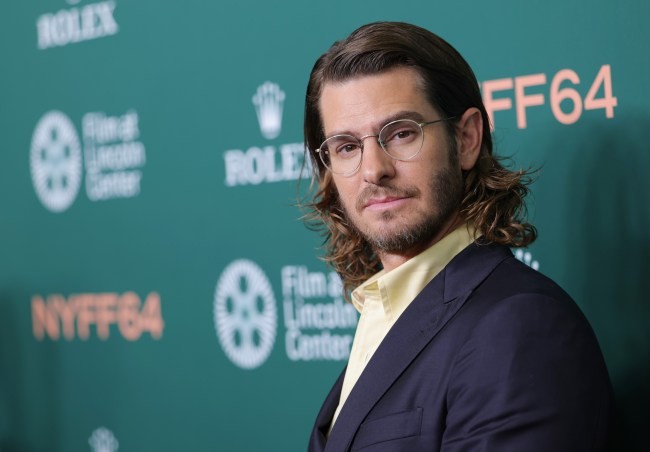
To put it quite bluntly, there is a point early on in “Artificial” where Oscar winner Mark Rylance and Oscar-nominated “Anora” breakout Yura Borisov are playing two scientists devoid of any charisma, alongside an unknown actor who’s the spitting image of Edward Snowden, where one could ask “Who are these people, and why do I care?” There is no mention of OpenAI, no real life counterparts the general public would recognize, and most importantly no Andrew Garfield.
Proving how absence makes the heart grow fonder, when the two-time Oscar nominee finally does show up as tech executive Sam Altman, at first as a meek accessory to Ike Barinholtz’s anti-comedy Elon Musk, it feels the film finally comes alive.


Much has been reported about “Artificial,” with debates over whether or not the latest Luca Guadagnino film was dropped by Amazon MGM as a concession of the company partnering with OpenAI, or because it is actually not commercially viable. There may be some truth to the latter point, as it is quite bold for a $40 million film to be led by Borisov, a supporting actor in one of the lowest grossing Best Picture winners of all time. But the no guts, no glory bet that Neon is making, having been the one studio to finally pick up the film just in time for awards season, is that there is enough nostalgia around “The Social Network” and Garfield to carry the workplace drama to box office success.
Though it takes him a minute to arrive, by the end, there is no doubt that “Artificial” is Garfield’s movie, and furthermore, that the inevitable comparisons to “The Social Network” are a feature not a bug. The star famously did not actually receive an Oscar nomination for Best Supporting Actor in 2011, after being nominated for his breakout role as Facebook co-founder Eduardo Saverin by the Golden Globes, Critics Choice, SAG, and BAFTA Awards. But in this shift from the corporate martyr to corporate menace, Garfield has come upon a full circle narrative that could finally earn him an Academy Award nearly two decades later. As they say, third time’s the charm.
It will be harder for the other actors in “Artificial” to receive recognition, as they all sort of function as an ensemble that uplifts Garfield. Again, Borisov is technically the lead, and does a fine job, but is playing far too passive a character to be put in the same league as the several Best Actor frontrunners with multiple Oscar nominations under their belt, especially when they’re playing alphas like Odysseus. The morbid fun of the film is seeing just how easily Borisov gets mowed over. Outside of Garfield, fellow Oscar nominee Monica Barbaro has the most magnetic presence in the film, but is not given spare moments to shine like she had in “A Complete Unknown.”
 ‘Artificial’Courtesy Everett Collection
The real awards potential for “Artificial” lies behind the scenes. It is only the second feature screenplay written by Simon Rich, who, as a notable alum of “Saturday Night Live,” is able to find comedic beats to a cast full of characters who lack charm, but more impressively he taps into the existential dread of unchecked power. The narrative around OpenAI, and the negative effect it could have on the world, is actually something Rich has personal stakes in, recently appearing in the documentary short “Josh’s Wedding,” about how his friend group has begun to distance themselves from their buddy who was an early hire at the infamous tech company. Much of the field for Best Original Screenplay are films of significantly smaller scale, so the challenge for Rich to secure a nomination would more so be that other contenders like “Club Kid” or “Tender Loving Care” pulled harder on voters’ heartstrings.
“Artificial” is a bit of redemption for cinematographer Malik Hassan Sayeed, who made his long-awaited return to narrative filmmaking last year with Guadagnino on “After the Hunt,” a film weighed down mostly by script issues. The way the pair uniquely capture the city of San Francisco alone is worth the price of admission. Guadagnino’s longtime editor Marco Costa is also worthy of praise, as the film does not feel like it meanders even at a two hour and 20 minute runtime. However, it is still not as tightly edited as “Challengers,” the collaboration that Costa really should have been recognized for.
Maybe in an effort to not be too on the nose about the comparisons to “The Social Network,” Guadagnino did not employ longtime collaborators Trent Reznor and Atticus Ross, who earned their first Oscars for their work on the David Fincher film, as the composers of “Artificial.” Instead, Blur and Gorillaz frontman Damon Albarn handled the music for the film, even contributing three original songs. Best Original Score may be a challenge, just considering how everyone from Ludwig Göransson to Hans Zimmer to John Williams is in the running this year, and have made more headway with Oscar voters, but Albarn’s credits song is a particular highlight that could easily have a shot of making the Best Original Song shortlist.
As for what to make of Guadagnino and the film itself as Best Director and Best Picture contenders, respectively, that is really in the hands of audiences. Guadagnino has been very prolific since earning his first and only Oscar nomination for producing Best Picture nominee “Call Me By Your Name,” but maybe finds himself in a similar boat to Denis Villeneuve, where voters find no urgency to recognize him when his next film is already arriving soon.
 Luca Guadagnino speaks onstage at the ‘Artificial’ – Intro & Q&A during the 64th New York Film Festival at Alice Tully Hall, Lincoln Center on October 05, 2026 in New York City.Michael Loccisano/Getty Images for FLC
But it really should not be taken for granted how the Italian auteur has been getting some of career-best performances out of both the biggest movie stars on the planet, as well as introducing audiences to fresh young talent, all while making the types of mid-budget films that used to be the Oscars’ bread and butter, but have largely fallen by the wayside in favor of either extreme indies or mega blockbusters.
That is, in part, what makes “Artificial” stand out in the Best Picture race. There aren’t really any films from this year that are like it, outside the obvious comparison to “The Social Reckoning” (more on that soon). In addition to Guadagnino, two “Artificial” producers who have a long history with the Oscars are four-time nominee David Heyman, who was just tapped to produce the James Bond franchise, and Jennifer Fox, who was nominated for Best Picture for “Michael Clayton,” and had a years-long streak of producing the Governors Awards.
Neon has gotten over the hurdle of critics appreciating their high profile acquisition. If it can truly find an audience for the film at the box office, the studio has another undeniable Oscar contender on its hands.
What's Your Reaction?
 Like
0
Like
0
 Dislike
0
Dislike
0
 Love
0
Love
0
 Funny
0
Funny
0
 Wow
0
Wow
0
 Sad
0
Sad
0
 Angry
0
Angry
0







Comments (0)