

Apple TV Deserves Credit For Successfully Adapting Isaac Asimov's Most Difficult Book

Published Oct 18, 2026, 2:00 AM EDT
Dhruv is a Lead Writer in Screen Rant's New TV division. He has been consistently contributing to the website for over two years and has written thousands of articles covering streaming trends, movie/TV analysis, and pop culture breakdowns.
Before Screen Rant, he was a Senior Writer for The Cinemaholic, covering everything from anime to television, from reality TV to movies.
After high school, he was on his way to become a Civil Engineer. However, he soon realized that writing was his true calling. As a result, he took a leap and never looked back.
Apple TV keeps setting an increasingly high bar for sci-fi adaptations. Its take on Hugh Howey's Silo is already one of the greatest post-apocalyptic sci-fi shows of the decade. Meanwhile, even its original sci-fi shows like For All Mankind and Pluribus are no less brilliant. Arguably, though, Apple TV's most impressive feat in the sci-fi genre is translating Isaac Asimov's most difficult book for the screen.
Long before Apple TV's take on Isaac Asimov's Foundation saw the light of day, a film adaptation of the book trilogy was planned by New Line Cinema. Unfortunately, despite the production company's continuous efforts to materialize the project, it never saw the light of day. As reports reveal, HBO and Skydance Media, too, tried their hands at a TV adaptation of Foundation.
Jonathan Nolan was even onboard to write the series for HBO. Surprisingly, none of these projects got past the early stages of production. After so many failed adaptations, Apple TV finally came into the picture and made the adaptation happen. Although Apple TV's take on Asimov's book series took some time to find its feat, it is now one of the best sci-fi adaptations of the decade.
Why Apple TV's Foundation Adaptation Worked After So Many Failed Efforts
 Image via MovieStillsDB
Isaac Asimov's Foundation is an incredible read, but its narrative structure is not suitable for the screen. It spans across thousands of years with no single protagonist as its story's driver. It also focuses less on spectacle and its core conflicts are driven by heavy dialogue that focuses on diplomatic debates and trade blockades.
Created by David S. Goyer and Josh Friedman, Apple TV's Foundation had to take the risk of introducing a major paradigm shift to the original novel's structure. The show achieved this by first solving the time-jump issue from the books. It found creative ways to feature multi-generational conflicts, which gave the series a semblance of continuity and allowed recurring characters to appear across multiple arcs.
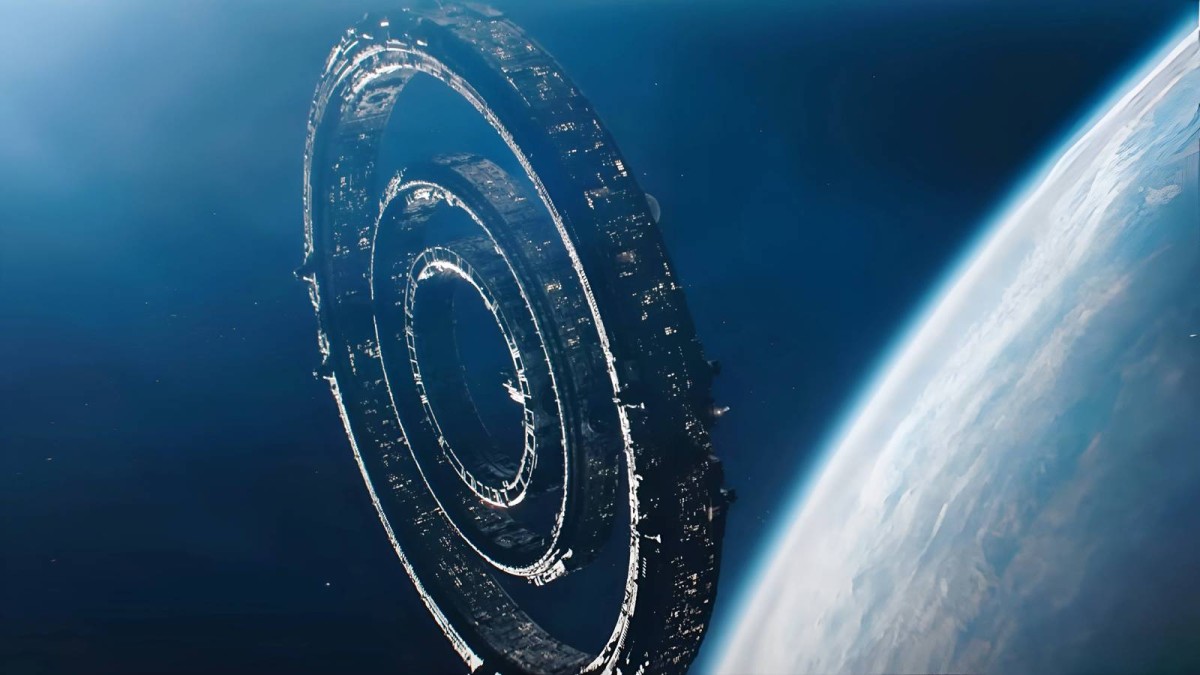
Even the world building in Asimov's trilogy is subtle and gradually spread across multiple chapters. While borrowing key aspects from the books, Apple TV's Foundation tries to visually capture all the implicit violence that rots the central Galactic Empire. For instance, to show imperial decline from the books, Foundation season 1 cleverly shows the destruction of an orbital space elevator.
Instead of treading the same path as the books and only featuring a male-dominated story, the show even diversifies the original roster. It swaps key characters like Salvor Hardin, Gaal Dornick, and Eto Demerzel to make room for female and non-binary leads. Some purists still argue that the Apple TV sci-fi show is too much of a far cry from the novels, but a literal book-to-screen translation would have been unwatchable.
Foundation's Success Spells Promise For Apple TV's Upcoming "Unfilmable" Sci-Fi Adaptation
 Credit: Apple TV
Instead of playing safe after its long line of successful sci-fi shows, Apple TV is fortunately not holding back from pushing the boundaries of book-to-screen adaptations. Like Isaac Asimov's Foundation, William Gibson's Neuromancer, too, seemed cursed because its planned adaptations struggled to see the light of day.
Over four decades after the seminal cyberpunk book's publication, however, it is finally being adapted for the screen. After Foundation, it is hard not to be grateful that Apple TV has picked up Neuromancer for a TV adaptation.
In its own unique ways, Neuromancer, too, has been considered "non-cinematic" and "unfilmable." William Gibson's prose and storytelling style is so dense and replete with layered themes and ideas that it seemed impossible to translate Neuromancer to the screen.
Apple TV's success with Foundation, however, suggests that the streaming service will find a way to deliver a compelling adaptation of William Gibson's Neuromancer as well. And if all goes well for Neuromancer, it could get the long-term treatment like Foundation, where Apple TV could adapt William Gibson's entire Sprawl trilogy.
What's Your Reaction?
 Like
0
Like
0
 Dislike
0
Dislike
0
 Love
0
Love
0
 Funny
0
Funny
0
 Wow
0
Wow
0
 Sad
0
Sad
0
 Angry
0
Angry
0





Comments (0)