

‘Batman: Caped Crusader’ Season 2 Is a Masterful Sequel About the Heroes We Need Now
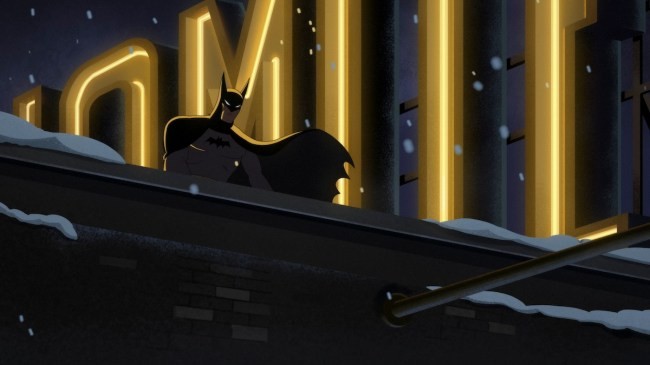
[Editor’s note: The following review contains mild spoilers for “Batman: Caped Crusader” Season 2.]
“Batman: Caped Crusader” kicks off its second season with an absurd, if still foreseeable, setback. After finally getting Gotham crime boss Rupert Thorne (Cedric Yarbrough) to stand trial, justice remains stubbornly out of reach for the city’s few stalwart do-gooders. Local news analysts claim the charges are a trumped-up joke. Thorne himself is suspiciously unshaken. The prosecutors aren’t sure they can secure a conviction, and they know they’ll lose without the testimony from a star witness: Thorne’s (oddly honest) accountant.


So, naturally, Thorne tries to have the bean counter killed, and Batman (Hamish Linklater) tries to save him. Not just Batman, though. Since trying to go it alone in Season 1, he’s earned a few allies in the Gotham P.D., including Commissioner James Gordon (Eric Morgan Stuart), public defender (and James’ daughter) Barbara Gordon (Krystal Joy Brown), and loyal detective Renee Montoya (Michelle C. Bonilla). The four of them defend attack after attack from Thorne’s men until — spoiler alert — the accountant makes it to the stand. They did it! The good guys won! The truth will be heard!
Too bad it’s not the truth they were counting on. The very words that should’ve sent Thorne to prison prove to be the same words that explain his release: “The law is whatever I decide it is.” Despite damning evidence, the judge throws out the case and Thorne goes free. Like too many other rich, well-connected, con men, Thorne built in a back-up plan to ensure he’d never see the inside of a prison cell, and with that, all of Batman’s efforts are for naught. He played it by the book, and he lost.
These days, even superheroes have to be patient.
From there, it appears “Batman: Caped Crusader” is on a path toward pessimism; a further darkening of the Dark Knight who, in Season 1, was rudely awakened to the inadequacies of Gotham’s foundational institutions. After seeing corrupt cops rewarded with medals and politics debase his best friend, now the courts can’t even be trusted to perform their solemn duty.
But for as much as the superb first season drew parallels between a fictional society’s failures and our own, it put even more emphasis on rediscovering compassion. For a boy whose parents were murdered by an armed robber, it’s easy to view criminals as pure evil — one-note villains in need of a swift punch and swifter imprisonment. But Bruce Wayne isn’t a boy anymore, and Batman can’t operate as a one-man judge, jury, and executioner. He needs to recognize the humanity all around him, in those he’s trying to help and those inflicting hurt, if he hopes to keep his own humanity intact.
It’s not a sudden transformation. Shades of jadedness remain in Season 2, which is fitting for a fantastic noir, such as when Batman saves the plans for a “miracle element” that could be the key to renewable energy, but later changes his mind and burns them. “In the right hands, [those plans] could be transformative,” Alfred (Jason Watkins) says. “And whose hands would that be?” Batman says, lighting the match.
But the light that Alfred helped bring into his heart at the end of Season 1 continues to spread as additional cohorts crack Batman’s armor. He starts working directly with Commissioner Gordon, rather than relying on Barbara as a go-between. He leans on Alfred more, while learning about his surrogate parent. Most notably, he starts to empathize with people he previously regarded solely as criminals, lowlifes, or impediments — and not just to hasten their capture.
 ‘Batman: Caped Crusader’Courtesy of Prime Video
In essence, the excellent second season is dedicated to muddying the myth of heroes and villains, in that heroes don’t have to put themselves above anyone in order to lead. They don’t have to set aside their humanity to become — as Bruce puts it in “Batman Beyond” — an “incorruptible symbol.” If anything, they need to be more in touch with their “flesh and blood” than ever, and “Batman: Caped Crusader” grounds its Dark Knight by bringing wayward working stiffs to the forefront of every episode — the average Joes who, when stuck between a rock and a hard place, take desperate measures to escape their suffering.
Episode 2, “Rocket’s Red Glare,” follow’s Batman’s pursuit of a brilliant Black scientist who’s setting off bombs after her corporate job nearly killed her. Episode 4, “The Devil’s Due,” compares cable news junkies to cult members, while framing the latter’s extreme tactics around people’s shared need to believe in something bigger than themselves. Episode 5, “The Spectral Hand,” elicits pathos for Barbara’s former assailant as she wrestles with his accidental execution (and unexpected resurrection).
Batman’s path is flooded with lost, complicated souls, but the “bad guy” with the greatest impact on our caped crusader is also the one he spends the most time with. In Episode 3, “Deep Cover,” Bruce Wayne goes to prison — undercover, as a common crook named Matches Malone — so he can find out where the Thorne is hiding. His target: Dez, one of Thorne’s most trusted — and exploited — thugs. “Matches” doesn’t uncover the secret softer side of Dez, nor does he find an actual monster sleeping on the bunk below him. Instead, Dez is just a man who’s been betrayed by the people who are supposed to be looking out for him — including “Matches.”
Wrestling with his role in Dez’s downfall does a number on our hero, the ramifications of which are felt throughout Season 2. Collectively, the show’s cases of the week prepare Batman for the ultimate test for a man rekindling his regard for others: an unfeeling agent of chaos. (His identity is no secret, but I’ll let you guess who.) By the time Batman goes toe to toe with his greatest rival, he knows what — and who — he’s fighting for: not just a city, but a community; not just the pure of heart, but those who’ve lost their way; not just one victory, but a righteous crusade.
“Batman: Caped Crusader” makes clear there’s not one Big Bad to bring down. Instead, there are millions of citizens to save in a campaign that will take time and undoubtedly be filled with plenty of setbacks. But by seeing himself in those around him, the good and the bad, Batman (and “Batman”) becomes more than one guy and more than a symbol. He’s both, and that’s a leader worth following.
Grade: B+
“Batman: Caped Crusader” Season 2 premiered Friday, July 31 on Amazon Prime Video. All 10 episodes are available now.
What's Your Reaction?
 Like
0
Like
0
 Dislike
0
Dislike
0
 Love
0
Love
0
 Funny
0
Funny
0
 Wow
0
Wow
0
 Sad
0
Sad
0
 Angry
0
Angry
0










Comments (0)