

Why a Sub-$100 Godox Is the Most Versatile Flash in a Wedding Photographer's Bag
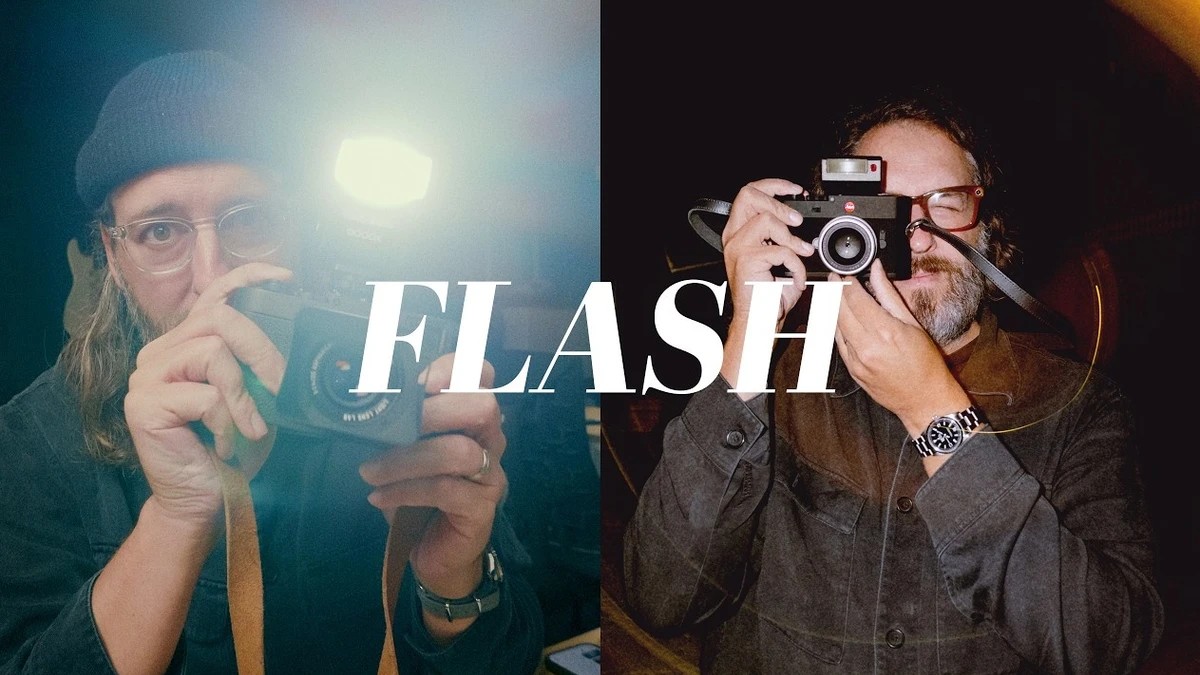
Rangefinders like Leica's M bodies and compacts like Fujifilm's X100 line have pulled a lot of people back toward on-camera flash, and finding a speedlight that fits those small bodies without overwhelming them has never been simple. The flash you pick decides whether you get harsh direct light, a softer bounce, or an off-camera look, and it decides how much weight hangs off your neck through a four-hour reception.
A firmware update changed what works on a Leica rangefinder, and Benj Haisch starts his rundown of the flashes he carries with that news. The Godox iT32 now fires TTL natively on the Leica M11, with no adapter, which retires a workaround Haisch relied on for a long time. He uses it at weddings for cocktail hour grip-and-grins and couple shots on the dance floor. Neither situation calls for a portfolio image, but both look much better with a bounce card and a tilting head, so most of the light goes to the ceiling while a little kicks forward onto faces. The head also attaches magnetically to its transmitter, so you can pull it off the camera and place it to the side for a more shaped look, and the whole setup costs under $100.
Size drives the next choice. Haisch sees the Godox iT30Pro as a clear take on the Fujifilm EF-X20, a tiny flash he bought for a Fujifilm X100VI and kept for his X100F after selling the newer camera. A hot shoe flash also sits above a lens hood, which can block a built-in flash and spoil the light. The Fujifilm unit is discontinued, pricey, and runs on two AAA batteries. The Godox charges over USB-C, so there's no separate charger to pack, though a built-in battery leaves you stuck on a long trip with nowhere to plug in. On his Sony RX1R III, the iT30Pro has handled TTL well, but a gap between the flash foot and the hot shoe bothered him enough that he packed gaffer tape underneath to steady it.
For most of the digital M system's life, TTL flash on a Leica rangefinder pointed you toward Leica's own SF 40 or SF 60, both priced well above the Godox options. Leica's flash protocol made third-party support hit or miss, so plenty of M shooters ran small flashes in manual mode and did the exposure math themselves. A sub-$100 TTL option that charges from the same cable as a phone lowers the barrier a lot, and it lands while direct flash has become a popular look in wedding and event coverage. The technique Haisch leans on has a long history in press photography: tilt the head up, use the card to throw a sliver of light forward, and let the ceiling handle the rest. The ceiling evens out the room and lifts the shadows behind your subject, while the card adds fill and a catchlight so faces don't go flat. Ceiling height and color change the result, so on a high or dark ceiling you'll get more from the card and less from the bounce. If you shoot events with a compact camera and want light that looks intentional without carrying a stand, this approach is the simplest place to start.
At the other extreme sits the Godox V100, a 100 Ws round-head flash Haisch uses when he wants the best light and the fastest recycling. Paired with the Sony a9 III, whose global shutter can sync flash at any shutter speed, it has let him make images he couldn't get any other way. It roughly doubles the size of his camera kit, though, so it isn't something he wants to carry for hours, even if he has used it through full receptions without trouble. That bulk is part of why a small body like the Fujifilm X-Pro1 served as his dance party kit for years before he moved to Leica.
The last flash Haisch shows in the video is a retro unit with no TTL and only three power settings, which he likes for street photography because it seems to disarm the people he photographs.
What's Your Reaction?
 Like
0
 Dislike
0
 Love
0
 Funny
0
 Wow
0
 Sad
0
 Angry
0









Comments (0)