

Before Dark Souls, FromSoftware’s Forgotten PS1 Horror Game Was a Haunting Exercise in Empathy

Published Oct 18, 2026, 6:00 AM EDT
Ryan Epps is a contributing writer for Polygon. His writing spans both the entertainment and tech verticals, with bylines covering everything from Dark Souls to TVs at sites like Tom’s Guide, IGN, Digital Trends, TheGamer, Tech Times, and more.
Aboard a long-lost ghost ship, this underappreciated game finds tragedy in the stories left untold
 Image: FromSoftware
Sign in to your Polygon.com account
To trace FromSoftware’s history is to uncover a lineage written in cold sweat. While the studio is celebrated today for unforgiving action RPGs like Dark Souls and Elden Ring, its DNA is deeply rooted in games that feel born of a fever dream. FromSoft’s darker legacy lives in games like Kuon, a masterclass in Japanese folklore and survival horror, and Shadow Tower, a claustrophobic dungeon crawler that turns every dark alcove into a deadly trap. Even Eternal Ring — not to be confused with its blockbuster sibling Elden Ring — radiates that signature, unsettling aura that makes exploring FromSoftware’s later worlds so intoxicating.
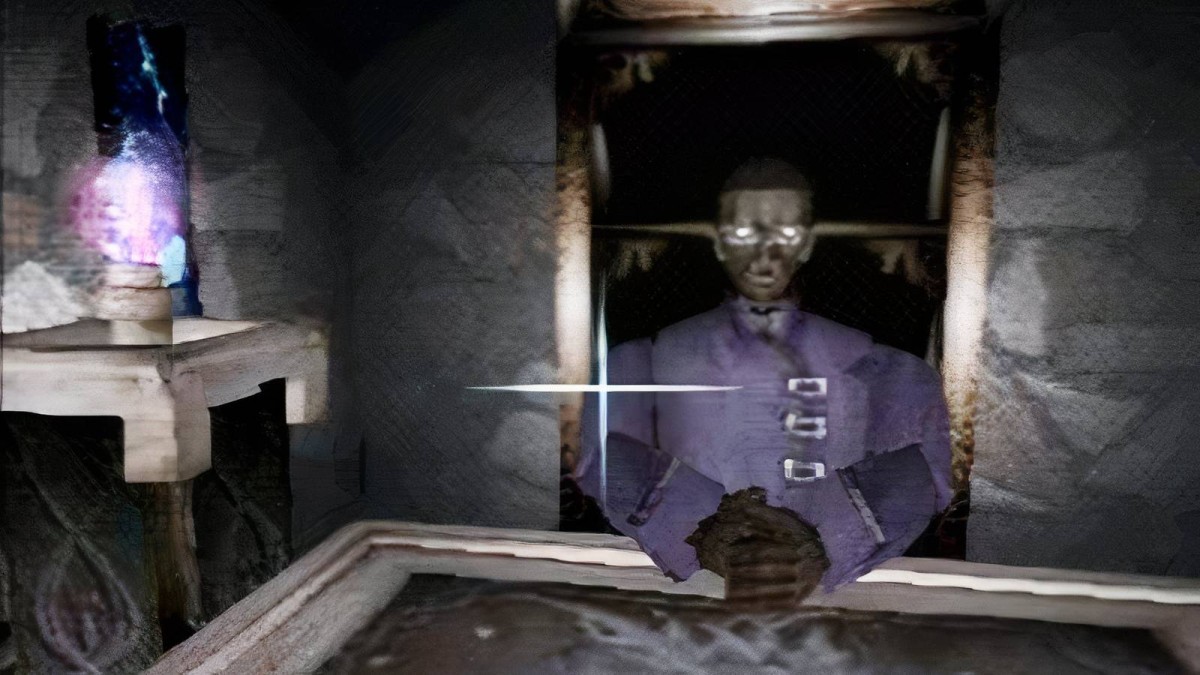
Yet, nearly three decades since its debut, one of the developer’s most compelling experiments in terror remains criminally overlooked. Released in 1998 for the original PlayStation, Echo Night was a radical departure for its era. Uninterested in spilt blood or slaughtered gods, the haunting ghost story traded violence for the melancholic task of laying restless souls to rest on an abandoned cruise ship. Players step into the shoes of Richard Osmond, whose search for his missing father leads to an enigmatic painting that transports him onto the Orpheus, a long-lost ocean liner haunted by spirits trapped in their tragic regrets. To escape, Richard must unravel the ship’s dark history and grant its forgotten passengers the closure they so desperately crave.
Written and produced by Toshifumi Nabeshima, Echo Night rejects the combat-heavy and gory framework of typical ‘90s survival horror in favor of something far more intimate. Rather than leaning into the resource scarcity popularized by Resident Evil, Nabeshima crafted a deeply empathetic adventure built around observation and emotional catharsis. In Echo Night, encounters with hostile spirits don't ask you to pull a trigger, but to frantically race through pitch-black rooms in search of a light switch, as illumination is your only defense against their malice. From there, Nabeshima turns game progression into a series of spectral mercy missions. You might track down a missing ring for a grieving widow or solve a riddle to help a trapped sailor move on, receiving an Astral Piece each time a soul fades into eternal rest. In doing so, Echo Night flips the script on the entire genre: the ghosts aren't obstacles to be destroyed, but victims waiting to be understood.
 Image: FromSoftware
Although there is an overarching mystery involving Richard’s father and the Orpheus, the game’s true power lies in these more modular tragedies. The Orpheus becomes this vessel of lost lives waiting to be remembered, with one of its most poignant vignettes involving John Cutter. A young crewman trapped in eternal limbo, Cutter endlessly awaits his fiancée, Sistina, who never arrives. He died thinking she had abandoned him, unaware that she had arrived too late and was searching for him in another part of the ship. By delivering a simple keepsake to clear up decades of misunderstanding, Richard resolves a tragic heartbreak, allowing two lingering spirits to finally find each other and peace in the afterlife. It’s in these intimate detours where Echo Night reveals the smaller stories can often have an even more profound impact than the overarching narrative ever could.
 Image: FromSoftware
The unique formula of Echo Night was compelling enough to spawn a trilogy, though one that remains largely obscure outside of niche horror circles. The Japan-exclusive Echo Night 2: Lord of Nightmares (Nemuri no Shihaisha), released in 1999, moved the ghostly investigation to a gothic mansion and refined Nabeshima’s focus on interconnected character vignettes. To this day, series enthusiasts widely consider it the high point of the franchise and well worth seeking out through fan-translation patches. In 2004, the series jumped to the sixth console generation with Echo Night: Beyond, transporting players to an abandoned research base on the Moon. Though critics at the time balked at its slow pace and polarizing suit-oxygen mechanics, Beyond has since earned a devoted cult following. It never lost sight of the series’ core identity of a melancholic journey where helping lost souls find closure is your only true objective.
 Free sign-up
Get Polygon’s Wishlister newsletter
A weekly cheat sheet to what you’ll eventually love to play. No buying, no commitment — just saving for later.
Sign up freeFree. Unsubscribe anytime.
Echo Night puts forth a sensibility that feels quietly prevalent in FromSoftware’s later work. The mournful environmental storytelling of Dark Souls and the fragmented lore of Elden Ring share this exact DNA, insisting players actively piece together forgotten tragedies themselves rather than having them passively explained through dialogue or long, drawn-out cutscenes. As such, Echo Night stands as a fascinating proto-Soulslike in spirit if not in combat, a game where compassion takes precedence over violence, and where the ultimate victory isn't slaying a god, but helping a forsaken soul finally rest.
 Image: FromSoftware
In an industry that so often turns death into a sport and horror into a shooting gallery, Echo Night stands as a quiet act of resistance. Even after all this time, it reminds us that horror can be far more devastating when it’s not born from a monster in the dark, but from the tragedy of being forgotten. Long before FromSoftware taught us how to survive their grueling nightmares, Echo Night showed us how to heal them, leaving behind a poignant ghost story that doesn't haunt the player with fear but lingers in the heart like a half-remembered lullaby.
What's Your Reaction?
 Like
0
Like
0
 Dislike
0
Dislike
0
 Love
0
Love
0
 Funny
0
Funny
0
 Wow
0
Wow
0
 Sad
0
Sad
0
 Angry
0
Angry
0






Comments (0)