

Cooler Master MWE Gold 750 V4 power supply review: Verified Gold efficiency with mainstream pricing
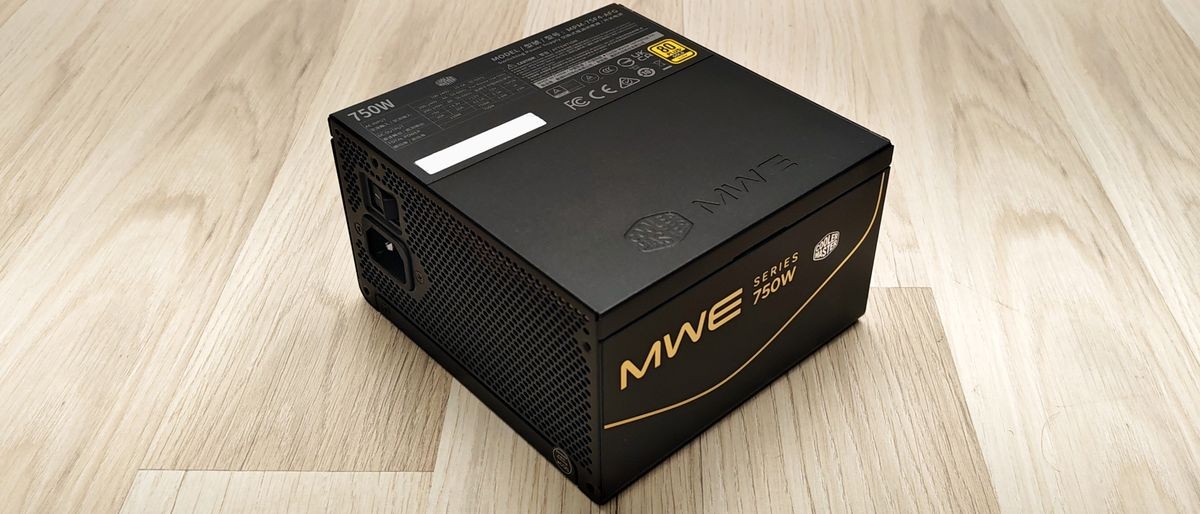
Built by Gospower on a platform currently dedicated to Cooler Master, the MWE Gold 750 V4 pairs verified 80 PLUS Gold efficiency with ATX 3.1 compliance, a native 12V-2x6 connector, GPU Shield current monitoring, and a conformal-coated PCB. Regulation and ripple are solid rather than class-leading, and there is no Cybenetics certification yet. With a 300W fanless window, a ten-year warranty, and a $119 MSRP, it is one of the most complete mainstream 750W options on shelves.
Pros
- +
Verified Gold efficiency
- +
Native 12V-2x6 connector
- +
GPU Shield monitoring
- +
Quiet at typical loads
- +
Conformal-coated PCB
- +
Compact 140 mm chassis
- +
Fully modular cabling
- +
10-year warranty
- +
Aggressive pricing
Cons
- -
No Cybenetics certification
- -
Medium quality parts
- -
Loud when hot
- -
No fan mode switch
Why you can trust Tom's Hardware Our expert reviewers spend hours testing and comparing products and services so you can choose the best for you. Find out more about how we test.
Cooler Master occupies an unusual position in the power supply market. Founded in Taiwan in 1992 and best known for the cases and coolers that made its name, the company has spent more than two decades selling PSUs without ever being a PSU manufacturer in the strict sense. Like most brands in this space, it commissions platforms from numerous OEMs, and the quality of a given Cooler Master unit has historically tracked the quality of whoever built it. The MWE line sits at the volume end of the company's catalog: sensible, mainstream units aimed at builders who want a dependable supply without paying for a flagship badge. We take a closer look at the Cooler Master MWE Gold 750 V4 to see if it belongs among our list of the best power supplies in the market today.
The MWE Gold V4 series is the latest iteration of that formula, and it arrives with more substance than the mid-range positioning suggests. The platform was developed by Gospower in collaboration with Cooler Master, and it is currently dedicated to them - you will not find this design wearing another brand's sticker for the time being. The series is fully compliant with ATX 3.1 and PCIe 5.1, carries a native 12V-2x6 connector, and introduces Cooler Master's patent-pending GPU Shield current-monitoring feature alongside a digital control scheme for the PFC and LLC stages. The 750W model reviewed here targets the heart of the mainstream gaming market, backed by a ten-year warranty and a $119 MSRP.
Specifications and Design
Swipe to scroll horizontally
RAIL | +3.3V | +5V | +12V | +5Vsb | -12V |
MAX OUTPUT | 20A | 20A | 62.5A | 3A | 0.3A |
| Row 2 - Cell 0 | 120W | 120W | 750W | 15W | 3.6W |
TOTAL | 750W | Row 3 - Cell 2 | Row 3 - Cell 3 | Row 3 - Cell 4 | Row 3 - Cell 5 |
AC INPUT | 100 - 240 VAC, 50 - 60 Hz | Row 4 - Cell 2 | Row 4 - Cell 3 | Row 4 - Cell 4 | Row 4 - Cell 5 |
MSRP | $119 | Row 5 - Cell 2 | Row 5 - Cell 3 | Row 5 - Cell 4 | Row 5 - Cell 5 |
In the Box
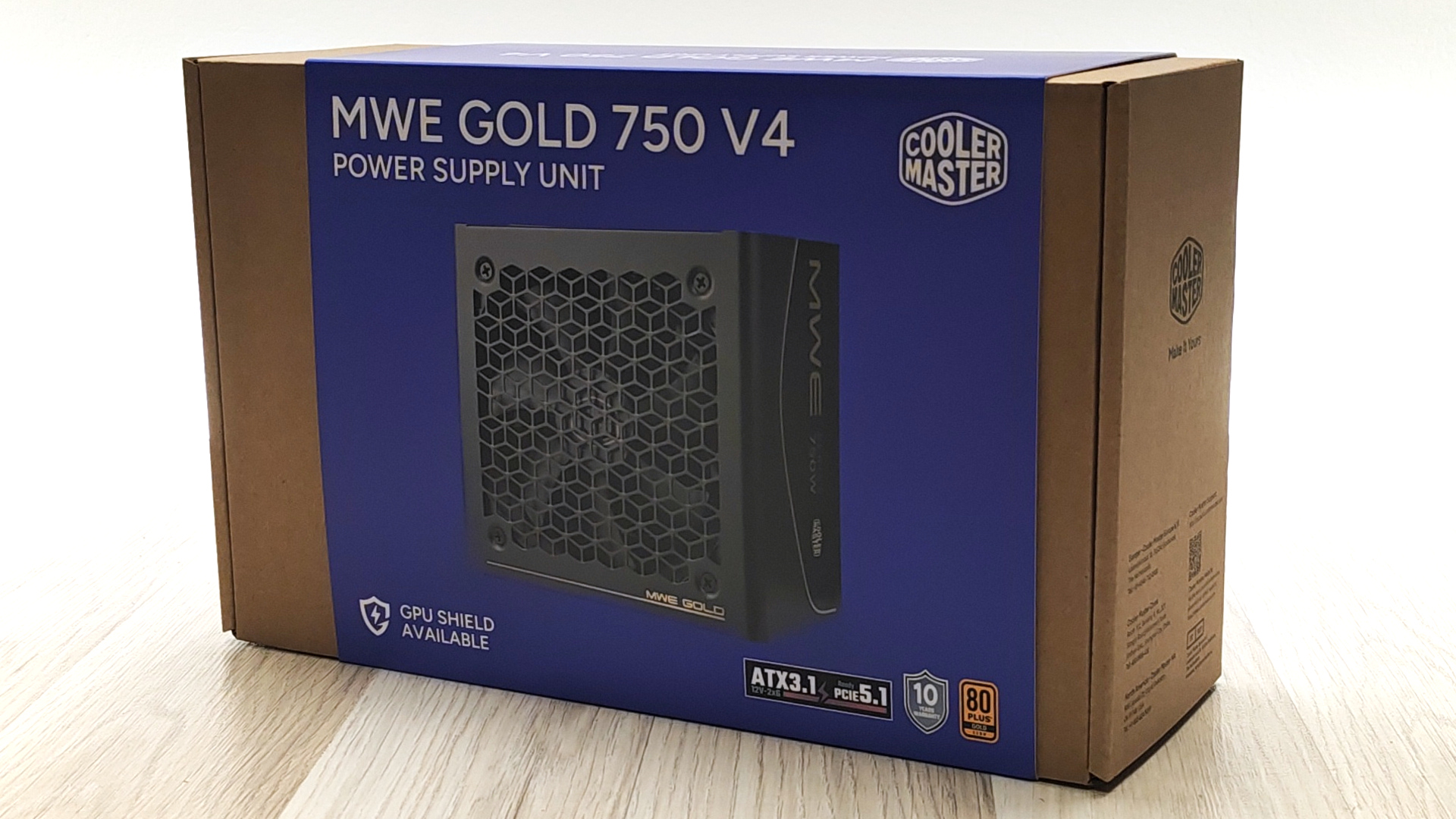
The MWE Gold 750 V4 ships in a cardboard box with a purple-blue sleeve wrapped around plain kraft board, a render of the unit on the front, and the important badges - ATX 3.1 with 12V-2x6, PCIe 5.1 readiness, the 80 PLUS Gold logo, and the ten-year warranty shield - laid out along the bottom edge. It is a clean, honest presentation for the class, with the GPU Shield feature called out in its own corner.
Latest Videos From

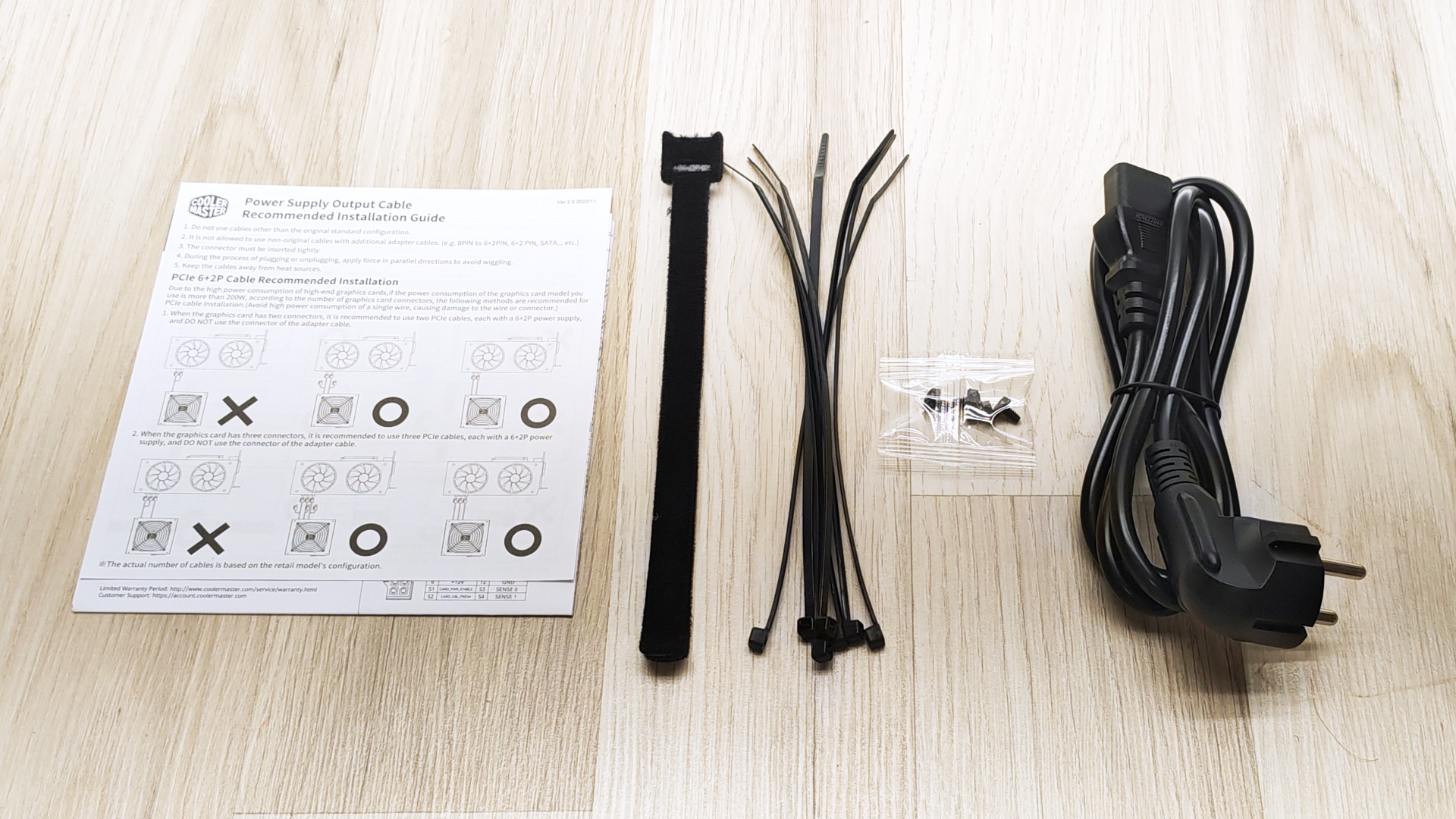
Inside, the supply is sandwiched between protective packaging. The bundle is basic: the AC power cord, a set of mounting screws, a handful of zip ties, and a few reusable Velcro straps, plus a leaflet explaining Cooler Master's recommended PCIe cable installation practices. There are no cable combs, no tester, and no storage pouch, which is a defensible economy at this price point, even if competitors occasionally throw in more.
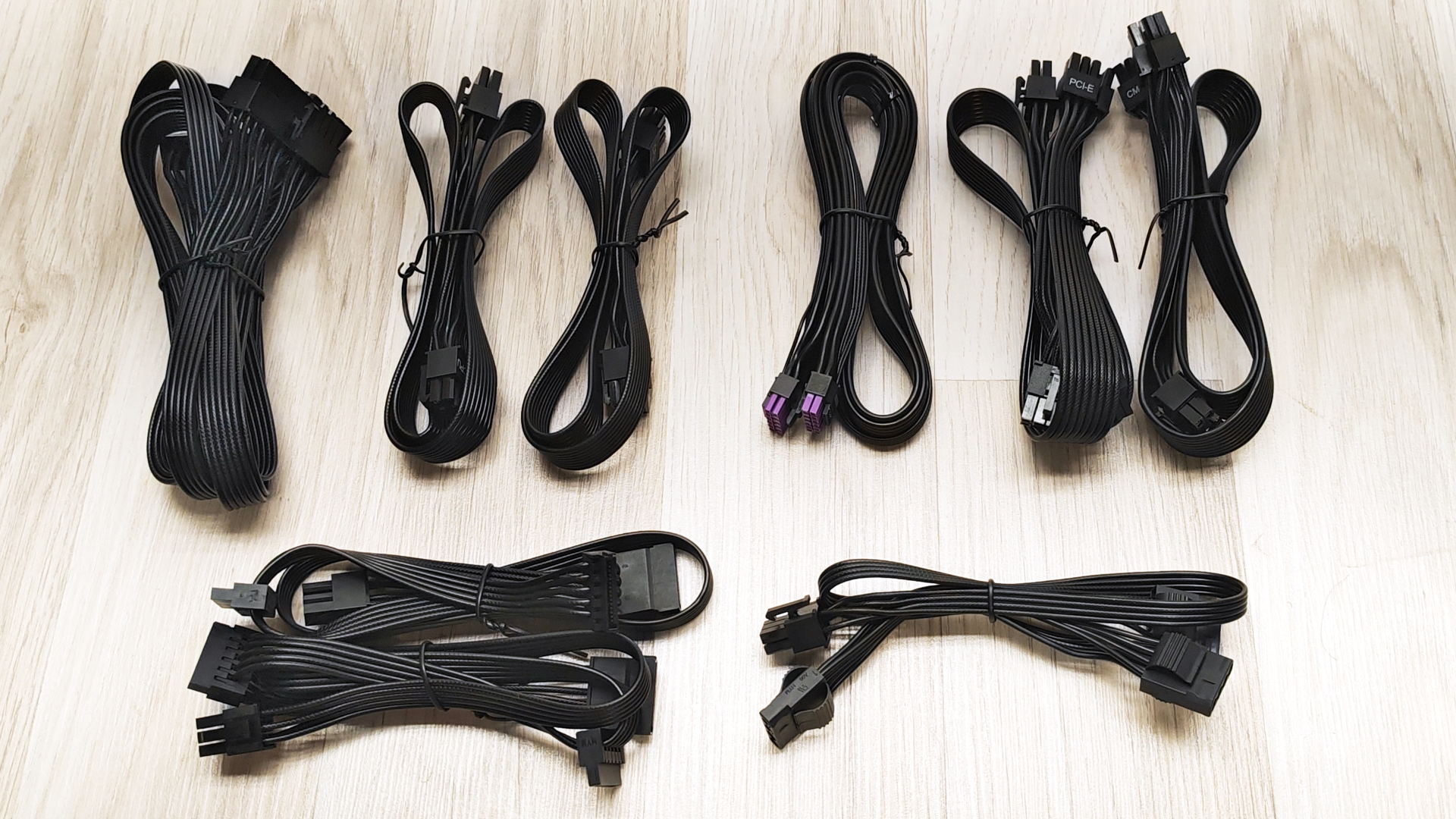
The modular cables themselves are all-black, flat ribbon types. The 12V-2x6 cable uses the two-color connector design that the ATX 3.1 spec encourages, making an incompletely seated plug easy to spot, but we would argue that dark purple was not the best choice for this application. Wire gauges are appropriate throughout, and the flat design makes routing behind a motherboard tray painless.
Swipe to scroll horizontally
Connector type | Hardwired | Modular |
ATX 24 Pin | - | 1 |
EPS 4+4 Pin | - | 1 |
EPS 8 Pin | - | 1 |
PCI-E 5.0 | - | 1 |
PCI-E 8 Pin | - | 4 |
SATA | - | 6 |
Molex | - | 3 |
Floppy | - | - |
External Appearance
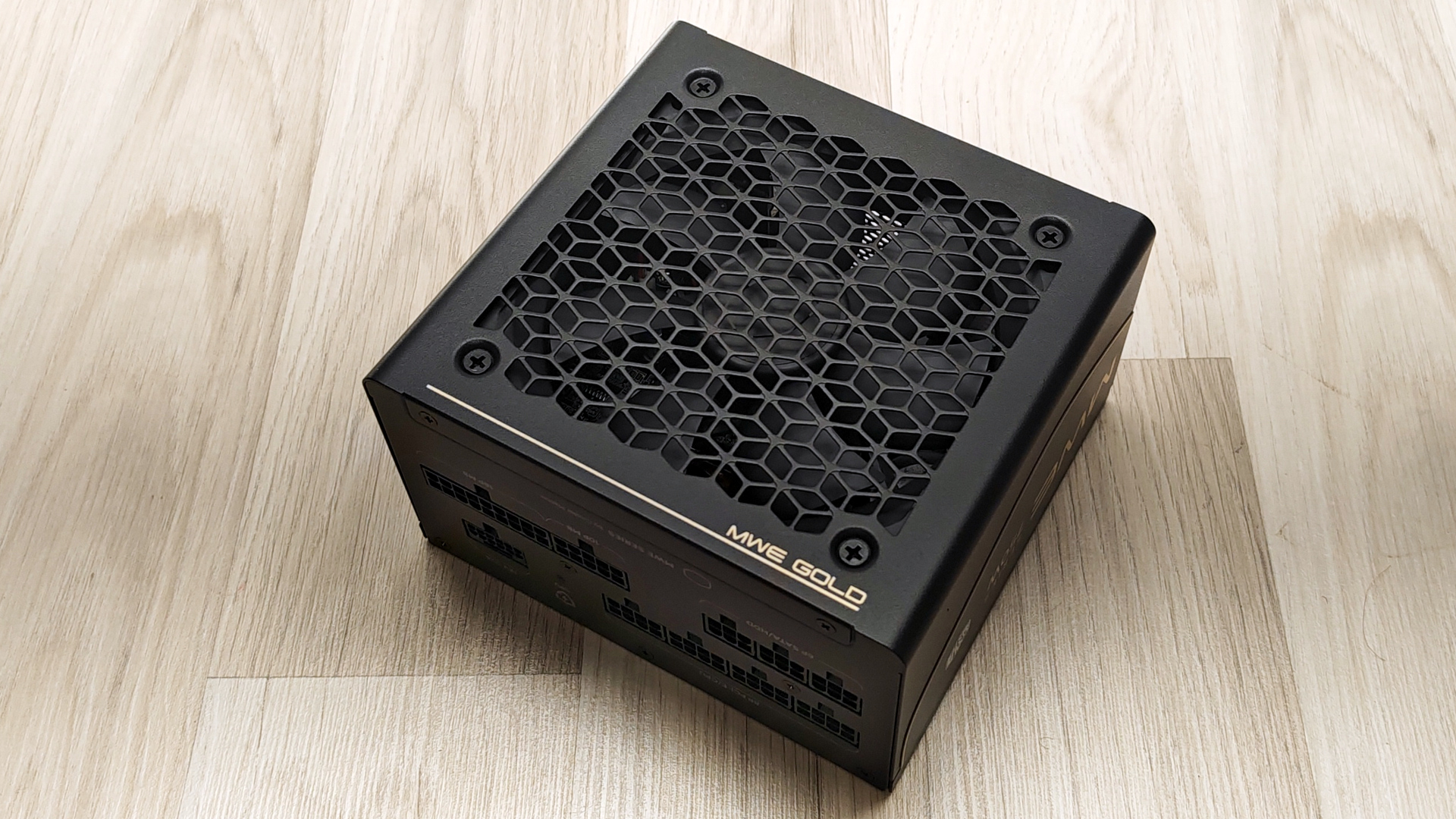
At 140 x 150 x 86 mm, the MWE Gold 750 V4 is a compact ATX unit - 140 mm of depth is as short as modern PSUs practically get, and it will drop into any case that accepts an ATX supply at all, with room to spare for cable slack. The rhombille tiling fan grille stands out, framed by four exposed screws, with a thin gold pinstripe and gold MWE branding on the side panels, providing the only decoration on an otherwise all-black chassis. The finish deserves a mildly critical word. It is smooth and appealing - not a bad paint job by any means - it simply is not as special as the rest of the unit's feature sheet might lead you to expect.
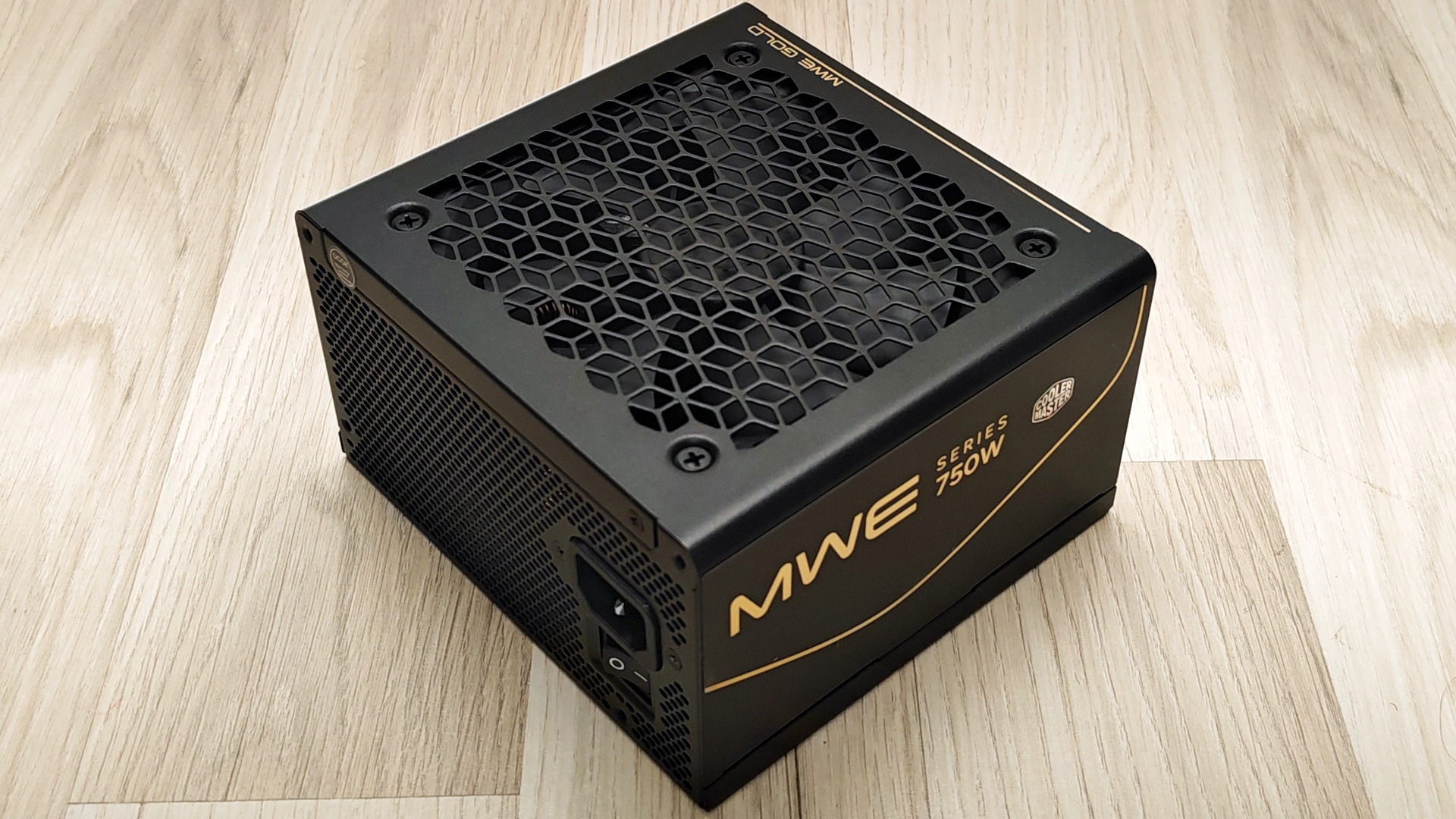
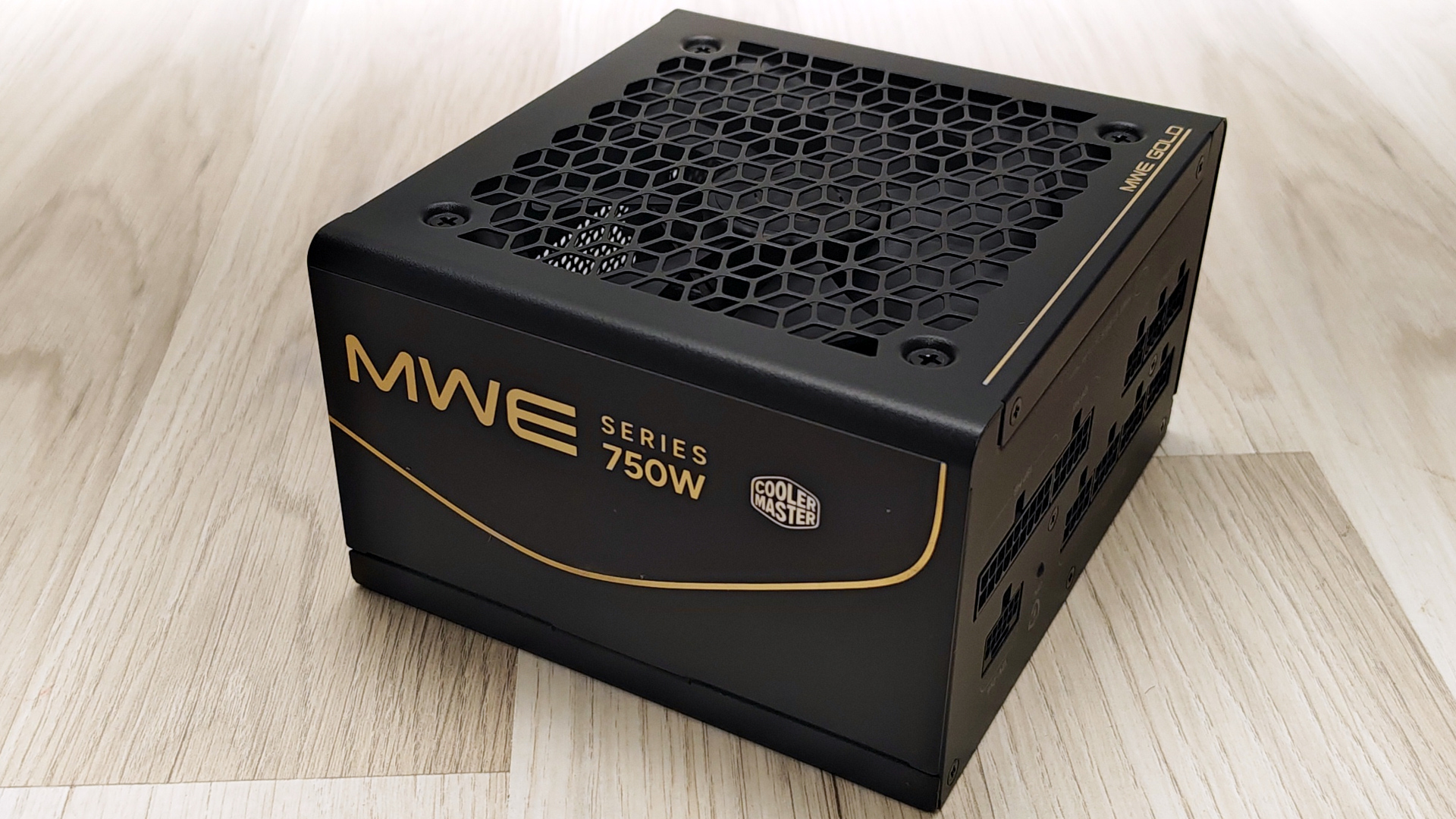
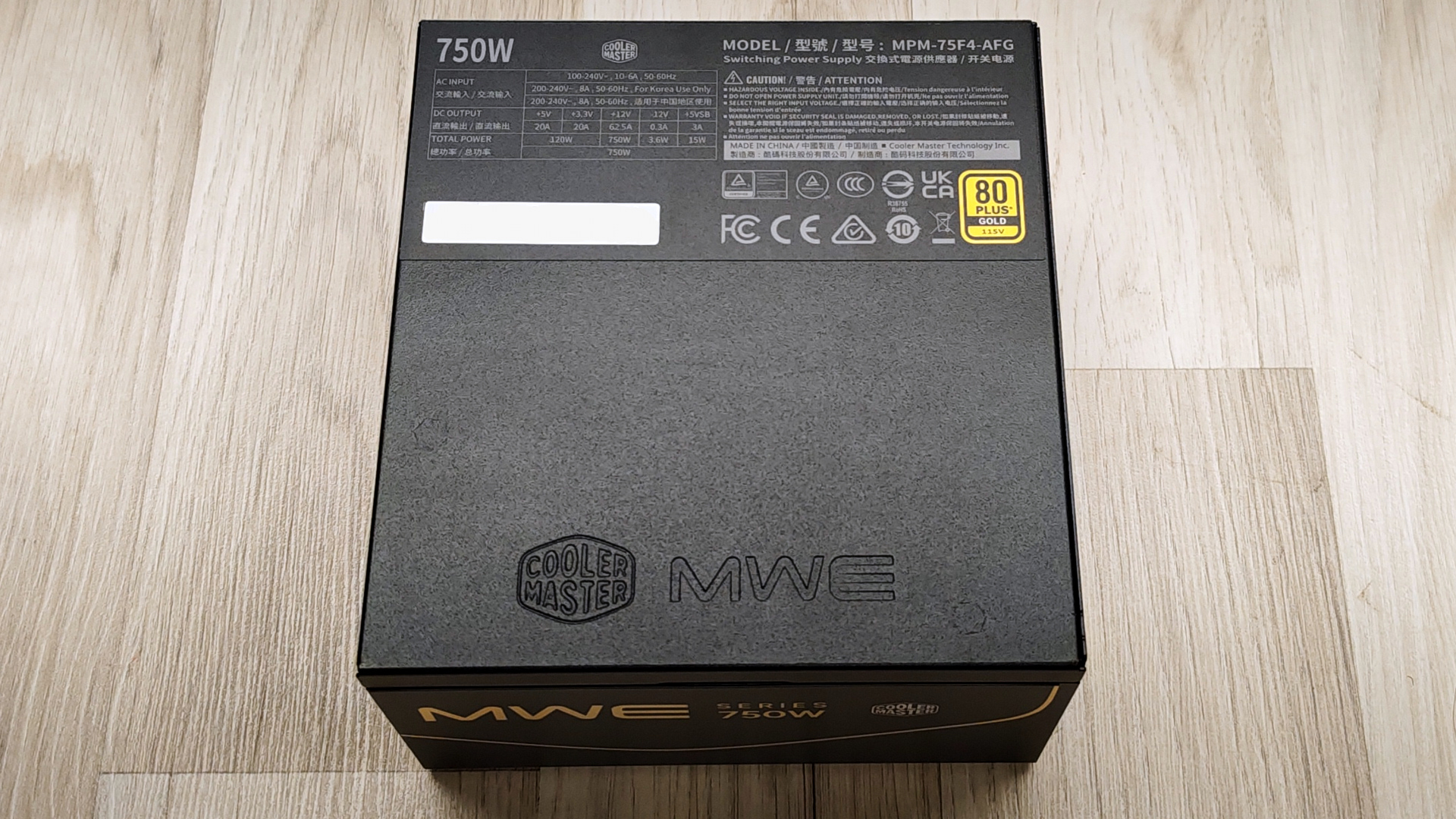
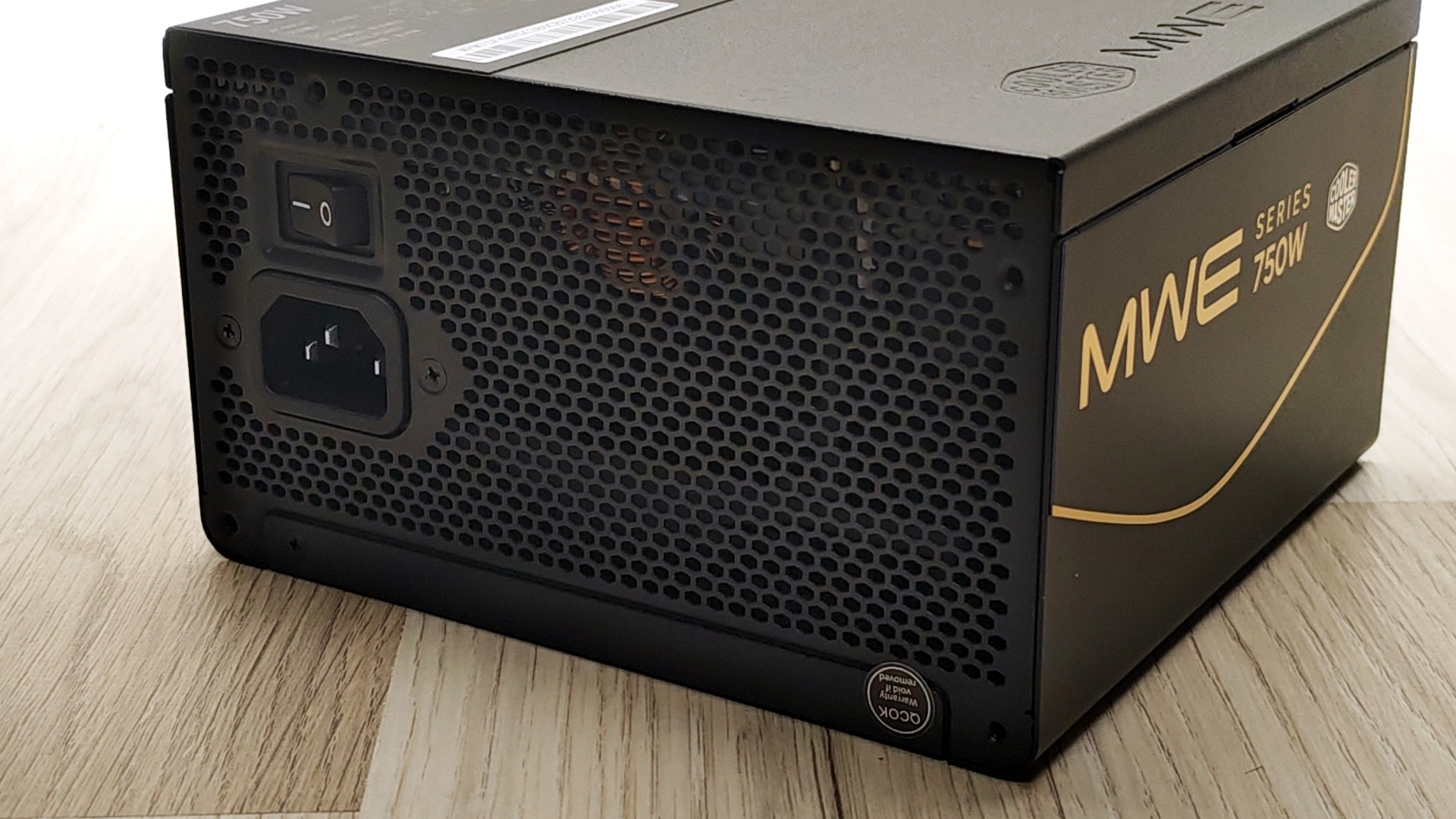
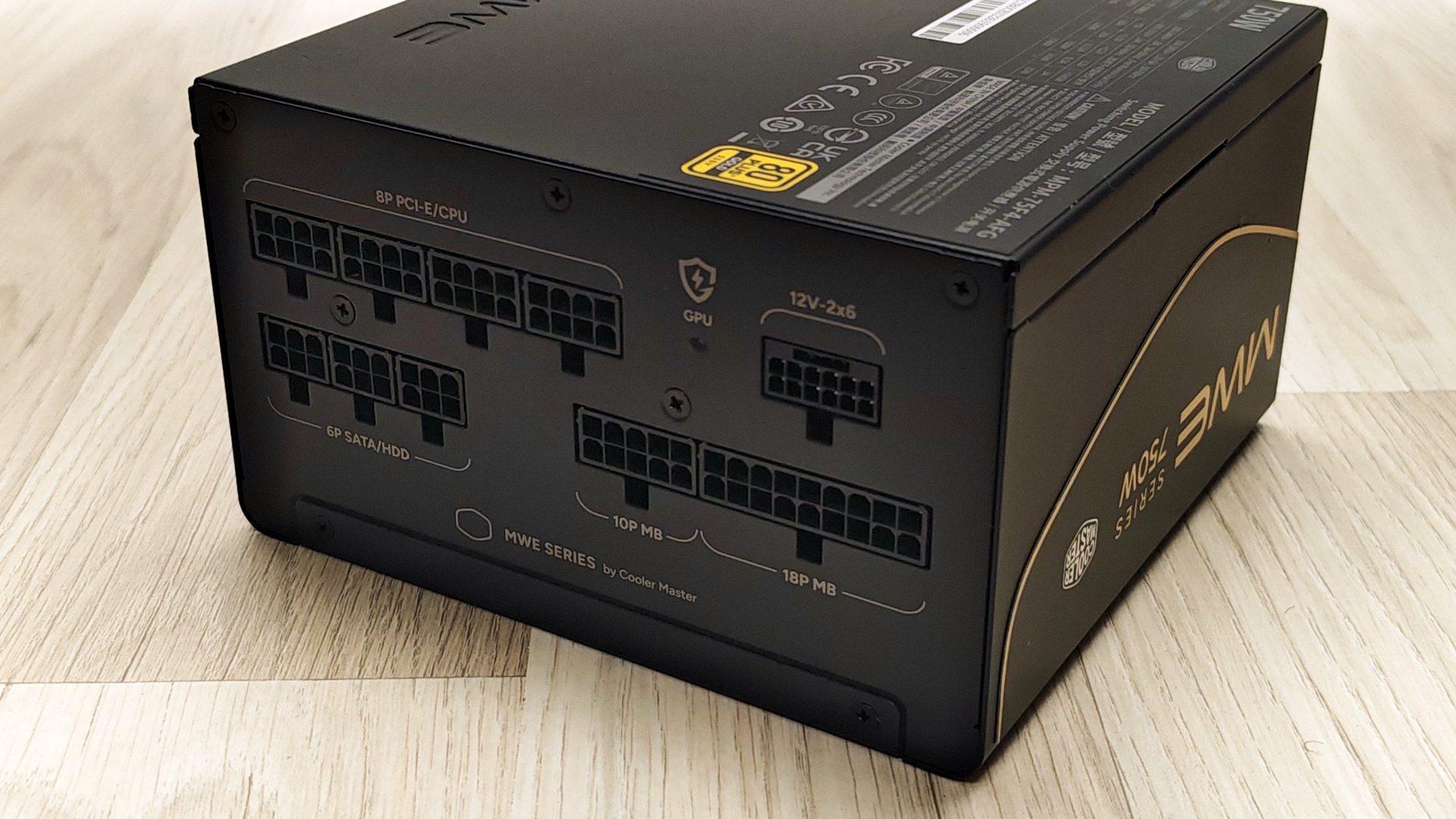
The rear face carries the AC receptacle and a receded main rocker switch surrounded by a generous perforated exhaust area. There is no switch for the semi-passive fan mode - the Zero RPM behavior is automatic and not user-selectable, which some builders will not appreciate. The front face hosts the fully modular connector bay, clearly silkscreened, with a shared 8-pin socket group for the PCIe and CPU cables, the native 12V-2x6 socket, and a small indicator LED between them. The specifications sticker lies on the top face.
Stay On the Cutting Edge: Get the Tom's Hardware Newsletter
Get Tom's Hardware's best news and in-depth reviews, straight to your inbox.
That small LED is the visible face of GPU Shield, Cooler Master's patent-pending current-management feature, and the marketing centerpiece of the V4 series. The circuit monitors the current flowing through the individual pins of the 12V-2x6 connector in real time, and if it detects an abnormal draw on any of them - the classic signature of a poorly seated or damaged connector - it intervenes and flags the fault through the LED. Given how much grief melting connectors have caused over the past few years, a per-pin watchdog on a $119 unit is a genuinely useful inclusion rather than a gimmick, even if we hope most owners never see the LED do anything at all.
Internal Design
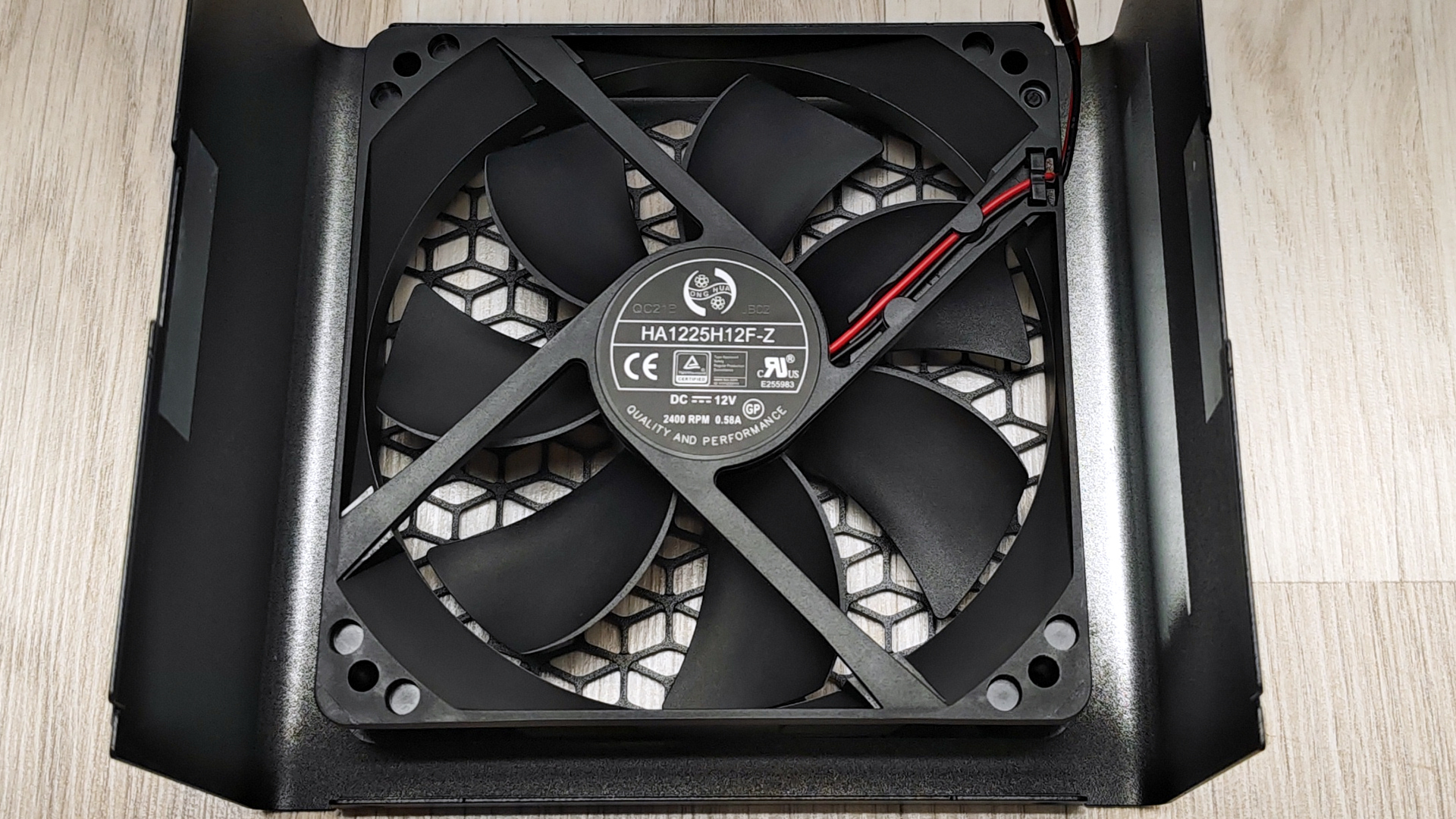
Cooling is handled by a 120 mm Hong Hua HA1225H12F-Z fan, a hydrodynamic bearing (HDB) model rated for 2400 RPM at 0.58A. Hong Hua is a familiar name inside value-oriented and mid-range PSUs, and while it lacks the cachet of a premium Japanese fan, the HDB variant is a reasonable, durable choice at this tier, and its ceiling speed gives the platform plenty of thermal headroom to call on.
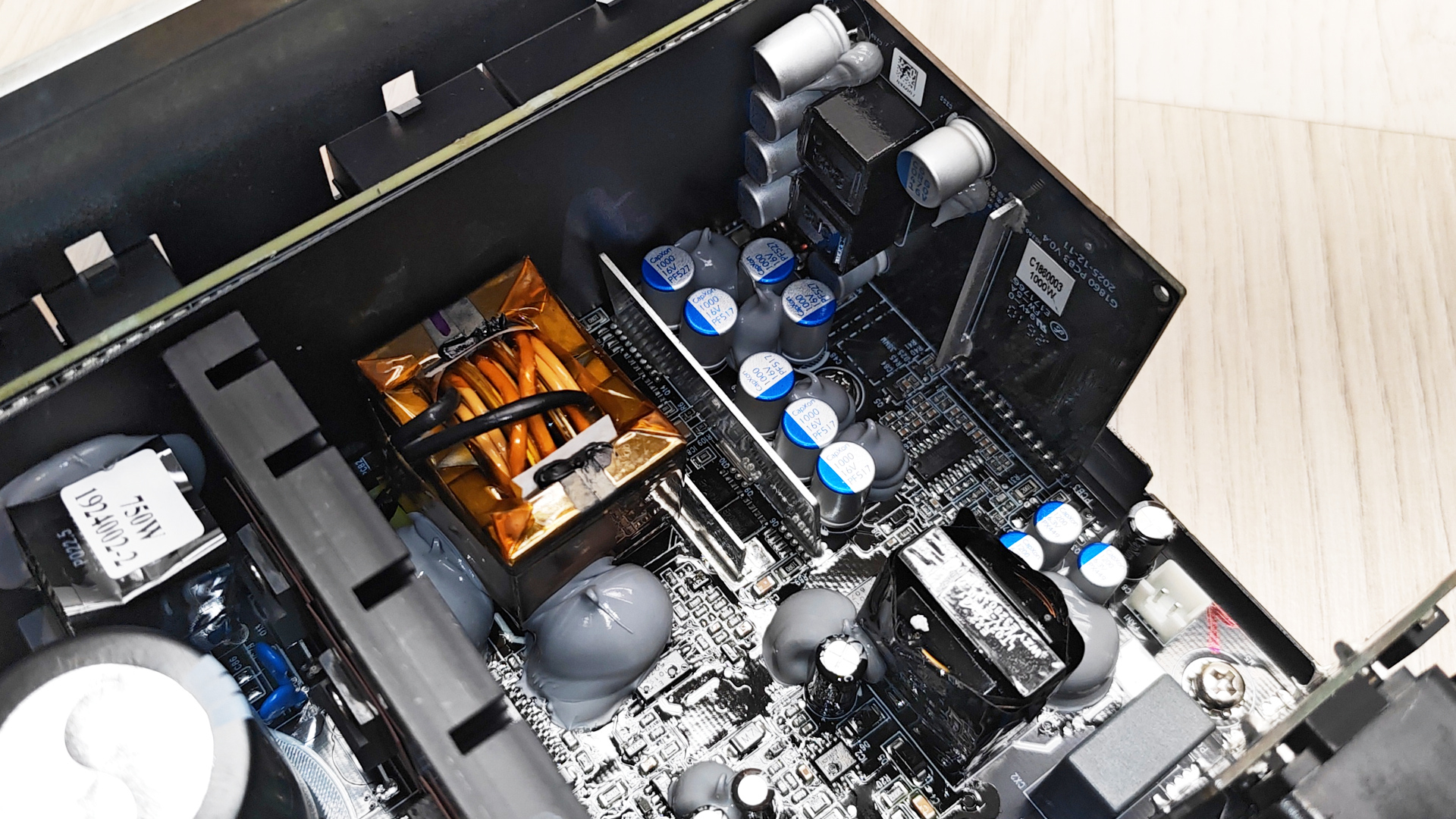
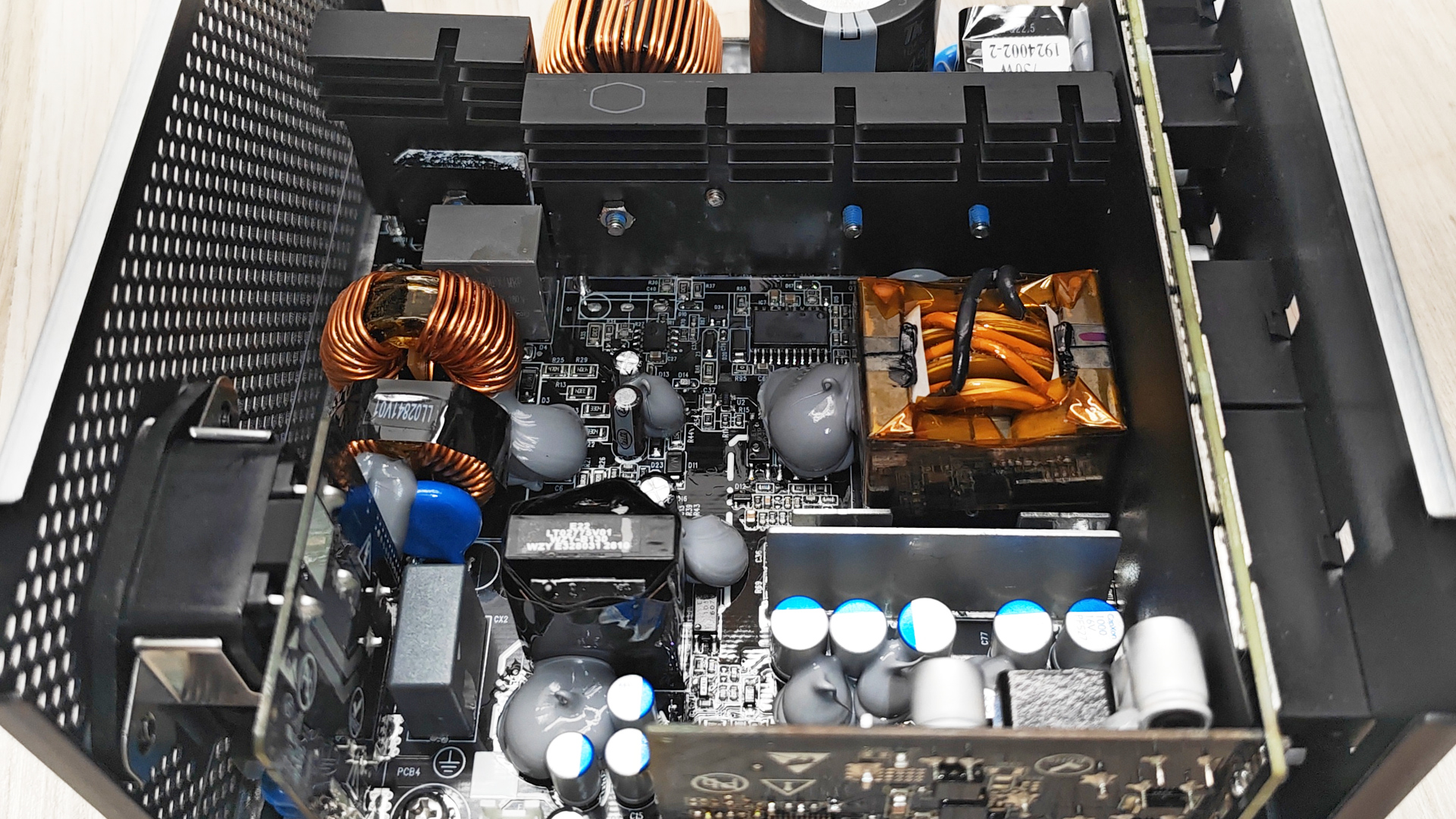
As noted in the introduction, the platform is a Gospower design produced in collaboration with Cooler Master and currently exclusive to them, so there is a clear answer to the perennial 'who really makes it' question. The layout is clean and modern, with sizable heatsinks for the power output, vertical daughterboards for the minor rails, and generous helpings of grey silicone glue securing the components.
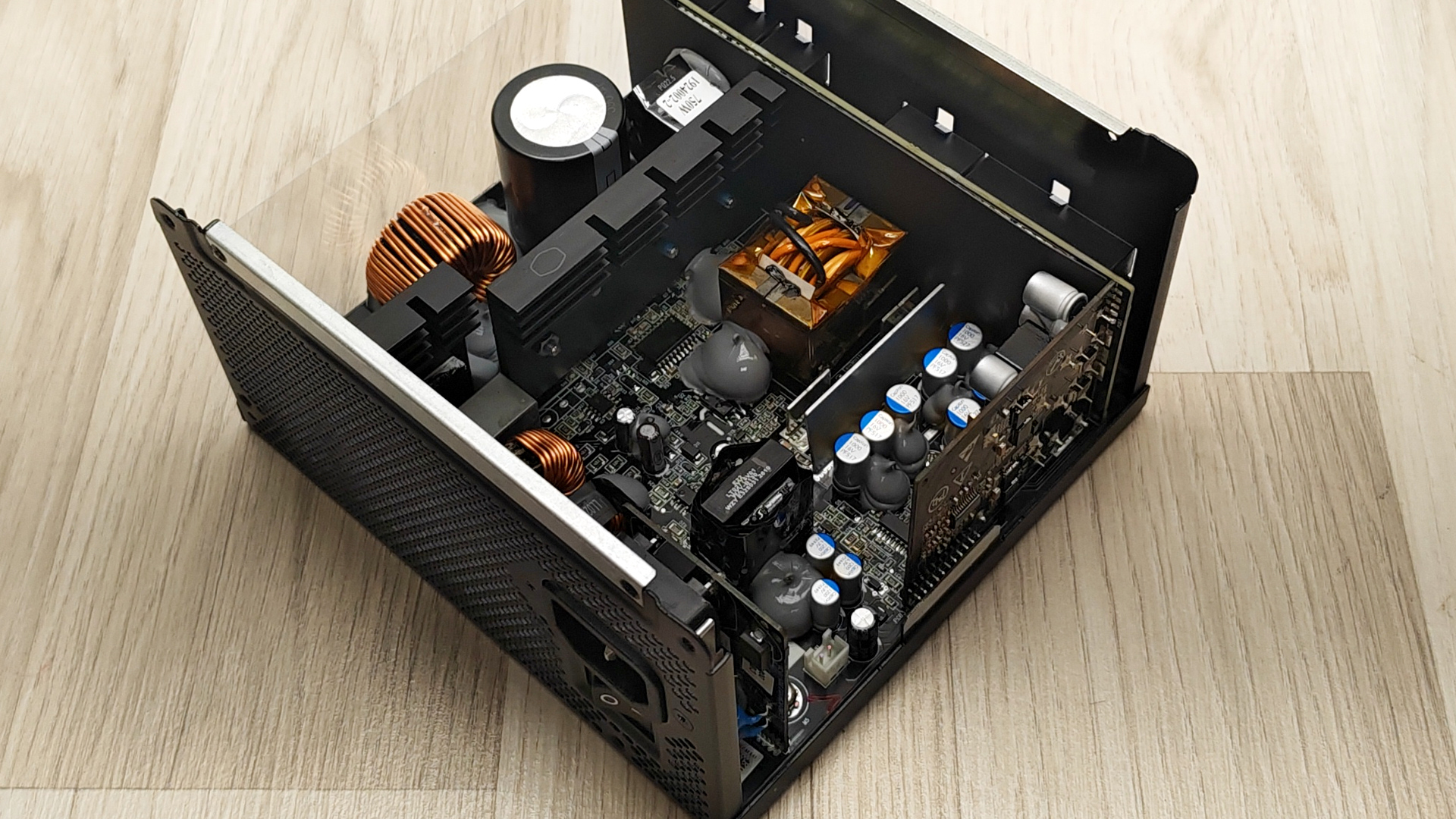
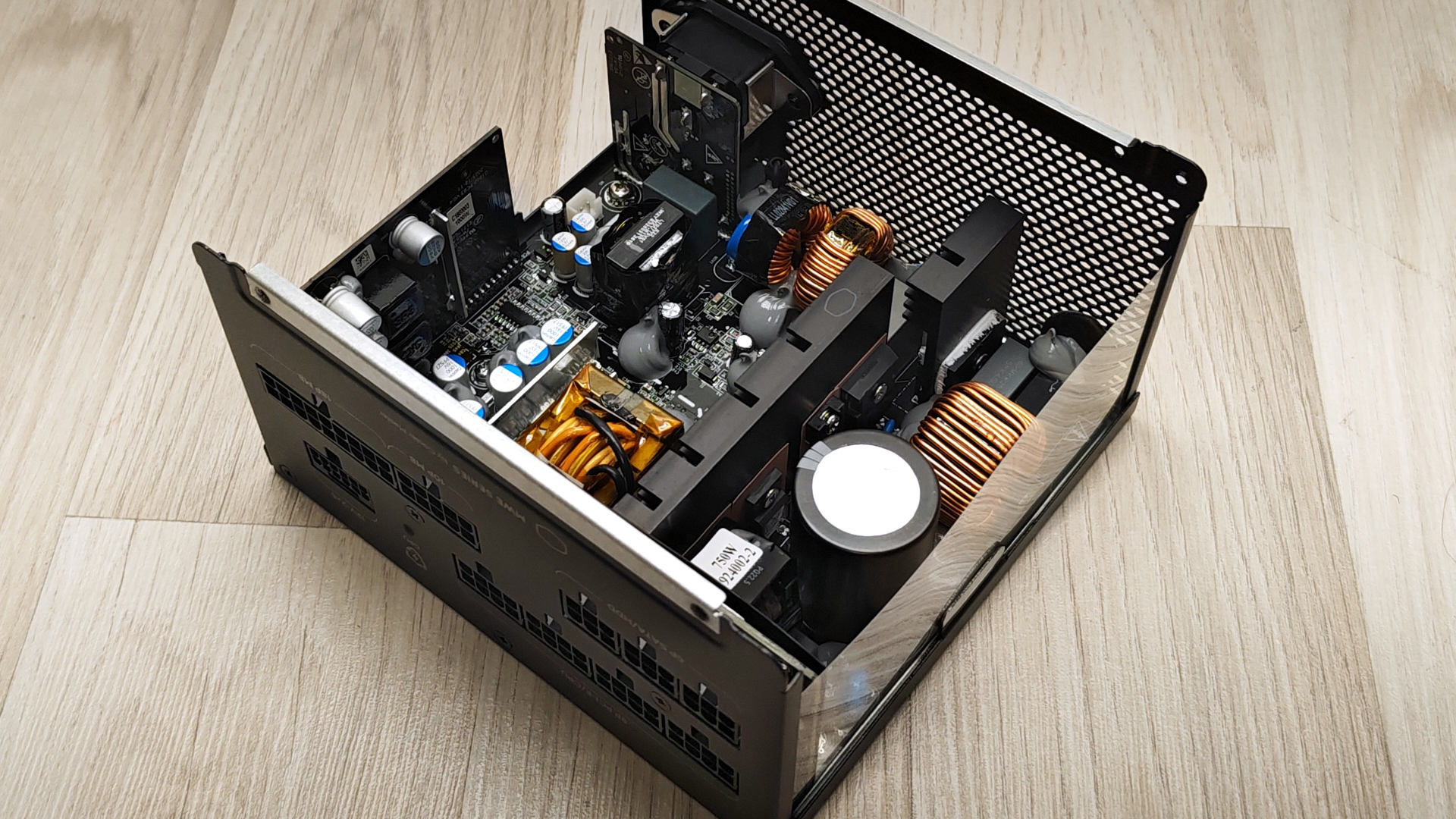
The transient filtering stage begins on a small PCB behind the AC receptacle and continues on the main board, with two Y capacitors, two X capacitors, two filtering inductors, and a MOV - a basic but complete filter without omissions. A relay handles inrush current bypass duty alongside the usual NTC thermistor. Two bridge rectifiers are mounted on their own heatsink, feeding the APFC stage, whose boost components share the long heatsink with the primary inversion stage MOSFETs. A single 590 μF capacitor from TK (Toshin Kogyo), a renowned Japanese manufacturer.
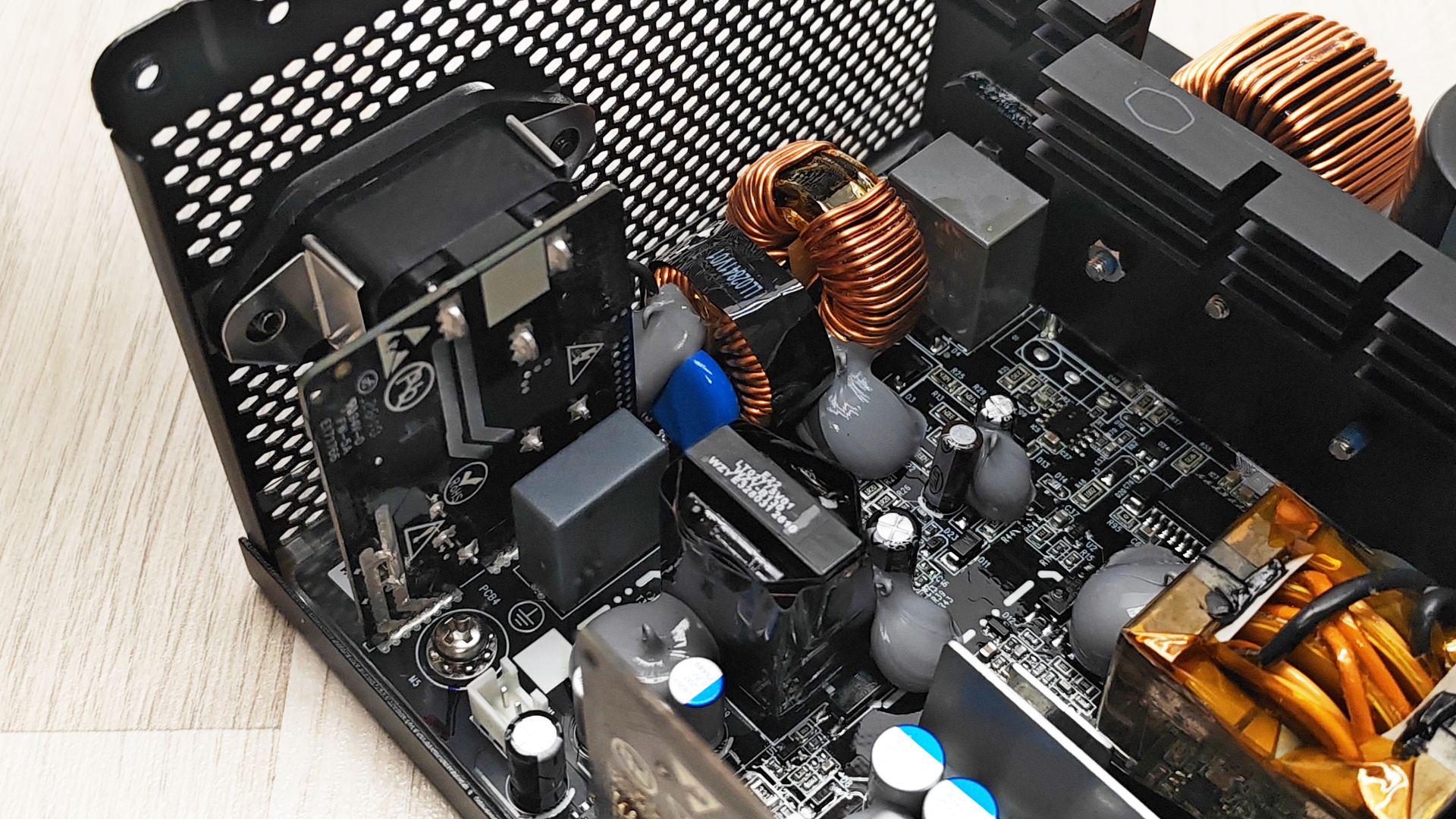
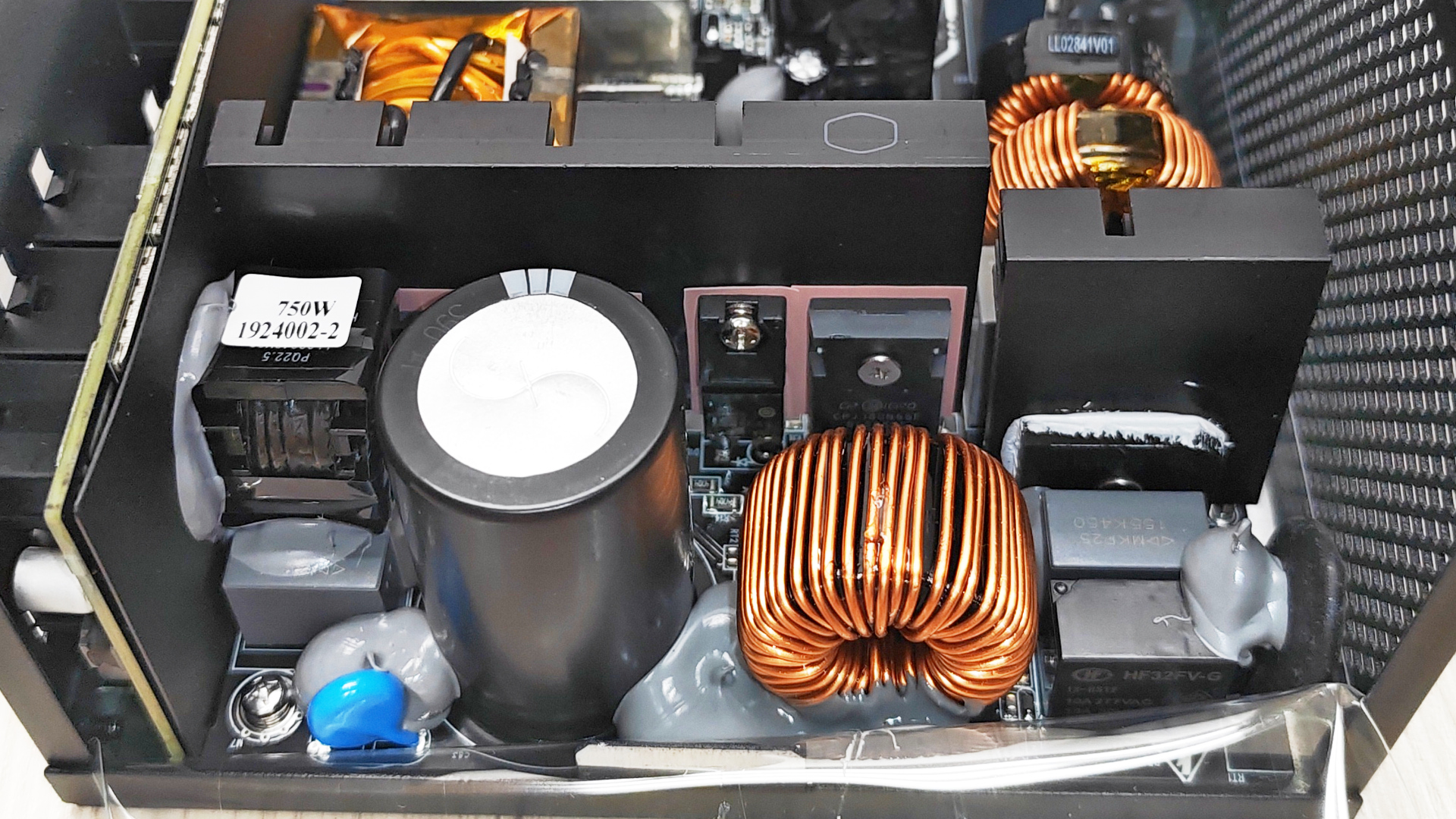
The primary inversion stage uses a half-bridge LLC resonant topology, the mature and cost-effective arrangement that dominates this class, with Cooler Master claiming the digital tuning of the PFC and LLC stages is worth roughly three points of efficiency over the previous MWE generation - a dubious claim as the unit still lands on Gold-level efficiency class. On the secondary side, the 12V rail is generated by four MOSFETs arranged in synchronous rectification on the main PCB, while the 3.3V and 5V rails are derived from DC-to-DC converters on a vertical daughterboard. Secondary filtering leans heavily on CapXon capacitors.
Cold Test Results (25°C Ambient)
Cold Test Results (25°C Ambient)
For the testing of PSUs, we are using high precision electronic loads with a maximum power draw of 2700 Watts, a Rigol DS5042M 40 MHz oscilloscope, an Extech 380803 power analyzer, two high precision UNI-T UT-325 digital thermometers, an Extech HD600 SPL meter, a self-designed hotbox and various other bits and parts.
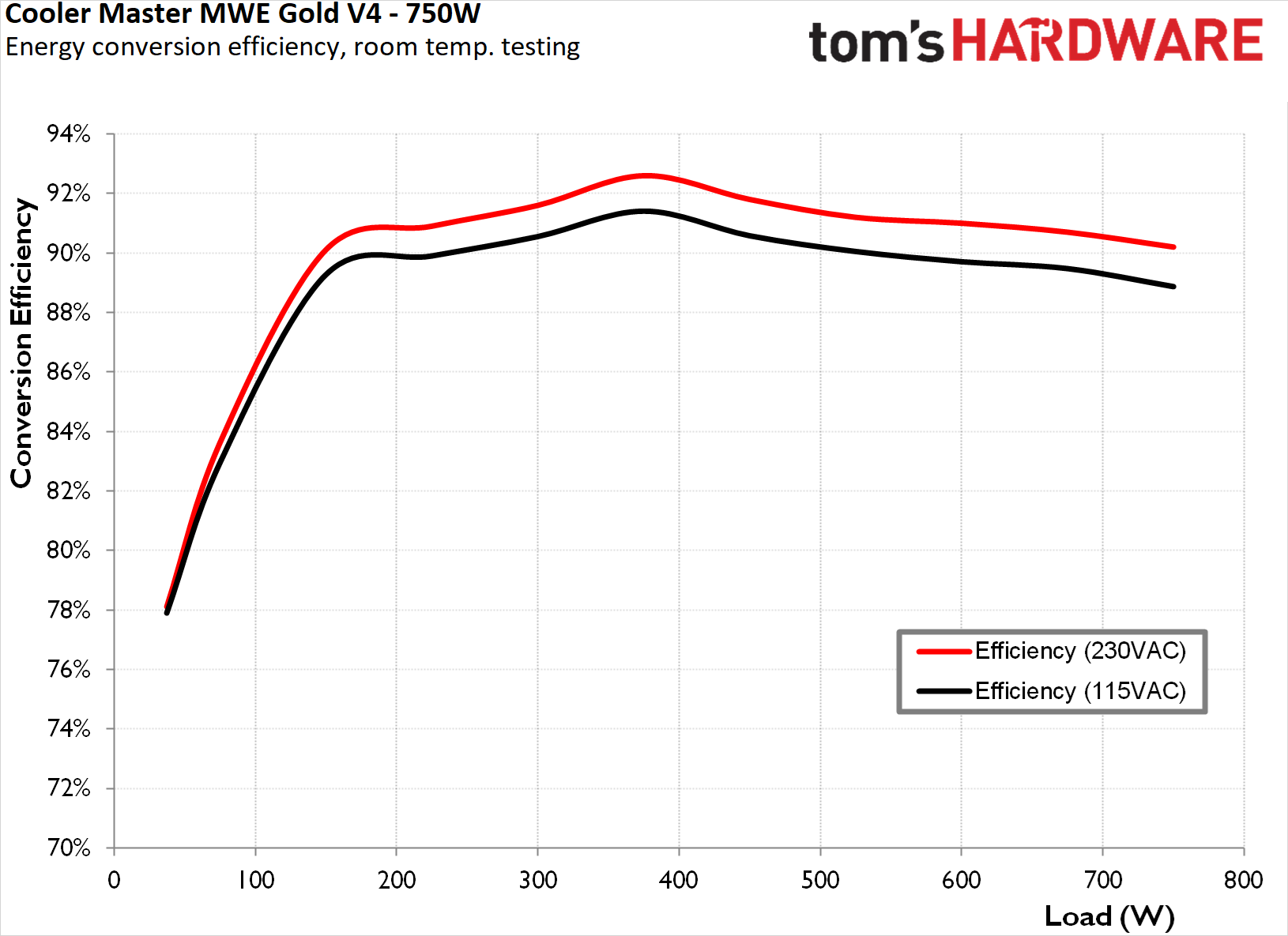
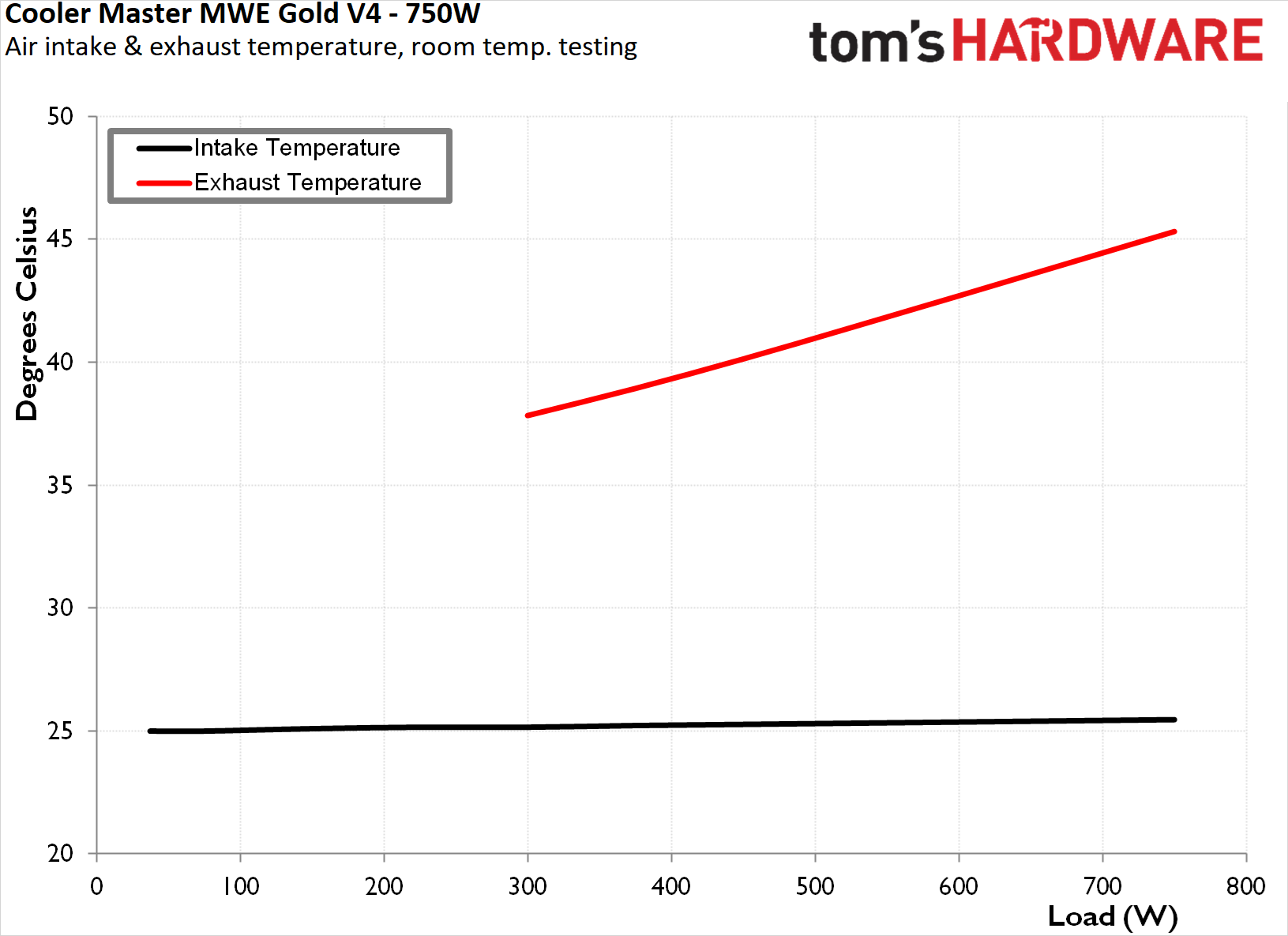
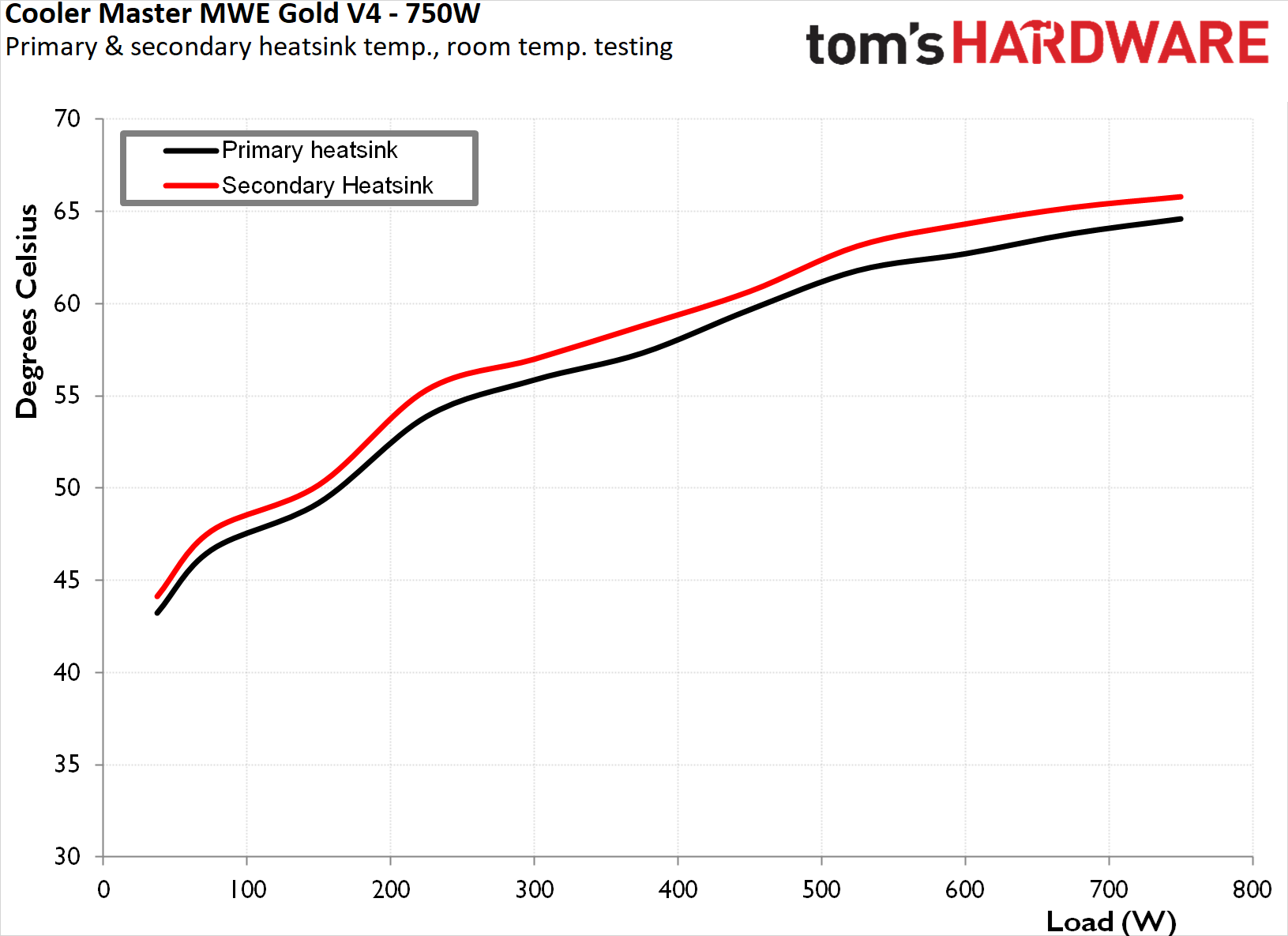
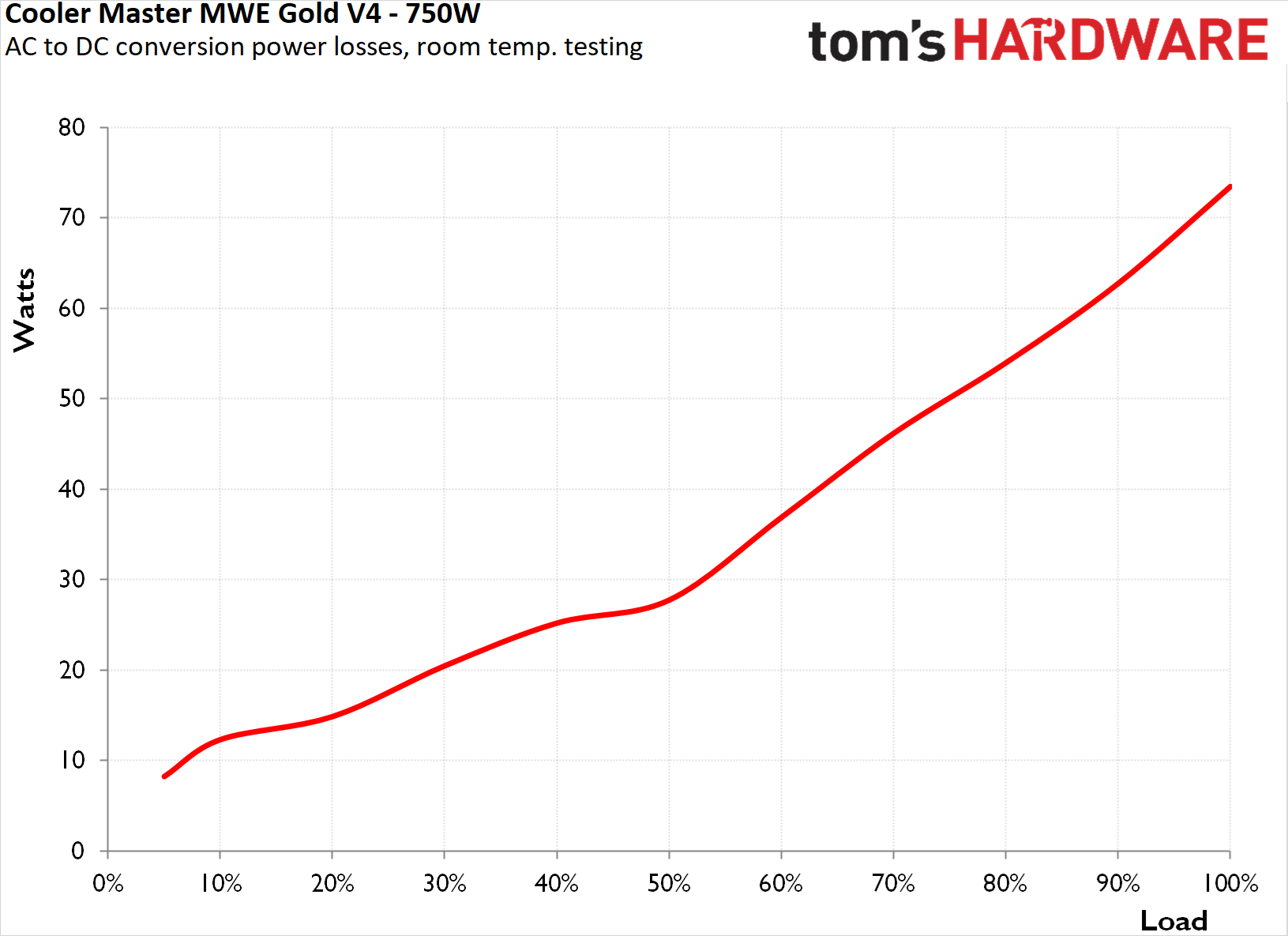
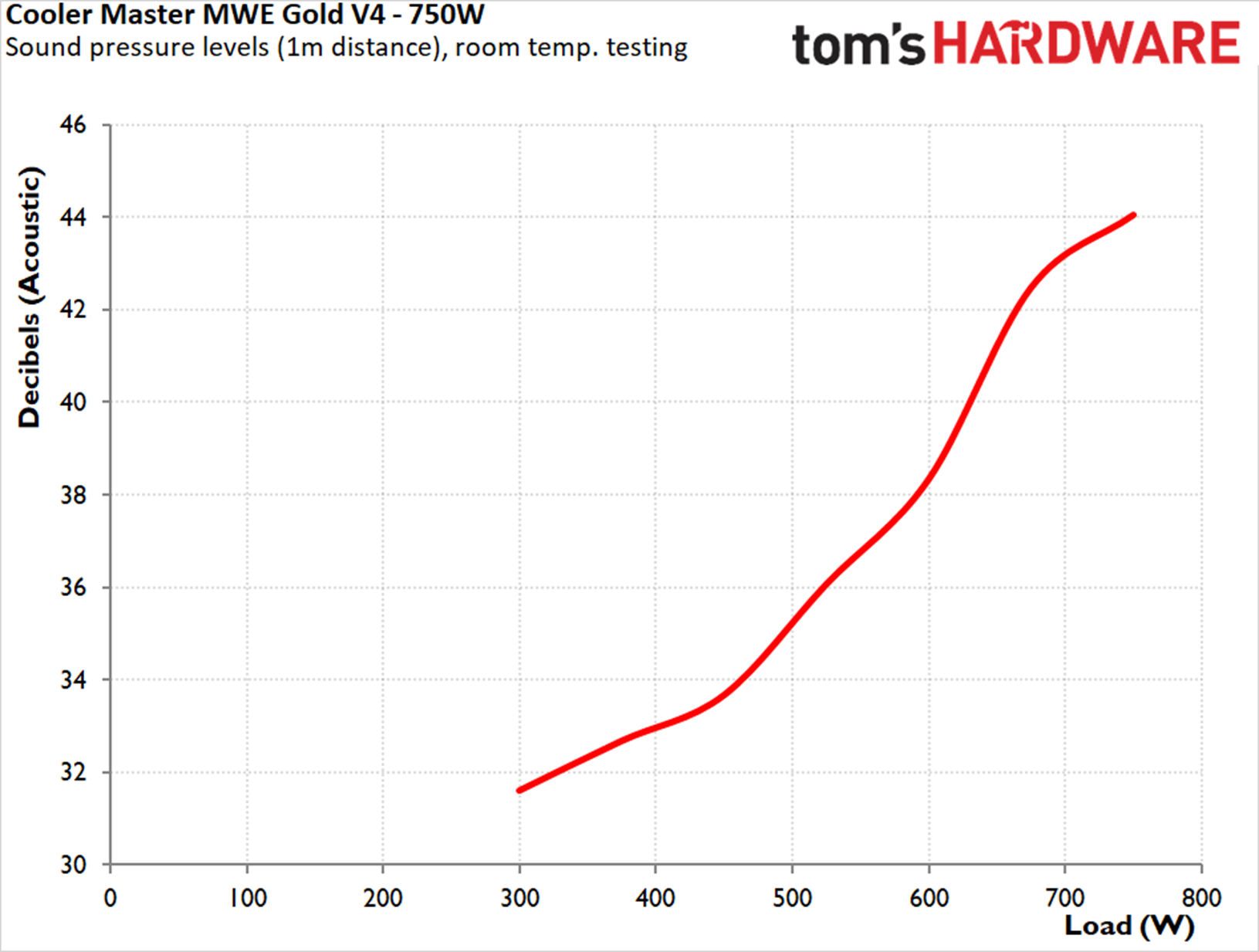
At 25°C ambient, the MWE Gold 750 V4 delivers exactly the efficiency profile its badge promises. It averaged 90.4% at 230 VAC and 89.3% at 115 VAC across the nominal load range, peaking at 92.6% (230 VAC) near 50% load and holding 90.2% even at a sustained 750W. The curve is not exactly flat, but there is no dramatic full-load sag. The figures sit comfortably within 80Plus Gold territory. What the unit does not yet have is a Cybenetics certification: at the time of writing, there is no entry for the MPM-75F4-AFG in the Cybenetics database.
Acoustically, the cold run is very good news. The Zero RPM mode keeps the fan completely stopped up to almost 40% load (roughly up to 300W), which covers desktop work and light gaming outright. The fan spins up at about 40% load, registering a whisper-quiet 31.6 dB(A), and ramps gently from there, crossing 39 dB(A) only past 80% load and topping out at 44.2 dB(A) at a sustained 750W. Thermal performance gives no cause for concern, with the primary and secondary heatsinks reaching just 64°C and 66°C, respectively, at full load.
Hot Test Results (~45°C Ambient)
Hot Test Results (~45°C Ambient)
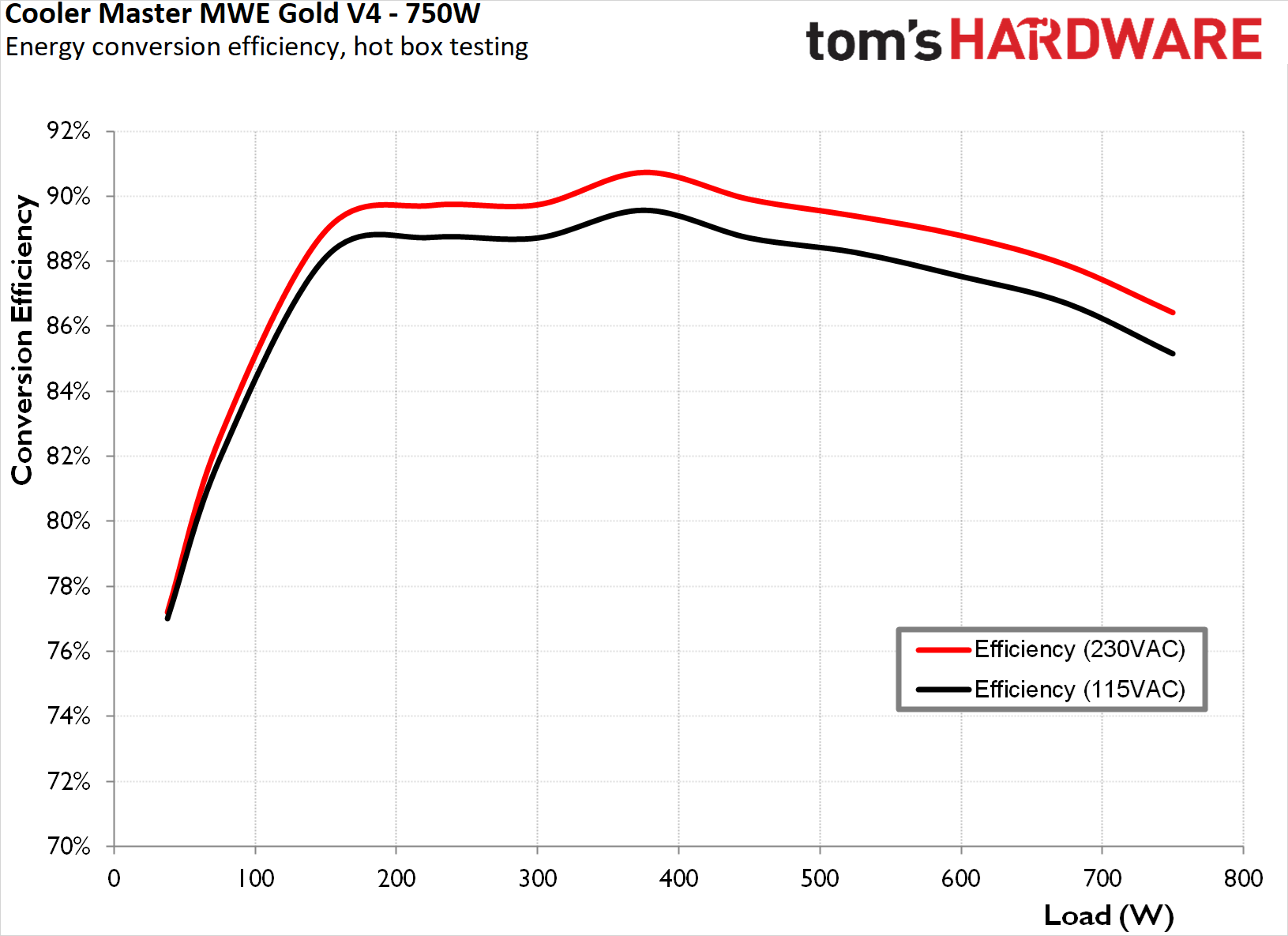
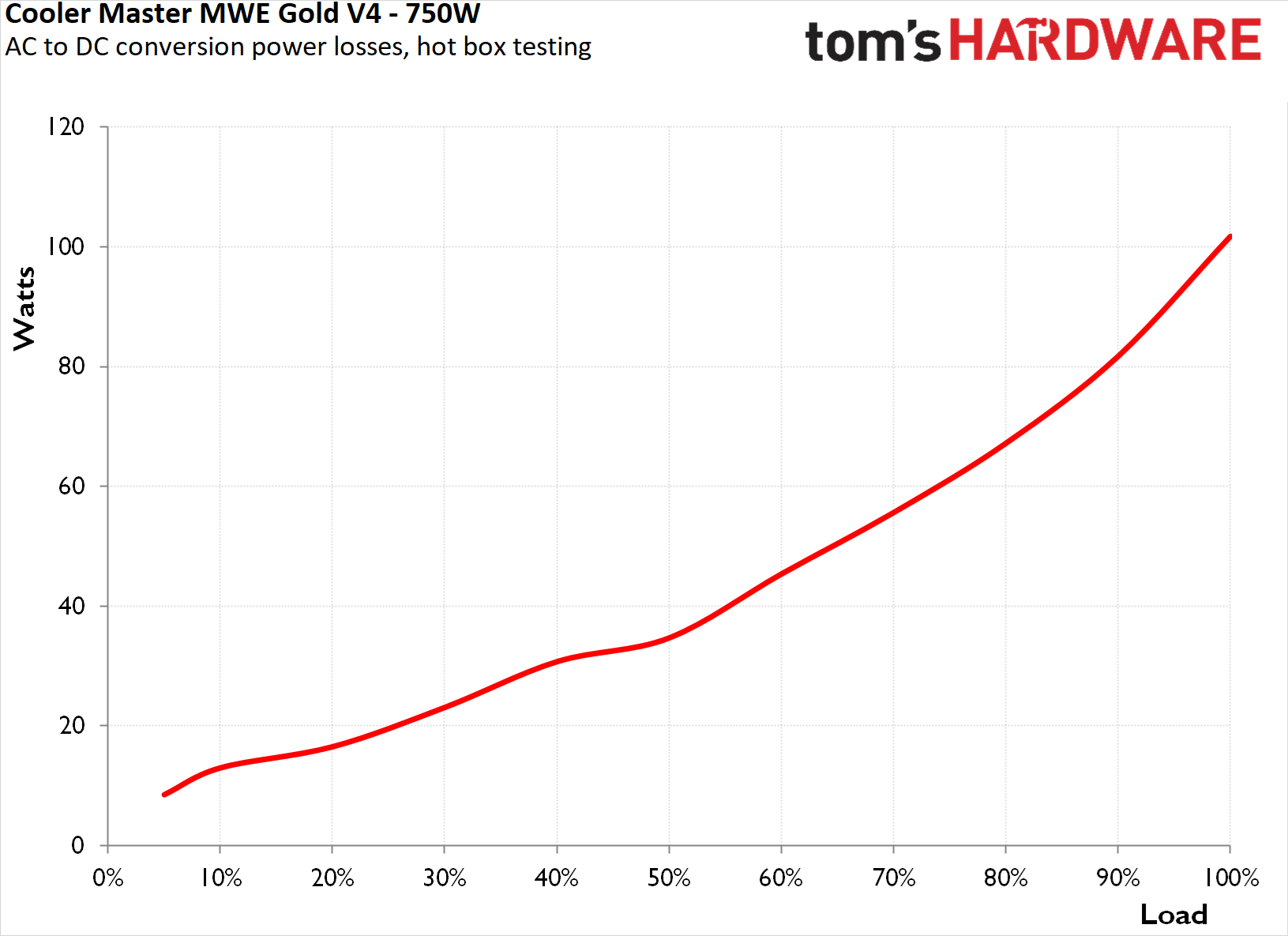
Inside the hotbox at roughly 45°C ambient - slightly above the unit's own 40°C rating - efficiency drops by about two percentage points, averaging 88.4% at 230 VAC and 87.4% at 115 VAC, with full-load figures of 86.5% and 85.2% respectively. That degradation is significant but entirely ordinary for the temperature delta, especially considering a unit that is now operating beyond its rated envelope.
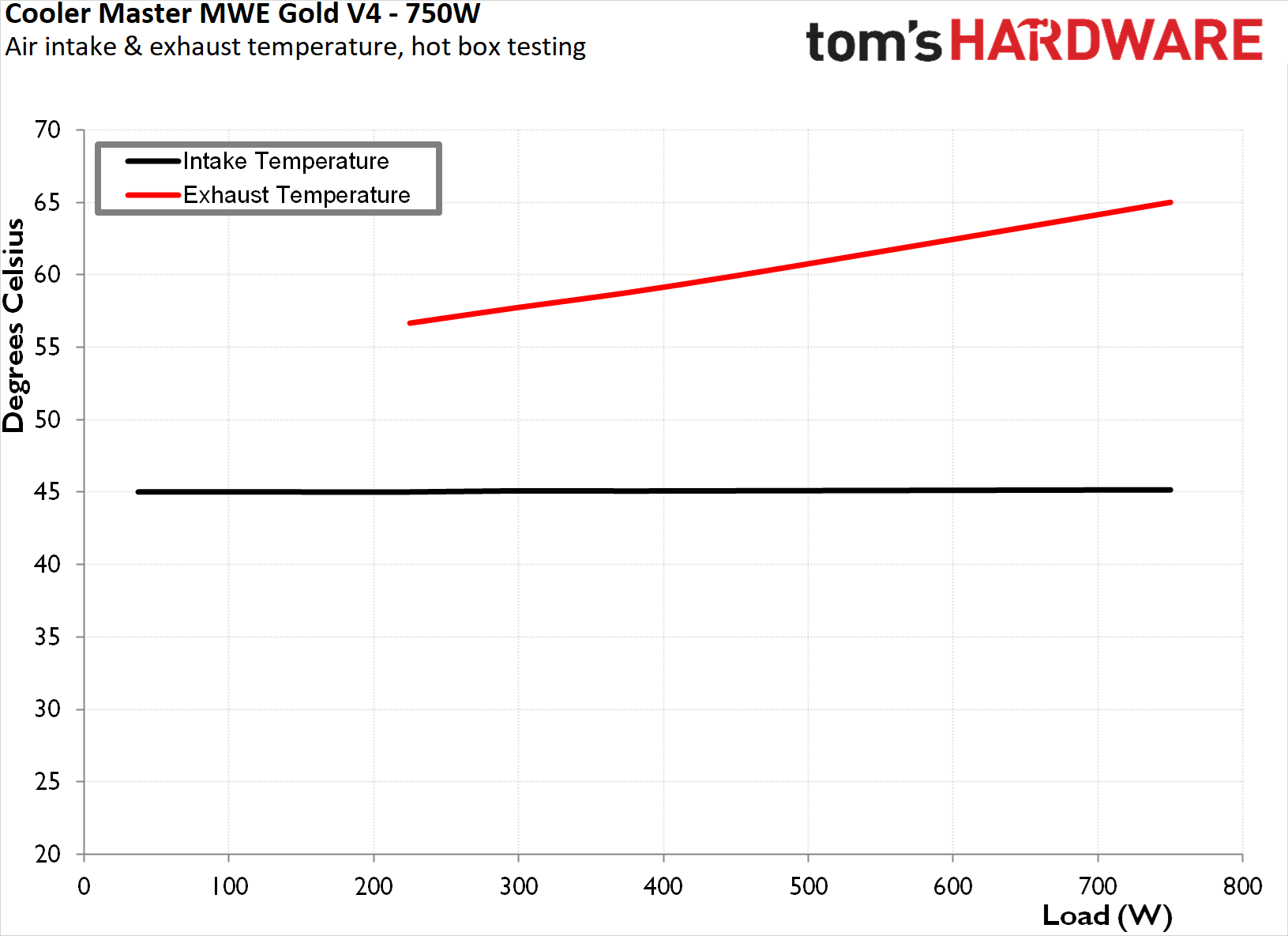
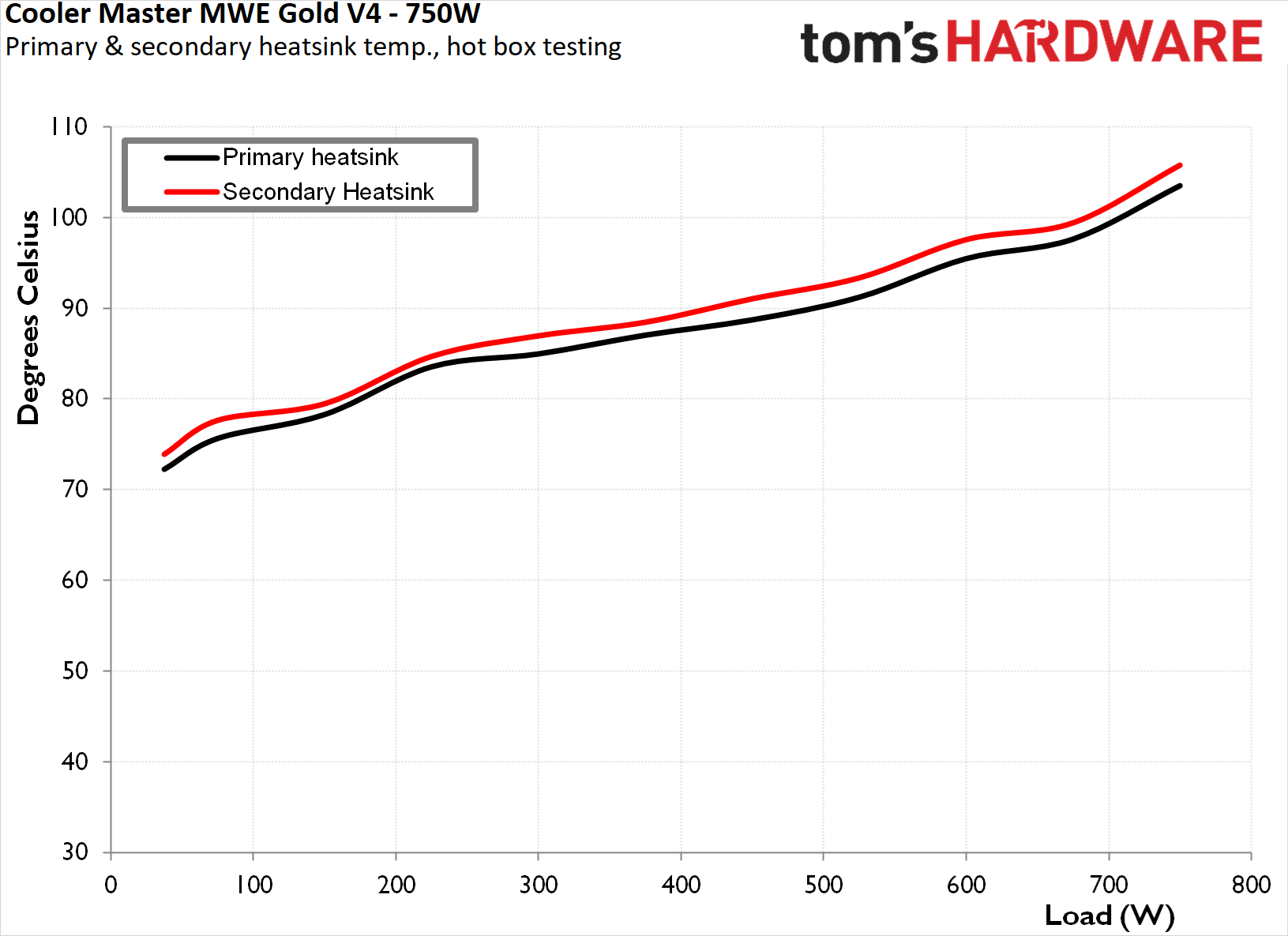
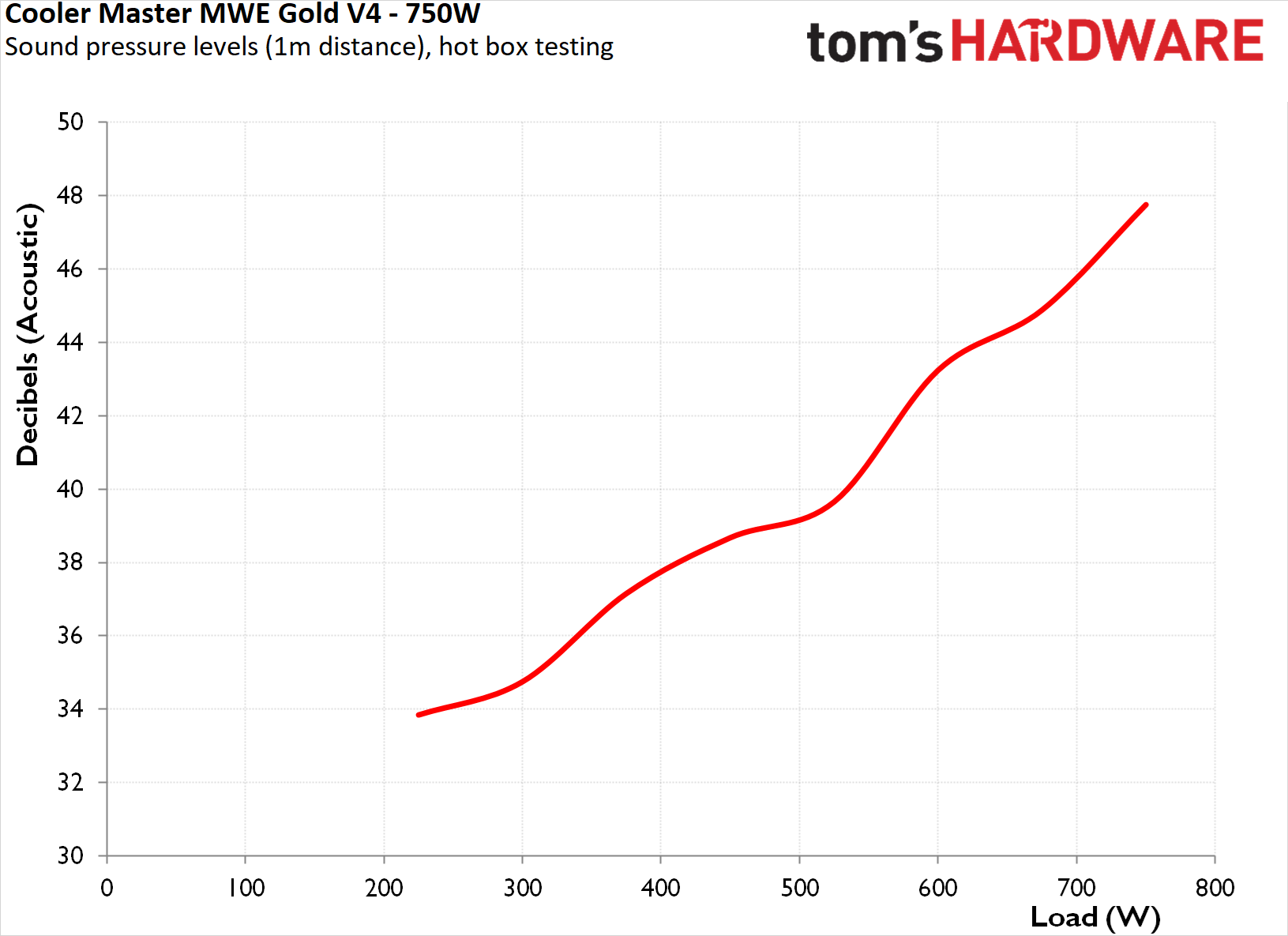
Noise is where the heat reshapes the unit's character. The fan abandons its passive mode sooner and climbs steadily to 47.8 dB(A) at full output - a level you will definitely hear, though short of the wind-tunnel territory some compact Gold units reach under the same conditions. Internal temperatures are the figures to watch: the primary heatsink reached about 104°C and the secondary about 105°C at full load. The platform held composure, and component ratings give some reassurance, but sustained full-load operation in a 45°C environment is clearly not this unit's design brief, nor should it be for any mainstream 750W supply.
PSU Quality and Bottom Line
Power Supply Quality
Voltage regulation is relatively solid for the class. Across the 20% to 100% load span, the 12V rail moved by 0.9%, the 3.3V rail by 1.1%, and the 5V rail by 1.4%. Nothing here approaches the sub-1% figures of premium digital platforms, but every rail stays comfortably tight, and the 12V line - the only one modern systems seriously stress - is well controlled at under 1% regulation.
Ripple suppression follows the same pattern of honest adequacy. The 12V rail peaked at 54 mV under full load and 50 mV under the 12V-focused cross-load test, while the 5V and 3.3V rails topped out at 32 mV and 30 mV. Against the 120 mV and 50 mV ATX design limits, these are comfortable passes with roughly 55% headroom on the critical rail, though enthusiast-class platforms routinely halve these numbers. For the components a 750W Gold unit will realistically feed, the filtering is more than sufficient.
During our thorough assessment, we evaluate the essential protection features of every power supply unit we review, including Over Current Protection (OCP), Over Voltage Protection (OVP), Over Power Protection (OPP), and Short Circuit Protection (SCP).
All protection mechanisms were verified and triggered correctly during testing. With the unit hot, OCP tripped at 134% on the 3.3V rail, 136% on the 5V rail, and 128% (80A) on the 12V rail, with OPP shutting the unit down at roughly 130% of rated output, or about 975W. These thresholds are on the generous side for a mainstream unit but not unexpectedly so.
Swipe to scroll horizontally
Load (Watts) | 151.48 W | Row 0 - Cell 2 | 378.52 W | Row 0 - Cell 4 | 564.3 W | Row 0 - Cell 6 | 748.7 W | Row 0 - Cell 8 |
Load (Percent) | 20.22% | Row 1 - Cell 2 | 50.47% | Row 1 - Cell 4 | 75.24% | Row 1 - Cell 6 | 99.83% | Row 1 - Cell 8 |
| Row 2 - Cell 0 | Amperes | Volts | Amperes | Volts | Amperes | Volts | Amperes | Volts |
3.3 V | 1.8 | 3.37 | 4.5 | 3.36 | 6.75 | 3.34 | 9 | 3.33 |
5 V | 1.8 | 5.1 | 4.5 | 5.09 | 6.75 | 5.05 | 9 | 5.02 |
12 V | 11.25 | 12.11 | 28.14 | 12.1 | 42.2 | 12.03 | 56.27 | 11.97 |
Swipe to scroll horizontally
Line | Regulation | Voltage Ripple (mV) | |||||
| Row 1 - Cell 0 | (20% to 100% load) | 20% Load | 50% Load | 75% Load | 100% Load | CL1 | CL2 |
3.3V | 1.3% | 26 | 18 | 26 | 30 | 22 | 30 |
5V | 1.5% | 26 | 22 | 28 | 32 | 22 | 30 |
12V | 1.2% | 18 | 24 | 36 | 54 | 50 | 24 |
Bottom Line
The MWE Gold 750 V4 is a well-judged mainstream power supply that knows exactly what it is trying to be. The Gospower-built platform - developed jointly with Cooler Master and currently dedicated to them - is modern where it matters: ATX 3.1 compliance with a native 12V-2x6 connector, digital control of the PFC and LLC stages, and the GPU Shield monitoring feature as a genuinely novel extra at this price. The engineering fundamentals are in noticeably better shape than the MWE badge historically implied, and the 12V-2x6 connector protection can bring sales from worried consumers.
The measurements back the badge without embarrassing it. Efficiency lands squarely and honestly in Gold territory with a predictable curve, and its 80Plus listing is real and verifiable. Regulation and ripple are comfortably within specification on every rail, with the 12V line particularly steady, even if neither metric threatens the enthusiast tier. Acoustics at normal ambient temperatures are a quiet strength, with a true fanless window covering 300W of load and restrained ramping beyond it.
The compromises are easy to enumerate and, mostly, easy to live with. The capacitor selection is almost entirely Taiwanese, leaning on CapXon polymers - fine parts, but the ten-year warranty is doing some load-bearing work there. The unit gets audible under sustained heavy load in hot environments, where the internal temperatures also climb higher than we would like. None of these is a genuine weakness at this price point - they are simply the fingerprints a $119 budget inevitably leaves somewhere.
At an MSRP of $119 and with retail pricing typically drifting below that figure, the value calculus is straightforward. There are quieter units, better-built units, and units with prestigious component sheets - all of them costing meaningfully more. For a mainstream ATX 3.1 build around a mid-range or upper-mid-range graphics card, the MWE Gold 750 V4 delivers verified Gold efficiency, current-generation connectivity, unusual protective touches, and a decade of warranty coverage at a price that undercuts most of the units it competes with. That is an easy recommendation, delivered with only minor reservations.
MORE: Best Power Supplies
MORE: How We Test Power Supplies
MORE: All Power Supply Content

Dr. E. Fylladitakis has been passionate about PCs since the 8088 era, beginning his PC gaming journey with classics like Metal Mutant and Battle Chess. Not long after, he built his first PC, a 486, and has been an enthusiast ever since. In the early 2000’s, he delved deeply into overclocking Duron and Pentium 4 processors, liquid cooling, and phase-change cooling technologies. While he has an extensive and broad engineering education, Dr. Fylladitakis specializes in electrical and energy engineering, with numerous articles published in scientific journals, some contributing to novel cooling technologies and power electronics. He has been a hardware reviewer at AnandTech for nearly a decade. Outside of his professional pursuits, he enjoys immersing himself in a good philosophy book and unwinding through PC games.
What's Your Reaction?
 Like
0
Like
0
 Dislike
0
Dislike
0
 Love
0
Love
0
 Funny
0
Funny
0
 Wow
0
Wow
0
 Sad
0
Sad
0
 Angry
0
Angry
0








Comments (0)