

Crushing shortages have pushed long-term supply agreements for SSDs and HDDs to record five years — large customers are signing large contracts
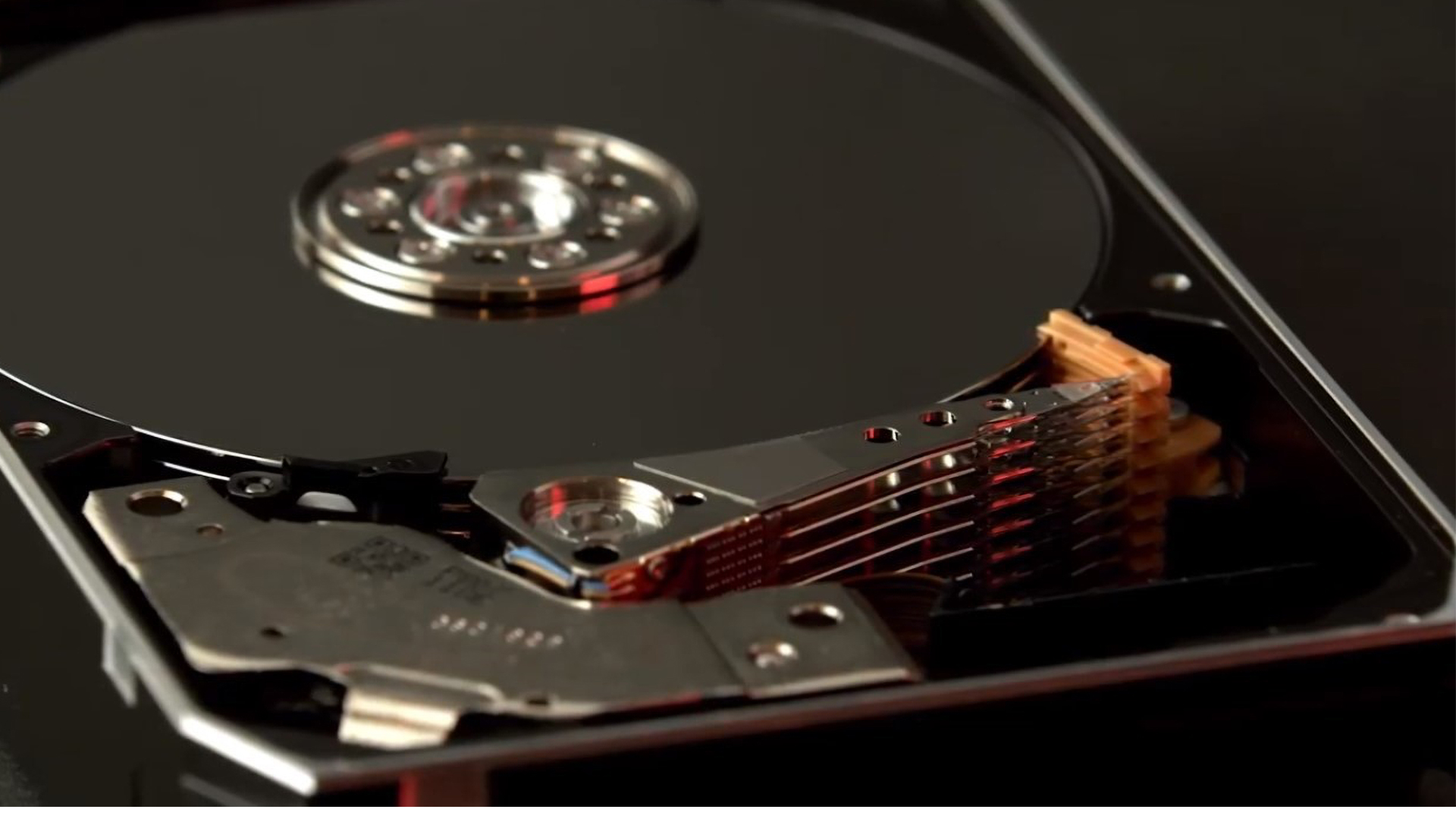 (Image credit: Toshiba)
In a world of rapidly developing artificial intelligence, the supply of computer hardware can barely meet demand, and at this point, long-term supply agreements (LTAs) become compulsory. When it comes to storage — both hard disk drives and solid-state drives — LTAs now span from three to five years, depending on the device. While some may argue that now all the supply will get to large customers, such agreements with guaranteed offtake may actually be good for consumers.
Up to five year LTAs
"The duration of this agreement varies, with the longest contract extending to five years," said Luis Visoso, chief financial officer of SanDisk, in an earnings call with analysts and investors. "In aggregate, volume commitments increased during the life of the contracts with quarterly commitments and a combination of fixed and variable pricing. […] These agreements are tailored to meet the needs of our customers and, in aggregate, provide us with demand certainty at financials that we expect will be consistent with our fiscal fourth quarter guidance."
Something similar applies to hard drives, though LTA visibility of Seagate and Western Digital is a bit shorter. In the case of Seagate, the company is even talking about bespoke storage systems.
"We have exabyte-scale supply agreements in place with nearly all major cloud and hyperscale customers, with nearline capacity almost fully allocated through calendar 2027," said William Mosley, chief executive of Seagate, in the company's most recent conference call. "At the same time, we are finalizing build-to-order contracts with these customers through the end of fiscal 2027, which defines specific configuration and pricing. Our value-based pricing approach enables customers to plan with confidence while contributing to sustained profit growth for Seagate, and we are actively engaged in strategic planning discussions now reaching into calendar 2028 and beyond."
The same applies to Western Digital. "Our long-term visibility continues to improve, with the duration of our agreements now extending into calendar year 2028 and calendar year 2029," said Irving Tan, chief executive of Western Digital.
Clear visibility
For years, storage has been considered a commodity, so now these long-term supply agreements give storage makers unusually clear visibility into real demand, which enables them to scale production in a far more disciplined way. SanDisk, Seagate, and Western Digital can now align NAND wafer starts, HDDs, HDD media output, and controller supply with multi-year volume commitments instead of reacting to short-term market demand. On the one hand, this reduces the risk of overbuilding capacity; on the other hand, it may ensure a lack of underinvesting ahead of demand increases.
Get Tom's Hardware's best news and in-depth reviews, straight to your inbox.
With guaranteed demand secured using multi-year contracts, the aforementioned three companies are also more willing to commit billions of dollars to the expansion of fabs, assembly lines, and next-generation technologies such as higher-layer NAND and heat-assisted magnetic recording (HAMR). What is even more important, these investments are aimed at confirmed demand rather than speculative forecasts, which in turn enables these companies to look beyond guaranteed demand, which in turn means speculative forecasts on the consumer market. Whether or not they are going to do that remains to be seen.
That being said, expansion remains inherently gradual. New 3D NAND memory capacity —like any semiconductor fab — usually takes years to ramp, and HDD advancements depend on incremental media and read/write head production increases usually at third parties like Hoya, Resonac (former Showa Denko), and TDK, which means supply will tighten before new capacity fully materializes.
To sum up, while a clear visibility of demand gives Sandisk, Seagate, and Western Digital more ability to spend, we have yet to see how everything works out.

Follow Tom's Hardware on Google News, or add us as a preferred source, to get our latest news, analysis, & reviews in your feeds.
Anton Shilov is a contributing writer at Tom’s Hardware. Over the past couple of decades, he has covered everything from CPUs and GPUs to supercomputers and from modern process technologies and latest fab tools to high-tech industry trends.
What's Your Reaction?
 Like
0
Like
0
 Dislike
0
Dislike
0
 Love
0
Love
0
 Funny
0
Funny
0
 Wow
0
Wow
0
 Sad
0
Sad
0
 Angry
0
Angry
0







Comments (0)