

David Ellison’s Big Bet: Why the Mogul Thinks Skydance Film Chiefs Dana Goldberg and Josh Greenstein Can Deliver 30 Movies a Year
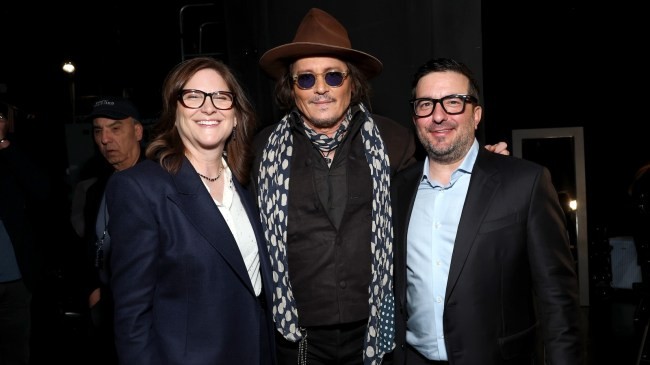
In 2010, Josh Greenstein met Dana Goldberg for the first time. He was a hot-shot marketing executive at Paramount Pictures, she was a new hire at Skydance, a production company looking to take the next leap in its Hollywood ambitions. The pair were sitting down to work out the release strategy for “True Grit,” a Western remake from the Coen brothers that was one of the first films produced under a financing deal between Paramount and Skydance.
It was, Greenstein later recounted, “the first glimmer of what was to come,” one that would see them forge a close working relationship. They’ll need to lean on each other as they get their biggest promotion yet. When Warner Bros. and Paramount formally merge this week, Greenstein and Goldberg will oversee the two film studios and with it an aggressive mandate to release 30 theatrical films each year. Netflix may approach that output, but that volume of moviemaking — and the marketing push that comes with it — is unprecedented in the streaming era.


Having not run a studio at this scale before, neither Goldberg nor Greenstein is an obvious choice for the gig, and they haven’t yet developed the name recognition among the general public that even Michael De Luca and Pamela Abdy, who were jettisoned as Warner Bros. film chiefs last week, earned after a banner 2025. But they have more than a few admirers who believe they can achieve this lofty goal at a time when their rivals are struggling to make a dozen movies for cinema annually.
One former studio chief who has known and worked with Greenstein and Goldberg for decades told IndieWire that to reach the level — and quality — of films they need to hit, the two have to build a consistent process of development and trust in talented filmmakers to make something good. They “have to have conviction” to continually say yes, and the executive was adamant that even in their short time as Paramount’s film chiefs, “I’ve seen that.”
“I can’t tell you the number of conversations I hear about how hard it is to make money as opposed to ‘this is so cool, how do we do it,'” the executive said. “They’re going to get more out of the creative people because they are enthusiasts, not pencil pushers.”
Goldberg has been at Skydance for 16 years, helping the company move from bankrolling movies to producing its own films and shows. Greenstein, who left Paramount in 2014 to oversee marketing and distribution for Sony, is known for his innovative campaigns for everything from the Tom Holland “Spider-Man” movies to “Once Upon a Time…in Hollywood” and “Sausage Party.” However, the two executives, who are said to have a close personal bond, hadn’t run a major studio before they were tapped by Ellison nor do they have the auteur relationships De Luca and Abdy did.
So what gives Skydance CEO David Ellison, the owner of the combined Warner Bros. and Paramount, confidence in his team? It appears to be a combination of loyalty and personal comfort.
“They have a strong reputation, and the key is they work well with David Ellison,” said Jason Squire, host of The Movie Business Podcast and Professor Emeritus at USC School of Cinematic Arts. “Ellison made a strong move by expanding the portfolio of his tried and true executives.”
Greenstein and Ellison were friends for over a decade, having bonded over their love of racing and aviation (Greenstein has a driving simulator in his office). And Ellison credits Goldberg with helping Skydance scale up its operations. She’s been a key lieutenant in his rise to mogul-dom.
Both also have key skills. Greenstein isn’t just known for his snappy marketing hooks and for embracing digital platforms before they became ubiquitous. He’s also credited with running cost-efficient promotional blitzes. At Paramount, for instance, Greenstein has dialed back spending when it has appeared that a movie was headed for a rough opening instead of throwing more money after bad. Goldberg may not have Abdy and De Luca’s Rolodex, but she does boast strong creative relationships of her own, having worked with the likes of Tom Cruise, Shawn Levy, and John Krasinski. She’s known as a producer’s producer, with a keen story sense.
 ‘Days of Thunder’ Sequel, Tom Cruise and Anne HathawayKurt Iswarienko for Paramount Pictures
The pair also has impressed Ellison with their aggressive approach at Paramount, where they increased the output in their first year from under 12 films to 18. They’ve also managed to land some splashy projects, such as “High Side,” an action thriller reuniting Timothée Chalamet with his “A Complete Unknown” director James Mangold; a film adaptation of “Call of Duty” for which Paramount royalty Taylor Sheridan is involved; and a new “Longlegs” film.
One focus for the duo has been reviving or reimagining some of Paramount’s franchises. To that end, they’ve brought in Danny McBride to oversee a new G.I. Joe film that will star Bradley Cooper, backed a live-action “Teenage Mutant Ninja Turtles” movie, brought back James Wan and Jason Blum for a new “Paranormal Activity,” and enlisted Cruise and Anne Hathaway for a “Days of Thunder” sequel. They also convinced the producers of CBS’s “Survivor” to let them develop an animated feature film based on a series (CBS, like Paramount, is owned by Skydance).
“They are incredibly smart, incredibly warm, love artists, and that already is huge, and they have a mission for those 30 movies: some are going to be IP, some are going to be original, most will be commercial, some will be geared more toward auteurs, but it allows for all kinds of movies,” a producer with close ties to Goldberg told IndieWire. “It’s a balance for sure that they will have to reach, but they are very smart people, and I do believe in the intention of really getting theatrical back on its feet.”
The immediate challenge though is that with the exit of De Luca and Abdy, a massive slate has been dropped in Goldberg and Greenstein’s laps, and they have to figure out how to merge two different studio cultures and maintain each studio’s distinct identity. Under De Luca and Abdy, Warner Bros. gave out big budgets to the likes of Paul Thomas Anderson (“One Battle After Another”), Ryan Coogler (“Sinners”), Maggie Gyllenhaal (“The Bride!”), and Alejandro González Iñárritu (“Digger’). The first two were awards darlings and, in the case of “Sinners,” a massive hit. The latter two were painful flops that cost them their jobs.
Looking ahead to 2027 Greenstein and Goldberg now have to shepherd expensive original films from M. Night Shyamalan, Sam Esmail, J.J. Abrams, and Nancy Meyers, not to mention new movies in the “Ocean’s” and “Lord of the Rings” franchises. They’re not exactly in line with Skydance streaming plays like “The Old Guard,” “The Adam Project,” and “The Family Plan” on which Goldberg made her name. Moreover, many of those Skydance films were frostily received by critics and some wonder if they would have survived a traditional theatrical rollout.
“It’s not that [Goldberg and Greenstein] don’t have qualifications, it’s just a massive job that’s in front of them,” said Joe Pichirallo, a professor at NYU and former studio executive at Searchlight. “You have to delegate and have people working for you that share your vision and also be able to manage productions and attract talent and get things going. The size and the scope is much bigger than two people. They probably didn’t feel comfortable having De Luca and Abdy, but when you yank them out of there, all these films will fall in their laps. They have to start developing relationships with talent and producers and selling themselves to the agent and management world. It will require a lot of hands on deck beyond just the two of them.”
While Greenstein and Goldberg probably won’t be the default choice for art house filmmakers looking to score a $100-million budget, they have landed overall deals with the likes of “Wicked’s” Jon M. Chu, musician Travis Scott, and “Stranger Things” creators Matt and Ross Duffer. They’ve also shown a talent for fiscal discipline. Paramount will have one of it most profitable years in more than 15 years, but that’s come more from trimming costs than fielding blockbusters. Only two movies Paramount released so far this year, “Scream 7” and “Scary Movie,” have surpassed $100 million at the domestic box office.
 SCARY MOVIE, (aka SCARY MOVIE 6), Marlon Wayans (right), 2026. ph: Quantrell Colbert / © Paramount Pictures / Courtesy Everett Collection©Paramount/Courtesy Everett Collection
The other difficulty is that unlike in the case of Disney absorbing Fox, Goldberg and Greenstein are bound by consent decrees agreed to with the state AGs to settle an antitrust lawsuit. They don’t have the luxury of consolidating and merely making a larger version of Paramount as it is today. As Pichirallo explains, they have to maintain and service two distinct slates, and they have to live up in quality and box office results to executives like Tom Rothman and Donna Langley who have done this forever. Oh, and they have to do it while making twice as many films as a Rothman or Langley.
The good news is that the former studio executive believes Goldberg and Greenstein have already developed a buttoned-down process with clear messaging about their mandates, and the executive adds that not only is the process they’ve developed in a year at Paramount “more functional” than some of Paramount’s prior regimes, it’s “more transparent.”
“What I have found already…the process has been driven by the creative, not the finance,” the executive said. “That’s not to say they haven’t been very clear [on financing], but once they set that out, they’re presuming you’ve heard and they’re only focused on the quality.”
For Warner Bros. employees, there’s at least some relief that the M&A purgatory the company has been trapped in for nearly a year will soon be over, even if many are bracing for deep staffing cuts as a result of the $80 billion in debt Skydance has to pay down.
“Everybody here thinks they’re going to lose their jobs,” said an insider. “But that’s how we’ve operated for years.”
Indeed, Goldberg and Greenstein inherit a demoralized team. Warner Bros. has been involved in three tumultuous mergers in less than a decade. It was sold to AT&T in 2018, then offloaded to Discovery in 2022, and now is about to welcome its latest corporate overlords. The staffers who have managed to hang on through each transaction feel like they’ve been competing on an endless season of “Survivor.” And each new merger has meant that projects are abandoned or don’t receive the kind of rigorous development they would under stable leadership. De Luca and Abdy teased an ambitious slate at this year’s CinemaCon of dozens of films planned out through 2028 and beyond. Some of them won’t survive the transition.
But the former studio chief believes Greenstein, Goldberg, and Ellison have already overseen a cultural shift that positions them for success.
“You feel the difference in what they’ve done to make it such a vibrant culture,” the executive said.
Now, they just need a few blockbusters.
What's Your Reaction?
 Like
0
Like
0
 Dislike
0
Dislike
0
 Love
0
Love
0
 Funny
0
Funny
0
 Wow
0
Wow
0
 Sad
0
Sad
0
 Angry
0
Angry
0








Comments (0)