

DDR5 RAM pricing appears to be spiralling out of control even more — it's 5.5x pricier than before the memory crisis, and 2027 could get worse

 (Image credit: Shutterstock / aslysun)
- DDR5 RAM has hit a new pricing high in the German market
- It's now 544% up on the price it was before the RAM crisis began
- This inflation backs up predictions of the memory shortage worsening, and Dell has just hiked the price of one of its popular laptops, too
If you wanted a telling example of how bad the cost of RAM is getting, the latest report on DDR5 pricing makes it crystal clear – and it reaches us as Dell moves to hike the price of its affordable XPS 13 laptop (in a roundabout way).
I'll come back to the ins-and-outs of what's happening with Dell, but first the DDR5 price jump, which has happened over in Germany.
3D Center keeps tabs on the monthly pricing of DDR5 memory in the German retail market – some 20 products are covered in this largest market in Europe – and as Wccftech flagged, the report for September shows this RAM is now 544% up on the price it was in July 2025 (the baseline level before the crisis began).
This is a big leap from 486% where the DDR5 price index sat in August, and since June, when it was at 419% having remained flat for much of the year. This obviously represents a depressingly hefty additional toll on the wallets of PC buyers or those upgrading their memory.
Meanwhile, as Mashable noticed, Dell has effectively upped the price of its XPS 13 laptop in the US, without actually increasing the baseline cost – instead of doing that, the laptop maker has introduced a new entry-level model with less storage.
So, previously the XPS 13 started from $699 in the US for the model with 8GB of RAM and 512GB of storage. What Dell has done is brought in a new model with 256GB of storage at that $699 level, so while technically the cheapest XPS 13 is still at that price, you're getting a lower spec for the money.
The old baseline model with 8GB RAM and a 512GB SSD is now $799, so it's been hiked by $100 – a pretty nasty bump in cost that moves this notebook into a distinctly less affordable price bracket.
Sign up for breaking news, reviews, opinion, top tech deals, and more.
If you want the XPS 13 with 16GB of system memory (and 512GB of storage), that's also gone up $100 so it's now at $999. Do note that these are student-targeted laptops, and students get a $100 discount on the XPS 13, so you will pay less in that case. However, while $599 (with $100 off) remains a tempting price in this climate, 256GB storage is cutting it thin.
Analysis: as predicted, 2026 is turning much nastier with RAM
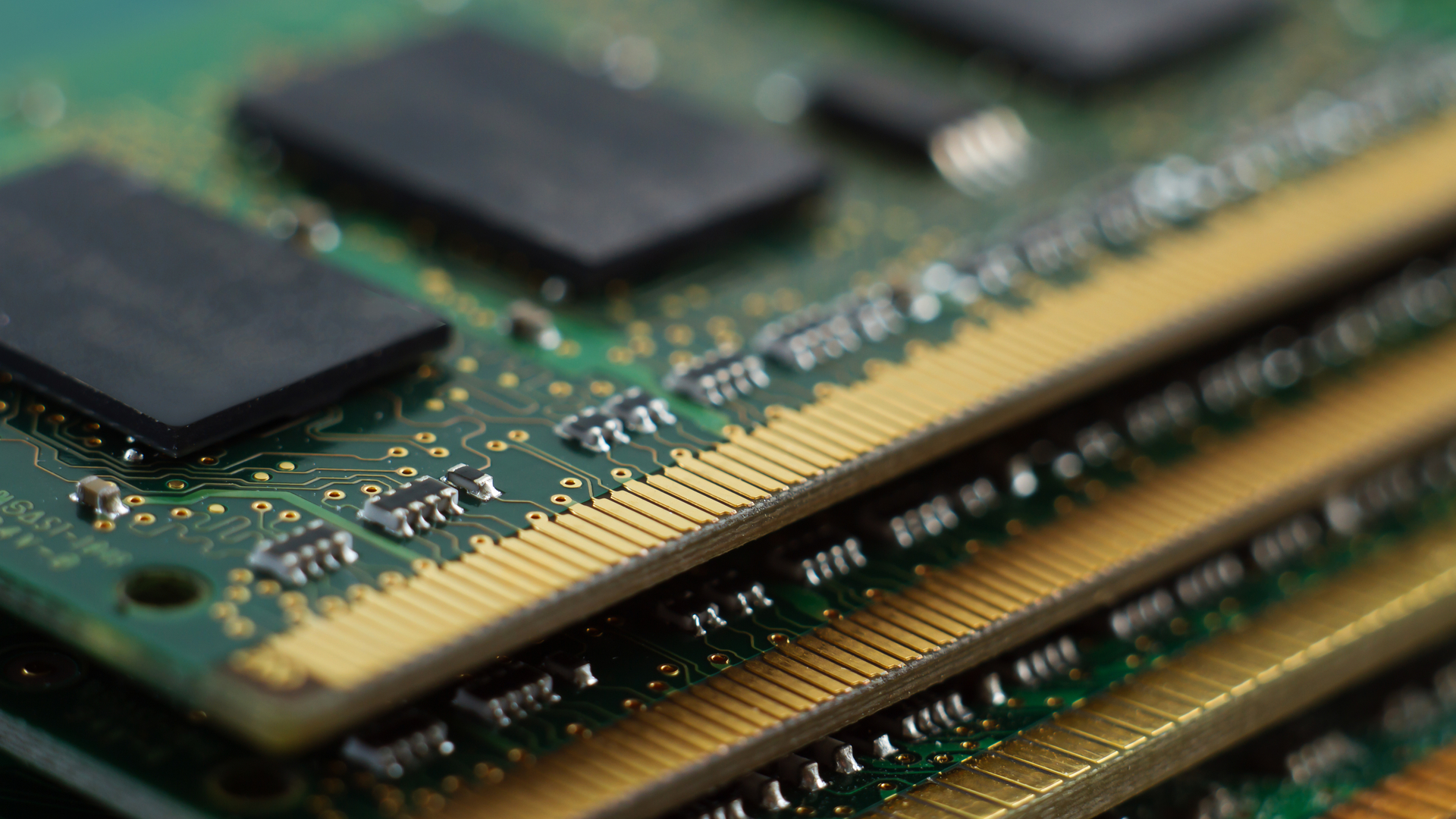
The DDR5 price spike is truly worrying in my opinion, simply because it's an acceleration of an already worsening picture. Yes, it's only one retail market and a snapshot of the overall landscape as such, but the same pattern is seen elsewhere. Just look at Tom's Hardware's price tracker, which shows 32GB of DDR5-5600 RAM in the US is now $409 (at the time of writing) compared to $72, which was the lowest price seen before the memory crisis.
That's over a 5.5x price increase in the US market (mirroring the German level of RAM inflation in this particular case). The end result is that what used to be a no-brainer of future-proofing any desktop PC – particularly a gaming rig – with 32GB of RAM is now a difficult choice to make, as sticking with 16GB is saving you $200 (or the regional equivalent). Bearing in mind that you're battling all sorts of other component inflation if you're building a new PC, too (most notably with the likes of SSDs and increasingly GPUs).
We were told that the second half of 2026 would see more RAM price misery, and these German market figures illustrate exactly that. Since June, buyers in the country have witnessed an effective 30% increase in the cost of DDR5 (when it was already hugely overinflated). It's worse than I imagined it could get, frankly, and I fear that the most pessimistic predictions – which also forecast a very rough 2027 – are very much on the money.
All these RAM price hikes are eventually reflected in the cost of laptops, of course, and the Dell XPS 13 provides an apt illustration here. Interestingly enough, I recently wrote about Dell's revelation of its new 14S laptop – which was shown off at IFA, but without any price tag being attached – saying that this made me nervous about how much the notebook might cost.
Given this XPS 13 hike, it's easy to see why Dell was hesitant, and to be fair to the company, it isn't the only manufacturer that's reticent to pin launch prices on incoming devices. This is becoming a trend because the memory shortage, and its knock-on effects, are making life difficult for all device makers.

Follow TechRadar on Google News and add us as a preferred source to get our expert news, reviews, and opinion in your feeds.
Darren is a freelancer writing news and features for TechRadar (and occasionally T3) across a broad range of computing topics including CPUs, GPUs, various other hardware, VPNs, antivirus and more. He has written about tech for the best part of three decades, and writes books in his spare time (his debut novel - 'I Know What You Did Last Supper' - was published by Hachette UK in 2013).
What's Your Reaction?
 Like
0
Like
0
 Dislike
0
Dislike
0
 Love
0
Love
0
 Funny
0
Funny
0
 Wow
0
Wow
0
 Sad
0
Sad
0
 Angry
0
Angry
0








Comments (0)