Executives are cutting jobs for an AI future that hasn't fully arrived yet, even as productivity gains remain difficult to prove — data neither confirms nor refutes an AI unemployment apocalypse
Jun 08, 2026 - 16:03
01
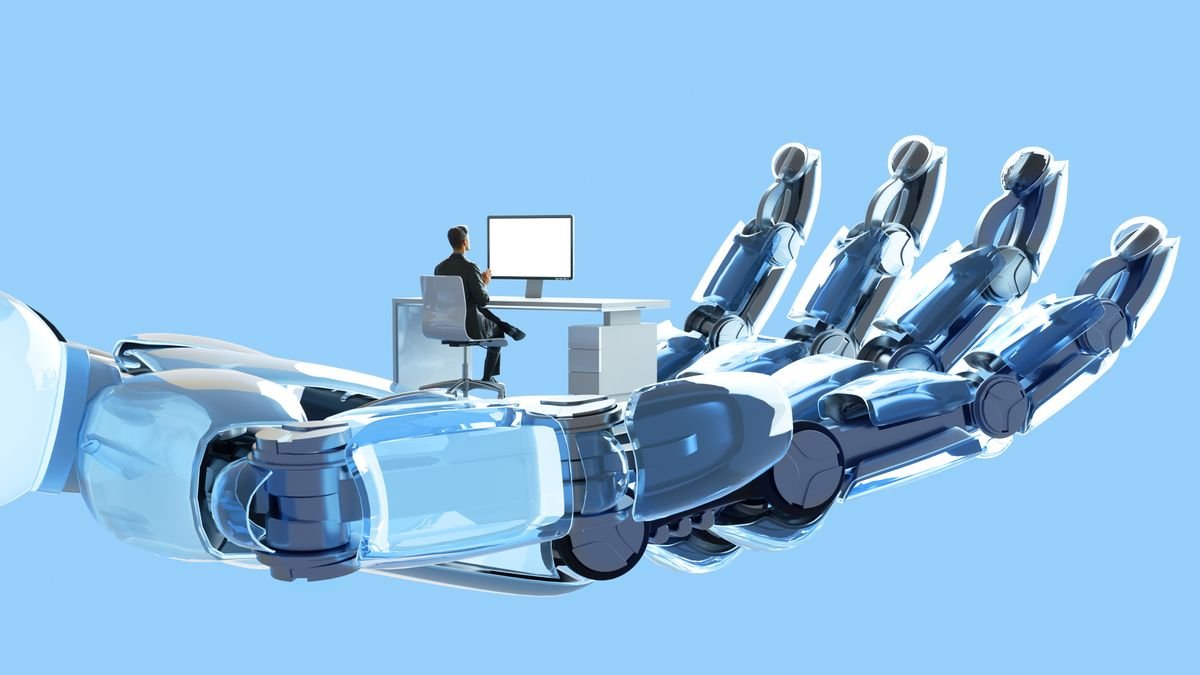
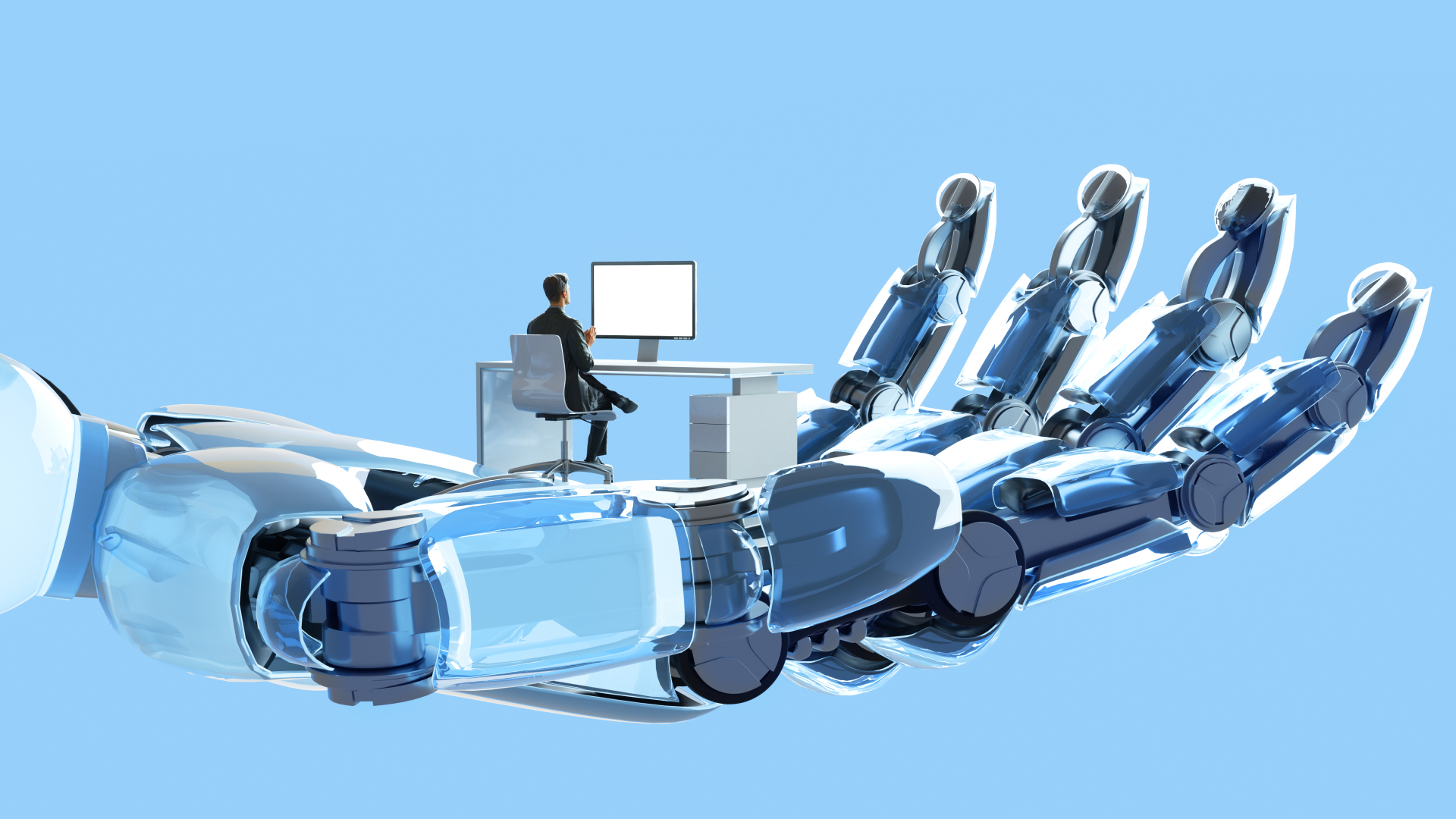
(Image credit: Getty Images / Andriy Onufriyenko)
A recent Mercer survey of nearly 12,000 C-suite executives, HR leaders, investors, and employees found that 99% of CEOs expect AI and automation to drive at least some headcount reduction in the next two years. At the same time, the report found that only 32% of executives believe their organizations are effective at combining human labor with AI systems.
These somewhat contradictory stats form the basis of an ongoing debate over AI and jobs. The data from Mercer shows that companies are indeed cutting or expect to cut significant portions of their workforce. In fact, we recently reported that 40,000 tech industry employees lost their jobs in Q1, 2026.
Now, companies are under pressure to show that these job cuts and billions of dollars in AI spending can translate into measurable returns. Workers, meanwhile, are already being affected as employers redesign teams, slow junior hiring, and tie AI to cost-cutting decisions before broader economic data shows a clear wave of AI-driven job replacement.
The evidence so far does not show an outright, simple story in which AI is massively replacing workers across the economy. Nor has it been proven that the actual AI replacements have proven useful. In another twist, it's possible that what OpenAI CEO Sam Altman calls “AI washing” — blaming AI for layoffs that may have happened anyway — is tainting the data.
Maximum pressure at the bottom of the ladder
(Image credit: Anthropic)
While the layoffs create a valid, growing concern about unemployment, the most immediate impact appears to be on who companies are willing or unwilling to hire, and for what roles. Mercer’s report suggests that younger workers are especially exposed, with entry professionals aged 22 to 27 facing the highest perceived risk of disruption. This is because generative AI is strongest at the codifiable, repeatable tasks that often make up entry-level roles through which new workers are traditionally trained and integrated into the system.
A similar 2026 CEO survey by consulting firm Oliver Wyman points in the same direction. The firm found that the share of companies planning to reduce junior roles has jumped from 17% to 43% in a single year, while 33% are shifting their workforce mix toward midlevel roles. This stat presents another concern. Companies removing junior roles may reduce costs in the short term. However, the move may also weaken their own future talent pipeline. A labor market that demands experience while eliminating the jobs that create experience risks imploding.
For now, the full picture remains quite murky, with contradictions in the available data. Oliver Wyman notes that some of the most advanced AI adopters are not abandoning junior hiring entirely. In fact, companies reporting stronger AI returns are somewhat more likely than weaker performers to shift toward junior workers, suggesting that at least some businesses see AI-literate early-career staff as an asset rather than a cost.
This makes the entry-level story more complicated. AI may reduce demand for some traditional junior tasks, but it could also increase demand for workers who can use AI tools effectively inside redesigned workflows. The real risk is that companies treat the technology as a simple substitute for early-career workers before they understand which roles should be automated, augmented, or rebuilt.
The productivity evidence is still unclear
The case for AI-driven layoffs depends heavily on one assumption: that AI is making workers and teams productive enough to justify smaller headcounts, while also cutting costs. So far, the evidence is mixed. Mercer’s findings show that executives see AI as central to future performance, but also that many organizations are struggling to redesign work around it. Oliver Wyman found that 53% of CEOs still say it is too early to assess the return on investment from AI, up from 41% last year. It also found that 67% of companies are still primarily planning or piloting AI rather than scaling it across the business.
This gap between ambition and proof reveals that AI can be impressive at the task level without immediately transforming company-level productivity. A chatbot that drafts an email faster or helps a programmer debug code may save time for an individual worker. However, turning that into measurable revenue growth, lower operating costs, or a sustainably smaller workforce is a different challenge.
There are workflow redesigns, data cleaning and integration, and compliance risk management, among several other accompanying tasks. Employees need training on how and when to apply AI. They also need cybersecurity training as hackers are increasingly finding ways to exploit systems through AI chatbots. Managers need to know which outputs can be trusted and which require human review. There’s also the question of how much responsibility AI can safely handle. We recently covered a case where a Claude-powered AI coding agent deleted a company's entire database. In many companies, these changes are slower and more difficult than the early AI hype suggested.
European data further complicates the replacement narrative. A European Central Bank analysis of firms that use and invest in AI found no significant overall difference in job creation or destruction between businesses that use AI and those that do not. In some cases, companies with more intensive AI use or investment were slightly more likely to be hiring, especially where AI supported research, development, and innovation.
While none of this proves that AI will not still reduce employment later, it does suggest that the current relationship between AI and jobs is not as straightforward as many layoff announcements imply. In the near term, AI may be helping some companies grow, while leaving many still searching for measurable returns.
“AI washing” is tainting the data
As if the data isn’t painting an unclear enough picture, there’s a real possibility that companies are falsely using AI as an excuse to fire workers. Layoff announcements rarely provide enough detail to distinguish genuine AI displacement from broader corporate restructuring or even serious internal issues. Sam Altman, whose company helped trigger the generative AI boom, has warned that some firms are engaging in “AI washing” by blaming AI for job cuts they would have made anyway. He also acknowledged that real displacement is happening and is likely to become more visible over time. Both points can be true.
This is why the current wave of AI-linked layoffs should be read carefully. A company may cite automation while also dealing with overhiring from the pandemic period, weaker demand, outsourcing, margin pressure, a falling share price, activist investors, or a broader strategic reset. AI can be the cause, the tool, the justification, or merely the language used to present a decision to investors.
Now, this does not mean AI is irrelevant to job cuts. Major companies across banking, retail, technology, and professional services are already reorganizing work around automation. Standard Chartered has discussed thousands of job cuts tied to automation and lower-value roles. Other firms, such as Amazon and Meta, have cited AI as part of broader efficiency drives.
As an increasing number of companies now believe AI will allow smaller teams to do more, even uncertain productivity gains are influencing hiring plans. The powerful technology is arriving in companies already under pressure to cut costs, demonstrate growth, and satisfy investors. As a result, managers may delay backfilling roles, and graduate hiring may slow, with entry-level work being bundled into contractor roles or existing mid-level positions.
The danger for companies is that cutting too deeply into junior roles could create a skills shortage later. The danger for workers is more immediate, as the traditional route into white-collar careers may narrow before a clear replacement path emerges. For now, the most defensible reading is also the least dramatic, and may be somewhat on the fence: AI is neither harmless, an automatic jobs apocalypse, nor a magic potion for instant growth and productivity.
Etiido Uko is a news contributor for Tom's Hardware covering the latest updates in big tech and the PC industry. He is a mechanical engineer and senior technical writer with over nine years of experience in documentation and reporting. He is deeply passionate about all things engineering and technology, and is an expert in gadgets, manufacturing, robotics, automotive, and aerospace.


 (Image credit: Getty Images / Andriy Onufriyenko)

 Like
0
Like
0
 Dislike
0
Dislike
0
 Love
0
Love
0
 Funny
0
Funny
0
 Wow
0
Wow
0
 Sad
0
Sad
0
 Angry
0
Angry
0









Comments (0)