

Intel introduced ‘the first processor in the x86 series and the first 8086 microprocessor’ on this day in 1978 — CPU was designed as a temporary substitute for the delayed iAPX 432 project
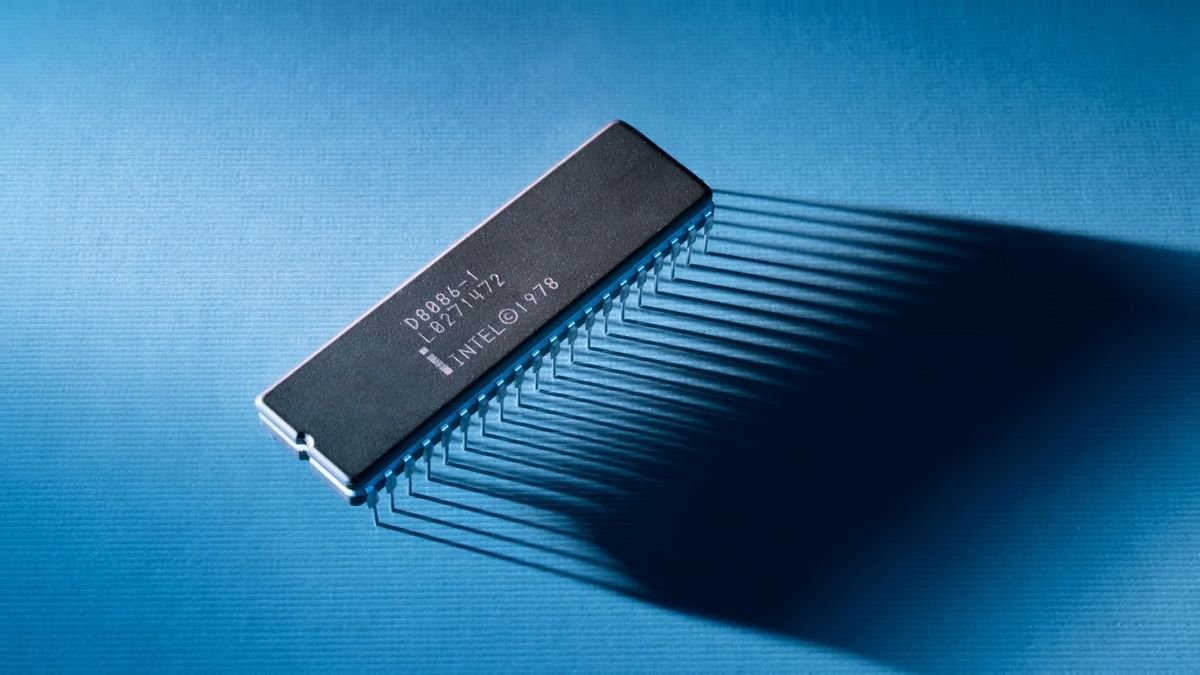
Probably the most important processor in PC history was introduced on this day 48 years ago. June 8, 1978, marked the birth of the x86 architecture with the arrival of the 16-bit Intel 8086 CPU. This lineage continues to the majority of PCs today, almost half a century later. Ironically, this chip and its x86 architecture, the result of 18 months of R&D, was meant only as a stopgap because Intel’s complex, clean-sheet 32-bit iAPX 432 project was delayed.
The Intel 8086 was designed by a team of four engineers and 12 layout people led by Stephen P. Morse. Reports indicate that the impetus behind this project was to provide a practical, timely alternative to upcoming 16-bit Motorola and Zilog CPU designs. The fabled 8086 processor was only meant as a stopgap, as Intel had bitten off a bit more than it could chew with the iAPX 432 project, begun a year prior. As a side note, the 432 finally shipped in 1981 and was deemed too expensive, too complex, and fatally too slow when it arrived.
The 8086, the founding CPU in the x86 lineage, was marketed as Intel’s first 16-bit processor. It benefited from a degree of backwards compatibility with prior Intel 8-bit designs like the 8008, 8080, and 8085. Notable advancements over its predecessors included microcode for multiply and divide assembly language instructions.
Looking closer at the hardware tech specs, the Intel 8086 had around 20,000 transistors (29,277 including ROM and PLA) and was manufactured using Intel’s HMOS (High performance MOS) manufacturing process, originally developed for manufacturing fast static RAM products. The resulting 40-pin chip measured 33mm², and the minimum feature size was 3.2μm. Over its lifetime, it was released in clock speeds ranging from 5 to 10 MHz.
While the Intel 8086 founded the x86 architecture, the subsequent 8088 design (1979) would become the beating heart of the first IBM PC (1981) and that particular storied lineage.
Direct 8086 successors like the 80286, 80386, and 80486 would spearhead the Wintel alliance and establish the PC compatible as the default choice for productivity, home computing, and computer gaming enthusiasts until being sidelined by the Pentium CPU (also x86) from the mid-90s onwards.
Intel released its Core i7-8086K 40th anniversary chip in 2018. What next?
To celebrate 40 years since the original 8086, Intel launched the Core i7-8086K 40th anniversary chip in 2018. It looks like a pretty safe bet that we should get another tribute in 2028, marking the half-century anniversary. What will we get for the 50th? Something that embodies the fun and enthusiastic side of PCs, we hope.
Get Tom's Hardware's best news and in-depth reviews, straight to your inbox.
Also, it will be interesting to see if Arm processors begin to impinge upon the dominant x86 designs from the likes of Intel and AMD in the Windows PC market in the next couple of years. We’ve had Windows-on-Arm efforts from Qualcomm and Mediatek try to usurp x86 with muted success.
At the recent Computex 2026 there was a lot of buzz about Nvidia’s RTX Spark Superchip, a powerful new Arm platform designed to transform Windows 11 into an agentic AI operating system. Looking back two years from now, will Nvidia and its partners have started to turn the tide against x86?

Follow Tom's Hardware on Google News, or add us as a preferred source, to get our latest news, analysis, & reviews in your feeds.
Mark Tyson is a news editor at Tom's Hardware. He enjoys covering the full breadth of PC tech; from business and semiconductor design to products approaching the edge of reason.
What's Your Reaction?
 Like
0
Like
0
 Dislike
0
Dislike
0
 Love
0
Love
0
 Funny
0
Funny
0
 Wow
0
Wow
0
 Sad
0
Sad
0
 Angry
0
Angry
0






Comments (0)