

Fractal Define One case review: Balancing noise and thermals
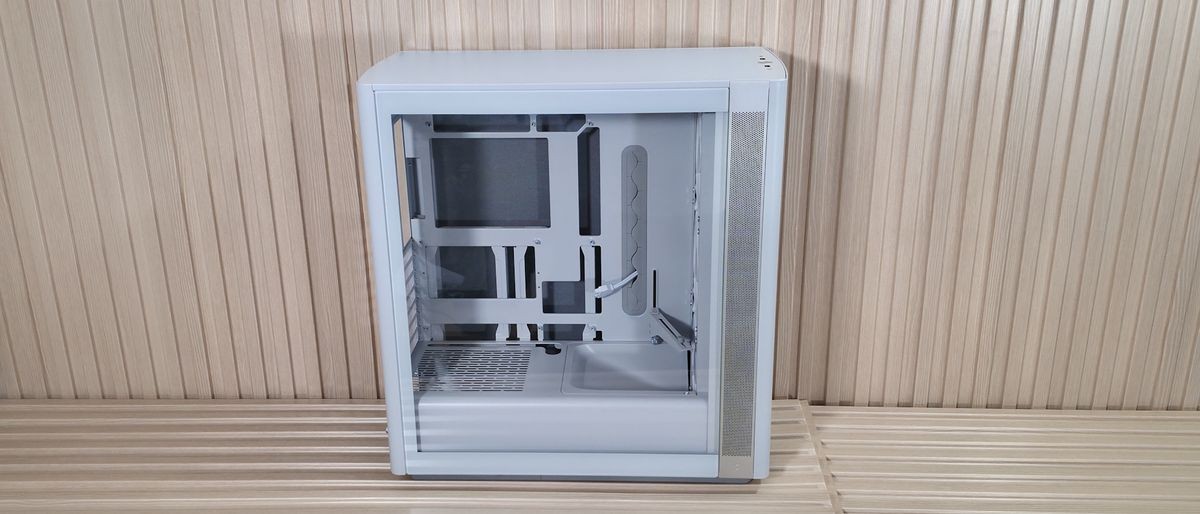
Fractal hits the nail on the head with the Define One, balancing quiet, cool, and premium looks. Smart details make it an easy recommendation at $154.99.
Pros
- +
Premium, conservative aesthetic with rounded edges
- +
Integrated air guide results in great GPU temps
- +
Integrated GPU support bracket
- +
Includes three 140mm fans
- +
Quiet operation
Cons
- -
Closed front limits airflow
Why you can trust Tom's Hardware Our expert reviewers spend hours testing and comparing products and services so you can choose the best for you. Find out more about how we test.
The Fractal Define series has been around since 2009, starting with the aptly named Fractal Define chassis. Since then, we’ve seen the Define R2/R3/R4/R5/R6/R7/7 XL cases over the years, all keeping the familiar closed-front design. Today, Fractal released the Define One, which they say is a “...modern expression of quiet performance and Scandinavian aesthetics”. This ‘expression’ includes aluminum side intake vents, premium details, and subtle curves that aim for a clean, understated look balancing airflow and thermal efficiency.
The new Define One achieves Fractal’s goals, offering users a clean, premium-looking chassis that achieves sound mitigation with its closed-front design. The previous Define 7 and 7 XL (and others before it) are all cuboids with sharp edges, whereas the Define One rounds the corners off for a softer, yet still premium appearance. This is one of the best-looking Define chassis to date.
Inside, there’s room for large graphics cards, multiple radiators (up to 360mm), and it even supports rear-connect motherboards. Fractal includes three pre-installed Momentum 14 fans in the front and has a unique integrated front air guide that feeds air directly from the bottom fan towards the video card. The interior is well thought out, with toolless access, removable brackets, and built-in cable management that makes building easier and leaves you with a clean, functional PC. Priced at
$154.99, it gives off premium vibes you don’t normally find at this price point, or in previous Define iterations.
We'll cover many more details inside and outside the chassis, showcasing the features and any issues we may encounter during the build process. We also run the case through thermal and noise testing to show how it performs compared to others and whether it has a chance of making our best PC cases list. Below are the case's specifications from Fractal.
Latest Videos FromTom's Hardware
Define One Product Specifications
Swipe to scroll horizontally
Type |
Mid-Tower |
Dimensions (H x L x W) |
19.6 x 18.9 x 9.2-inches (500 x 482 x 235mm) |
Motherboard Support |
Mini-ITX, Micro ATX, ATX, E-ATX |
Back-connect Motherboard Support |
No |
Color |
Dark Solid |
Storage Support |
(2) 3.5-inch -or- (4) 2.5-inch |
PCIe Expansion Slots |
7 |
Fan Support |
Top - 2x120/140mm |
Pre-installed fans |
(3) 140mm LCP Blade Momentum 14 (Front) |
Radiator Support |
Front - Up to 360mm |
CPU Cooler Clearance |
171mm |
GPU Clearance |
368mm (w/ front fans installed) |
Vertical GPU Support |
Yes (required adapter, $79.99) |
PSU Length |
180mm |
Dust Filters |
Top, Front, Bottom |
Other features |
3x included fans, integrated GPU front air guide, noise/vibration dampening |
MSRP |
$154.99 (all four configurations) |
Warranty |
2 Years |
Features of the Define One
▶️ External Features
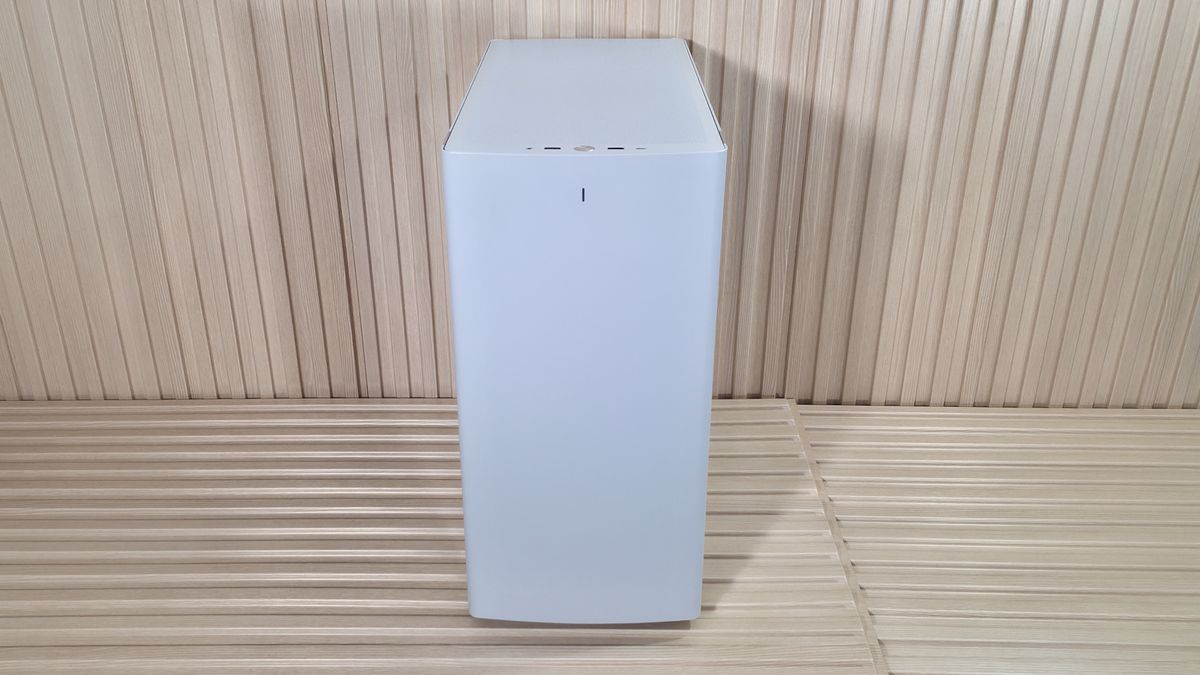
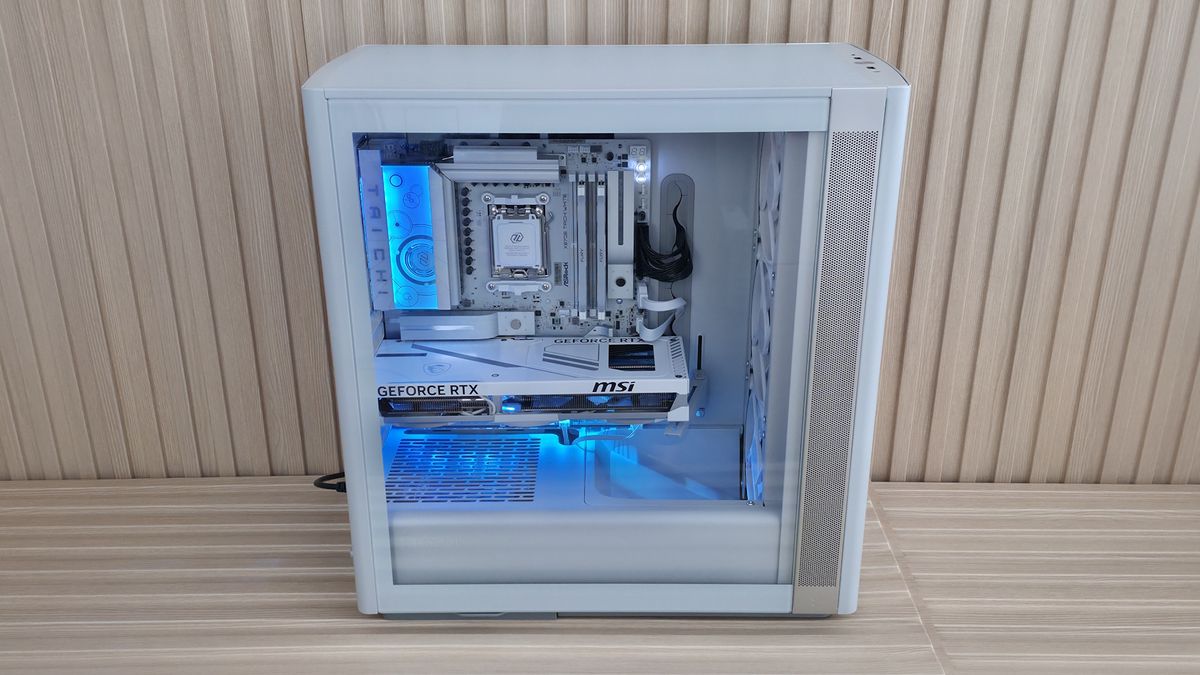
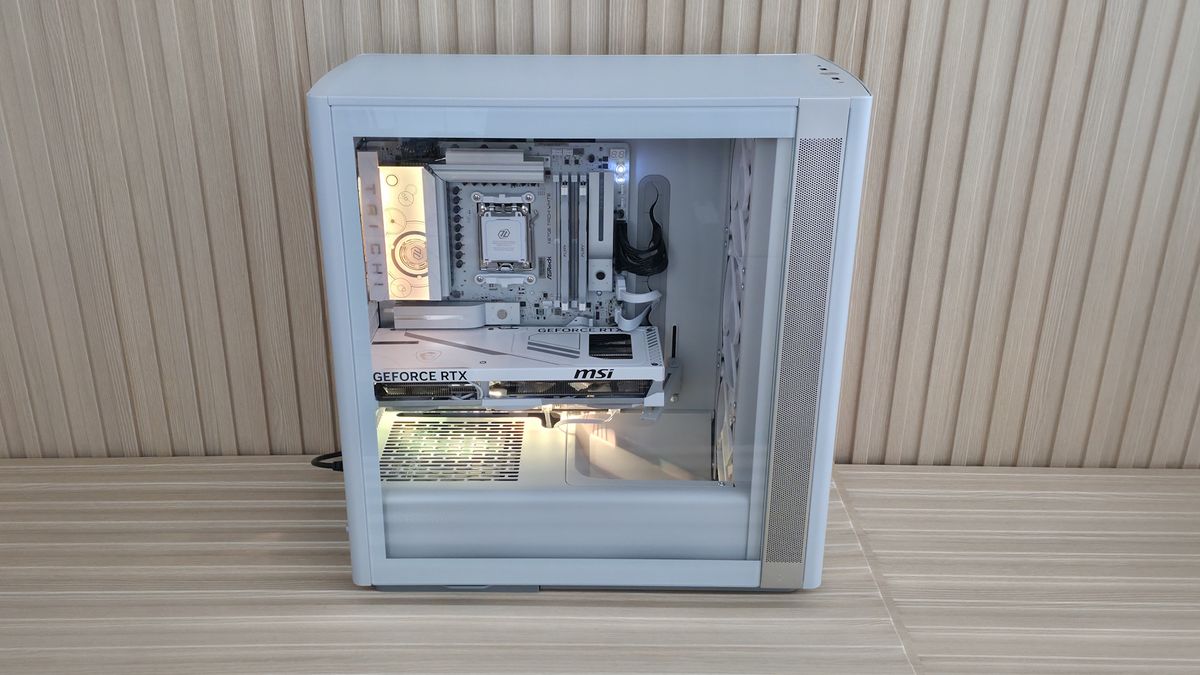
Externally, the case looks considerably different than previous versions. While it still screams "computer case," those rounded edges soften the look of the closed-front design. The IO panel is still on top, and there’s a single LED at the top of the front panel, like previous designs. Another holdover is the ability to take the chassis apart for easy access, a boon for building. Overall, I do like the look of the 'Light' colorway. The subtle rounding off of sharp edges makes the Define One stand out among past iterations. It comes in four flavors: Dark (black) and Light (off-white) with closed sides, or Dark with tinted tempered glass and Light with tempered glass and no tint – one should match your style and build preferences.
Image 1 of 7
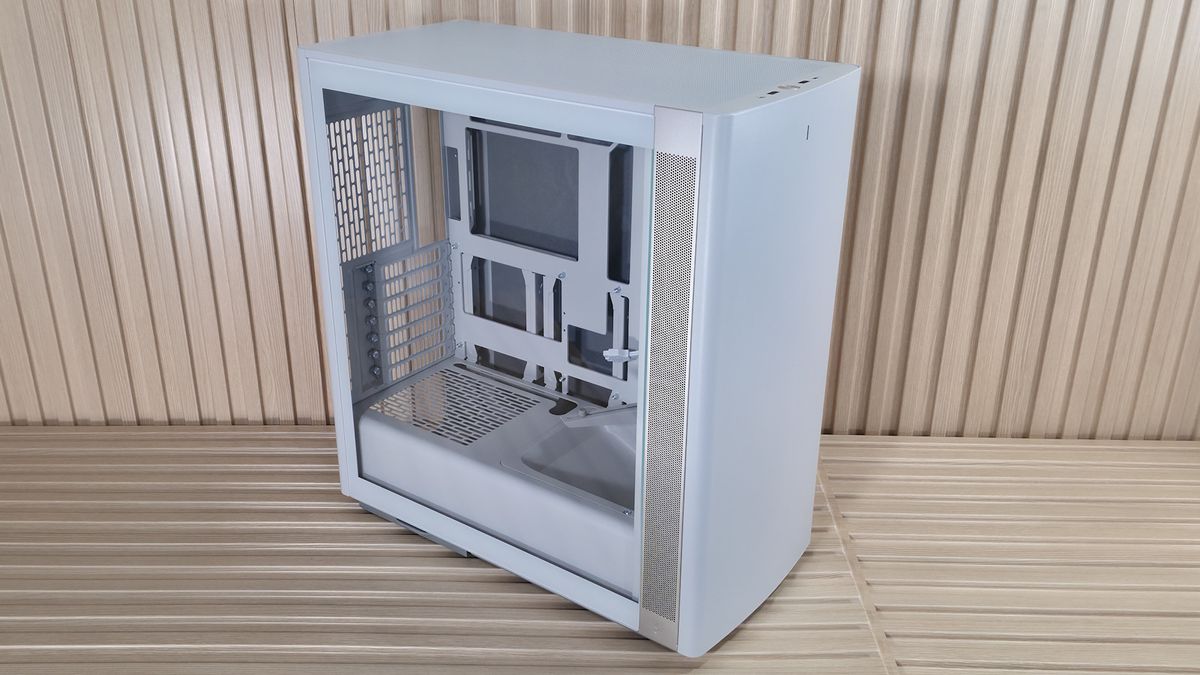
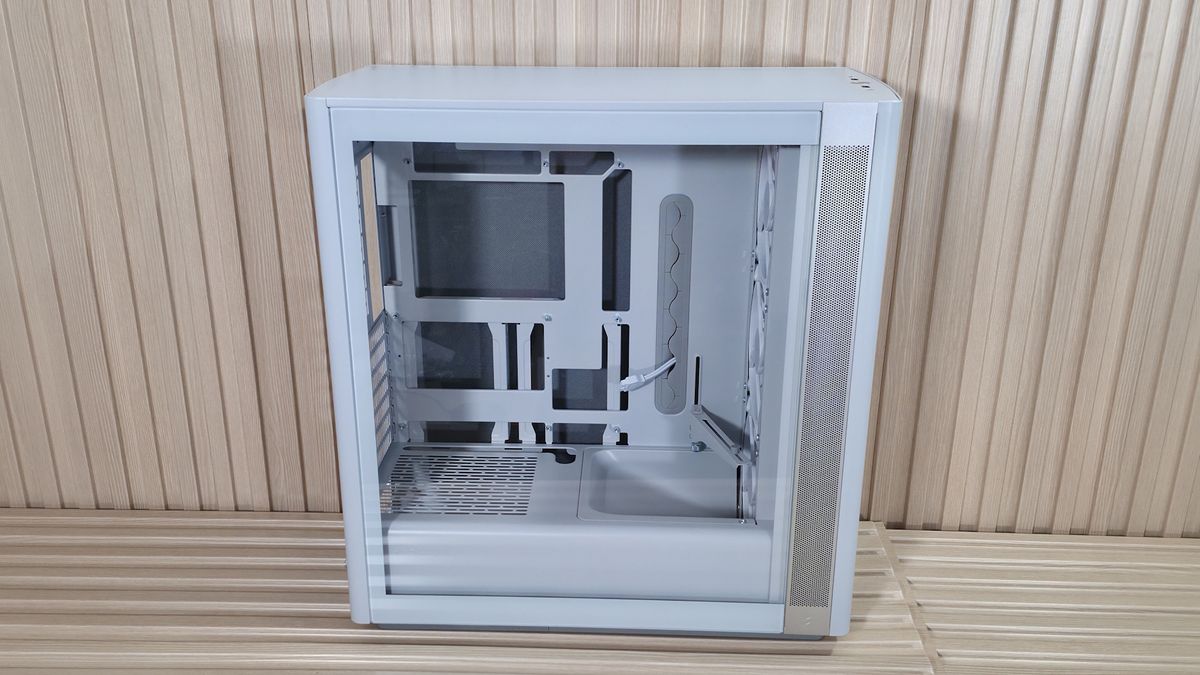
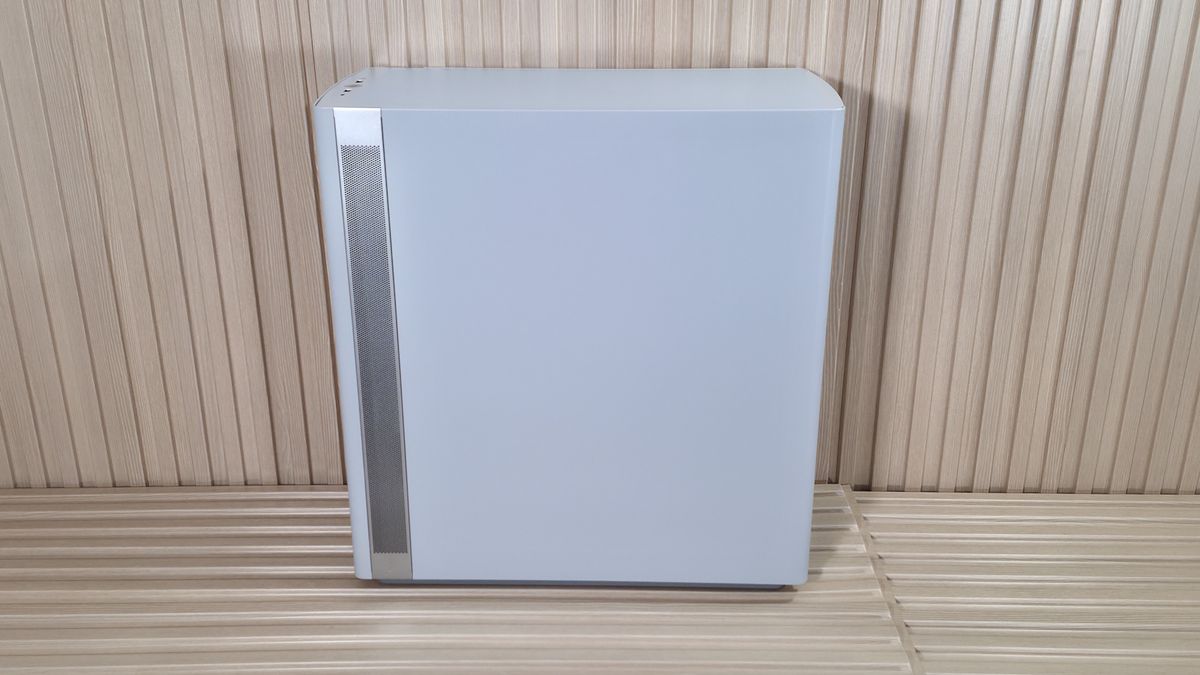
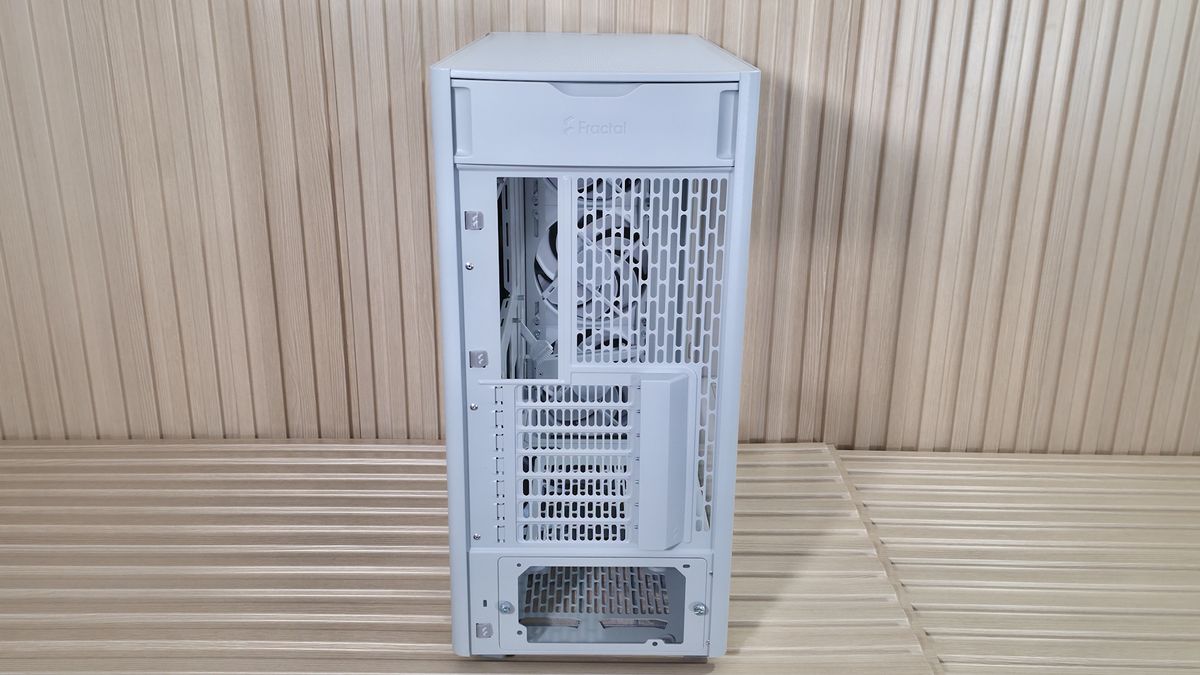
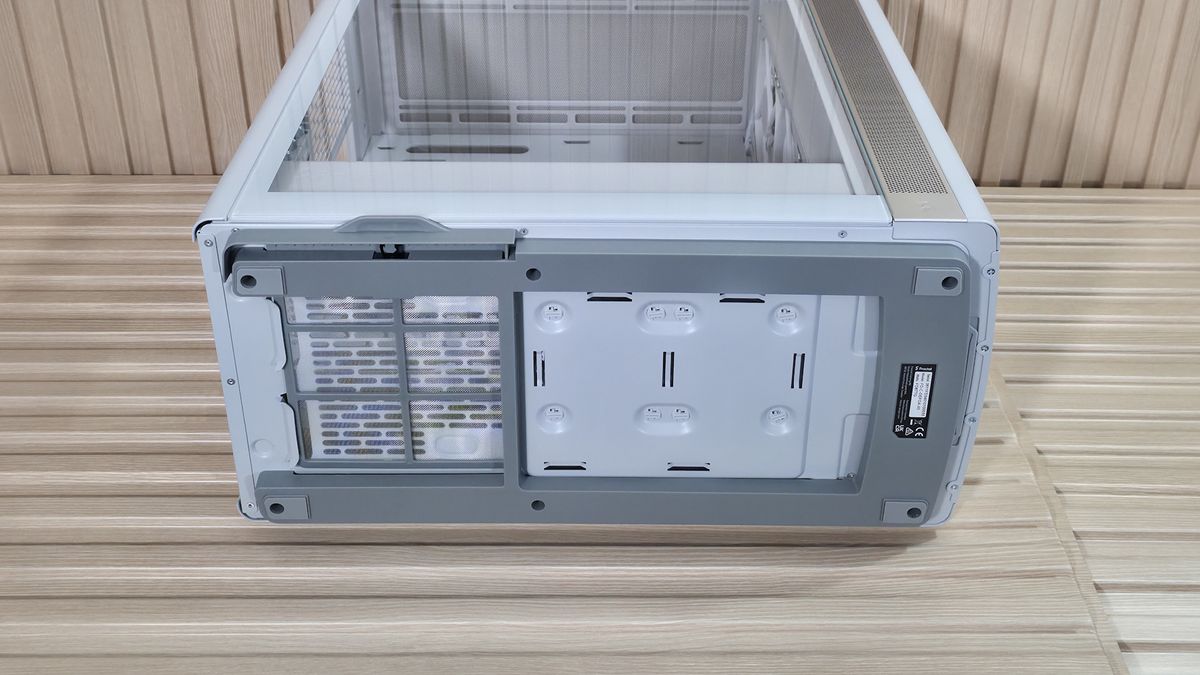
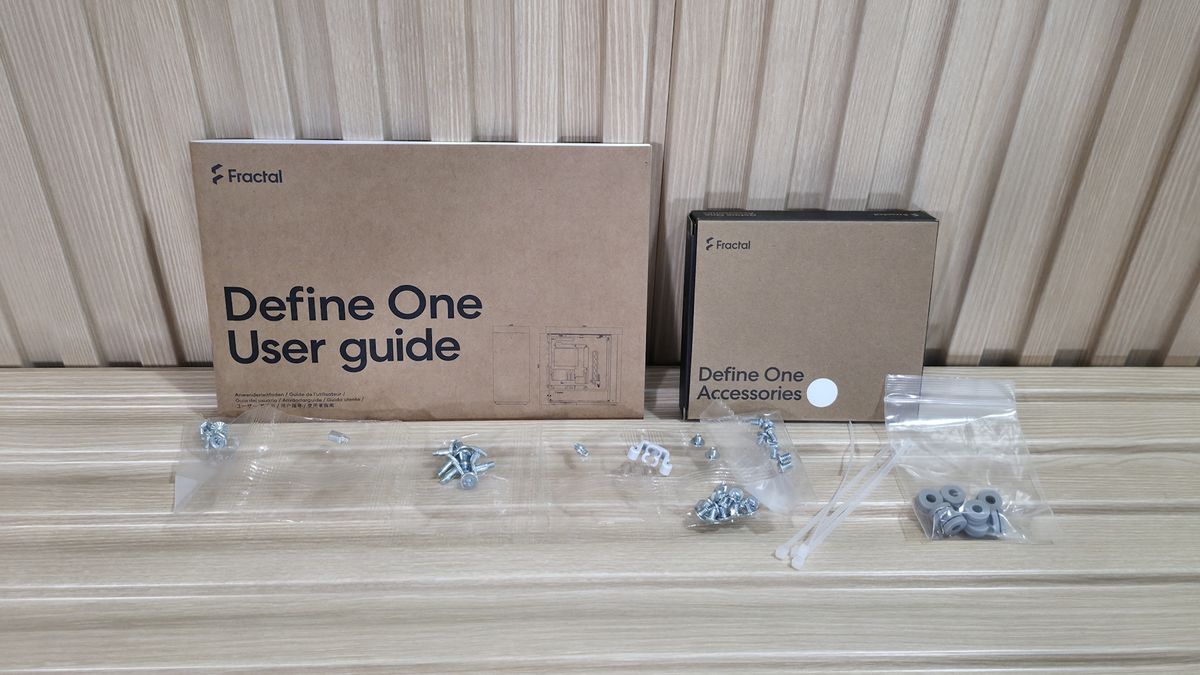
The side of the off-white Light case uses a clear tempered glass panel, secured by three tabs at the bottom and held to the frame by two ball-and-socket latching mechanisms on top. Slot the glass in and push on top and you're done. The clear glass allows for unobstructed views of the internals and easy access to the components inside. The other side panel is solid and bitumen-lined for sound dampening (like the front panel), and it attaches the same way, with tabs at the bottom and ball-and-socket mechanisms on top. Both have a small indentation at the top and rear of the case where you can easily grab and remove the panels.
Intake also comes through the sides. Two aluminum strips run vertically with small circular perforations, and on the Light chassis, the strips contrast with the rest of the off-white case and look good, breaking up the otherwise all-white colorway. These intakes also use a removable dust filter, accessible from the inside when you take off the front panel. It’s not the best situation for high airflow, but as we’ll see later, the Define One didn’t do a terrible job in our testing, especially on the GPU, using only one additional case fan, leaving the top empty.
Turning the chassis around to the rear, we get a better view of the seven expansion slots (which also have a cover over the screws to clean up the appearance), the rear fan location supporting 120mm air movers, and the PSU mounting location at the bottom. The power supply uses a bracket with two captive thumbscrews. Simply mount it to your power supply, then install it in the case. Looking on the left, you’ll also see a couple of pre-installed Velcro straps to help with internal wire management.
Stay On the Cutting Edge: Get the Tom's Hardware Newsletter
Get Tom's Hardware's best news and in-depth reviews, straight to your inbox.
The bottom of the Define One uses a raised gray plastic frame that circles the entire bottom, with rubber ‘feet’ on the corners, giving your power supply about an inch of room to breathe. The dust filter on the bottom pulls out from the left side (window side), which is ideal since you likely won’t have to move your PC to remove it. In many cases, it comes out from the rear, requiring you to move your heavy PC to clean it.
Image 1 of 2
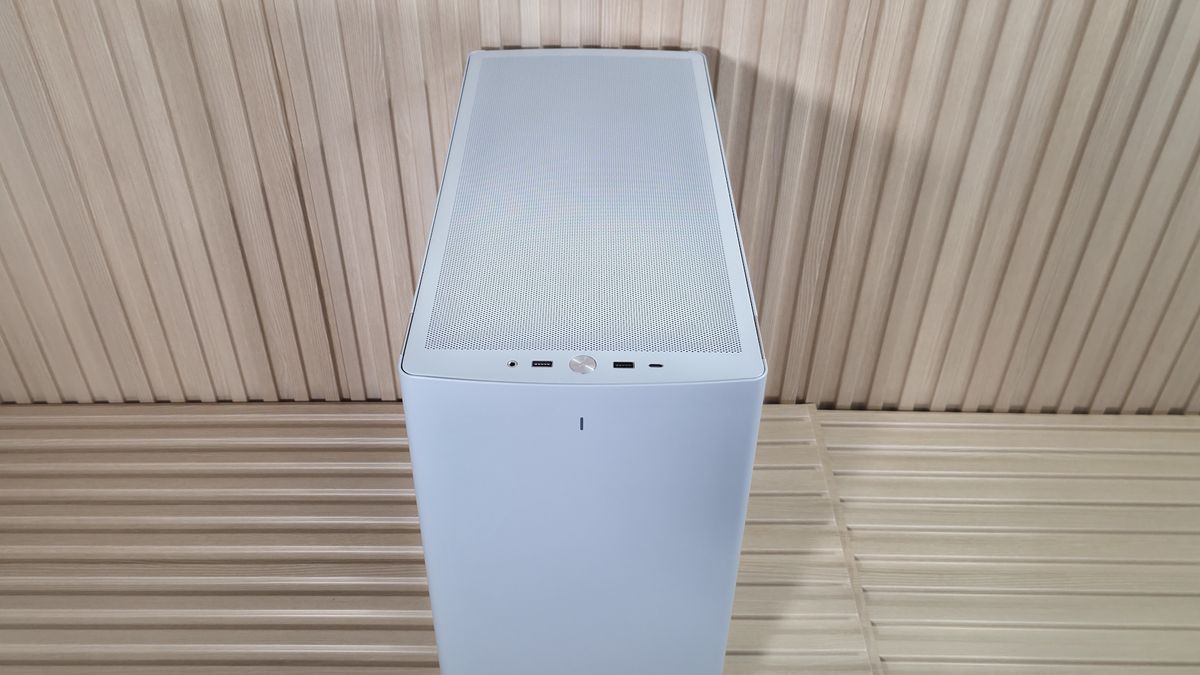
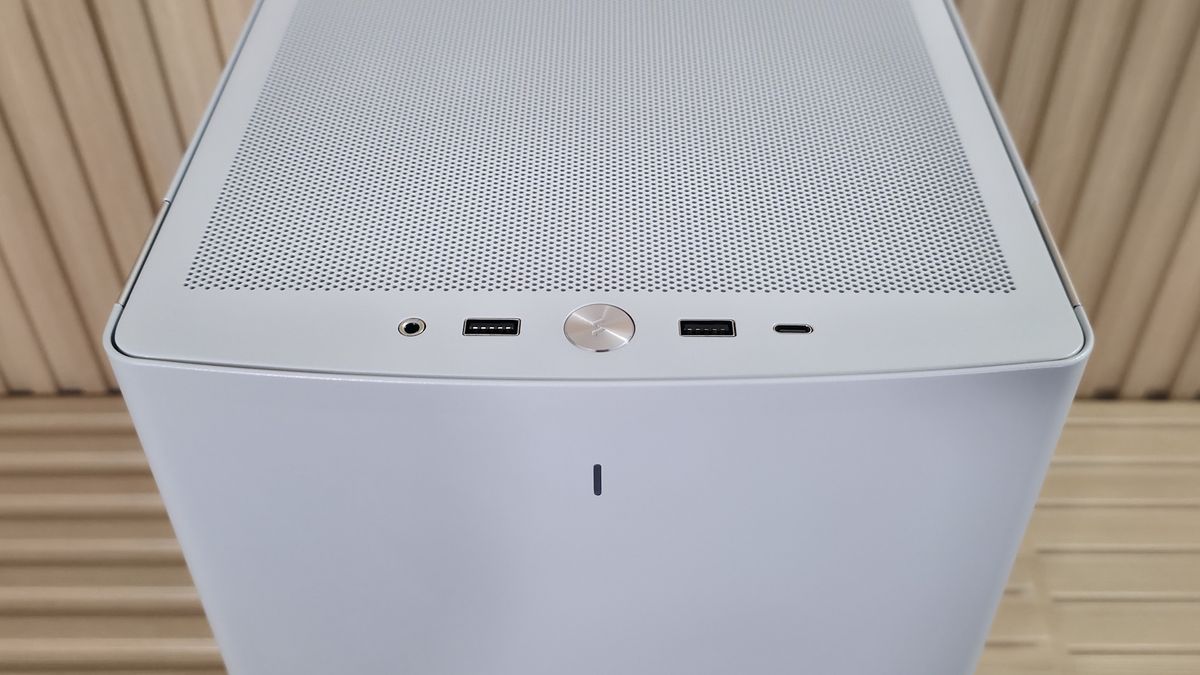
On top of the case, Fractal updated the design with a dense pattern of circular holes for air to pass through. This feels a bit more restrictive than the more open design on the Define 7, but still allowed air to escape even without fans on top in our testing. The good news, at least when this area is used as exhaust, is that there isn’t a mesh dust filter to thwart airflow further. The top panel also pops off easily (via more ball-and-socket retention clips) from the back, exposing the inner frame where you mount fans or a radiator.
The IO panel sits at the front edge and offers your typical assortment of ports. You get three USB ports: one USB 3.2 Gen 2x2 20 Gbps Type-C, and two USB 3.1 Gen 1 (5 Gbps) Type-A ports. This is exactly what we want to see in a case of this caliber. There’s also a shiny power button with the Fractal symbol in the middle, a 3.5mm combo audio jack on the left, and finally a skinny LED light at the top. The front panel also comes off easily. Removing the top panel exposes two levers, so you can remove the front panel, access the front of the case, and reach those three 140mm Momentum 14 fans and dust filters.
▶️ Internal Features
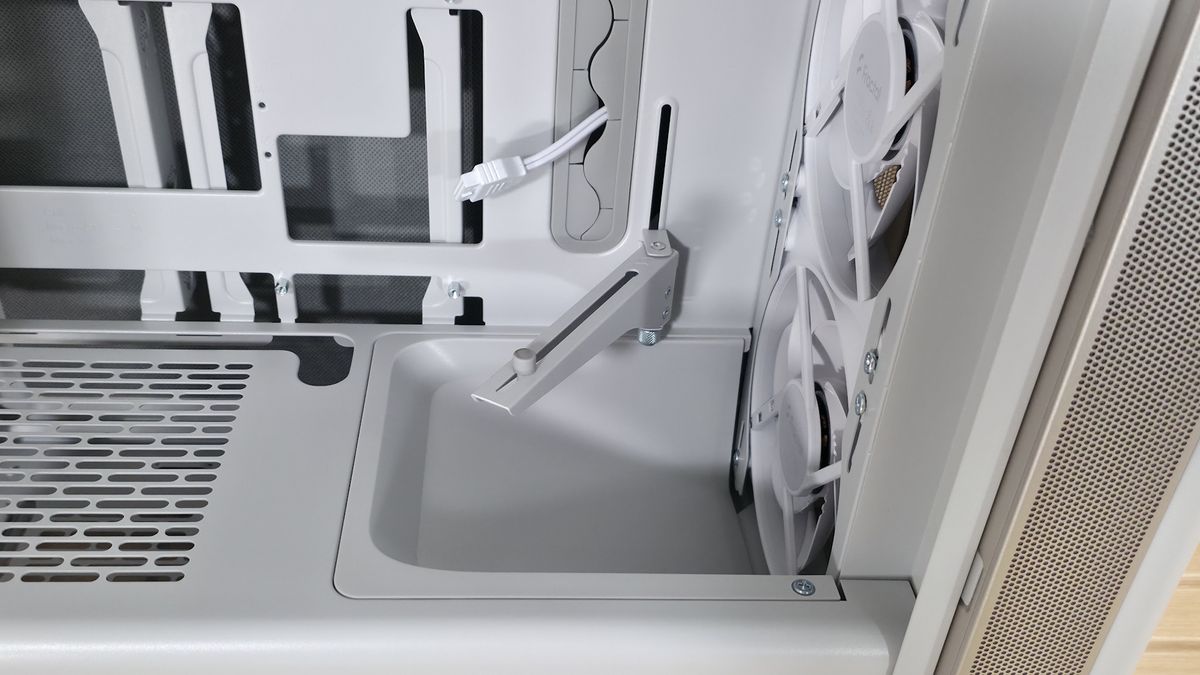
Inside the case, you have two separate chambers. One is for the power supply and cables, while the other is for the components. One of the first things that jumped out to me is the integrated front air guide, which helps direct airflow to the graphics card. I like this, as the front bottom fans' air isn’t wasted on the power supply and instead focuses on what is likely the hottest-running component. Just above that is the adjustable support bracket for the video card, mounted directly to the motherboard tray. Two screws let it move a couple of inches up or down, so it supports video cards of nearly any size.
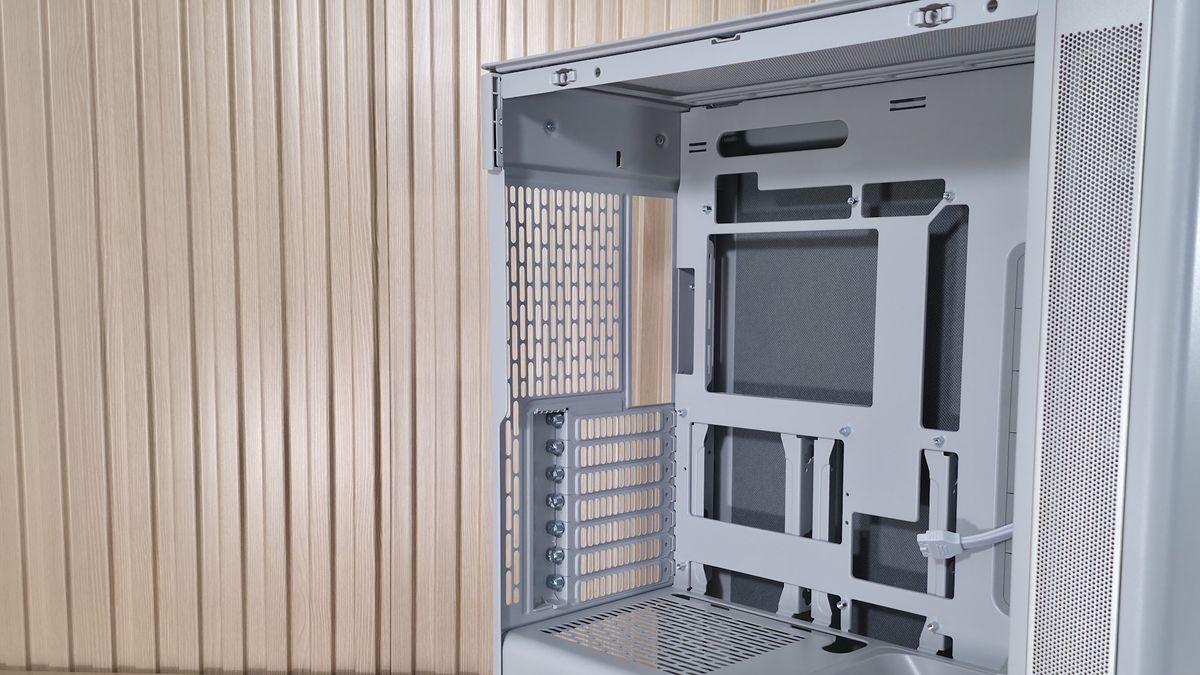
Next up is the motherboard tray, and it has plenty of cutouts. The largest one, behind the socket, is great for accessing the rear of the motherboard and mounting your cooling solution while the board is in the case. The rest are there for cable management (top or bottom) and to support rear-connect motherboards like Asus BTF, Gigabyte Stealth, and MSI Project Zero boards. A large gray grommet for hiding wires runs vertically to the right of the motherboard. This grommet satisfied a pet peeve of mine by not moving out of its spot easily, as some others do. In fact, in some cases I’ve owned, I’ve glued the grommets in because I was tired of them pulling out when building or changing parts.
Image 1 of 6
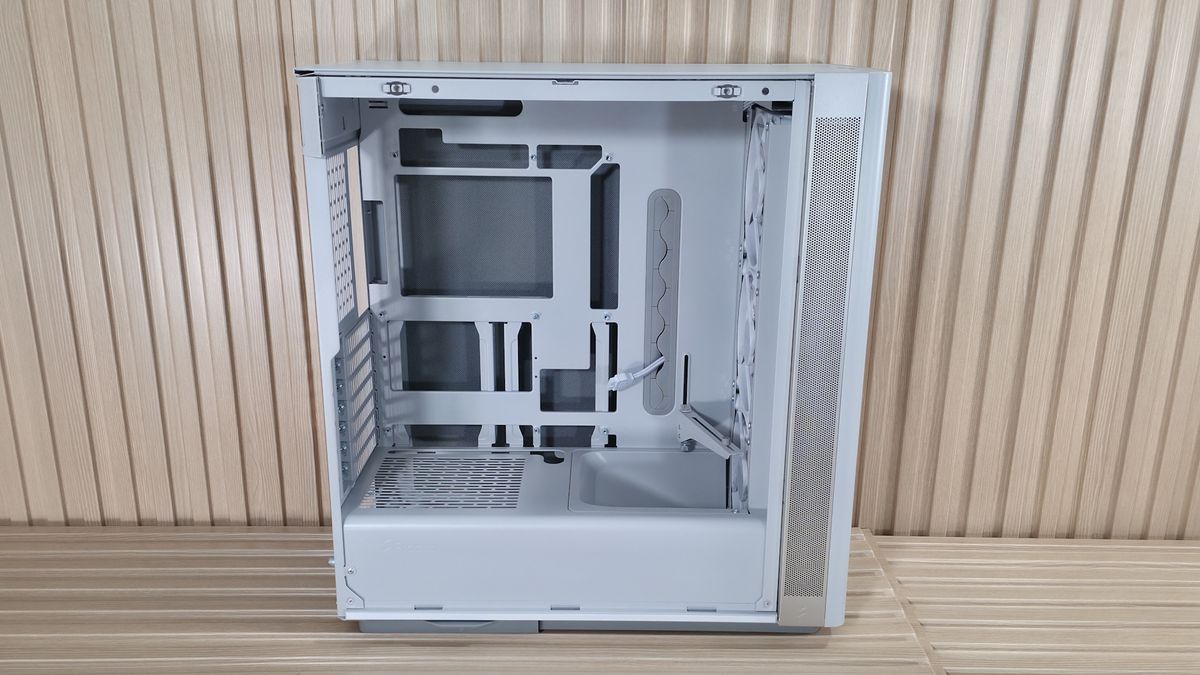
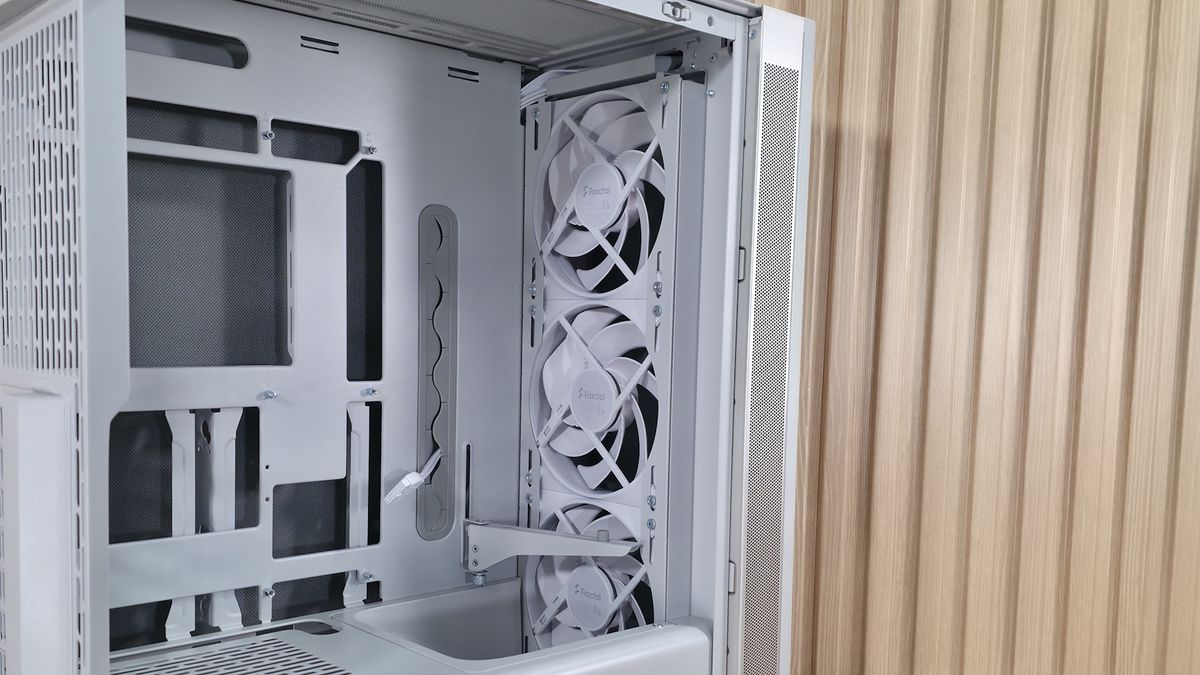
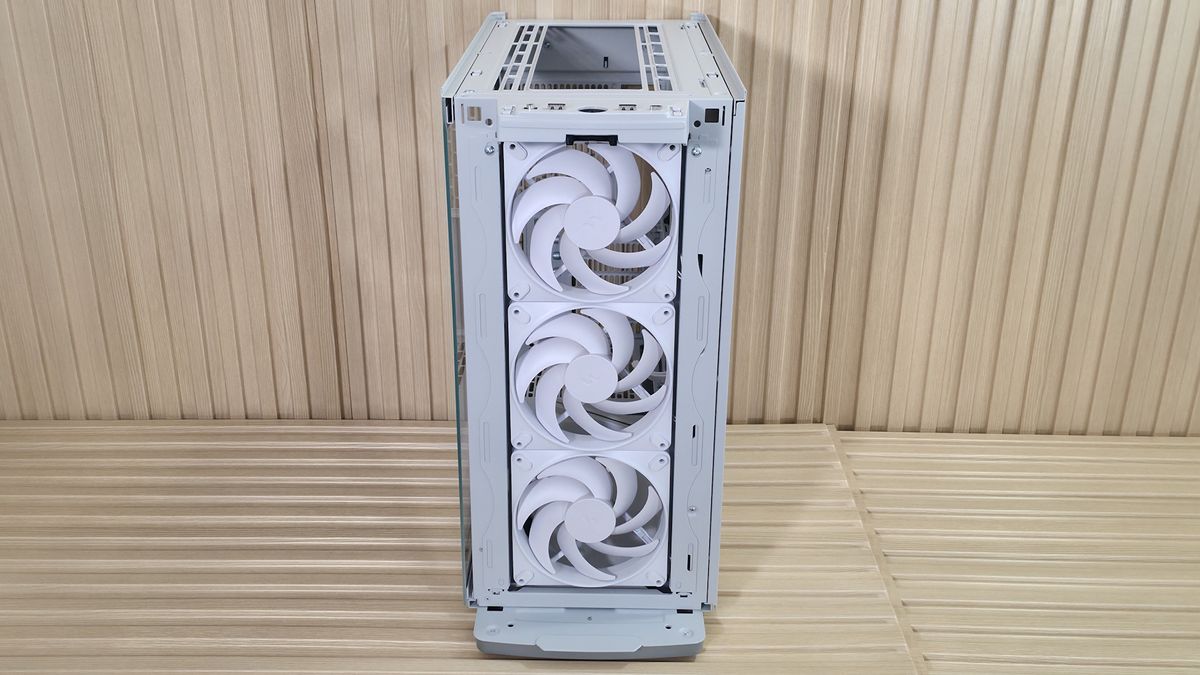
Looking at the front from the inside, we get a better view of the pre-installed Momentum 14 fans and the removable front fan brackets. You can mount a 3x120 mm radiator here, with a maximum length of 405 mm and 30 mm thick if you keep the air guide (435 mm and thicker radiators, up to 65 mm, if you remove it), or it fits 280/240/140/120mm radiators. There are plenty of options, but make sure you know your radiator size so you know what you need to remove, if anything.
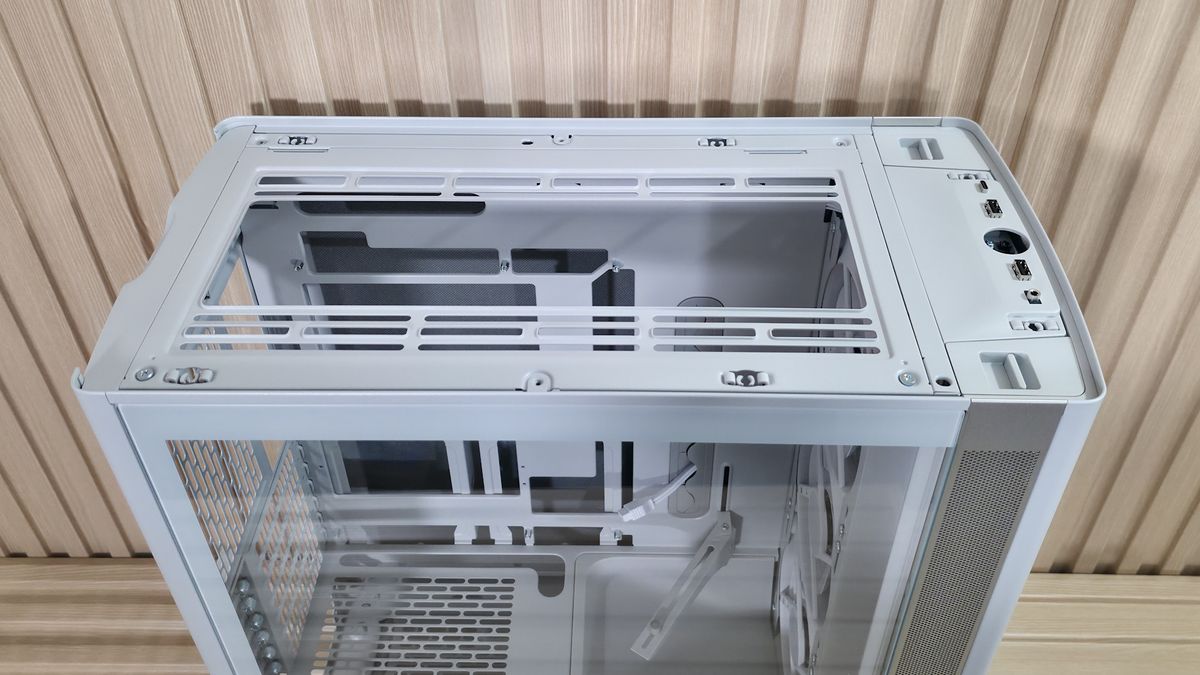
Looking at the ceiling of the case from the inside, we see the removable top bracket, held in by two screws. The top holds up to two 140mm fans or a 280mm radiator. You have around 60mm or so before the radiator/fan combo covers the top of the motherboard, so you don’t have to worry too much about fitment or covering the top of your motherboard if you choose to use a radiator in this space. At the rear of the case, we spy the 120mm fan mounting location and the seven available expansion slots.
On the bottom rear, we can see the power supply chamber, along with space to route cables for any headers located along the bottom of the motherboard. The bottom chamber is vented, but won’t radiate a ton of heat, as the power supply gets cool air from the filtered intake on the bottom.
Image 1 of 3
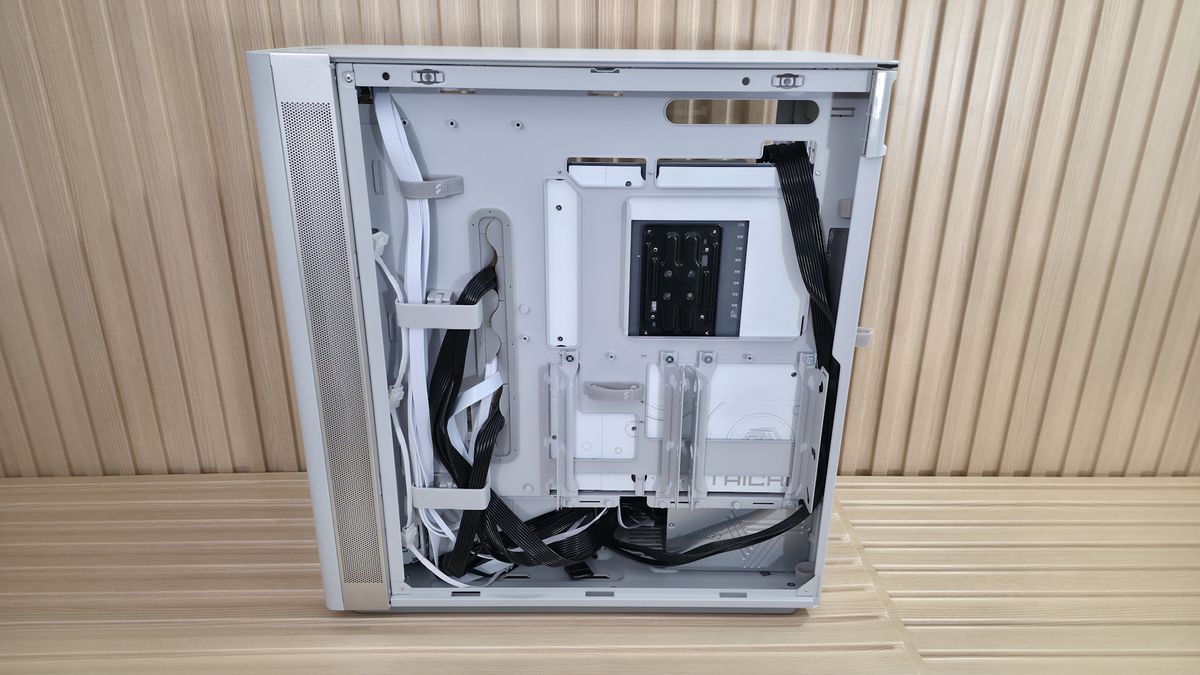
Let’s look behind the motherboard panel. Here, we see the difference between cheap cases that cut corners and one that doesn’t. First, there’s 37 mm (1.46 inches) between the motherboard tray and the back panel for cables. That’s plenty of space to haphazardly stuff your cables in without a bulging panel. Next, you’re likely to notice the cable management features. On the left are two plastic pieces and pre-installed Velcro. The plastic pieces slide in and out so you can more easily get the cables in the channel.
On the rear of the case are more Velcro straps to route cables, like your 8-pin EPS for the CPU, cleanly up the back. A keen eye also spots the two 2.5/3.5-inch drive mounts. You can fit two 3.5-inch drives (one in each mount location) or four 2.5-inch drives (two in each mounting location). The case fits six 2.5-inch drives total, with the other mounting areas hidden on the floor, under the front air guide.
Overall, the Define One is a good-looking case in the “Light” colorway. The contrasting aluminum intake area breaks up the monotony of an all-white chassis, giving it some visual life. From the way the panels come off to the internal features, it’s clear some thought went into making this an intuitive building experience.

Joe Shields is a staff writer at Tom’s Hardware. He reviews motherboards and PC components.
What's Your Reaction?
 Like
0
Like
0
 Dislike
0
Dislike
0
 Love
0
Love
0
 Funny
0
Funny
0
 Wow
0
Wow
0
 Sad
0
Sad
0
 Angry
0
Angry
0







Comments (0)