

Fullmetal Alchemist remains a masterpiece 16 years later

Published Jun 13, 2026, 10:00 AM EDT
A breathtaking manga that brought profound emotion and depth to the genre
 Image: Square Enix/Viz Media
The appeal of shonen anime lies in its epic tropes. Quest-driven stories with world-ending stakes push the protagonist to take on impossible odds, typically leading to the stylized fight scenes that define the genre. Some of the most mainstream anime, such as Dragon Ball, Naruto, and Jujutsu Kaisen, are classic shonen stories, while others, like Attack on Titan and Devilman Crybaby, challenge genre conventions by exploring darker themes.
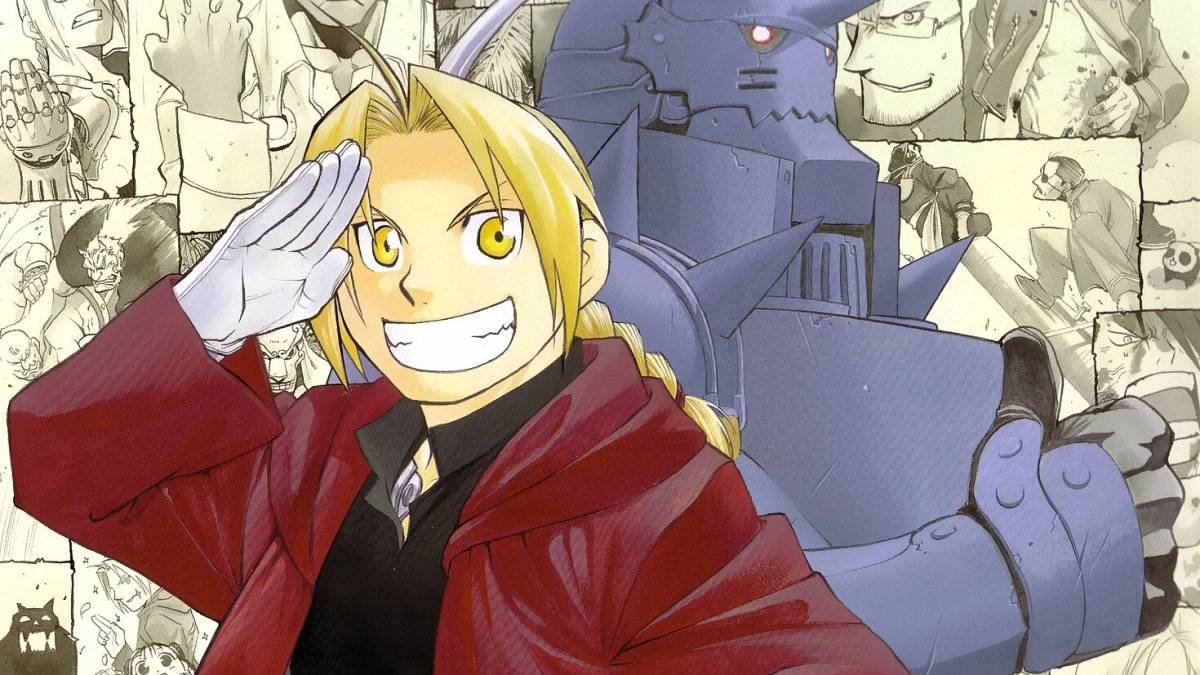
But any conversation about the boundary-pushing shonen anime is incomplete without Hiromu Arakawa’s Fullmetal Alchemist, which concluded its official manga serialization on June 11, 2010. While 16 years and two anime adaptations, countless light novels, and three live-action films have come and gone since Arakawa gifted her best-selling dark fantasy manga to the world, Fullmetal Alchemist continues to be a timeless classic. This is not just because of its breathtaking action and complex approach to alchemy, but thanks to its scathing dissection of capitalism, imperialism, and the pursuit of power at any cost.
The world of Fullmetal Alchemist is a heavily industrialized one, informing the manga’s steampunk aesthetics. Alchemy is practiced as a science in the city of Amestris, where state-sanctioned alchemists are used as government weapons, earning them a reputation as the “dogs of the military.” The story opens with young brothers Edward and Alphonse attempting the forbidden practice of human transmutation to resurrect their dead mother.
Per the science of alchemy’s Law of Equivalent Exchange, to obtain something, something of equal value must be lost or given in return. But what could equal the value of a human soul? This is one of those deep philosophical questions that the series dwells on for its entire duration. While Ed loses his left leg during the failed transmutation, he sacrifices his right arm to save Al, bonding his brother's disembodied soul to an empty suit of armor. Ed goes on to become a State Alchemist and embarks on a mission with Al to restore their bodies.
 Image: Square Enix/Viz Media
While Ed and Al are already acquainted with the devastating effects of misusing alchemy, their journey exposes them to alchemy’s most nefarious uses. The chapters that detail State Alchemist Shou Tucker’s spine-chilling experiments on human Chimera (the fusion of a human being with another organism) still traumatize fans of the manga and anime alike. In fact, both adaptations of the manga — 2003’s Fullmetal Alchemist and 2009’s Fullmetal Alchemist: Brotherhood — have successfully conveyed the emotional gut-punch that is the Shou Tucker storyline despite taking distinct approaches in its portrayal. Much later in their journey, Ed and Al realize that this perversion of alchemy’s use is systemic, as the military has been synthesizing their own chimera in secret labs, albeit with limited success.
In Fullmetal Alchemist, alchemy is often treated as a tool of industry and state power rather than a mystical art. The military's drive to expand Amestris' borders leads to ruthless campaigns of conquest, colonialism, and ethnic cleansing. The enforcer in question is Führer King Bradley. Although Bradley maintains an amicable facade, his cruelties directly shape the war-torn reality of Amestris. While Bradley isn’t the Big Bad, he is one of many formidable hydra heads Ed and Al need to lop off to bring about societal stability. Although Bradley’s militaristic Amestris is meant to evoke the horrors of Nazi Germany, his character is named after the real-world General Omar Nelson Bradley, a US military general who served during World War II.
 Image: Square Enix/Viz Media
Although Fullmetal Alchemist is a shonen due to its target demographic (adolescents, at least at first glance) and the fact that Ed and Al are teenagers, it has all the markings of a mature, politically dense tale. Ed and Al spend most of their time chasing a MacGuffin that is the Philosopher’s Stone, a powerful transmutation amplifier that can supposedly bypass the Law of Equivalent Exchange. While this takes an appropriately philosophical turn towards the end, Fullmetal Alchemist cooks up nuanced conflict through Scar, a lone killer and vigilante who wants to erase all State Alchemists. Scar is both aggressor and victim — his violence is a by-product of the near-extermination of his people, the indigenous Ishvalans, at the hands of the government.
After an Ishvalan child was shot by an Amestrian soldier in 1901, riots and protests erupted, and prolonged armed conflict plagued Ishval until it turned into a war zone. Seven years later, King Bradley issued Order 3066 and sent State Alchemists to war, which caused irreversible damage to the people of Ishval, who were no match for those who wielded science as a weapon. The true purpose behind the government’s deliberate plan to trigger widespread violence, which is revealed in time, puts the heinous extent of state-sanctioned brutality into perspective.
 Image: Square Enix/Viz Media
Scar’s tunnel-visioned goal to eradicate State Alchemists stems from an anguish that cannot be quenched with empty platitudes, as the military’s genocidal tendencies will inevitably repeat as long as they’re in power. Scar seeks to dismantle the societal structures that oppress his people by leveraging alchemy itself, but his character gradually finds a way to hold compassion for people like Ed, who dare to stand up to the authoritarian regime from within it.
Fullmetal Alchemist is a bittersweet whirlwind of a story about rebellion, sacrifice, familial bonds, and war. That said, its greatest strength is its refusal to water down its complex sociopolitical core, which critiques unchecked militarization and capitalist greed. The antagonists in Arakawa’s manga go to great lengths to amass wealth and power and are willing to sacrifice countless innocents to power their depraved wishes. Ed, Al, and their allies succeed in shattering this hollow system, and Fullmetal Alchemist ends with a selfless act of love. While love and compassion might not be enough to combat injustice in the real world, they’re necessary foundations to aid us in the big fight.
Fullmetal Alchemist is available on Manga Up! and Webtoon.
What's Your Reaction?
 Like
0
Like
0
 Dislike
0
Dislike
0
 Love
0
Love
0
 Funny
0
Funny
0
 Wow
0
Wow
0
 Sad
0
Sad
0
 Angry
0
Angry
0






Comments (0)