

Goals is a free FIFA alternative that is actually good
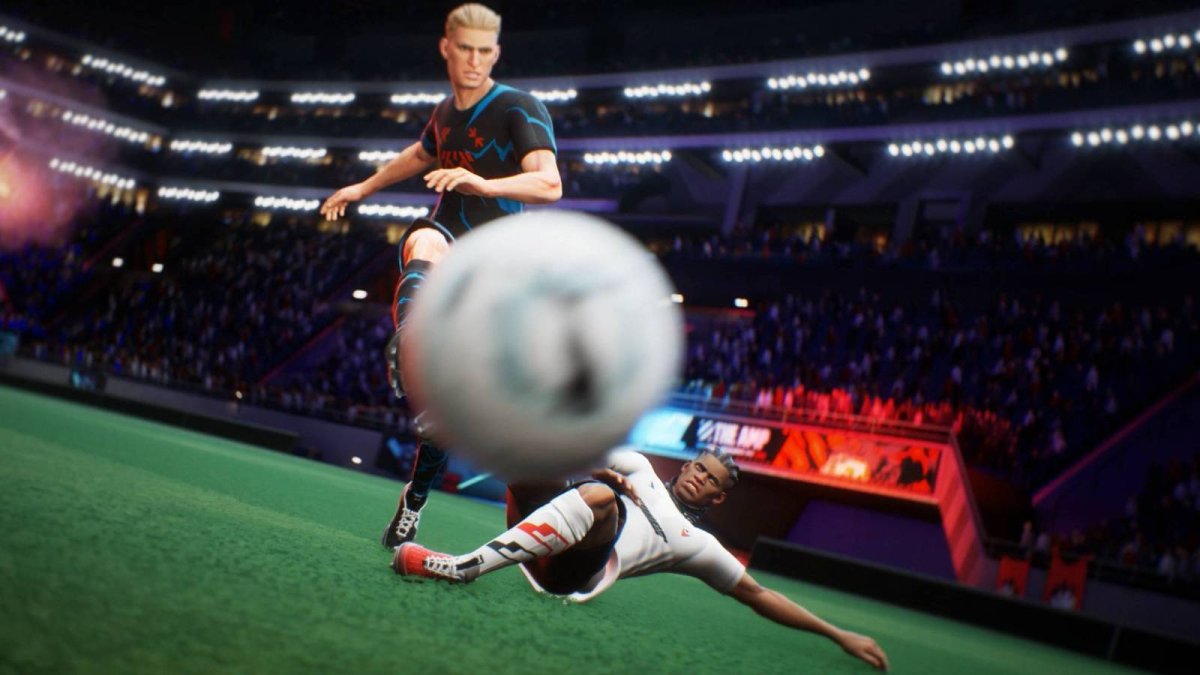
EA Sports FC, commonly referred to as FIFA despite its split from the sport's global governing body in 2023, is the main soccer game on the market. Over the years, competition has come and gone, but ever since the Pro Evolution Soccer series tailed off in the late noughties, FIFA has donned the crown. eFootball, Rematch, and (confusingly) FIFA's World Cup Netflix game post-split from EA Sports have, unfortunately, not offered much in the way of other options worth your time.
Claiming that's no longer the case would be jumping the shark because it's still very much in its infancy, but FIFA finally has a potential competitor: Goals. While the developer (also named Goals) hasn’t outright claimed Goals is here to topple FIFA's reign, the game's tagline reads "football gaming, rebuilt from scratch," seemingly implying that until now, the genre has been broken.
Goals' most obvious selling point is that it's free-to-play, compared to EA Sports FC 26's premium price tag. Realistically, breaking down that barrier to entry and allowing anyone to give it a shot without forking over real money is the only way a FIFA competitor will stand a chance of succeeding, because EA Sports' game has so much brand recognition.
On the surface, Goals bears many resemblances to Ultimate Team, the card-based mode that has featured in every FIFA and EA Sports FC game since 2009. The entirety of the game relies on opening packs of cards to improve your squad, before taking it to modes such as ranked and knockout, which closely resemble FIFA's division rivals and weekend league respectively.
It isn't a carbon copy, though. Firstly, Goals doesn't have any real players; everyone on your team is fictional. This means the collective hunt for Messi, Ronaldo, or Mbappe doesn't exist. However, there also isn't a transfer market, so at the moment, there is no player economy, which leaves more room to focus on the actual soccer as opposed to the metagaming aspect of trying to buy low and sell high.
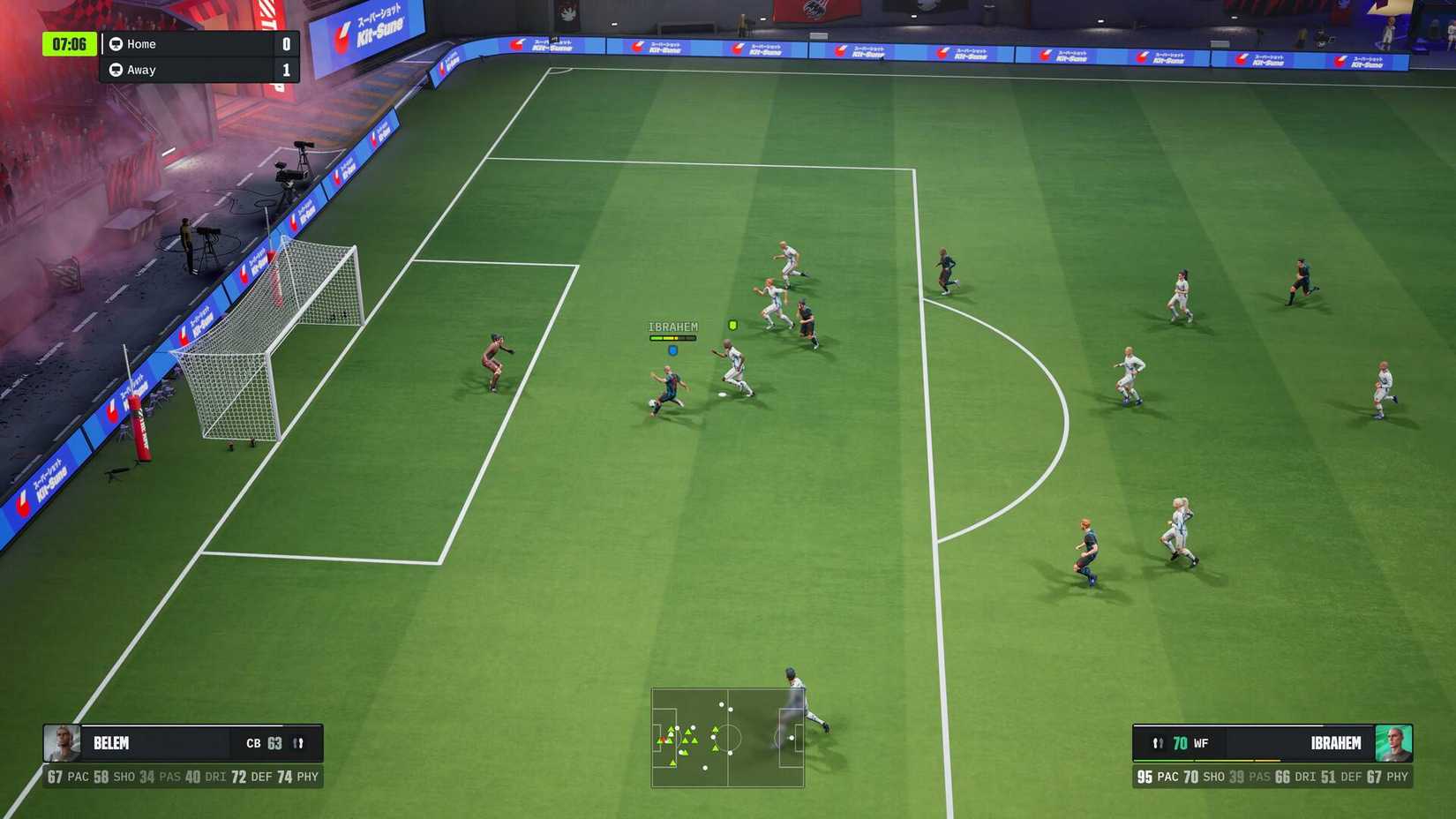 Image: Goals
Progression, at least for the time being, is also much slower. While there is a pay-to-win element in the form of premium currency, which you can spend on more packs, the highest rarity of card you can guarantee is uncommon, aka players rated 70-79. The chance of getting an 80+ player is just over 5%, while an 85+ is 0.37%. A 95+ player? You have just a 0.0002% chance, aka approximately 1 in 500,000.
These odds may change in future as more pack varieties are released, but it means you're far less likely to get frustrated, coming up against opponents that have dropped a wedge on the game to have the strongest team. However, highly rated cards can be acquired another way: upgrades.
After every match you play, everyone on the team sheet will receive a set amount of experience. Once they earn enough (the higher rated they are, the more it takes), you can spend points on upgrading them. This isn't infinite, though; each player has a set potential, much like you'd find in FIFA's career mode, and only a certain number of possible upgrades. They may reach their potential, they may not, but you can only upgrade them as many times as their card indicates.
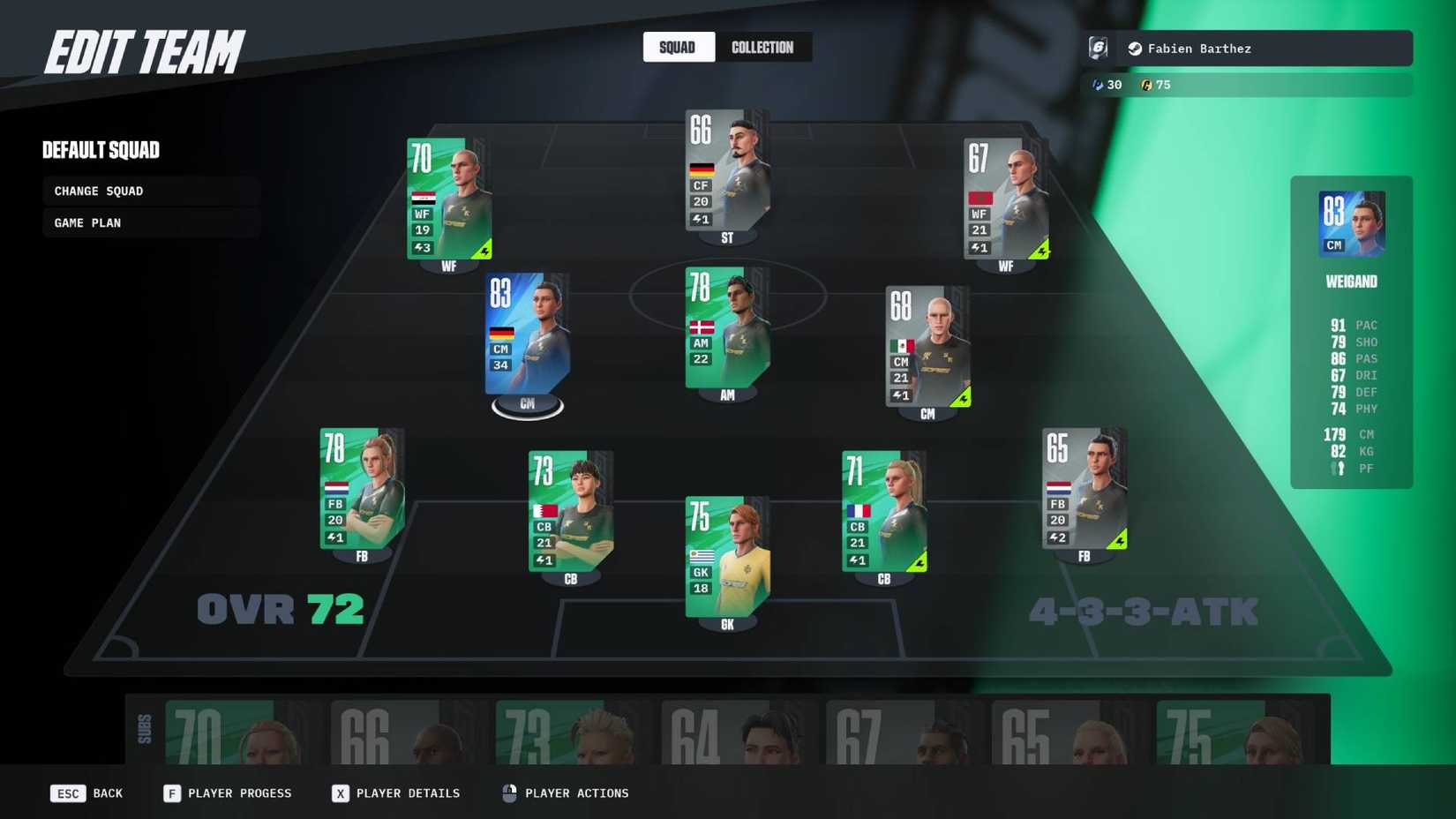 Image: Goals via Polygon
You'll form attachments to your fictional players, helped by the knowledge that nobody else in the world has them. 33-year-old Ola Weigand is the star of my team, an 83-rated German center midfielder with 91 pace who has been with me since my randomly assigned squad at the start of the game. She's won me numerous matches with her 93 attacking IQ and 99 lofted pass stats, and she's my prime candidate to turn into a legend. Players retire in Goals, but if you're so attached to them that you can't bear to see them leave, you can also spend currency to convert them into legends, allowing them to play indefinitely.
On the pitch, FIFA players will feel right at home, both for better and for worse. The control scheme is practically identical, and mechanically, it's only slightly stripped back. You can hold R1/RB to use another player to press an opponent, you can use the same button while in possession to perform a finesse shot, skill moves are executed with the right analog stick, and so on.
This similarity is clearly intentional, because Goals isn't asking you to learn an entirely new game; it's offering FIFA-style gameplay with less of the bullshit. In FIFA, hands-off defending is the most effective approach, letting your players naturally get in the way of attackers, but that won't fly here. You need to be proactive and time your tackles. You can't waste time here; if you pass it around the defense, a zone will slowly extend from behind your goal. Spend too much time in here and you'll concede a free kick.
 Related
The same zone appears as the game approaches half-time, albeit from the center circle, so rather than adding on a certain amount of injury time that could be deemed unfair or inaccurate, the half only ends when the ball has spent a cumulative 10 seconds inside the zone. At full time, the zone appears behind the goal of whichever player is losing.
Goals isn't short of drawbacks, however. In FIFA 12 and 13, pace was infamously overpowered. Players who were otherwise nothing spectacular — Theo Walcott, Aaron Lennon, and Seydou Doumbia to name three — were some of the most expensive in the game. Pace feels similarly powerful in Goals, although whether you can get your hands on a rapid player is much more luck-based thanks to the lack of a transfer market.
 Image: Goals
Certain skill moves, such as ball rolls and pullbacks, are frustratingly strong here too, with a meta quickly emerging that favors players who can control the ball closely as opposed to using through balls and encouraging runs into the open. Losing in Goals doesn't feel quite as rage-inducing as FIFA often has over the years though, even if there are moments where I've needed to put the controller down for a break.
EA Sports' 30-year-old series is definitely the flashier package, and if authenticity is important to you, the fictional players in Goals aren't going to cut the mustard. But with the ball at your feet, this up-and-coming indie competitor feels like it has a healthy future. It's early days, but now's your chance to get involved with potentially the next big sports game.
What's Your Reaction?
 Like
0
Like
0
 Dislike
0
Dislike
0
 Love
0
Love
0
 Funny
0
Funny
0
 Wow
0
Wow
0
 Sad
0
Sad
0
 Angry
0
Angry
0








Comments (0)