

G.Skill Trident Z5 NeoX RGB DDR5-6000 C30 2x16GB Review — EXPO ULL memory kit to max out your Ryzen
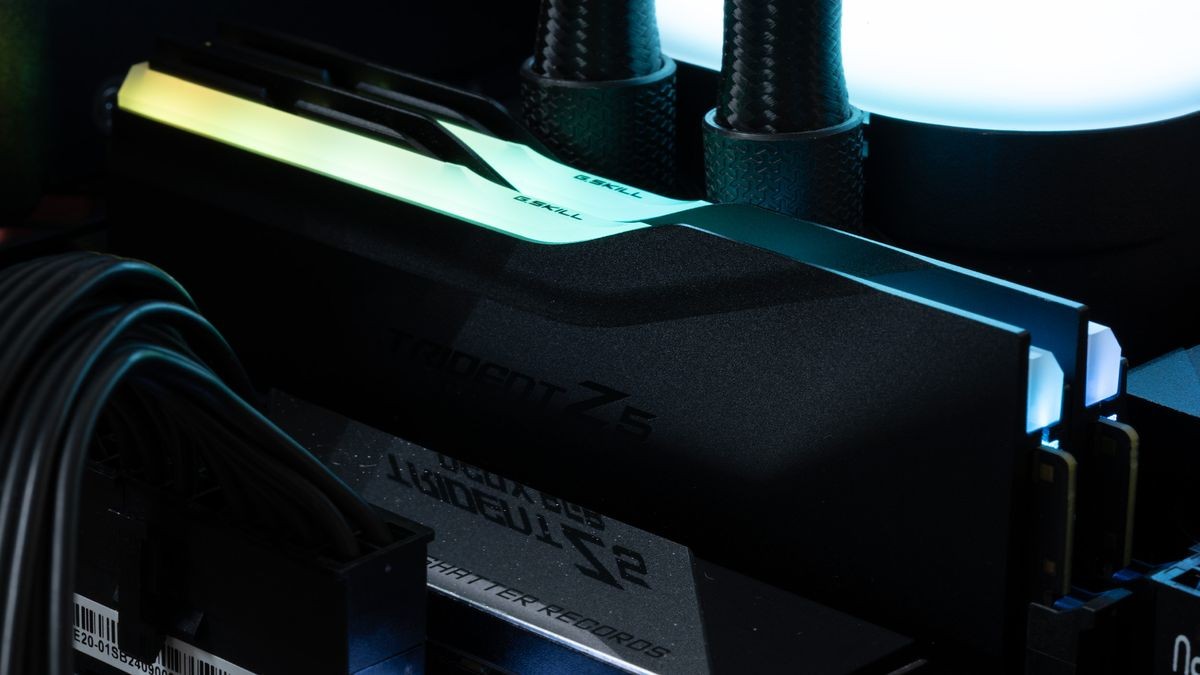
The Trident Z5 NeoX RGB DDR5-6000 C30 is the kind of memory kit you pick up if you want the absolute best for an AMD Ryzen processor.
Pros
- +
Unrivaled performance
- +
Runs at 1.35V
- +
Backup EXPO profile
Cons
- -
Exorbitant price tag
Why you can trust Tom's Hardware Our expert reviewers spend hours testing and comparing products and services so you can choose the best for you. Find out more about how we test.
Unfazed by the ongoing memory shortage, G.Skill has launched the Trident Z5 NeoX RGB DDR5-6000 C30 memory kit, equipped with AMD's EXPO Ultra Low Latency (ULL) feature, to position it as a serious contender among the best RAM options.
EXPO 1.2 may seem like a minor specification update, but ULL is nothing to sneeze at. Among all the features, it brings a new level of optimization of memory sub-timings that were previously neglected. These memory sub-timings are key to increasing the performance on Ryzen processors. Standard AMD EXPO memory kits typically leave these memory sub-timings alone for the sake of broader compatibility. However, new EXPO ULL-certified memory kits, like the Trident Z5 NeoX RGB DDR5-6000 C30, leverage these secondary and tertiary memory sub-timings to unlock additional performance from AMD's Ryzen chips.
Image 1 of 3
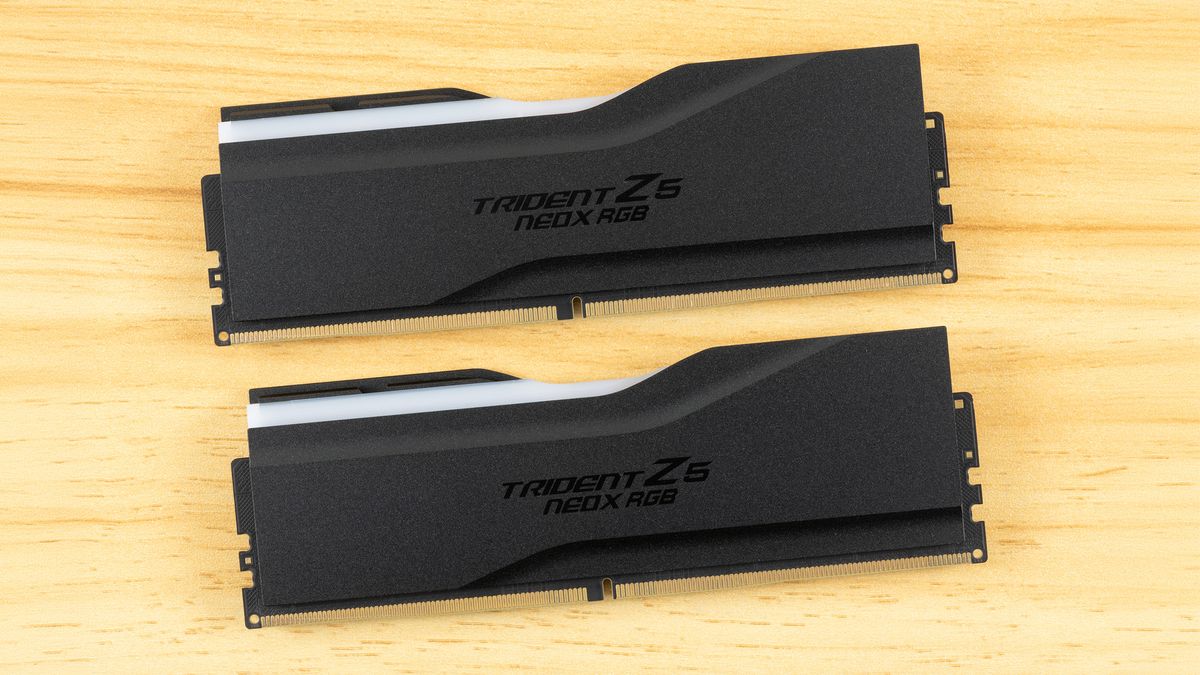
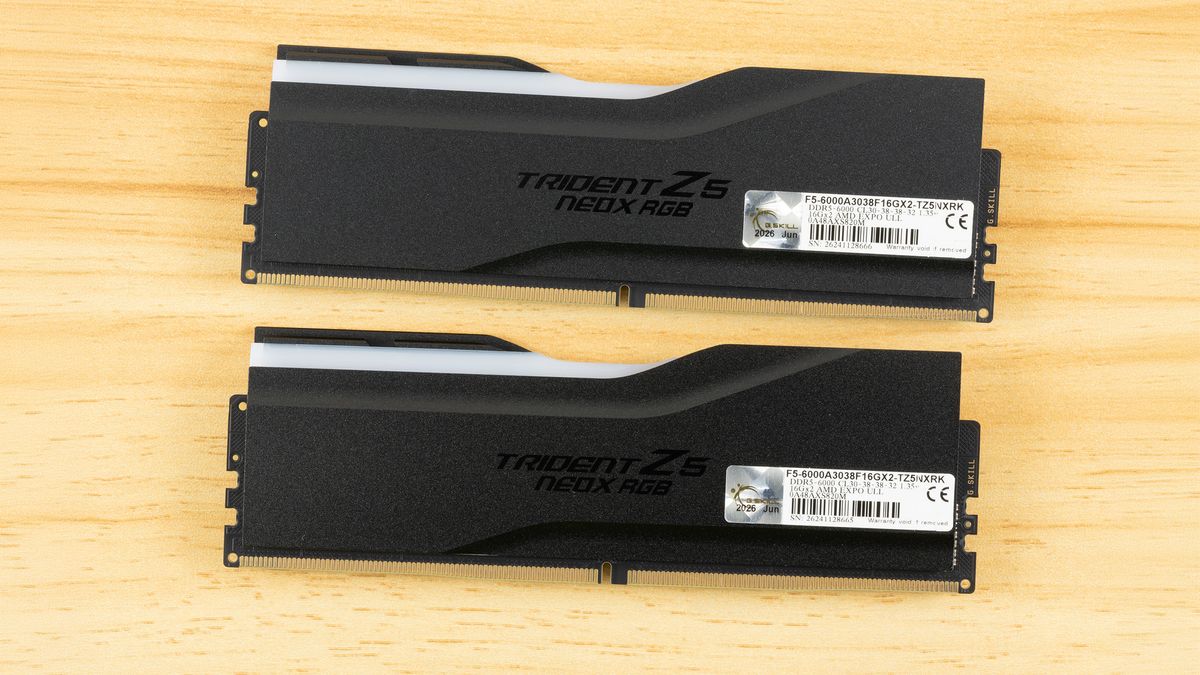
If you have seen one Trident Z5 memory module, you have seen them all because every new Trident series that comes out follows a similar design recipe as the very first Trident DDR5 memory modules. This is not necessarily a bad thing, though. The design has been a winning formula for G.Skill's Trident Z5 memory modules, and it has resonated well among enthusiasts.
Latest Videos FromTom's Hardware
In the case of the Trident Z5 NeoX, G.Skill went with a single-color exterior. Depending on the SKU, the memory modules are available in matte black, matte white, or a sleek glossy black finish. Regardless of which colorway you choose, the overall design language remains largely identical. The only subtle difference lies in the logo placement. On the glossy black variant, the logo is on the right side, while on the matte versions, it resides in the center of the memory module.
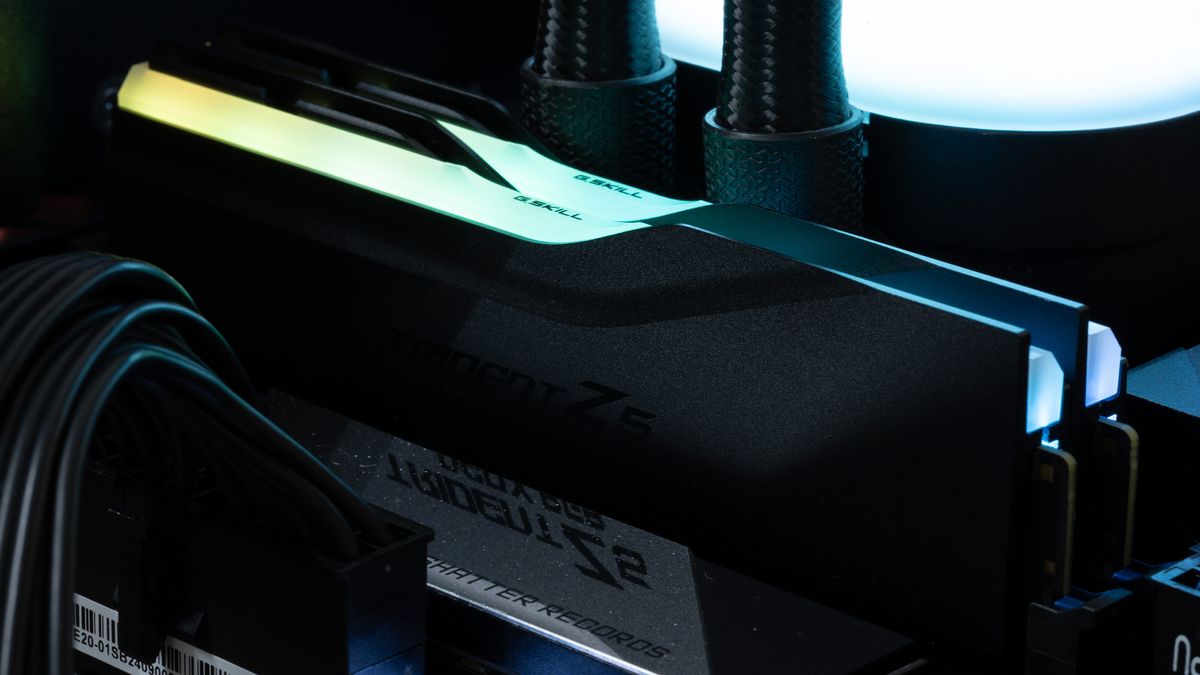
Since it essentially utilizes the standard blueprint for every Trident Z5 memory module, the NeoX maintains a height of 1.65 inches (42mm). You are unlikely to run into clearance issues with large CPU air coolers. When it comes to aesthetics, the only RGB lighting present is the diffused light bar running along the top edge of the memory module. G.Skill provides its proprietary Trident Z Lighting Control software for customization, but you can use the motherboard software suites from all major brands, including Asus Aura Sync, Gigabyte RGB Fusion 2.0, MSI Mystic Light Sync, or ASRock Polychrome Sync.
Image 1 of 2
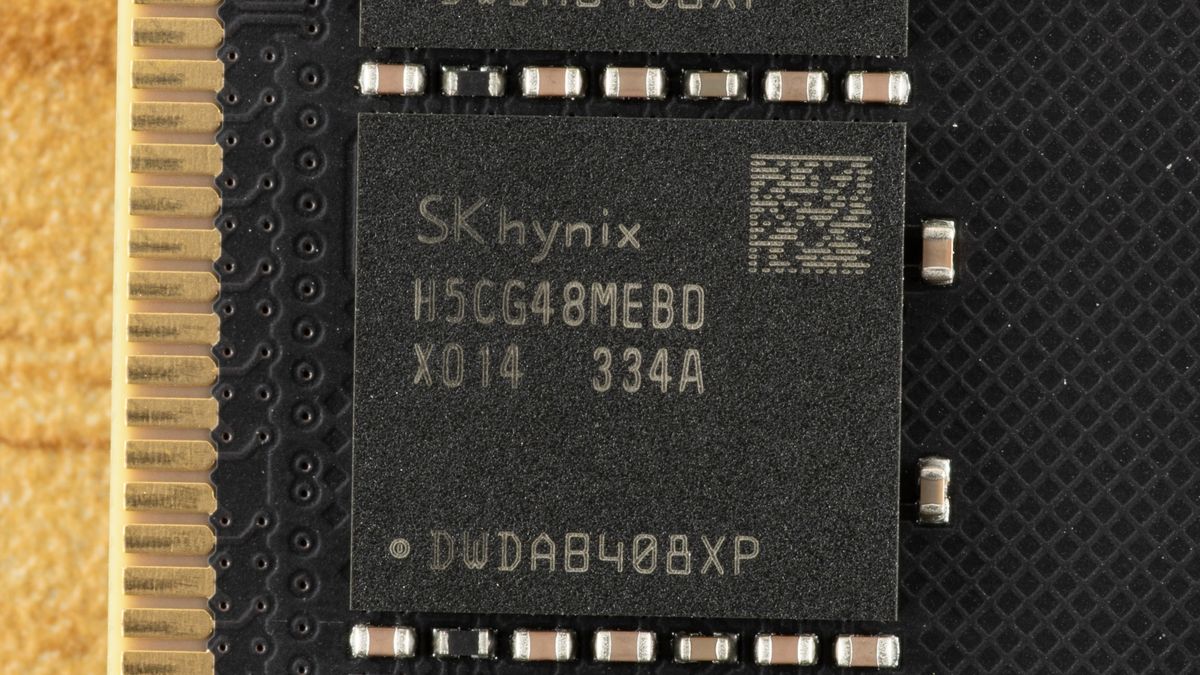
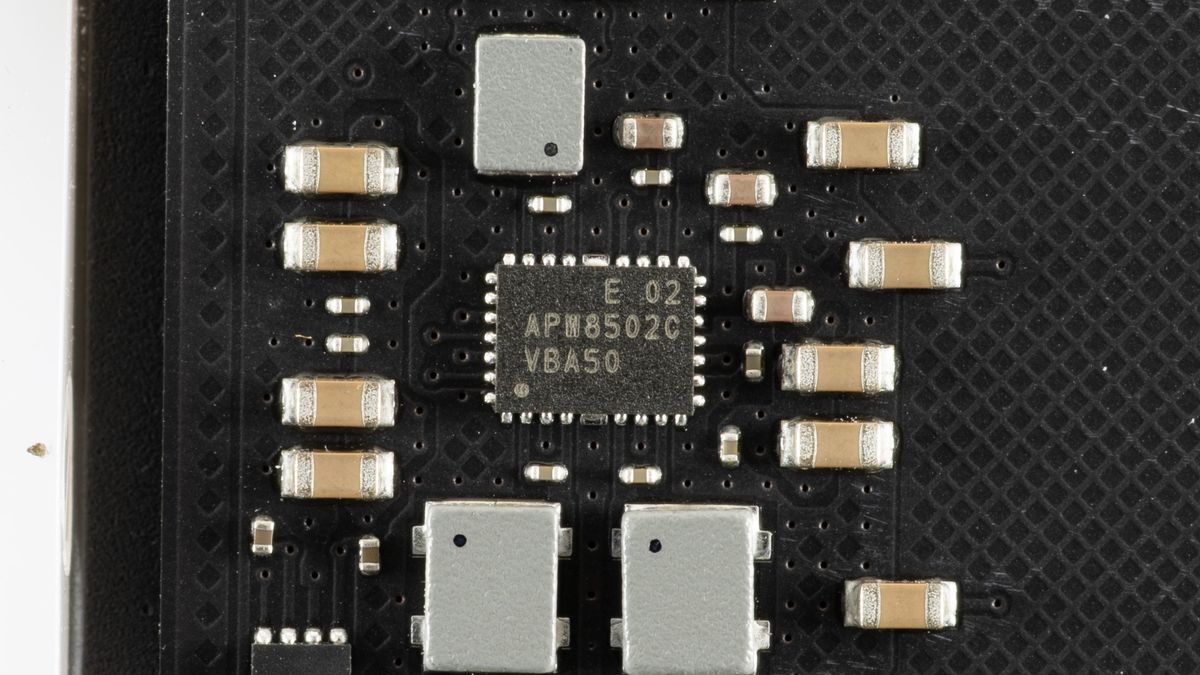
It is a dual-channel memory kit, so each memory module is 16GB in capacity. The memory modules employ a black PCB with a single-sided design and a single-rank layout. There are eight integrated circuits (ICs), each with a capacity of 2GB, on one side of the PCB. The ICs themselves are H5CG48MEBD-X014 (M-die) from SK hynix and are well-regarded in the overclocking community. The power management integrated circuit (PMIC), which handles the power delivery, is from ANPEC, specifically the APW8502C-VBA50.
Like most enthusiast-grade memory kits, the Trident Z5 NeoX modules default to the JEDEC DDR5-4800 specification, with relaxed timings of 40-40-70 to ensure maximum compatibility. Since it is a memory kit for AMD systems, there are only EXPO profiles onboard. The primary EXPO profile corresponds to ULL, and it is clearly labeled as such within the BIOS for easy identification. It will set memory to DDR5-6000 speeds with 30-38-38-23 timings at 1.35V. The secondary EXPO profile keeps the data rate and operating voltage the same but dials back the tRAS to 96 clock cycles, probably to enhance stability for users who cannot get the ULL profile to work. See our PC Memory 101 feature and How to Shop for RAM story for more timings and frequency considerations.
Stay On the Cutting Edge: Get the Tom's Hardware Newsletter
Get Tom's Hardware's best news and in-depth reviews, straight to your inbox.
Comparison Hardware
Swipe to scroll horizontally
Trident Z5 NeoX RGB |
F5-6000A3038F16GX2-TZ5NXRK |
2 x 16GB |
DDR5-6000 (EXPO) |
30-38-38-32 (2T) |
1.35 |
Lifetime |
Corsair Vengeance RGB DDR5 |
CMH32GX5M2B6000Z30 |
2 x 16GB |
DDR5-6000 (EXPO) |
30-36-36-76 (2T) |
1.40 |
Lifetime |
G.Skill Trident Z5 Neo RGB |
F5-6000J3038F16GX2-TZ5NR |
2 x 16GB |
DDR5-6000 (EXPO) |
30-38-38-96 (2T) |
1.35 |
Lifetime |
Adata XPG Novakey RGB |
AX5U6000C3016G-DCNKRBK |
2 x 16GB |
DDR5-6000 (XMP & EXPO) |
30-40-40-77 (2T) |
1.40 |
Lifetime |
G.Skill Ripjaws S5 |
F5-6000J3238F16GX2-RS5K |
2 x 16GB |
DDR5-6000 (XMP) |
32-38-38-96 (2T) |
1.35 |
Lifetime |
Lexar Ares RGB |
LD5FU016G-R6000GDGA |
2 x 16GB |
DDR5-6000 (XMP & EXPO) |
34-38-38-76 (2T) |
1.30 |
Lifetime |
G.Skill Trident Z5 RGB |
F5-6000U3636E16GX2-TZ5RS |
2 x 16GB |
DDR5-6000 (XMP) |
36-36-36-76 (2T) |
1.30 |
Lifetime |
TeamGroup T-Force Deltaα RGB |
FF7D532G6000HC38ADC01 |
2 x 16GB |
DDR5-6000 (EXPO) |
38-38-38-78 (2T) |
1.25 |
Lifetime |
Adata XPG Lancer RGB |
AX5U6000C4016G-DCLARBK |
2 x 16GB |
DDR5-6000 (XMP & EXPO) |
40-40-40-76 (2T) |
1.35 |
Lifetime |
Image 1 of 2
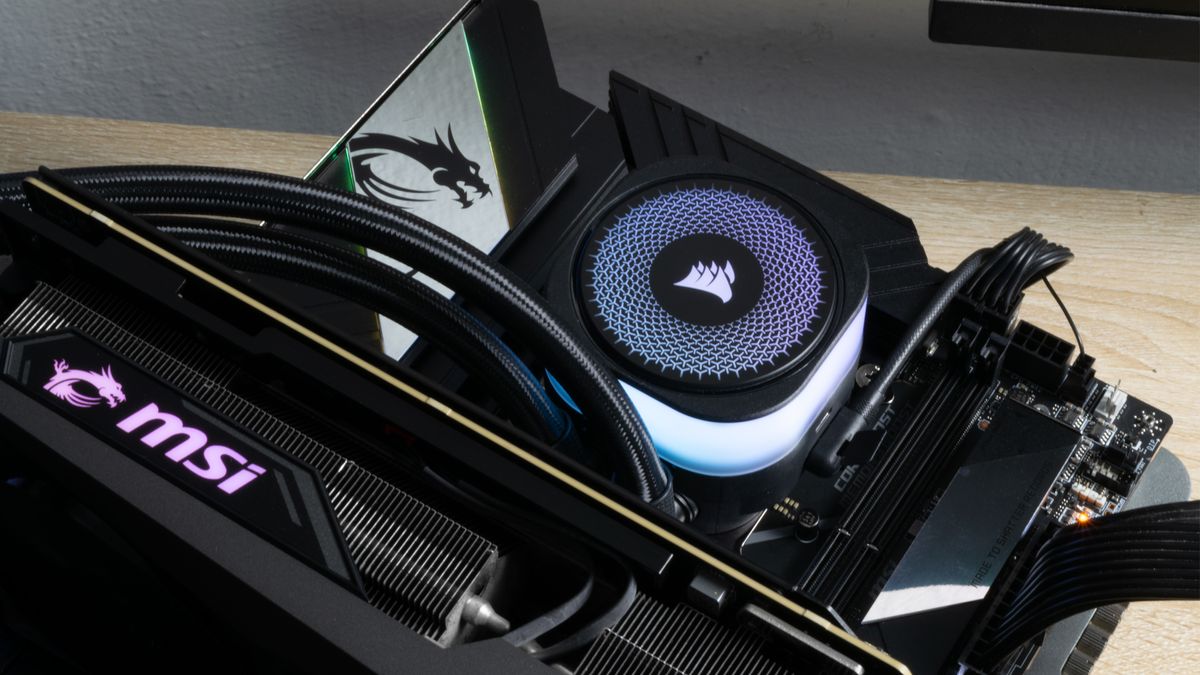
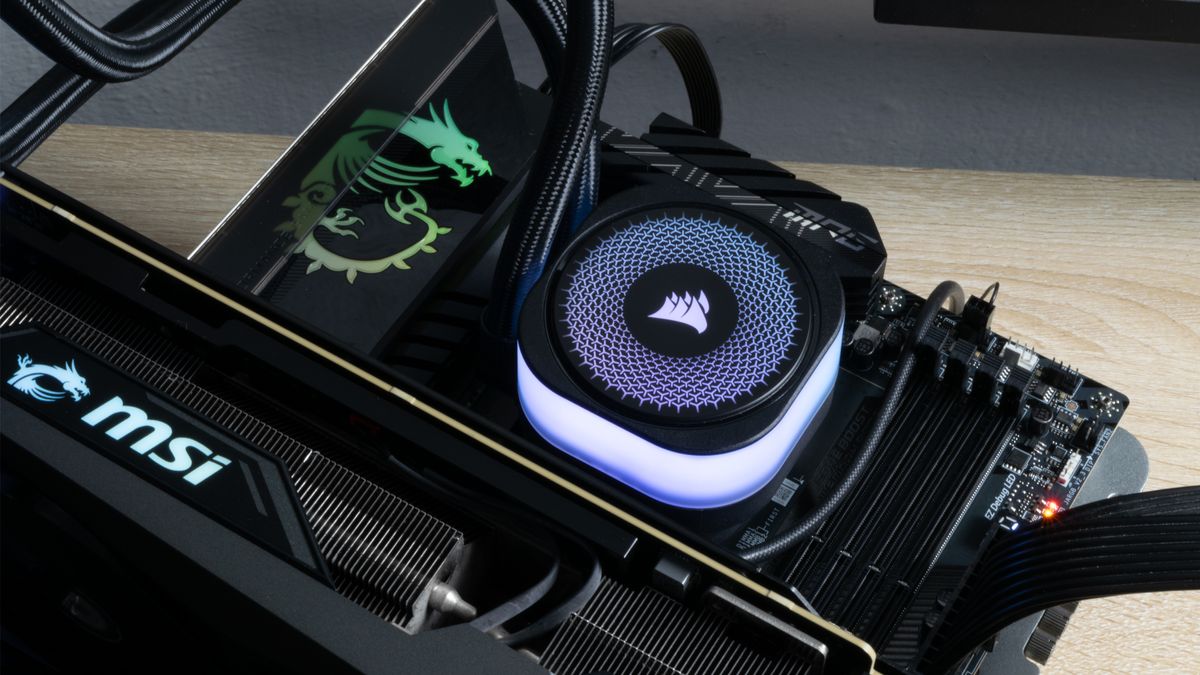
The Intel system features the Core Ultra 9 285K processor and the MSI MEG Z890 Unify-X motherboard with firmware version 7E20v1AA0. Conversely, the AMD system utilizes the Ryzen 9 9900X processor and the MSI MPG X870E Carbon WiFi motherboard with firmware version 7E49v1AA3. The Corsair iCUE Link Titan 360 RX LCD CPU liquid-cooling solution efficiently maintains optimal temperatures for both the Arrow Lake and Zen 5 processors, ensuring efficient thermal management across platforms.
The MSI GeForce RTX 4080 16GB Gaming X Trio efficiently handles demanding graphics workloads, preventing any bottlenecks during our gaming RAM benchmarks. The TeamGroup A440 Lite PCIe 4.0 SSD balances performance and capacity, delivering 2TB of ultra-fast storage with speeds up to 7,400 MB/s—perfect for Windows 11 24H2 installations, benchmarking software, and gaming applications.
The Corsair RM1000x Shift ATX 3.0 power supply delivers reliable and ample power to our test systems, directly supporting the GeForce RTX 4080 via its native 16-pin (12VHPWR) cable. The Streacom BC1 open-air test bench offers flexible, tool-free accommodation for all hardware components, streamlining assembly and component swaps.
Swipe to scroll horizontally
Processor |
Intel Core Ultra 9 285K |
AMD Ryzen 9 9900X |
Motherboard |
MSI MEG Z890 Unify-X |
MSI MPG X870E Carbon WiFi |
Graphics Card |
MSI GeForce RTX 4080 16GB Gaming X Trio |
MSI GeForce RTX 4080 16GB Gaming X Trio |
Storage |
TeamGroup A440 Lite 2TB |
TeamGroup A440 Lite 2TB |
Cooling |
Corsair iCUE Link Titan 360 RX LCD |
Corsair iCUE Link Titan 360 RX LCD |
Power Supply |
Corsair RM1000x Shift |
Corsair RM1000x Shift |
Case |
Streacom BC1 |
Streacom BC1 |
Intel Performance
Image 1 of 24
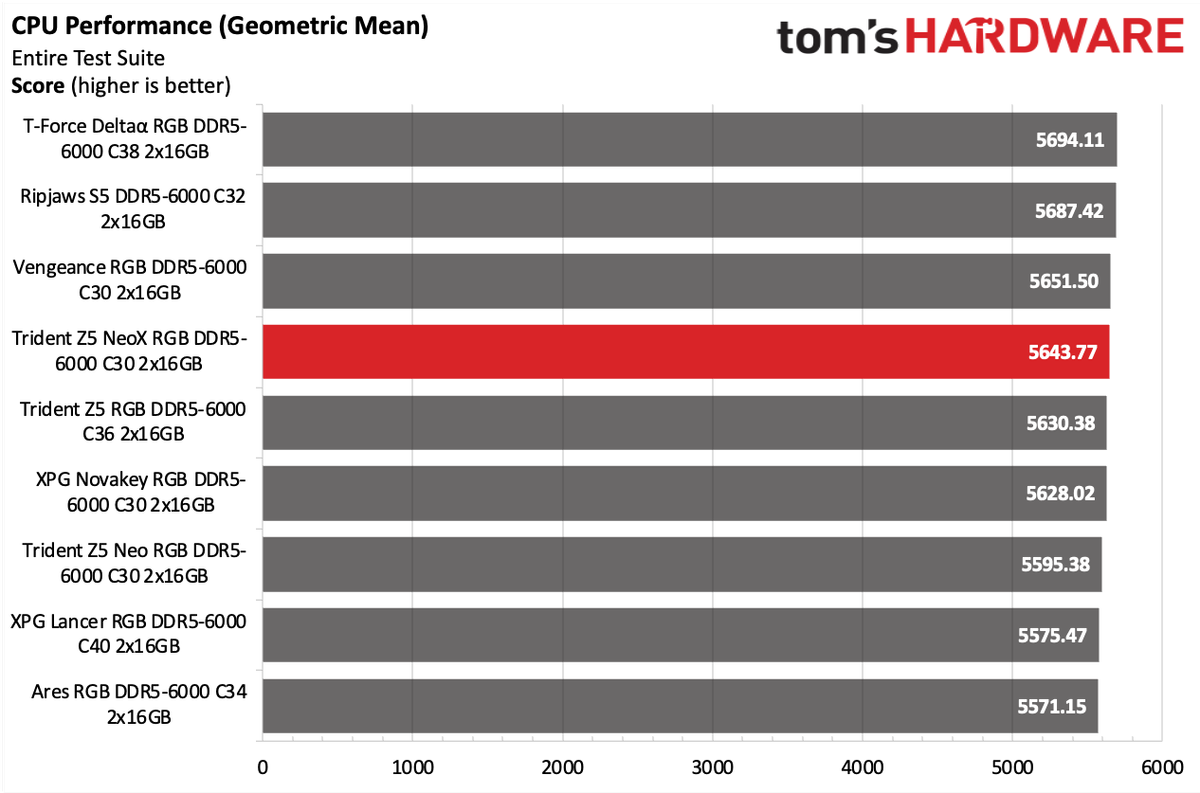
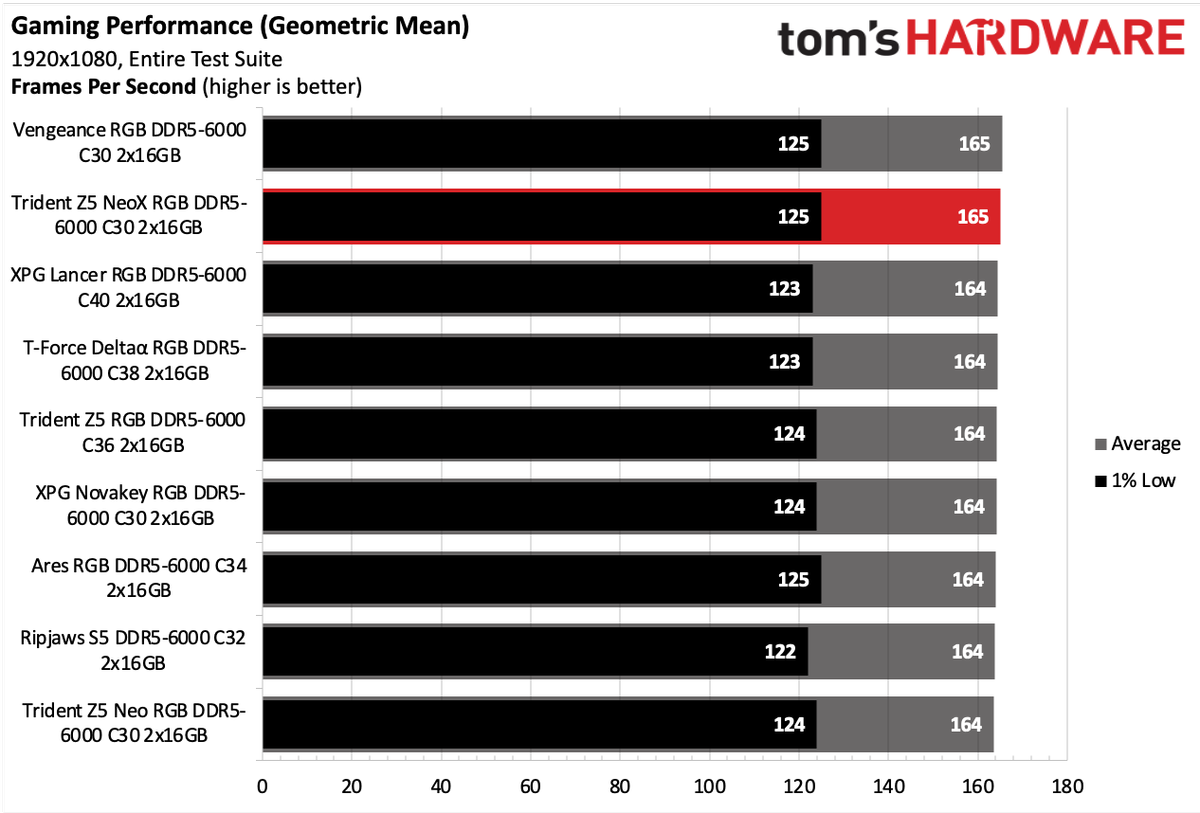
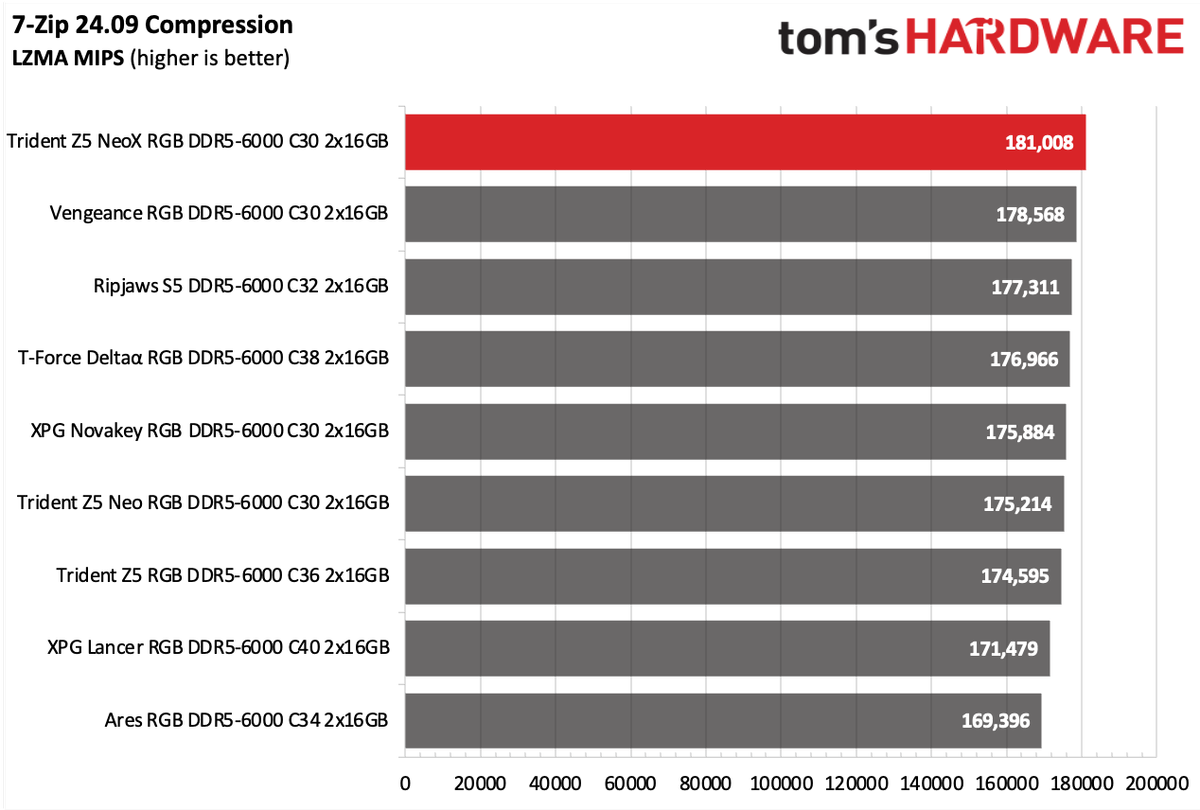
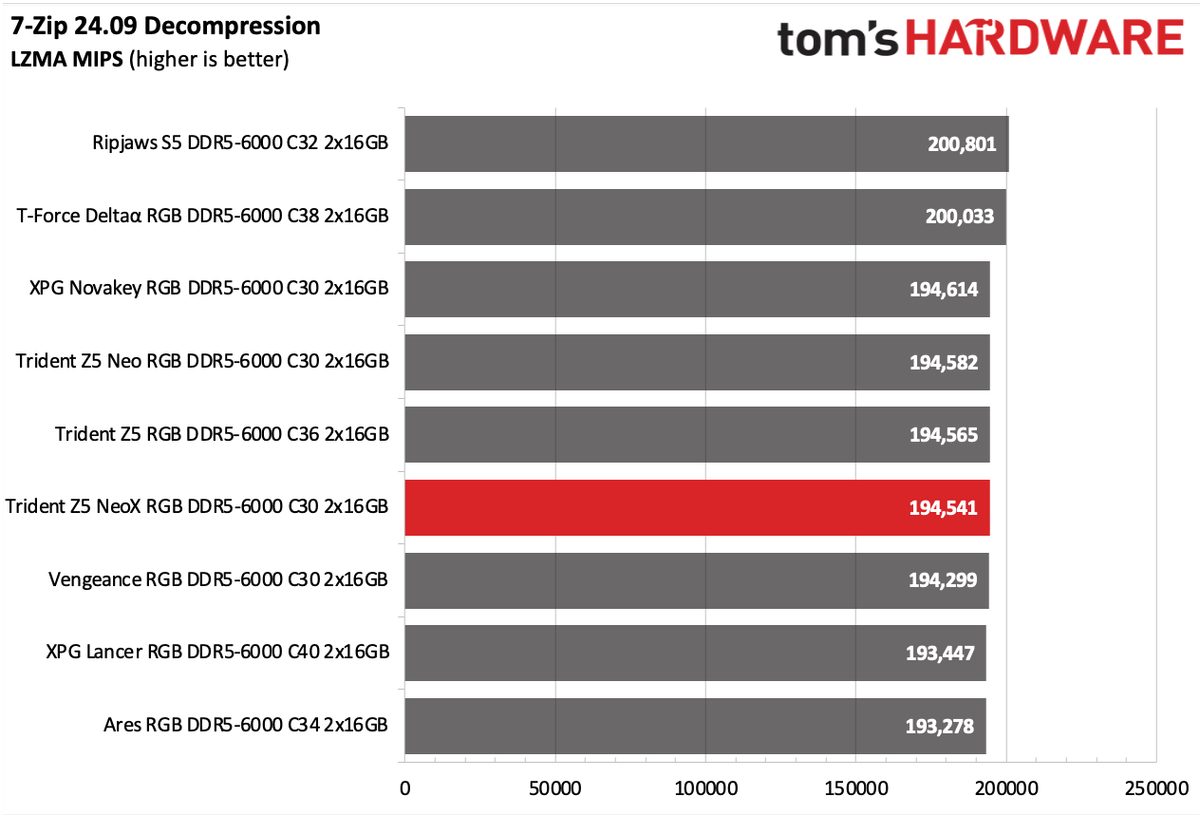
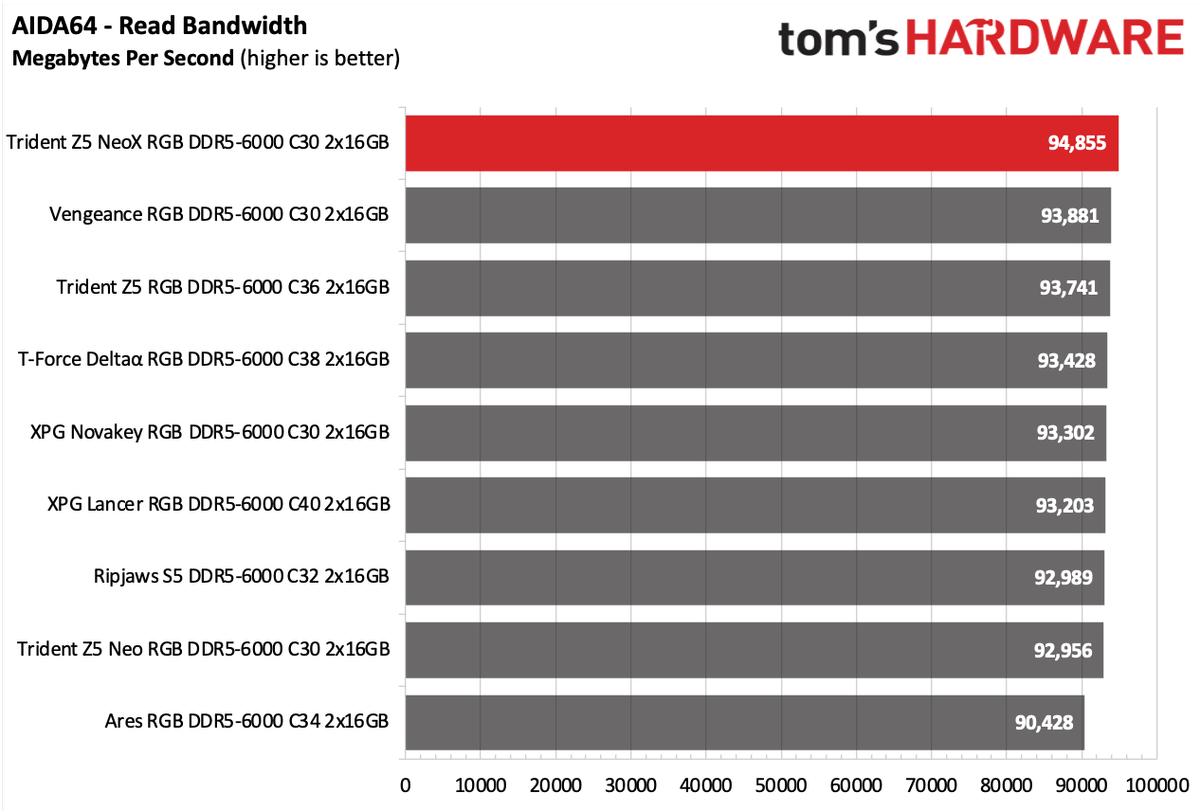
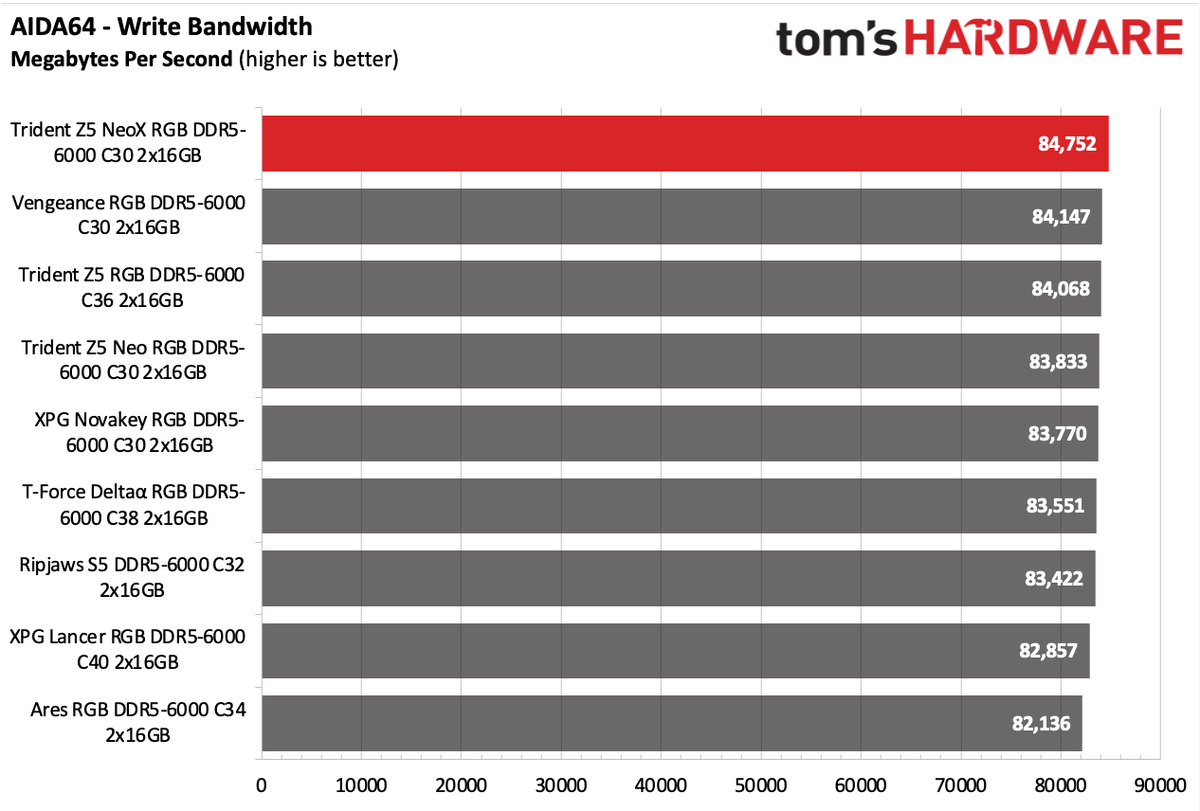
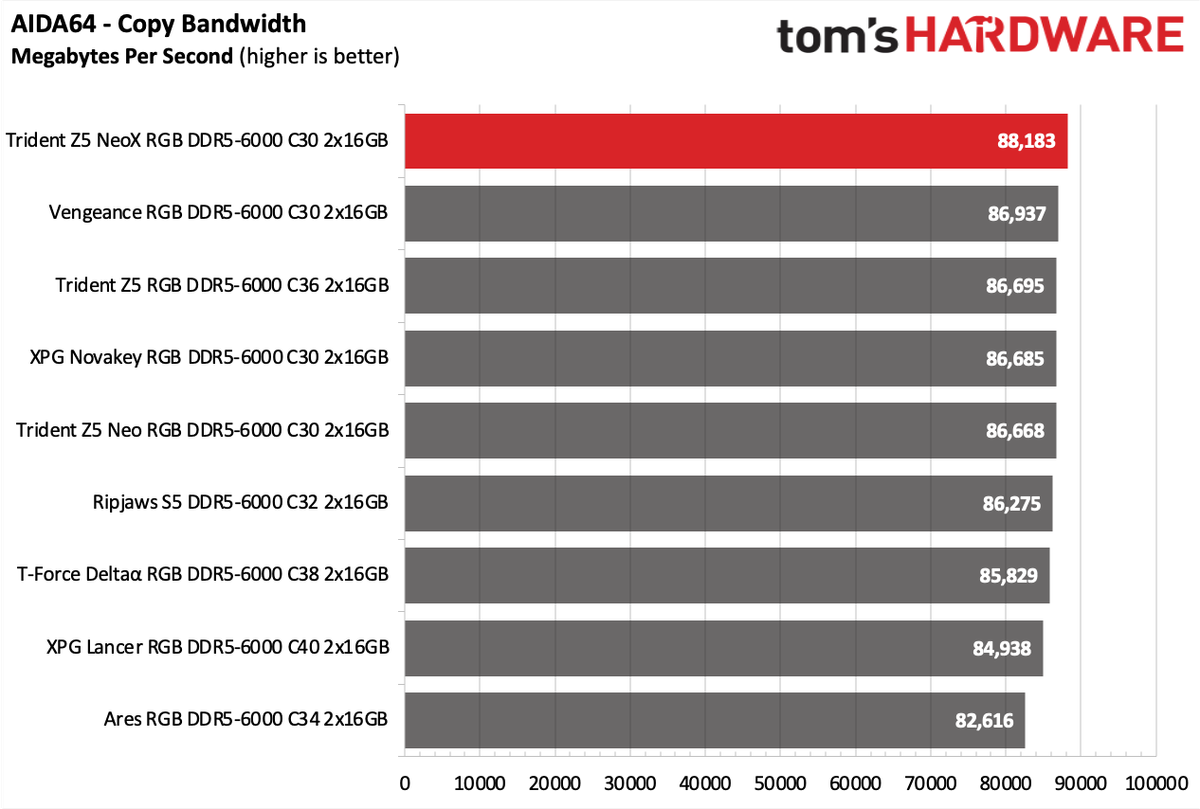
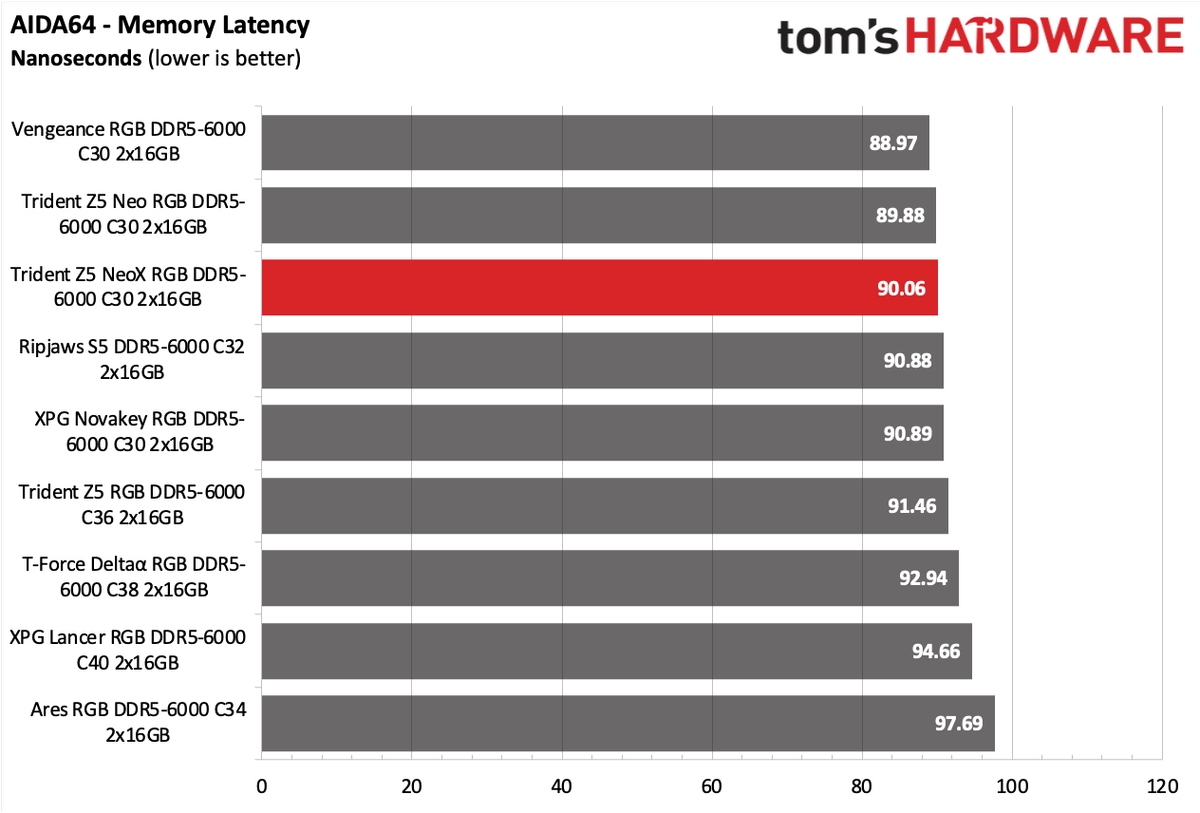
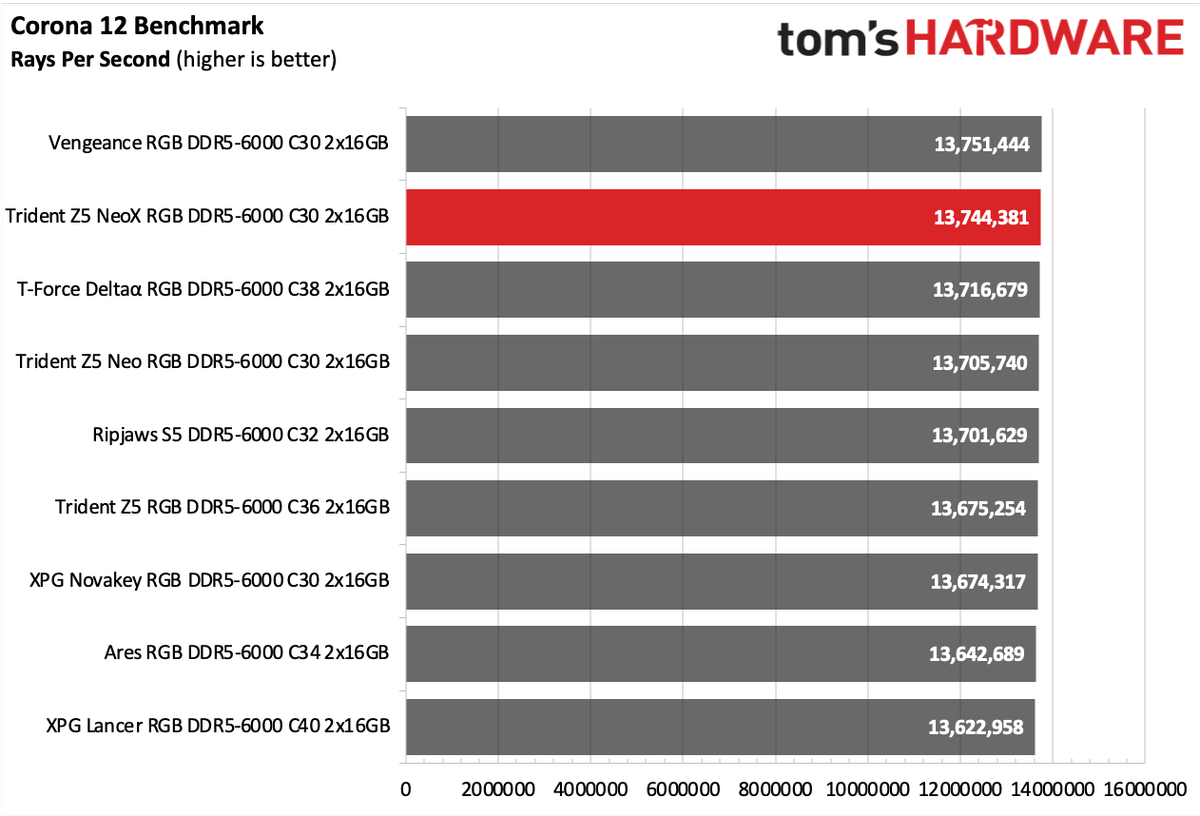
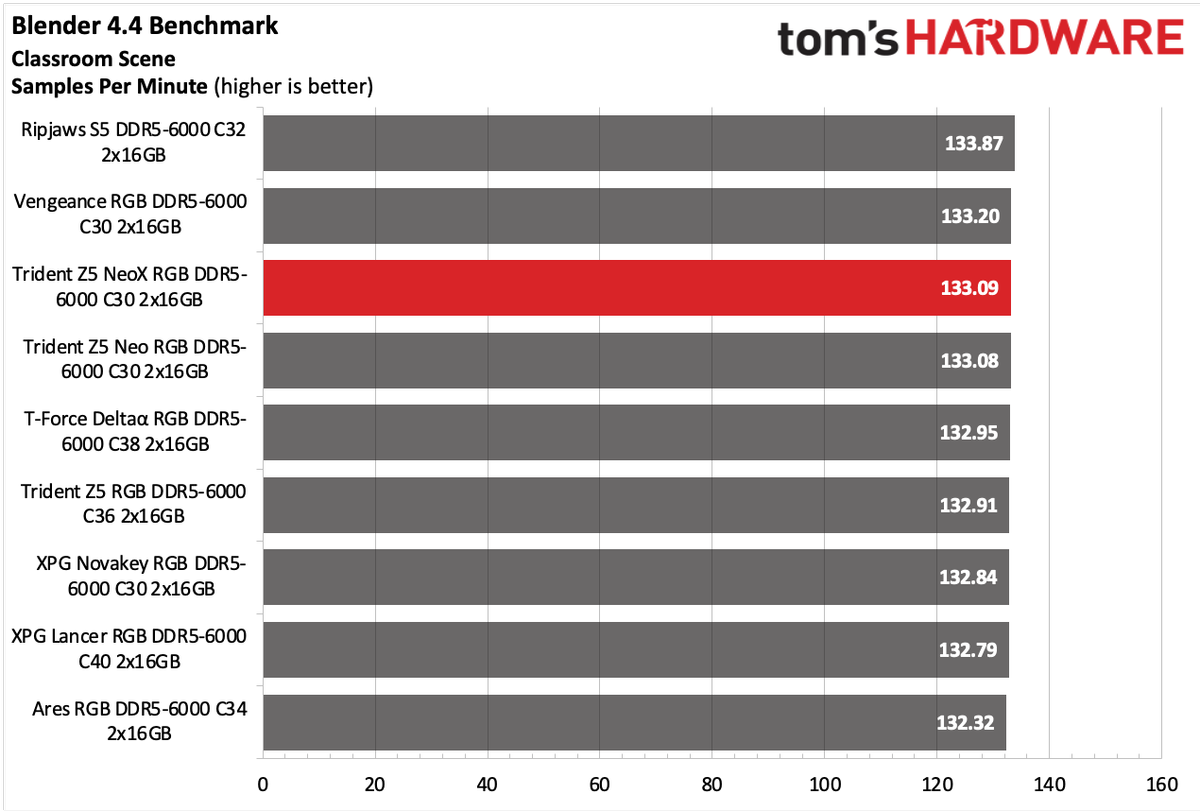
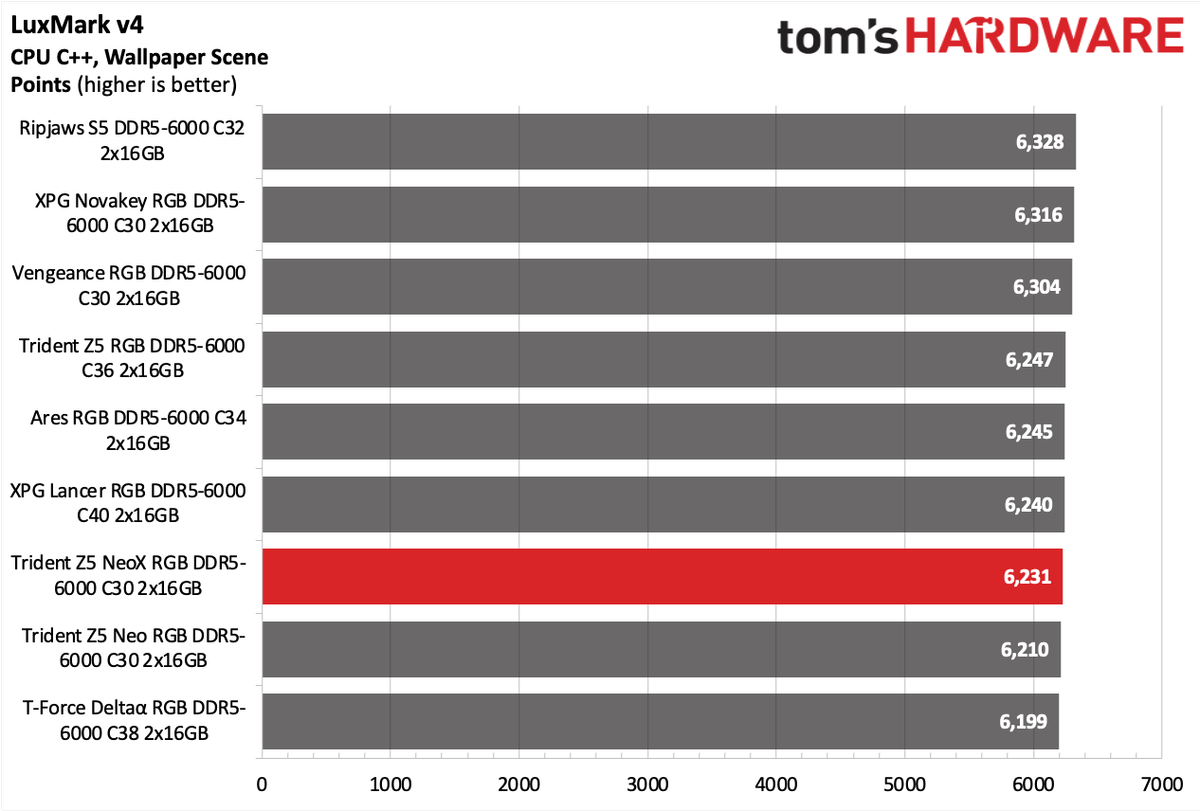
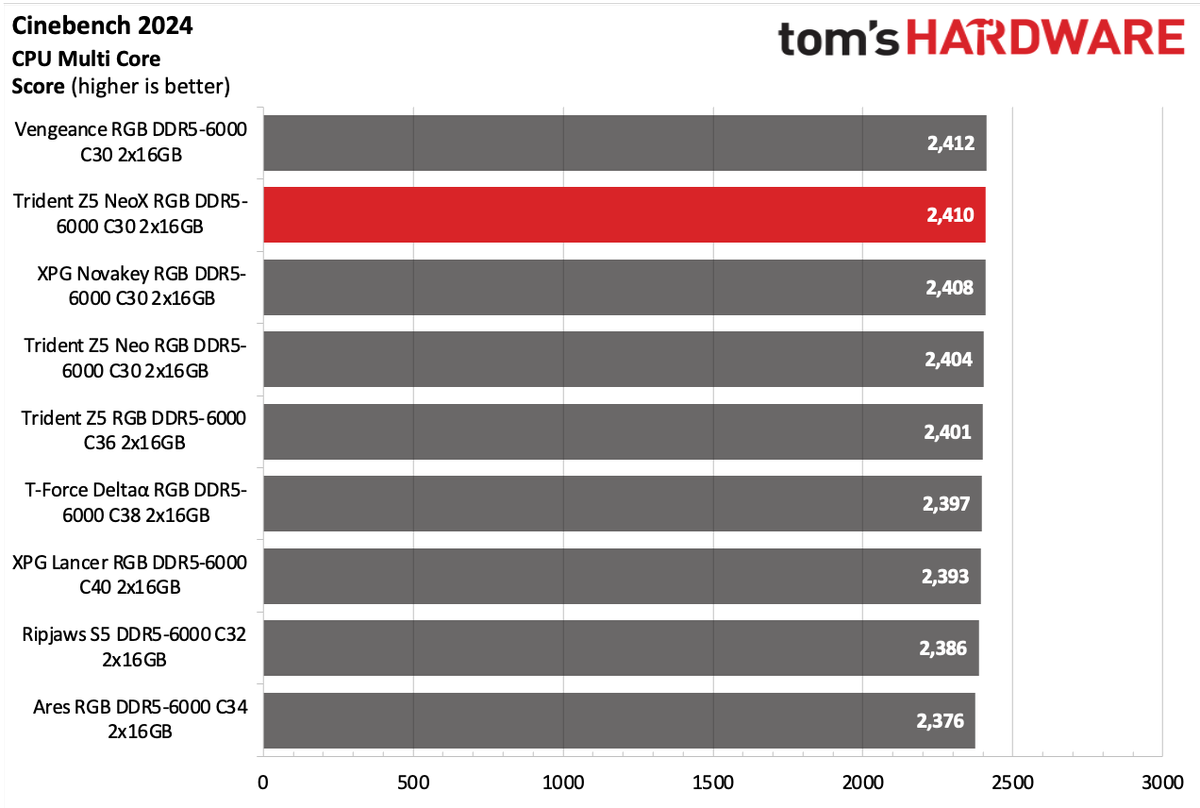
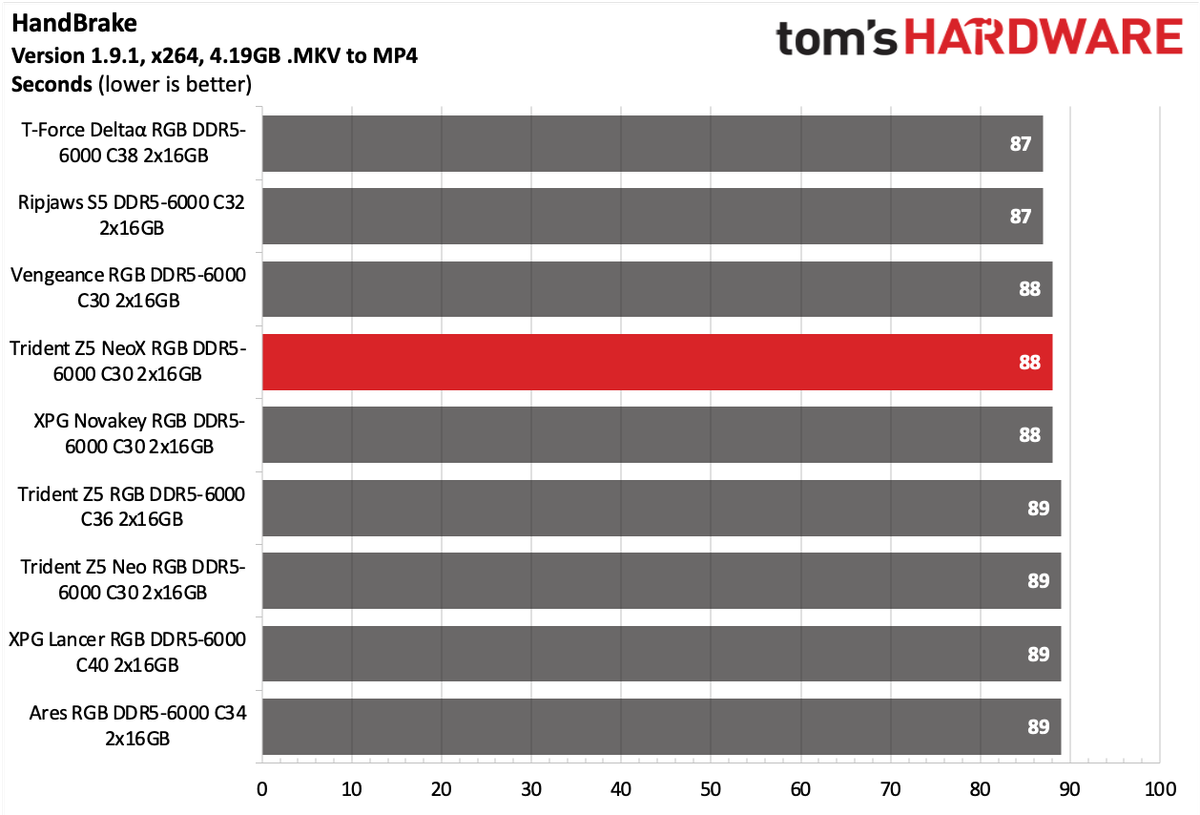
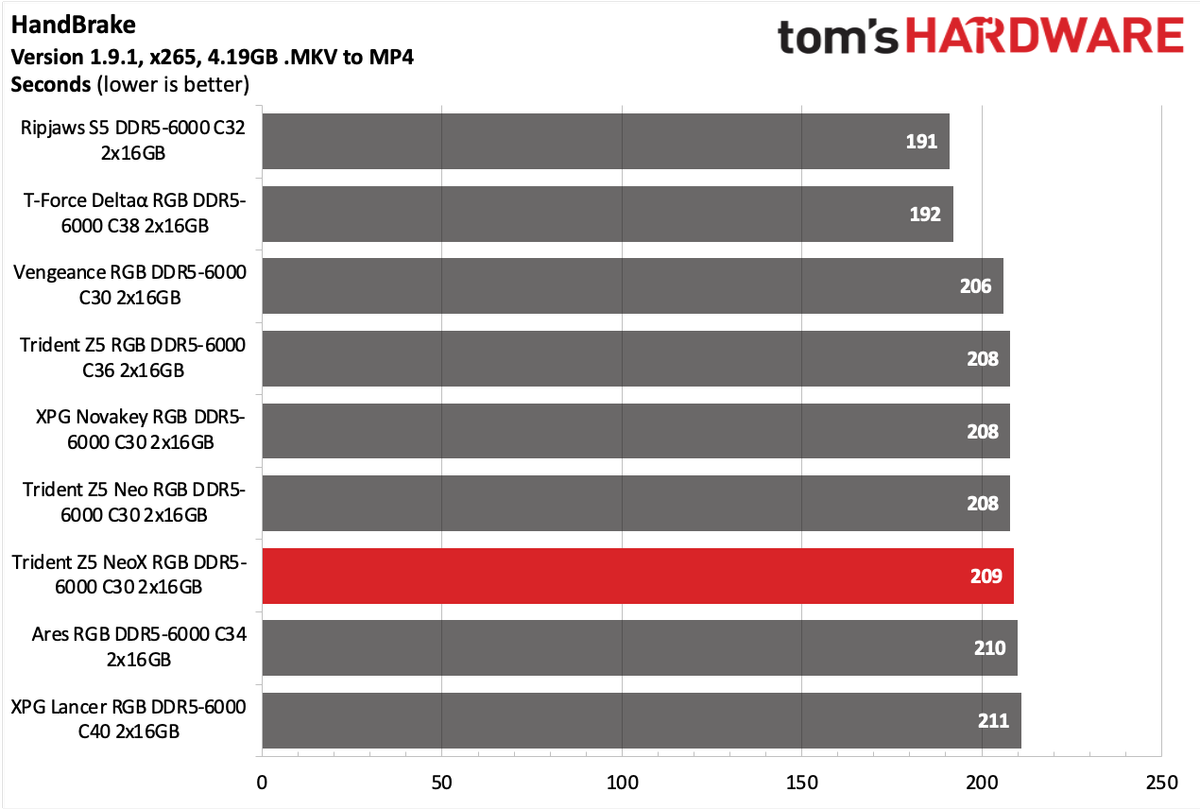
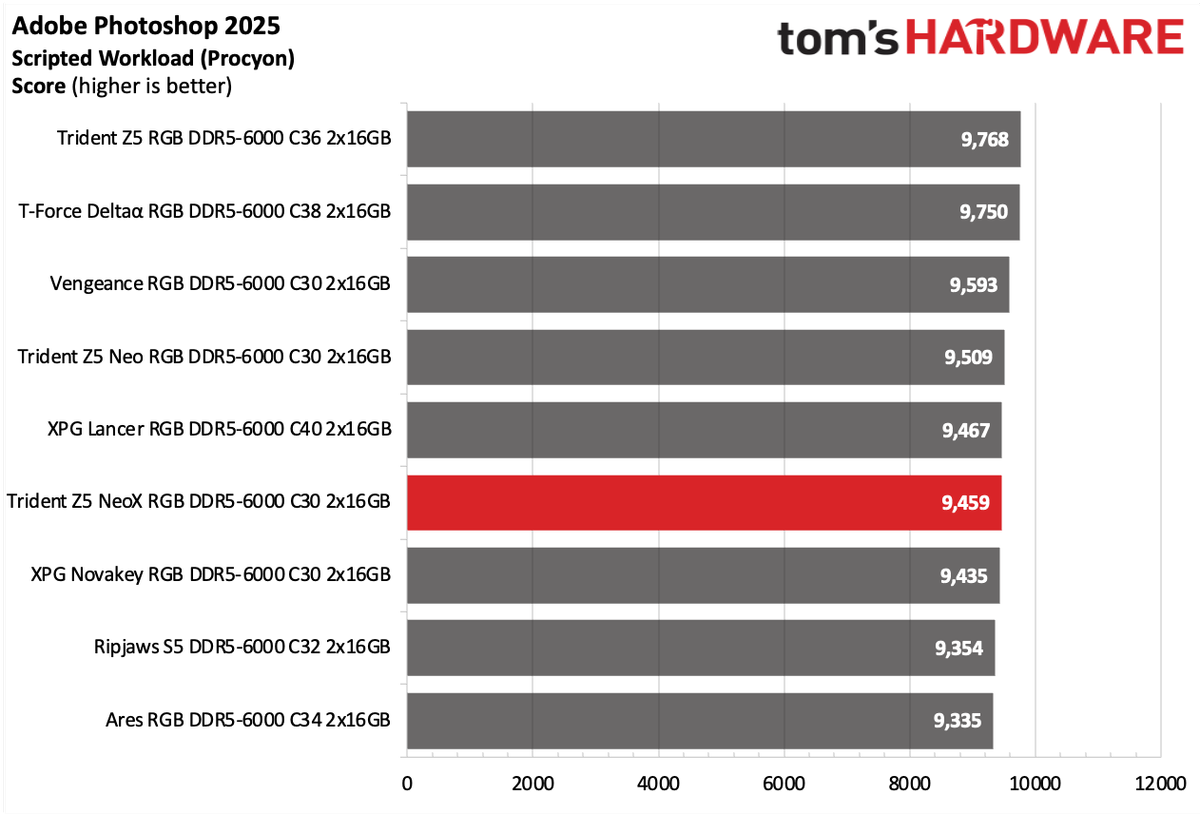
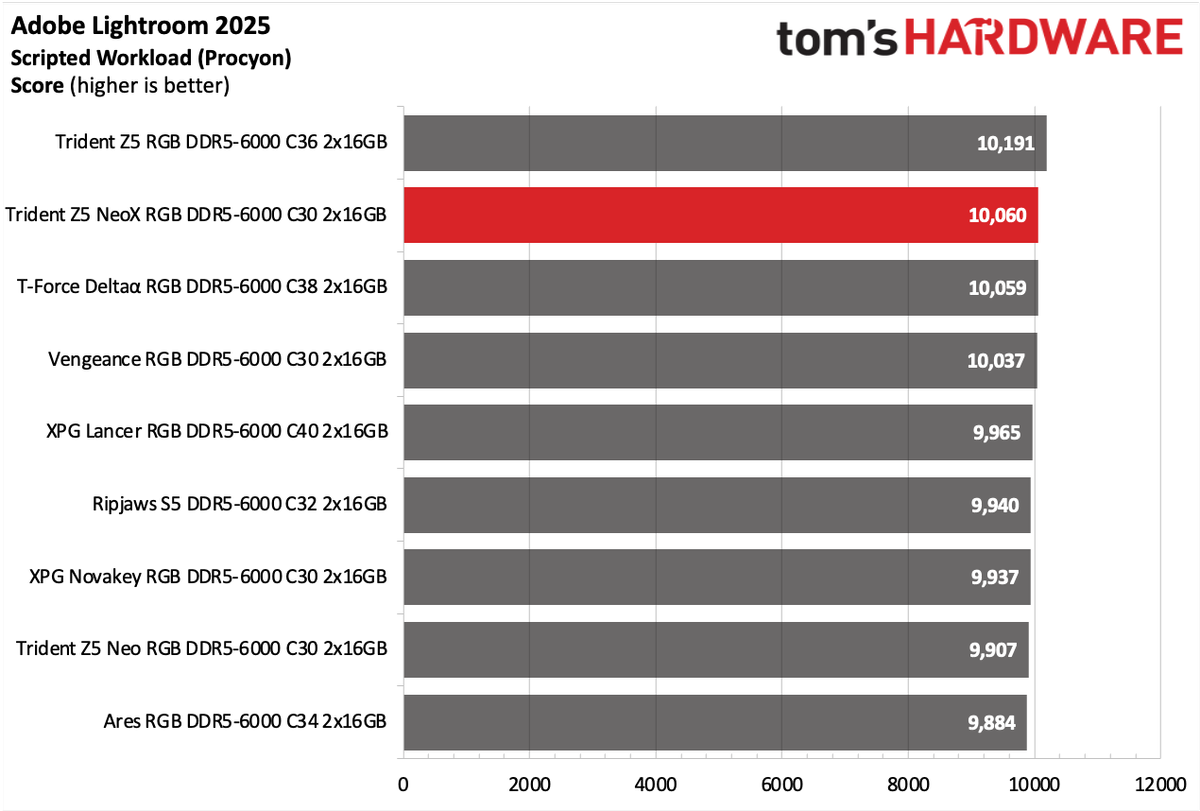
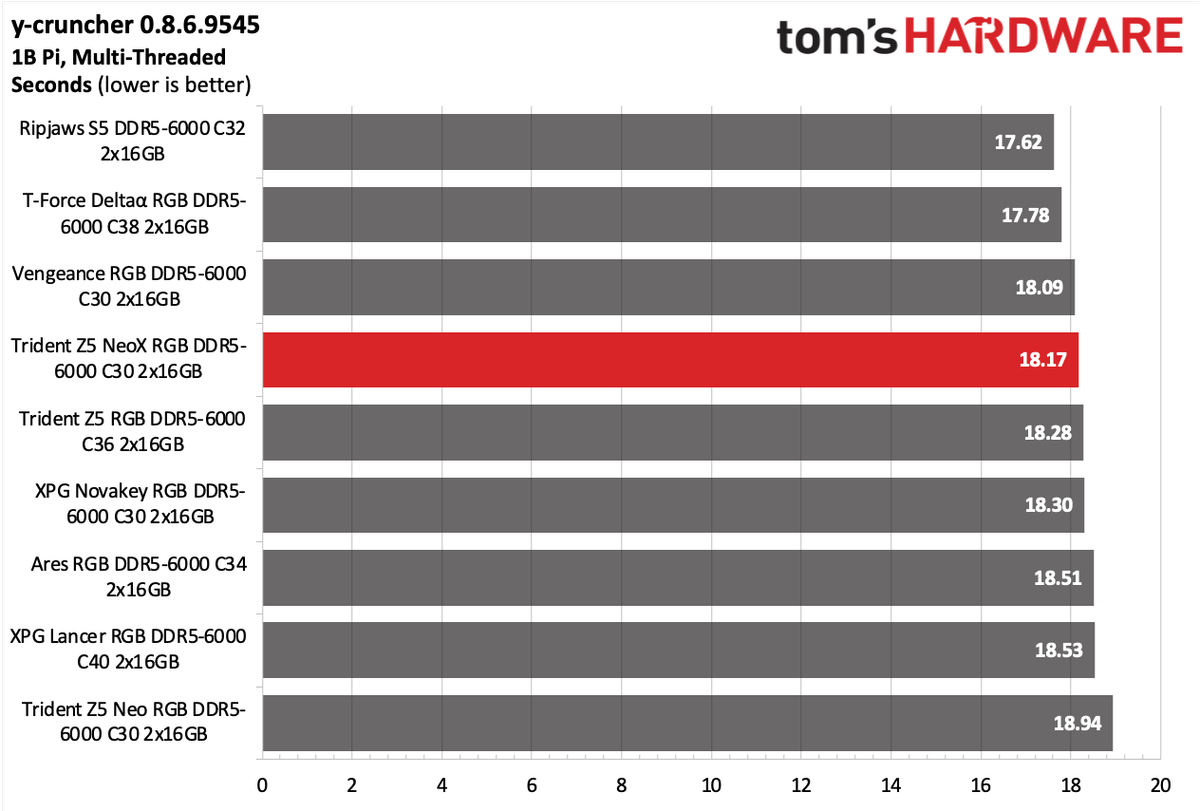
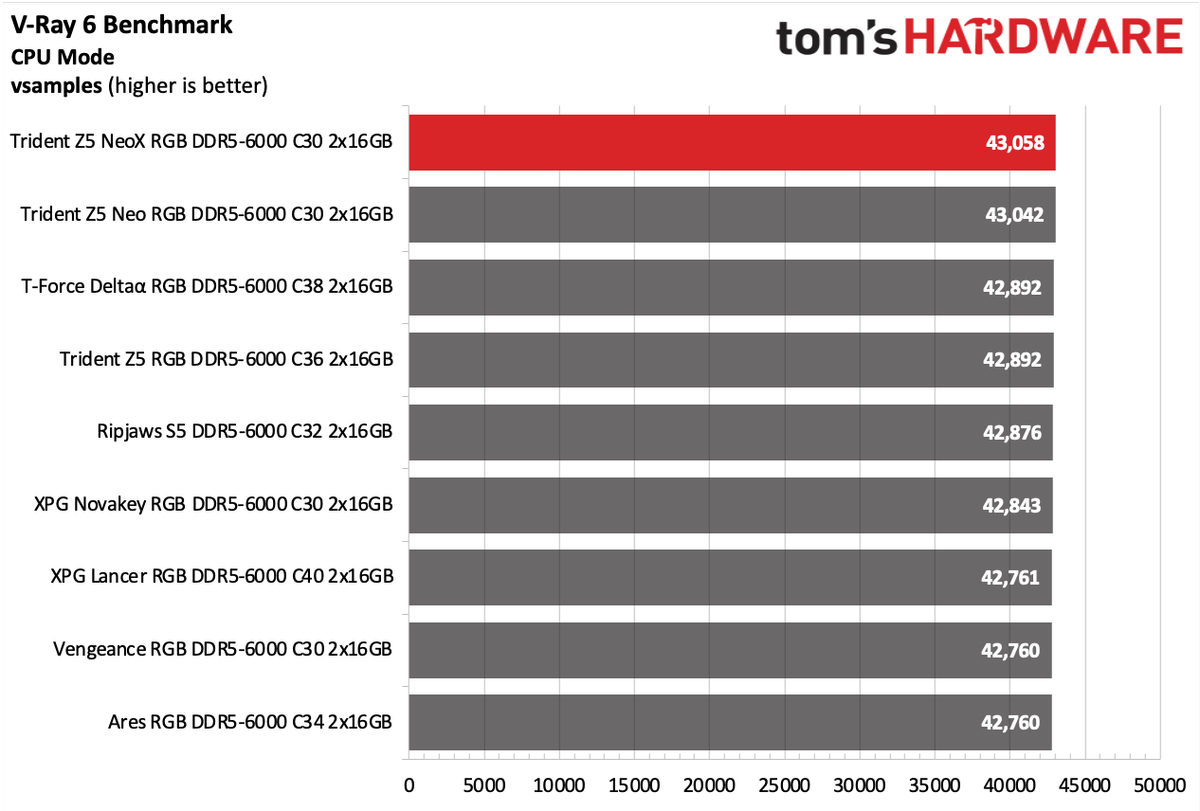
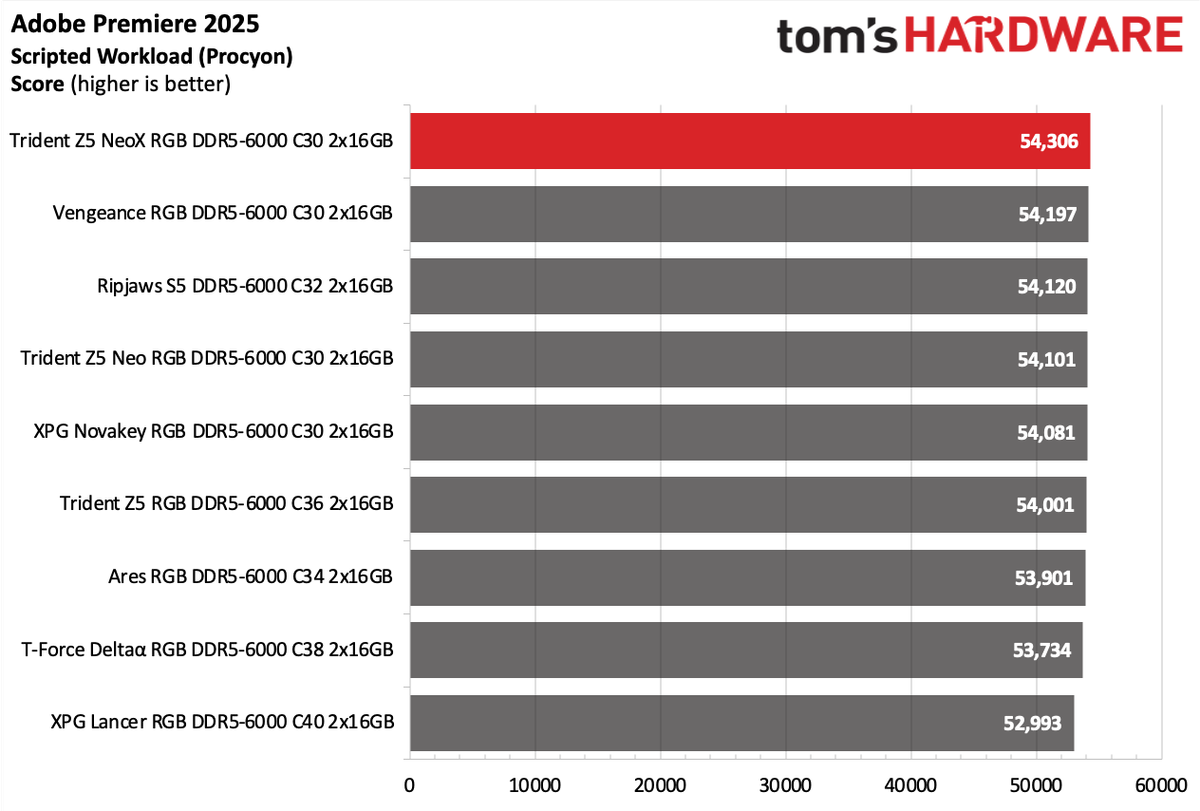
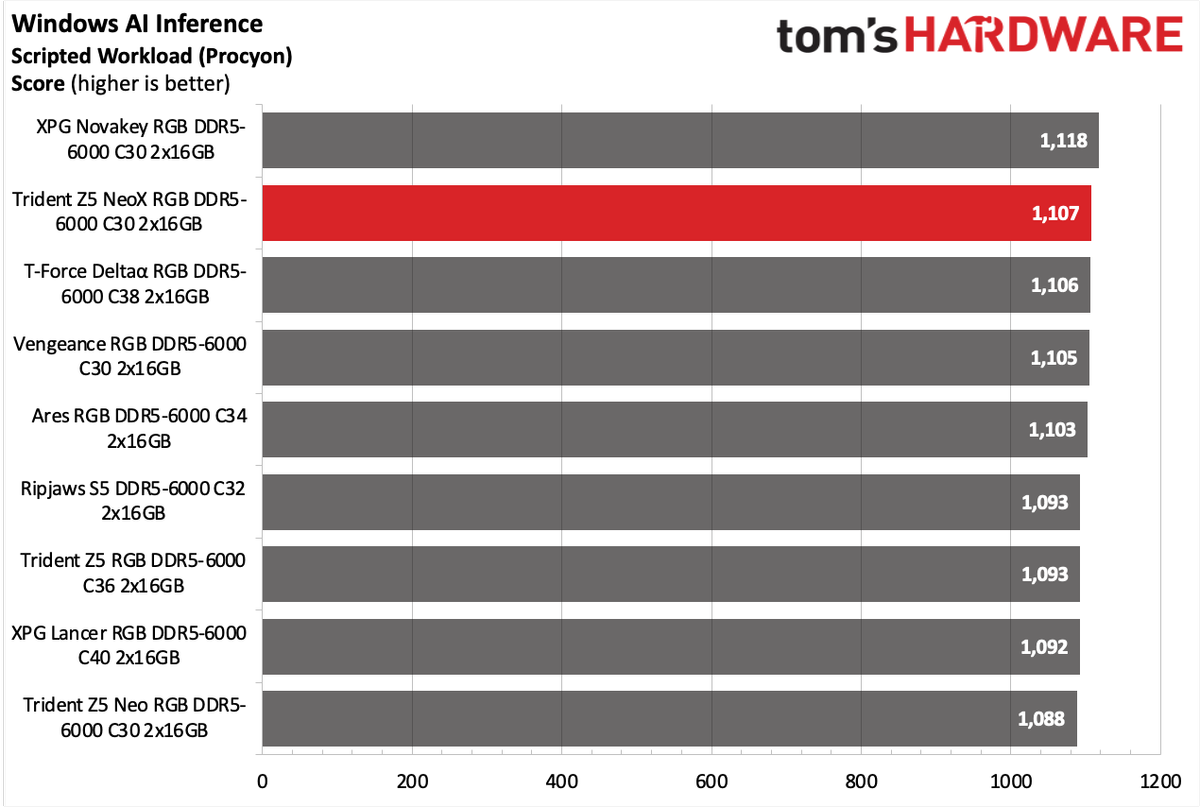
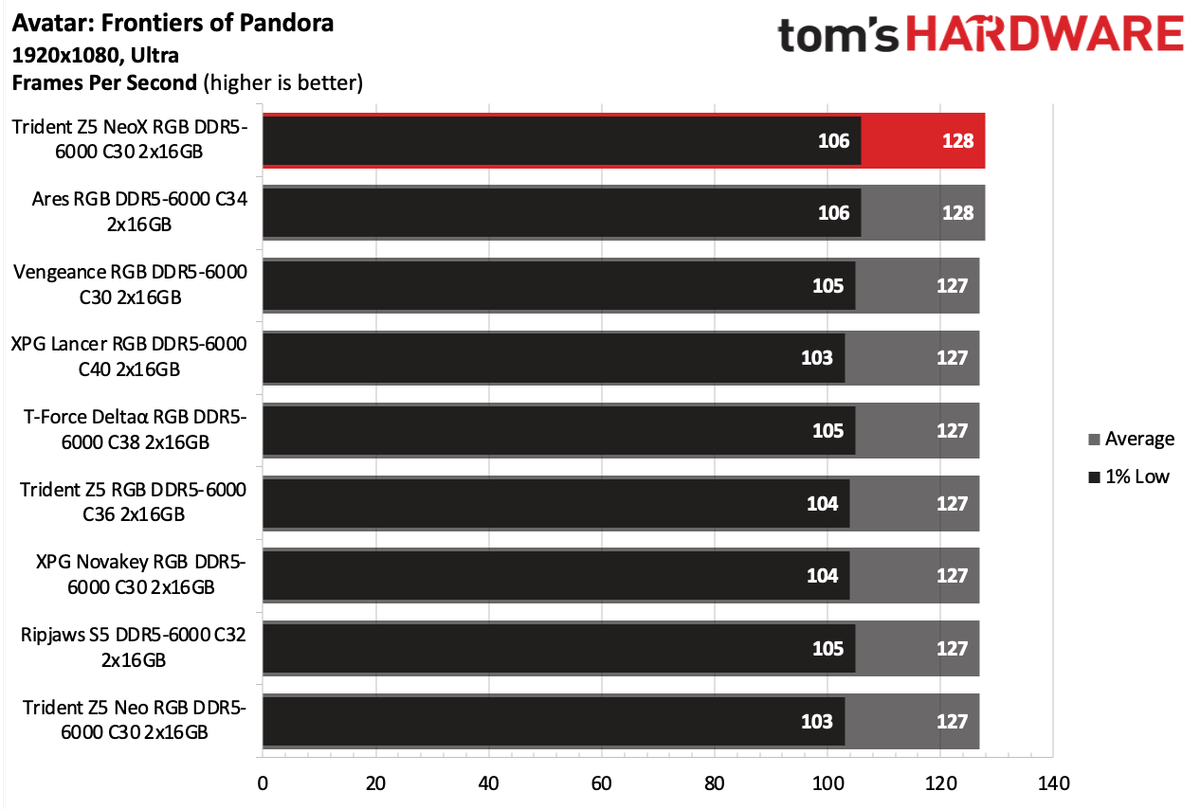
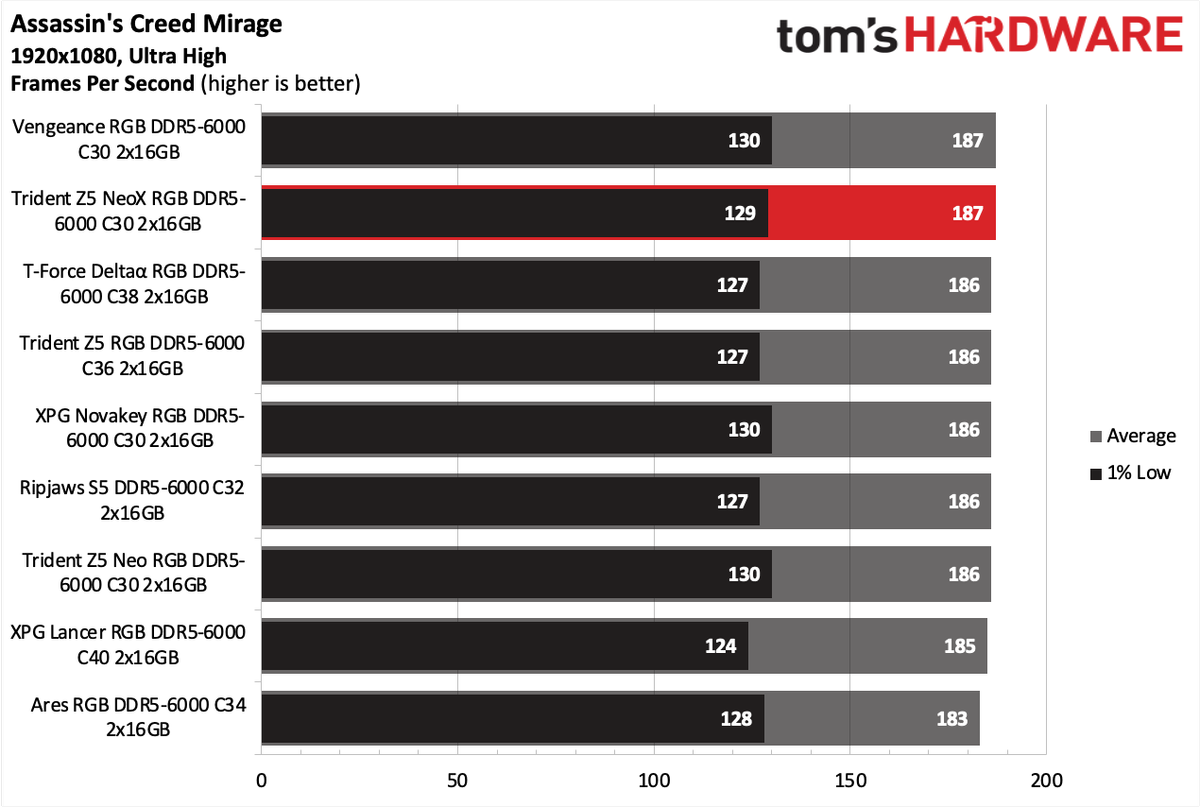
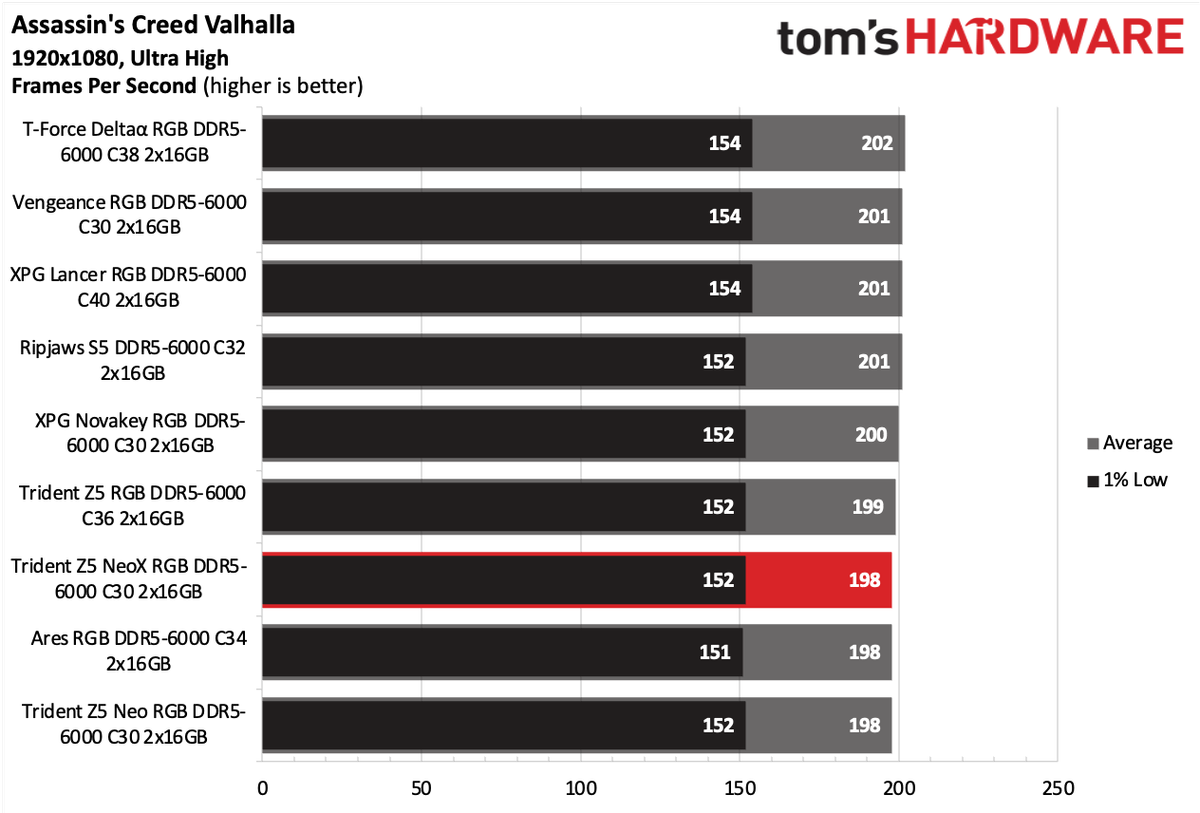
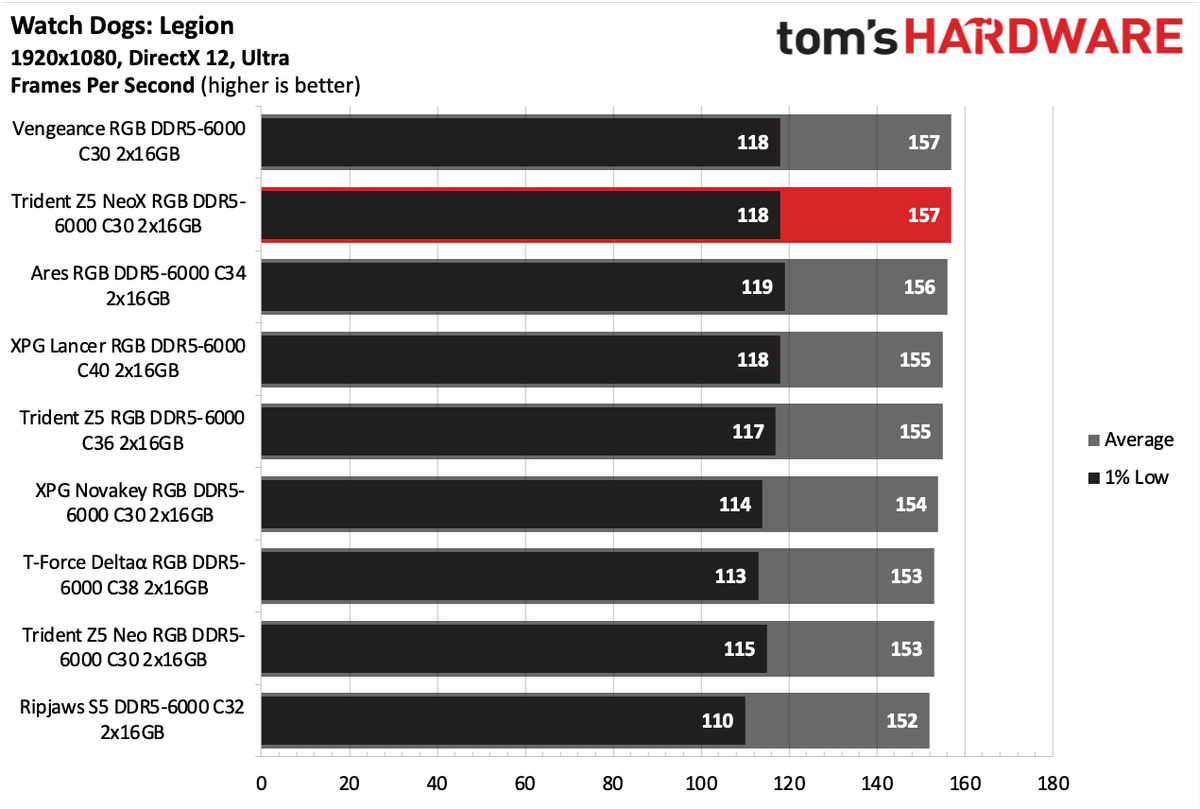
The results from our testing clearly demonstrated that the NeoX does not perform to its full potential when paired with an Intel-based system. The NeoX specifically targets AMD platforms, so the ULL optimizations are not available on an Intel system. That is not to say that the NeoX was slow.
On the contrary, even without access to ULL, the NeoX proved to be a strong competitor. It performed well in the 7-Zip compression workload, where it was up to 7% faster than the slowest memory kit. However, there are better and more affordable options for Intel users, such as the Vengeance RGB DDR5-6000 C30, the Ripjaws S5 DDR5-6000 C32, or the Deltaα RGB DDR5-6000 C38.
AMD Performance
Image 1 of 24
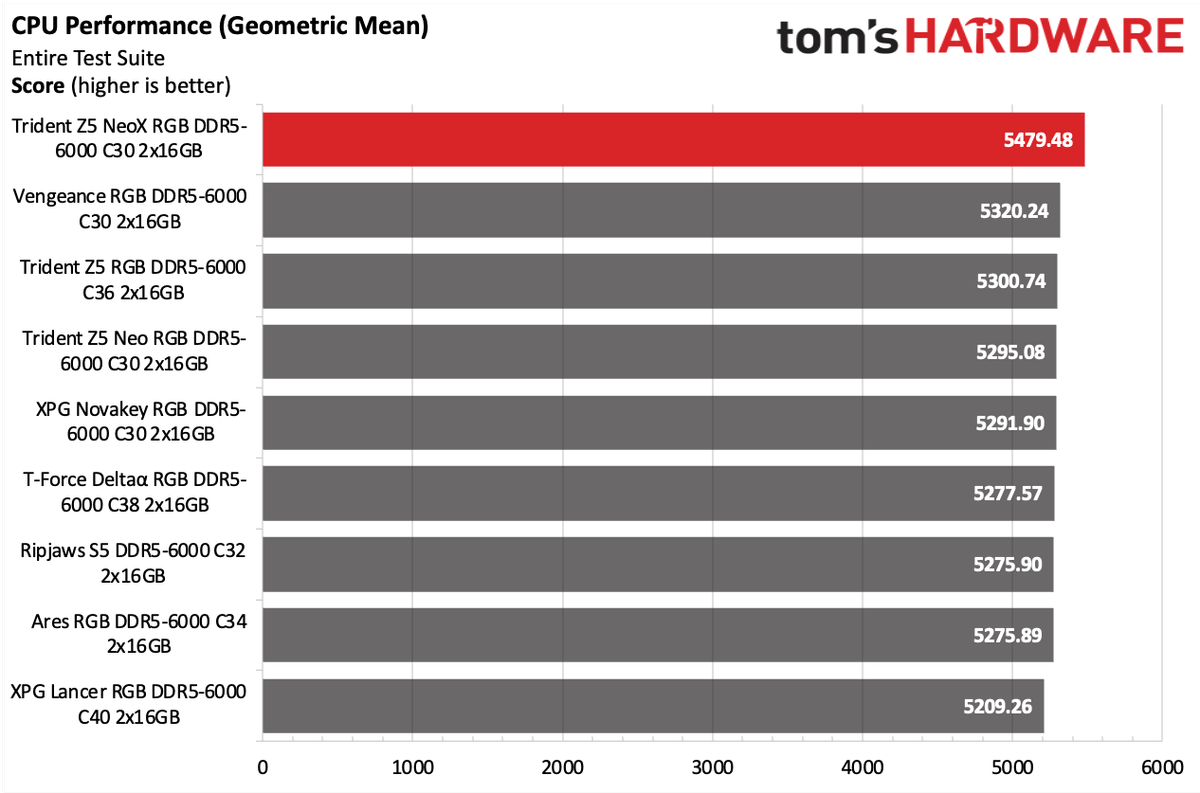
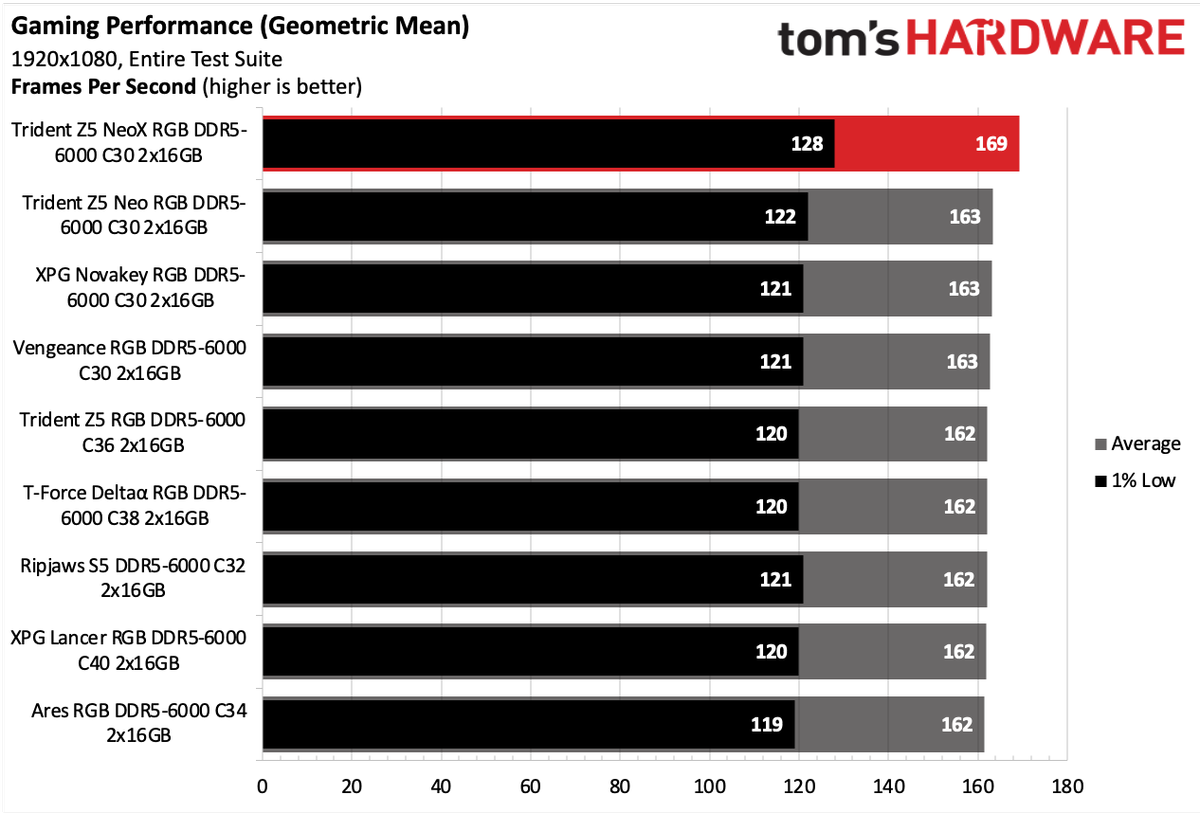
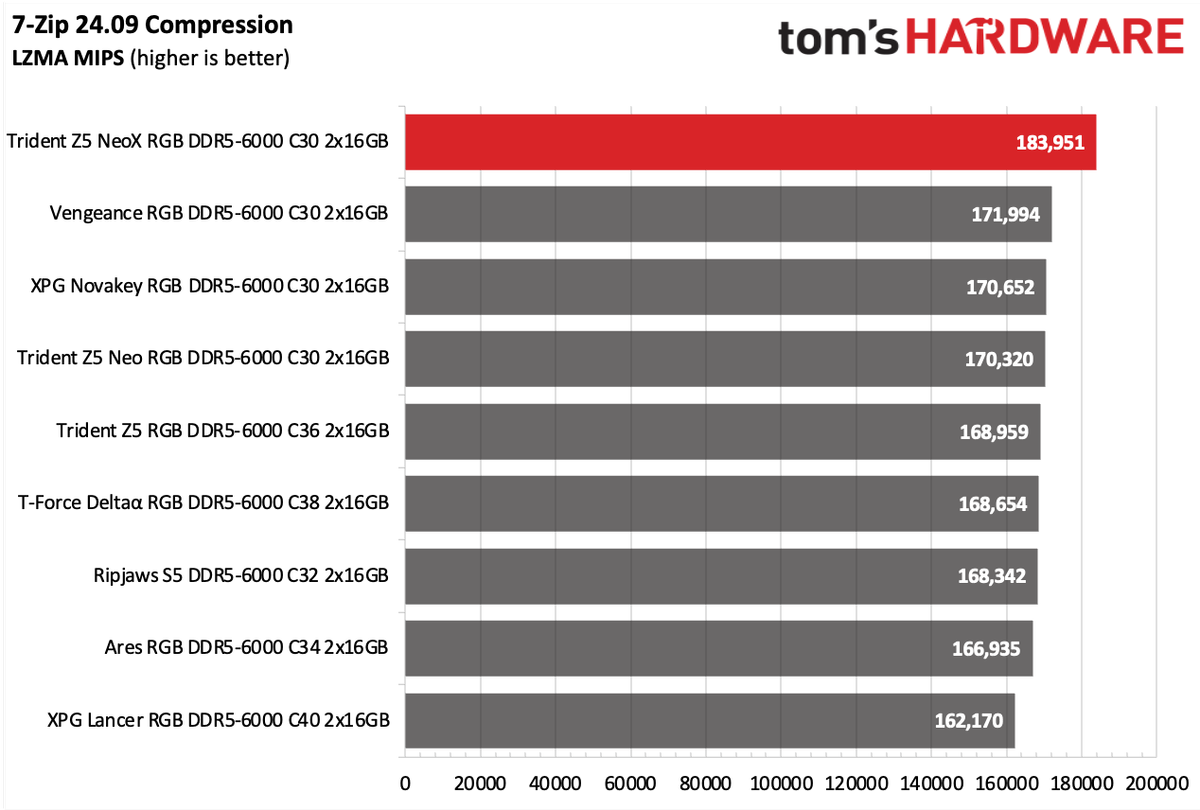
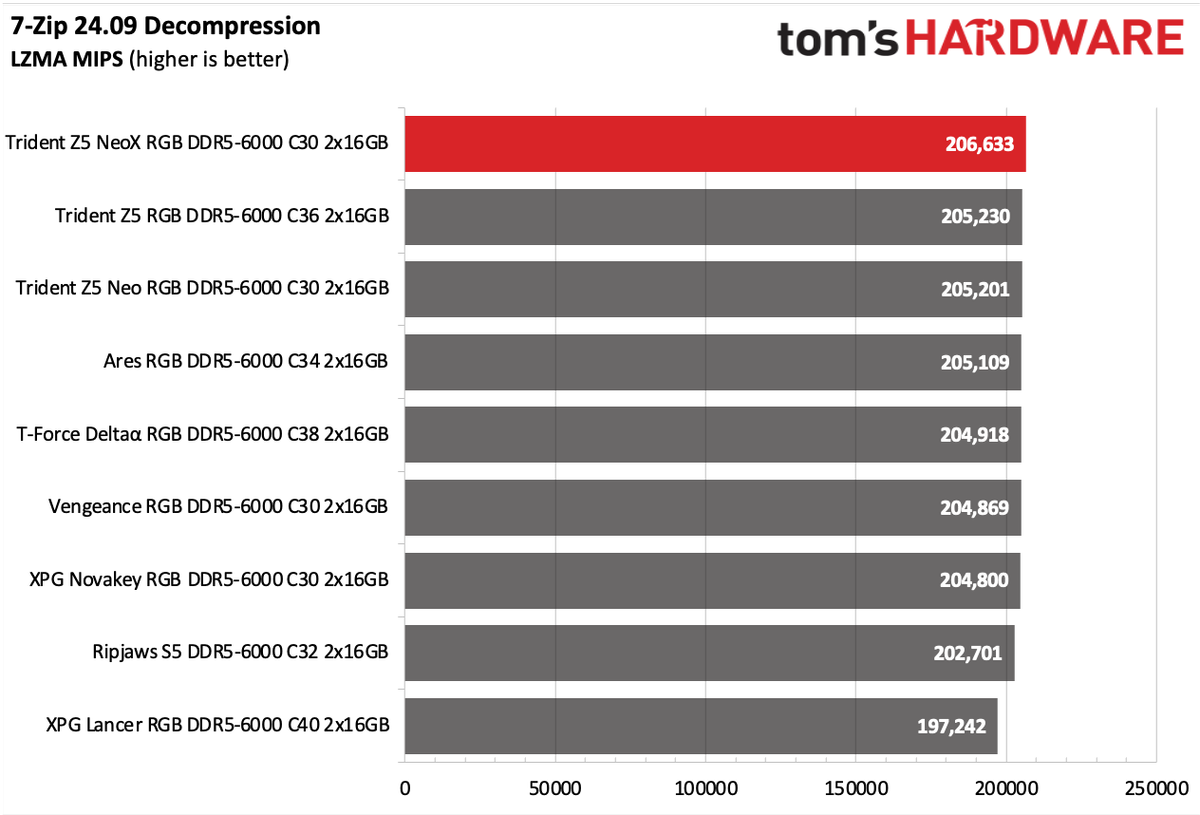
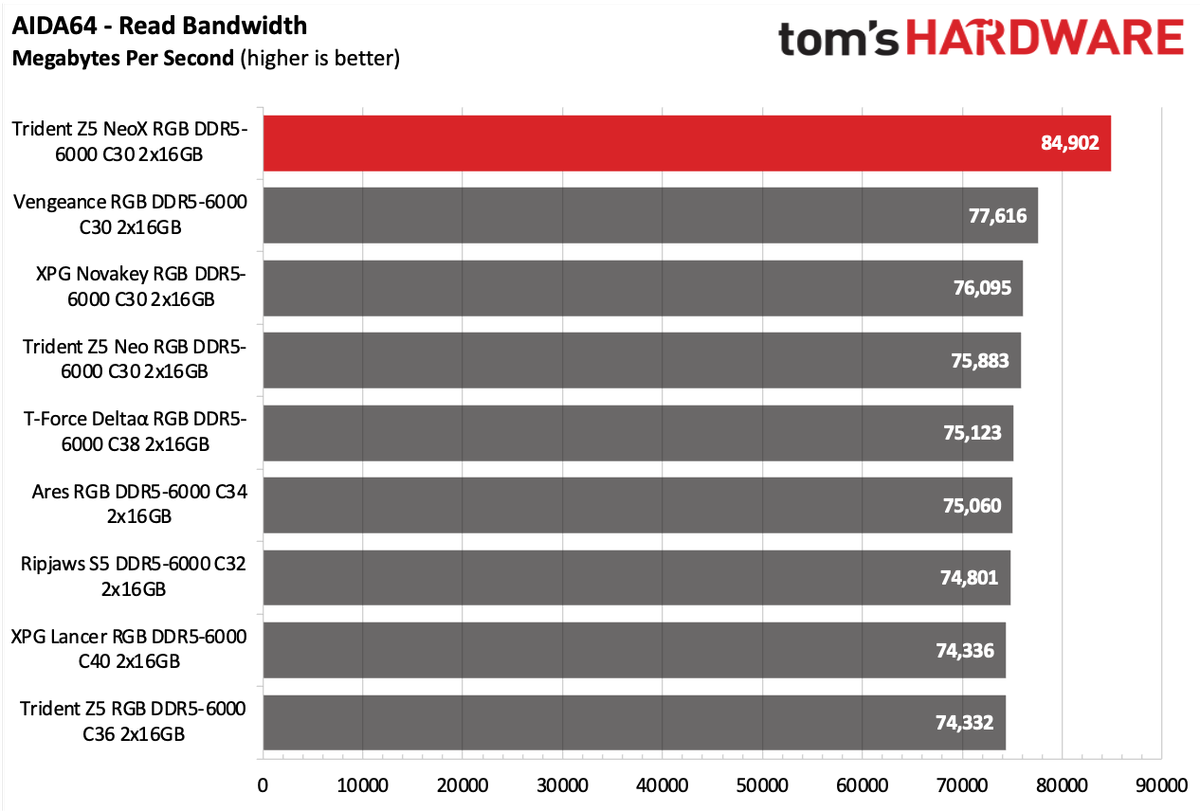
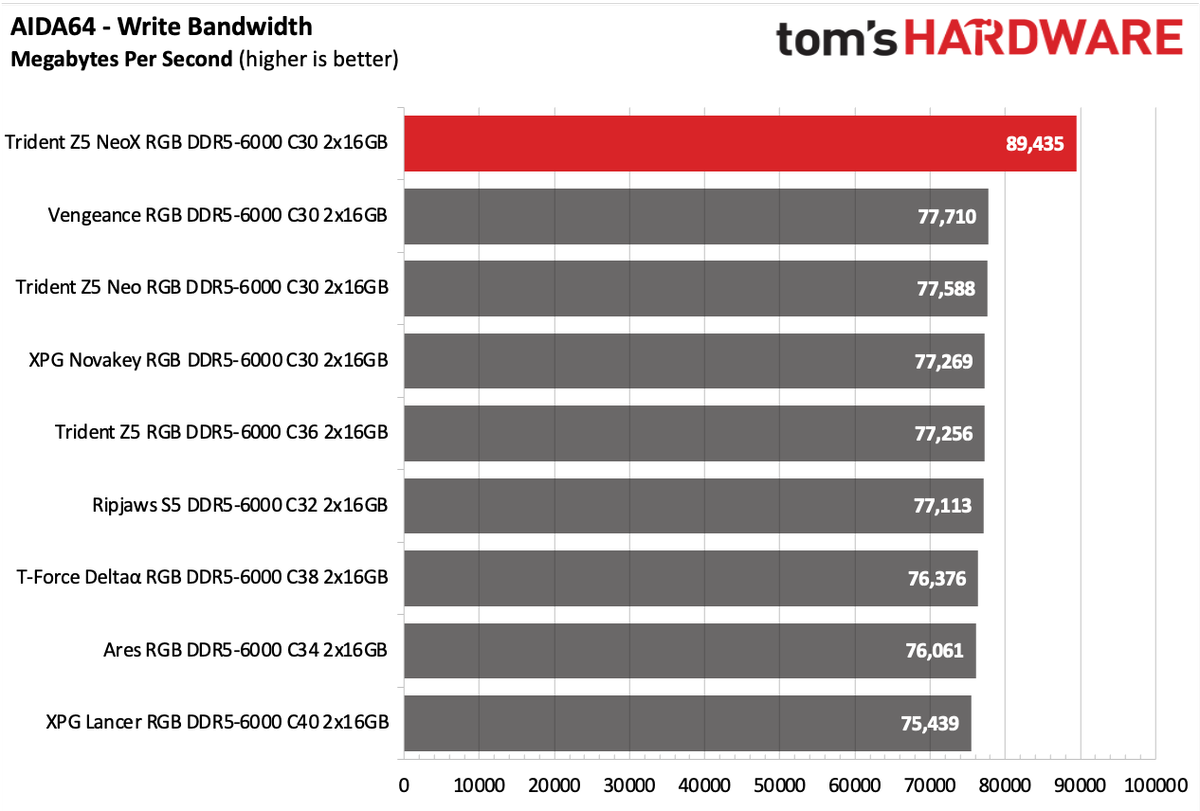
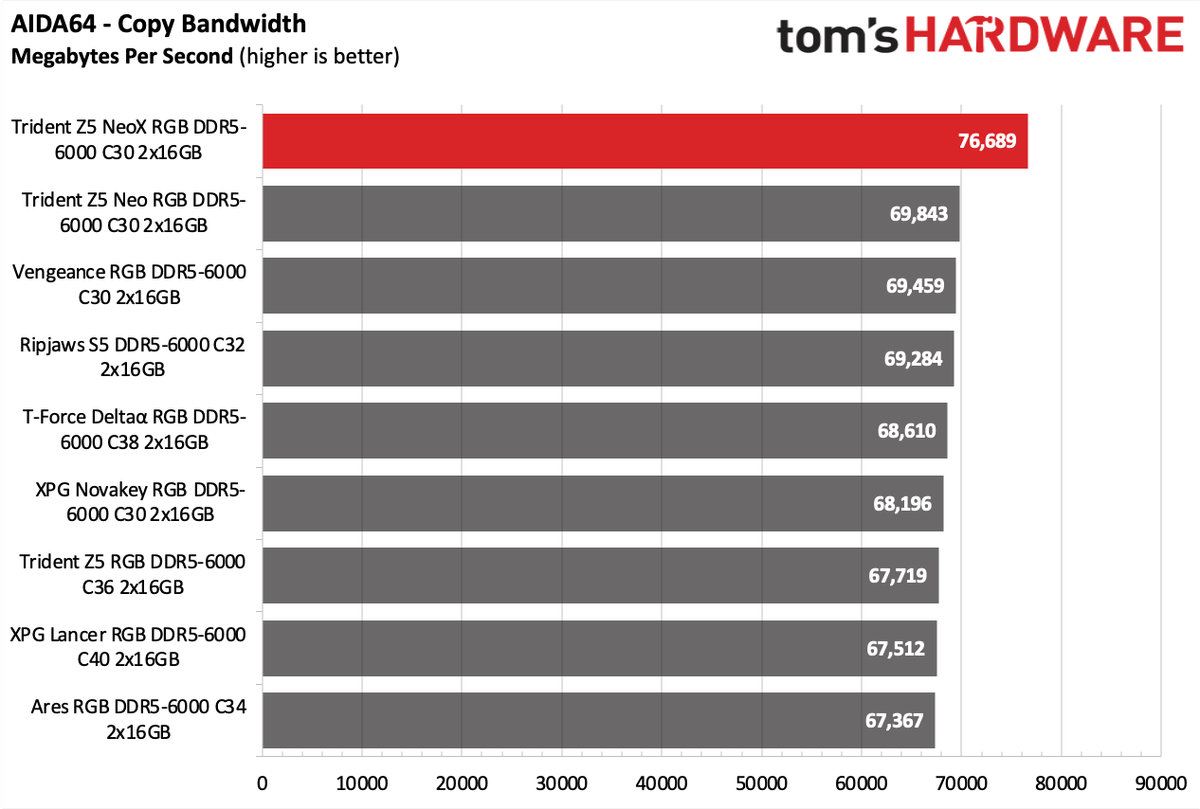
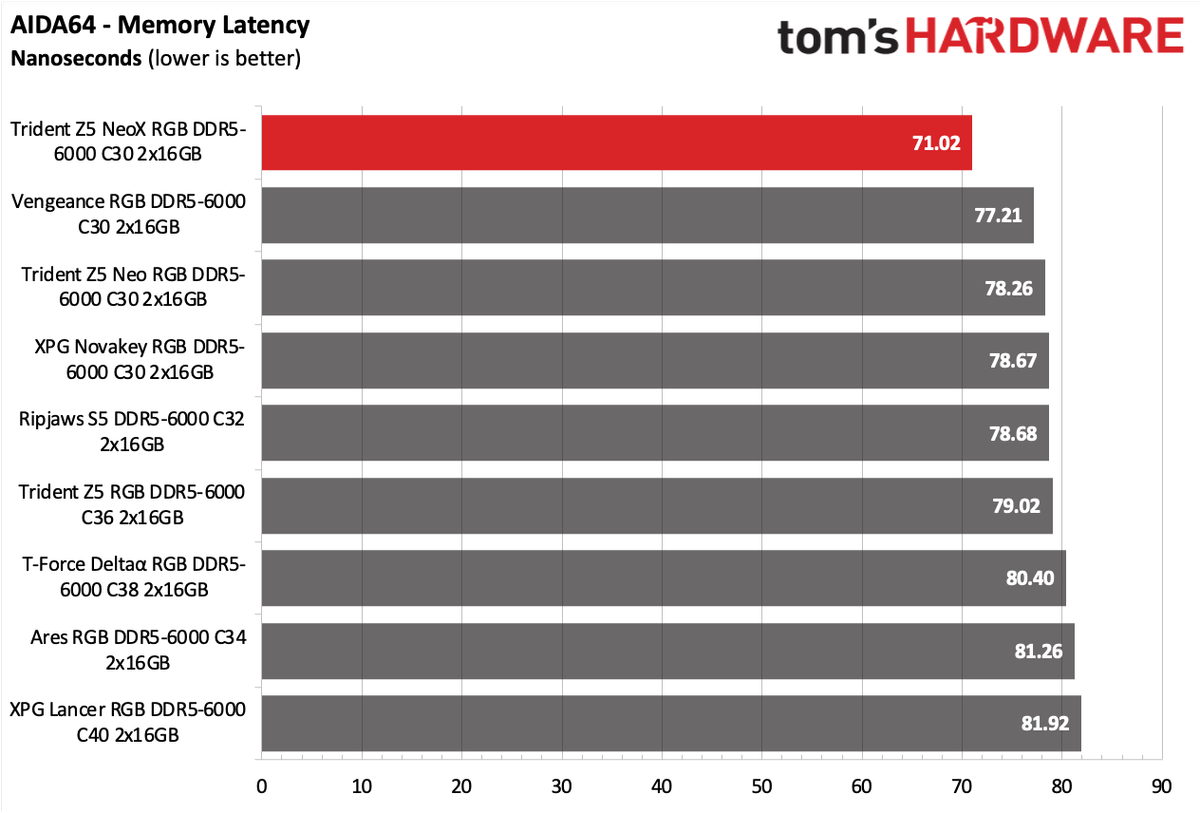
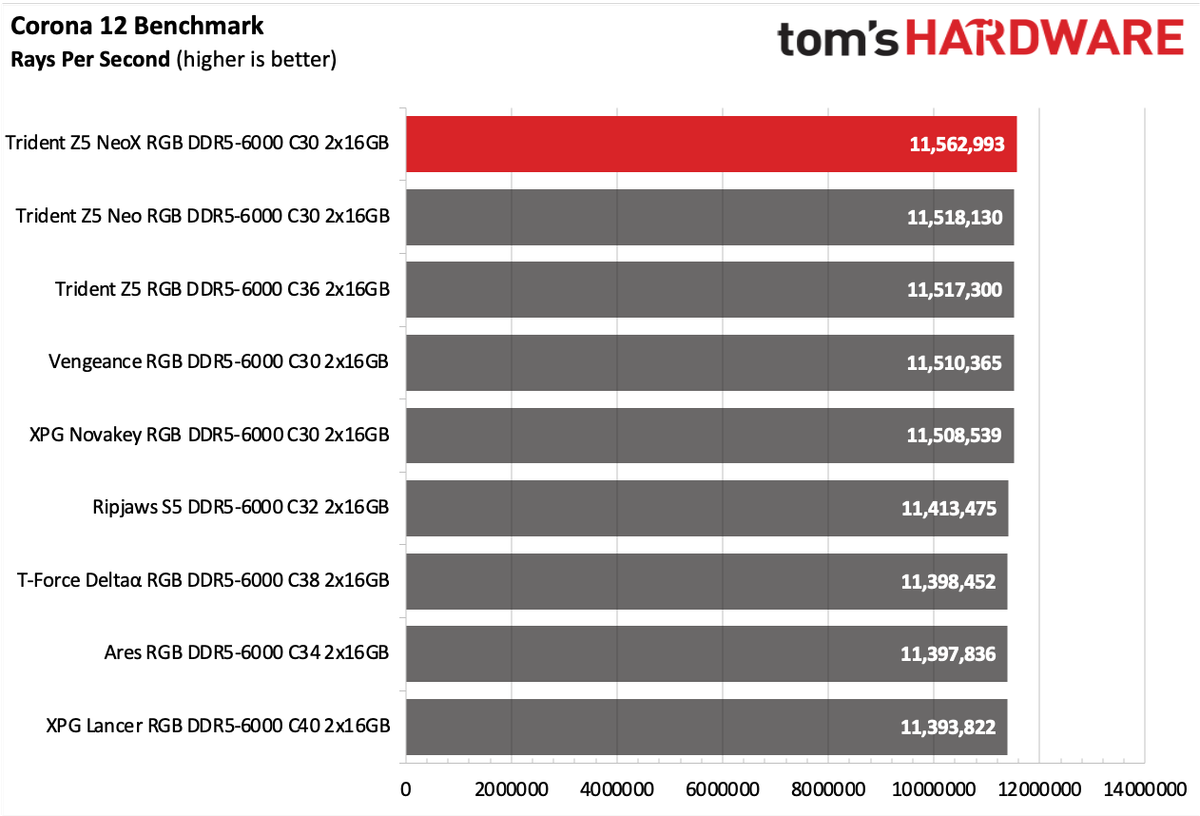
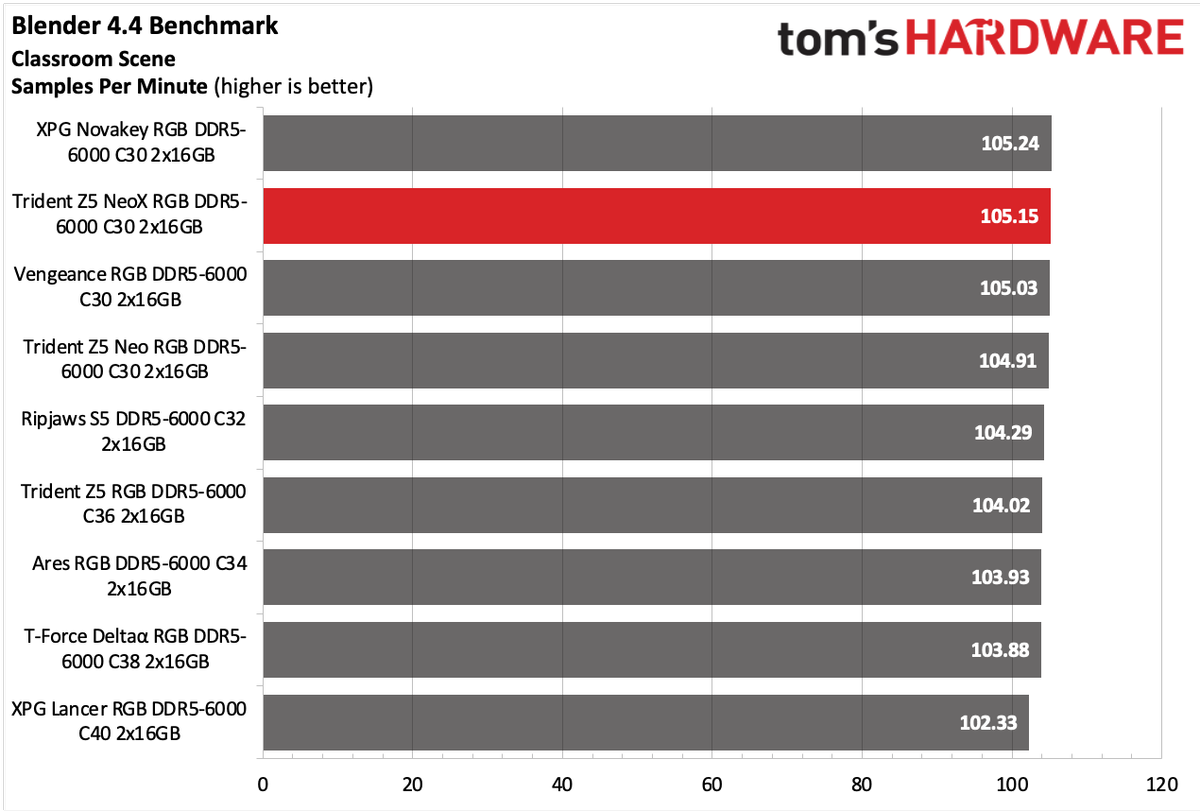
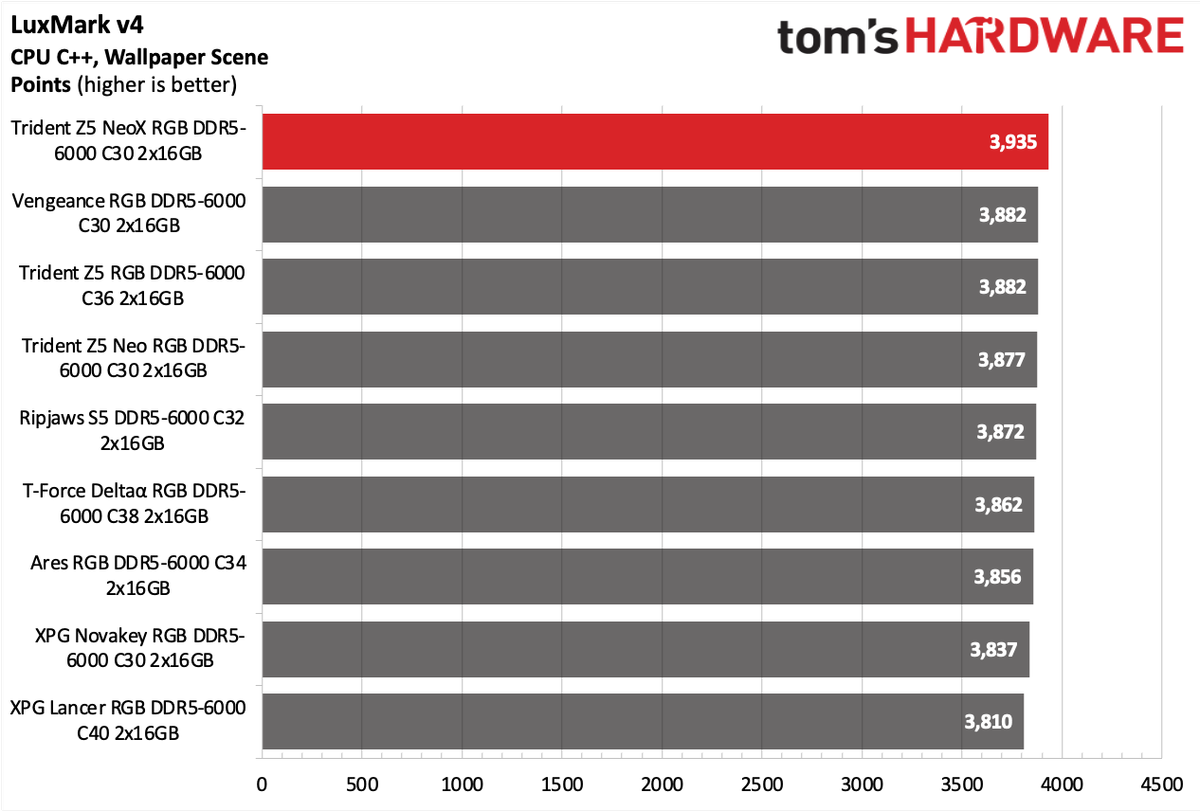
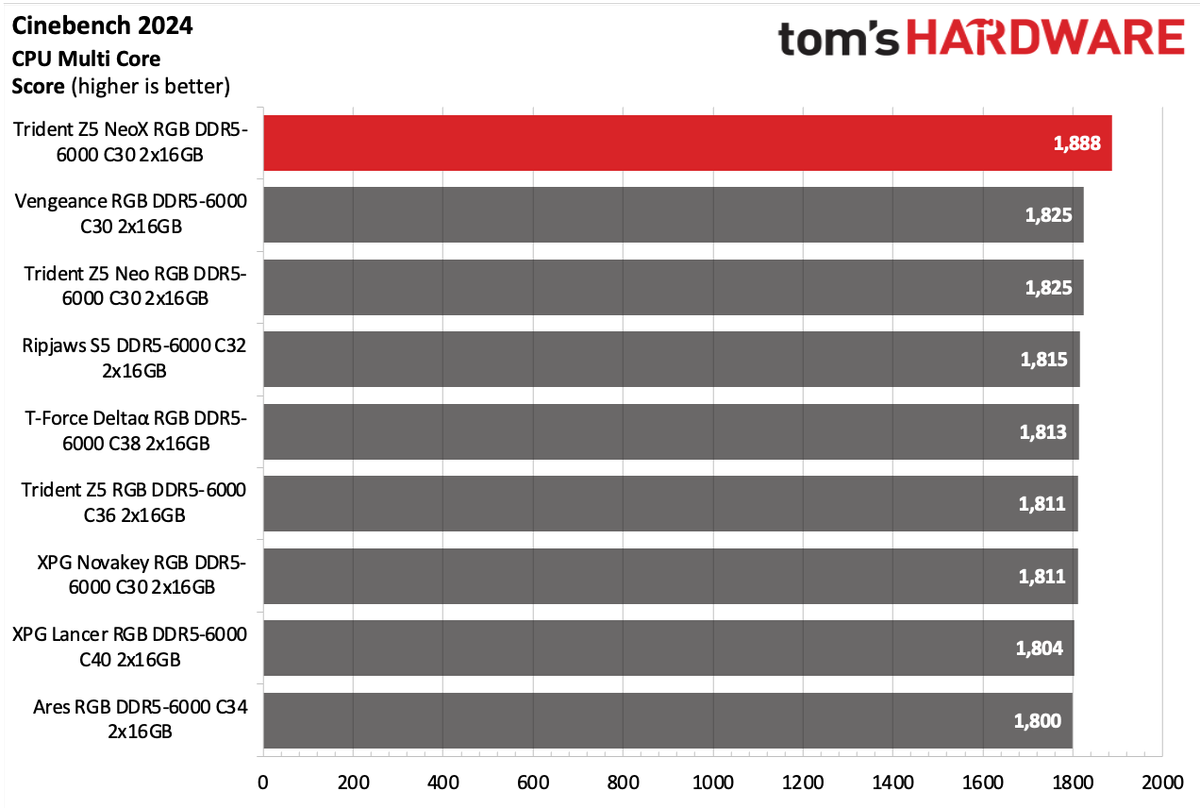
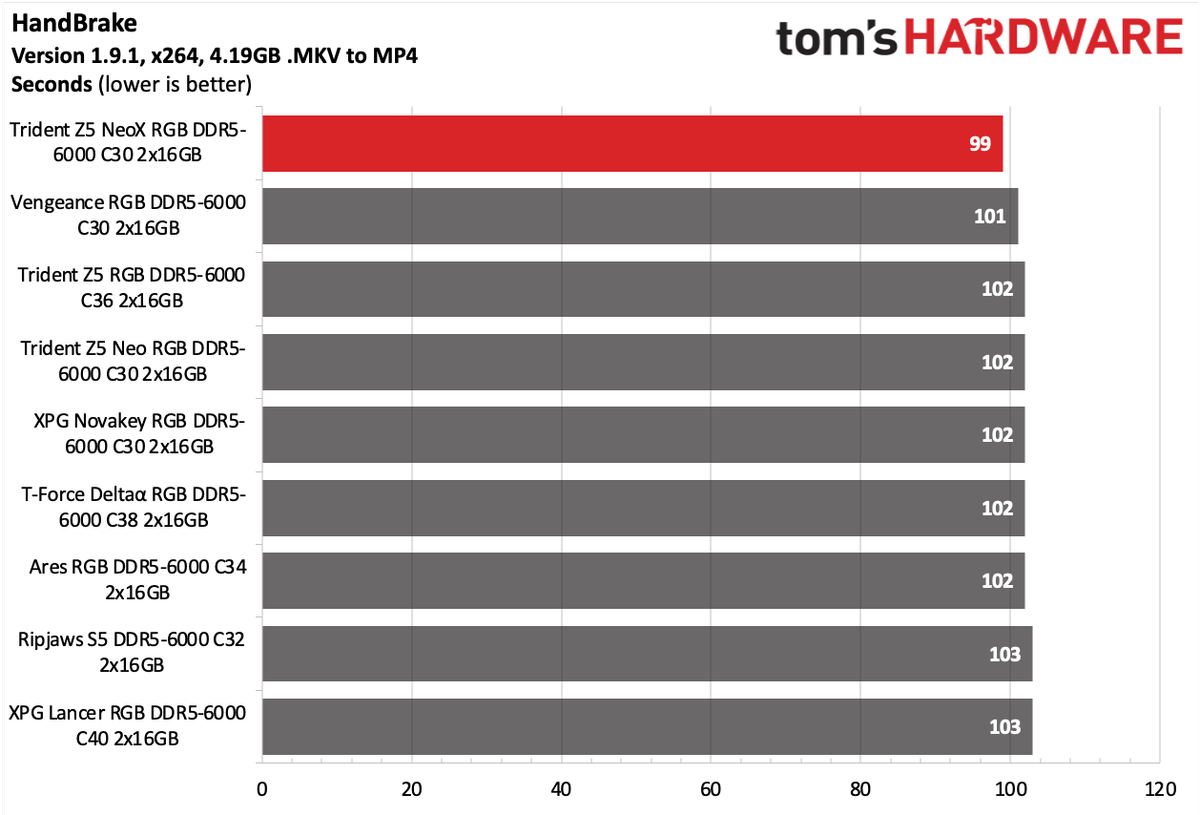
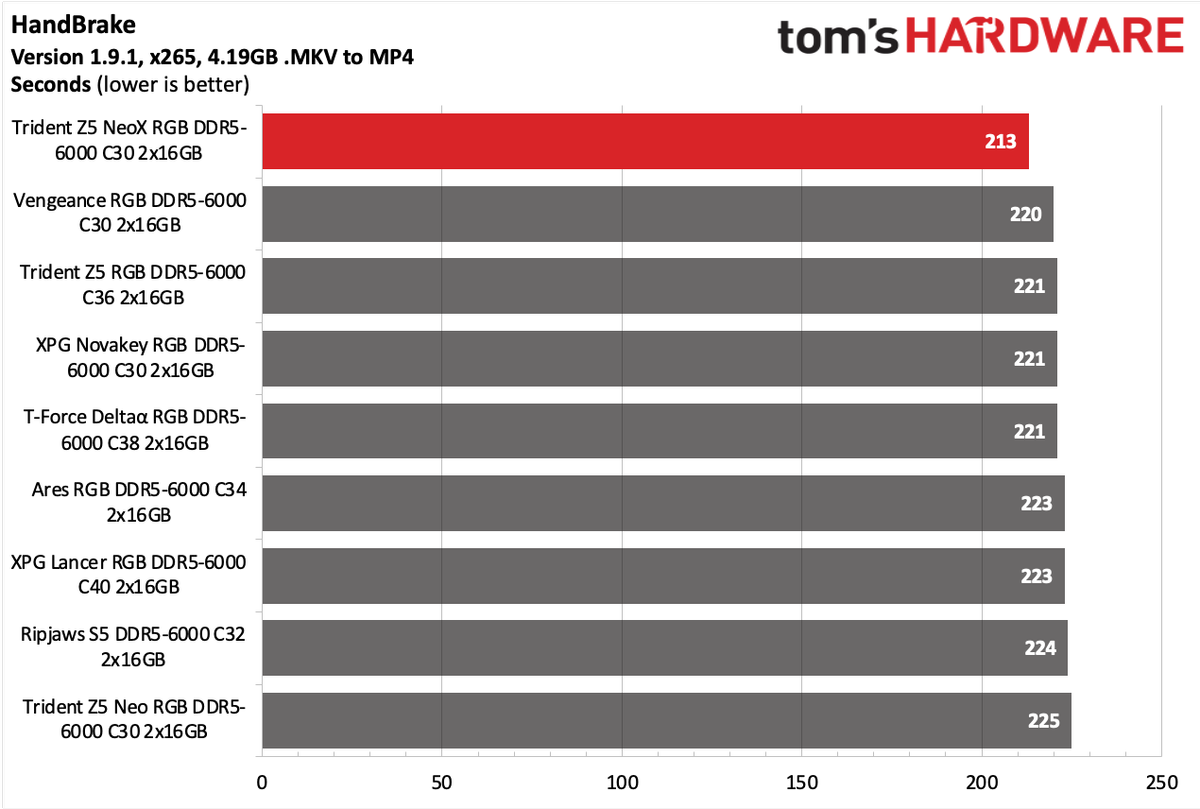
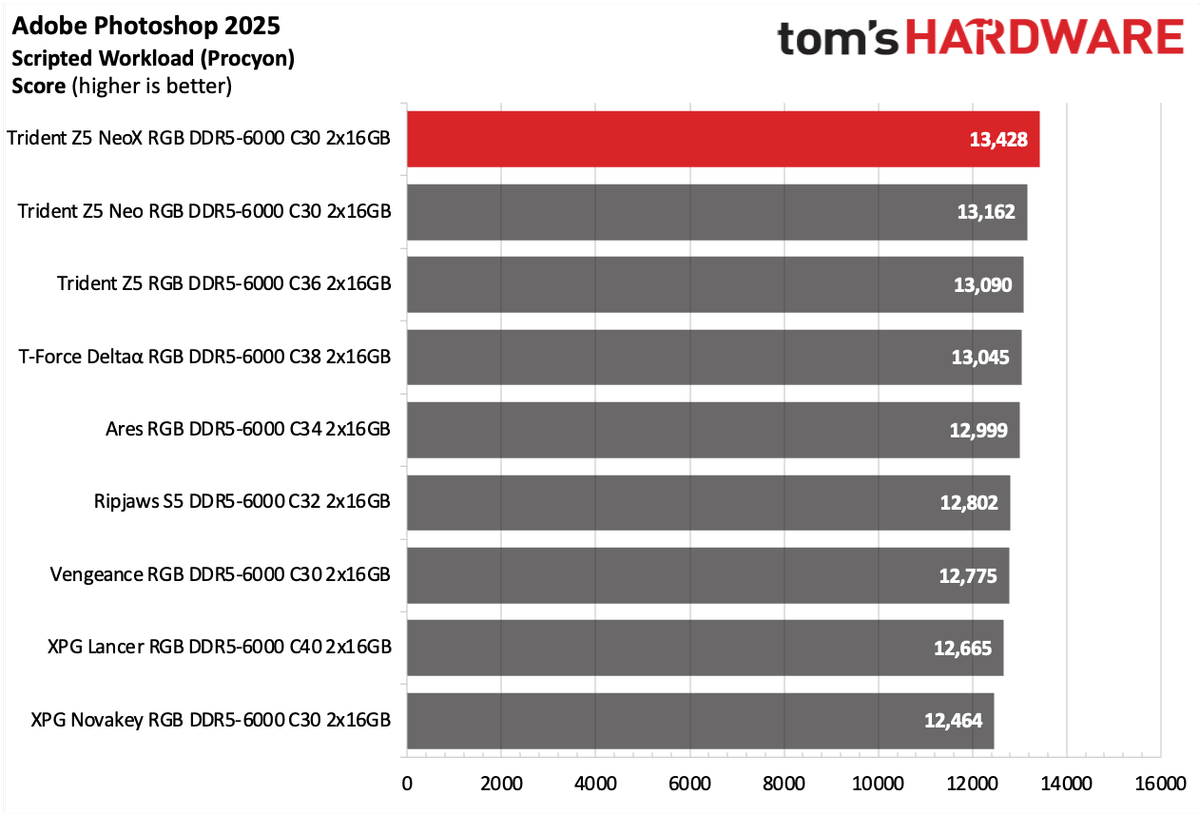
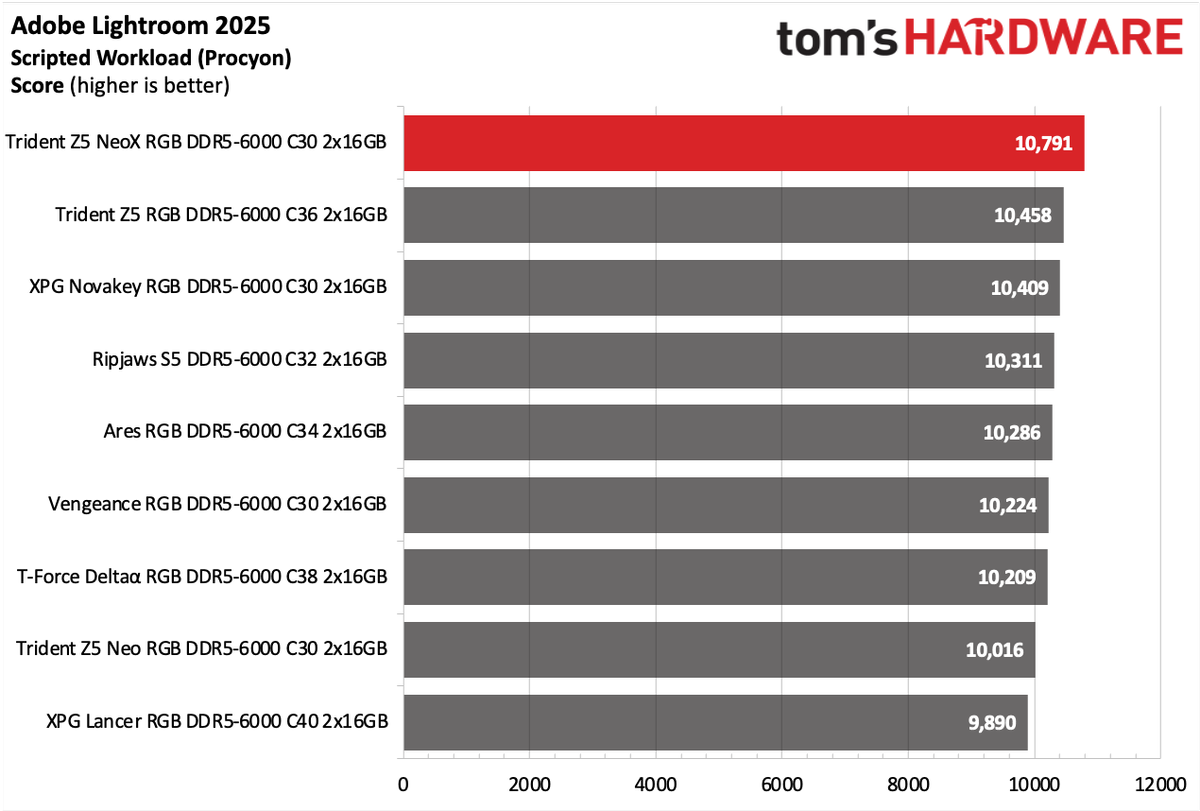
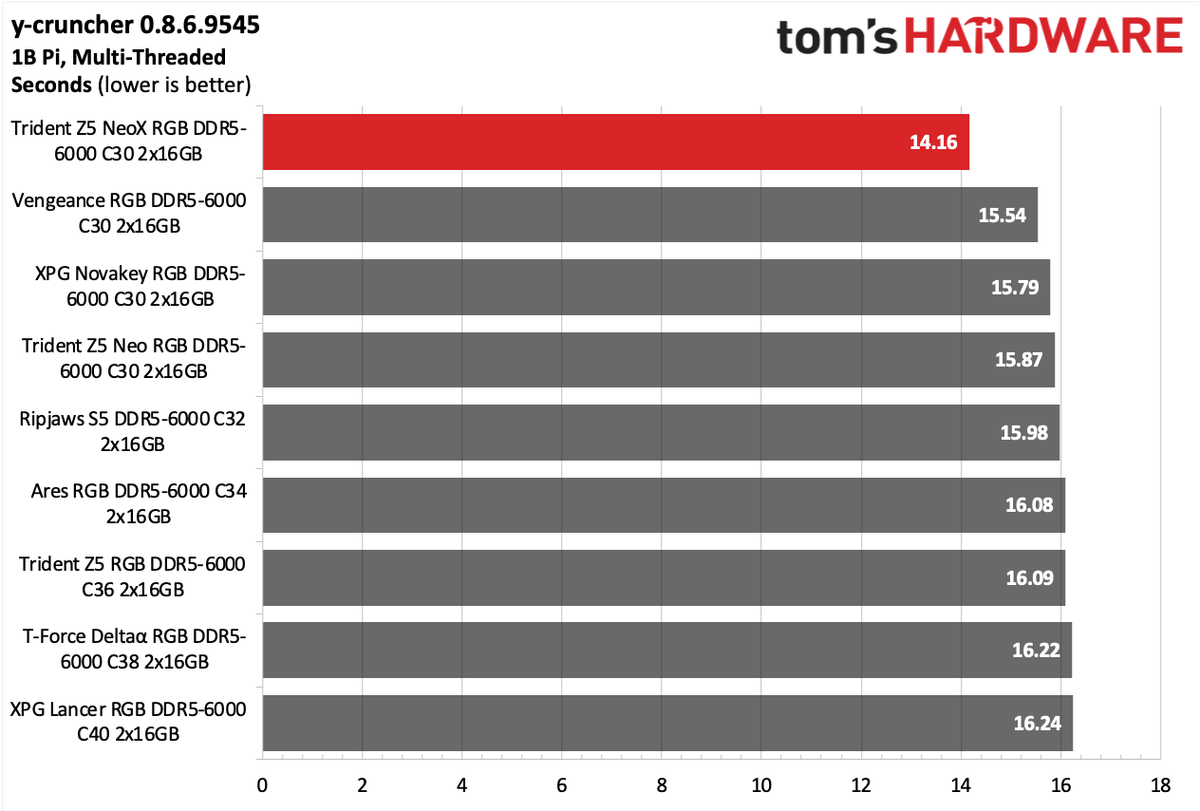
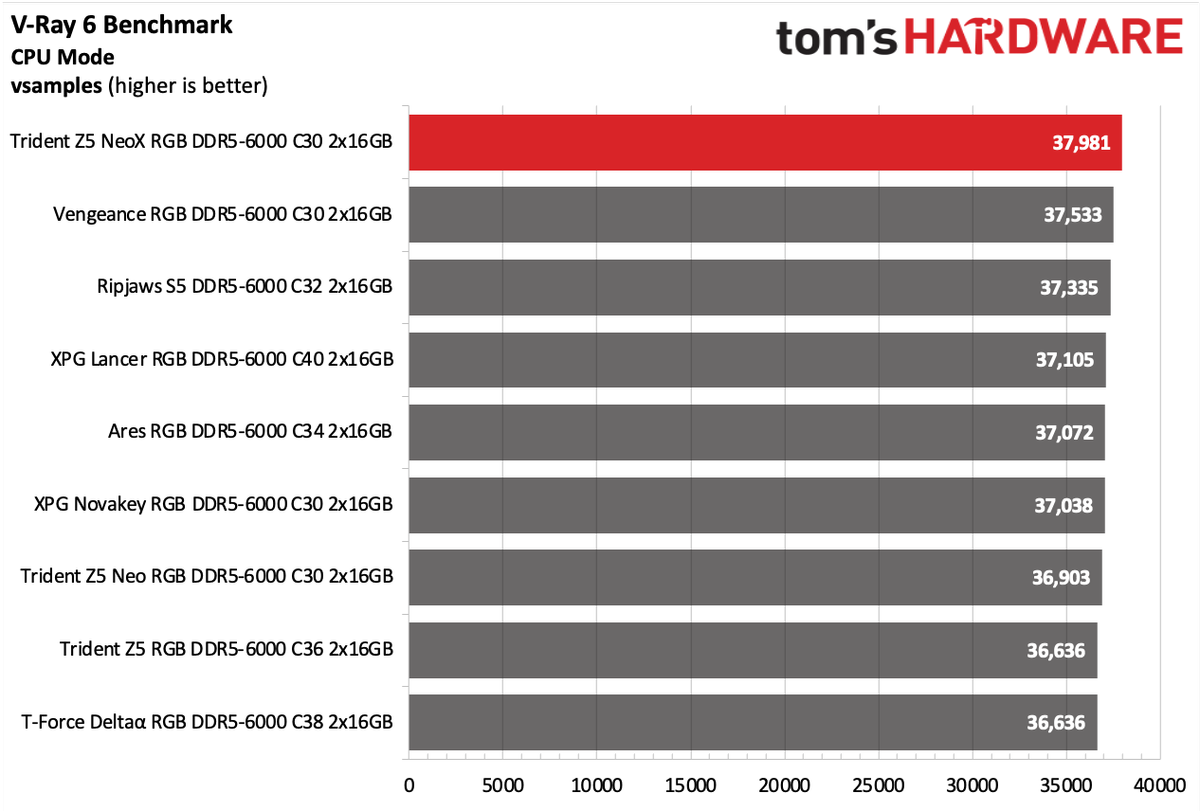
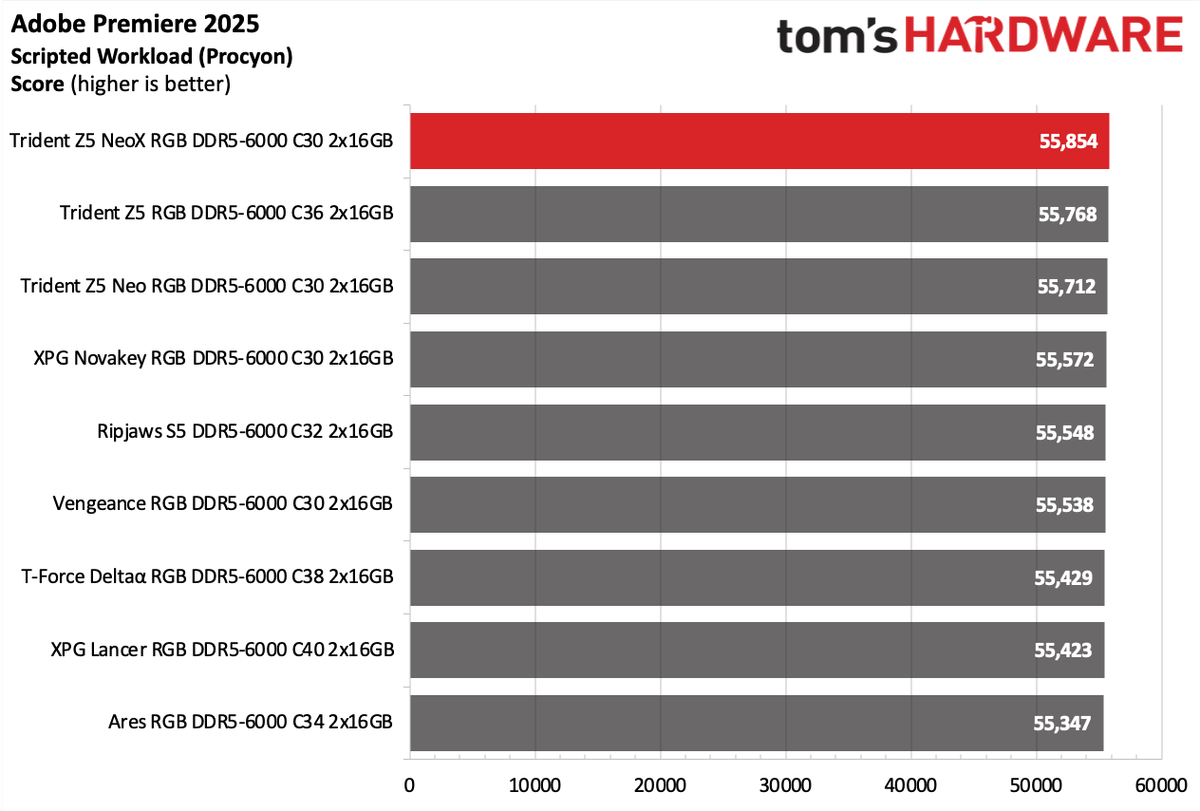
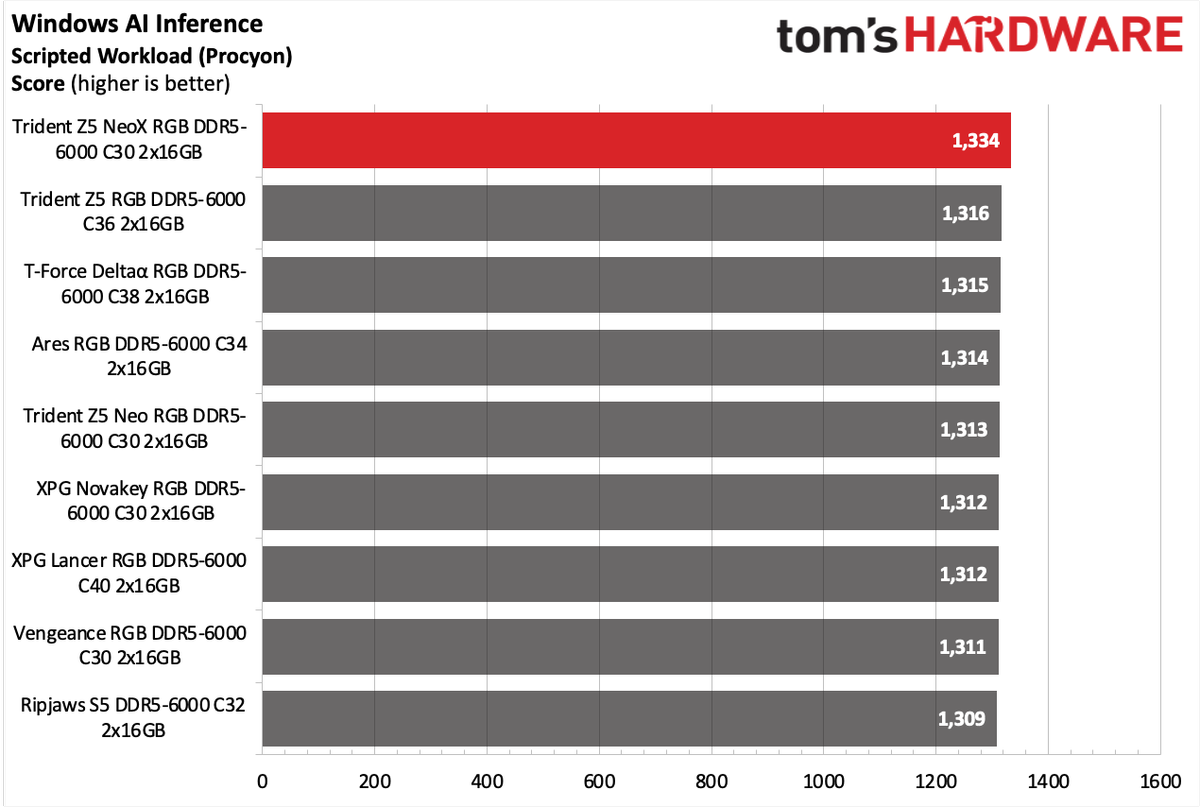
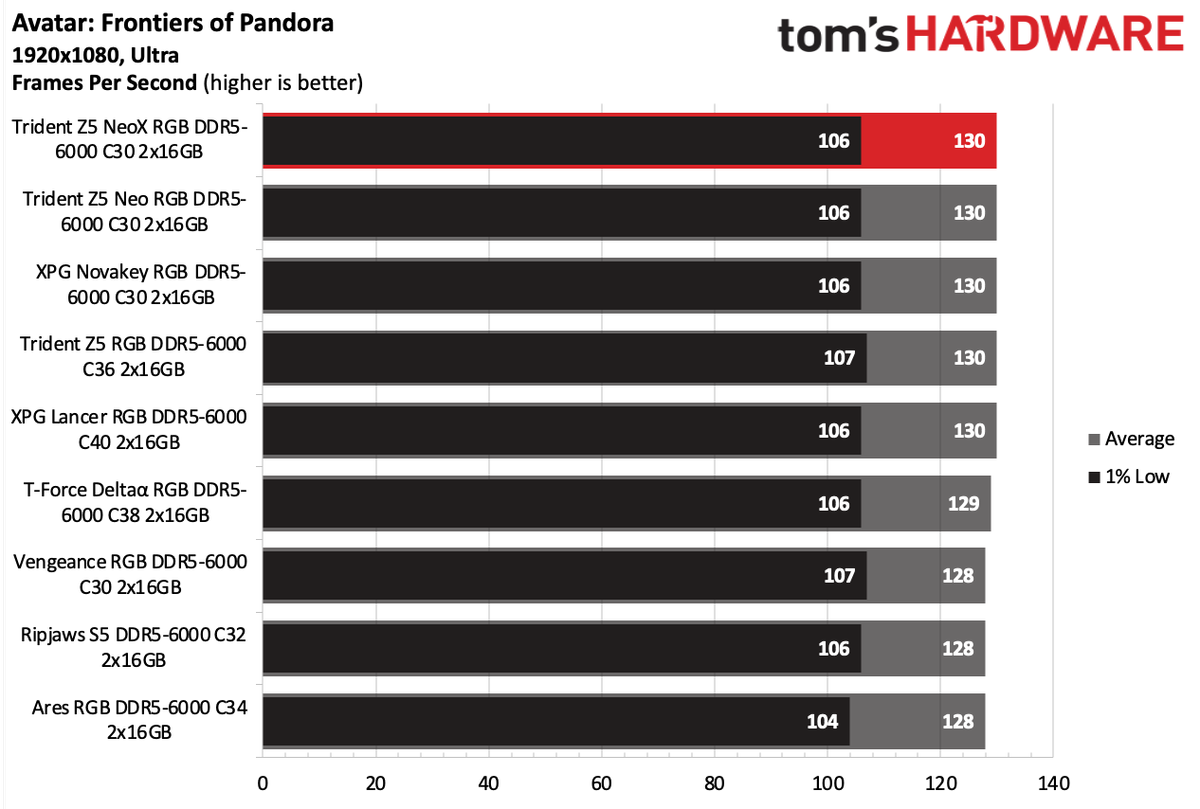
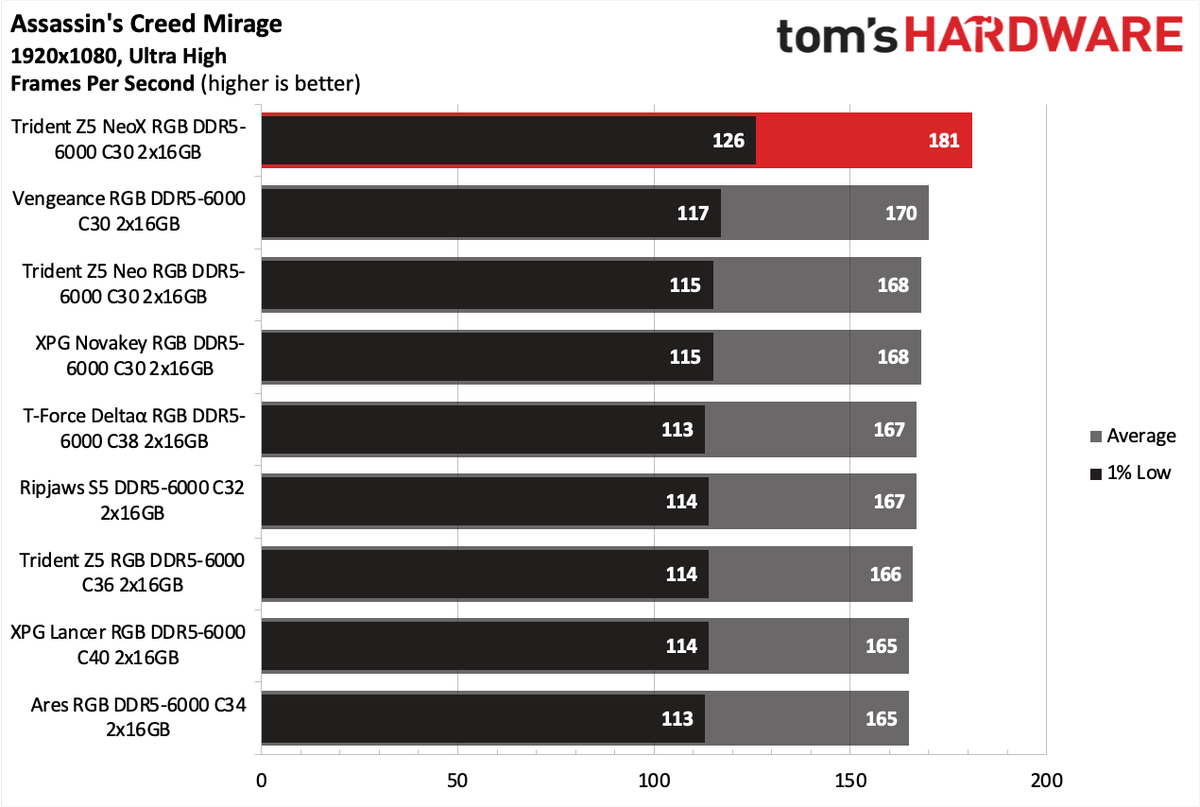
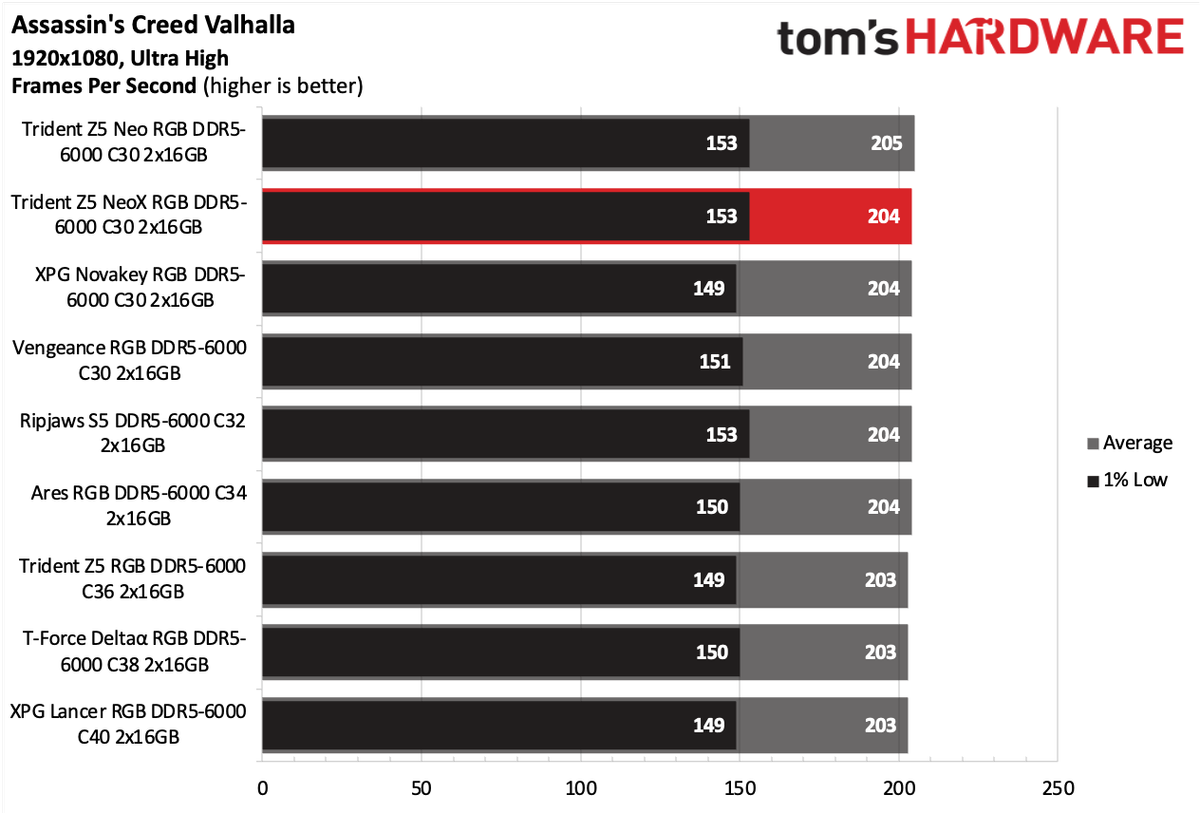
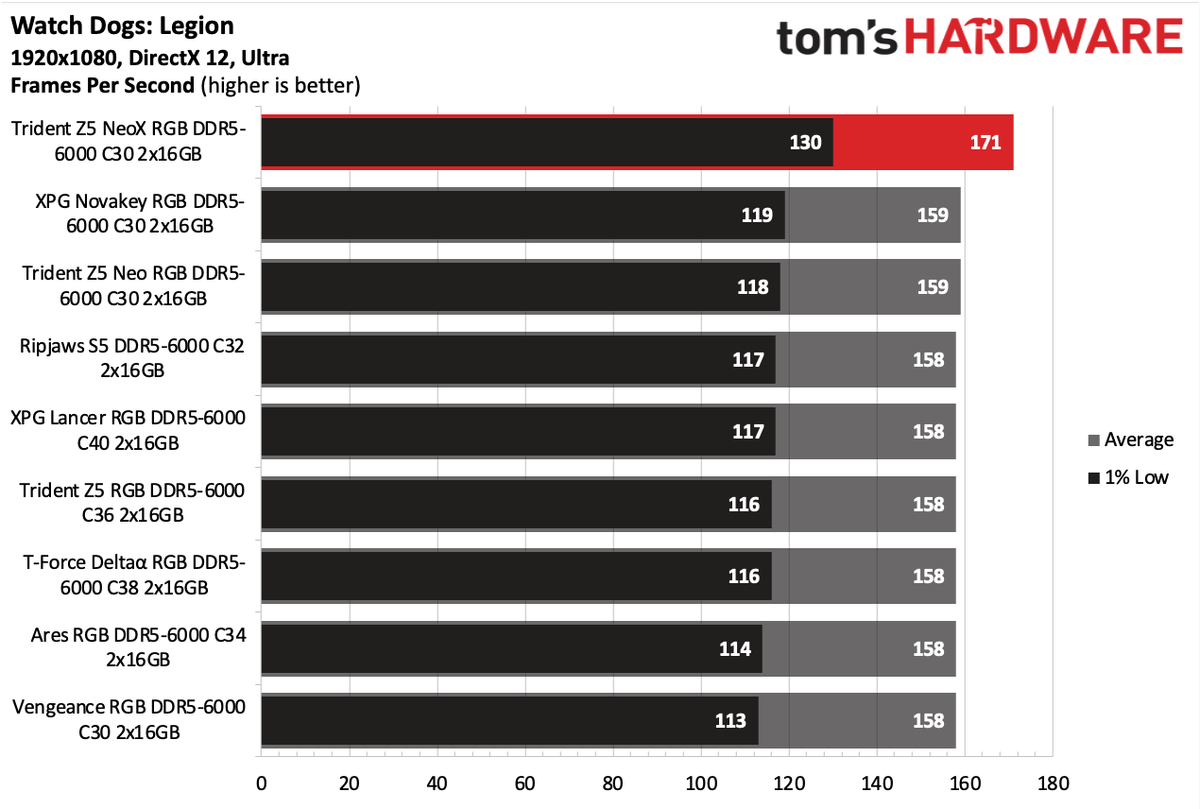
It was a different story entirely when on an AMD platform, an environment where the NeoX thrived. On average, the NeoX posted results that were 3% faster than the Trident Z5 Neo RGB DDR5-6000 C30, its non-ULL counterpart, and 9% faster than the Lancer RGB DDR5-6000 C40, one of the first DDR5 memory kits when the standard debuted. While a 3% to 9% performance lead appears modest, it is important to highlight that some workloads benefited more than others, which balances out the average.
The advantages of ULL memory like the NeoX extend into gaming, but the degree of improvement heavily depends on the game. For example, in games such as Avatar: Frontiers of Pandora and Assassin’s Creed Valhalla, the NeoX was right in the alley of the non-ULL competitors. In Assassin’s Creed Mirage, the NeoX showed an 8% uplift in average frame rates and a 10% improvement in 1% lows compared to the Trident Z5 Neo RGB DDR5-6000 C30. Watch Dogs: Legion exhibited a similar pattern, with the NeoX delivering 8% higher average frame rates and 10% better 1% lows than its non-ULL equivalent.
Overclocking and Latency Tuning
Image 1 of 3
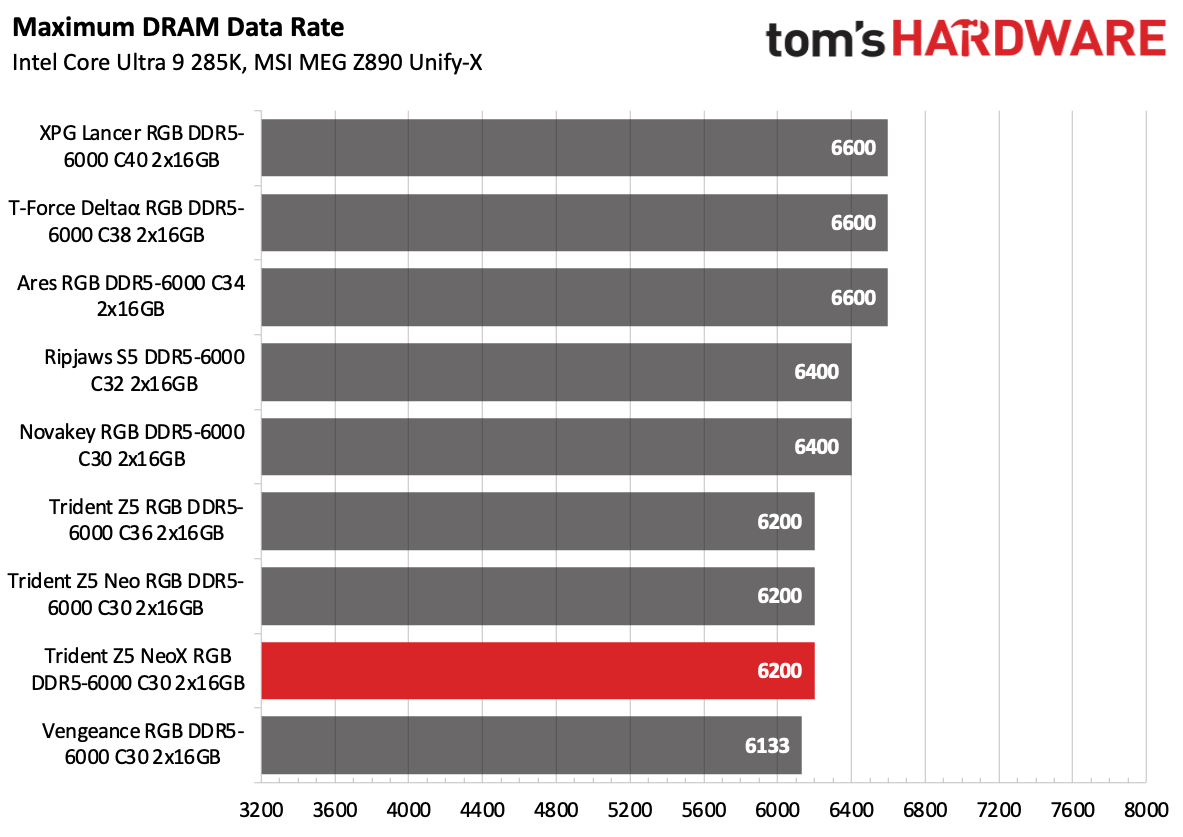
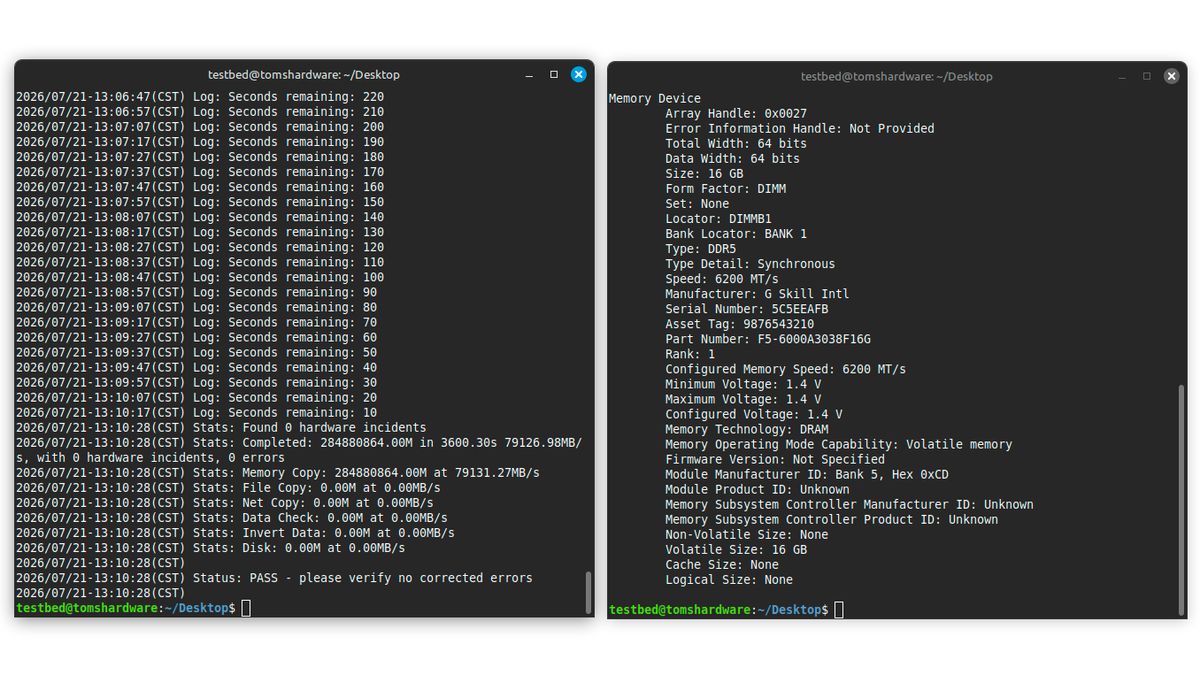
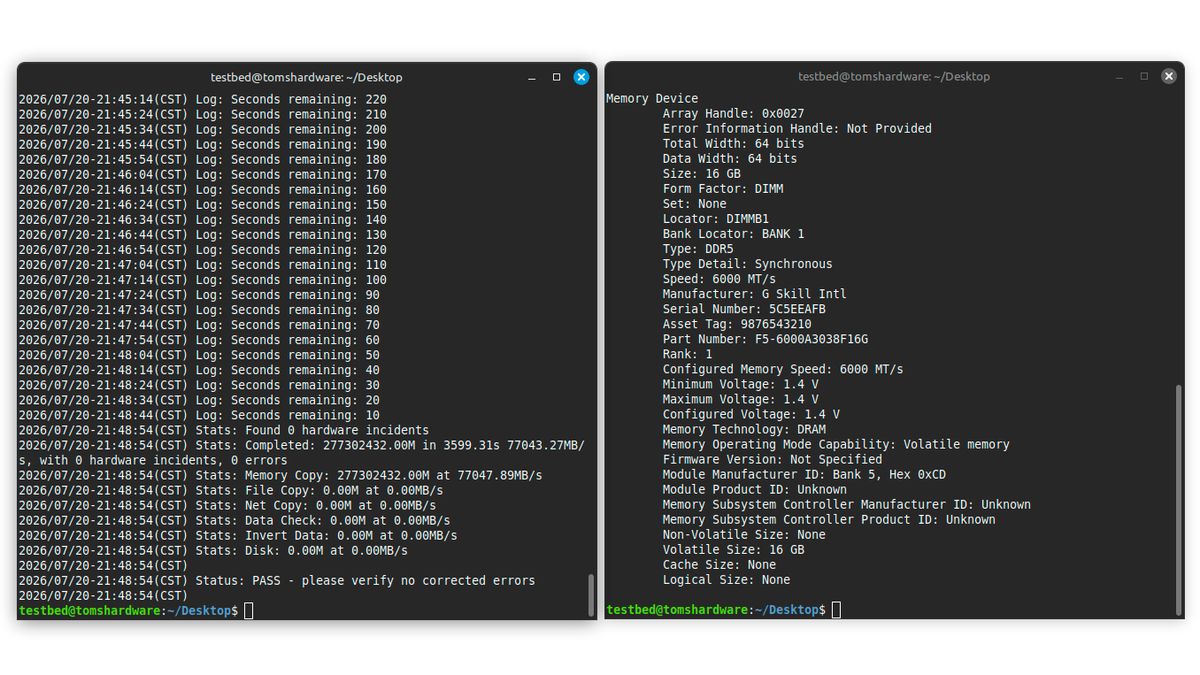
One of the upsides of the NeoX memory kit is that it operates at the standard 1.35V commonly used by enthusiast-grade DDR5. It provides substantial headroom for those willing to experiment with overclocking. During our testing, we found that a modest bump of just 0.05V, from 1.35V to 1.40V, enabled us to stabilize the memory kit at DDR5-6200 while maintaining the same tight timings as DDR5-6000 (32-38-38-32).
Swipe to scroll horizontally
XPG Novakey RGB DDR5-6000 C30 |
N/A |
N/A |
30-36-36-70 (2T) |
N/A |
N/A |
N/A |
30-40-40-77 (2T) |
Ripjaws S5 DDR5-6000 C32 |
28-34-34-74 (2T) |
N/A |
N/A |
N/A |
N/A |
32-38-38-96 (2T) |
N/A |
Trident Z5 NeoX RGB DDR5-6000 C30 |
30-36-36-32 (2T) |
N/A |
N/A |
N/A |
30-36-36-32 (2T) |
N/A |
N/A |
Trident Z5 Neo RGB DDR5-6000 C30 |
30-36-36-96 (2T) |
N/A |
N/A |
N/A |
30-38-38-96 (2T) |
N/A |
N/A |
Vengeance RGB DDR5-6000 C30 |
N/A |
30-36-36-72 (2T) |
N/A |
30-38-38-78 (2T) |
N/A |
N/A |
N/A |
The NeoX memory kit already ships with very tight timings. Nonetheless, we were curious to see how much further these timings could operate without compromising system stability. Using the same 1.4V DRAM voltage as our previous overclocking endeavor, we methodically decrementally lower the memory timings. The only stable reduction we could achieve was with tRCD and tRP, which we were able to lower by two clock cycles.
Bottom Line
There is no denying that the Trident Z5 NeoX RGB DDR5-6000 C30 is at the top echelon of DDR5 memory kits for the AMD platform. The memory kit targets the very hardcore hardware enthusiast who wants to maximize performance from their AMD processor and does not want to tinker with a standard memory kit, but more importantly, is not afraid to pay for it. While the ULL memory kit will not post double-digit uplifts, it is still important to keep expectations in check as the level of improvement over a standard memory kit varies significantly based on your combination of hardware, and remember that ULL is more for the vanilla Ryzen chip as X3D parts are unlikely to experience any perceptible gains.
Like countless other DDR5 memory kits released during this historic memory shortage, the Trident Z5 NeoX RGB DDR5-6000 C30 also falls victim to the circumstances. The memory kit launches at $629.99, so it would be wise to wait for prices to stabilize before picking one up. However, for users putting a new AMD system together from scratch or looking to upgrade their memory and want unbeatable performance at this very moment, the Trident Z5 NeoX RGB DDR5-6000 C30 is in a league of its own.

News Editor, RAM Reviewer & SSD Technician
Zhiye Liu is a news editor, memory reviewer, and SSD tester at Tom’s Hardware. Although he loves everything that’s hardware, he has a soft spot for CPUs, GPUs, and RAM.
What's Your Reaction?
 Like
0
Like
0
 Dislike
0
Dislike
0
 Love
0
Love
0
 Funny
0
Funny
0
 Wow
0
Wow
0
 Sad
0
Sad
0
 Angry
0
Angry
0









Comments (0)