

Have Cameras Finally Peaked in 2026?
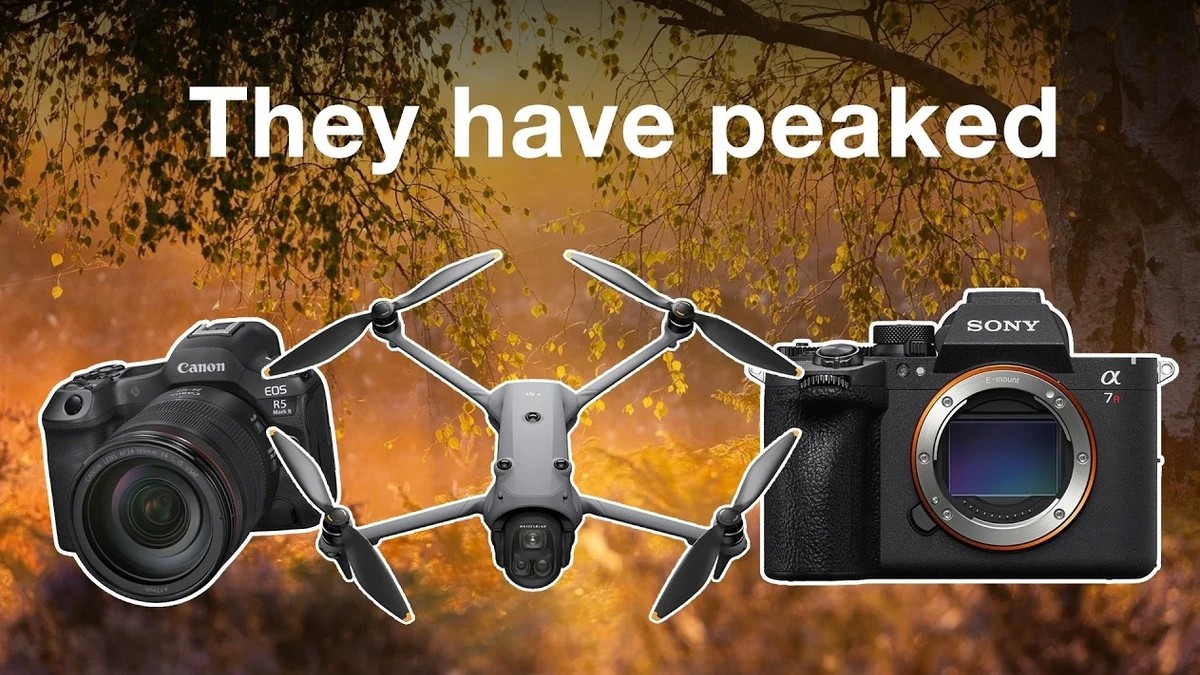
Every new camera announcement still promises a reason to upgrade, yet plenty of people are shooting the same bodies they bought years ago and feel no pull to move on. If you shoot landscapes or buildings on a hobby budget, whether new gear still earns its price decides how you spend the next few thousand dollars.
While riding a bike across the South Downs between shooting spots, Ben Harvey argues that mirrorless camera tech has hit a ceiling. He points back to the early mirrorless years, when each new body brought a feature you simply couldn't get before and upgrading was easy to justify. Today, most releases offer modest refinements on what already exists. Harvey still relies on a Sony a7 III from 2018 and a Canon EOS R, and neither has given him a reason to replace it. Landscape and architecture are a low bar for a camera. Static subjects don't need fast burst rates or quick autofocus, so a body from 2018 can handle the job as well as this year's flagship.
Price is the other half of his argument. The latest mirrorless releases cost upward of about $2,600, and a good lens can cost about the same. A working pro can earn that back. Someone shooting on weekends has to absorb it, and Harvey describes how it sounds when a curious stranger asks what your camera cost and you add up a body and lens past $5,000. He expects the rising cost of chips, memory, and processors to push prices higher still, which leaves you with less innovation at a higher price. When beginners tell him their budget is around $650, he notes that for mirrorless, that money only goes far on the used market.
That has made him comfortable recommending a used DSLR for stills, depending on the genre. DSLRs tend to get better battery life, and their lenses sell for far less secondhand. Harvey still has portfolio images made with a Canon EOS 5D Mark II, a full frame camera from 2008 that remains fully capable for landscapes and architecture. He makes a similar case about drones. Early models were bulky enough to need their own case. His DJI Neo 2 now rides on his backpack, shoots 4K, and flies itself. Even drones, a much younger category, now seem to be settling into small yearly improvements.
Camera makers have noticed some of this shift. Pentax released the Pentax 17 in 2024, its first new film camera in about two decades, and built it around manual control and a half-frame format meant to stretch each roll. Fujifilm's X100VI sat on backorder for months after its 2024 launch, and the camera people waited for was a fixed-lens compact, not a faster flagship. The demand there is for small, simple cameras that are enjoyable to carry. You can apply the same thinking to your own kit. List what your subjects actually demand, such as frame rate, low-light autofocus, or resolution for big prints, and judge any upgrade only against that list. A landscape shooter and a sports shooter reading the same spec sheet should come to very different answers.
Harvey has also been moving backward on purpose. He carries a pocketable Panasonic Lumix GX80, sold in the U.S. as the Panasonic Lumix GX85, and he has never switched it out of JPEG. More recently, his father handed him the film camera from 1997 that he used to photograph Harvey as a child. After 15 years of digital work, Harvey wanted to see whether he could nail focus, exposure, and composition without any help from the camera. That film body has three focus points, compared with roughly 100 on his mirrorless camera, and he believes all that help from modern cameras is dumbing photography down a bit. The camera is 29 years old and still works, and he asks whether you could say the same about the digital body in your bag today.
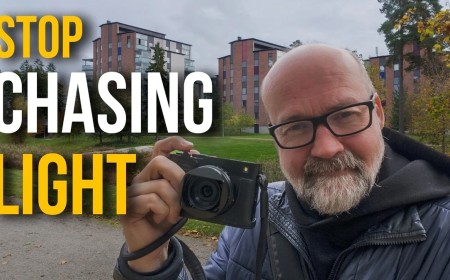
Harvey's take on why older lenses have more character is in the video above.
What's Your Reaction?
 Like
0
Like
0
 Dislike
0
Dislike
0
 Love
0
Love
0
 Funny
0
Funny
0
 Wow
0
Wow
0
 Sad
0
Sad
0
 Angry
0
Angry
0







Comments (0)