

How I Shot Three Completely Different Portraits With Profoto's Essential Hybrid Kit
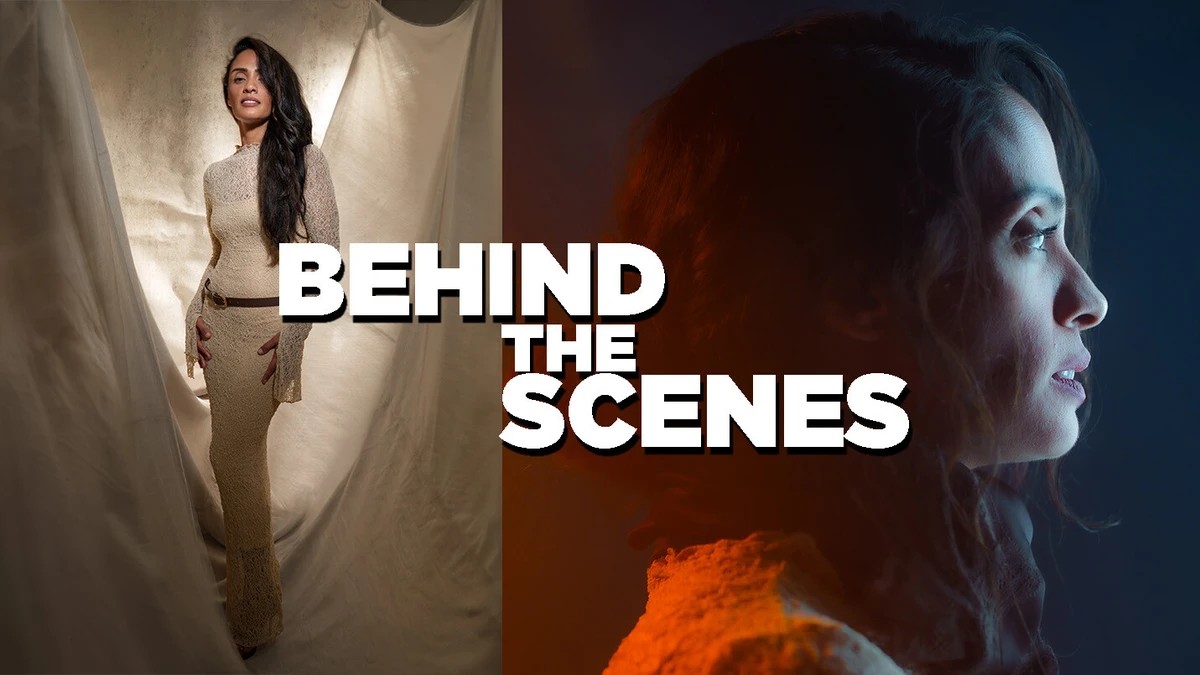
A few weeks ago, Profoto challenged me to do a full photo shoot using their new Essential Hybrid Kit. I told them to send it over, and I would use it on a real shoot. In this article and the video above, I'm going to show you exactly how I used this kit and take you behind the scenes on how I mixed constant light with flash to create the final images.
What Exactly Is a Hybrid Kit?
If you're a professional creator, you're probably aware that more and more of your clients are asking for both still photos and video. Sometimes those video assets are just for social media. Other times they get combined with the photo shoot for a larger branding campaign.
Depending on the scope of the shoot, many times you can get by shooting video with just the modeling lamps on your strobes. Other times you might find yourself needing a more flexible LED light that's dedicated to video. For the last 15 years or so, I've primarily used Profoto strobes, but recently, Profoto has been making a big splash into the world of high-end video lighting. This year, they have designed three different hybrid kits so that you don't have to piecemeal a bunch of strobes and constant lights together when shooting mixed forms of media.
Everything comes in one kit, and it all works with the same light modifiers you may already own. That's one of the main reasons something like this appeals to me.
What Comes in the Essential Hybrid Kit
The Essential Hybrid Kit is the one I used for this shoot. Profoto pitches it at full-time content producers, and it's built around two very different lights. Here's what's in it:
- Profoto L600C, a 600 W full-color LED constant light
- Profoto B30, a 500 Ws battery-powered flash
- Profoto Connect Pro remote
- White Zoom Reflector
- White 10° grid
- 4' Silver Octa softbox and softgrid
- Large black and white collapsible reflector
- 8' light stand
The kit price is $6,623.00. If this is more or less gear than you need, the other two kits may be a better fit. The Core Hybrid Kit is the smallest of the three, with just a single L600C, the Connect Pro, and the 4' Octa. The Ultimate Hybrid Kit is the largest, with two L600Cs, a pair of B30s, and a much bigger selection of modifiers.
All of these lights can be controlled with the Connect Pro, which sits on top of your camera, or with the Profoto Control phone app, which gives you even more options. Since both of these heads can act as a strobe or as a constant light, I built three unique sets that mix and match the two types of lighting while producing both stills and vertical video for social media.
For all three, I photographed my friend Velia Gomez. Velia is a professional stylist and consultant whose client list is filled with celebrity A-listers. However, I was most excited when she told me she had worked with one of my favorite photographers ever, David LaChapelle.
Shoot 1: Mixing Flash and Constant Light Inside a Fabric Cocoon
For the first image, I mixed both strobe and constant light. I like to always build the most elaborate set before any talent arrives, and for this shot, I used some old painter's drop cloth that I've had forever. I draped it around some C-stands and light stands to build a little tunnel. The goal was to make it look like Velia was wrapped inside a cocoon, and it's a very easy way to transform a normal studio space into something that looks much more abstract than a normal square room.
Behind the fabric, I placed the L600C to create all of the dramatic backlighting. Depending on where I positioned it, the light would shine right through the cloth. Because the fabric is a neutral color, I could completely change the mood from the app. I could have made it green, pink, or any other color I could think of, but for this setup, I went with a really warm straw color.
The second light was the B30 with the white Zoom Reflector and the 10° grid. I set both the strobe and the modeling lamp really low so that my images and video would look consistent. This grid lets you put the light selectively on someone's face. My thought was that Velia has some really awesome clothing, so she could be mostly lit from behind while a tiny spot of light picked out her face.
Then I added one last trick that I hoped would take the image from just okay to pretty awesome. I placed a fan just outside the fabric, turned it on full blast, mounted my camera on a tripod, and added a neutral density filter to the lens. The idea was to drag the shutter for one or two seconds so that all of this fabric would turn into motion blur while Velia stood perfectly still.
My test shots the night before, with apple boxes as a stand-in, looked amazing. The real thing was harder. The longer my shutter was open, the more blur I started to get in Velia's face. I wound up using a faster shutter speed than I wanted and riding the balance between enough fabric movement and a portrait that was still sharp enough to read as clean. I also held fabric in front of the lens to add more movement, which led to all kinds of happy mistakes. Sometimes the fabric would block too much of the frame but look really cool, and sometimes the lights would fire through it and cast unexpected shadows.
The L600C: A Beast of a Constant Light
Most of you know Profoto for flash, but their constant lighting system lets you use all of their light modifiers across both flash and LED systems. The L600C is a beast, and if you are a photographer, it might be a much larger light than you're probably used to working with. It's a 600 W LED, and around 20,000 lux at one meter with no modifier. You can nearly double that output if you use Profoto's Zoom Reflector White dish.
The real story with this light is all of the color options you can achieve. The L600C is an RGBWWW light, which means it has red, green, and blue LEDs along with three white LEDs. That lets you dial in an exact color temperature all the way from a warm 2,000 K up to an ice-cold 15,000 K. You can also adjust the tint toward magenta or green to match the perfect white balance with other lights on set.
On top of that, there are several lighting modes, including CCT, HSI, RGBW, and preset gels. The gel mode replicates more than 300 different LEE and Rosco gels. Profoto claims this light can produce over 16 million colors! In a more practical sense, the L600C allows you to match color perfectly on set without having to carry around dozens of gel swatches and taping them to the front of your lights. In terms of color accuracy, the Profoto L600C has a CRI of 96 and a TLCI of 99, so your color quality is going to be acceptable for professional productions.
Normally, a light like this would have a huge ballast at the bottom of the stand with a cable running up to the head. Profoto has built everything directly into the unit, so all you have to do is plug in the light with a single power cable. They were able to achieve this by designing the light with a built-in water-cooling system. Not only does it run cool, but in my use, it was nearly silent. If you're recording audio, the last thing you want is the sound of your light's fans contaminating the natural audio in your scene.
Can the L600C Really Work Like a Flash?
Yes, but I want to be really clear about what that means.
On the back of the light or in the app, you can set the L600C to flash mode. This dims the LED so that it doesn't blind everyone on set. Then, when you trigger your camera, the Connect Pro trigger fires the LED up to full power and allows you to sync it to a still frame. Your constant light now functions much more like a traditional strobe, without constantly blasting the talent in front of your light at full power. This makes the L600C a better solution than most traditional modeling lamps that still get extremely bright.
However, this light does not have a traditional flash tube in it. It's a pulsing LED that can output the full power in just a fraction of a second (but not, say, 1/1,000th of a second). That means it's not going to freeze motion the way a strobe with a very fast flash duration would. If you're shooting splashes, a fast athlete, or anything with a lot of movement, you're definitely going to want something like the B30 to freeze the action while the L600C provides the atmospheric light in the background.
Where flash mode really shines is in your workflow. Your model isn't staring into a light at full power, and you can trigger everything with the same remote as your other flashes.
Shoot 2: Flash Only in a Stylist's Corner
For the second image, I wanted to create an environmental portrait that Velia could use in her own branding. We turned a corner of my studio into a little nook filled with colorful, fashion-forward clothing, and Velia wore more of a modern-day consultant outfit that fit the scene really well. This is probably the easiest setup in the whole video. Both heads are firing as flashes here, which makes it the pure stills setup of the three.
I put both lights on the same side of the frame so that the direction of the light would be consistent, even though they're doing very different jobs. The L600C sits slightly behind, with the Zoom Reflector and 10° grid aimed mostly at the clothing. It barely touches Velia at all. It's just there to make the clothes pop. Because it's in flash mode, its modeling lamp isn't nearly as bright as it could be.
Up front, the B30 fires through the 4' Octa Silver Softbox and lights Velia directly. This larger light source makes up about 70% of the lighting in the image. It creates a really soft, directional sidelight that almost looks like window light. Adding the L600C on the clothing gives the frame a bit more pop, much like you'd see in a department store or fashion set. The big advantage of two separate lights is that I have complete control over the subject and the background independently.
There's one important step here if you're mixing these two lights. Normally, you wouldn't have to think about color when using only flash because a flash tube is daylight-balanced. Since the L600C is an LED that can be any color, I dialed it in to match the B30 so that everything would blend perfectly when they both fired.
I also have a white wall to my left that's bouncing some fill back into this image. If you're in a much larger space and want that same fill, just place a V-flat outside of the frame.
The B30: A Direct Replacement for the B10X Plus
If you're familiar with Profoto's lineup, the B30 is a direct replacement for the B10X Plus. It's the same idea, but better in many ways. Its smaller sibling, the 250 Ws B20, replaces the B10X. Compared to the previous models, these new lights recycle about 13% faster, have a brighter modeling light, and have a flash tube you can replace yourself. Your old B10 and B10X batteries still work, too.
The B30 is a 500 Ws battery-powered flash. Profoto rates it at 11 stops of power, from 0.5 Ws to 500 Ws, and you can adjust it in tenth-of-a-stop increments to really fine-tune your exposure. The modeling light is a 40 W LED that goes from about 2,800 K to 7,000 K, so you can match the color of your room or match it to most of the white LEDs on the L600C. It also uses the Profoto Air system, so it works with the same Connect Pro and the Profoto Control app.
This is the light in your kit that's going to freeze motion, because it has a real flash tube. In Freeze mode, you're looking at a flash duration of around 1/10,000 of a second. That's great for water splashes, athletes jumping, hair flying through a scene, or high-fashion images with a lot of movement.
Being able to dial this light down to half a watt-second is also extremely useful. Say you're shooting in a dimly lit reception hall with your ISO bumped really high, or you're doing an environmental portrait at night and trying to keep the city lights in the frame. Most flashes are completely overpowering in those situations, and this is exactly where that low end pays off.
The Light Modifiers in the Kit
The first modifier is the white Zoom Reflector, which gives you a slightly softer and warmer light than the silver reflectors I've been using in my own studio for years. When testing and researching this white reflector, I reached out to the Profoto team, and I was told that the white reflector produces about one full stop more power than the silver reflector dish when used on any recessed-flash strobe. On the strobes with an exposed flash tube, the bulb fills the silver reflector dish and pushes all of that light forward. However, when the tube is recessed into the unit, the white reflector can more efficiently throw the light forward, resulting in quite a bit more flash output on your subject.
Next, we have the white 10° spot grid. This white 10° grid pops right into the white Zoom Reflector, and it helps contain the spill of your light. You still get a hard light source, but with a much narrower beam, which is how I lit only Velia's face in the first shoot.
To help create softer light, we have the 4' Octa White Softbox. Profoto has redesigned the mounting speed ring, so instead of fighting with all of the poles like on many of my other softboxes, you simply ratchet one little lever, and the whole thing pops open. It takes literally five seconds to build or break down, and I kind of want to replace all of my other softboxes with this version.
The 4' Octa Softbox is definitely the modifier I use the most with both photography and videography. It's so soft and so forgiving that I'd say 90% of the shoots I do involve a 4' Octa Softbox.
Finally, you get the large collapsible reflector, which has two handles that make it really easy for an assistant to hold. Normally, you'd use it to bounce light back into your scene, but in the final shoot, I decided to use it in a very different way.
Shoot 3: All Constant Light With a Window and a Black Reflector
For the final portrait, I didn't use any strobe at all, and instead of an elaborate set, this one is all about lighting. When you start introducing really extreme color into a shoot, this is where a hybrid kit really excels.
My studio has only one window light, which is a door on the side of the room. I decided to use the natural light from that door as my key light, which let me use the two lights in the kit as secondary lights. That gave me a total of three light sources when only using a two-light kit. I closed all of the drapes to leave a little sliver of light, then positioned Velia in front of the door for a profile shot so that the sliver would light just the front of her face.
Next up was the background. My studio has pure white walls, which don't make it easy to get a dark background. So I mounted the collapsible reflector on a C-stand with the black side facing out and used it as my background. The great thing about black is that it absorbs so much light that you can fire a light directly into it without the light bouncing around the studio and contaminating everything else. To get a really smooth transition with no hot spot, I lit it with the B30's modeling lamp through the 4' Octa.
Then came the color. If you've ever used natural light as your key, you know that it's almost impossible to change its color beyond the typical cool or warm color scheme. I had already matched the B30's modeling lamp to the outdoor light, so the window and the background were consistent, but I wanted the whole scene to be super blue. My trick is to go into the white balance setting on my camera and set the Kelvin scale way down to 3,200 K. That turned my window light and B30 modeling lamp to a much cooler temperature than what was seen by the naked eye.
That left the L600C for the final color accent. I went into the Profoto Control app and chose RGBW mode, which let me dial in very intense colors. Then I played with the sliders until I had the warm orange color I was looking for.
The takeaway here is the order of operations. Set the lights that give you the least flexibility first, then use the L600C, which has the most flexibility, last. That let me balance out the entire look without putting a single physical gel on anything.
Who Is This Kit For?
This kit makes the most sense for someone who's regularly delivering both stills and video but wants total flexibility all in one system. If you already own Profoto modifiers, it's even more appealing since you can easily mount them to any light in this kit.
There are some things to think about, though. The B30 runs on a battery, but the L600C needs wall power, so this isn't a kit you can take anywhere and run completely untethered. There's also only one Zoom Reflector, one grid, and one softbox, which means you might be moving modifiers between the lights as your setups change. And if you only ever shoot stills or only ever shoot video, you probably don't need both of these lights, although the L600C is nice for all the color options it can generate.
Final Thoughts
What I enjoyed most about this kit is how different these three images are. In one day, I used these two lights with a mix of flash and constant, as flash only, and as constant only. The same two heads and the same handful of modifiers gave me a warm fabric cocoon, a soft editorial portrait, and a dramatic blue and orange profile.
If you'd like more information about the kit, you can find the Essential Hybrid Kit here or you can check out the other Profoto Hybrid Kit variants here. I hope you enjoyed this behind-the-scenes look, and let me know in the comments which of these three images is your favorite.
What's Your Reaction?
 Like
0
 Dislike
0
 Love
0
 Funny
0
 Wow
0
 Sad
0
 Angry
0











Comments (0)