

How This Photographer Turned Drone Photography Into a Creative Advantage
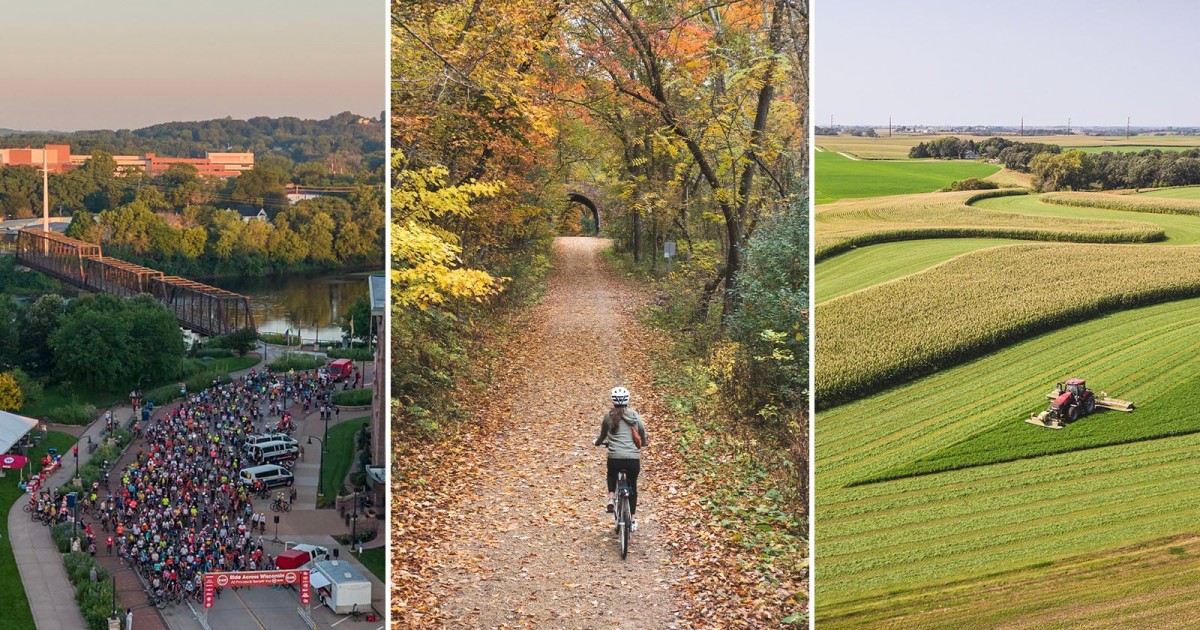
As photography becomes an increasingly competitive and crowded field, adding new skills can give photographers an important edge. In this exclusive PetaPixel interview, photographer and filmmaker Megan Zabel Holmes shares how becoming a commercial drone pilot has helped her stand out, attract new clients, and turn aerial work into a valuable part of her business.
Holmes began her career in writing before moving into photography and filmmaking, eventually adding commercial drone work to her creative toolkit. Her journalism background has shaped an approach centered on authentic visual storytelling, with a particular appreciation for the small details, quirks, and imperfections that give a place or event its character.
Her work has taken her everywhere from outdoor events to commercial assignments for clients including Travel Wisconsin, Zoom, the American Birkebeiner, the Wisconsin Bike Federation, and others. She often works independently, bringing photography, video, and aerial capabilities to projects that might otherwise require a larger creative team.
For Holmes, the drone is ultimately another camera with a unique ability to change how a story is seen. She uses that perspective alongside her ground-based work, considering everything from the landscape and scale of an event to weather, timing, and flight restrictions when deciding how to approach a shoot. She discusses how she got started with drones, how aerial work has become a valuable part of her commercial business, how she balances drone and ground-based coverage at events, the gear she relies on, and why she wants to see more women enter the commercial drone industry.
A Career Built by Layering New Creative Skills
Holmes didn’t begin her career with the goal of becoming a photographer, filmmaker, and commercial drone pilot. Instead, she gradually added new disciplines as she looked for additional ways to tell stories. Each new skill became another way to approach the same subjects, while also giving her greater control over how she could bring a story to life.
“I’m a person who is addicted to learning new skills and perhaps a bit of a control freak who wants to own all of the aspects of my work,” Holmes says.
She started her career focused on writing before adding photography, then video, and eventually drone work. For Holmes, the progression has been less about collecting technical abilities and more about having the right tools available when a particular story calls for them. That has allowed her to move between different forms of visual storytelling while maintaining the same underlying focus.
“I’m always working to convey the truest, most authentic representation of any place or event and I’ll use all the tools I can get my hands on to do this well,” she says.
Her journalism background remains an important part of that approach. Rather than focusing only on the obvious or polished elements of a subject, Holmes looks for the details that reveal its personality and make an experience feel genuine. Those can include imperfections, unexpected moments, or small visual elements that might be overlooked in a more conventional commercial shoot.
“I love the small details that make a place or event unique, and the quirks or imperfections that give it character,” she says. “I know that I am always drawn to what’s real vs. manufactured and can’t imagine approaching my work in any other way.”
Discovering the Possibilities of Commercial Drone Work
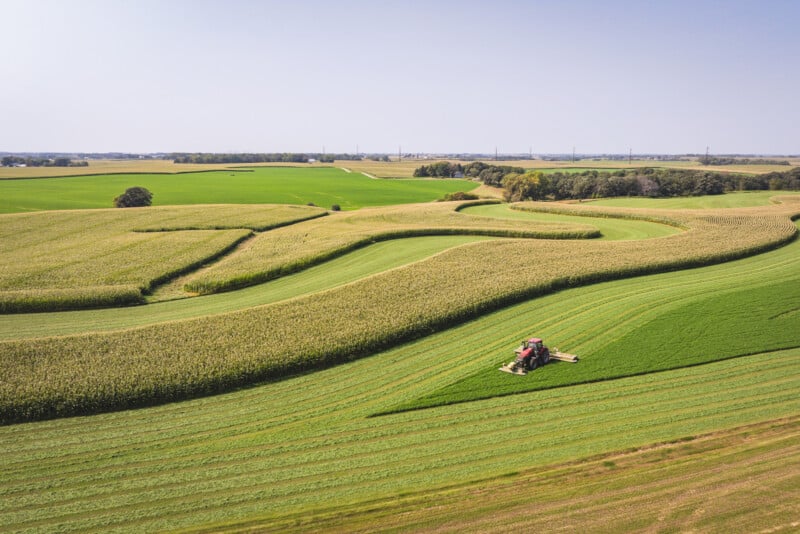
Drone photography was not originally part of Holmes’ career plan. She was working in-house as the creative lead at a destination marketing organization when her employer supported her in pursuing an FAA Part 107 Remote Pilot Certificate. Until then, becoming a commercial drone pilot had not been something she had considered much, and preparing for the exam proved more intense than she expected.
Another realization helped motivate her to follow through: less than 10 percent of licensed commercial drone pilots were women. As Holmes became more confident as a pilot, she also began to see how much an aerial perspective could add to the work she was already doing.
“I’ve really embraced the drone and I value the perspective it adds to my projects,” Holmes says.
The additional capability has also helped Holmes distinguish herself among other visual storytellers. Instead of offering only photography or filmmaking, she can provide multiple forms of coverage as part of the same project, giving clients another reason to work with a single creative who can handle different aspects of an assignment.
“It’s helped differentiate me in a crowded field of visual storytellers,” she says. “I take pride in being a one-stop-shop for photo, video and drone coverage.”
For smaller brands and nonprofits, that flexibility can be particularly useful. Holmes’ ability to provide photography, video, and aerial coverage means clients can get a broader range of visual content without assembling a larger production team. It also allows her to approach an assignment as a complete visual story rather than treating each medium as a separate service.
Knowing When an Aerial Perspective Adds to the Story
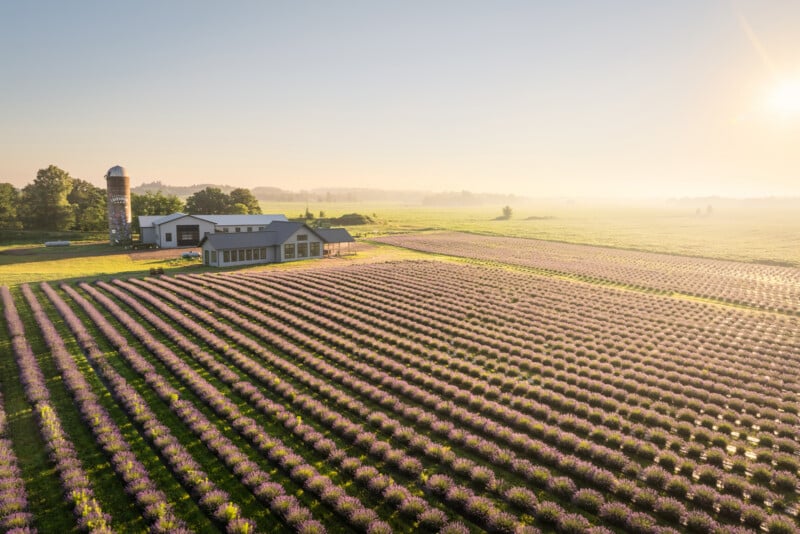
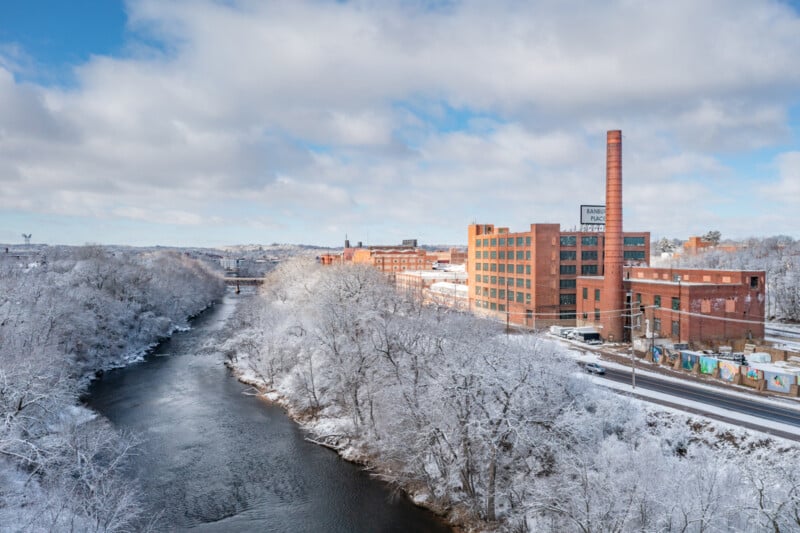
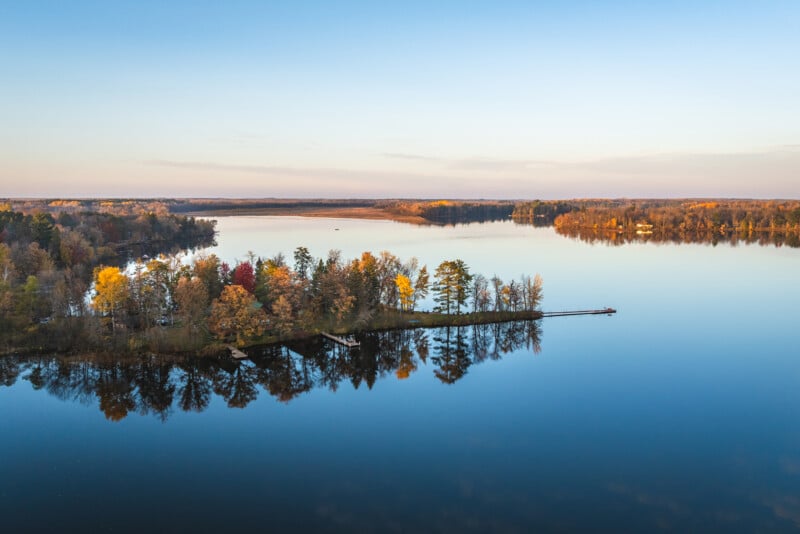
For Holmes, the value of drone photography isn’t simply capturing an impressive image from above. The aerial perspective has to contribute something meaningful to the story, whether that means showing the scale of an event, establishing a sense of place, or revealing how people and activities interact with the surrounding environment.
“I think an aerial perspective almost always adds value when you’re thinking about photo and video work from a storytelling perspective,” she says. “And I’d argue that you always should be!”
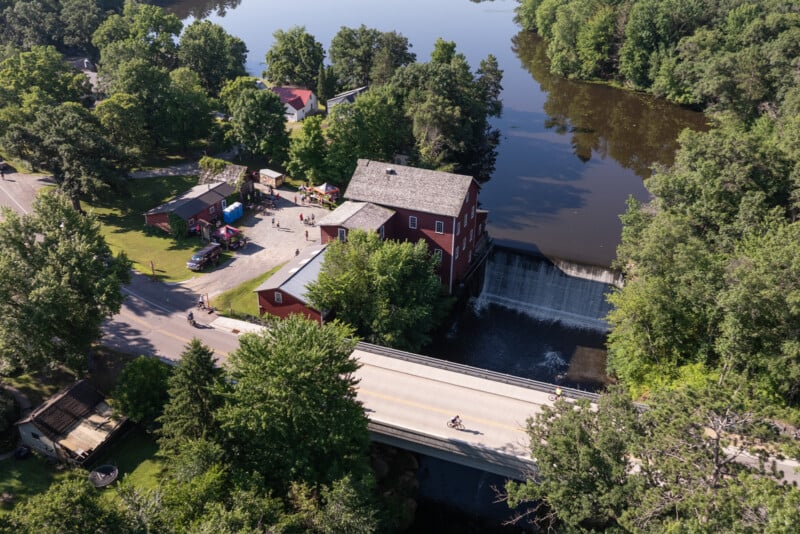
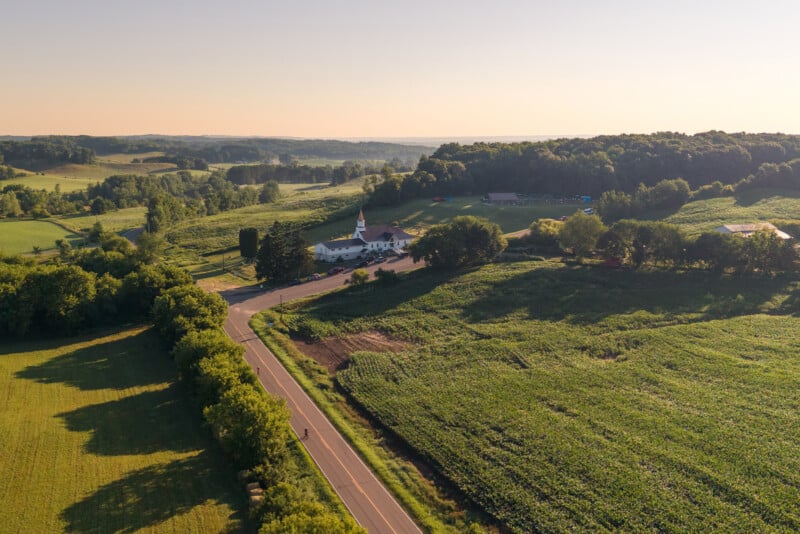
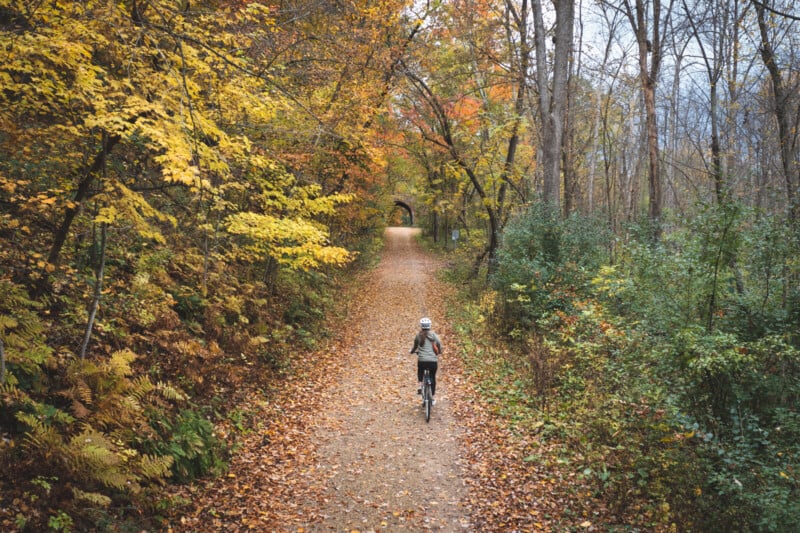
That becomes especially apparent when she is covering outdoor events, where the surrounding environment can be an important part of what makes the experience distinctive. A ground-level photograph can show the people participating in an event, but an aerial image can place those people within the landscape and communicate the relationship between the activity and its setting.
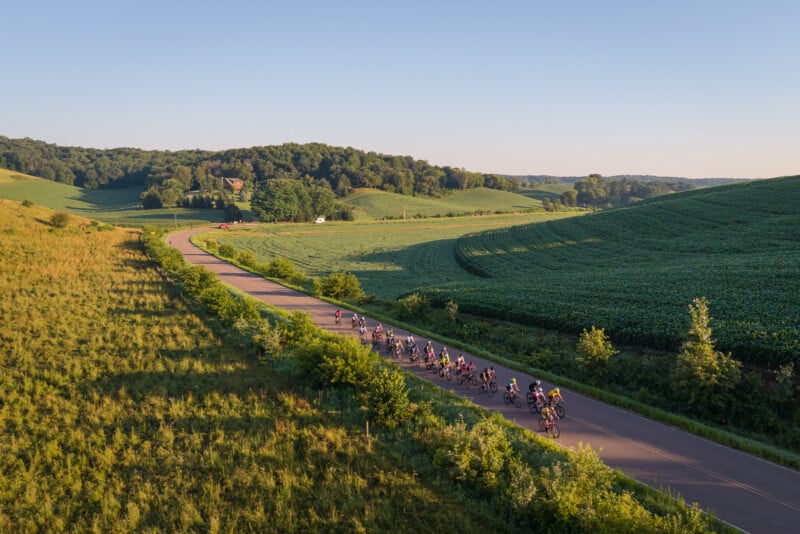
“If I’m covering a bike race, the landscape and terrain are main characters,” Holmes explains. “It’s vital when selling the merits of a destination or the essence of a brand.”
An aerial perspective can therefore provide context that isn’t always possible to capture from the ground. For Holmes, the drone is most useful when it adds information to the visual narrative rather than simply providing a different-looking image. The same approach applies across commercial assignments, where showing the environment can help communicate what makes a destination, event, or brand distinctive.
Building a Commercial Kit for Multiple Perspectives
Holmes’ equipment reflects the variety of work she takes on. Her drone kit includes a DJI Mavic 3 Pro, a DJI Mini 5 Pro, and a DJI Avata 2, giving her several options depending on the assignment and the type of aerial footage she needs to capture.
For photography and video, she uses a Canon R5 II and Canon R6 II, relying heavily on 24-70mm f/2.8 and 70-200mm f/2.8 lenses. She also takes opportunities to experiment beyond her primary camera setup, including strapping a GoPro to a bike. More recently, she has been exploring film photography and experimenting with creative lenses and filters such as the Lensbaby Velvet and Prism Lens FX.
That willingness to experiment reflects the same curiosity that has driven Holmes to continually expand her creative toolkit. Rather than relying on one camera or drone for every assignment, she has built a collection of tools that allows her to choose the approach that best fits the story, whether that means working from the air, photographing from the ground, or experimenting with a completely different format.
Balancing Aerial and Ground Coverage at Live Events
Working with multiple cameras and perspectives becomes particularly challenging when Holmes is covering an event by herself. She has to make deliberate decisions about when it is worth putting down her ground-based camera to fly the drone, knowing that spending time in the air can mean missing moments happening at ground level.
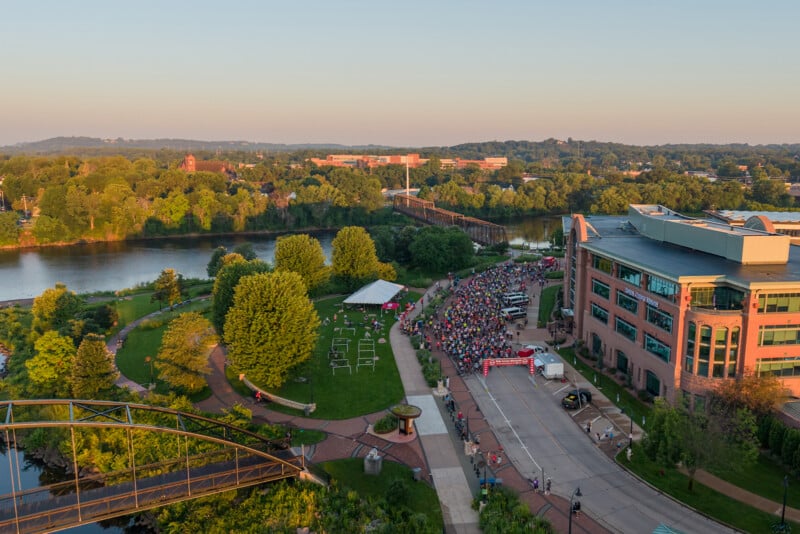
A bike race provides a good example. Early in the race, she prioritizes the drone during the rollout, when riders are still mostly grouped together. From above, she can show the scale of the field and its relationship to the surrounding landscape. Later, once the riders begin to spread out, she shifts her focus toward individual competitors and the emotion of the finish.
“At the end I’ll get tighter shots of individuals’ faces when they’re exhausted, emotional or covered in dirt,” she says.
Those decisions are shaped by more than a scene’s visual possibilities. Tree cover, weather, flight restrictions, and the timing of the event can all determine whether an aerial shot is practical. Covering an event alone, therefore, requires Holmes to continually reassess what is happening around her rather than follow a rigid shot list.
“I make a plan but am prepared to pivot at any moment,” Holmes says.
That flexibility is essential when working outdoors, where conditions can change quickly, and an ideal opportunity may only last for a short time. Recognizing those moments and changing her approach is part of what allows her to combine aerial and ground-based coverage without treating them as completely separate assignments.
Preparation Matters When the Shoot Is in the Air
Drone work also requires a different kind of preparation than traditional photography. Holmes has learned some of those lessons through experience, including a few mistakes she doesn’t intend to repeat. Before heading to a location, she makes sure she hasn’t been logged out of her drone account, particularly if she expects to be somewhere without reliable Wi-Fi, and she cross-references flight restrictions and airspace maps before a shoot.
Weather creates another challenge, particularly during Midwest winters. Batteries need to be kept warm before flights, while Holmes has to contend with the cold herself. Those practical considerations can determine whether a planned flight is possible just as much as the creative concept behind the shot.
“During Midwest winters I need to think about how I’ll keep my batteries warm before flights and how to keep my hands from freezing,” she says. “Still working on troubleshooting the hands part.”
Preparation, however, doesn’t mean everything can be controlled. Outdoor assignments require Holmes to recognize when conditions are changing and be ready to take advantage of a brief opportunity. A weather shift that might disrupt one planned shot can sometimes create an entirely different photographic possibility.
“You have to be ready to roll with the punches and or pounce when an optimal weather window opens up,” Holmes says.
The Advantage Photographers Already Have
For photographers and filmmakers considering adding drones to their commercial services, Holmes believes their existing creative experience can provide an advantage. Learning to operate a drone introduces a new set of technical skills, but once the fundamentals of flying become comfortable, many of the creative decisions involved in making a strong aerial image are familiar territory for someone who already understands photography.
“If you are already a photographer or filmmaker, you have an advantage out of the gate,” Holmes says.
That advantage comes from understanding that getting the drone into the air is only the beginning. A compelling aerial photograph still requires an understanding of composition, exposure, light, perspective, and timing. The pilot has to recognize what makes a scene visually effective and know how to position the camera to communicate that effectively. Holmes points out that some people are drawn to drones primarily because of the technology itself, without necessarily having experience behind a camera.
“A large portion of drone pilots were drawn to the ‘cool toy’ aspect of the work, but have zero experience composing a good shot or nailing the exposure,” she says.
For an established photographer, those decisions are already part of the creative process. The drone changes the vantage point and adds the challenge of controlling an aircraft, but the fundamentals of making an image remain. A photographer still has to consider how lines and shapes work within the frame, how the available light affects the subject, where the viewer’s eye will go, and whether the chosen perspective actually communicates something useful.
Once flying becomes more comfortable, those existing instincts can be applied from above. Instead of learning composition and exposure at the same time as learning how to operate the aircraft, an experienced photographer can focus on adapting familiar skills to a new perspective.
“Once you’re comfortable flying a drone you can apply the same creative decision making that you use when operating any other camera,” Holmes says.
That distinction can be particularly valuable for photographers looking to turn drone work into a commercial service. Rather than competing with drone operators solely on flying ability, photographers can combine piloting skills with the visual storytelling and technical knowledge they have spent years developing. The result is not simply aerial footage, but imagery that serves a purpose within a larger campaign, event, or visual story.
Looking Beyond the Standard Drone Shot
Megan Zabel Holmes isn’t finished expanding her aerial capabilities. She wants to spend more time practicing with her FPV drone and eventually reach a point where she feels confident enough to offer that specialty to clients. She would also like to take on more documentary work and find opportunities to bring her photography, filmmaking, and aerial skills together on projects with a deeper purpose.
“My #1 dream gig would be using my skills in support of conservation organizations working to protect sacred, wild places,” Holmes says.
That ambition points toward work where the different parts of her creative background can serve a larger purpose. Rather than focusing exclusively on commercial assignments, Holmes wants to use those skills to document places and subjects that benefit from greater attention and advocacy.
She also sees an opportunity to help change who participates in the commercial drone industry. Women remain significantly underrepresented among licensed commercial drone pilots, and Holmes wants to make entering the field feel more approachable.
“I want to make drone work feel less intimidating to women because there is NO REASON that men should make up 90% of the field,” she says.
Holmes says she is always available to help other women navigate the Part 107 system, offering the kind of practical support that can make entering a technical field feel less daunting. It also reflects the same willingness to keep learning that has shaped her own career, from writing and photography to filmmaking and aerial work.
As Holmes looks toward FPV, documentary work, and conservation projects, she continues to expand the ways she can use her skills to tell stories. For her, the drone is not the destination but another tool that opens up creative and professional possibilities.
Image creditsPhotographs by Megan Zabel Holmes
Affiliate Disclosure PetaPixel articles may include affiliate links; we may earn a commission if you buy through one.
What's Your Reaction?
 Like
0
Like
0
 Dislike
0
Dislike
0
 Love
0
Love
0
 Funny
0
Funny
0
 Wow
0
Wow
0
 Sad
0
Sad
0
 Angry
0
Angry
0








Comments (0)