

I love how much you can tweak the new Razer Huntsman — it's just a shame that you can't make full use of its precise analog switches
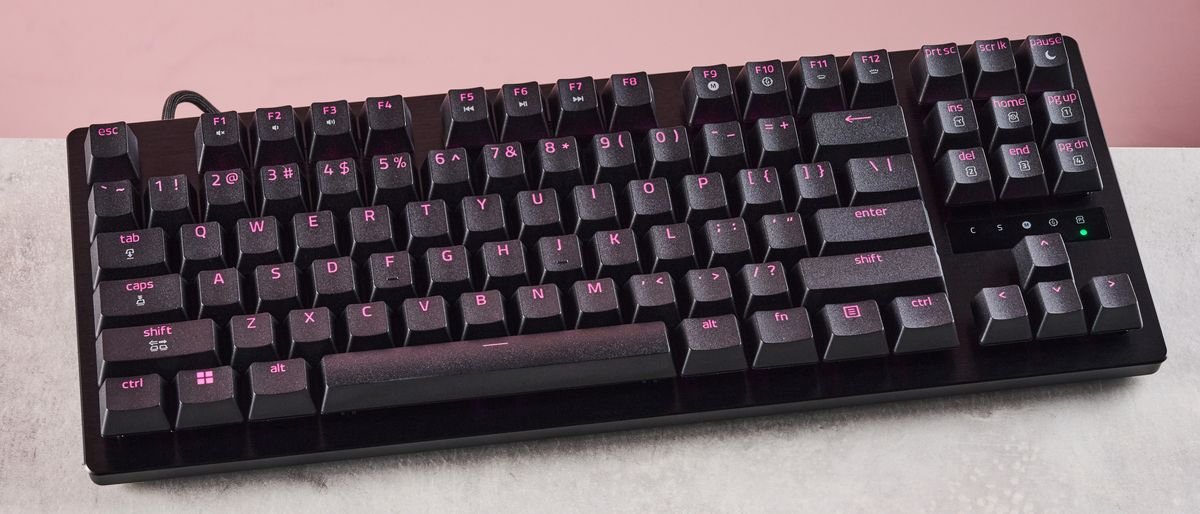
The Razer Huntsman V3 Tenkeyless 8KHz is a mixed performer. There are an astounding number of adjustments you can make in its software, and the analog switches are responsive and precise. However, they don’t offer the best feedback, and the elevated keycaps are hard to move your fingers around. Given its reasonable asking price, though, the Huntsman V3 remains a reasonable choice for your next gaming keyboard.
Pros
- +
So many analog adjustments and features
- +
Light but strong build
- +
Smooth analog response
Cons
- -
Tall keycaps aren’t great for typing
- -
Switches lack feedback
- -
Small issues with Synapse
Why you can trust TechRadar We spend hours testing every product or service we review, so you can be sure you're buying the best. Find out more about how we test.
Razer Huntsman V3 Tenkeyless 8KHz: One-minute review
The Razer Huntsman V3 Tenkeyless 8KHz is one of the brand’s new flagship gaming keyboards. It features analog switches with huge customization potential, designed to meet the exacting requirements of esport professionals.
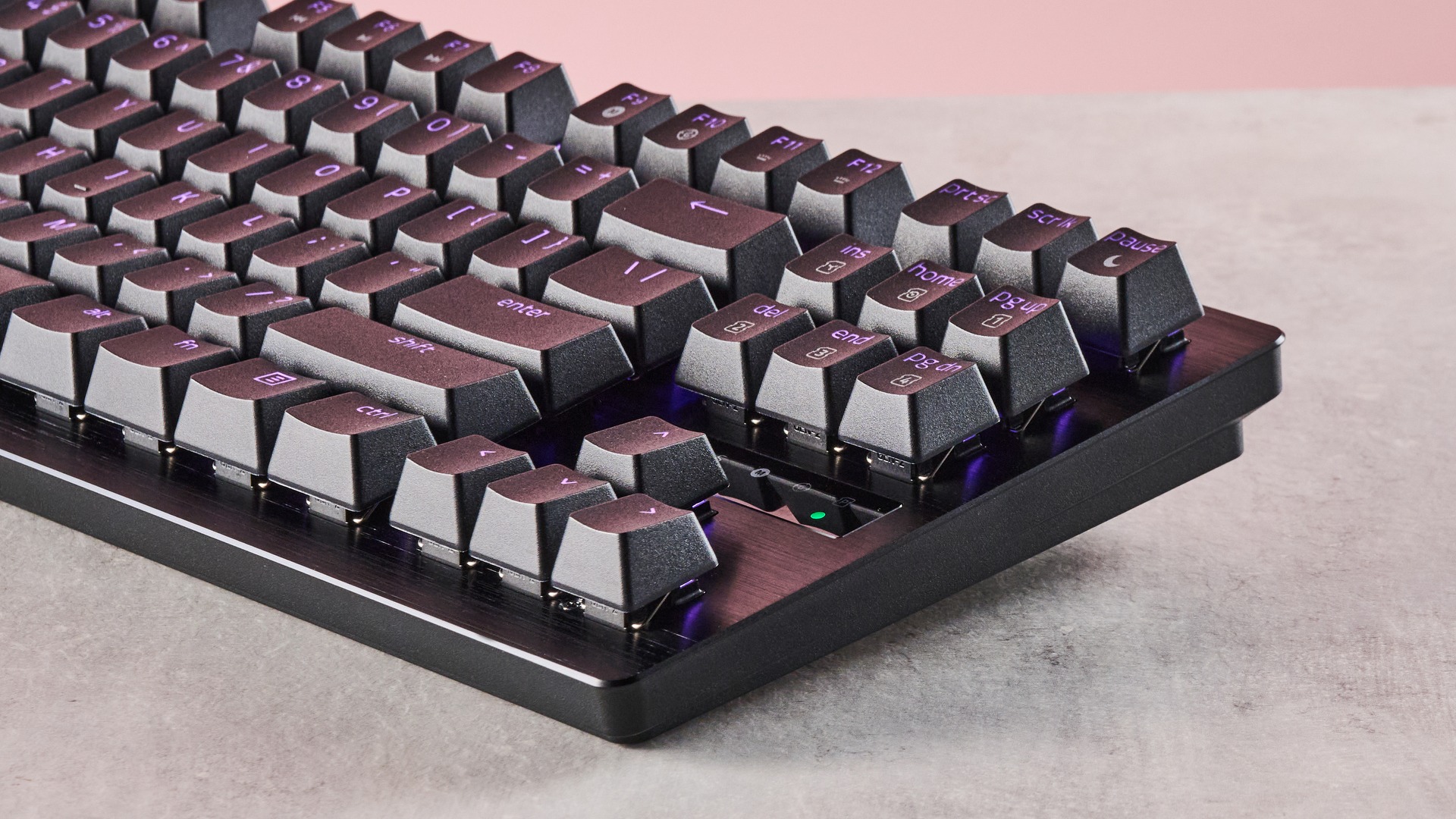
It has a simple and basic form, although there are few touches that add a little flair. The shiny, brushed top plate and high floating keycaps are sleek, while the bright but subtle RGB lighting adds some much needed color.
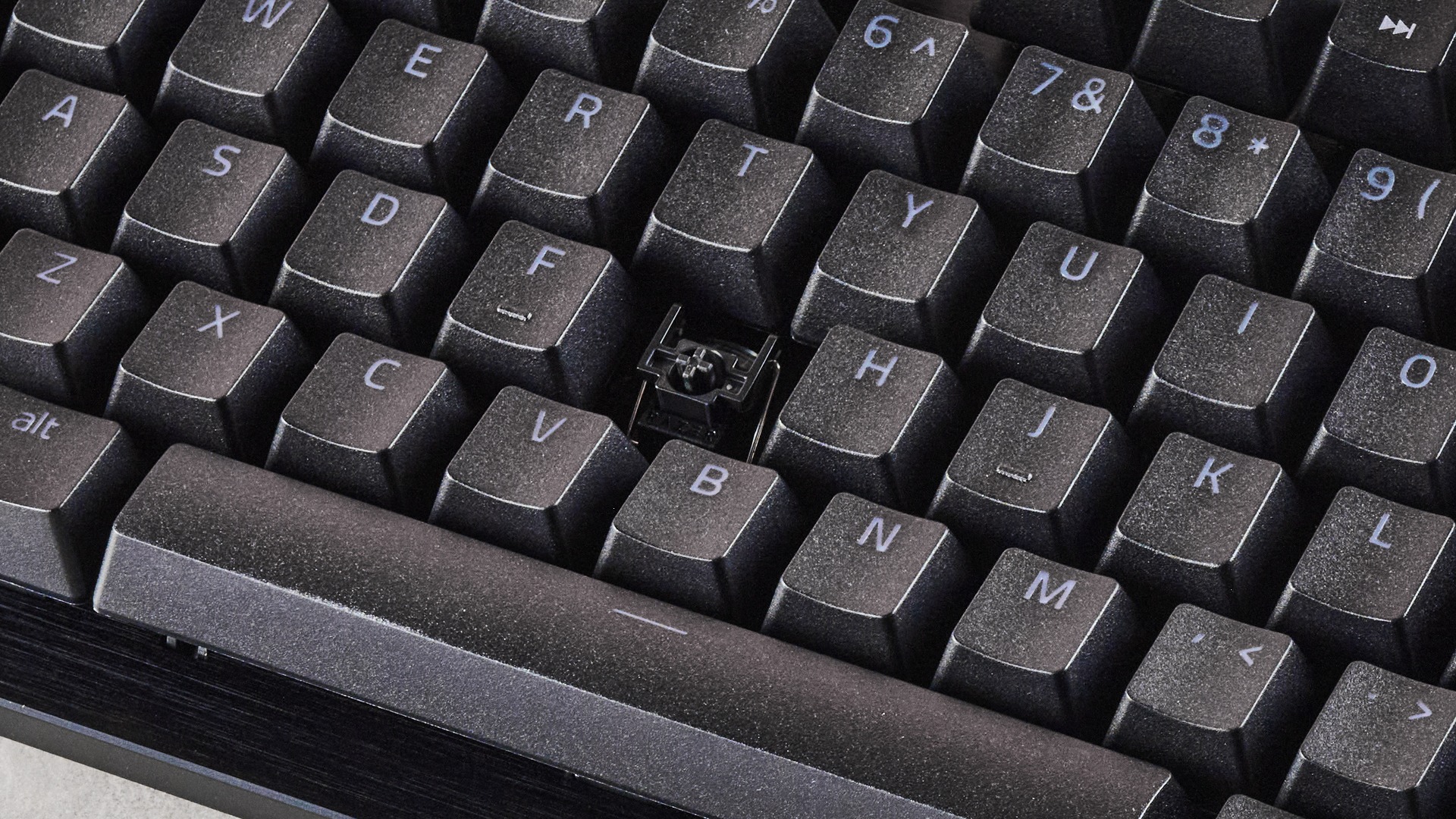
It’s also light and compact, but very solid at the same time. The materials feel premium, with the Doubleshot PBT keycaps being the highlight. Some might not like their prominent graining, but to me they’re among the best gaming keyboard caps around in terms of texture.
Latest Videos From

Razer’s Synapse software has a smorgasbord of options to play around with. There are plenty of rebinding options and performance-related settings, including in-depth Rapid Trigger, Snap Tap, and controller emulation features, to name a few. The app is clear and easy to use, although I did experience a few minor issues with settings failing to take hold at certain points, although these are ultimately fixable.
The optical switches in the Huntsman V3 lack the dampening or clickiness of other boards, and can feel a little harsh at times. This is especially evident when typing, which is also made difficult by the sheer height of the keycaps themselves. Overall, though, they’re still pleasant to use, and the smooth and easy travel of the keys makes them effective when gaming.
The analog performance is also smooth and precise. However, there’s a lack of feel and feedback at the top of each key’s travel. Press further down, though, and you’re met with more resistance, which provides more control when attempting to hit certain actuation points, or when emulating controller sticks and triggers.
With its sub-$200 price point, the Huntsman V3 represents good value considering all that it offers. There are very strong contenders in the analog gaming keyboard space, but the Huntsman V3 acquits itself just well enough to justify its place among them.
Get daily insight, inspiration and deals in your inbox
Sign up for breaking news, reviews, opinion, top tech deals, and more.
Razer Huntsman V3 Tenkeyless 8KHz review: Price and availability
- $169.99 / £169.99 / AU$299.95
- Available now in one color
- Decent price for an analog board
The Razer Huntsman V3 Tenkeyless 8KHz costs $169.99 / £169.99 / AU$299.95 and is available now in black only. The keycaps are removable, but the switches aren’t.
This is a decent price for an analog keyboard, especially one with as many software tweaks as the Huntsman V3 features. The SteelSeries Apex Pro TKL Gen 3, for instance, has a considerably higher list price, although we have seen it with significant discounts lately, bringing it closer in line with the Huntsman V3. The Apex Pro is a truly phenomenal board, with a superior build and performance to that of the Huntsman V3. It doesn’t have as many analog tweaks, though.
For a more budget option, there’s the Turtle Beach Vulcan 2 TKL Pro. Like the Huntsman V3, this also has plenty of analog adjustments and features, including controller emulation. However, I found its analog performance inferior, lacking the same levels of precision and control as the Huntsman V3.
- Value score: 4 / 5
Razer Huntsman V3 Tenkeyless 8KHz review: Specs
Swipe to scroll horizontally
Layout | TKL |
Switch | Razer Analog Optical Switch Gen-2 |
Programmable keys | Yes |
Dimensions | 14.2 x 5.5 x 1.5 inches / 362 x 140 x 38mm |
RGB or backlighting | Yes (customizable) |
Razer Huntsman V3 Tenkeyless 8KHz review: Design and features
- Light and compact board
- Tall floating keycaps
- Wealth of settings in Synapse
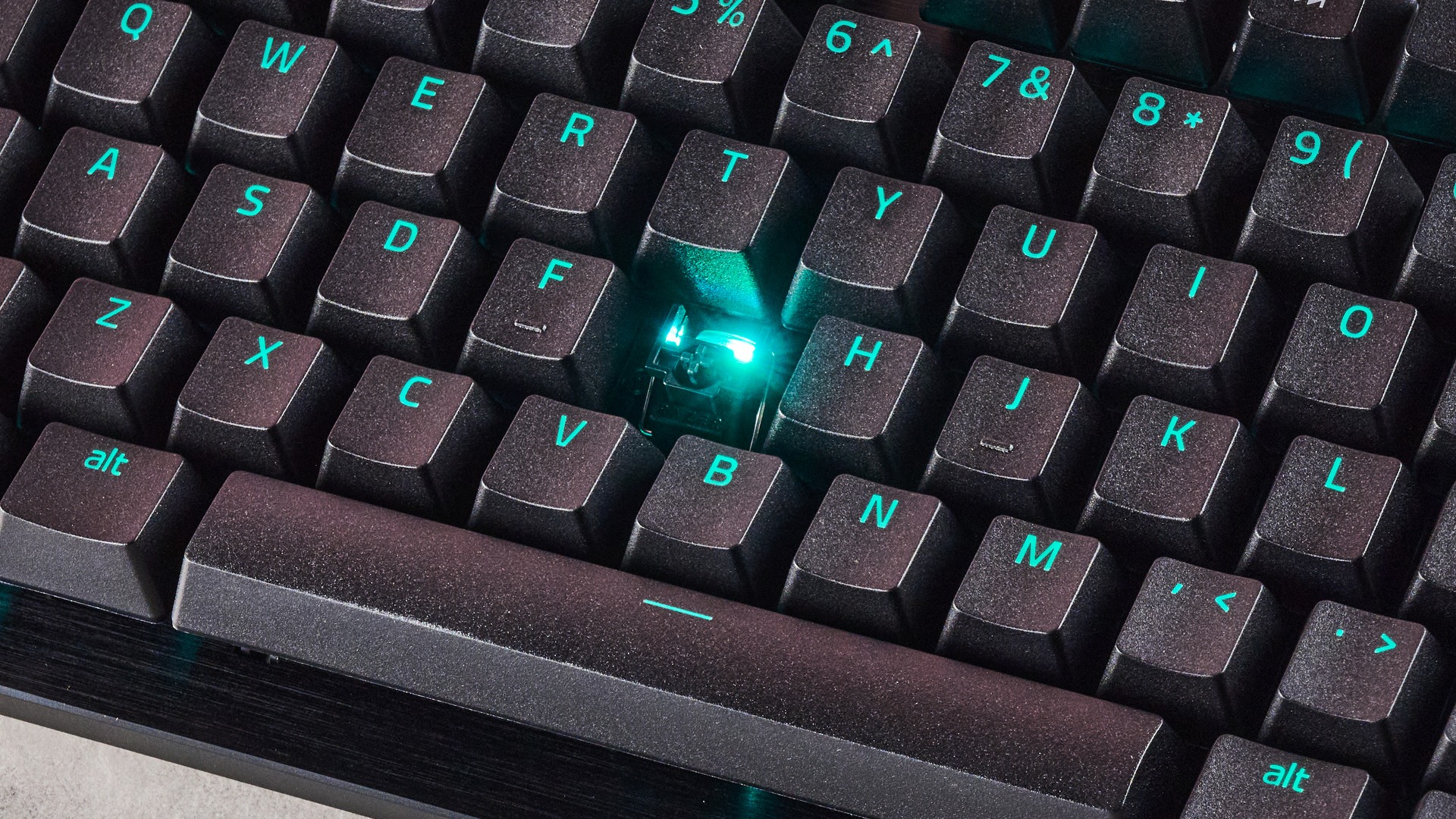
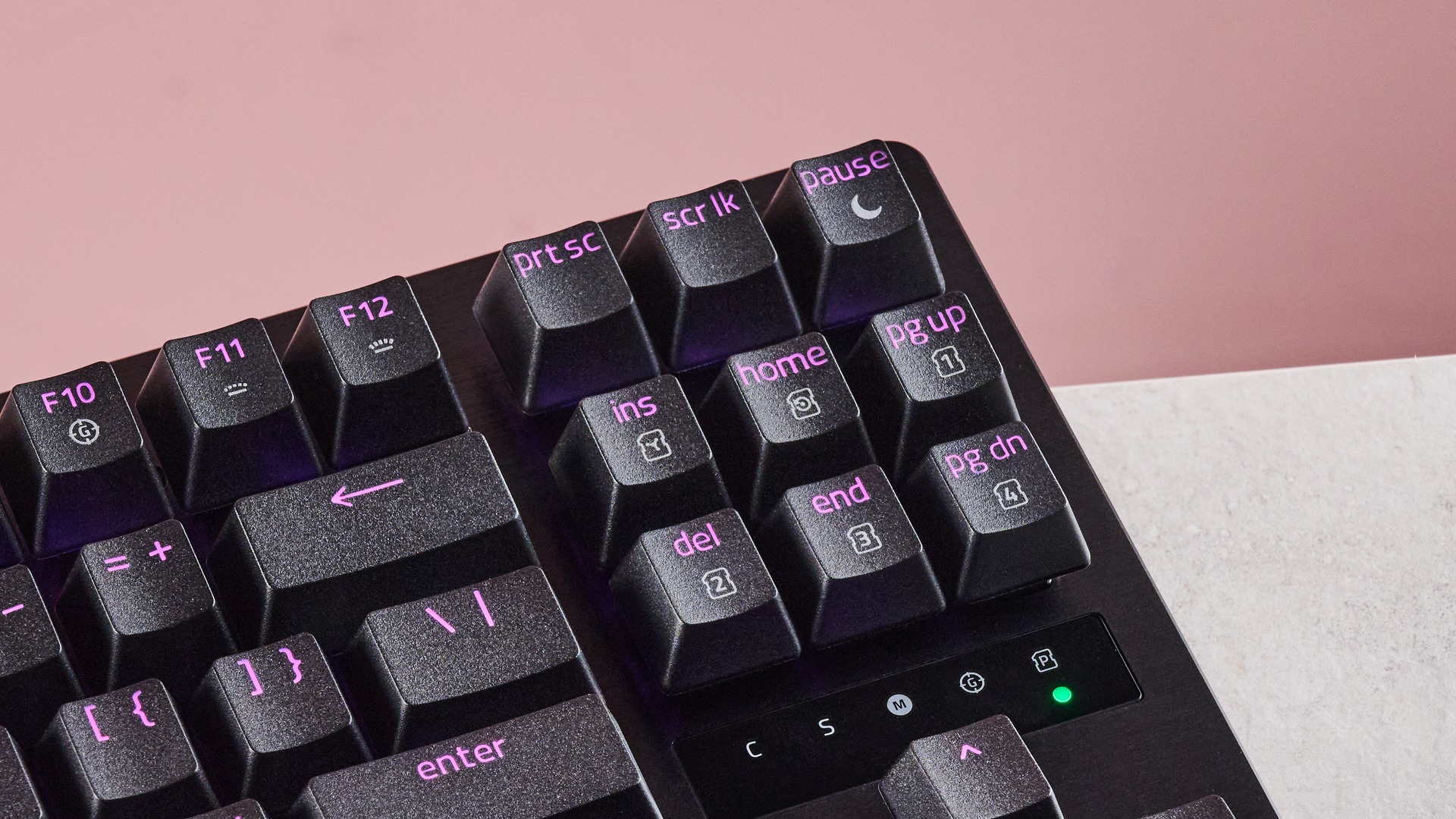
The Huntsman V3 has a basic appearance, although a few touches set it apart. The aluminum faceplate has a shiny finish with a brushed effect, which is subtle but may still prove divisive. The prominent floating keycaps lend it a healthy dose of sleek minimalism.
The RGB lighting is reasonably subtle, only shining through the keycap characters, although a small amount does leak between the gaps. It’s quite bright, and there are numerous options for customizing patterns.
It’s quite a light and compact board, but it feels surprisingly solid at the same time. There’s very little flex and all materials feel premium. This includes the Doubleshot PBT keycaps; their prominent graining is satisfying to touch and also helps with traction. Again, though, this mightn’t be to every gamer’s taste, given that many keycaps are super smooth.
While the board itself is quite thin, it actually feels a lot thicker, thanks to the height at which the keycaps float above it, as well as the tallness of the keycaps themselves.
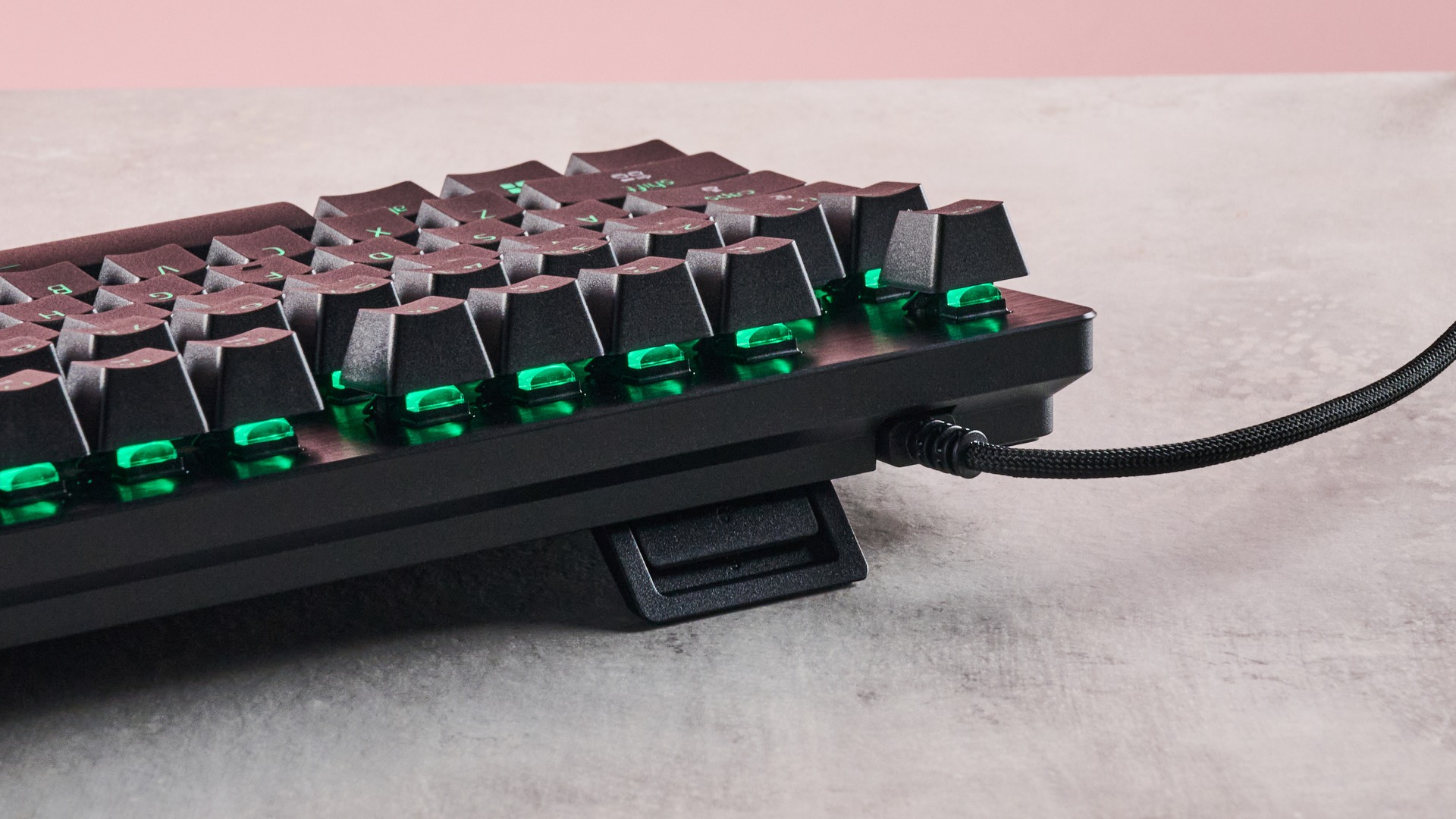
However, the tilt angle provided by the feet does help to make it more comfortable to reach the keys. There are two sets of feet which offer meaningful differences in angle.
You’ll find the USB-C port on the back left of the unit. It’s deeply recessed, which makes it a little more difficult to connect and disconnect, but this small inconvenience is a fair trade-off for the security it provides.
To customize the Huntsman V3, you’ll need to download Razer’s Synapse software. This has an impressive gamut of adjustments. There are plenty of remapping options, including a wealth of Windows and media controls you can assign to keys. You can also assign up to four inputs to a single key, each triggering depending on how far down you press.
Like many modern gaming keyboards, there’s a Snap Tap function, letting you assign priority to a single key when two are pressed simultaneously. There are various options here, with different types of priority to choose from. There’s also a Snap Flex feature, which allows you to bind a second input to a key that triggers when you release it. This can be assigned on up to four different keys.
Then there are the analog settings, which again are very extensive. Aside from being able to adjust the actuation point for each key between 0.1mm and 4mm, there’s also a Rapid Trigger function with independent upstroke and downstroke sliders, each with ranges between 0.1mm and 1mm. You can even enable Continuous Rapid Trigger.
There’s a controller emulation mode, too, allowing you to assign gamepad inputs to your keys. This includes trigger and stick inputs, where you can also adjust their curve profile to set their response and sensitivity to your liking.
Controller inputs are easy to assign, in part thanks to the ability to assign multiple common mappings with a single click. For instance, there’s an option to assign the left stick to the WASD keys. A simple but useful visualizer attends the controller section, showing trigger and stick behaviours in real time with your presses.
Aside from being able to create your own profiles, Synapse features some useful preset profiles, including those designed for certain games. For example, the Racing profile binds gamepad triggers and joysticks to the WASD keys. These profiles can be selected via Fn shortcuts, and there are hotkeys for other performance-related functions, too.
Synapse is clearly laid out and features helpful explanations and tutorials. It’s fast and smooth, although I did experience a few minor bugs. For instance, the keyboard passthrough feature for controller emulation, which allows keys not bound to controller inputs to work as normal, failed to work on occasion. However, a simple replug of the USB cable seemed to remedy the issue.
- Design and features score: 4 / 5

Razer Huntsman V3 Tenkeyless 8KHz review: Performance
- Precise analog response
- Slight harsh and numb keys
- Not great for typing
The keys in the Huntsman V3 are more clicky than thocky, although they feel less sharp than the clickiest switches out there. Their sound is both lower in pitch and quieter than many mechanical models, too.
They don’t have much dampening, which can make the board feel a little harsh at times. This is especially evident when typing — and the act isn’t made any easier by the thick keycaps, their elevated height, and the absence of a dip in the middle row. This combination makes gliding around the keys tricky, and it also causes some discomfort, owing to the angle at which you have to bend your wrists to reach them.
Thankfully, I was more comfortable when gaming in the WASD position. The keys are comfortably spaced, while the space bar and other peripheral keys are easy to reach.
The standout aspect of the Huntsman V3’s performance, though, is its analog response. It’s very precise and sensitive, reacting very well to different levels of pressure, which in turn gives you a broad range of control.
However, this precision is somewhat undermined by the lack of feel in the keys themselves. They don’t provide as much feedback as I would've liked, which can make it a little tricky to dial in the exact amount of pressure to hit certain actuation points or make smooth adjustments when emulating triggers and sticks.
What's more, there’s a small but noticeable amount of wobble to the keys, which means presses don’t feel particularly secure. Thankfully, though, most of the analog issues I’ve outlined only pertain to the top of presses; once you press further down, more resistance is generated from the springs, which allows for much smoother and more granular control.
- Performance score: 3.5 / 5
Should I buy the Razer Huntsman V3 Tenkeyless 8KHz?
Scorecard
Swipe to scroll horizontally
Attributes | Notes | Rating |
Value | Not many analog keyboards are cheaper than this, especially those that offer this many features. | 4 / 5 |
Design and features | Compact, light, and well made. The Synapse software provides copious options and it’s mostly stable, bar a few minor issues. | 4 / 5 |
Performance | The analog response from the switches is great, although the actual control you get from presses is less so. Not a great board for typing, either. | 3.5 / 5 |
Overall rating | The Huntsman V3 packs in many features and it mostly delivers on the performance front, aside from a slight lack of feedback. For the price, the Huntsman V3 is a competent gaming keyboard. | 3.5 / 5 |
Buy it if…
You want plenty of adjustments
I haven't seen an analog keyboard with this many adjustments, and the software for tweaking them is easy to use.
You want a good analog performance
The analog response is smooth and precise, which makes it ideal for all kinds of games.
Don't buy it if…
You want great key feedback
The keys are a little numb at the top of their travel, which might deter those looking for the finest of movements.
You’ll be typing a lot
The height and the thickness of the keycaps make the Huntsman V3 a chore to type on.
Razer Huntsman V3 Tenkeyless 8KHz review: Also consider
SteelSeries Apex Pro TKL Gen 3
Still one of my favorite analog keyboards, the performance and build quality of the Apex Pro are hard to beat. It doesn’t have as many adjustments as the Huntsman V3, and misses out on controller emulation entirely, but in terms of pure analog feel, it’s a hard board to beat. Read our full SteelSeries Apex Pro TKL Gen 3 review.
Turtle Beach Vulcan 2 TKL Pro
A more budget-friendly analog board, the Vulcan 2 TKL Pro still has plenty of features, including controller emulation. However, its analog response isn’t as precise as the Huntsman V3’s, nor is its build quite as strong, but it’s not a bad pick for those looking to save. Read our full Turtle Beach Vulcan 2 TKL Pro review.
How I tested the Razer Huntsman V3 Tenkeyless 8KHz
- Tested for several days
- Used many features
- Extensive gaming keyboard experience
I tested the Razer Huntsman V3 Tenkeyless 8KHz for several days, during which time I used it for gaming, working, and general use.
I played games such as Subnautica 2, which makes use of the typical first-person keys, from WASD and the number keys to the space bar and control and shift keys. I also played games that allowed me to make use of the Huntsman V3’s controller emulation, such as Assetto Corsa, by using W and S to emulate triggers and A and D in place of the left stick.
I’ve been PC gaming for over a decade, and have used a number of keyboards in that time. I’ve also reviewed a large number of them, including other Razer models.
- Read TechRadar’s reviews guarantee
- First reviewed: June 2026

Lewis Maddison is a Reviews Writer for TechRadar. He previously worked as a Staff Writer for our business section, TechRadar Pro, where he gained experience with productivity-enhancing hardware, ranging from keyboards to standing desks. His area of expertise lies in computer peripherals and audio hardware, having spent over a decade exploring the murky depths of both PC building and music production. He also revels in picking up on the finest details and niggles that ultimately make a big difference to the user experience.
You must confirm your public display name before commenting
Please logout and then login again, you will then be prompted to enter your display name.
What's Your Reaction?
 Like
0
Like
0
 Dislike
0
Dislike
0
 Love
0
Love
0
 Funny
0
Funny
0
 Wow
0
Wow
0
 Sad
0
Sad
0
 Angry
0
Angry
0





Comments (0)