

I tested the DJI Osmo 360 II against the Insta360 X6 — the X6 is still the 360 camera king, but not by much
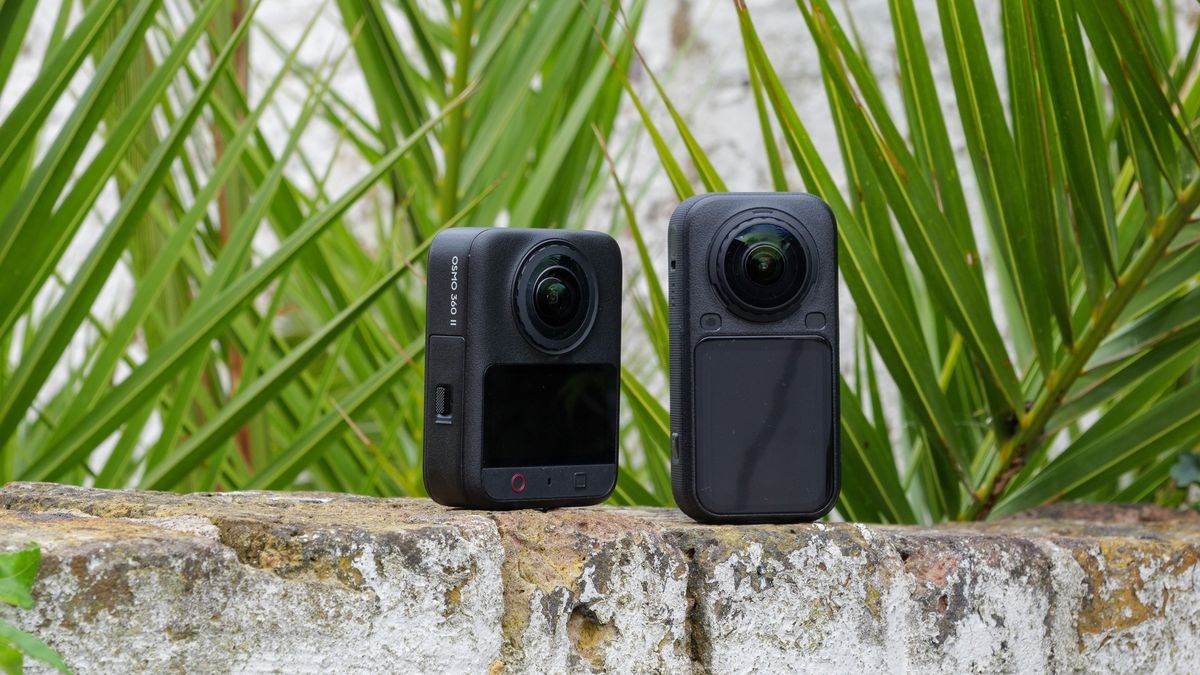
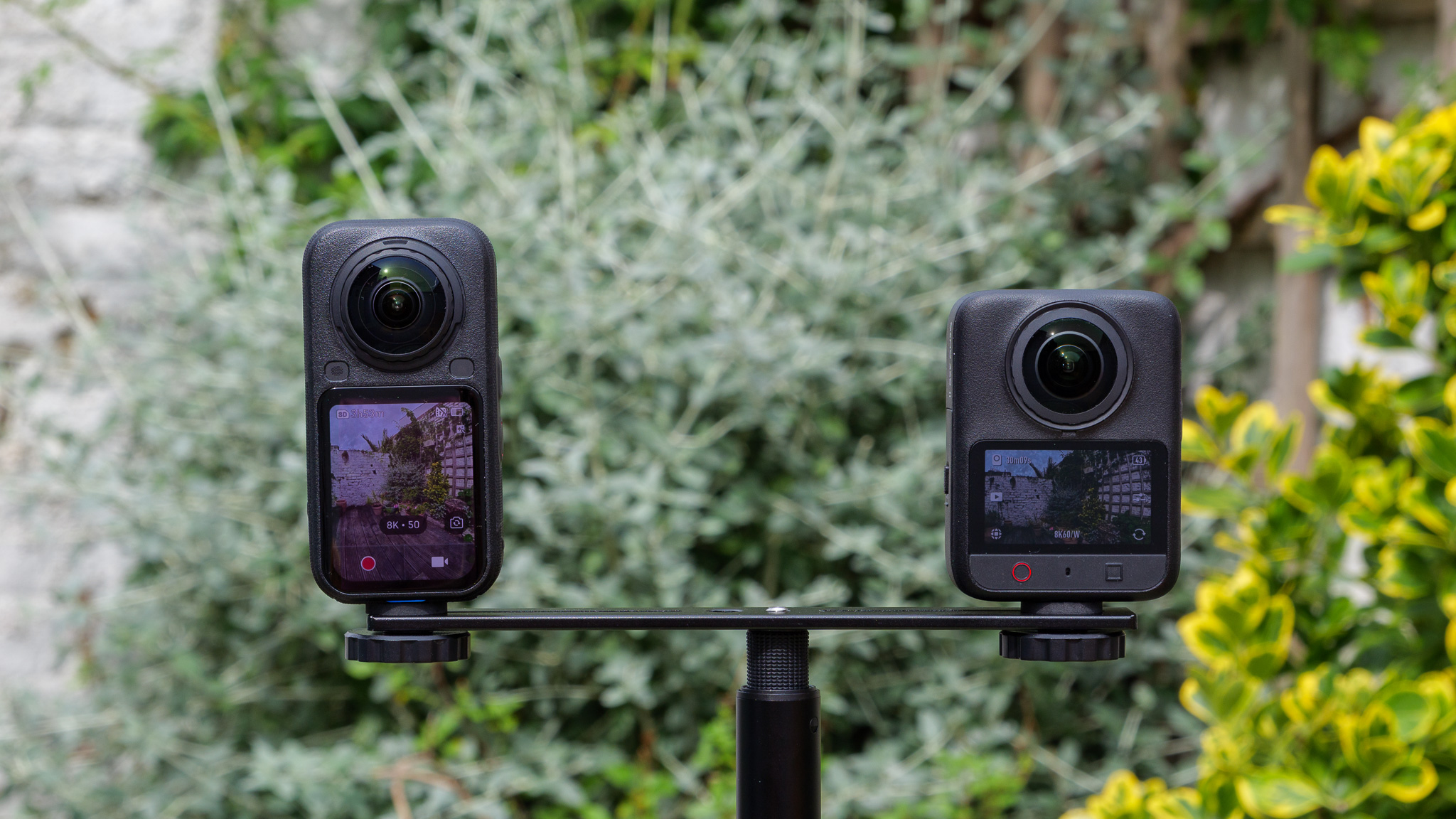
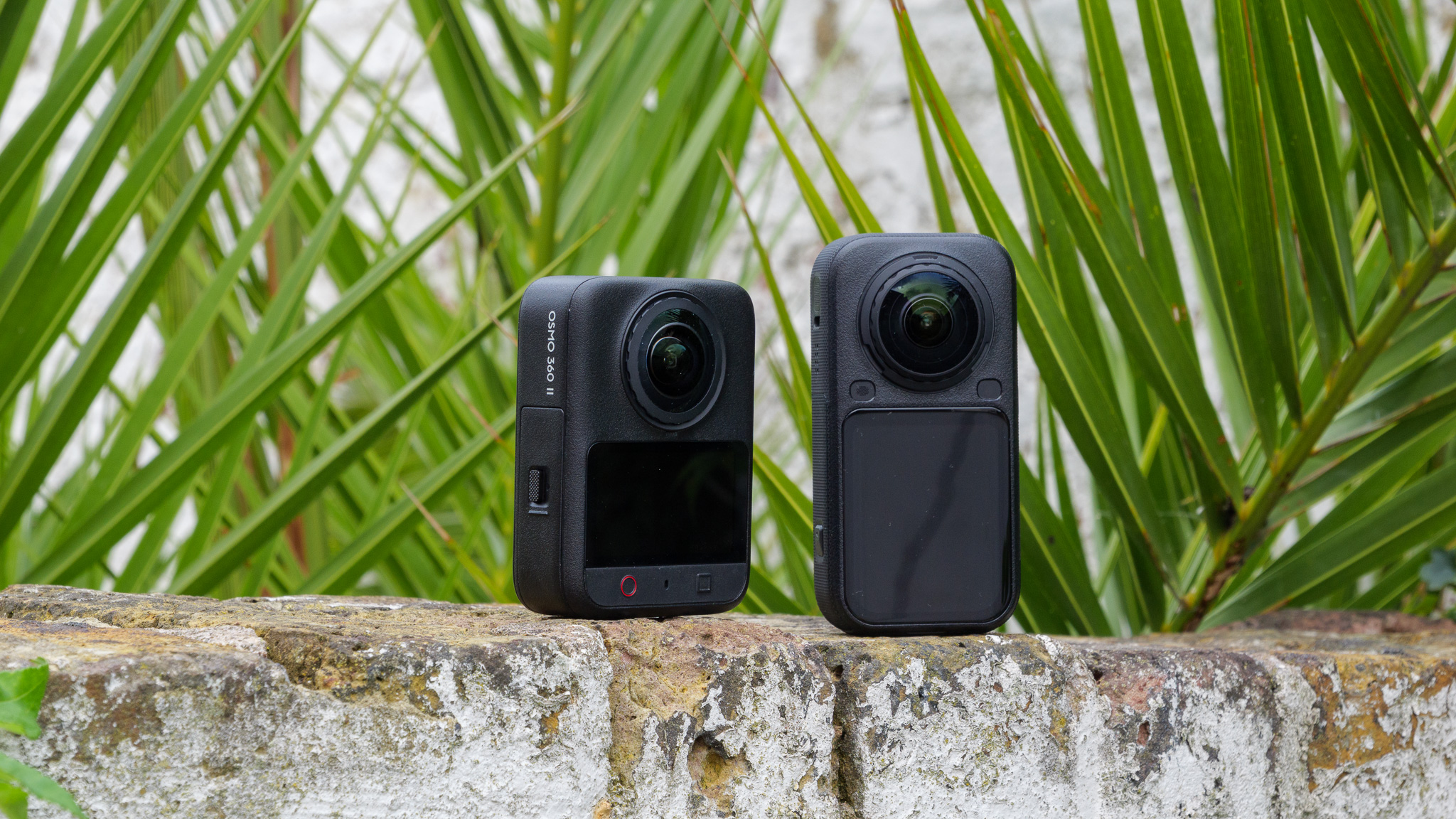 (Image credit: Future | Sam Kieldsen)
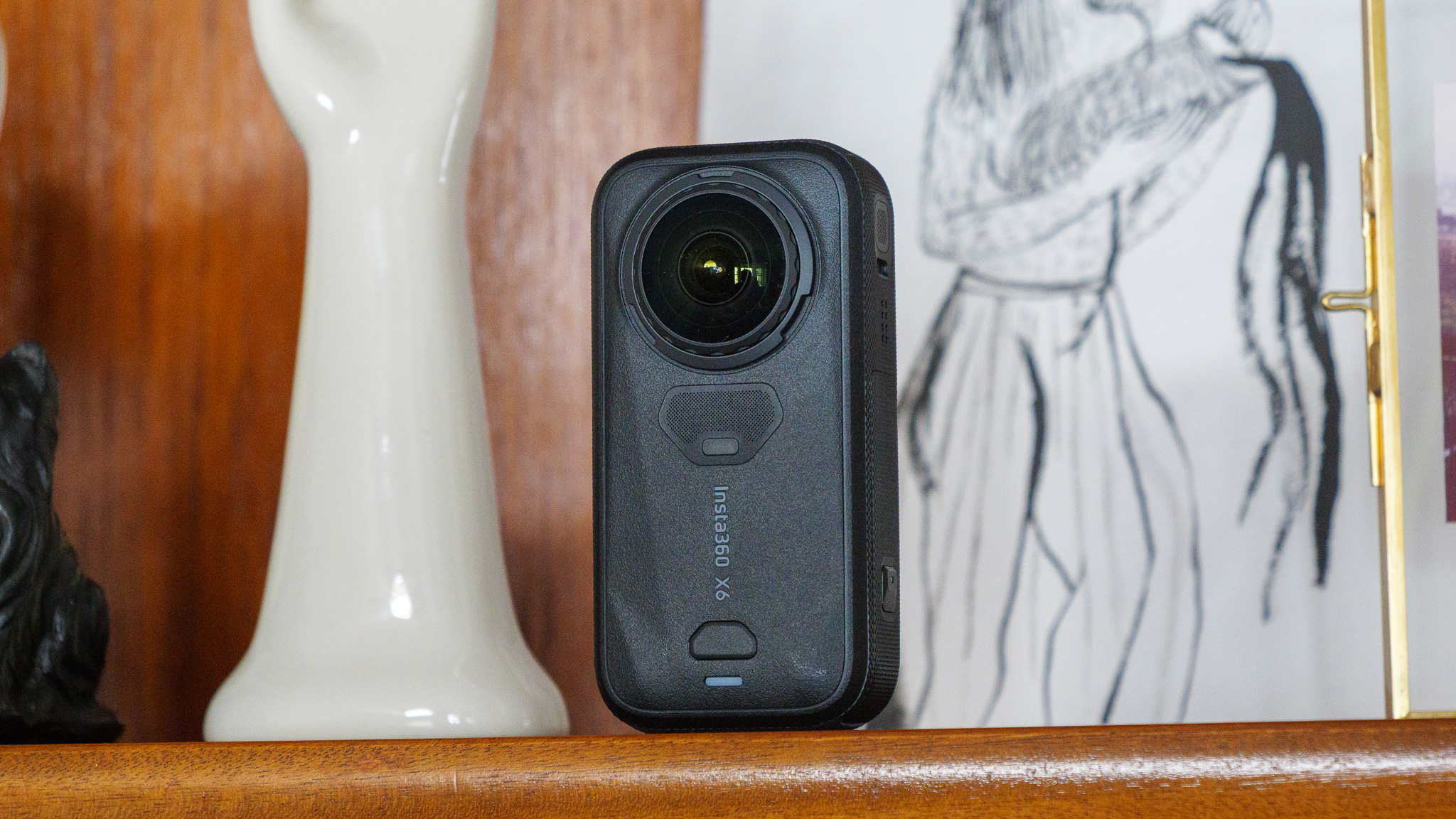
The X6 is currently the best 360 camera you can buy, offering excellent image quality day and night.
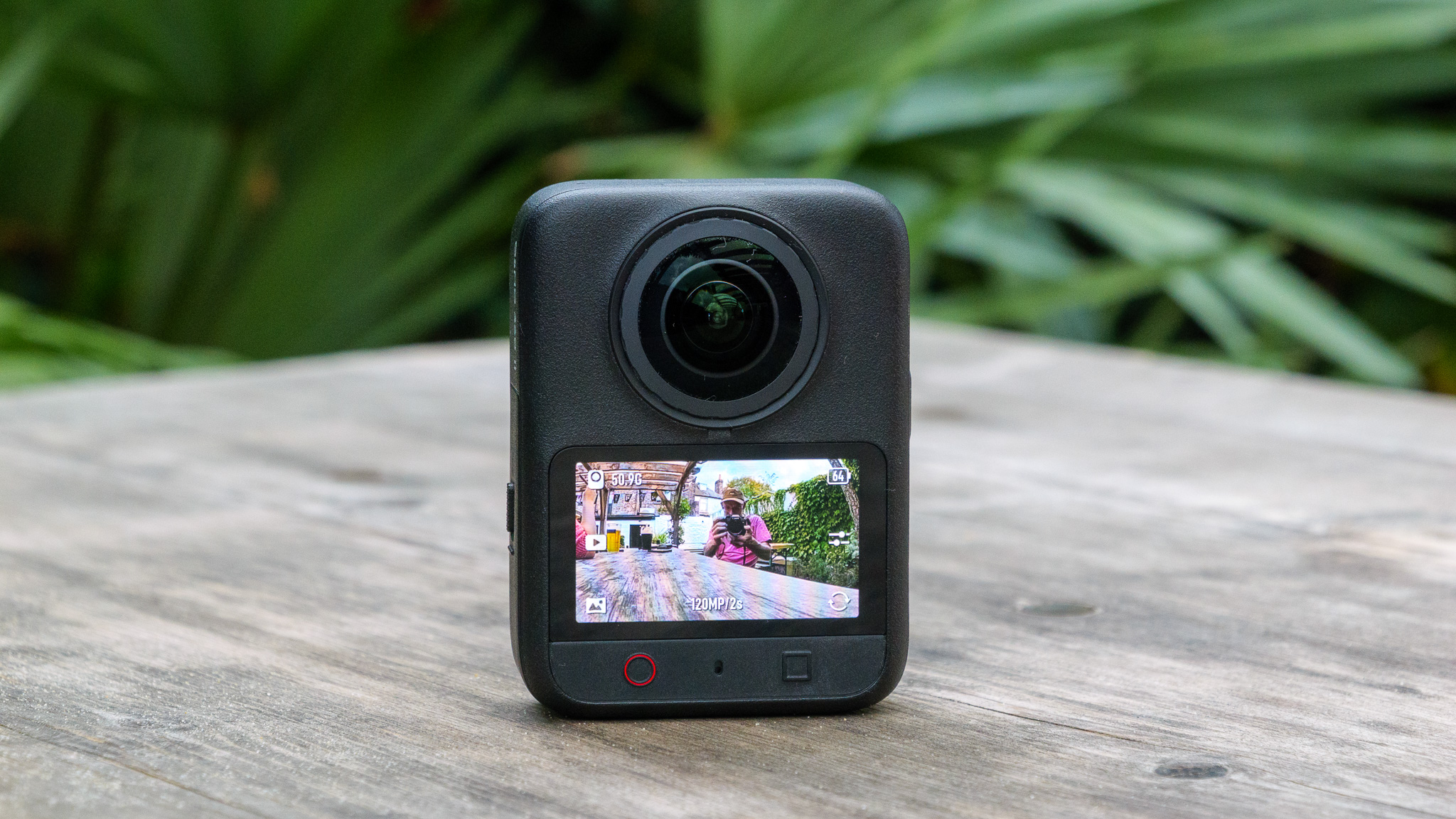
A great 360 all-rounder that fixes many of its predecessor's flaws, and gives GoPro and Insta360 a major headache.
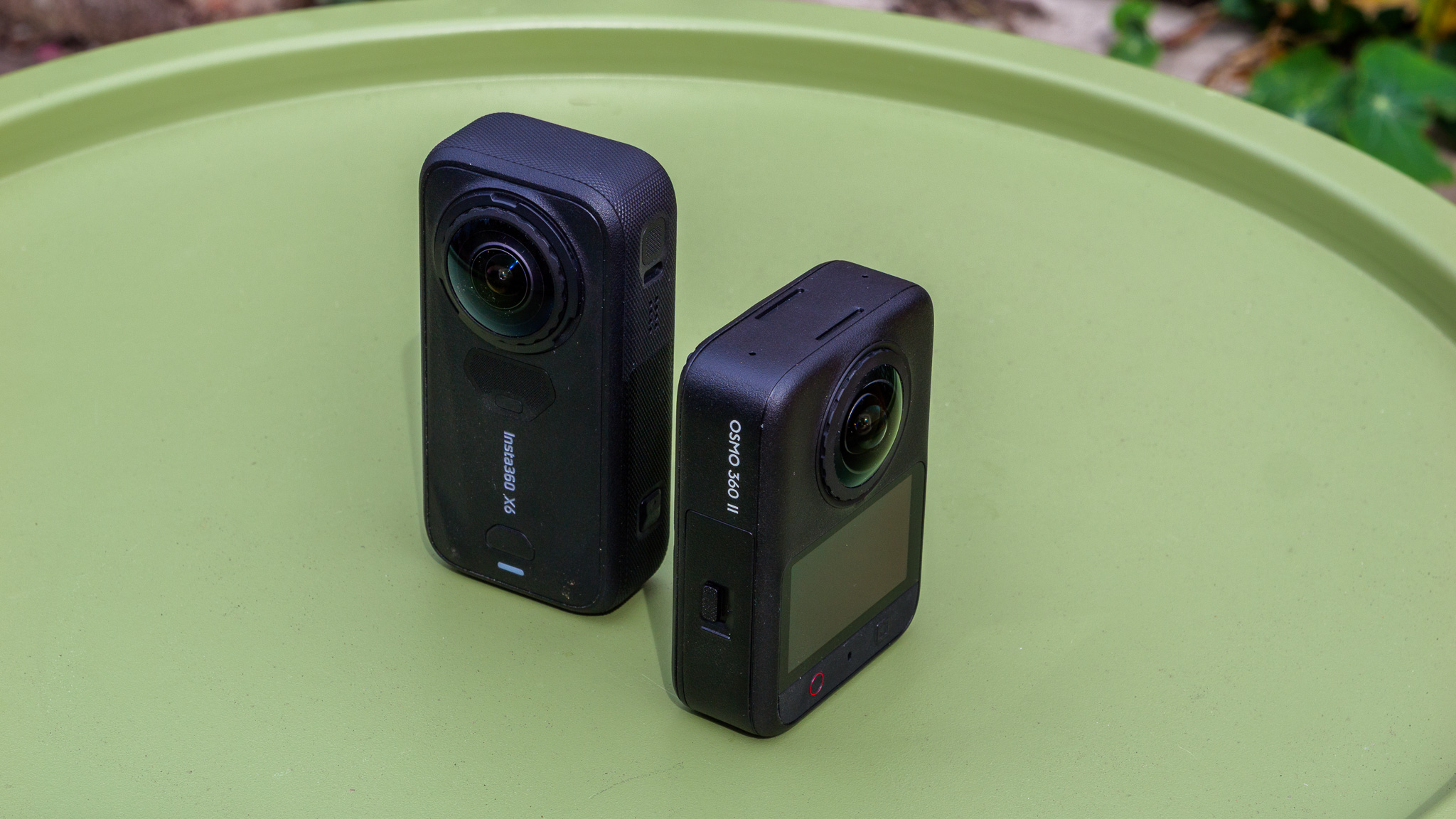
Two of the biggest names in 360 cameras have just launched new flagships within weeks of each other, and it's clear that DJI's Osmo 360 II and Insta360's X6 are both aiming squarely at the same buyer.
I've reviewed both cameras individually, and on paper it looks like a tight contest. The Osmo 360 II arrives just a year after the original Osmo 360, fixing its biggest weaknesses while pushing image quality forward with the first native 8K/60fps 360 video on the market. Insta360 is no newcomer to this though: the X6 lands ten years after Insta360's first 360 model, and my review of a few weeks ago called it the best 360 camera on the market, with excellent image quality day and night.
If anything can knock the X6 off its perch, it's the Osmo 360 II. I've put both cameras through matched side-by-side testing — with the same settings and conditions — to find out which 5-star model is best in which area. Here's what I found.
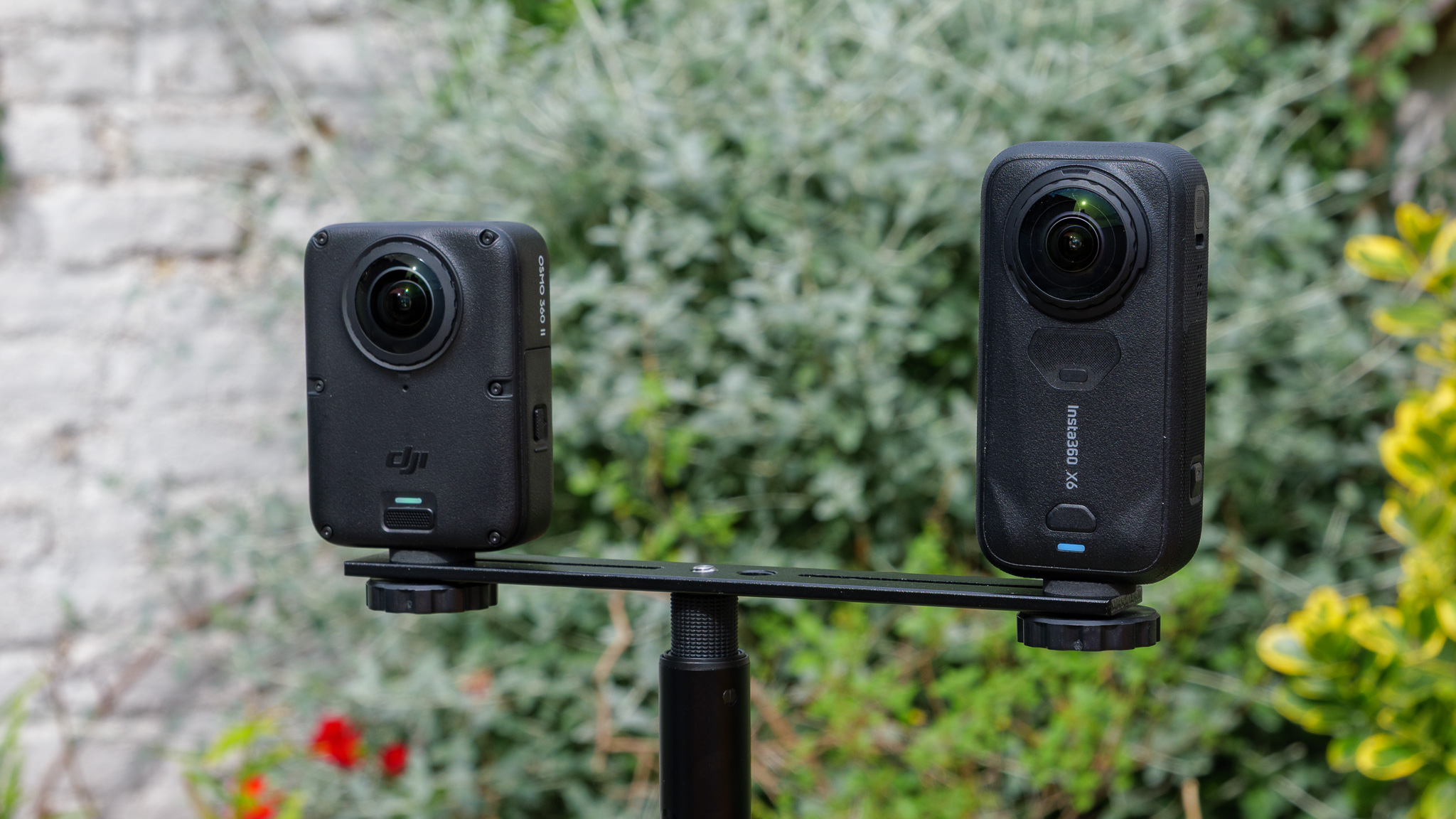
1. DJI Osmo 360 II vs Insta360 X6: Price and value
- Osmo 360 II: Standard Combo £509 / AU$921; Adventure Combo £639 / AU$1,096 (not launching in the US)
- Insta360 X6: Standard bundle $699.99 / £619.99 / AU$1,049.99; Essentials Bundle $799.99 / £709 / AU$1,159.99
- The Osmo 360 II undercuts the X6's entry price by over £100
The Osmo 360 II's Standard Combo costs £509 / AU$921, and includes the camera, one battery, a silicone lens cover, a neoprene case and a USB-C cable. The pricier Adventure Combo adds two extra batteries (three in total), a triple-battery charging case and a 1.2m selfie stick for £639 / AU$1,096. It isn't launching in the US for now, with DJI's regulatory authorization still pending.
The Insta360 X6 starts at $699.99 / £619.99 / AU$1,049.99 for its Standard bundle, which gets you the camera, battery, USB-C cable, protective pouch and lens cloth. Step up to the $799.99 / £709 / AU$1,159.99 Essentials Bundle and you add a second battery, a 114cm invisible selfie stick, a lens cap, a fast-charge case and an extended warranty.
Compare the two Adventure/Essentials bundles directly and the value gap narrows a little, since both throw in similar extras. But even then, the Osmo 360 II remains cheaper at every tier – if, of course, you live in a country where you can actually buy it.
- Price and value winner: DJI Osmo 360 II (unless you're a US resident)
2. DJI Osmo 360 II vs Insta360 X6: Video quality
- Both cameras claim 14.5 stops of dynamic range
- In daylight the Osmo 360 II shoots 8K at up to 60fps versus the X6's 50fps
- X6 comes with PureVideo for 8K/30fps low light shooting, while the Osmo 360 II offers SuperNight 2.0 with 8K/60fps shooting
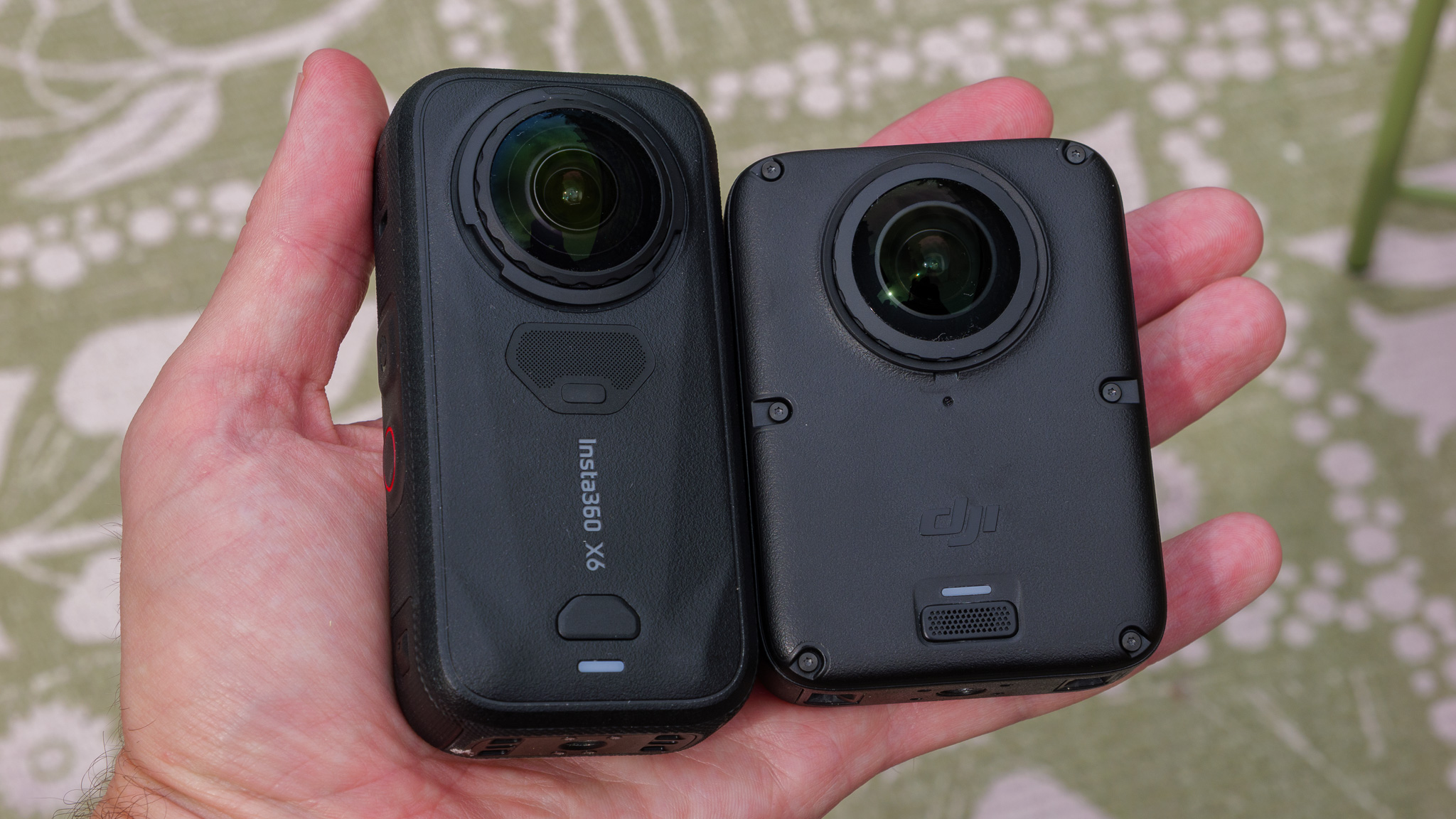
I shot matched daytime and nighttime footage on both cameras using a dual-camera mount rigged up to my car, exporting everything at matched settings (10-bit, 100Mbps for daytime and 160Mbps for the nighttime comparison) to keep things as fair as possible.
Sign up for breaking news, reviews, opinion, top tech deals, and more.
In daylight, using each camera's default Standard color profile and preset Dewarp reframing, the X6's footage is the cleaner, sharper and less distorted of the two. But the Osmo 360 II holds onto noticeably more detail in bright skies, where the X6's footage blows out around the sun.
Applying DJI Studio's noise reduction on export closes some of the gap for the Osmo 360 II, even in daylight, though pushing the bitrate up to 160Mbps made no further difference. Even with noise reduction applied, I'd still call the X6's daytime footage the more visually appealing of the two overall.
After dark, it's a closer contest. The X6 still has a bit more punch to its low-light footage, though it casts a slightly greener, yellower tint by default that's easy enough to correct in post. Insta360's PureVideo mode caps out at 30fps, while the Osmo 360 II's SuperNight 2.0 goes up to 60fps — worth factoring in if you're shooting motion after dark, sports especially. Both cameras are reliable low-light performers, but I'd give the X6 the edge here too, just.
- Video quality winner: Insta360 X6
3. DJI Osmo 360 II vs Insta360 X6: Waterproofing and durability
- X6 waterproof to 20m case-free, versus the Osmo 360 II's 10m
- Both cameras are IP68 rated against water and dust ingress
- Both now offer user-replaceable lenses
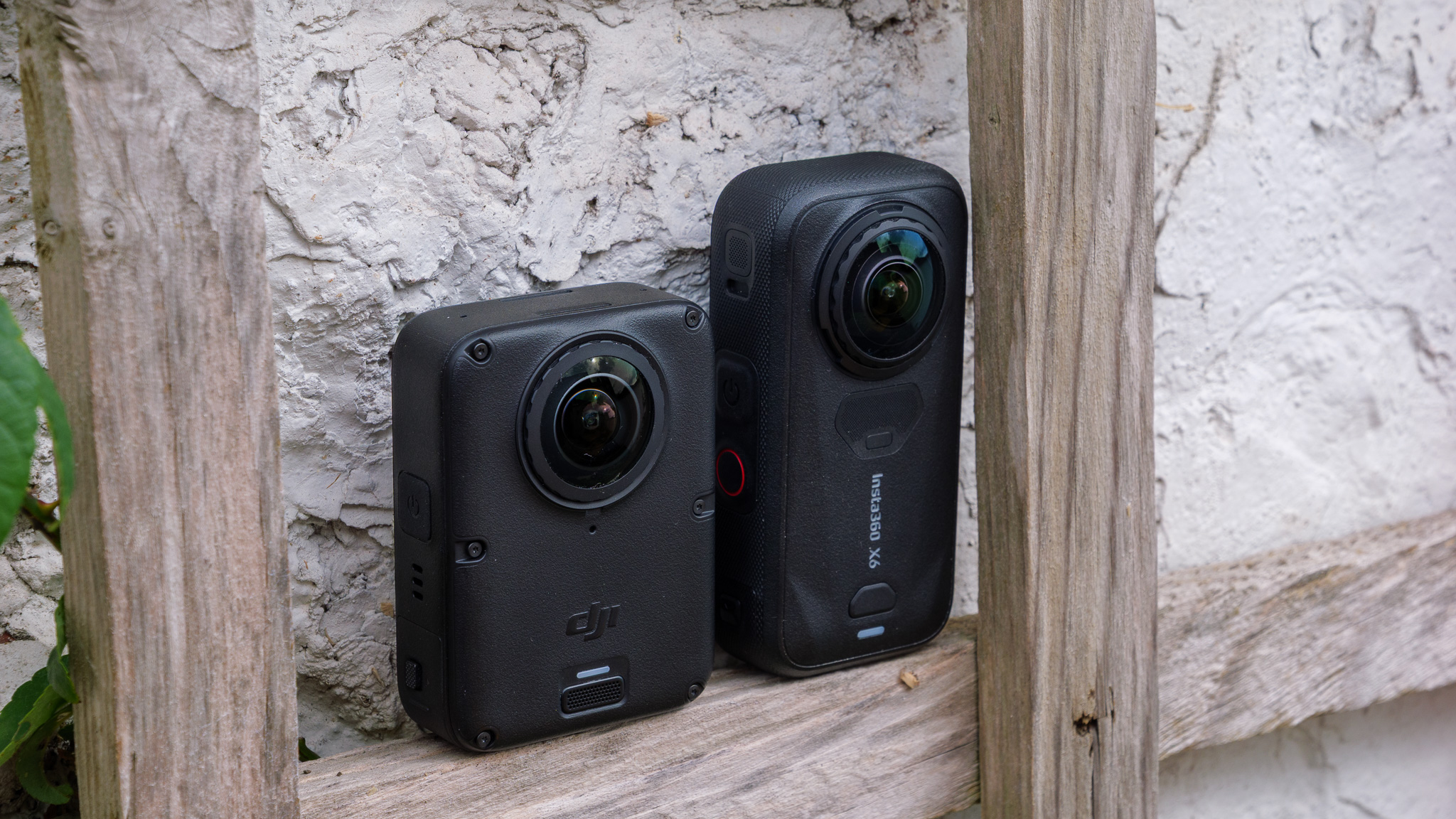
The X6 wins on raw waterproofing, being rated to a depth of 20m case-free, versus the Osmo 360 II's 10m. DJI has a dive case of its own on the way, extending the Osmo 360 II to 50m once it launches alongside the camera in a couple of weeks, while Insta360's own case takes the X6 to 60m. That at least means neither camera is left behind for serious underwater use, if you're willing to buy the accessory.
Durability tells a similar story of both manufacturers addressing old weaknesses. The Osmo 360 II's lenses now use a tougher optical coating and are user-replaceable via a cheap kit — a direct fix for one of the original Osmo 360's main flaws. The X6's lenses are also user-replaceable, continuing the system Insta360 introduced with the X5.
- Waterproofing and durability winner: Insta360 X6
4. DJI Osmo 360 II vs Insta360 X6: Battery, storage and thermal management
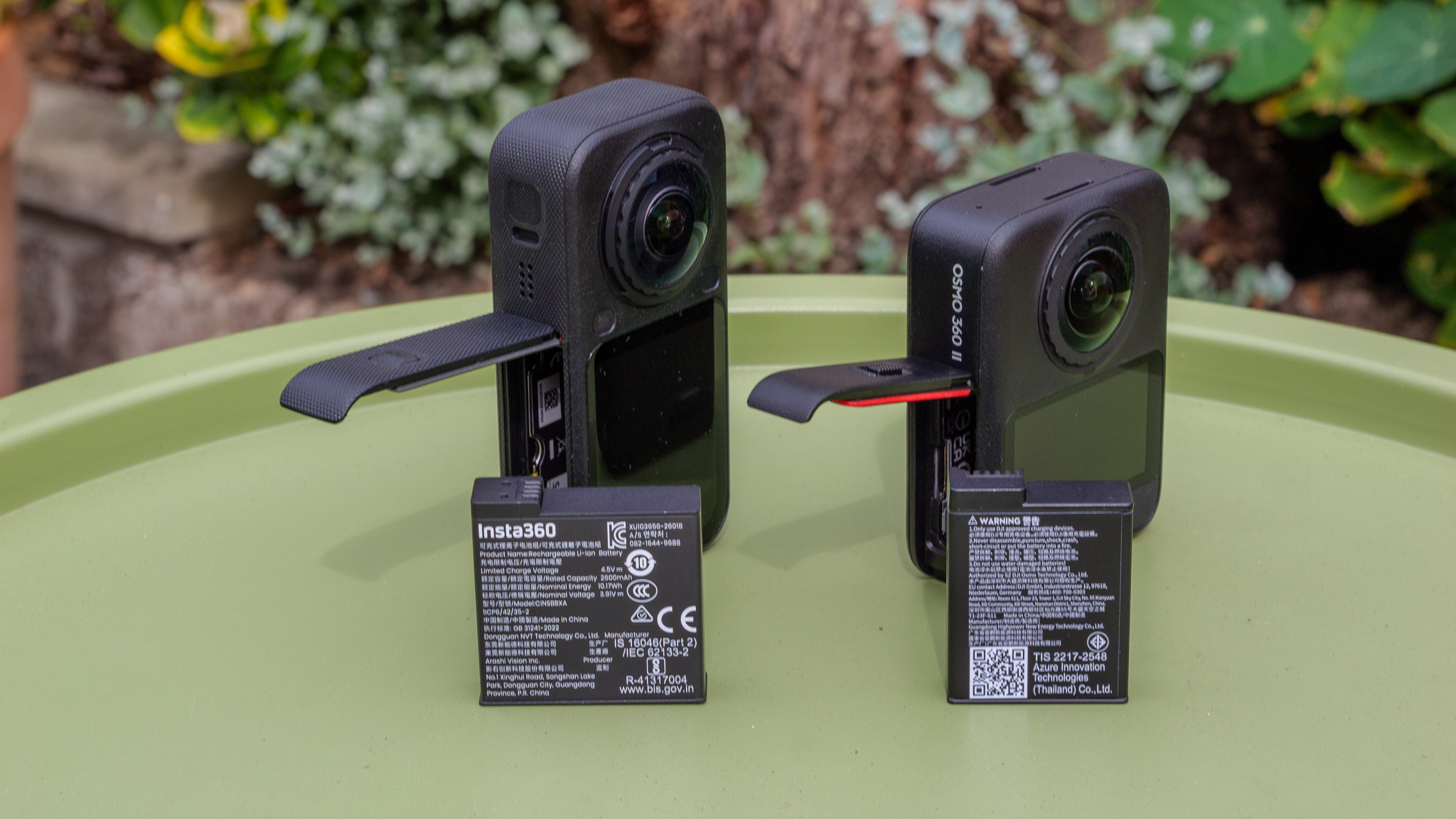
- X6 has a bigger battery (2,600mAh vs 2,150mAh)
- Both cameras can overheat when recording at their most demanding settings
- The Osmo 360 II has more than double the built-in storage of the X6
The X6 has the bigger battery, and it makes a difference: DJI rates the Osmo 360 II for up to 100 minutes of 8K/30fps recording, while Insta360 claims 140 minutes for the X6 at the same settings, and having tested both I can say those figures are largely accurate.
I ran both cameras through an overheating test side by side in the same room, at a mild 22°C, each set to its own maximum 8K frame rate (60fps for the Osmo 360 II, 50fps for the X6), 10-bit Standard color with Adaptive Tone active. The Osmo 360 II shut itself down to cool off after around 34 minutes; the X6 lasted about 40. Not a dramatic gap, but a gap nonetheless.
Storage flips the script, though. Both cameras have a microSD slot, but the Osmo 360 II offers 105GB of additional built-in space while the X6 has 47GB — which is only sufficient for 30 minutes of 8K/50fps footage.
- Battery, storage and overheating winner: Insta360 X6 (but the Osmo 360 II's storage win is a consolation prize)
5. DJI Osmo 360 II vs Insta360 X6: Apps and ecosystem
- Both cameras have mobile and desktop companion apps
- Insta360 Studio supports ProRes export; DJI Studio doesn't, yet
- Both ecosystems now support 24-bit audio with their respective mic systems
Neither camera has a clear edge here. The DJI Studio desktop offers excellent subject tracking and a really impressive 64x slow motion mode, and I'd rate it the better desktop experience of the two, but the DJI Mimo mobile app's AI-assisted auto-editing tools left me unimpressed. On mobile, Insta360's app has historically had the edge, though I've found it to be unstable and crash-prone on my ageing iPhone, so you'll need a newer model to get the best out of it.
There is one interesting software difference on the desktop side: Insta360 Studio supports ProRes export, which DJI's desktop app doesn't yet offer — a real consideration if you're using a 360 camera for professional work, or want to in the future.
Both companies also now offer wireless microphones (DJI's Mic series and Insta360's own equivalents) that connect directly for 24-bit audio, so neither has a key advantage there either, although DJI's Mic range is significantly larger.
- Design and display winner: Tie
DJI Osmo 360 II vs Insta360 X6: Early verdict
Four rounds go to the X6, one goes to the Osmo 360 II, and one is a tie — but I think the margins tell a more complex tale than the overall score here. The X6 wins on image quality, waterproofing and battery life, but never by a giant margin, and the Osmo 360 II wins back some ground on price, storage and dynamic range in bright conditions.
Whether that adds up to the Osmo 360 II being the better buy overall depends heavily on what you value most. If outright image quality matters above all else, the X6 remains the camera to beat. If you want DJI's frame-rate advantage, extra built-in storage, and to spend significantly less getting them, the Osmo 360 II makes a serious case for itself.
I want to spend more time with both cameras across a wider range of real-world conditions before calling an outright winner — so consider this early verdict just that: early. But, for now, I'd say the Insta360 X6 is still the king of 360 cameras.

Follow TechRadar on Google News and add us as a preferred source to get our expert news, reviews, and opinion in your feeds.
Sam has been writing about tech and digital culture for over 20 years, starting off in video games journalism before branching out into the wonderful worlds of consumer electronics, streaming entertainment and photography. Over the years he has written for Wired, Stuff, GQ, T3, Trusted Reviews and PC Zone, and now lives on the Kent coast in the UK – the ideal place for a camera reviewer to ply their trade.
What's Your Reaction?
 Like
0
Like
0
 Dislike
0
Dislike
0
 Love
0
Love
0
 Funny
0
Funny
0
 Wow
0
Wow
0
 Sad
0
Sad
0
 Angry
0
Angry
0







Comments (0)