

India bets $13B on semiconductor plants and nuclear reactors in twin industrialization push
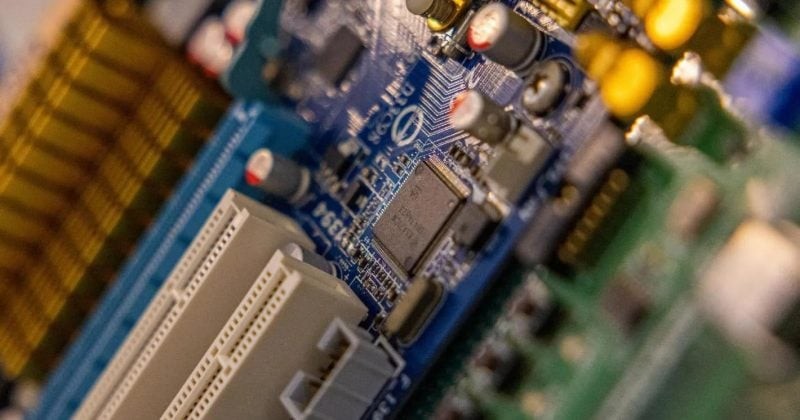
India just approved a ₹1.275 trillion (roughly $13.23 billion) program to supercharge its semiconductor manufacturing ambitions, while simultaneously opening its nuclear energy sector to private investment for the first time. The two moves are deeply intertwined: you can’t run cutting-edge chip fabrication plants without enormous, reliable power supplies, and India is betting that nuclear reactors are the answer.
The Union Cabinet greenlit the program, called Semicon 2.0, on July 15, 2026. It covers the full semiconductor value chain, from chip design and fabrication to advanced packaging, materials, equipment, R&D, and workforce development.
The semiconductor buildout
As of mid-2026, between 12 and 13 semiconductor projects have received approval across six Indian states, with combined investments exceeding ₹1.64 lakh crore.
The flagship project is the Tata-PSMC silicon fab in Dholera, Gujarat, which is expected to produce its first silicon by December 2026.
Nuclear energy as the backbone
India currently operates 24 nuclear reactors with a combined capacity of roughly 8.18 to 8.78 GW. Eight additional reactors are under construction, set to add another 6.8 GW. The government’s targets get progressively more ambitious from there: 22.5 GW of nuclear capacity by 2031-32, and 100 GW by 2047. The government plans to commission 21 additional reactors by 2031 alone.
On July 30, 2026, Indian power companies announced major investments in nuclear facilities following legislative changes that ended the state’s monopoly over nuclear energy. Companies like Tata Power and Reliance are moving in.
The government is also exploring Bharat Small Reactors and Small Modular Reactors specifically designed for industrial applications, including powering semiconductor manufacturing facilities.
The Viksit Bharat calculus
Both initiatives fall under India’s broader Viksit Bharat vision, the government’s framework for achieving developed-nation status by 2047, the centennial of Indian independence.
Disclosure: This article was edited by Editorial Team. For more information on how we create and review content, see our Editorial Policy.
What's Your Reaction?
 Like
0
Like
0
 Dislike
0
Dislike
0
 Love
0
Love
0
 Funny
0
Funny
0
 Wow
0
Wow
0
 Sad
0
Sad
0
 Angry
0
Angry
0










Comments (0)