

Kurosawa’s Final Film ‘Madadayo’ Was One of His Best — So Why Did it Take Five Years to Reach the U.S.?
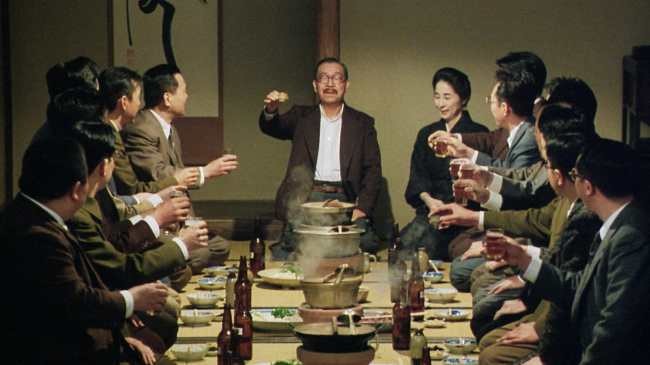
When Japanese auteur Akira Kurosawa wrote and directed “Madadayo” in 1993, he was by any criteria one of the living legends of international cinema. Although his previous two films, “Dreams” (1990) and “Rhapsody in August” (1991) had received mixed reviews, in the 40 years leading up to them, Kurosawa had directed a virtually unbroken streak of commercial and artistic triumphs.
Most of these movies were as influential as they were popular and acclaimed; “Rashomon,” “Yojimbo,” “Seven Samurai,” and “The Hidden Fortress” inspired everyone from Sergio Leone and George Lucas to Lawrence Kasdan and Walter Hill. (As recently as last year, Spike Lee made one of his best films, “Highest 2 Lowest,” by riffing on a Kurosawa classic from 1963.) At the time Kurosawa embarked on “Madadayo,” you’d have been hard-pressed to find a filmmaker who didn’t revere Kurosawa, or a cinephile who didn’t have at least one of his movies on their list of all-time favorites.


Yet “Madadayo,” which turned out to be Kurosawa’s final film, barely made it onto movie screens outside of Japan. After opening in Kurosawa’s home country in April of 1993, it made its international debut in May at the Cannes Film Festival, where it played out of competition to a muted response before going on to a relatively limited European theatrical release later that year. It didn’t play in the United States until 1998, where it quickly came and went from American theaters just before Kurosawa died at the age of 88.
While “Madadayo” is unquestionably one of Kurosawa’s quietest, most modest works in terms of scale — its gentle story of a teacher in retirement is a long way from the thunderous action of “Seven Samurai” and “Ran” — its failure to secure any kind of American theatrical run in its first five years of existence is shocking. Would there really have been no audience at all for this on the arthouse circuit?
Thankfully for everyone who missed “Madadayo” on its initial run, the Australian physical media label Imprint has released an exquisite Blu-ray of the film that includes a gorgeous transfer alongside some excellent supplements. There’s an insight-packed interview with film historian Jasper Sharp that contextualizes “Madadayo” in Kurosawa’s life and career, and a half-hour interview with Kurosawa himself on his approach.
Even better is a 90-minute documentary on the making of the movie made at the time of its release, which offers invaluable behind-the-scenes footage of Kurosawa at work. If you ever wondered how Kurosawa elicited the great performances that were pervasive across his filmography, here’s a feature-length crash course where you can watch and listen to every note Kurosawa gives his actors on set. And if you were ever foolish enough to believe Kurosawa’s visual precision was a fluke or something he left to chance on set, the Blu-ray features comparisons between the final film and Kurosawa’s storyboards, which are so detailed and beautiful they come across as independent works of art regardless of their intended use.
“Madadayo” itself is one of the great final films by a master filmmaker, and one of the subtlest. Like John Huston’s “The Dead” or Stanley Kubrick’s “Eyes Wide Shut,” it’s both a summation of what has come before and a hint at what might have been had the directors lived longer and made more films. In Kurosawa’s case, he didn’t think “Madadayo” would be his last movie — he continued planning other projects until his death five years after its production — but it’s so elegiac in its tone and powerful in its emotional effects that it works beautifully as the director’s final artistic statement.
As is often the case with late films, “Madadayo” is completely unadorned, and barely interested at all in delivering conventional satisfactions; considering how renowned Kurosawa was as a classical storyteller (the rock-solid structures of “Seven Samurai” and “Yojimbo” being so sturdy they’ve been ripped off dozens of times), his disregard for traditional dramaturgy in “Madadayo” is kind of shocking. (It might also have been part of the reason why American distributors didn’t think there’d be an audience for it.)
The movie unfolds less as a story than as a series of episodes and observations spread out over 20 years of its main character’s life — specifically, the 20 years he spends in retirement before he dies. Although the tale is ostensibly based on the writings of essayist Hyakken Uchida, the professor played by Tatsuo Matsumura seems as much a stand-in for Kurosawa as Uchida; every time he repeats the title of the film, translated into English as “not yet,” it seems to be the director’s way of asserting that he still has something to say, and a unique way of saying it.
And does he ever. Though the contemplative pace of “Madadayo” might not appeal to fans of the crisp propulsion of “Yojimbo” or “Seven Samurai,” Kurosawa’s ability to find the right cinematic rhythms to express his protagonist’s daily existence reveals him to be in full command of his craft right up to the end. Set pieces like an extended sequence in which the professor loses his beloved cat are exquisitely calibrated to sneak up on us with emotional effects so subtle it’s difficult to see how they’re achieved — there’s something in the DNA of Kurosawa’s technique that’s as immensely powerful as it is impossible to imitate.
Critic Jonathan Rosenbaum has correctly written that the subplot about the cat is so devastating it makes the most emotional scenes in “E.T.” seem restrained, yet there are times when Kurosawa barely seems to be doing anything — the episode plays like a slow, steady stream of straightforward images without emphasis and without excess. Whatever makes the sequence, and the movie as a whole, work so well is truly invisible, the result of an 83-year-old director’s confidence after 50 years of making movies.
Some of that confidence may have been a little misplaced — if Kurosawa was confident the audience would have the patience for his experiment, he was wrong, at least at the time. But his confidence in his own gifts was fully earned, and if people weren’t quite ready for “Madadayo” at the time, its pleasures seem obvious now. The movie unquestionably benefits from our knowledge that it’s Kurosawa’s last; when the professor says his final “not yet” late in the film, it’s unbearably touching, as is his reflection that when he thought he was old on the occasion of his retirement 20 years earlier, he was really just beginning.
Kurosawa said something similar when he accepted his honorary Oscar at around the time he was making “Madadayo”: “I’m only now beginning to see the possibility of what cinema could be, and it’s too late.” The quote speaks to “Madadayo” and its power. It’s an elegy, and the end of something, but it and “Dreams” and “Rhapsody in August” feel like the beginning of something too — a new way of impressionistic, subtle storytelling that Kurosawa barely got the chance to explore.
The special edition Blu-ray of “Madadayo” is currently available from Imprint.
What's Your Reaction?
 Like
0
Like
0
 Dislike
0
Dislike
0
 Love
0
Love
0
 Funny
0
Funny
0
 Wow
0
Wow
0
 Sad
0
Sad
0
 Angry
0
Angry
0






Comments (0)