Leading semiconductor analyst says AMD should be investigated for 'treason' over availability of restricted chips in China, AMD blames diversion of export-controlled RFSoC
Sep 24, 2026 - 19:10
00
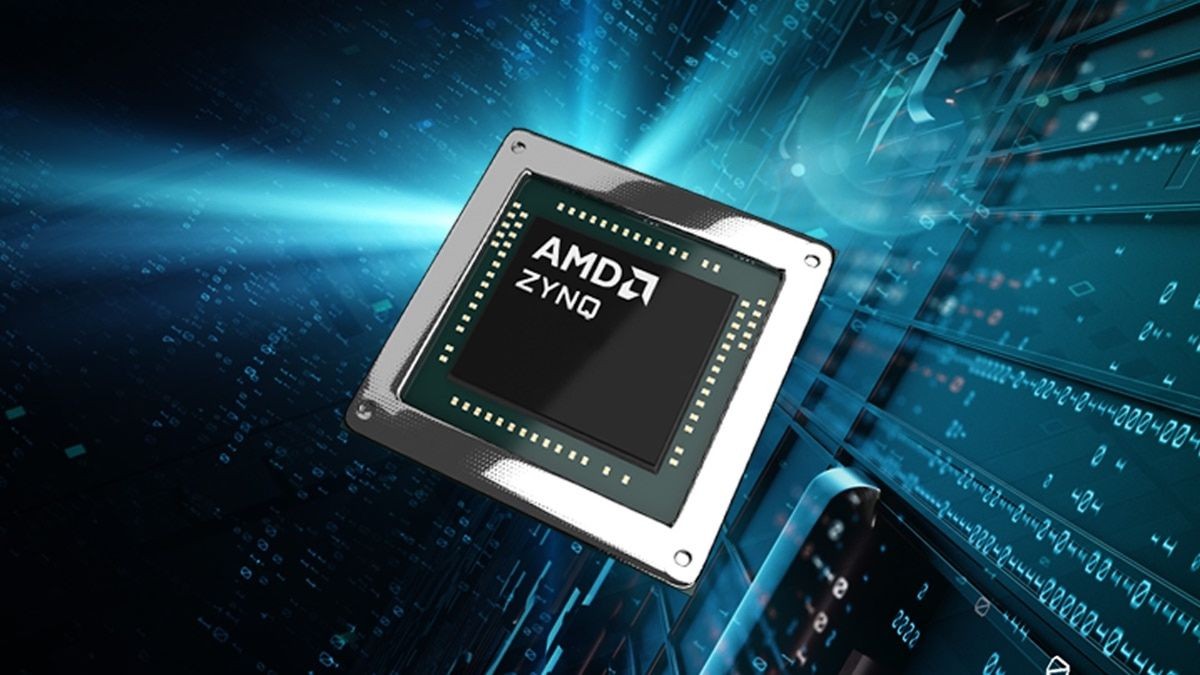
(Image credit: AMD)
Dylan Patel, the head of SemiAnalysis, a top semiconductor analysis company, has discovered that China-based Puzhi Electronic Technology is crowdfunding development of a system that is based on AMD's Zync UltraScale+ XCZU47DR RFSoC, which is a U.S. export-controlled dual-use component. Dylan Patel called on the government to investigate AMD for treason, whereas, in a statement to Tom's Hardware, AMD denied selling or shipping the chips directly into the restricted region and said it investigates suspected cases of illegal diversion.
"AMD found a business opportunity in dumping U.S. military chips for 1/4 of the cost in China," Patel wrote in an X post. "U.S. list price is $36K for this chip, with $4K – 5K to U.S. companies at volume, but it is getting quoted $1K in China to crowdfunding campaigns. AMD needs to be investigated for treason. It is not just export violations, but it is literally selling military end use components to an adversary for less than your home country."
AMD denies any wrongdoing and says it investigates suspected diversion cases to determine whether any violation of law occurred, although it did not explicitly confirm that it had opened an investigation into this particular case.
"AMD is committed to full compliance with all U.S. and global export regulations and has a clear policy requiring our distributors, resellers, and customers to do the same," a spokesperson for AMD told Tom's Hardware. "Any shipment into restricted regions is a direct violation of our policy. This recent instance is unrelated to any direct AMD sales or shipments. We investigate all suspected diversion cases and if we find any violation of law, we will report it to relevant authorities and cease all business with the company."
AMD told Patel the same, according to another X post he made as a follow-up on the matter.
AMD's Zynq UltraScale+ XCZU47DR RFSoCs pack four general-purpose Arm cores, two Cortex-R5F real-time cores, an FPGA with 930,000 gates, DSP engines with 4,272 DSP slices, as well as eight 14-bit analog-to-digital converters (ADC) capable of up to 5 GSPS and eight 14-bit digital-to-analog converters (DAC) operating at up to 9.85 GSPS to receive, process, and generate RF signals in real time without relying on separate data converters. Devices based on Zynq UltraScale+ RFSoCs are used for software-defined radios, radar and phased-array systems, wireless and satellite communications, electronic test equipment, and other applications that require high-bandwidth, low-latency signal processing. Puzhi Electric officially positions its upcoming systems based on the Zynq UltraScale+ RFSoCs for 'professional engineers' and 'advanced researchers in universities,' though such systems can be used for completely different applications.
AMD's Zynq UltraScale+ XC-series RFSoCs are designed for commercial and industrial applications, but AMD also offers separate XQ-series defense-grade RFSoCs for aerospace and defense applications, although there the XCZU47DR does not have a direct XQZU47DR counterpart. Yet, the closely related ZU48DR is available in both XC and XQ versions. The latter adds defense-oriented qualification, ruggedization, and support rather than fundamentally different processing capabilities.
Therefore, while the XCZU47DR is technically aimed at civil, commercial, and industrial applications, the chip is a dual-use component featuring a 3A001.a.14 ECCN classification under the U.S. Commerce Control List (CCL) and therefore its exporting, re-exporting, or transferring normally requires a BIS export license to non-allied destinations (e.g., China) on anti-terrorist and national security concerns. This means that any shipment to China requires a license, but in practical reality, that license will almost certainly be denied. However, there is a license exception that allows shipping such items to commercial companies from the Group B countries, which means legitimate exports to dozens of states from where such goods could get to China illegally.
This might explain how Puzhi obtained its XCZU47DR devices, but it does not explain the enormous apparent difference between the prices available to Chinese and American buyers. The $1,000 figure, however, is Patel's reported price for the chip rather than a publicly advertised retail offer.
Get Tom's Hardware's best news and in-depth reviews, straight to your inbox.
Xilinx, which AMD later acquired, introduced its 3rd Generation Zynq UltraScale+ RFSoC family, including the XCZU47DR, in February 2019, and the devices reached production status in 2020, meaning that they have been on the market for almost six years now. Xilinx and then AMD have sold the unit to tens, if not hundreds, of companies in different countries, so determining the origin of the units that Puzhi has might be difficult.
It should be noted that lead times for XCZU47DR at various resellers like Avnet and DigiKey are 40 to 52 weeks, which indicates that the components are in high demand in the U.S. and Europe. Meanwhile, Puzhi claims it can ship its system based on the RFSoC on November 6, 2026.
Anton Shilov is a contributing writer at Tom’s Hardware. Over the past couple of decades, he has covered everything from CPUs and GPUs to supercomputers and from modern process technologies and latest fab tools to high-tech industry trends.


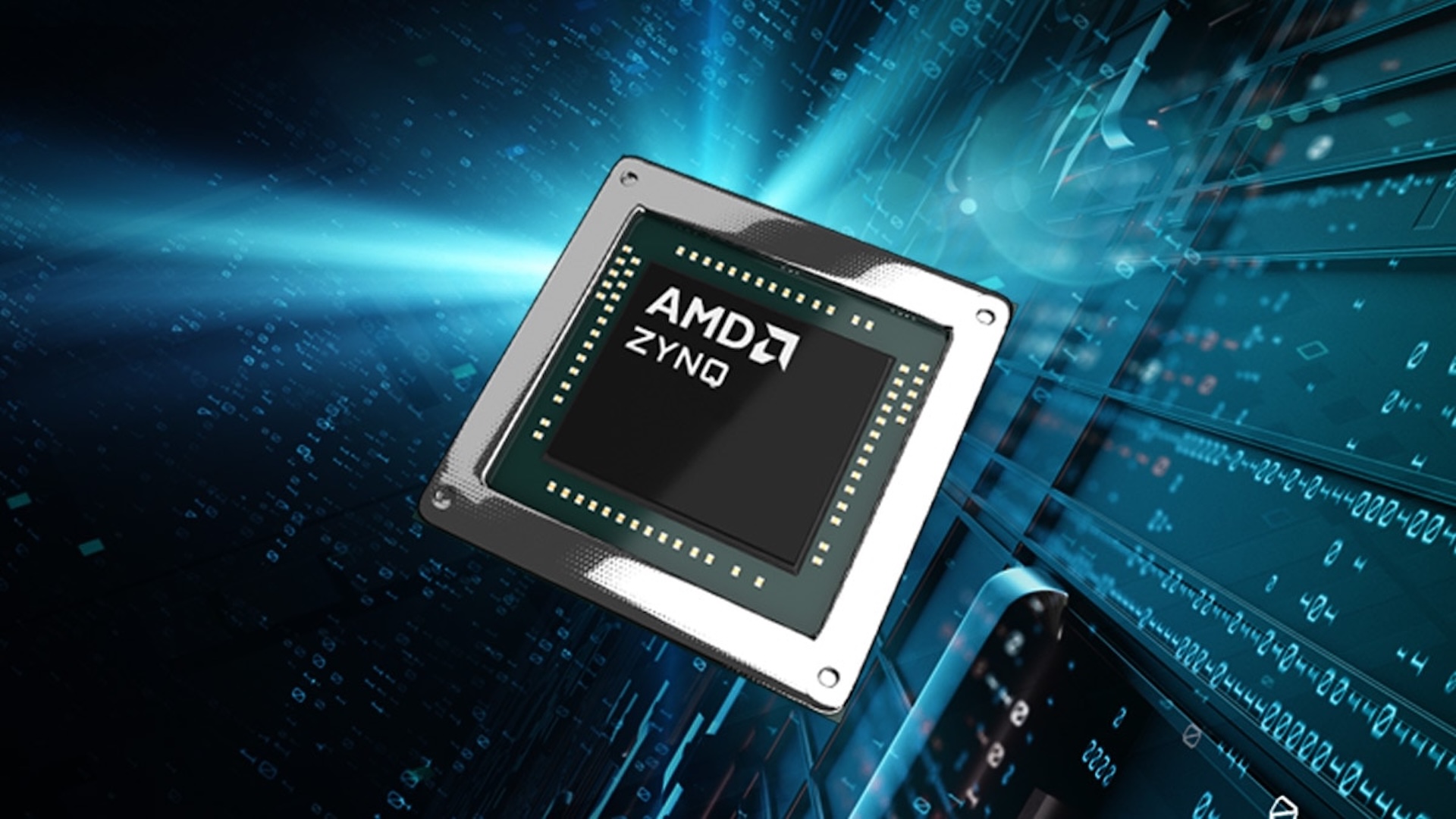 (Image credit: AMD)

 Like
0
Like
0
 Dislike
0
Dislike
0
 Love
0
Love
0
 Funny
0
Funny
0
 Wow
0
Wow
0
 Sad
0
Sad
0
 Angry
0
Angry
0









Comments (0)