

London cops bring live facial recognition to West End
security
'Permanent biometric surveillance of the public square' incompatible with policing by consent, say critics
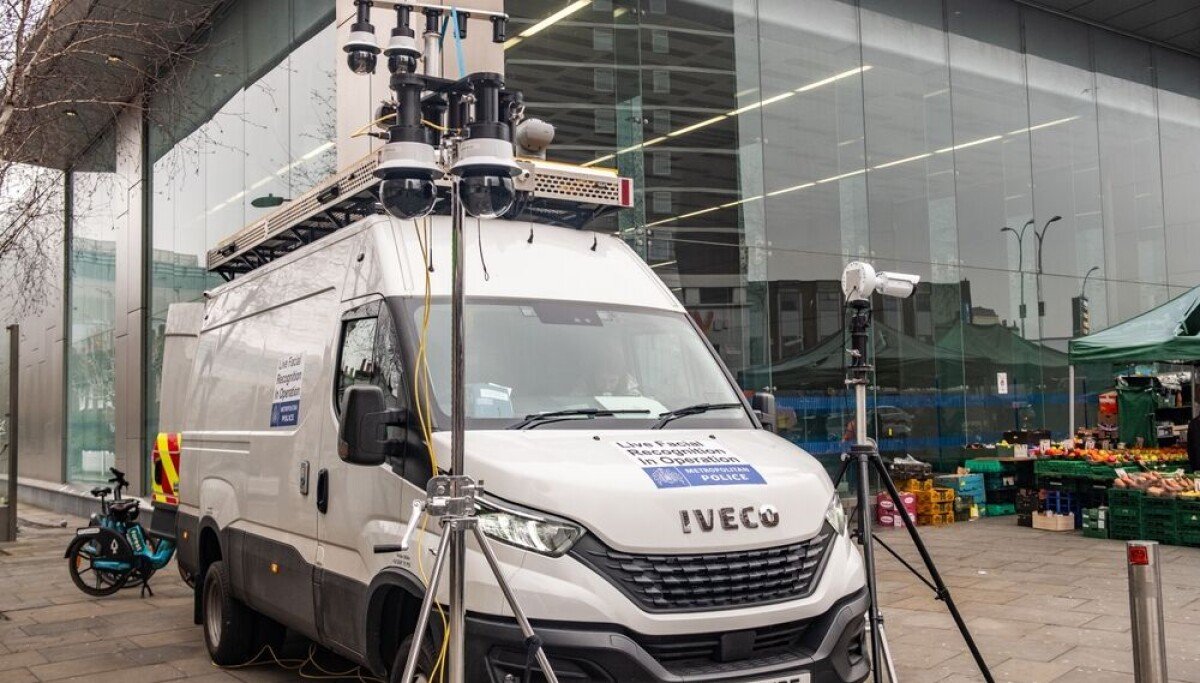
The Metropolitan Police Service (MPS) will start using static live facial recognition (LFR) cameras in London's West End and Soho by the end of this year following a six-month pilot in the south London borough of Croydon.

A Metropolitan Police live facial recognition van stands outside Shepherd's Bush station in London William Barton/Shutterstock
Static LFR involves the police temporarily attaching cameras to lampposts or similar infrastructure, with the feeds monitored remotely and officers on the ground stopping people whom the technology matches to images on its watchlist. The MPS said that each of the 24 deployments in central Croydon between October 2025 and March 2026 used a bespoke watchlist created up to 24 hours in advance and deleted afterward.
Civil liberties campaign group Big Brother Watch, which in April lost a High Court challenge to police use of LFR, said the force was rushing ahead with deployment before Parliament has passed legislation regulating the technology's use. "We are calling on the Met to stop this experiment until, at least, Parliament has spoken," Jack Coulson, the group's head of advocacy, said in a press release. "Policing by consent is a cultural inheritance we must protect. Permanent biometric surveillance of the public square is incompatible with that ideal."
He highlighted the case of Alvi Choudhury, a Southampton man arrested and held for ten hours in January after a retrospective LFR system run by Thames Valley Police matched him to a crime committed in Milton Keynes, a city he had never visited. "It is predictable, given the technology's racial bias, that Mr Choudhury was confused for another Asian man," said Coulson.
The MPS said that in Croydon more than 470,000 people walked past the LFR cameras, leading to 173 arrests and one false alert, which resulted in officers stopping someone without arresting them, realizing the mistake, and letting them go. The force added that one of those arrested, a registered sex offender who was communicating with a child under 16, was subsequently sentenced to two years in prison in May for breaching a sexual harm prevention order and making indecent images of children.
MPS Commissioner Mark Rowley said on June 24 that the force planned to "significantly step up our use of technology to fundamentally change how we protect the public" through the use of live LFR, a city-wide emergency services drone network, and AI to analyze the footage from the capital's one million CCTV cameras. Rowley added that the force needs to spend more on technology but its budgets for doing so have been repeatedly cut, with spending of around £6,000 per person compared with budgets of more than double that at some government agencies.
Earlier this month, the commissioner said the MPS would have to cut around 700 frontline posts after London's deputy mayor for policing and crime, Kaya Comer-Schwartz, refused to approve its plan to award a major contract to controversial US supplier Palantir. ®
What's Your Reaction?
 Like
0
Like
0
 Dislike
0
Dislike
0
 Love
0
Love
0
 Funny
0
Funny
0
 Wow
0
Wow
0
 Sad
0
Sad
0
 Angry
0
Angry
0









Comments (0)