

Milt Windler, NASA flight director who helped save Apollo 13, dies at 94
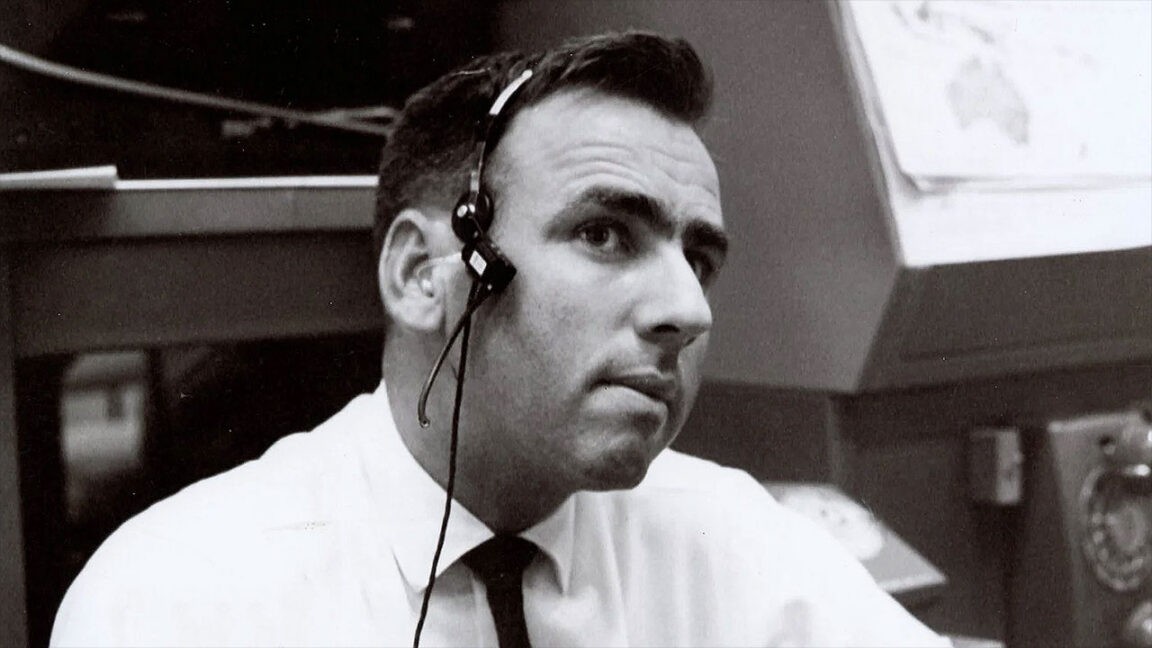
“We had to come up with a system that would allow us to plan in real time and accommodate the science people. If something interesting happened on the sun, which it did several times, then we needed to be able to schedule the ATM [Apollo Telescope Mount] work,” he said in 2006.
“We invented a way of flight planning in real time, or cycles,” said Windler, where one day the science people talked about what they wanted to do, and the ‘Science Czar’ got with them and said, ‘All right, then, we need these particular objectives for tomorrow.’”
After the Skylab missions ended, Windler went to work on the space shuttle and the development of the remote manipulator system or “Canadarm,” the winged orbiters’ robotic arm contributed to the program by Canada. He then retired from NASA and joined private industry to work on what would become the International Space Station, consulting on the operations aspect of the orbiting laboratory, and later, as modules were produced, on some of the verification procedures.
‘Pay more attention’
Born on Jan. 10, 1932 in Hampton, Virginia, Milton Windler graduated from Virginia Tech (Virginia Polytechnic Institute and State University) in 1954 with a degree in aeronautical engineering. He joined the U.S. Air Force’s Reserve Officers’ Training Corps (ROTC) while still in school and then worked for the National Advisory Committee for Aeronautics (NACA), NASA’s predecessor, before serving in the Air Force for four years.
Windler rejoined NACA at Langley Research Center in Virginia and was there for its transition to becoming a NASA facility. He relocated to Houston, Texas, just as the Manned Spacecraft Center (today, Johnson Space Center) was being established.
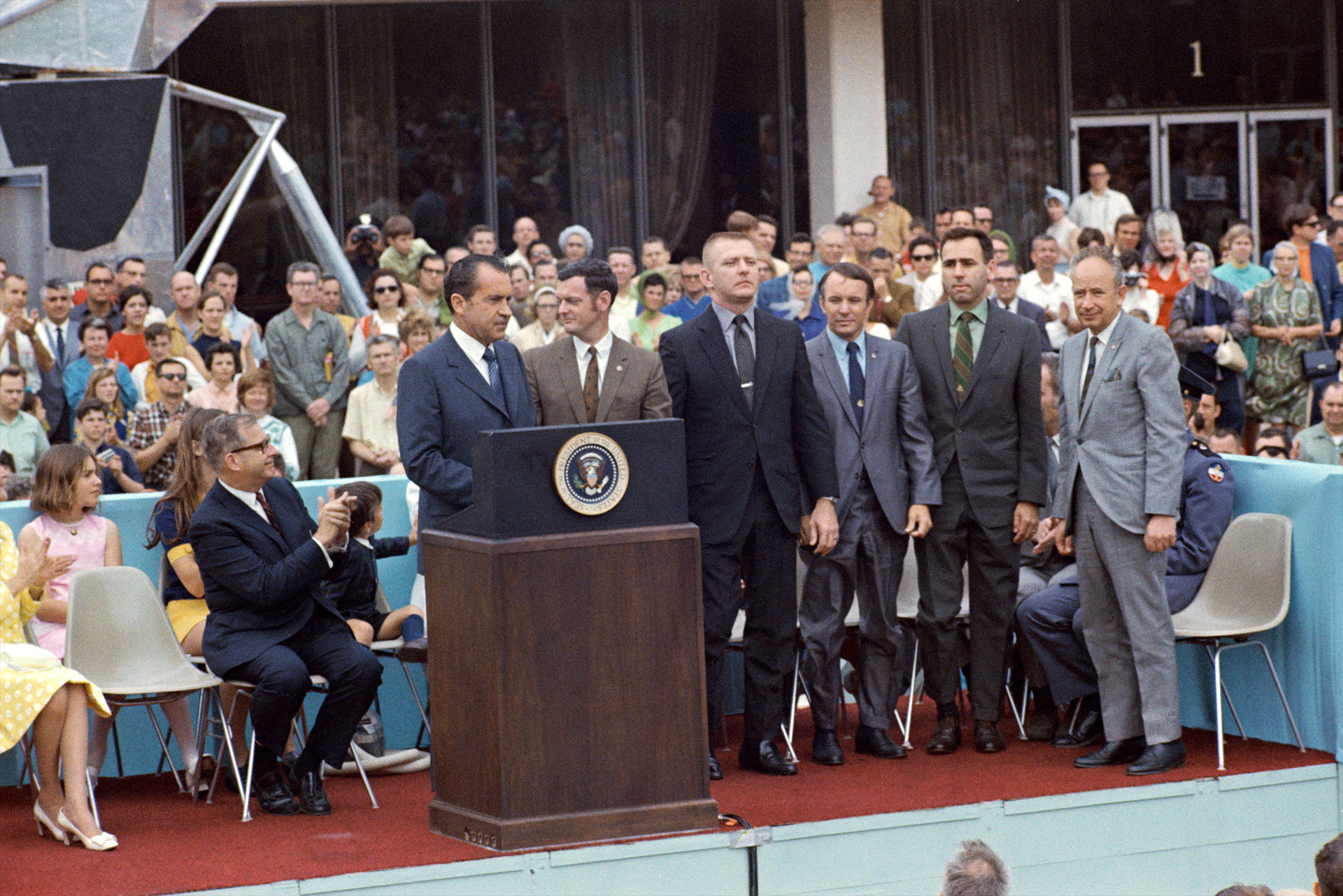
Milt Windler stands with fellow flight directors Glynn Lunney, Gene Kranz and Gerry Griffin for President Richard Nixon’s presentation of the Presidential Medal of Freedom to NASA’s Apollo 13 mission operations team on April 18, 1970.
Credit: NASA
Milt Windler stands with fellow flight directors Glynn Lunney, Gene Kranz and Gerry Griffin for President Richard Nixon’s presentation of the Presidential Medal of Freedom to NASA’s Apollo 13 mission operations team on April 18, 1970. Credit: NASA
As a member of Mission Control during the Apollo 13 mission, Windler and his fellow flight directors and controllers were awarded the Presidential Medal of Freedom by then-President Richard Nixon in 1970. Windler was also honored with NASA’s Exceptional Service Medal.
Milton and Betty (née Selby) Windler had three children and eight grandchildren. A memorial service will take place in the coming weeks at the family’s former church in Friendswood, Texas.
“If I did it again, I’d probably try to do something more about trying to pay more attention,” said Windler. “Apollo was — well, all of [the missions] were … bang-bang-bang. You couldn’t enjoy, really, in a way you couldn’t savor it, like maybe it would have been better to have done.”
What's Your Reaction?
 Like
0
Like
0
 Dislike
0
Dislike
0
 Love
0
Love
0
 Funny
0
Funny
0
 Wow
0
Wow
0
 Sad
0
Sad
0
 Angry
0
Angry
0











Comments (0)