

NASA chief: I'm only interested in "good deals" from international partners
“There was absolutely a time where we were trying to make everyone happy.”
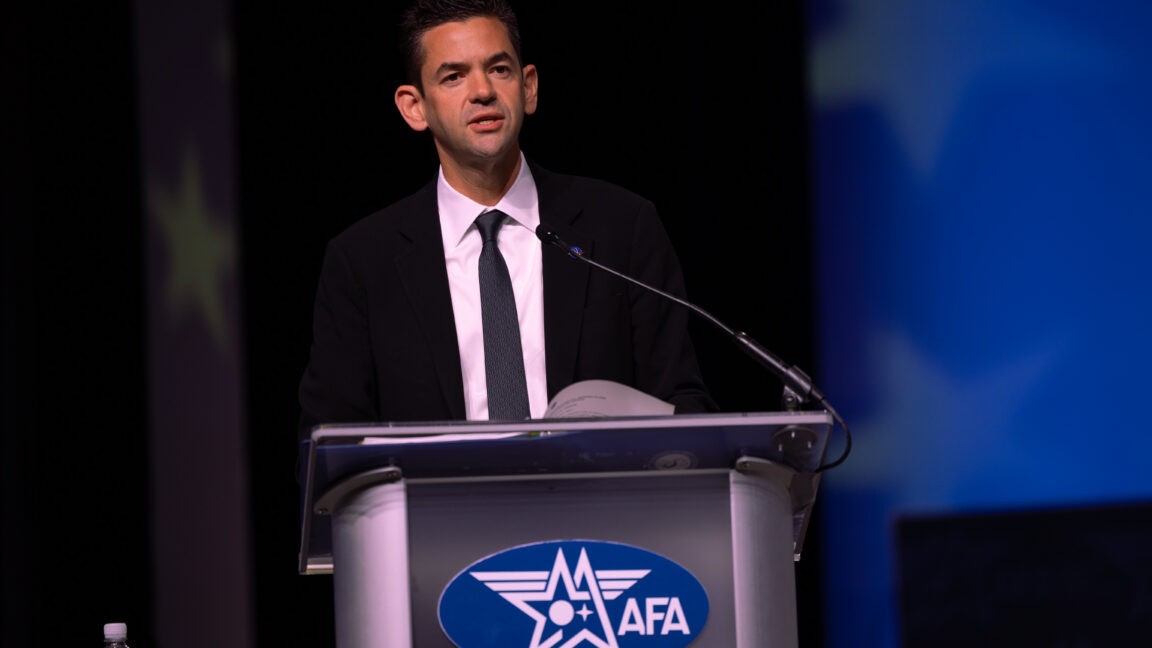
NASA Administrator Jared Isaacman speaks at AFA's Air, Space & Cyber Conference on September 15, 2025. Credit: Jud McCrehin/Air & Space Forces Association
NASA must be more selective in the way it forges international partnerships as the race to the Moon transforms from a battle for national prestige between the United States and China into a high-stakes competition for extraterrestrial real estate and resources, the agency’s administrator said.
Jared Isaacman, now in his 10th month at the helm of the world’s largest civilian space agency, told a gathering of military leaders and defense contractors last week near Washington, DC, that the 21st-century race to the Moon is more than a battle of ideologies. The sweet spot for a Moon base, Isaacman said, is a relatively small region near the lunar south pole, and there are tangible implications for who gets there first.
The Moon’s south pole harbors substantial quantities of water ice concentrated on the floors of craters away from the reach of sublimating rays of sunlight. The ice inside these eternally dark craters could be used to supply water, air, and rocket fuel for a Moon base, supporting a permanent settlement and providing a springboard for future expeditions to Mars.
“It’s a big Moon, with the surface area of Africa,” Isaacman said Wednesday at the Air & Space Forces Association’s Air, Space & Cyber Conference. “The south pole is more akin to Washington, DC, when there are only so many roads and so many good parking spots that you’re going to want to occupy.”
The best parking spots aren’t just those close to the Moon’s water ice bound up in deep craters. A few select crater ridges extending high above the ice deposits provide access to near-continuous sunlight for power generation.
“We want to go there to master the skills for Mars,” Isaacman said. “And when you realize there are only limited parking spots that get us access to that training environment, it creates an urgency, and we must [go fast] because the Chinese are going to the exact same locations. They are partnered with the Russians. They are going to put a nuclear reactor there, and they could potentially deny this training environment that is a necessity for America’s space ambitions.”
Isaacman said this means NASA must make better decisions on when and how to work with international partners. Other nations have a place in NASA’s programs, but only if they can meaningfully contribute to the mission, he said.
“I will tell you, though, and this is right from the top from the president of the United States: We’re only doing good deals, and we haven’t always done good deals,” Isaacman said. “There was absolutely a time where we were trying [to] make everyone happy. Let’s get a lot of flags together for a great press release, and it can [be], and absolutely has been, at times, a drag on the mission instead of accelerating it. You can’t do that, and we’ve changed that now, and as a result, good deals are happening.”
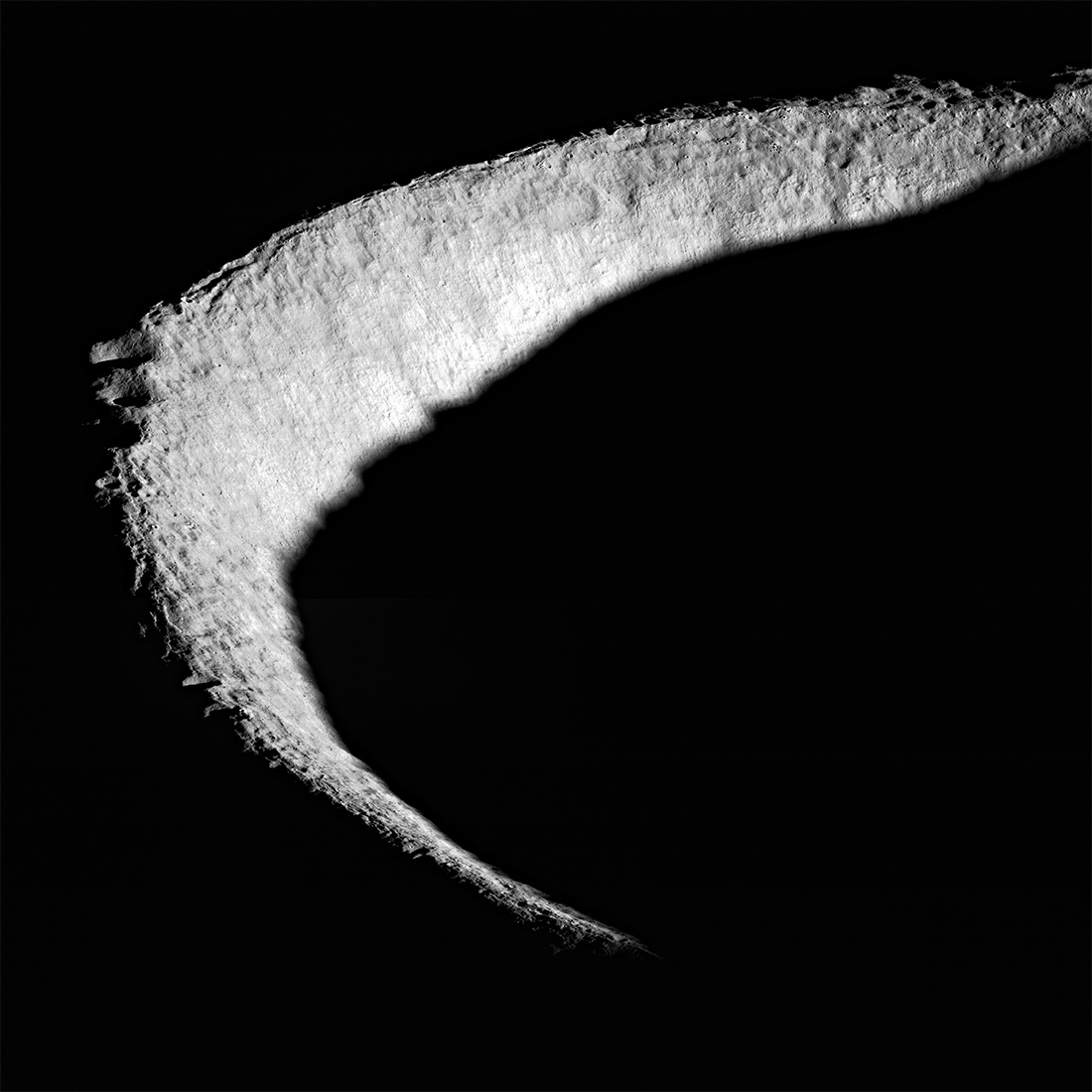
The rim crest and upper part of the rim of Shackleton Crater, as viewed by NASA’s Lunar Reconnaissance Orbiter. The Moon’s south pole is located on the rim near the upper-right corner of the image.
Credit: NASA/GSFC/Arizona State University
The rim crest and upper part of the rim of Shackleton Crater, as viewed by NASA’s Lunar Reconnaissance Orbiter. The Moon’s south pole is located on the rim near the upper-right corner of the image. Credit: NASA/GSFC/Arizona State University
What’s a good deal?
Isaacman singled out as a good deal NASA’s agreement with the Italian government in March for the development of living quarters for astronauts on the Moon.
“They’re committing over $5 billion to building one of the first habitation modules,” Isaacman said. “It likely will be the first real habitation module that makes its way to the lunar surface. And as a result, you’re going to see two Italian astronauts on the surface of the Moon.”
Japan, too, is coming in clutch for NASA, Isaacman said, with a multibillion-dollar commitment to develop a pressurized rover to ferry astronauts across the Moon. In exchange, Japan will likewise get two tickets to the Moon for the country’s astronauts. The US and Japanese governments signed the agreement on the pressurized rover in 2024.
“That is the expectation we set for everyone,” Isaacman said. “You’re not just going to bring us a list and say, ‘I will do this regardless if it helps the mission or competes with US industry and what US industry is trying to accomplish on the Moon.’ That is not going to work. We need meaningful contributions now. The game has changed.”
The role of the European Space Agency, perhaps NASA’s most enduring international partner, on the Moon Base program remains undefined. ESA signed up to provide elements for a habitation module, a refueling module, and deep space communications hardware for the planned Gateway mini-space station in orbit around the Moon.
NASA announced the cancellation of Gateway in March in a strategic shift to focus on a permanent presence on the lunar surface, where China has set its sights. It didn’t help that Gateway’s first pressurized module was corroded.
Canada, too, is weighing its potential contribution to the Moon Base program. The Canadian Space Agency was on the hook to build a robotic arm for the Gateway outpost, improving on the Canadian robotics systems used on the Space Shuttle and the International Space Station. The design and use case for a robotic arm on the surface of the Moon, where it must operate in partial gravity, is different from that in microgravity. It doesn’t help that the Trump administration is currently engaged in a trade war with Canada, erecting a hurdle for any potential bilateral agreements.
ESA and Canada received guarantees from NASA for lunar flight opportunities for their astronauts through their agreements on Gateway. ESA also provides service modules for NASA’s Orion spacecraft, the ship that carries astronauts between the Earth and the Moon. Canadian astronaut Jeremy Hansen took Canada’s first seat on an Artemis mission with the flight of Artemis II around the Moon earlier this year.
NASA announced in June that ESA astronaut Luca Parmitano, a colonel in the Italian Air Force, will serve as pilot on the Artemis III mission to test lunar landers and the Orion spacecraft in low-Earth orbit in 2027.
Rule by committee
ESA’s director general, Josef Aschbacher, told reporters in June that he is eager to secure seats for the agency’s astronaut corps to land on the Moon. A “meaningful” contribution to the Moon Base program would pay the fare, but it hasn’t been easy to find agreement on what that might look like.
NASA’s agreement with Italy, an ESA member state, was directly negotiated between the two countries outside the halls of ESA. The European Space Agency has 23 member states, which provide funding in three-year increments, offering a modicum of stability for ESA’s programs at the expense of agility.
Italy’s commitment to build a habitation module and Japan’s contribution of a pressurized rover offer something new to NASA, which didn’t have contracts with US companies to do that work. Those are the kinds of partnerships Isaacman said he is looking for.
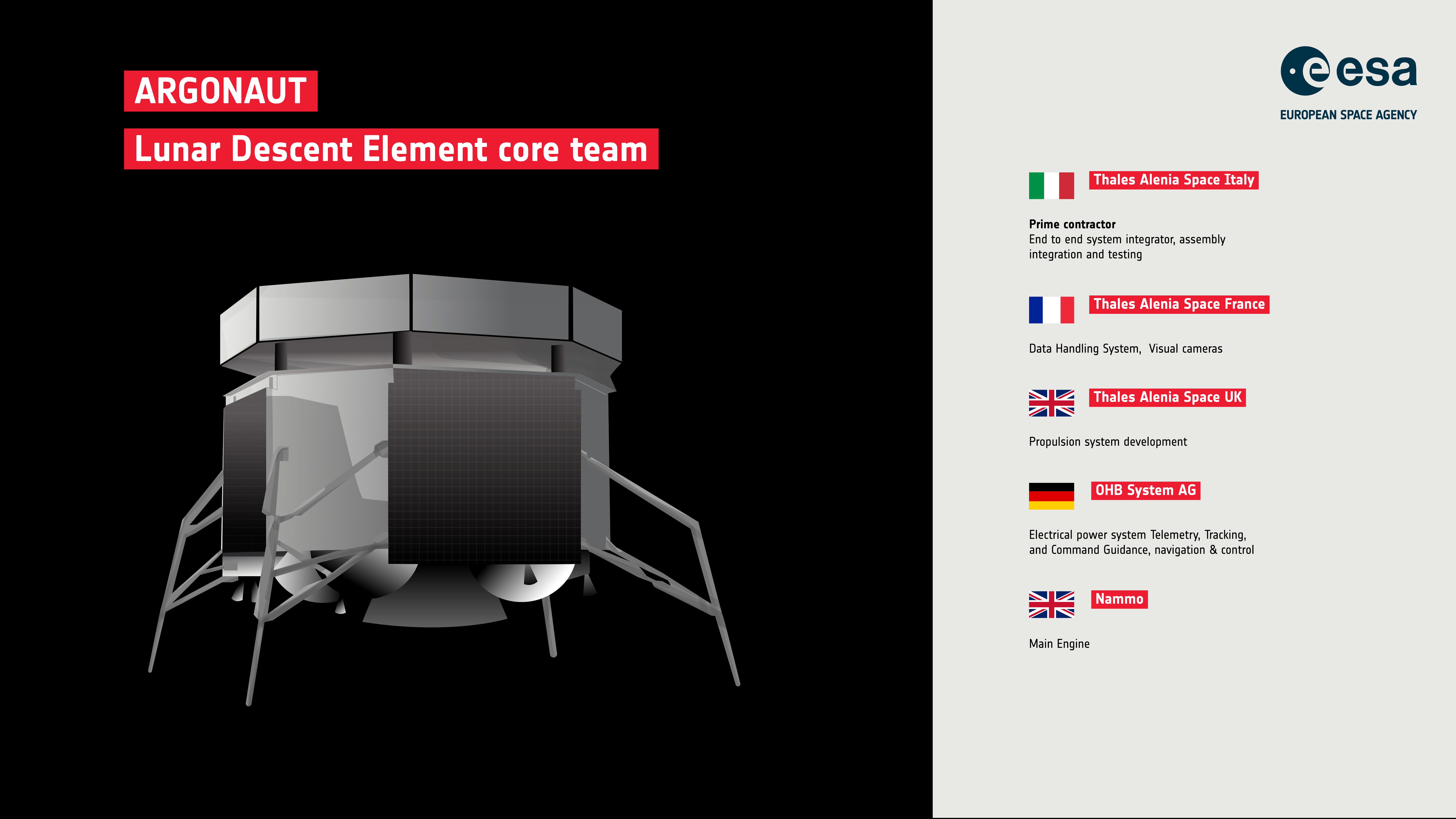
ESA’s Argonaut would include elements from across Europe.
Credit: European Space Agency
ESA’s Argonaut would include elements from across Europe. Credit: European Space Agency
“We had one partner that said, ‘Look, I’ll give you a lander, a robotic lander, that’ll go to Shackleton Crater by the mid-2030s,” Isaacman said in a question-and-answer session at the Air, Space & Cyber Conference last week. “I was like, ‘The Chinese are launching there in two months (with Chang’e 7, a mission now delayed to early 2027). What good is that to us then? There will be no landing spots available at that point in time.'”
Isaacman did not identify which partner he was talking about, but it almost certainly was ESA, which is seeking a role for its Argonaut cargo lander in NASA’s Moon Base program. The problem from NASA’s perspective is that Argonaut would replicate much of what US companies are well along in developing.
Each Argonaut lander could deliver to the lunar surface up to 1.5 metric tons (3,300 pounds) of cargo, such as crew provisions, science instruments, and infrastructure, according to ESA. That is half of the payload capacity of Blue Origin’s Blue Moon Mark 1 lander, set to make its first flight to the Shackleton Connecting Ridge near the Moon’s south pole next year and far below the cargo capability of larger human-rated landers like Blue Moon Mark 2 or SpaceX’s Starship.
“We’ve got to get in touch with reality and make meaningful contributions to what NASA and the free world are trying to achieve with our space ambitions,” Isaacman said.

Stephen Clark is a space reporter at Ars Technica, covering private space companies and the world’s space agencies. Stephen writes about the nexus of technology, science, policy, and business on and off the planet.
What's Your Reaction?
 Like
0
Like
0
 Dislike
0
Dislike
0
 Love
0
Love
0
 Funny
0
Funny
0
 Wow
0
Wow
0
 Sad
0
Sad
0
 Angry
0
Angry
0










Comments (0)