

‘Not Saying That Verité Is Dead’: How Documentaries Take Advantage of a World So Aware of the Camera
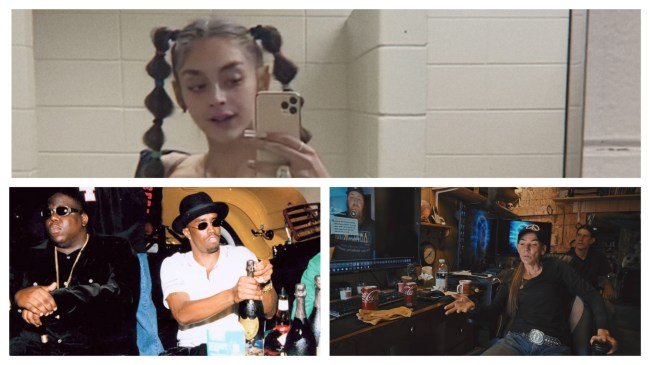

“Not saying that verité is dead per se,” “Neighbors” co-creator Dylan Redford recently told IndieWire, but the idea of a “pure subject,” heedless of how they are perceived on film, might be, “given the world that we live in now and the awareness of the camera, and everyone’s documenting themselves and each other.”
Redford and Harrison Fishman’s HBO series, an Outstanding Unstructured Reality Program Emmy contender that documents both sides of residential disputes around the country, was borne of viral neighbor dispute videos captured and posted by the subjects themselves. “In some ways, we’re trying desperately to get close to where they already are with a lot of their own material because they’re just alone in their personal space speaking to the camera,” said Redford. “We can’t really ever totally compete with that level of intimacy that a subject has with their phone and their camera. And so the best thing we can do is just utilize that and have it be a part of the language of the show.”


That language is one of utility, so footage from GoPros, 360 cameras, even Ring security systems is on the table. “We just fully want to lean into how contemporary and how American our show is. And so any chance that we can — almost to a gratuitous level — just show truthfully how people are surveilling people, and how people are showing themselves, we’re really excited about that,” said Fishman.
“Part of trying to make the show feel really relevant is also not fighting against that idea that our subjects are aware of the camera and have their own lens that they’re using,” said Redford. “It then almost becomes more of a collaboration because they just know what we’re doing. They’re not naive to what it means to craft a story and talk to the camera. And so it’s a more collaborative approach than a more classic verité thing used to be in the past, because I just don’t think you can access that kind of total purity as much anymore.”
The participants’ footage becomes important because it “deeply embeds our show into the sort of real fabric of these people’s lives. And also it just further emphasizes that this show’s real and you can go online and you can find their profiles and you can watch all the same videos that we used in the show or watch more that we didn’t,” he added.
 ‘Neighbors‘Courtesy of HBO
Though it is vastly different take on true crime, as “Neighbors” leans toward the comedically absurd, to the point where one can forget what the inciting infraction was in the first place, the Netflix film “The Crash,” an Outstanding Documentary or Nonfiction Special Emmy hopeful, similarly leans on footage shot by its own subject to tell its story.
Directed by Gareth Johnson and produced by Angharad Scott, the documentary takes a closer look at the case of Ohio teenager Mackenzie Shirilla, who is currently in prison for murder, based in part on surveillance footage of her crashing her car, killing passengers Dominic Russo, her boyfriend, and Davion Flanagan, his friend.
“She didn’t have approval over what was put in the documentary, but obviously, she did provide material to us to help tell her side of the story, and as a filmmaker, that’s so important that people do that, so that we can make these stories in this way,” said Scott.
Johnson explains that having footage directly from the subject curbs the need to shoot dramatic reenactments, a waning trope of the true crime genre that has been actually used in retellings of the Shirilla case. However, “you do have to be careful. We were always very careful about how we used it, and you could use it in a very blunt way where you just illustrated ideas or things like that, or certainly it’s very easy to paint a negative picture of anybody potentially with all the footage that they have in their phone,” said the director. “We tried to not do that and to try to show a real person and a real life, but at the same time, there’s complexities to that because she was also very engaged in trying to present a version of herself to the world.”
The film itself shows an example of how a subject could be shot in the foot by their own footage, with one of Shirilla’s TikToks innocuously soundtracked by “Bubblegum Bitch” by Marina and the Diamonds, which had become a viral sound on the platform, being used in court as an example of her having no remorse for her actions, and therefore deserving of a harsher sentence. The scene illuminates a generational conversation about the degree to which what someone posts on their social media account is an authentic representation of themselves, but from a filmmaking standpoint, it also shows how just because a subject shot the footage on their own does not automatically mean it will present them in the most flattering light.
That is especially true of the self-commissioned footage that director Alex Stapleton interspersed throughout “Sean Combs: The Reckoning,” a frontrunner for an Outstanding Documentary or Nonfiction Series Emmy nomination. “The footage was one of those weird things that happens in documentary filmmaking where you get these crazy things that land in your lap,” said filmmaker, who was already in deep on the edit of her Netflix series about the private exploits of the music mogul better known as Diddy when she received hours of footage of him in his last week of freedom.
Though it would be a huge pivot for the project, and commanded an entire night of combing through all the footage, what Stapleton received “was proving a lot about his personality and more of the nuance of who Sean is,” she said. “People can talk about him being this way and being that way, but until you see what he’s saying when he gets in the car in Harlem, when thinks he’s going to be able just to [make sure] no one’s ever going to see that part of him, that was a very valuable thing as a documentary filmmaker, to be able to put that forward.”
Of course, in making a documentary about the man and trying to understand his history of abusive behavior, Stapleton was keen on interviewing Combs, but “I felt like I got something even better. I got a verité experience with him,” she said. “And then the challenge became, ‘OK, how the heck do we integrate this in a four-hour episodic structure where we can weave it in and braid it into the historical timeline that we were working on, and then the timeline of all the other things that we’re developing with victims coming forward from different eras of Sean’s career in his life?’”
That challenge of taking footage that the subject shot, and then providing the right context for it, is something the filmmakers behind “Sean Combs: The Reckoning,” “The Crash,” and “Neighbors” all spoke to. “We wanted to really focus on Sean’s relationship with the media, and Sean in front of cameras, and also a personality that, when he has the means, is always filming himself,” said Stapleton of her intention behind using the footage that Combs had hired people to take of himself.
Being that the cameras worked for him at that point, “There’s a certain level of safety of, ‘Well, I know that they’re not going to use this part of the conversation,’ and I think him as a producer and a star and someone who’s in front of the camera, you could see the dials,” she said. “You’re being let in on him and his process of manufacturing reality,” added Stapleton. “There’s things that go down in it that are crazy, but a lot of the power of it is in the in between, in what’s not said or what things that you just wouldn’t get if you didn’t understand who this man was and that time period specifically where his priorities laid.”
 Mackenzie in ‘The Crash.’Courtesy of Netflix
One thing that makes “The Crash” fascinating in comparison is that Johnson and Scott were able to shoot an interview with their subject Shirilla. “People will find it really fascinating to study her, her eyes directly, she talks directly into the camera in her interview, and to try to read her. I still do every time I watch it,” said Johnson. But whereas with the social media clips they used, which were shot before Shirilla had any concept of her life being fodder for a documentary, her interview for the film is very much presented as a lifeline for her to try and appeal her conviction. “You’ve got the immediacy of the social media, the videos, and the reflectiveness of the interviews,” said the director. “It’s a powerful combination.”
Scott agreed, “That’s where the real magic I think happens, because you can have that deeper analysis, you can have that deeper discussion, but you still see the truth of this person coming through in their social media.” The same goes for “Neighbors.” “When our cameras are there, we bring out something else that’s also special and unique and authentic,” said Redford. “It would be a mistake to consider someone’s confessional that they film on their phone for their TikTok is any more real or authentic than a ‘documentary’ interview that we do with them in the car. They do different things.”
Towards the end of “The Crash,” there is a standout moment where Shirilla asks her lawyer for feedback after answering one of the director’s final questions. “It was also important for the audience to know the circumstances of the interview. Obviously, there is an interview, which they’ll understand, but she’s still in the process of appealing, still fighting the conviction, and the lawyer genuinely was there and it’s a truthful bit of documentary making, in my opinion,” said Johnson of the choice to include the meta scene that furthers the conversation about what footage presents the most authentic version of a documentary subject. “That moment I think reveals really what her thinking is, and you can interpret that as you will. Do you find that strange or suspicious, duplicitous? I wouldn’t tell anyone what to read into that at all,” he said.
“Context is a really big part of the documentary process. And I think it’s always a tragedy when you don’t build that out,” said Stapleton. “You should never underestimate your audience, and you should never think that an audience won’t be able to comprehend.”
What's Your Reaction?
 Like
0
Like
0
 Dislike
0
Dislike
0
 Love
0
Love
0
 Funny
0
Funny
0
 Wow
0
Wow
0
 Sad
0
Sad
0
 Angry
0
Angry
0







Comments (0)