

‘Nothing worked for me until I was clean and sober’: Ashley Walters on acting, directing – and turning his life around
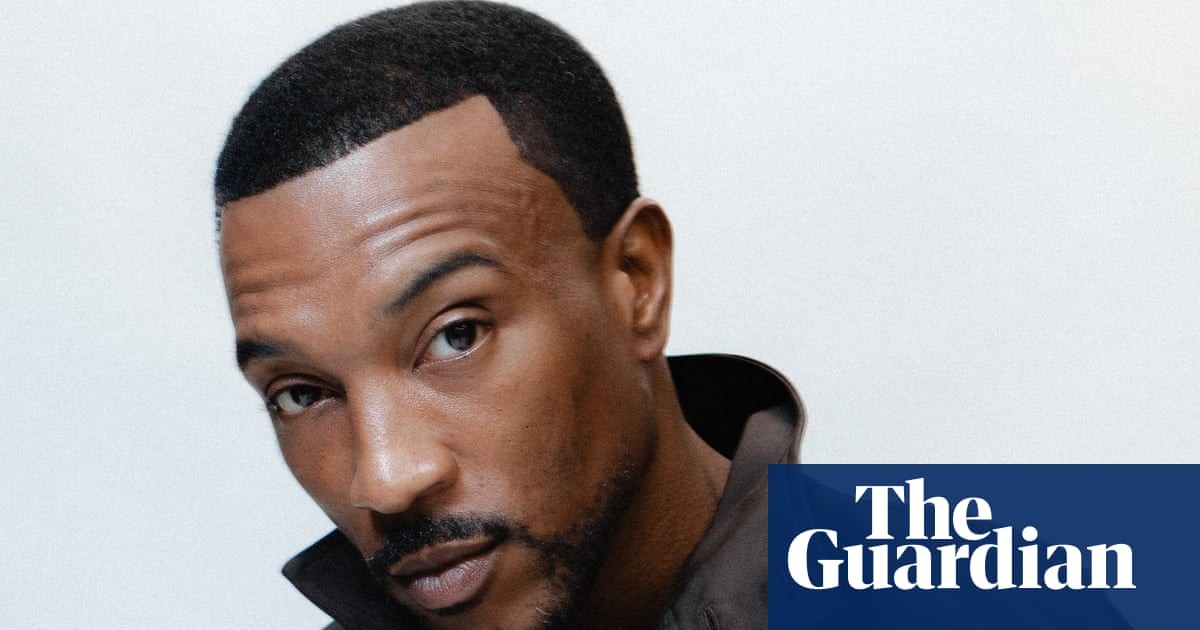
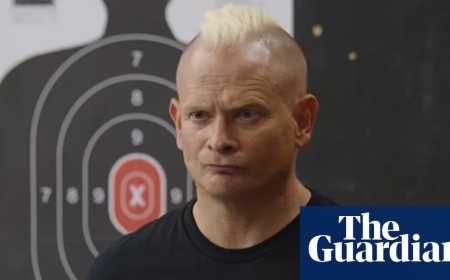
Ashley Walters seems to have lived his life on fast-forward. Before he turned 21 he had already had a No 1 hit, performed on TV and the West End stage, become a father and served seven months in prison. He has had another lifetime’s worth of incident since – including seven more children – but at the ripe old age of 44, enough water has passed under the bridge for Walters to have some perspective on his youth. Not that all that living appears to have left a mark: when we meet in London, he’s the picture of health, his face unwrinkled, eyes twinkling, hair cut in a crisp lineup.
Back in the early 2000s, he fit a certain stereotype of Black British youth as Asher D, the rapper from deprived and supposedly crime-ridden Peckham, who rolled with the street-tough So Solid Crew, got into beefs with east London rivals such as Dizzee Rascal, was demonised by the tabloids and called a “boasting macho idiot rapper” by the then culture minister Kim Howells.
So Solid Crew were trailblazing in terms of British hip-hop, but Walters’ view of those times is far from rose-tinted. “Everything other than the music, it was bad, it was negative,” he says. “The music was very British, but if you looked at our style, our clothes, the jewellery, the cars, that was all the Americanised stuff that we wanted to bring into it.” That also included guns – even if, in Walters’ case, the firearm was a modified air pistol.
Asher D was never really him, he says. “Behind the scenes, in all honesty, I was questioning if I was doing the right thing. Because a lot of our success was underpinned with street stuff: you can’t go to that area because you might get shot; you can’t do this because that person has had beef with this person; and it was, like, all this politics.”
He’d got in with the wrong crowd, he suggests, “and it took me down the road of just not giving a shit any more … but the realisation came to me when that door was shut in the prison cell. And I was like: ‘Hold on. How the f– did I get here?’”
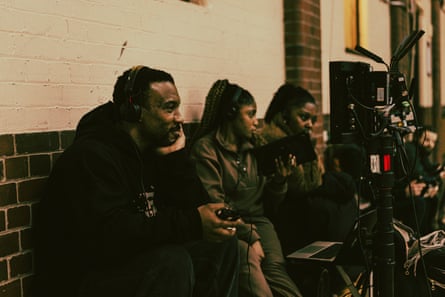
We’re talking about his prison days because Walters is now revisiting them, from the other side of the door. He has just directed his first film, Animol, which is set in a young offender institution. It is by no means autobiographical (it was written by Nick Love, of Football Factory fame), but he says that a lot of it is based on his own experience and memories of being locked up. “I wanted it to feel, look and sound the way it felt, looked and sounded to me.”
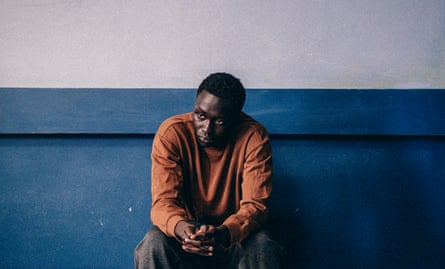
This is a genre that comes with certain expectations: brutality, bullying, staff-inmate relations, internal hierarchies. Animol meets many of them. The tension winds up from the first scene, when the story’s 15-year-old protagonist, Troy (Tut Nyuot), is coerced into smuggling in a phone. But the film also defies those expectations in surprising ways, not least with a queer romantic element that’s sensitively and sensuously handled. In that sense, it’s as much Moonlight as Scum – “slightly elevated,” as Walters puts it. “I didn’t want it to feel grey and gloomy like the other prison-genre films.”
Like Walters in his youth, these young men are playing roles, Animol suggests, concealing their authentic selves in order to navigate a landscape of fear, shame, trauma and codes of masculinity that has really changed very little over the years. “Every character in there, no matter how bad they are, no matter how manipulative or violent even at times, all of their actions are born from fear,” he says. “The idea a lot of people grow up with, like I did, of masculinity: being hard, never backing down, stoic, keep your emotions to yourself and never cry in front of other people. I was brought up with those rules and those regulations.”
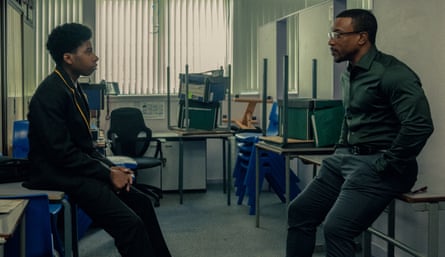
Troubled young men, masculinity, fathers and sons – one way or another, these have become recurring themes in Walters’ career. There’s a continuity, I suggest, between Animol and his recent role in the highly acclaimed Netflix drama Adolescence. He anchored the second episode as the investigating detective visiting the perpetrator’s school, seeking answers. The technical aspect alone was a ballet dance – Walters had to hit multiple marks as the one-take episode roved around a chaotic secondary school – but on top of that, he delivered a soulful, understated performance as a father struggling to connect with his teenage son.
It’s not a link he would make himself, Walters says, “but the theme, I guess, that runs through it is uncovering a marginalised group of people. And in the UK one of the biggest marginalised groups is kids.” And especially young men. “Over the years we’ve been pushed into repression and keeping your mouth shut, not questioning things and not having conversations with your friends and your peers about how you feel about life … Men just don’t do that. I think women find that a lot easier. That’s why we find we have a lot higher suicide rates, especially in young men in the UK.”
Walters’ own struggle through this territory would make for a movie in itself. He was mainly raised by his mother, Pamela, who worked in local government. She enrolled him at the Sylvia Young Theatre School aged seven (as a child actor, he performed in the stage version of Oliver!, had a role in Grange Hill and studied ballet and tap).
His father was mostly absent, Walters says. “He’d turn up one Sunday and then you wouldn’t see him for four months. And then he’d try and take me out, and then not take me somewhere and get drunk instead, and then I’d have to come home by myself.” He died in 2005, by which time they had made their peace. “He wanted to be a dad; he just didn’t have the tools and the resources. And he didn’t have the best start in his own life.” Born in the UK to Jamaican parents, Walters’ father was put in care, and was in and out of borstal, then prison, his whole life.
So when that prison door slammed on Walters in 2002, he felt as if he was repeating the cycle. Except he was a celebrity, so all the other inmates knew who he was. When he arrived that first night, “all hell broke loose”. For hours, people shouted insults, and threatened to kill him in the morning.
“It wasn’t a pleasant experience at all,” he says. “I was tried, I was tested, it was pressure, there was loads of fear. But I had no choice. It’s an experience I had to go through, and actually it was one of the best things that happened to me.”
How so? “It pushed me to the thoughts I needed to have: who do I want to be? What do I want from life? And then, looking around me and seeing my circle of friends and entrusted loved ones, do they reflect that? And the answer was a big resounding no.”
He was in effect starting again. “When I came out of prison, I didn’t know what I was going to do with my life, and a lot of doors were shut.” His music career had ground to a halt; he didn’t have an acting agent; he was not allowed to travel to the US owing to his conviction. Fortunately, the British film-maker Saul Dibb had written a role with him in mind: Bullet Boy, the story of a young ex-con returning to a very familiar set of troubles: guns, local rivalries, council estate life.
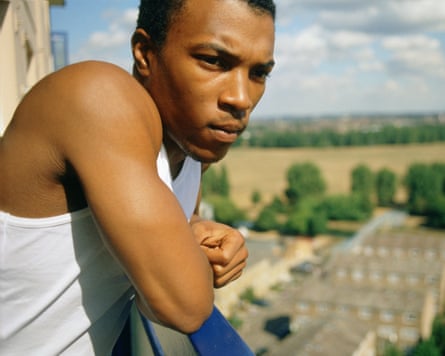
The film, and Walters’ performance, were widely praised and his acting career hit its stride: shows such as MTV’s stoner sitcom Top Buzzer; a part in 50 Cent’s biopic Get Rich or Die Tryin’; the adaptation of Andrea Levy’s immigrant drama Small Island. Then in 2011 came the role that pushed him into the mainstream: as Dushane in Channel 4’s Top Boy, chief drug dealer on his Hackney estate, whose quest for bigger and better things takes him on what becomes an epic journey.
As with So Solid Crew, Top Boy was accused of glamorising crime and violence, but Walters disagrees. The show went deeper in terms of character, morality and complexity, he argues. Many of the storylines and characters were based on real people and events. “It came from the source, so it felt real and rich,” Walters says. “Our whole thing was, we wanted the drug dealers to like it. If the drug dealers call us and go, ‘Bro, that’s the first time I’ve seen myself portrayed properly,’ then the rest should fall in place.”
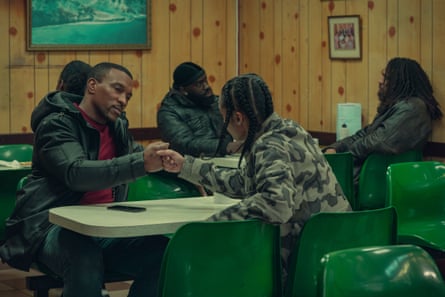
It wasn’t just the drug dealers; Top Boy became a global hit – and people still identify him with the role. “A lot of the time, if I walk down the street, my name’s Dushane. I spend a lot of my time having to tell people that stop me: I’m a 44-year-old man. I’m not even a ‘boy’ any more. I’ve got eight kids, three grandkids, I’m paying a mortgage! Like, I’m really not in that life.”
After Top Boy, his next act was something of a breakthrough, albeit a tainted one from today’s perspective. Bulletproof was a buddy cop series that unprecedentedly featured two Black leads: Walters and Noel Clarke. The two of them spent years trying to get the series made, pitching it as a British Bad Boys, and being told it could only work if one of the characters was white. When it came out on Sky in 2018, the show was a success, running for three seasons, but it was cancelled after allegations against Clarke came to light in April 2021.
At the time, Walters put out a statement saying his thoughts were with the women who had made the allegations. He and Clarke have not spoken since, he says. “But I don’t want to hate on anyone. Everyone has got their own journey and everyone has their own story to tell, and I think when they are ready to tell it, they will tell it.”
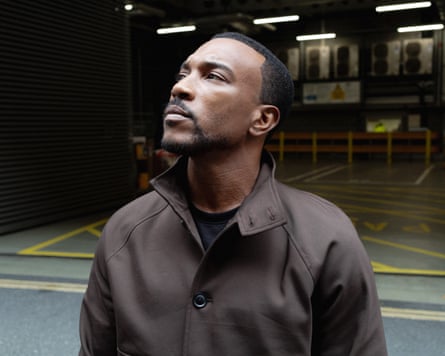
Walters had been going through his own struggles around that time. He had been an alcoholic and a drug user – predominantly cocaine – for about 15 years, and things had come to a head a few months before, in November 2020.
“Maybe in the first year, alcohol and substances were great,” he says. “They helped me perform, they helped me be more lively at parties and network with people that I was shit-scared to talk to before.”
Does he mean performing on set? “Performing on set I was freer, maybe wilder – who knows how I looked at that point? I felt I was doing a good job and giving people what they wanted, but the truth is, very, very quickly it stopped working, and started to hold me back.”
The breaking point came during lockdown, after an argument with his wife about his drinking and drug use. He had been married to Danielle, the mother of his four youngest children, since 2013 (his eldest child is now 27, his youngest 10).
He immediately sought help. “The next morning, my wife dropped me at rehab and I was there for four weeks, came out and I’ve never drunk or drugged since and it’s coming up to six years in November. So, very thankful for that. Sad it took me so long to get there, and there’s a lot of amends to make with family and kids and friends, but one of the best things I’ve ever done.” He also moved out of London in 2021, and now lives on the Kent coast. “In the last six years, it’s no coincidence that my life’s changed, like, amazingly. The truth is, nothing started working for me until I was clean and sober.”
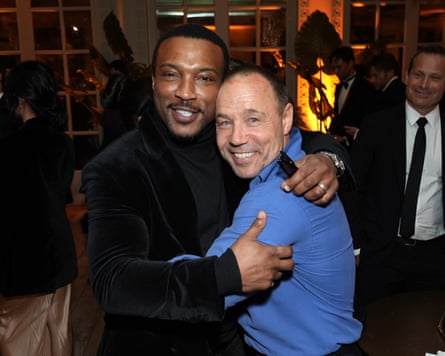
That includes his sensitive turn in Adolescence, and his new career as a director, which began with a short film in 2021, Boys, then episodes on multicultural school drama Ackley Bridge and underrated Victorian crime series A Thousand Blows. The latter came thanks to his old friend Stephen Graham, who starred and co-produced the series – they’ve been mates since the 2004 sitcom Top Buzzer. After that, Graham cast him in Adolescence. Graham now plays the welfare officer in Animol. He gives the young inmates a stirring talk about shame that ends the film on a cathartic, hopeful note.
“This is a tender, tactile sort of film where you’re seeing men hold each other – even the ones that are not gay, they’re embracing each other,” Walters says. “There’s love, and I’m like that with my friends. I kiss my friends on the cheek, my stepdad will give me a kiss, I still kiss Mum, I’ll kiss my kids. I wanted to show that on screen, like how boys are with each other, even in the worst environments, even when they’re going through the worst things.”
The theme resonates with Walters, of course, but this is also him challenging those codes of masculinity and male relationships that shaped his own life, and his father’s, and many others besides. “I realised that vulnerability is part of a man’s DNA as well,” he says. He’s breaking the cycle.
Animol is out on 30 October in the UK
What's Your Reaction?
 Like
0
 Dislike
0
 Love
0
 Funny
0
 Wow
0
 Sad
0
 Angry
0







Comments (0)