

‘Perhaps we are safer not knowing’: a year after his death, Rob Reiner’s JFK assassination book is revealed
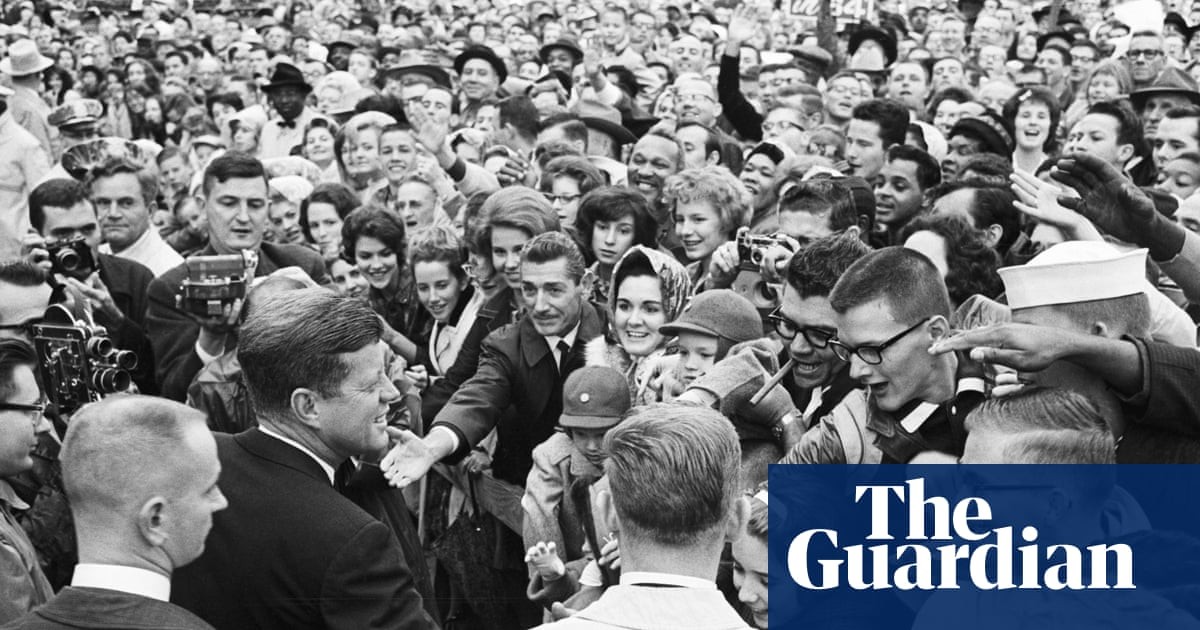
On 8 December last year, the great director Rob Reiner signed off the prologue for Who Killed JFK?, his book written with David Hoffman and Dick Russell and based on his podcast with Soledad O’Brien. Describing a lifelong fascination with the assassination of John F Kennedy in Dallas on 22 November 1963, and what he saw as the vast conspiracy to cover up who really killed the 35th president, Reiner wrote: “Maybe, people don’t truly want an answer. Perhaps we are safer not knowing … Well, I’m done being safe.”
Six days later, Reiner and his wife, Michelle Reiner, were stabbed to death in their home. Charged with murder, their son Nick Reiner has pleaded not guilty.
Reiner’s other son, Jake Reiner, “actually read the prologue for the audiobook”, Hoffman said. “Like his father, he’s got this incredible voice but he’s also a performer … He just did such a great job, and it was hard to not be emotional. The last sentence and then the date of it … really, it strikes you as to how poignant and meaningful it is. And obviously, nobody knows better than Jake how important this was to Rob.”
Reiner was 15 when Kennedy was killed. Russell was the same age and developed the same fascination. The author of 16 books, including studies on Kennedy, he was a researcher and commentator for the Who Killed JFK? podcast. In book form, Russell, Reiner and Hoffman, an author, historian and screenwriter, tell the story of the killing and the shadow it cast.
Hoffman said: “There is just so much intrigue, so many personalities, so many natural cliffhangers that make you want to turn the page … So the question was: ‘How do we take something that is so complicated and distill it in a way that feels definitive, but also feels as though someone who might not know a ton about the JFK assassination is enthused to keep going. This is where having Rob Reiner on the team certainly comes invaluable.”
The director of Misery, A Few Good Men and more “was a master storyteller”, Hoffman said, “and one of the things I have learned is that the best storytellers, one of their great talents is knowing what to leave on the editing-room floor. So I think between the three of us – Dick knowing everything there is to know, a full encyclopedia about the JFK assassination, Rob one of the world’s all-time great storytellers, and me somewhere kind of in the middle, trying to put those pieces together – we complemented each other.”
Russell said that even though he had “been deep in the weeds of this for 50 years off and on”, he “learned a lot still and it was amazing to work with Rob and David … and by the end of it, we wanted to be able to convince readers there was a lot more to this than investigations had shown.”
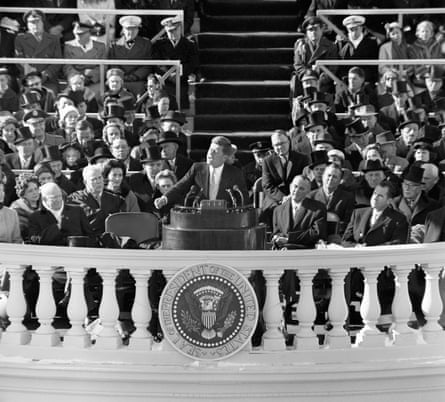
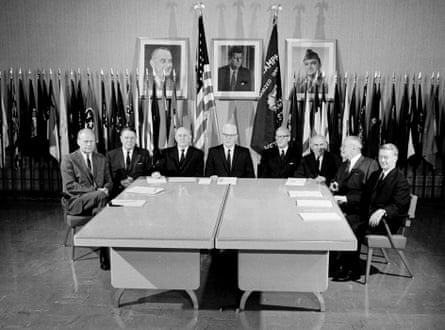
About those investigations. First there was the Warren Commission, established by JFK’s vice-president, Lyndon B Johnson, and chaired by chief justice Earl Warren, reporting in September 1964. Then there was the US House select committee on assassinations, which reported in 1979 after three years’ work. There have been file releases since, notably under Donald Trump. Debate over who killed Kennedy will never end.
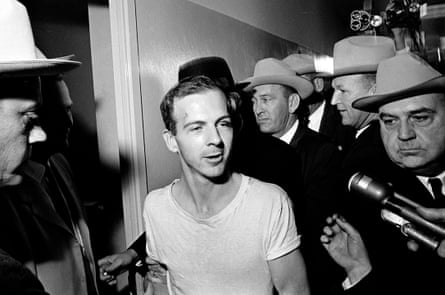
The official version is that Kennedy was shot by Lee Harvey Oswald, a young drifter with leftwing links who was himself killed two days later by Jack Ruby, a Dallas nightclub owner. Reiner, Hoffman and Russell do not agree. Who Killed JFK? considers what the authors say are many holes in the case against Oswald, and the suspects for an alternative explanation: the CIA and FBI, the mob, US and Cuban rightwingers. Combinations of all three. At the book’s end, the authors identify men they say carried out the assassination itself.
Russell said: “It was a matter of following threads and piecing together what we could from what exists, and we discovered that an awful lot was on the record but was ignored by the Warren Commission and to some degree by the House committee as well. And these were people who are in the literature, so to speak. We talked to some of them.”
The book admits that JFK research “is filled with Rorschach tests”, evidence or events in which any reader might see something different. A whole section is called The Wilderness of Mirrors. Hoffman said: “I think our challenge was, when you look at the JFK assassination, it is not an investigation or a mystery where there is a lack of information. The issue is you are opening up a jigsaw puzzle that’s 63 years old. You realize there’s supposed to be 1,000 pieces here and a bunch of them are missing. You start to go through it. You realize a bunch of these pieces don’t belong in here … So you start to think, ‘Which pieces do fit together?’ [JFK author] Jefferson Morley calls it fact patterns. We thought of clusters of information. When we found clusters that pieced together cleanly, that gave us confidence that was something we could build upon.”
Russell said: “There were some very interesting and dramatic things that we had to leave out because we couldn’t fit them into that framework comfortably, meaning, ‘Does this move the narrative forward, but also, is it true …’ That was Rob’s eye, a lot of the time, saying, ‘God, I really think this is probably true, but we don’t have enough to prove it, and so we’ve got to leave it on the cutting room floor.’”
Hoffman said: “It was very intentional that none of this is built upon a piece of evidence or a single witness or anything like that. When you step back, there’s just a ton of information … whether it’s Oswald being connected to intelligence or any of the other key tenets of the case that we build.”
Rather than examine each reason Hoffman, Russell and Reiner believe Oswald did not kill JFK, that he was a patsy caught in a plot, I posit just one point. Dominic Sandbrook, co-host of the hugely popular The Rest Is History podcast, thinks Oswald acted alone. One point of evidence cited by Sandbrook is that Oswald was an excellent marksman, trained in the US marines, certainly capable of making the fatal shots from the sixth floor of the Texas School Book Depository. Reiner, Russell and Hoffman, however, write that Oswald was a terrible shot, citing a Marine Corps nickname based on shooting test scores – “Shitbird” – and the testimony of another enlistee. So what would Hoffman and Russell say to Sandbrook?
“I had a copy of the book on me the other day,” Hoffman said, “and I went to a coffee shop in Los Angeles. A guy came up to me and said he was a marine for 20 years, and he goes, ‘I don’t know what that book says, but Oswald was a terrible shot. There’s no way he could have done that. I’m telling you, as a marine.’ So it’s funny you bring this up, three days later.
“The marksman thing is completely misleading. A marksman is not a high rank in terms of people that are capable with a rifle. It’s not a terrible rank, but it sounds to a layperson, ‘Wow, that person must be really good with a rifle.’ But marksman is not one of the highest rankings you can get on those tests … That’s one. Two is I think that test was in 1958 or ’59. There is virtually no record that is reliable of [Oswald] firing a gun, practicing with a rifle in the ensuing four years. So if you take someone that in 1959 was a mediocre shot, give him a gun that everyone acknowledges is an absolute piece of junk, he hasn’t practiced in four years, and put him in that building, that is not a shot that you would assume someone like him would make.”
On the gun, Russell expanded the point: “We emphasized the fact that in the beginning, the rifle that was found there on the sixth floor was identified as a German Mauser, not a Mannlicher-Carcano, which was really not the kind of rifle you’d use to shoot someone from on high … it just didn’t have the ability to do it. A Mauser did. So that was one thing, and then of course there’s the palm print that was found on the rifle … [it] looks very likely that it was placed there later to make it look like Oswald was holding that particular rifle, which changed by the way the next day. Suddenly it wasn’t a Mauser any more; it was a Mannlicher.
“And then, of course, we looked deeply into where was Oswald at the time; what do various people say? Was he really up there? Well, some people saw two shooters, one holding a rifle. And we looked at where Oswald was even before he went to his rooming house and ended up in the Texas theatre,” where he was arrested on 22 November 1963, initially for the murder of the Dallas police officer JD Tippit. “You know, people saw him in the lunchroom. He said he was in the lunchroom, having a Coke.”
Like Reiner, Hoffman and Russell do not think the evidence against Oswald adds up.
-
Who Killed JFK? is out now.
What's Your Reaction?
 Like
0
 Dislike
0
 Love
0
 Funny
0
 Wow
0
 Sad
0
 Angry
0




Comments (0)