

Photographer Captures Acrobatic Dolphins Leaping From the Water
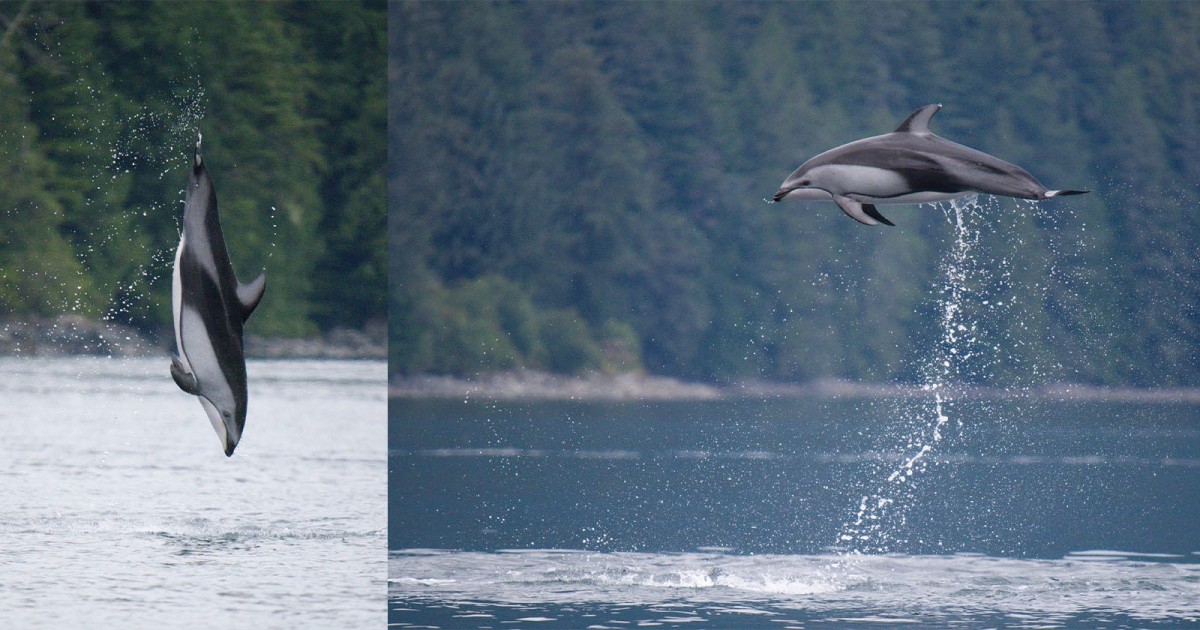
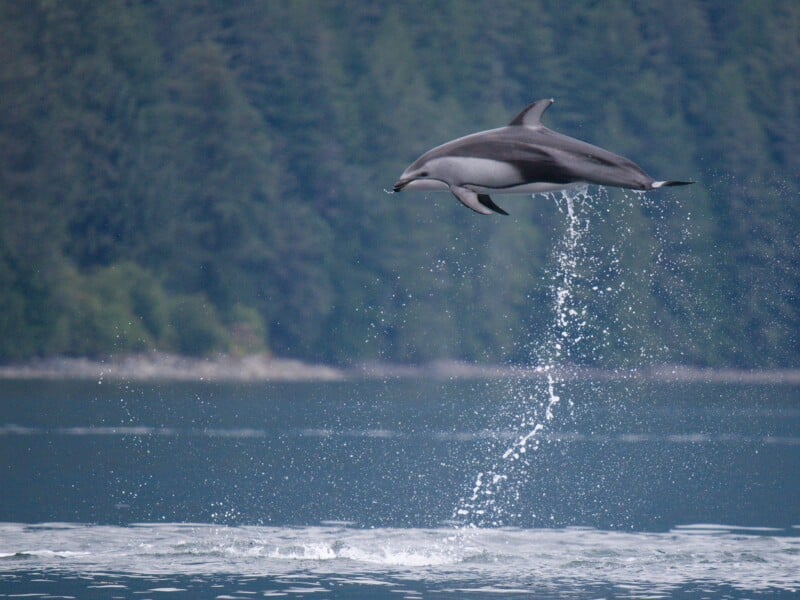 Photo by Daniel Cox
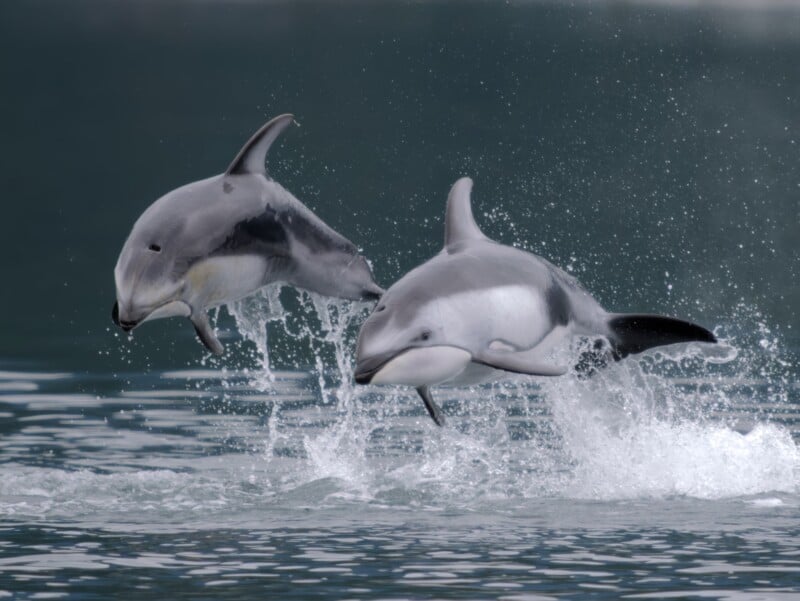
A photographer who captured a pod of gymnastic dolphins acrobatically leaping from the water has revealed the tricks and techniques he uses to set up his stunning shots.
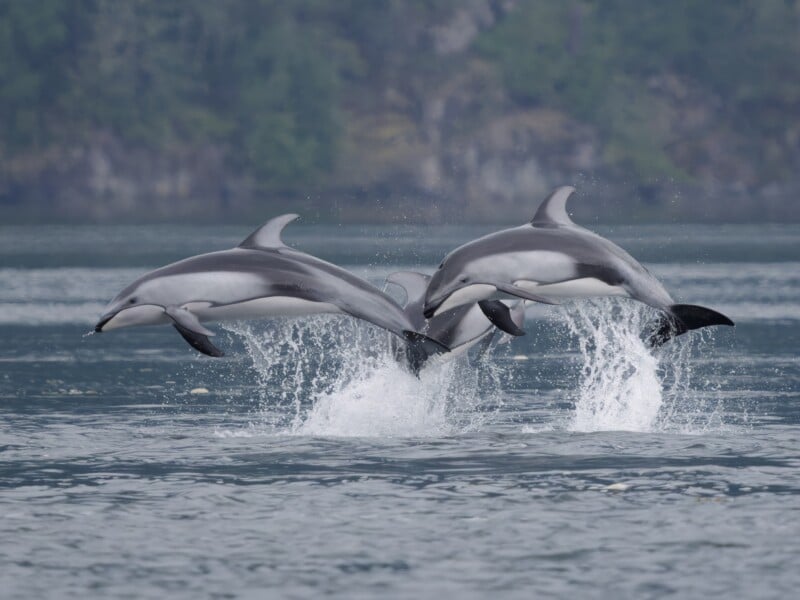
When trying to capture something unpredictable like wildlife or sports, readiness and experience are everything. Daniel Cox, who has 40 years of experience in professional photography, tells PetaPixel how he captured the athletic Pacific white-sided dolphins off British Columbia, Canada, last month.
Lightning Never Strikes Twice
“One of the lessons I’ve learned in my nearly five decades as a wildlife photographer is that you almost never get second chances. When you see something incredibly unique and are unprepared to capture it, it’s painful to know you’ll probably never see it again,” says Cox.
“Thankfully, on the day I saw these Pacific white-sided dolphins spring into acrobatics, I was well prepared to not let these amazing antics go undocumented. As usual, when something like this happens, it comes out of nowhere.”
A photographer should be able to operate their camera without thinking, and that only comes with regular use. Cox argues that photo tours, like the one he was leading in Canada, can really improve a photographer’s knowledge.
Camera Operation
Once the camera is as familiar as the back of your hand, there are a couple of tips that Cox has that may sound obvious, but he says are essential.
“This sounds trivial, but you need to remove the lens cap,” Cox says. “I don’t have one lens in my bag that has a cap on it. I’ve seen serious photographers put the camera to their eye and be confused as to why they can’t see anything. Sounds simple, but it happens, and when it does, by the time you figure out the lens cap is on, the picture is long gone. Take the cap off and leave it off. For protecting the front element, I use a protective skylight filter; the Hoya HD3 is my favorite.”
Cox bristles at the notion that photographers have to shoot in manual. “I set my camera to Shutter Priority with the shutter speed set to 1/2000 of a second [for the dolphins]. I chose 1/2000 knowing the boat would have motion, and any animals encountered would most likely be moving. A good rule of thumb is to shoot a shutter speed at least one stop above the lens being used. So in my case, I was shooting the OM System 150-400mm at 400, which had to be multiplied by 2 since it’s a MFT sensor camera. Most of the jumping dolphins were shot at 400mm, which was actually 800mm.”
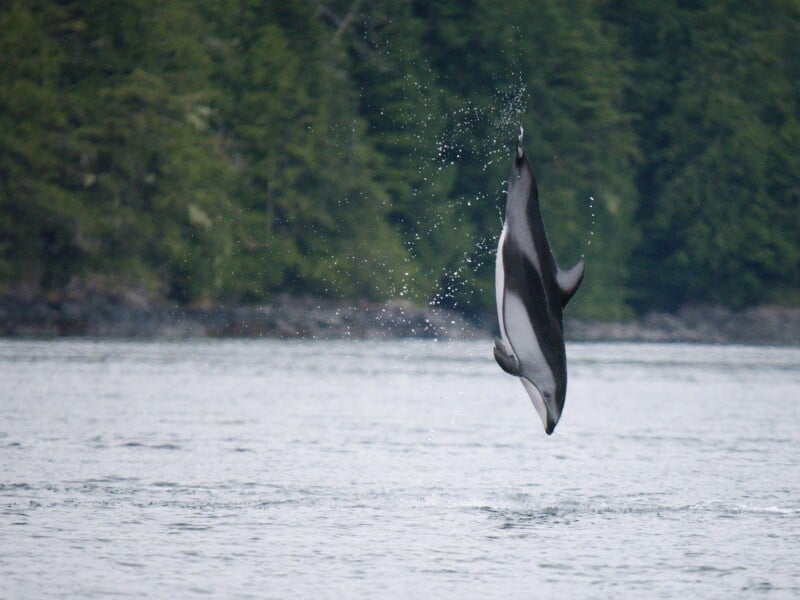
Cox also uses AF-C on his OM System OM-1 Mark II as his preferred autofocus setting.
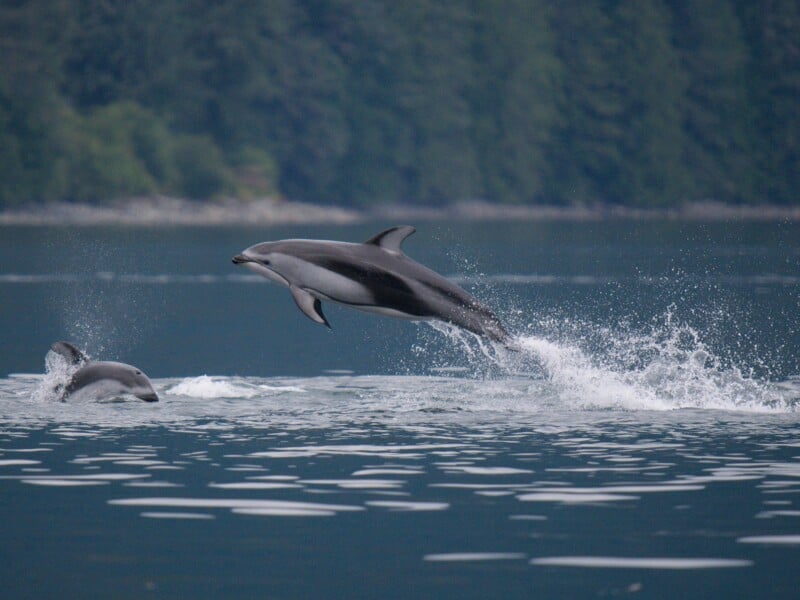
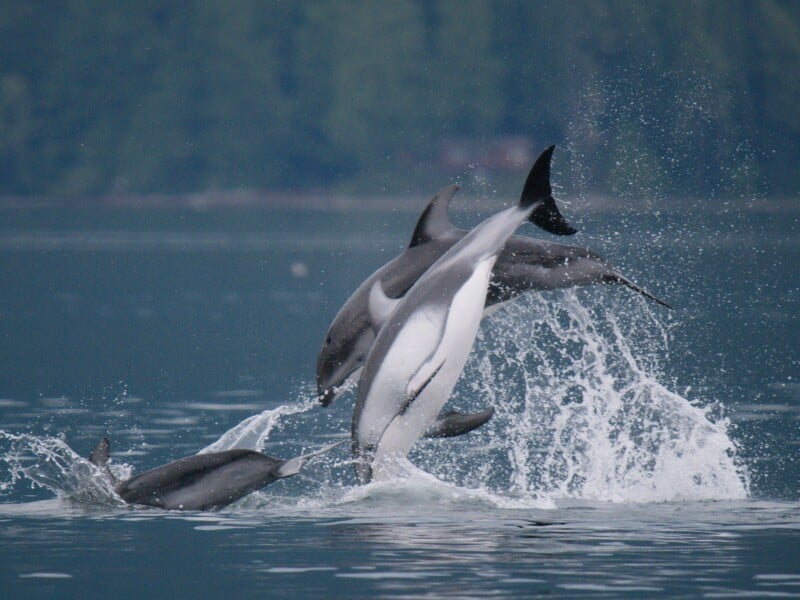
“When dolphins break the surface, it can be for literally 1-2 seconds. Getting on them quickly is imperative. As in all action-related photography, I used AF-C,” he says.
“This allows you to follow the action, and if the subject comes closer, the autofocus will adjust. I also zoom while I’m firing the shutter. I try to fit the subject in the frame so it’s not too far away and not too close. This all happens very quickly so you have to be nimble.”
Cox also recommends using auto ISO so that photographers can select the fastest shutter speed necessary, and letting the camera choose the aperture and ISO.
Using Both Eyes and the Human Tripod
“When the dolphins began to breach, I had to try and predict where they would next emerge. To do that, I scanned the surface of the water with my right eye to the EVF all the while keeping my left eye open,” Cox says on how he predicts where the dolphins will breach.
“Shooting with both eyes is a challenge, but it’s very helpful. Your left eye takes in the wide-angle scene, allowing you to quickly know where to point the camera. With practice, you can focus whatever eye you’re concentrating on.”
Cox says that while image stabilization has revolutionized photography, good form is still essential.
“When I’m shooting on a boat, I transform myself into what I call the Human Tripod,” he says. “You simply grab your camera in the right hand, cradle the lens in the palm of your left hand, bring both elbows to your side as you lift the camera to your forehead. Pull the camera tight to your face as you look through the EVF and squeeze your elbows into your sides. You’re now set to be as stable as possible.”
Cox emphasizes that preparedness really is everything as these special moments come around so rarely. More of his work can be found on his website, Instagram, and Facebook.
Image creditsPhotographs by Daniel Cox
Affiliate Disclosure PetaPixel articles may include affiliate links; we may earn a commission if you buy through one.
What's Your Reaction?
 Like
0
Like
0
 Dislike
0
Dislike
0
 Love
0
Love
0
 Funny
0
Funny
0
 Wow
0
Wow
0
 Sad
0
Sad
0
 Angry
0
Angry
0









Comments (0)