

Razer Blade 16 (2026) review: Competitive gaming performance and class-leading endurance
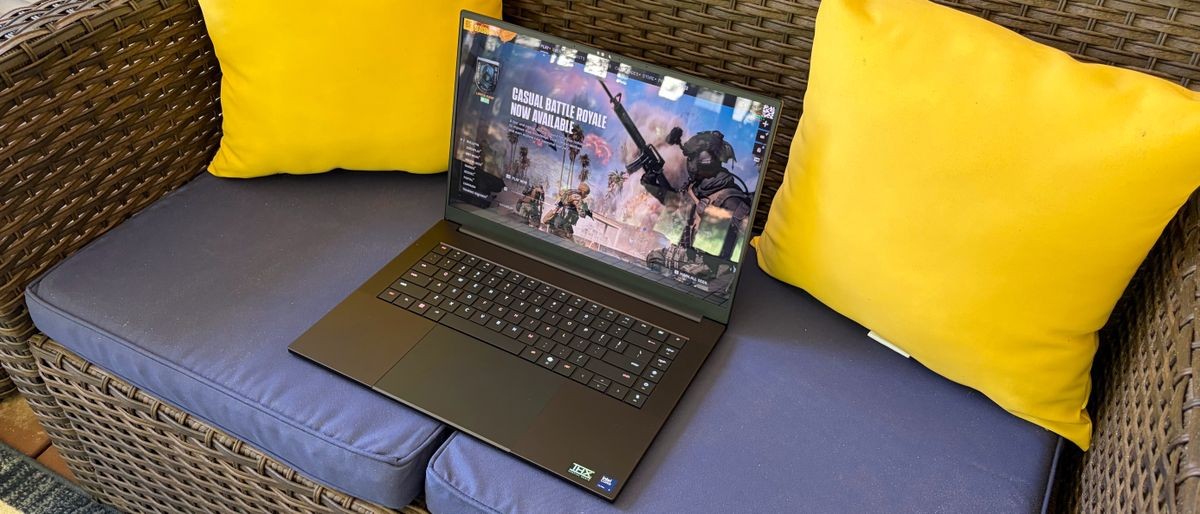
The Razer Blade 16 can hang with its peers in gaming performance, blows them away in battery life, but comes up short in multi-threaded productivity tasks.
Pros
- +
Phenomenal battery life
- +
Gorgeous 16-inch, 1200p OLED display
- +
Elegant design with excellent build quality
- +
Competitive gaming performance
Cons
- -
Nearly $5,000 price as-tested
- -
Multi-threaded performance lags competitors
- -
No haptic trackpad
Why you can trust Tom's Hardware Our expert reviewers spend hours testing and comparing products and services so you can choose the best for you. Find out more about how we test.
The Razer Blade 16 has long been leading contender among the best gaming laptops, thanks in part to its careful component selection and strong style. In this case, our review unit comes equipped with an Intel Core Ultra 9 386H processor and a flagship RTX 5090 GPU.
While the chassis remains the same as the Razer Blade 16 that we tested a little over a year ago, the 25W processor in our new review unit enabled some impressive runtimes that eclipse the competition. You’ll have to pay a considerable sum for the luxury, but the Blade 16 makes as strong a case as a compelling premium gaming laptop.
Design of the Razer Blade 16
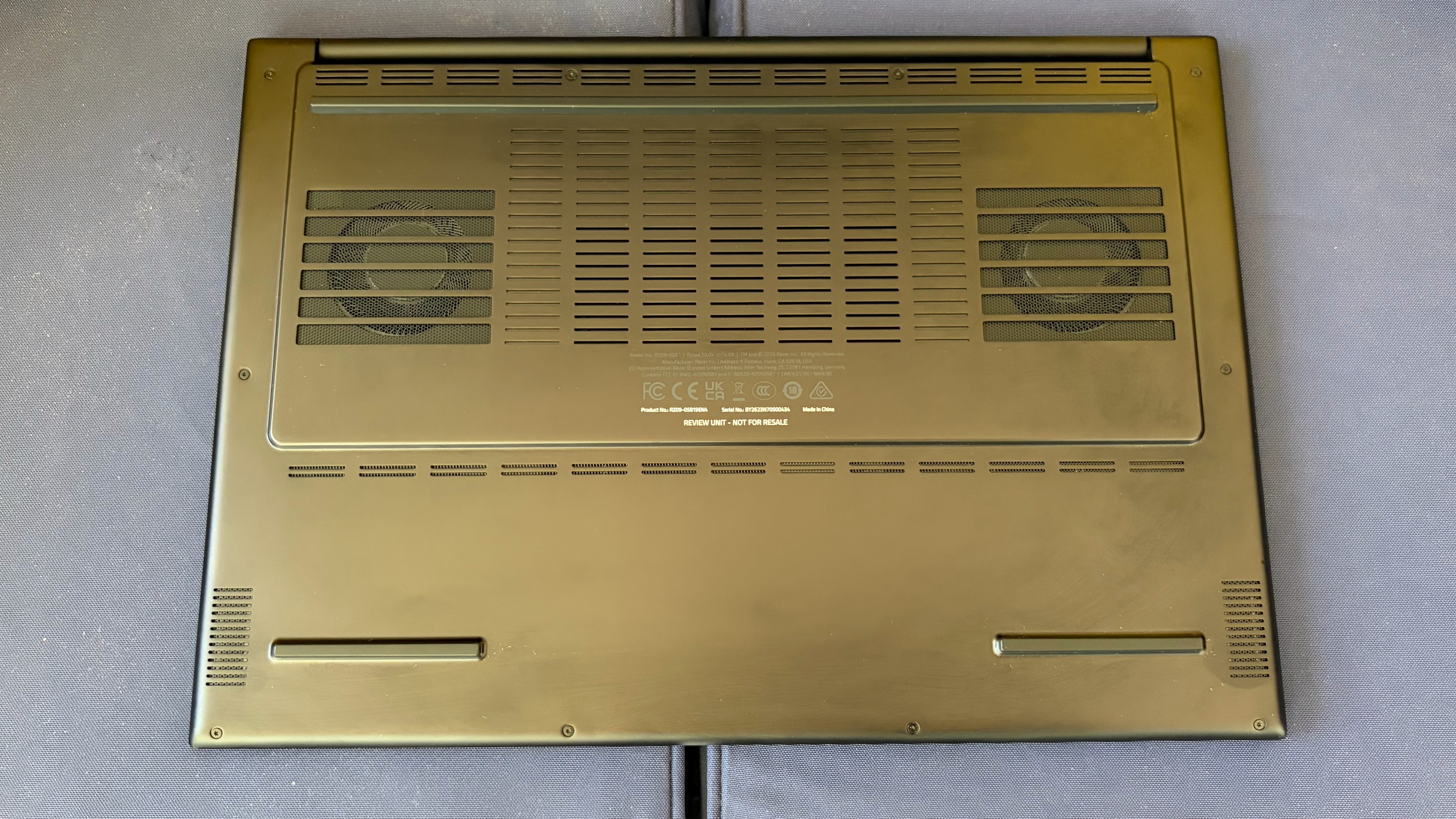
We were impressed with the design of last year's Blade 16, and luckily, Razer hasn’t altered the formula for this year’s model. You get the same matte-black chassis that measures just 0.69 inches at its thickest point (0.59 inches towards the front). Build quality remains excellent in true Razer fashion.
Latest Videos From

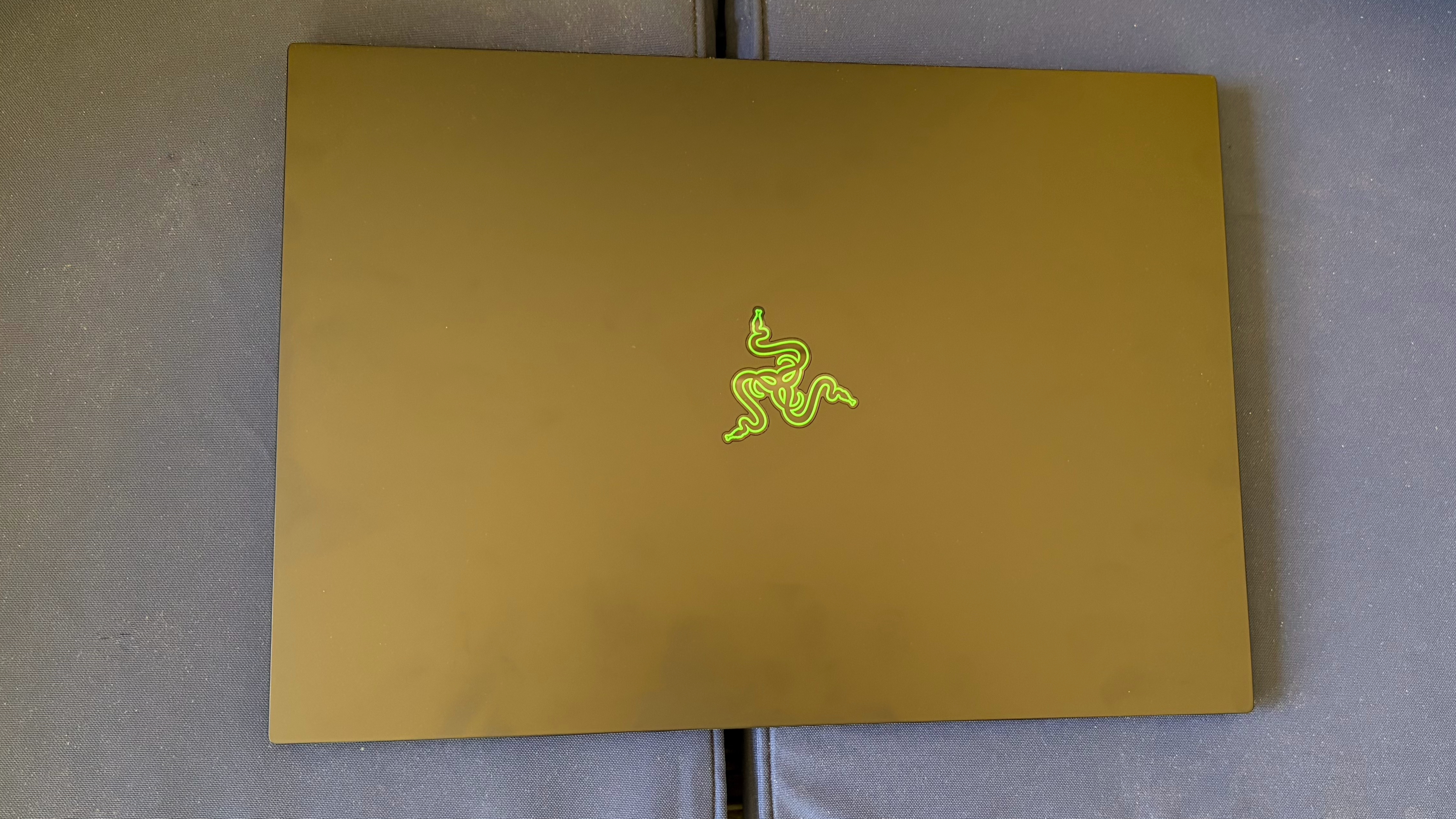
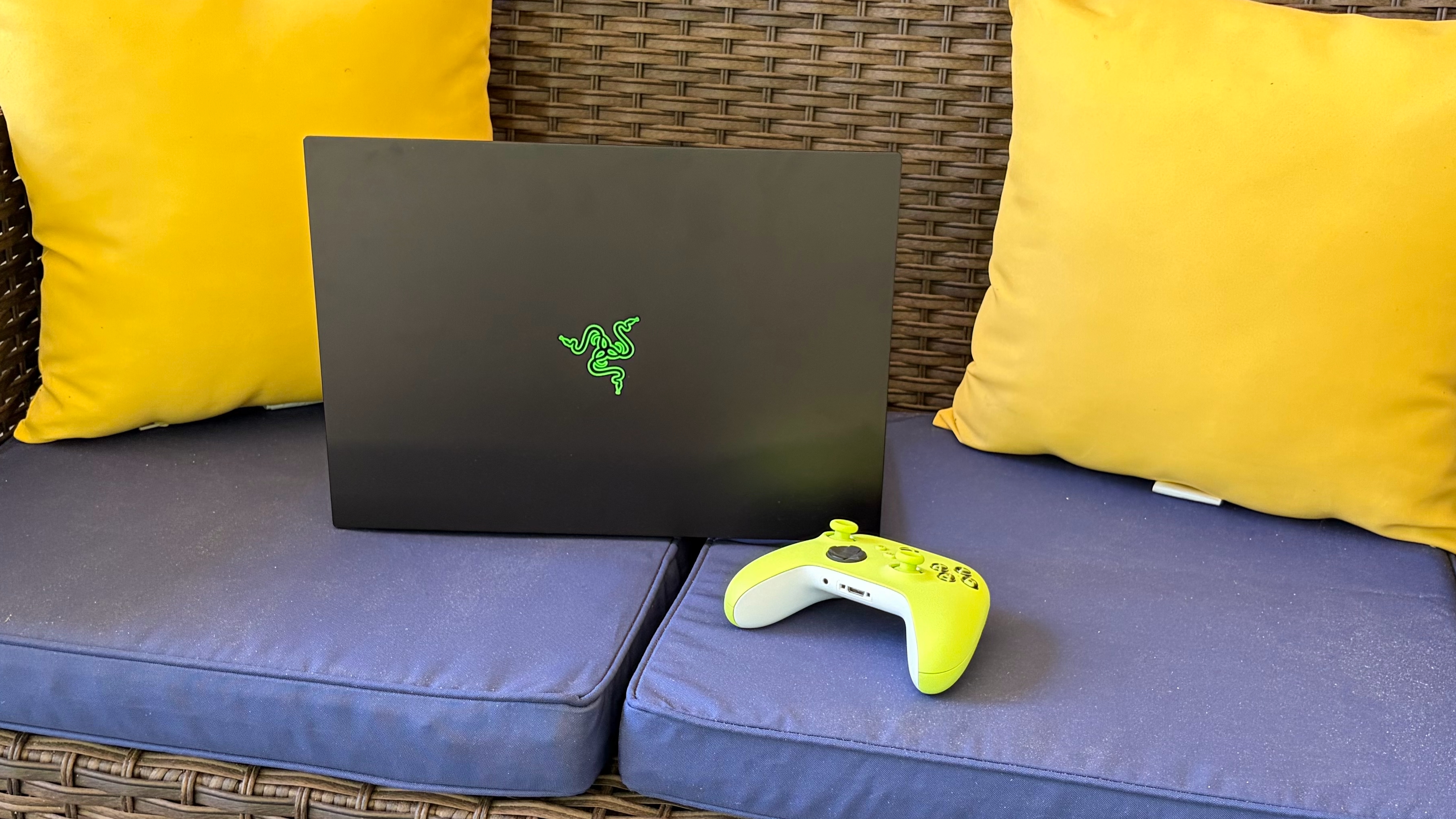
The overall design is minimalist, with a minimal amount of RGBs and no obvious ventilation slats along the sides for heat management. Instead, the clean design would look at home sitting on your desk while you're gaming with an Xbox controller, or sitting on your desk in a cubicle at work. The only bit of flash that you’ll find is the RGB Razer logo on the lid.
You’ll find thin bezels around the glossy 16-inch OLED display, below which you’ll find the full-size keyboard and a large trackpad. There’s also a small status LED at the front right of the chassis (just below the Intel Core Ultra sticker on the deck). It pulses white when the laptop is in standby mode.
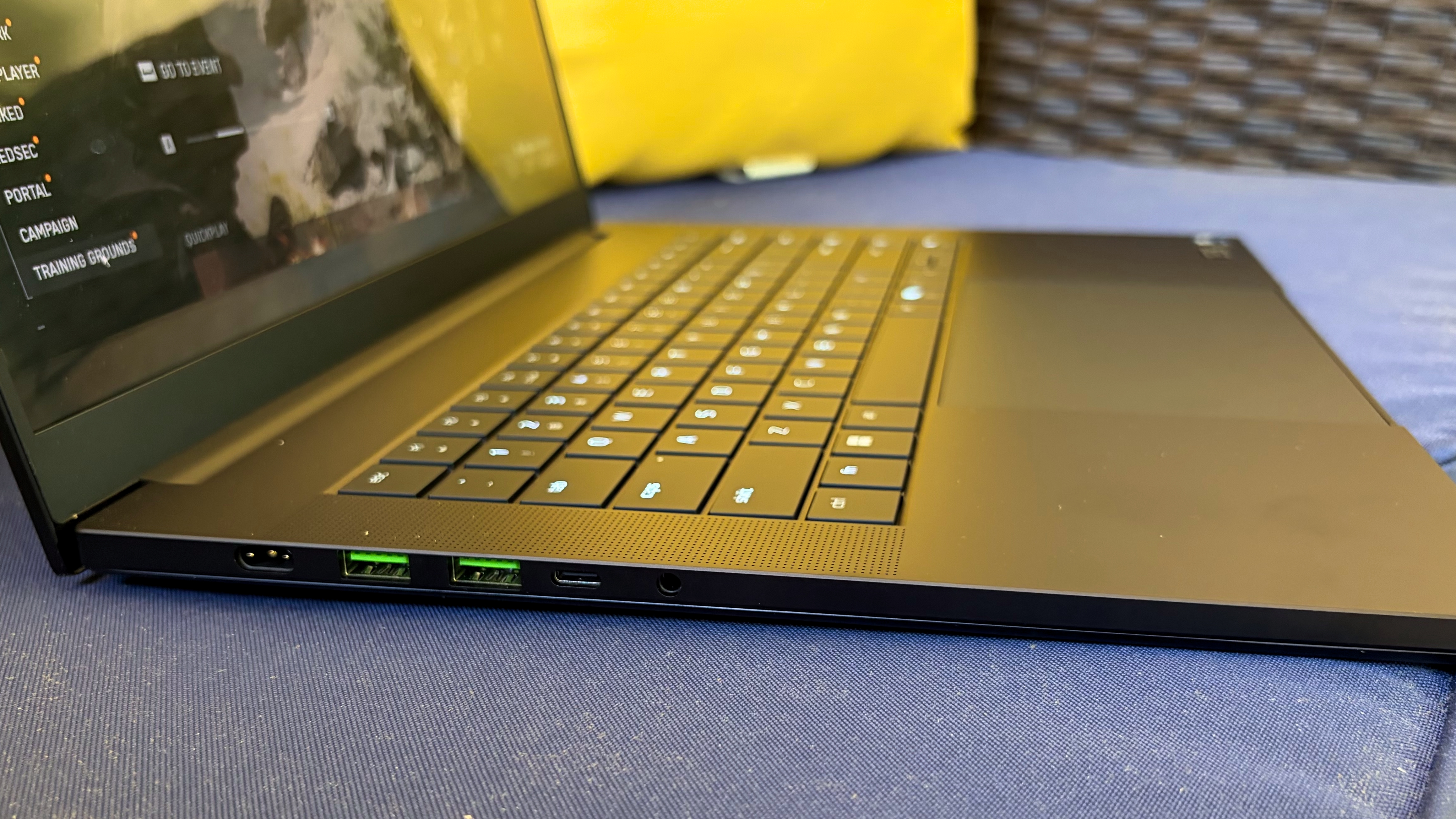
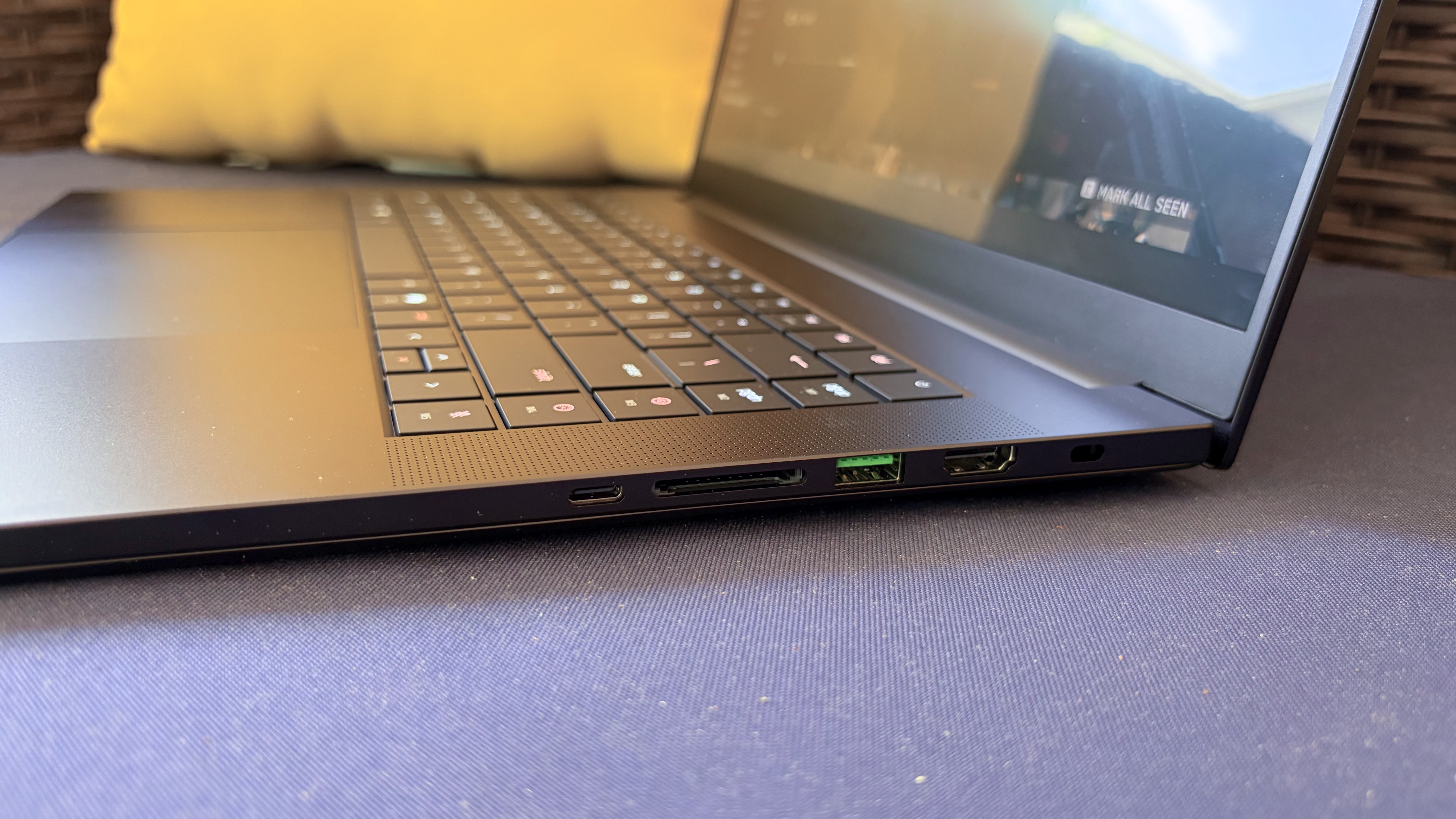
There’s a healthy assortment of ports on the laptop, including three legacy USB 3.3 Gen 2 Type-A ports. There’s also one Thunderbolt 4 port, one Thunderbolt 5, an SD card reader (UHS-II), a full-size HDMI 2.1 port, and a 3.5 mm combo audio jack. There’s also a proprietary power port.
The Blade 16 measures 13.98 x 9.86 x 0.69 inches and weighs 4.71 pounds. For comparison, the MSI Raider 16 HX also packs an RTX 5090, but measures 14.29 x 10.62 x 1.14 inches and weighs over a pound more (5.73 pounds). The Alienware 16 Area-51 is heavier still at 7.49 pounds, with dimensions of 14.37 x 11.41 x 1.12 inches.
Stay On the Cutting Edge: Get the Tom's Hardware Newsletter
Get Tom's Hardware's best news and in-depth reviews, straight to your inbox.
Razer Blade 16 Specifications
Swipe to scroll horizontally
CPU | Intel Core Ultra 9 386H |
Graphics | Nvidia GeForce RTX 5090 (24GB GDDR7, 1,597 MHz Boost Clock, 175 W Max TGP) |
Memory | 32GB LPDDR5X-9600 (2x 16GB) |
Storage | 2TB PCIe 4.0 NVMe M.2 SSD |
Display | 16-inch, 2560x1600, 240 Hz, 16:10 |
Networking | Wi-Fi 7, Bluetooth 6.0 |
Ports | 1x Thunderbolt 5, 1x Thunderbolt 4, 3x USB 3.2 Type-A Gen 2, 1x HDMI 2.1, 3.5 mm headphone jack, SD reader (UHS-II) |
Camera | 1080p IR webcam |
Battery | 90 Whr |
Power Adapter | 280 W |
Operating System | Windows 11 Home |
Dimensions (WxDxH) | 13.98 x 9.86 x 0.69 inches |
Weight | 4.71 pounds |
Price (as configured) | $4,899.99 |
Gaming and Graphics on the Razer Blade 16
Our Blade 16 review unit is equipped with a Core Ultra 9 386H processor, which has 16 total cores (4 performance, 8 efficient) and a maximum performance turbo frequency of 4.9 GHz for the performance cores. There’s also 32GB of LPDDR5x memory and a GeForce RTX 5090 GPU (1,597 MHz boost clock, 175W max TGP).
This combo generally performed well across our gaming benchmark suite, with a few exceptions. While playing Battlefield 6 at native resolution in Overkill detail mode, with DLSS Quality and Frame Generation enabled, I was comfortably getting between 110 and 120 FPS, even with a lot of action happening on the screen.
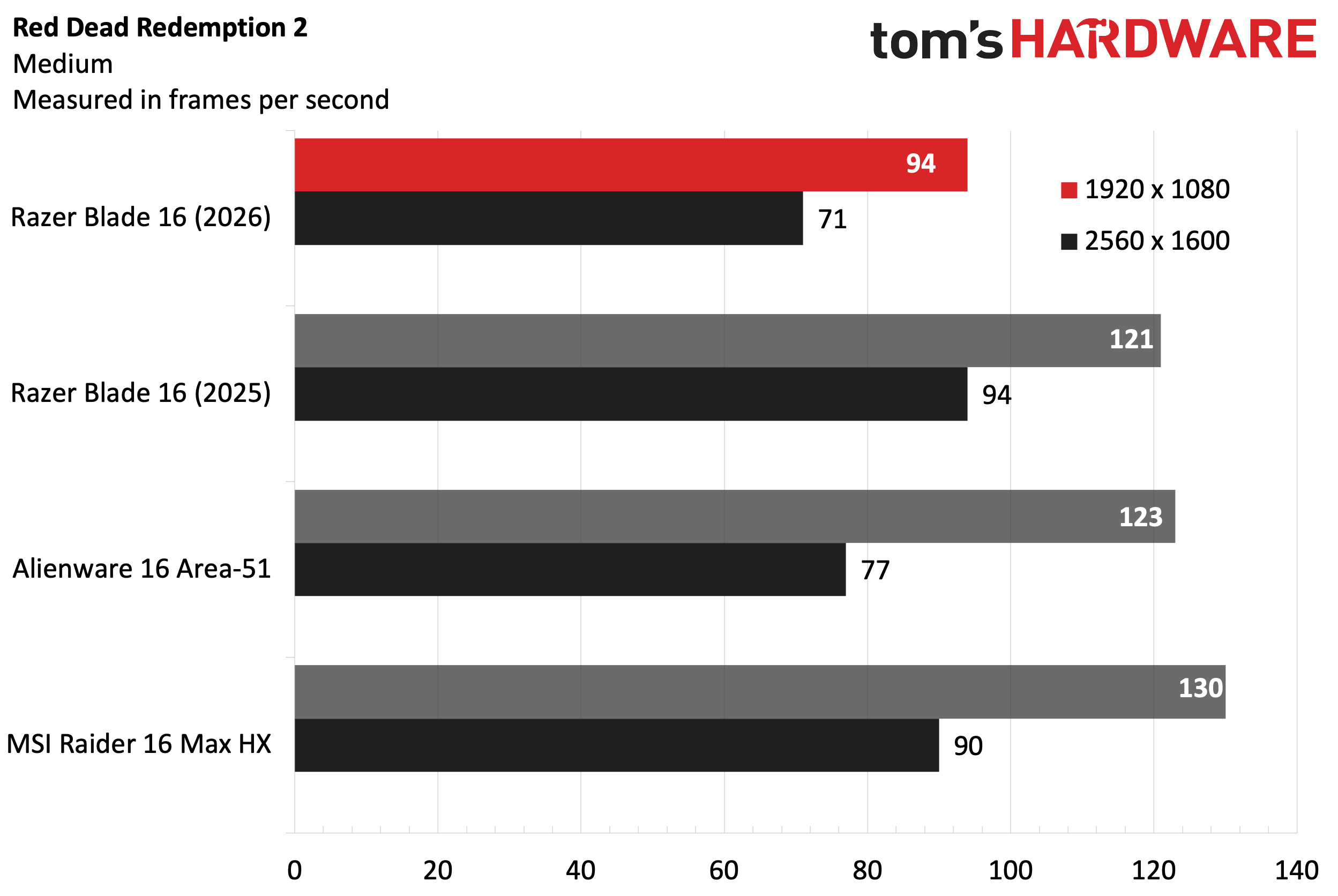
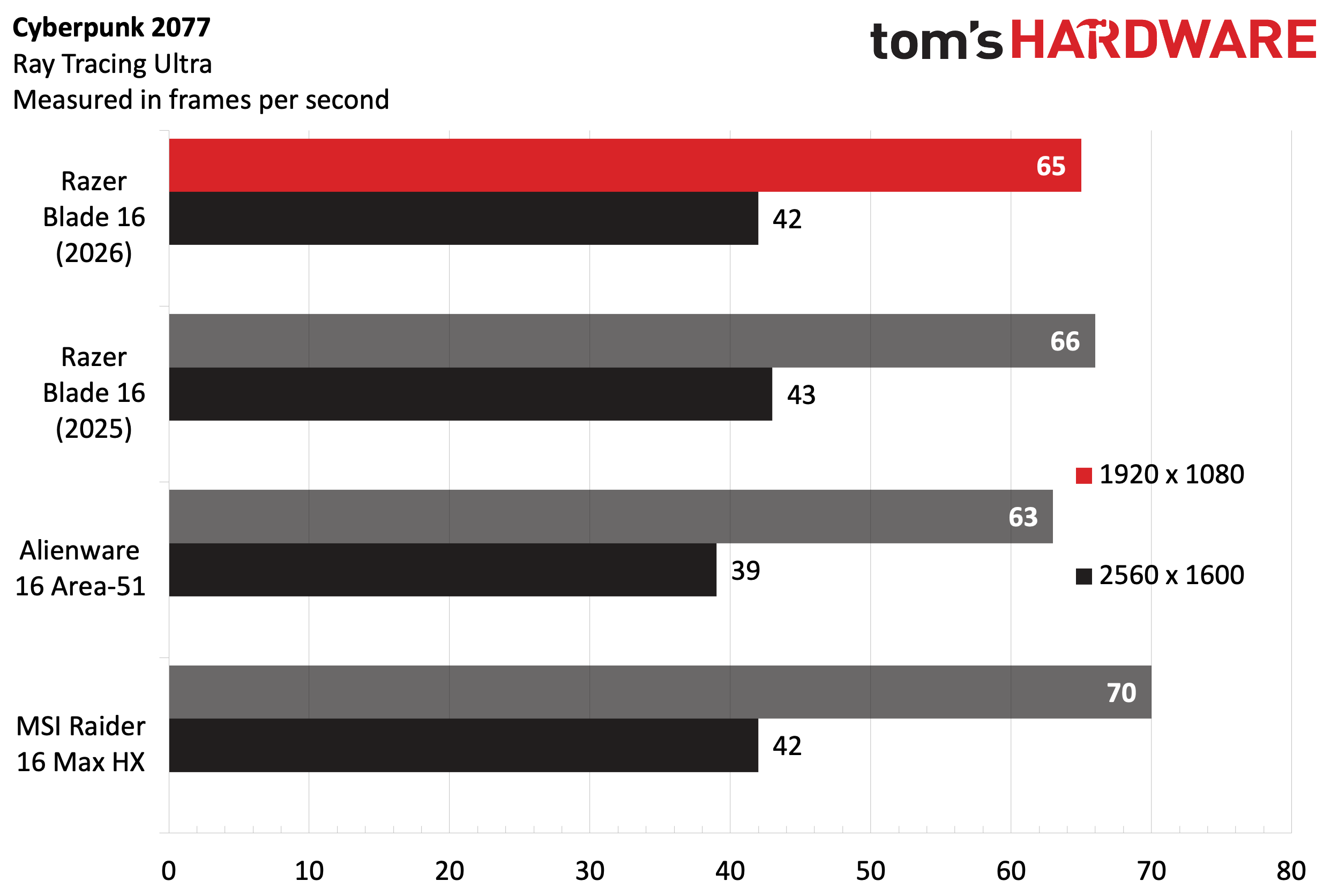
For this review, the competitive set consists of last year's Blade 16 (Ryzen AI 9 HX 370 at 28W, RTX 5090 at 160W TGP), MSI Raider 16 Max HX (Core Ultra 9 290HX Plus at 55W, RTX 5090 at 175W TGP), and the Alienware 16 Area-51 (Core Ultra 9 290HX Plus at 55W, RTX 5080 at 175W TGP).
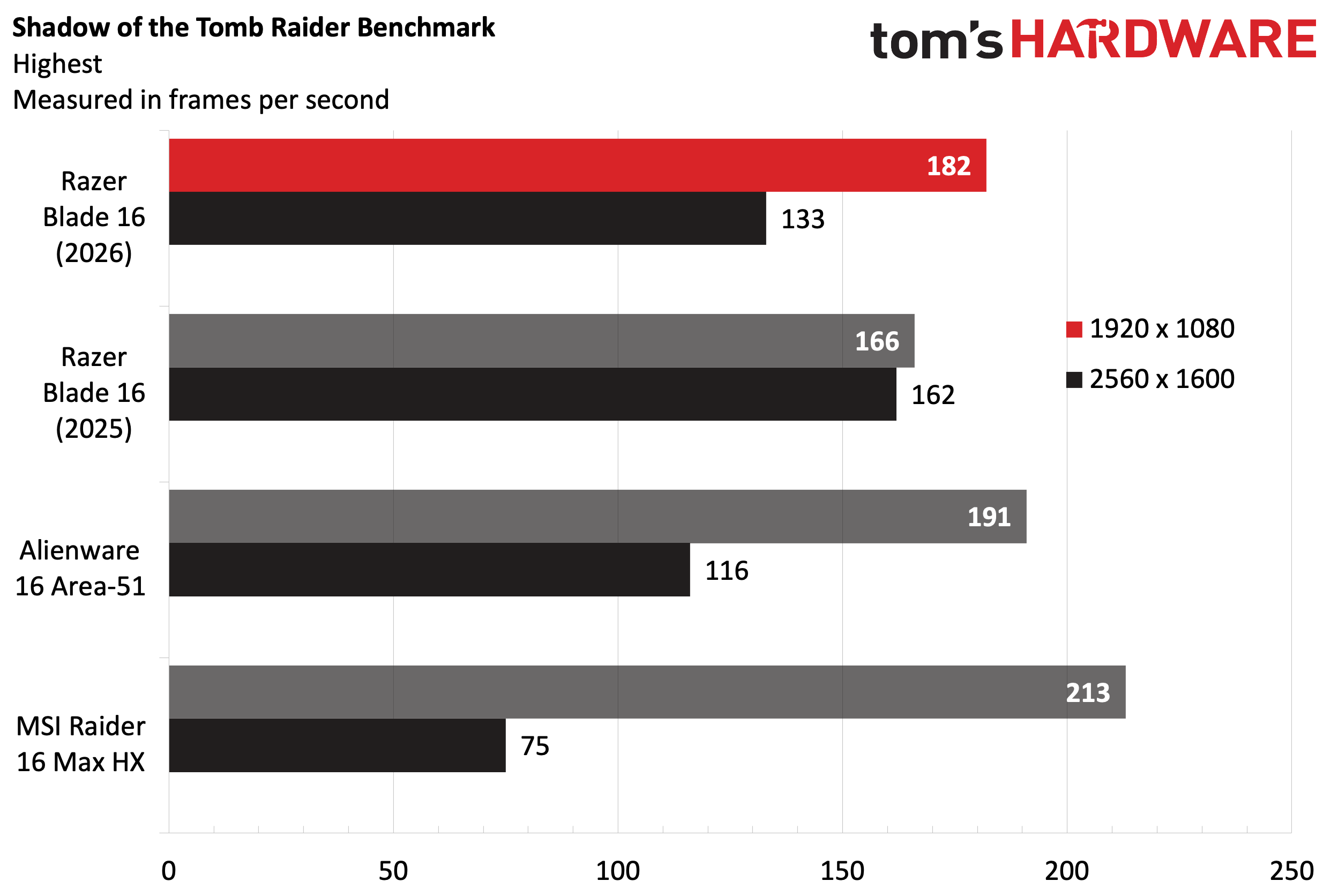
As usual, we start our gaming benchmarks with the Shadow of the Tomb Raider (Highest setting) benchmark, where the Blade 16 delivered 182 FPS at 1080p. Performance at 1600p scaled down to 133 FPS. The 2025 edition of the Blade 16 was 16 FPS behind at 1080, but at the resolution that most would play at, 1600p, the older model was nearly 30 FPS faster (162 FPS versus 133 FPS).
Cyberpunk 2077 (Ray Tracing Ultra settings), the laptops were pretty evenly matched, with most running between 65 and 70 FPS at 1080p and at around 40 FPS at 1600p. For the Razer Blade 16 specifically, it achieved 65 FPS at 1080p and 42 FPS at 1600p.
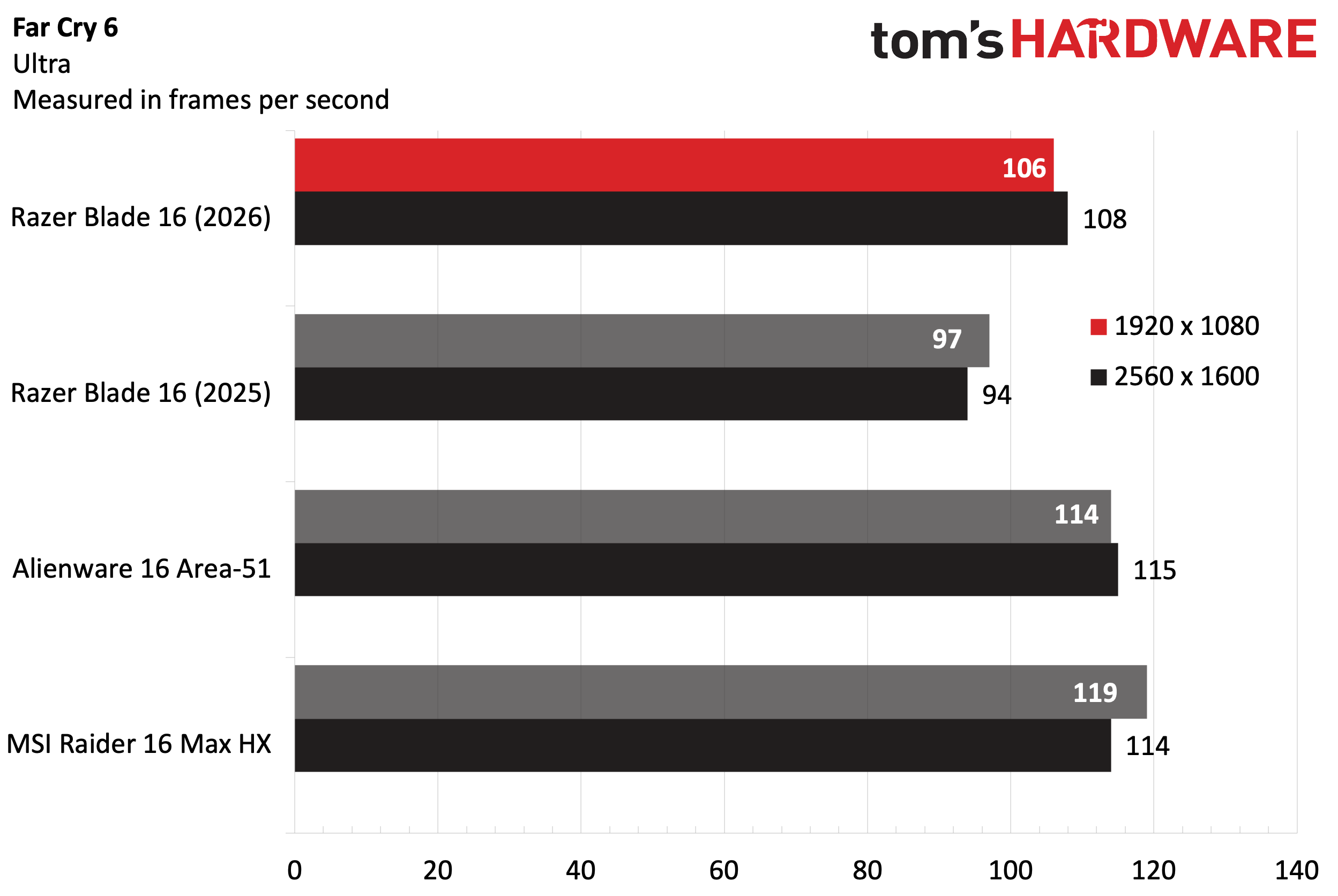
Far Cry 6 (Ultra settings) saw the Blade 16 running in third place ahead of its predecessor (106 FPS at 1080p, 108 FPS at 1600p). The Alienware 16 Area-51 and Raider 16 Max HX were a few FPS ahead at each resolution, but it was still a relatively close fight among the top three.
Red Dead Redemption 2 (Medium settings) proved challenging for the Blade 16, as it lagged behind with 94 FPS at 1080p and just 71 FPS at 1600p. For comparison, last year's model eclipsed those numbers at 121 FPS and 94 FPS, respectively. The 25W CPU simply couldn’t keep up with the 28W Ryzen and 55W Intel HX chips
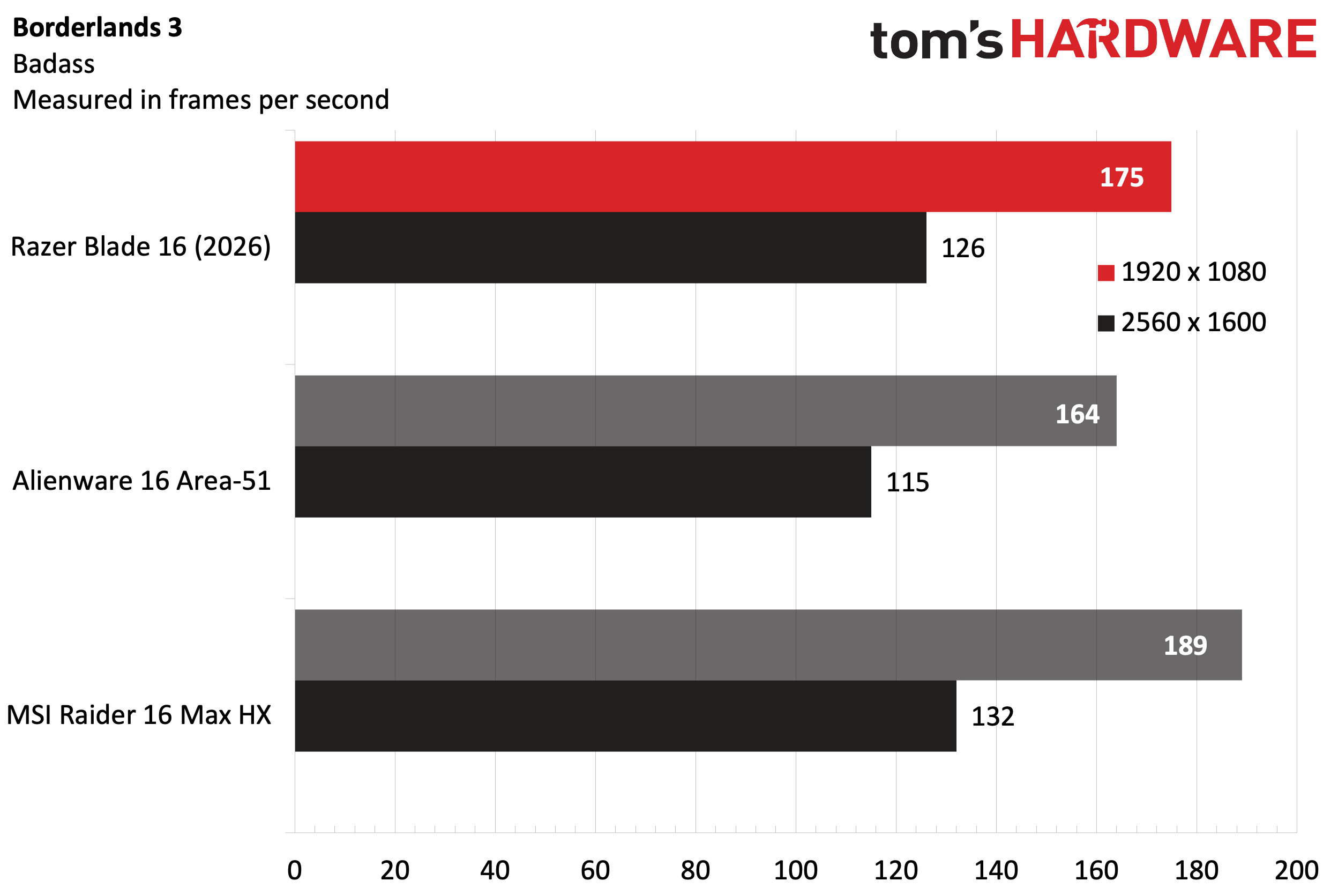
However, the Blade 16 was back to its fighting form in the Borderlands 3 (Badass settings) benchmark, easily slipping into second place behind the Raider 16 Max HX with 175 FPS at 1080p and 126 FPS at 1600p.
Metro Exodus is still our preferred benchmark for gaming laptop stress testing. Our review unit averaged 133.39 FPS at 1080p across 15 loops using the RTX benchmark preset. The CPU performance cores averaged 3.96 GHz, and the efficiency cores averaged 3.5 GHz. The RTX 5090 GPU also ran at 1.95 GHz.
One item of note is that the two system fans are incredibly loud while gaming, which may force you to use a pair of the best gaming headsets to block out the added noise.
Productivity Performance on the Razer Blade 16
The Razer Blade 16 uses a 16-core Intel Core Ultra 9 386H processor, 32GB of memory, and a 2TB PCIe 4.0 SSD. With some of the competition sporting upwards of 8 additional cores, the Blade 16 didn’t really break through in the multi-threaded benchmarks.
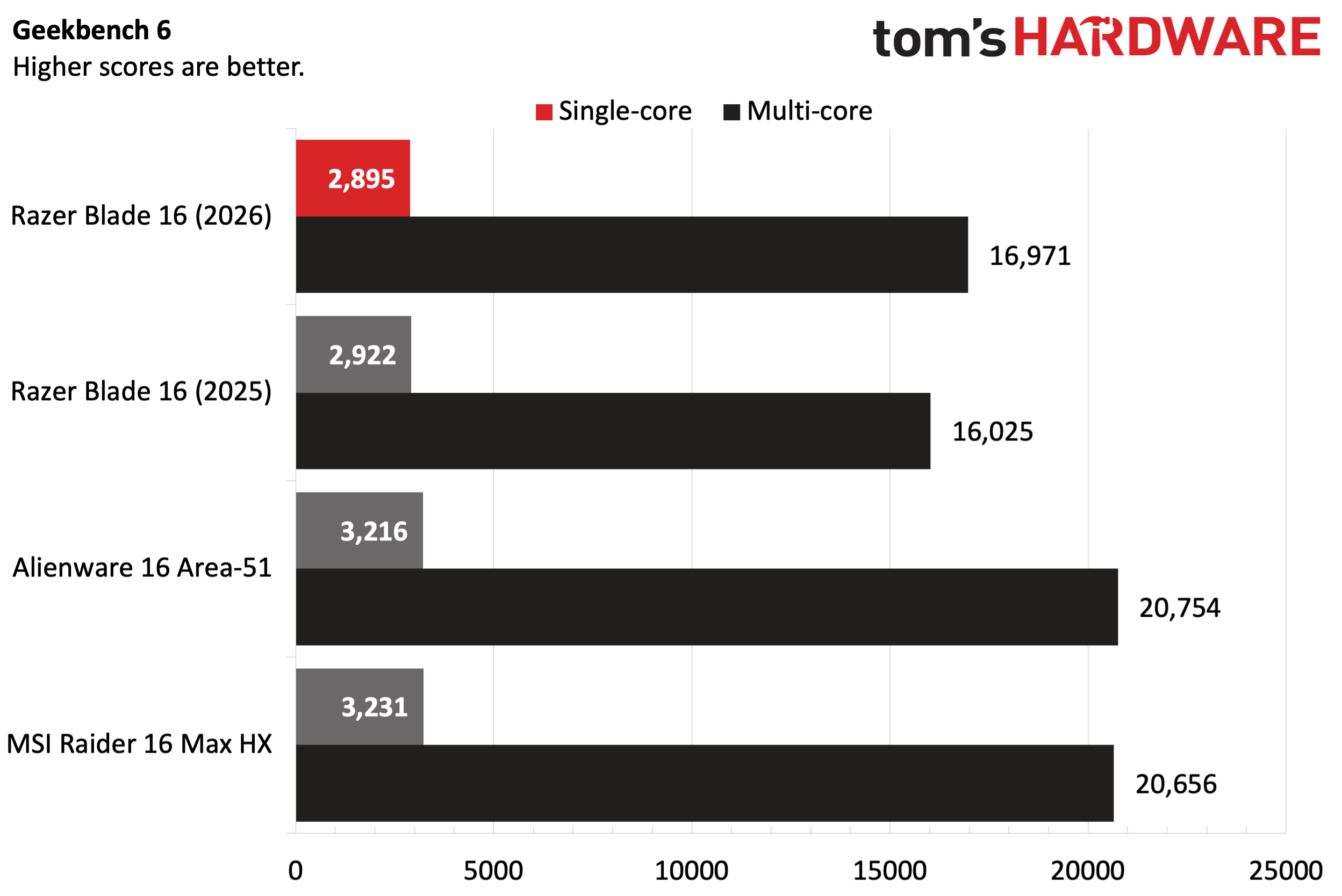
The synthetic CPU benchmark Geekbench saw the Blade 16 lag slightly behind its predecessor in single-core (2,895 versus 2,922), but pull ahead in multi-core performance (16,971 versus 16,025). However, neither Blade system was a match for the Core Ultra 9 290HX Plus processors in the Alienware 16 Area-51 and Raider 16 Max HX; the latter of which pulled numbers of 3,231 and 20,656, respectively.
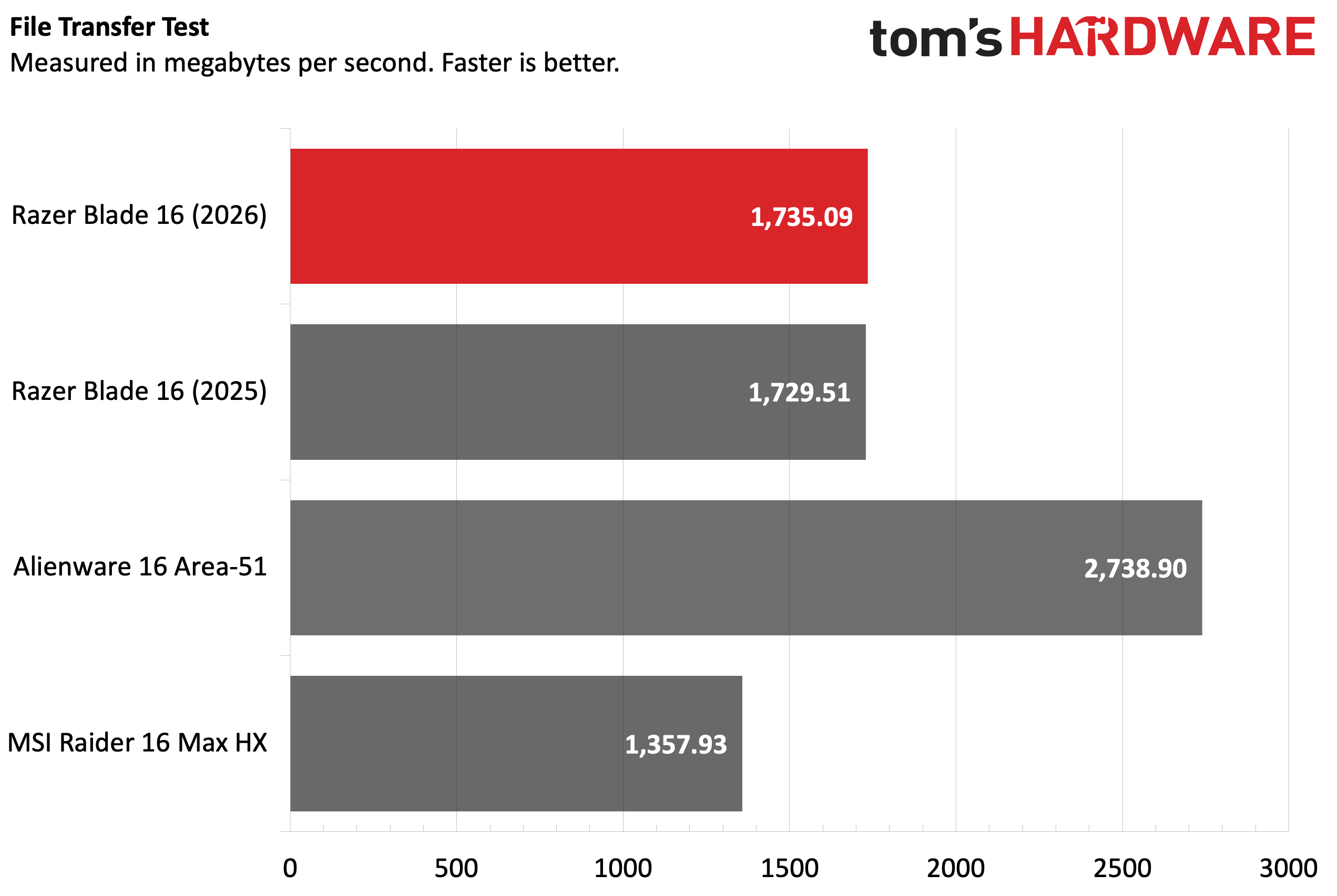
In our 25GB file transfer test, the Blade 16 took second place by the slightest of margins, hitting 1,735.09 MBps. However, this result was still 1,000 MBps behind the first-place Alienware 16 Area-51.
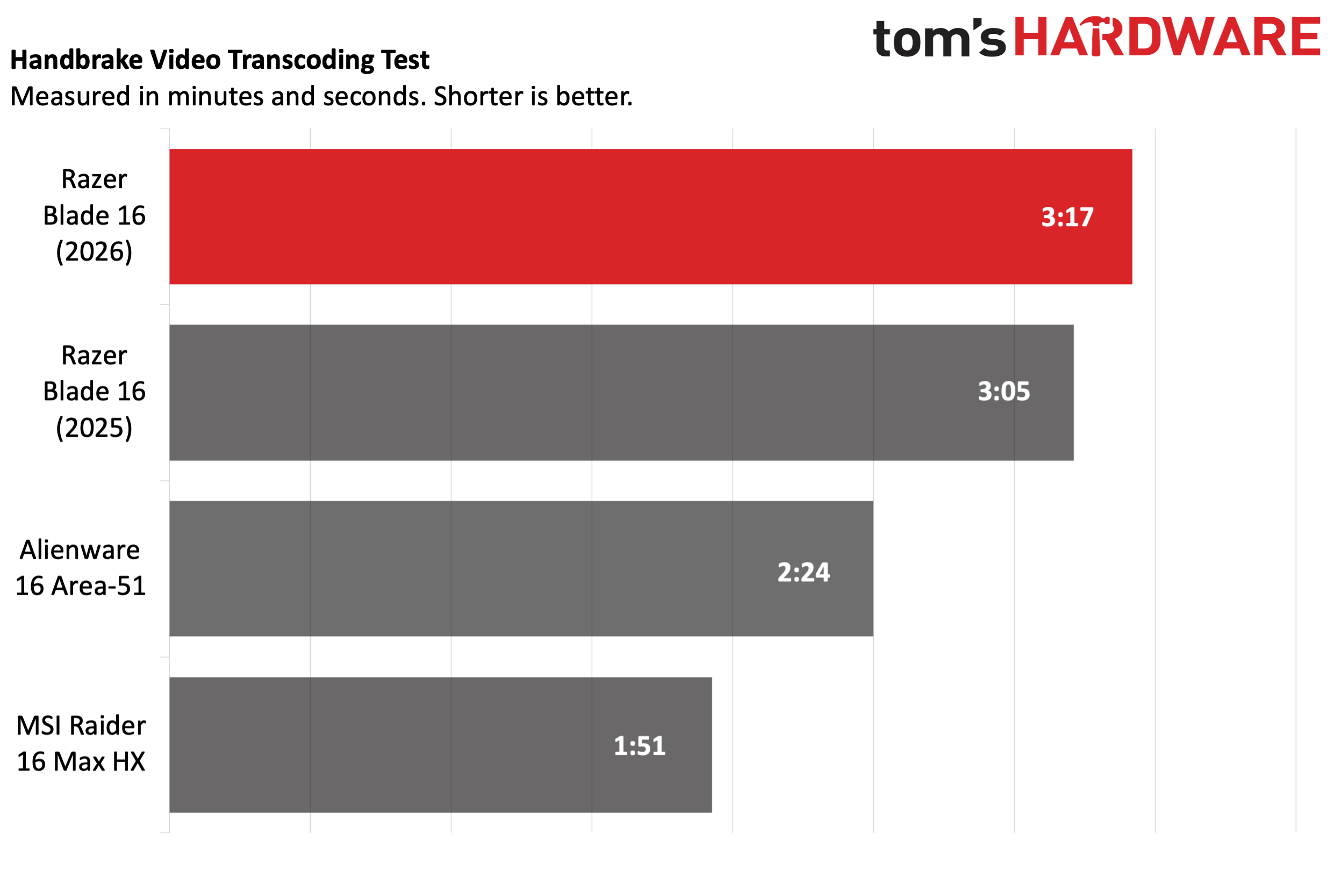
The multi-threaded performance shortfall crept up again in our Handbrake test, where we transcode a 4K video file to 1080p. The Blade 16 pulled up the rear in this group, even falling behind the Blade 16 with the Ryzen AI 9 HX 370. It took 3 minutes and 17 seconds to complete the task compared to just 1 minute and 51 seconds for the Raider 16 Max HX.
Display on the Razer Blade 16
As Tom's Hardware's resident monitor editor, I’m absolutely smitten with OLED panels. Thankfully, the OLED display on the Blade 16 doesn’t disappoint: it’s a 16-inch panel with a 2560 x 1600 resolution and a native refresh rate of 240 Hz.
We found that color volume was 90 percent for DCI-P3 and 127 percent for sRGB. Brightness levels were also fairly impressive, earning second place behind the Raider 16 Max HX at 408.2 nits.
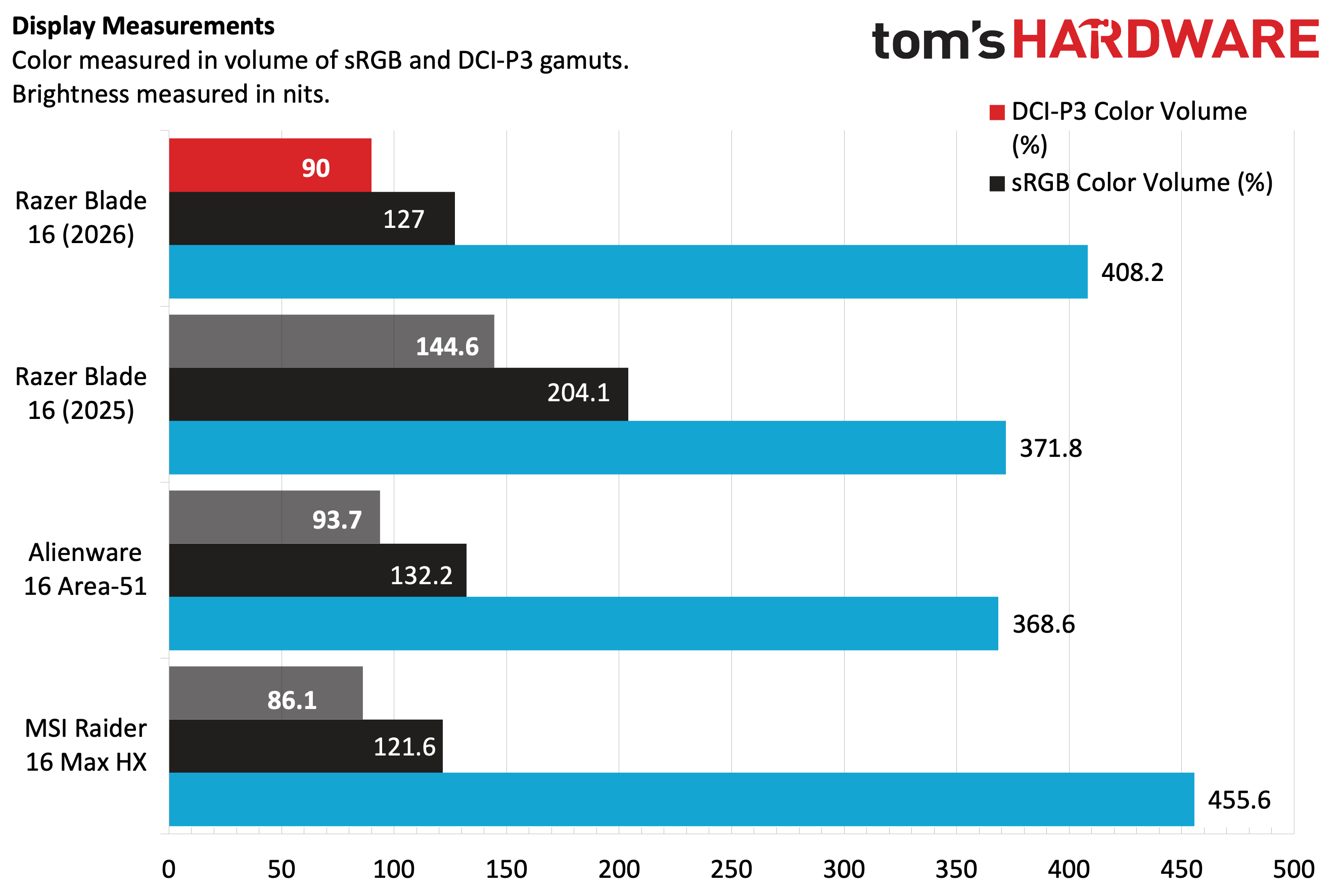
Although the instrumented tests show some regression compared to last year’s Blade 16 in the sRGB and DCI-P3 color spaces, the display looks amazing in a vacuum. The gritty visuals while playing Battlefield 6 in Overkill mode were a delight to my eyes, with sunlight glinting through windows and concussive bomb blasts kicking up debris all around me.
Keyboard and Touchpad on the Razer Blade 16
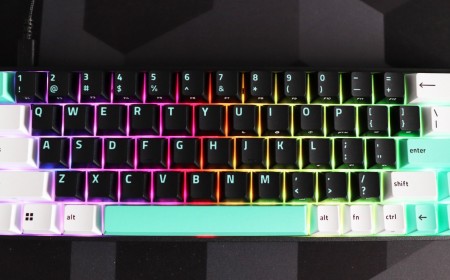
The keyboard on the Blade 16 uses scissor switches with 1.5 mm of travel. The key presses are slightly clicky, and my fingers had no trouble getting used to typing on the keys.
I used my standard keyhero.com typing test and scored 89 words per minute with 97 percent accuracy, which is about par for the course for me.
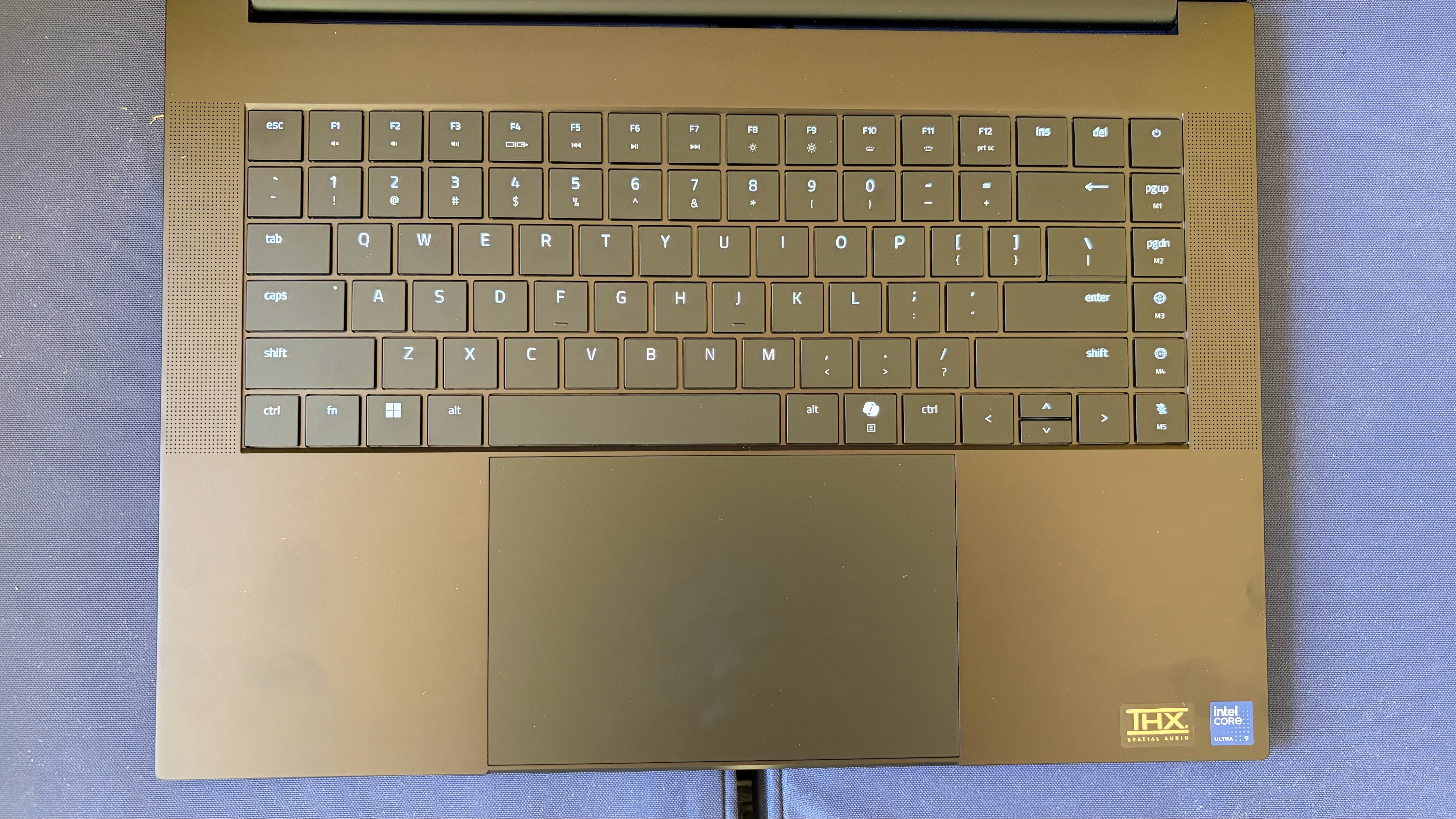
The touchpad is absolutely massive, measuring 5.9 inches wide and 3.8 inches tall. It’s one of the largest trackpads you’ll find outside of Apple’s 16-inch MacBook Pros. What isn’t Apple-like is the insistence on using a mechanical linkage for trackpad actuation instead of the steadier, more consistent presses made possible by a haptic touchpad. For a laptop with a sticker price of nearly $5,000, I don’t think it’s too much to ask for some haptics here.
However, if you’re using this laptop primarily for gaming, you’ll likely be using one of the best gaming mice for your competitive sessions.
Audio on the Razer Blade 16
The six-speaker audio system on the Blade 16 is THX-optimized, and the audio quality is good, if not quite price-appropriate. While playing Battlefield 6, in-game dialog, explosions, gunfire, and vehicle noise generally sounded good, but the effects were competing with the turbine whine of the dual system fans. Cranking the volume to near-max levels helped drown out the fan noise, but at that point, I was experiencing a bit of aural overload, so I opted to put on a pair of headphones.
When the CPU and GPU weren’t heavily taxed, I was able to better enjoy the speakers, such as by playing Dave Matthews Band’s album Before These Crowded Streets for the 300th time. I cruised through the album with the volume set to a comfortable 50%, savoring the acoustic and bass guitars on “Dreaming Tree,” which always results in a relaxing frisson for me.
Similarly, I watched the Mel Gibson-helmed The Patriot to get into the mood for the Fourth of July, and reveled in the heavy dialogue, flintlock musket blasts, and cannon bursts.
You can make adjustments to the audio using the Razer Synapse software,
Upgradeability of the Razer Blade 16
Accessing the interior of the Blade 16 involves removing 10 Torx screws. Once all screws are removed, the bottom panel lifts off with minimal force. You’ll find the large 90 WHr battery at the bottom front of the chassis, and above are two M.2 slots that accept full-length 2280 SSDs.
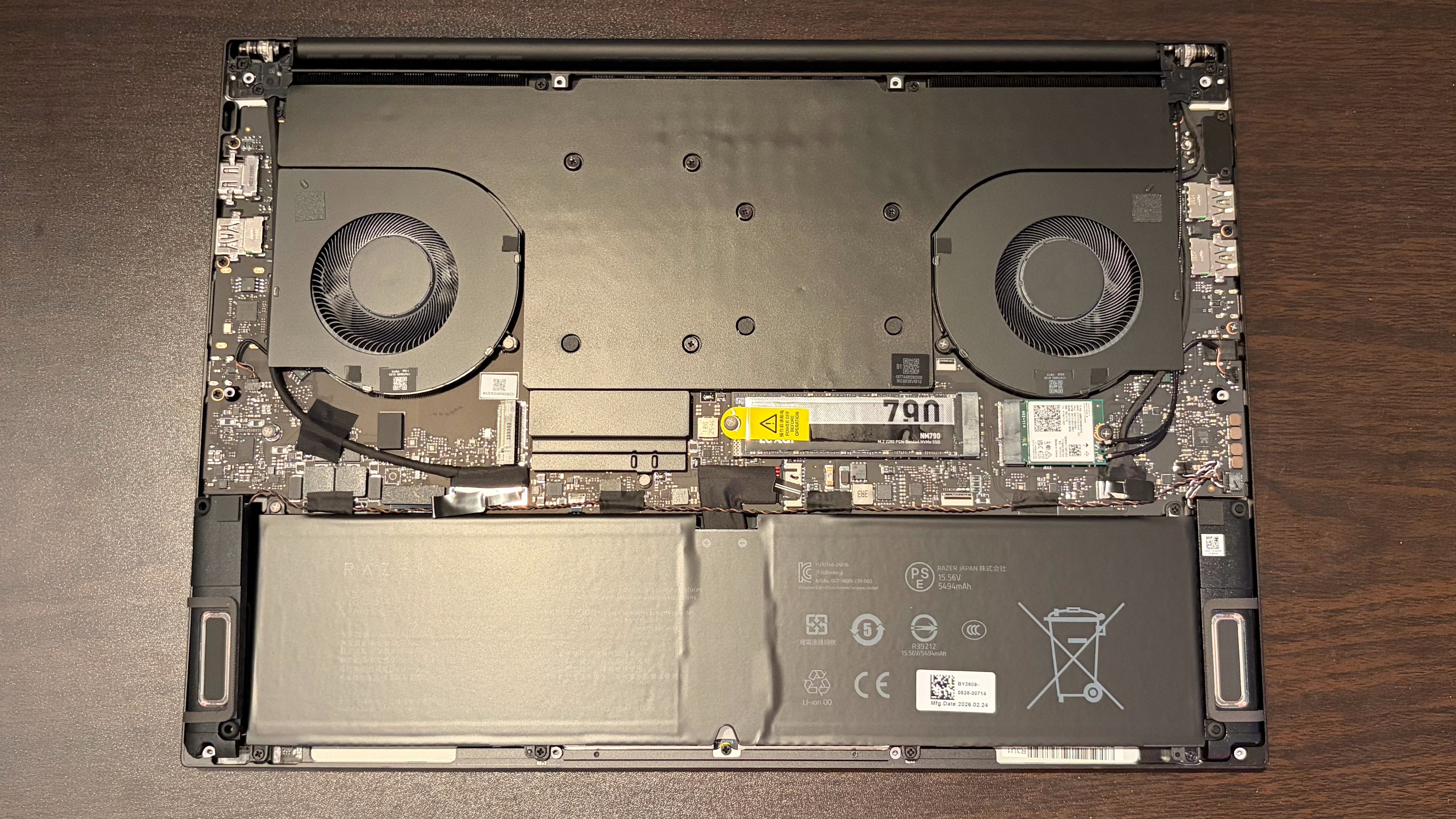
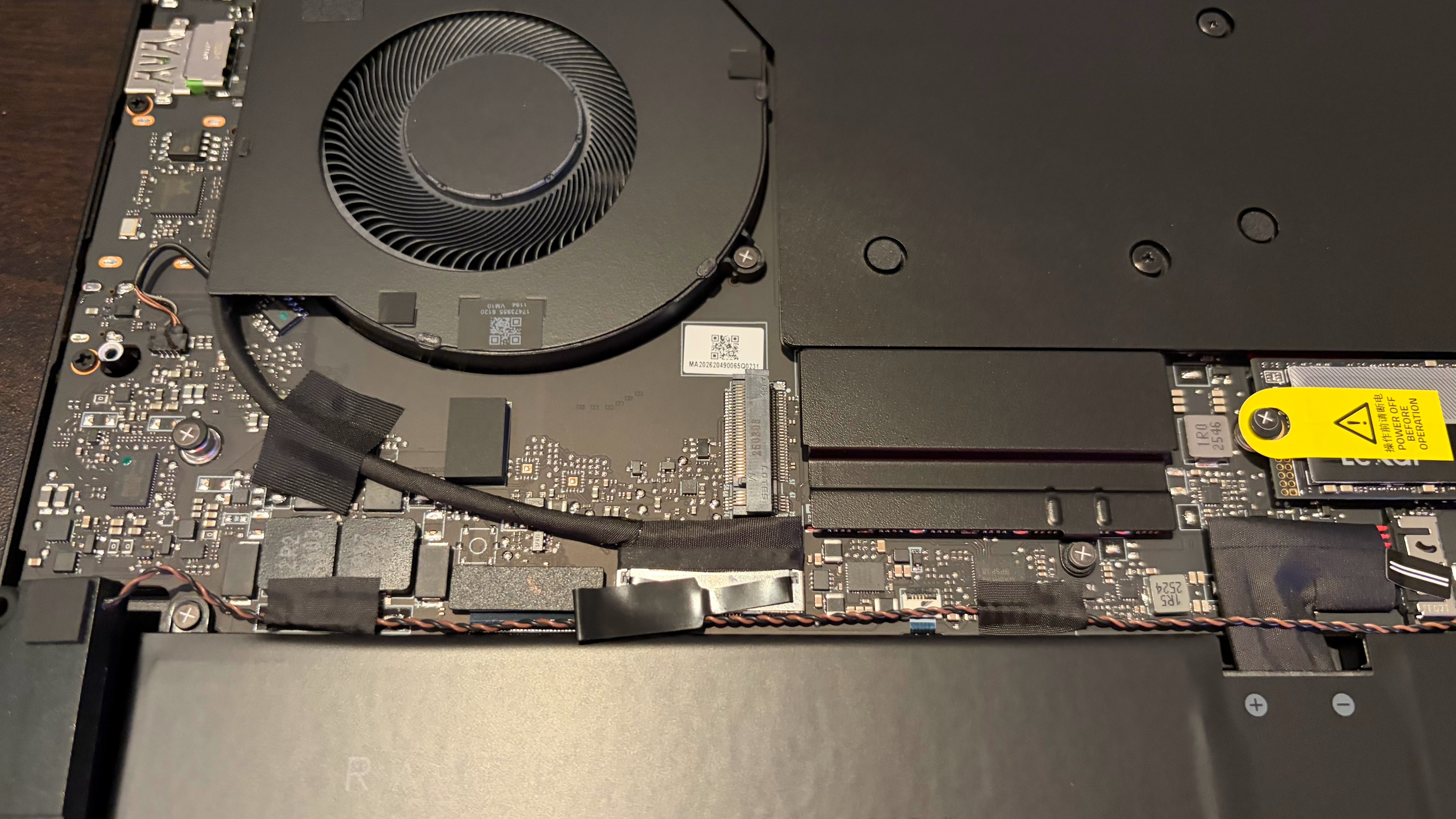
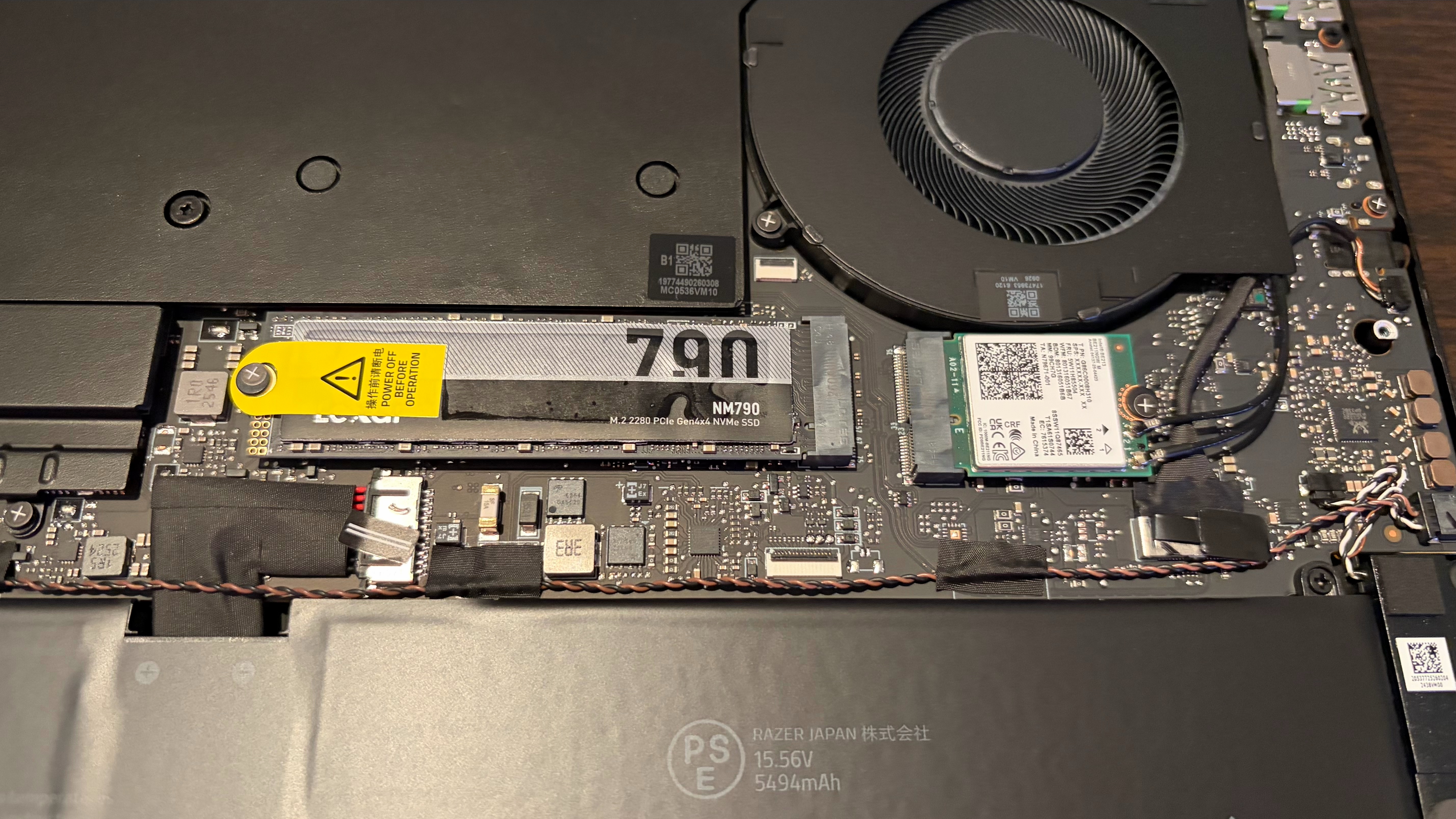
The right slot was populated with a 2TB Lexar NM790 PCIe 4.0 SSD, while the left slot was empty, allowing for future upgrades. Also accessible is the PCIe Wi-Fi 7 network adapter (Intel BE213).
Battery Life on the Razer Blade 16
One thing to keep in mind is that the Blade 16 maintained competitive gaming performance among its peers, while its multi-threaded performance took a back seat. However, those compromises were fully redeemed in terms of battery life.
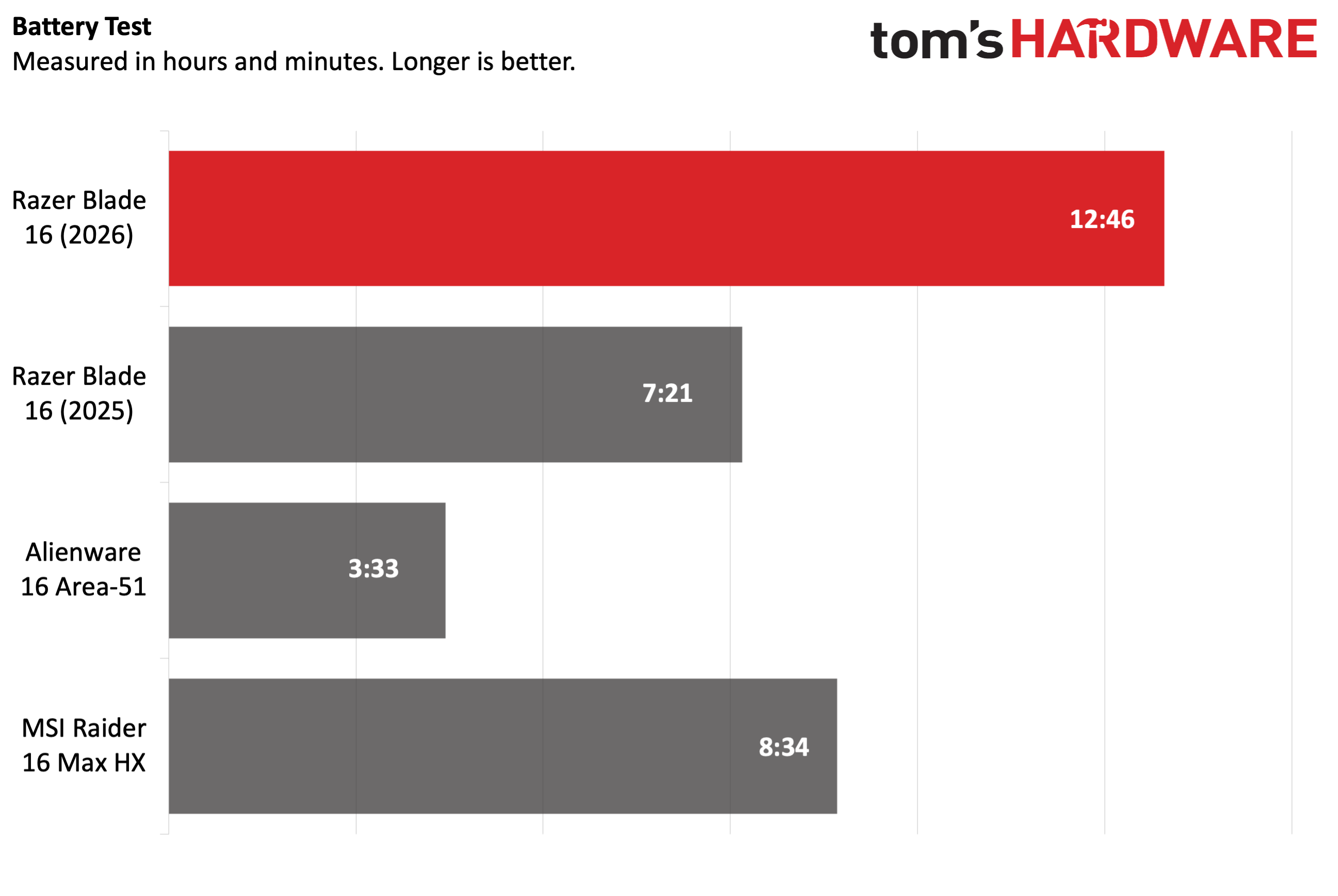
The Blade 16 uses a 90 WHr battery, which delivered shockingly long endurance (for a gaming laptop) in our battery test, consisting of web browsing, video streaming over Wi-Fi, and OpenGL testing with the screen brightness set at 150 nits. The system lasted a staggering 12:46, besting the Ryzen AI 9 HX 370-equipped Blade 16 by over 5 hours and the Alienware 16 Area-51 by over 9 hours. Even the Raider 16 Max HX was no match, falling short by over 4 hours.
That is a fantastic result for such a thin and light 16-inch gaming laptop, and it is a testament to the miserly energy consumption of the Panther Lake processor.
Heat on the Razer Blade 16
While running the Metro Exodus stress test, we measured the temperature of Blade 16's aluminum-alloy chassis in various spots. The keyboard measured 102 degrees Fahrenheit (F) between the G and H keys, while the touchpad was 92 F.
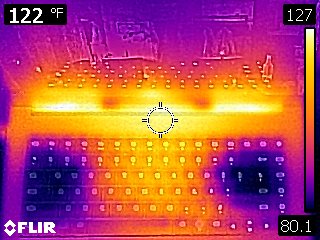
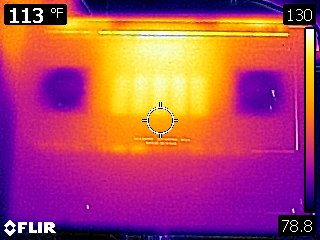
The hottest part of the laptop was near the rear center of the bottom of the chassis, where we measured 130 F. So it’s best to keep the laptop firmly planted on your desk while gaming, lest you roast your legs.
During the Metro Exodus stress test, the CPU measured 75.3 degrees Celsius (C). Meanwhile, the RTX 5090 came in at 87 C.
Webcam on the Razer Blade 16
Razer continues to use a run-of-the-mill 1080p webcam with an IR sensor for Windows Hello support. It’s by no means a class-leading webcam, but it’s perfectly usable for Zoom or Teams meetings.
I found the colors to be mostly adequate, but there was a little lightness in the detail in my facial features.
Software and Warranty on the Razer Blade 16
One of my favorite things about Razer laptops is that they aren’t loaded down with too much added software. On our Blade 16 review unit, Razer Chroma and Synapse were preloaded.
Synapse is an all-in-one utility that lets you adjust performance profiles, keyboard macros, audio presets, and more. Chroma, on the other hand, gives you full control over system RGBs, including the per-key keyboard effects.
Otherwise, you’ll find requisite utilities, like the Nvidia app and the usual Windows app shortcuts (we’re looking at you, LinkedIn) on the Start menu.
The Blade 16 comes backed by a one-year warranty for the system itself and a two-year warranty for the 90 WHr battery.
Razer Blade 16 Configurations
Our Blade 16 review unit came configured with a Core Ultra 9 386H processor, 32GB of LPDDR5X memory, a 2TB SSD, RTX 5090 laptop GPU, and a 16-inch, 240 Hz. 1600p display. The price as-configured is a whopping $4,899.99.
There are cheaper configurations available — if you retain the Core Ultra 9 386H and opt for an RTX 5070 Ti, 1TB SSD, and 32GB of memory, the price drops to $3,499.99. Going with RTX 5080 bumps (all other hardware staying the same) takes the price to $3,999.99.
Bottom Line
Overall, the Razer Blade 16 was a strong performer in our gaming benchmarks, which is the primary reason why most people would be willing to spend nearly $5,000 for this system. More importantly, the Panther Lake-based system delivered nearly 13 hours of non-gaming battery life, outrunning its closest competitor by over 4 hours. Combine those results with the beautiful display, attractive chassis, and under-the-radar design, and you have a winning combination.
However, there are some detractions; the lack of a haptic trackpad at this price point is annoying, and multi-threaded performance significantly lagged the competition. Also, the $4,900 asking price is high, although not completely out of line for a system with these specs. You can save roughly $900 by going with an RTX 5080 instead of the RTX 5090 that was in our system.
But if price isn’t an issue for you, it’s hard to argue with this compelling combination of gaming performance and battery life.

Brandon Hill is a senior editor at Tom's Hardware. He has written about PC and Mac tech since the late 1990s with bylines at AnandTech, DailyTech, and Hot Hardware. When he is not consuming copious amounts of tech news, he can be found enjoying the NC mountains or the beach with his wife and two sons.
What's Your Reaction?
 Like
0
Like
0
 Dislike
0
Dislike
0
 Love
0
Love
0
 Funny
0
Funny
0
 Wow
0
Wow
0
 Sad
0
Sad
0
 Angry
0
Angry
0








Comments (0)