

Robert Aramayo’s Star-Making Turn in ‘I Swear’ Is Already Award-Winning, Now He Just Wants People to See It
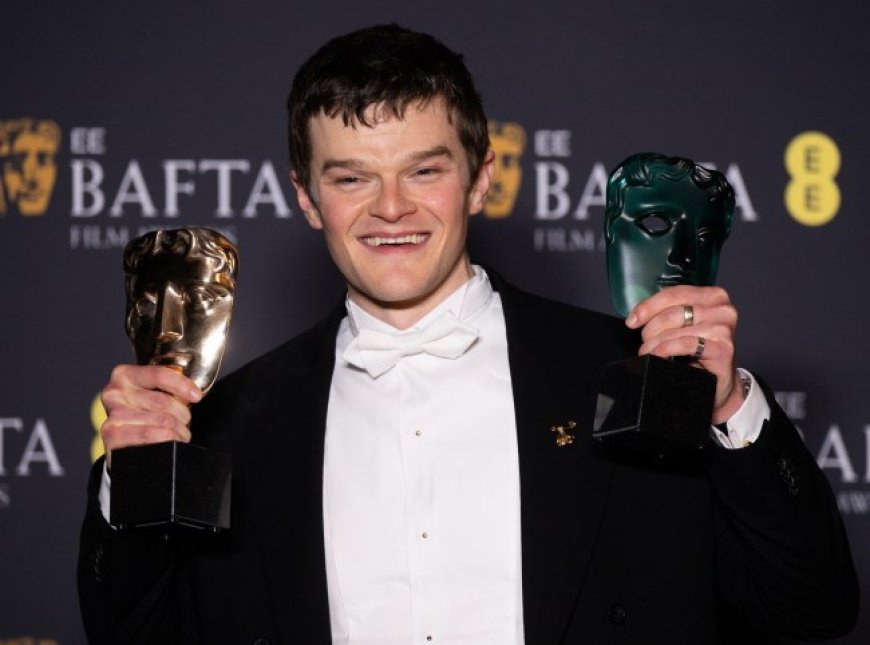
When Robert Aramayo signed on to play Scottish Tourette’s activist John Davidson in filmmaker Kirk Jones’ biopic “I Swear,” he could scarcely imagine where the film would take him.
A hit in the UK, the film netted Aramayo a pair of BAFTA wins earlier in the year, as the British actor won both the vaunted Rising Star Award (previous winners include James McAvoy, John Boyega, Tom Holland, Tom Hardy, and those are just some of its biggest names) and the Best Actor trophy (beating out Timothée Chalamet, Leonardo DiCaprio, Ethan Hawke, Jesse Plemons, and eventual Oscar winner Michael B. Jordan).
But that’s hardly all that happened at the February awards show, which was instantly and forever marred by a number of loud, racist outbursts from Davidson himself that were directed at “Sinners” stars Jordan, Delroy Lindo, Wunmi Mosaku, and more. The fallout from the incident was both swift and prolonged, and will likely impact the domestic release of “I Swear,” which is rolling out in stateside theaters now.


Aramayo’s performance in the film is indeed star-making and awards-worthy, as he brings sensitivity and great courage to his portrayal of Davidson, following him from his earliest symptoms through his current passionate activism. Hopefully, viewers can see and appreciate the work on its own merits, and get to know Aramayo much better, though he has previously appeared in plenty of projects recognizable to American audiences, from “The Empty Man” to “The Lord of the Rings: The Rings of Power” to a little thing called “Game of Thrones” (young Ned Stark!).
Ahead, Aramayo tells IndieWire about his deep research for the role, everything BAFTAs, and what he hopes will come from more people seeing the film and, hopefully, understanding Tourette’s all the better.
The following interview has been edited and condensed for clarity and length.
IndieWire: When I saw the film at TIFF in September, I did my due diligence before I reviewed it, and learned that John is a huge figure in the UK, but relatively unknown in America. How much did you know about him before this film?
Robert Aramayo: John’s made a lot of documentaries, but the big one that probably had the most impact was “John’s Not Mad,” and that was in 1989. So if you speak to people who were around then, they have a lot of very personal stories about watching that documentary and being like, “Wow, is this Tourette’s? What’s Tourette’s?”
So when you get the script, are you someone who then wants to do more research into him, or do you feel like the script is the thing?
The production team and Kirk were so gracious, and they gave me so much time. I think they were like, “Oh, yeah, take a couple of months or something to research and stuff.” I was really thankful for that. The first thing that I did was to meet John; I met him very quickly. And then I went away for a month, and I spent that time gaining as much knowledge as I could about Tourette’s and what it is. That was through watching the documentaries, watching YouTube videos, and reading books.
I based myself in Galashiels and spent weeks with John, just following him around and spending as much time with him as I could. And also traveling through Scotland, meeting people, mainly through [support organization] Tourette Scotland, who lived with Tourette’s as well. I wanted to have, I don’t know, a more expansive view of Tourette’s than just John. Obviously, John was my main focus, though.
 ‘I Swear’SPC
When you’re getting ready to meet John, what were you expecting and anticipating? What were you nervous about?
I don’t know what I felt, really. I was so filled with anxiety about, oh my word, am I going to do this? I wanted John to like me. I was already feeling, God, this is going to be a really big challenge. And I met him within days of saying yes.
But then, when I met him, one thing that struck me straight away was his knowledge. He’s got a really amazing knowledge about, obviously, Tourette’s, but also a lot of neurodiversity and how it lives, other conditions that exist with Tourette’s, and stuff like that. He’s got a lot of thoughts about how we can do better and help young people and things like that. He’s very forthcoming with it.
He’s got so much heart. He’s such an amazing, welcoming, supportive man that I was just like, wow, this is a really impressive person that I’m meeting here. Of course, then your anxiety and the responsibility meter have gone through the roof.
Just watching the film, I learned so much about what Tourette’s can entail and the very wide spectrum of symptoms that people can have. What was the most unexpected thing you learned about it during your research?
A couple of things really that had a really big impact on me straight away, and that sort of broke my perception of what I thought Tourette’s was, that anything can be a tic, and that it’s so singular to the person. So if you’ve met one person with Tourette’s, someone said to me, you’ve met one person with Tourette’s. That was a big thing.
And also the fact that there’s a lot of tics that you just don’t see. There’s tics that you don’t see as tics because anything can be a tic, or there’s tics that exist only in somebody’s mind, and things like that, tics linked with OCD. Just the complexity of it was massive.
I learned some statistics recently, which I found really interesting: One in 50 kids in America live with persistent tic disorder, and one in 160 live with Tourette’s, so it’s unbelievably common, it’s everywhere. We have met people with Tourette’s, we meet them all the time. It was part of the experience of the film as well, we met loads of people who were living with Tourette’s undiagnosed. 50 percent of people who live with Tourette’s in the U.S. are undiagnosed, and that was true for us in the UK as well in our experience. Maybe the thing is that we don’t know that that’s what’s happening. That made me think, wow, there’s a real educational piece to this as well.
You are playing someone who is a real person who has been captured on film for many years. People know what he looks like, they know what he sounds like. How do you find the line between impersonation and impression in your performance?
I never wanted to impersonate John. I think I would’ve gone the wrong way if that was what I was thinking. You have to, at a certain point, take ownership of the character and try and make him your own. I was lucky because there was so much that I needed to learn, so for so long, I wasn’t thinking about performance or playing him at all. I was just trying to immerse myself as much as I could in everything, anything that I could get my hands on. Then, at certain point, I moved to thinking about how I was going to try and play my version of John.
In a [narrative] film, you get the opportunity to maybe show a little bit more [than a documentary]. A documentary film crew comes into somebody’s life and they can capture what they can capture, but we could capture way more intimate moments throughout the whole film that John had spoken to.
We could show the moments where he is on his own, whether there’s been an impact or how he’s feeling or his emotional life, how things change over time and stuff like that, and hopefully try and do it with truth and authenticity.
 Robert Aramayo and Morfydd Clark in ‘The Lord of the Rings: The Rings of Power’Ben Rothstein / Amazon Prime Video
You attended Juilliard, which always seems a little, “Oooohhh, he’s Juilliard-trained.”
[Laughs]
But now that you’re a few years out of school, what are the pieces of training that are proving to be most useful to you?
I think that acting teachers and drama school is vocabulary, really. At the time, certain things that teachers would say to me had a massive impact on me and really opened me up to other ways of looking at things, and other things are only impacting me now, as I keep working and as I get older. I think that’s the beauty of drama school, you get flooded with all of this stuff, and then you’re going, “Oh, that’s what they were talking about.” And then there’s things that my teachers would consistently say, “You’ve got to work on this, you’ve got to work on this,” and I’m still working on it. It’s like a toolbox, and every now and again you go, “Oh, yeah, that’s what I need.”
They also made us do liberal arts which — I’m from Yorkshire, I don’t even know what liberal arts meant — but I’d encounter Nietzsche and Plato and all this stuff. I had no time at all to digest anything, but I’d read it and be like, “I don’t really know what’s going on here, but I think this is going to be important one day. I think I’m going to reread this one day!”
What was the morning of the BAFTA nominations like for you?
I knew it was happening that morning. I remember talking to my agent, and we just didn’t speak about it, but we both knew that they were coming out that morning or whatever, so we had a really chill conversation about something else. [Laughs] I put it on in the background, because I thought we had a chance at, I don’t know, something, and then I heard that Peter had been nominated and I was so happy for him. I was elated for him.
So, I was just in that, and I was doing the dishes, and I was like, “Wow, that’s so cool. I can’t wait to go text him.” And then they said my name, and I just absolutely couldn’t believe it. My agent called me back straight away and was like, “Oh, my God.” It was an amazing feeling, but it was really unexpected because I was still really, really sort of overwhelmed by the Rising Star thing.
You genuinely looked so surprised when you won Best Actor at the show. I feel like I would black out in that moment. Do you remember what that moment felt like?
Yeah, because I almost did! I had this weird physical reaction where I sort of went back [pantomimes sitting way back], and I think somebody grabbed me. I think I would’ve just kept going. I would’ve fallen off my chair or something.
I honestly couldn’t believe it. I’m honestly not sure I still can believe that that’s something that happened to me, because for someone like me to be in that group of people blew my mind. I felt like, “Wow, and there I am, that’s my name.” To me, that was the thing that sort of really, really, really, really blew me away. When it happened, yes, it all just becomes a blur, and I’m running down the stairs, and I don’t know what the hell I’m going to say.
 British actor Robert Aramayo attends the ‘Incontrolable’ (I Swear) premiere at Cines Verdi on March 16, 2026 in Madrid, SpainGetty Images
Obviously, other things happened at the awards show involving John. As someone who had seen the film, I felt like I had a greater grasp on what was happening; I had that context. Now that the film is coming out in America, what hopes do you have for people seeing the film and how that might impact that conversation?
I think lots of people watch the film, and they feel like their education around Tourette’s has improved and increased, and that would be amazing [if that continued]. I think it’s important to acknowledge that … Tourette’s has an impact on a person who’s ticcing, and the same tic obviously has an impact on the person who’s receiving the tic or impacted by the tic. And it’s important to acknowledge that, because that is what it is. Coprolalia, which is the tic that John has, that tic, it’s not saying what you think, it’s saying the worst thing imaginable. That’s how it was described to me.
I hope people watch the film. And I hope people watch the film and think, “Oh, I’ve learned something about Tourette’s.” I hope that people watch the film from the community, because that’s been an amazing thing as well. People watching it who have lived with Tourette’s or lived with another neurodiverse condition have reached out and said, “I see myself in this.” You want people to go to the movies and enjoy the film, but if people go home and Google “John Davidson” or Google “Tourette’s,” that’d be amazing.
The film is going to introduce you to a much larger audience, but you’ve also been in some massive hits before this one. Which is a fun way to ask: Do you know that “The Empty Man” has a huge cult fandom?
[Laughs] I’ve been told this. What an experience. I loved making that film. It was a long journey with it, and I learned a lot. And it was my first movie that I’d done with James Badge Dale, and I did another one with him as well. And I really, really liked working with him. He’s a really nice guy, and he’s a really talented actor. And the director, David [Prior], was wonderful. I learned a lot on that film. I love that people love that film.
You are also in the “Lord of the Rings” world as well. Are you going to be turning out to see “The Hunt for Gollum”?
I’m so excited. I can’t wait. I’m a massive fan of the Peter Jackson films. I can’t wait to see what they do with it. It’s a really interesting story. I’m glad that they’re doing it and doing it properly.
Now that you’ve had what feels like a big breakthrough, what sort of things are you pursuing next?
What do I want to do next? I don’t know! I feel lucky to just be an actor, to work. I’ve been lucky enough to work with some incredible people on “I Swear,” to work with Kirk and Peter and Shirley and Maxine. People like that, you learn, you grow, you get better. And so if I can just keep doing it, I’ll be happy.
That Rising Star Award feels like a lot of pressure!
I just feel really, really grateful for everyone who voted for me. It’s such a cool award that the public, the British public, vote for you. I feel so grateful for everyone who voted for me. I just feel very, very grateful for the whole thing, for everything, and mainly that people hopefully watch the film and talk about it.
For more information about Tourette Syndrome and access to free resources and support, visit the Tourette Association of America right here.
A Sony Pictures Classics release, “I Swear” is now in theaters.
What's Your Reaction?
 Like
0
Like
0
 Dislike
0
Dislike
0
 Love
0
Love
0
 Funny
0
Funny
0
 Wow
0
Wow
0
 Sad
0
Sad
0
 Angry
0
Angry
0








Comments (0)