

Samsung floats 2028 launch for seaborne datacenter
ON-PREM
Korean megacorp sets itself a target date to commercialize watery server farm concept
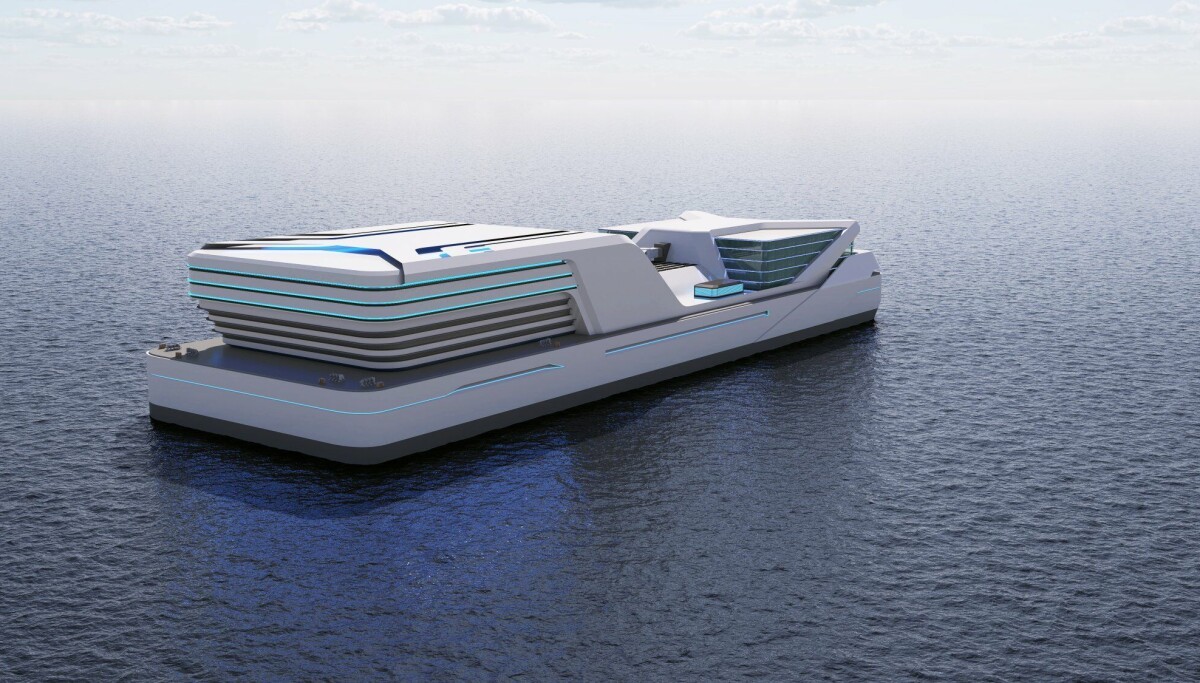
Samsung expects to have its first floating datacenter (FDC) operational by the second calendar quarter of 2028.
The Korean conglomerate is one of several companies pursuing waterborne bit barns, as recently covered by The Register. It has now put a specific date on those plans, according to the Seoul Economic Daily, which reports Samsung is weighing multiple candidate projects to commercialize an FDC the year after next.
Samsung Heavy Industries, the group's shipbuilding and offshore engineering arm, announced partners for the project at the Posidonia 2026 maritime exhibition last month, including a Memorandum of Understanding (MoU) with Greece-based Capital Clean Energy Carriers and Lloyd's Register.
Under the agreement, Samsung Heavy Industries handles the technology development and construction, Capital covers project sourcing and investment, and Lloyd's Register manages regulatory and certification work.
A rival Japanese partnership comprising Mitsui OSK Lines and Hitachi is taking a different approach, fitting datacenter infrastructure onto existing ships with a target of going live sometime in 2027. Samsung, by contrast, is building purpose-built vessels from scratch using established shipbuilding processes.
The plan is for the first floating facility to run on onboard power generation systems or shore-based power, and to use seawater for cooling, supporting around 50 MW of compute capacity.
The design has already received approval in principle from the American Bureau of Shipping and Lloyd's Register. But as floating AI datacenters are still unproven, the first unit built will effectively double as a proof of concept, assuming all goes to plan.
Samsung acknowledges that offshore conditions can expose servers to vibration, inclination, high-salinity air, and rapid humidity fluctuations, all of which may significantly impact server stability and lifespan.
To address this, Samsung Heavy Industries signed a joint development project (JDP) agreement with troubled server specialist Supermicro to conduct operational verification of AI server systems deployed in river and offshore environments.
Samsung Heavy Industries argues global demand for datacenter infrastructure, particularly AI platforms, is set to grow rapidly. It cites credit rating agency Moody's estimate that the market for high-performance infrastructure could reach $3 trillion by 2030.
Floating datacenters are being pitched as a way to sidestep some of the industry's biggest headaches: power constraints, heat dissipation, and land scarcity.
"Floating datacenters represent a major new opportunity for the shipbuilding and offshore industries," said Samsung Heavy Industries CEO Sung-an Choi. "Through global partnerships, we aim to establish a leading position in the FDC market by moving proactively and building a differentiated market position." ®
What's Your Reaction?
 Like
0
Like
0
 Dislike
0
Dislike
0
 Love
0
Love
0
 Funny
0
Funny
0
 Wow
0
Wow
0
 Sad
0
Sad
0
 Angry
0
Angry
0











Comments (0)