

Scientists Discovered 57 Species In a South Atlantic Submarine Canyon
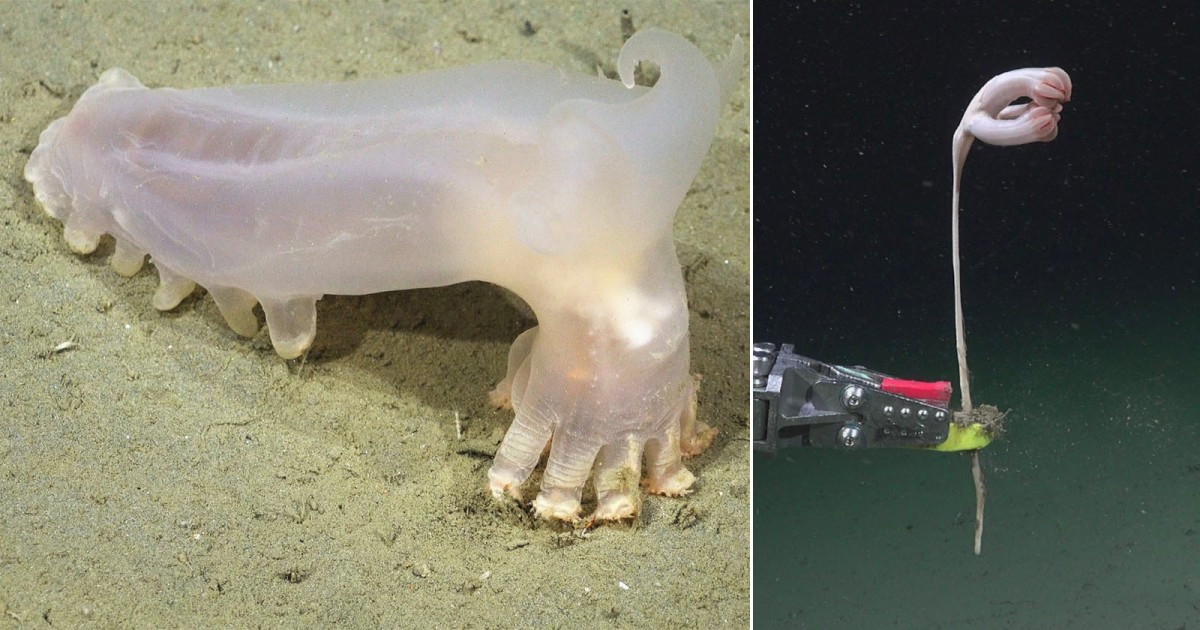
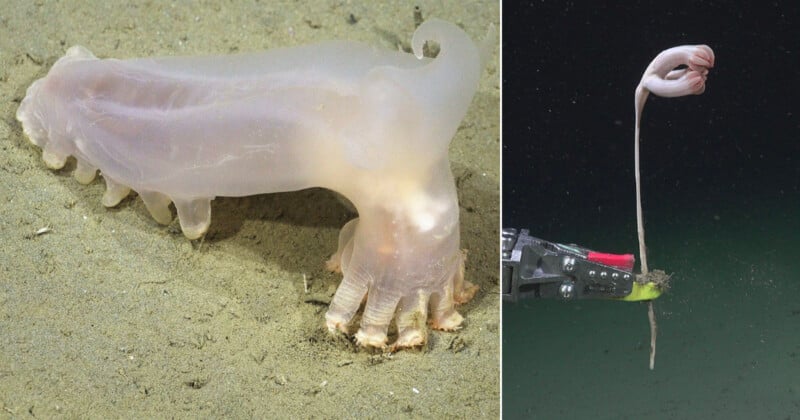
Scientists working for the Ocean Census Network identified 57 new marine species and five new genera in just two weeks of exploration. Initial photos show some pretty wild animals.
Led by the Nippon Foundation-Nekton Ocean Census in partnership with the Schmidt Ocean Institute, scientists explored the Mar del Plata Submarine Canyon in the South Atlantic Ocean. This submarine canyon off the coast of Argentina is over 3,500 meters (over 11,400 feet) deep, or about twice as deep as the Grand Canyon. As the myriad discoveries suggest, it’s an area rich with biodiversity.
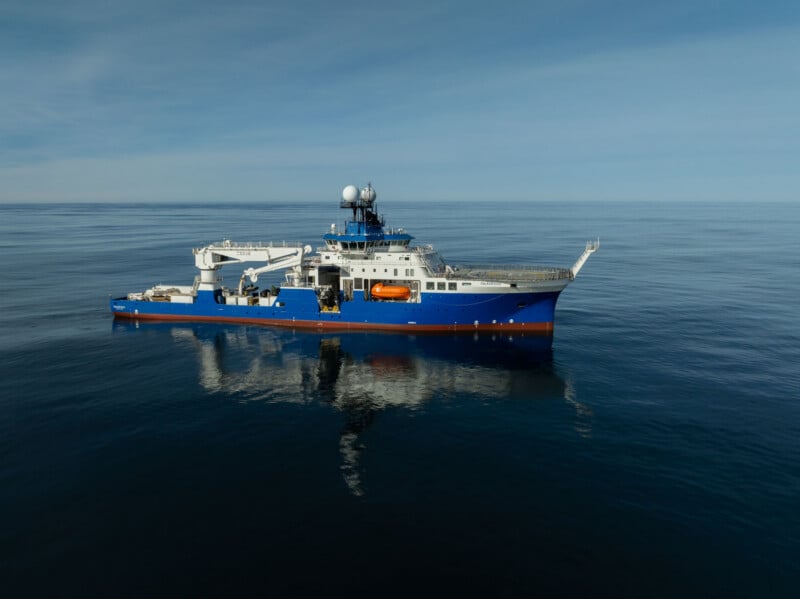 State-of-the-art ocean research vessel, Falkor (too) | Image credit: Schmidt Ocean Institute
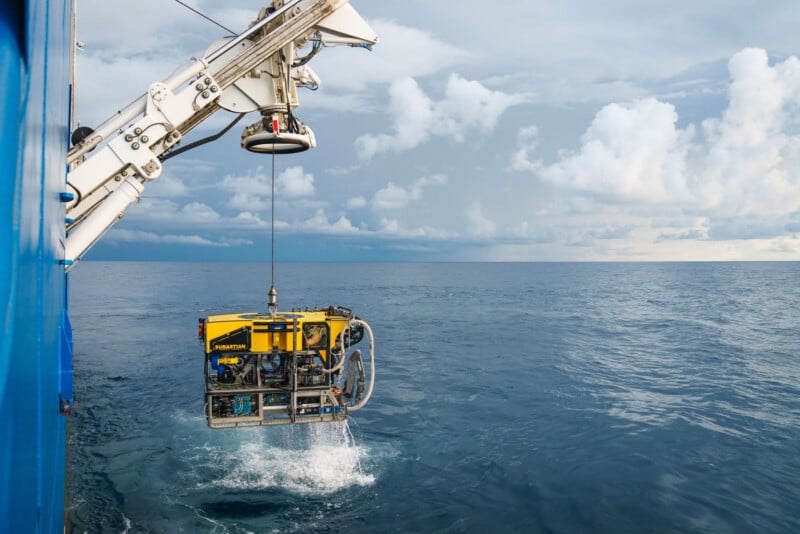 SuBastian | Image credit: Schmidt Ocean Institute
Of the 57 newly identified species, 20 are copepods, 22 are echinoderms (sea cucumbers and crinoids), 14 are cnidarians (octocorals, sea pens, and stony corals), and the last one is a scaphopod mollusk. The five new scientific genera include corals, sea cucumbers, and crustaceans.
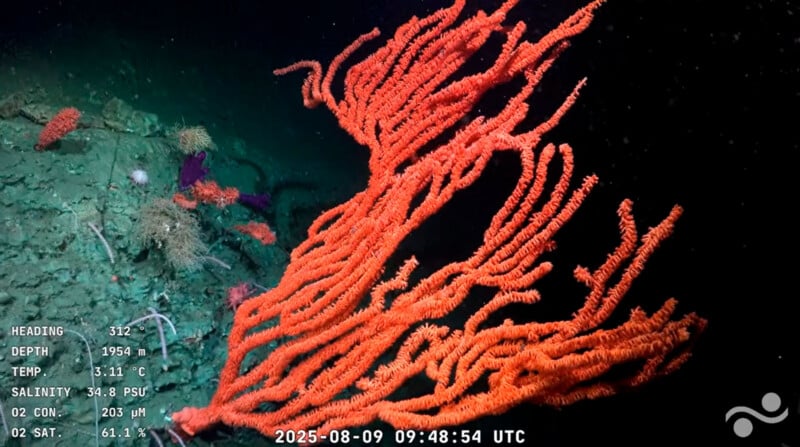 This bright red-orange octocoral is Orstomisis. Researchers discovered it at 1,954 meters below the ocean’s surface. | Credit: ROV SuBastian / Schmidt Ocean Institute
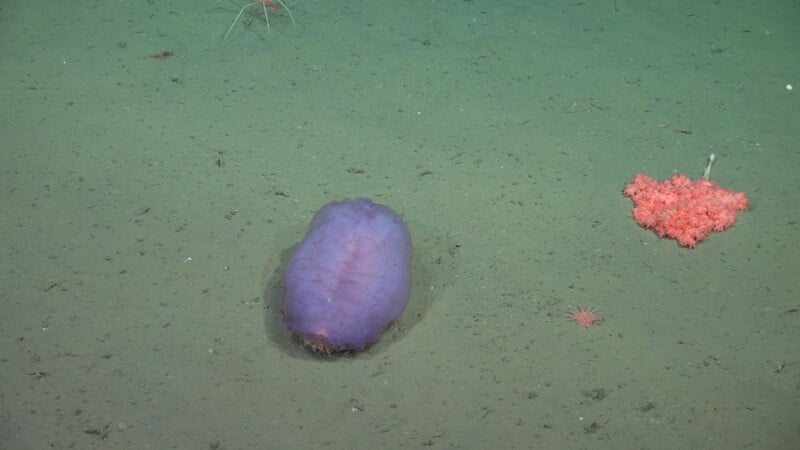 This bright purple holothurian, Benthothuria, is extraordinary. | Image credit: ROV SuBastian / Schmidt Ocean Institute
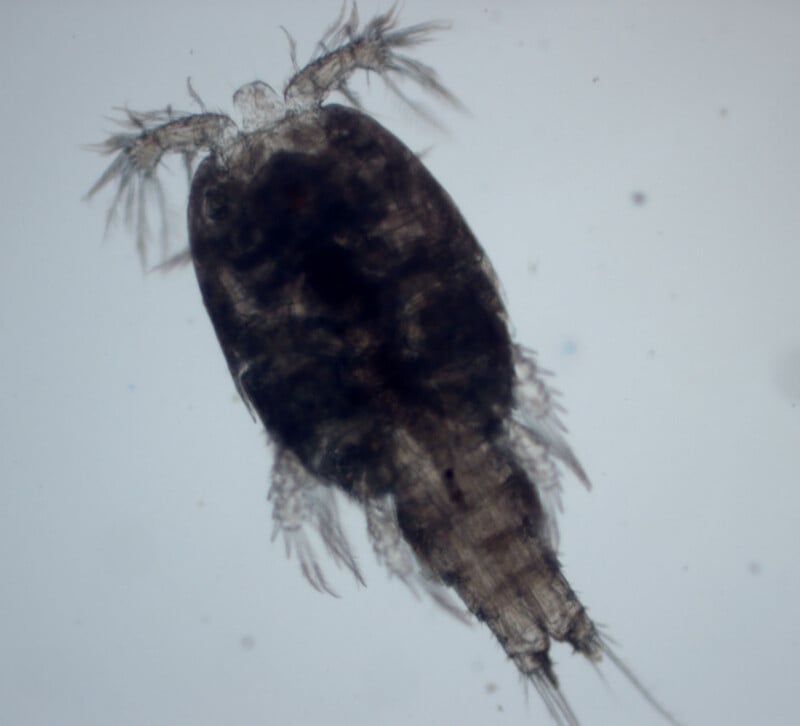 This tiny, newly-identified copepod, Pseudotachidius, was found between 1,909 and 2,625 meters deep. Taxonomists have examined only about 10% of the copepod samples collected during the expedition, but so far, all of them have been new to science. | Image credit: ROV SuBastian / Schmidt Ocean Institute
“International cooperation in taxonomy is critical, especially in groups with few active specialists. The species discovery workshop accelerated species identification, the recognition of species new to science, and increased capacity building for local early-career taxonomists working on deep-sea fauna,” says Dr. Daniel Lauretta, Principal Investigator from CONICET and the Museo Argentino de Ciencias Naturales.
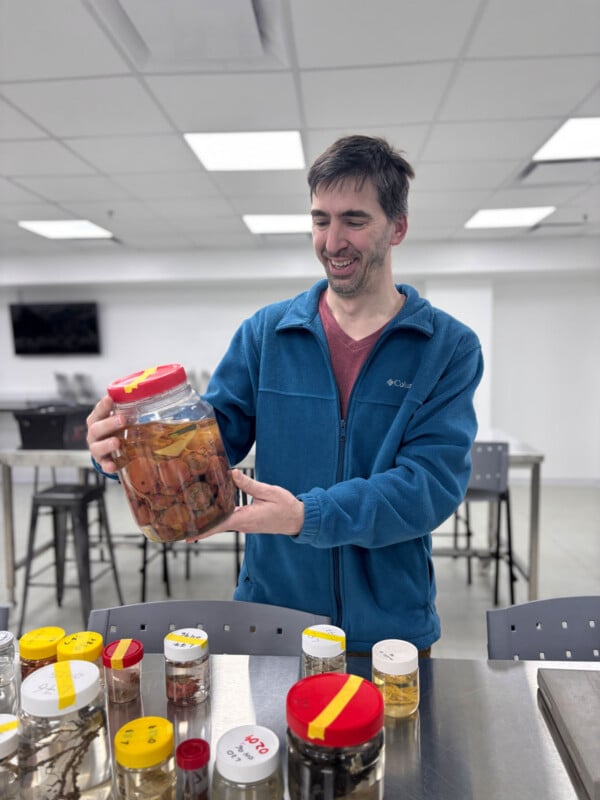 Dr. Daniel Lauretta during the species discovery workshop. | Image credit: The Nippon Foundation-Nekton Ocean Census / Schmidt Ocean Institute
While the discoveries are only now being shared, the expedition itself took place just over a year ago, led by Dr. Lauretta. The team even live-streamed some of the expedition from their remote-controlled vehicle, SuBastian. Over four million people tuned in, and they were enthralled by a bright orange sea star that looks uncannily like Patrick Star from Spongebob Squarepants, albeit with Patrick’s trademark shorts. It wasn’t a new species, though.
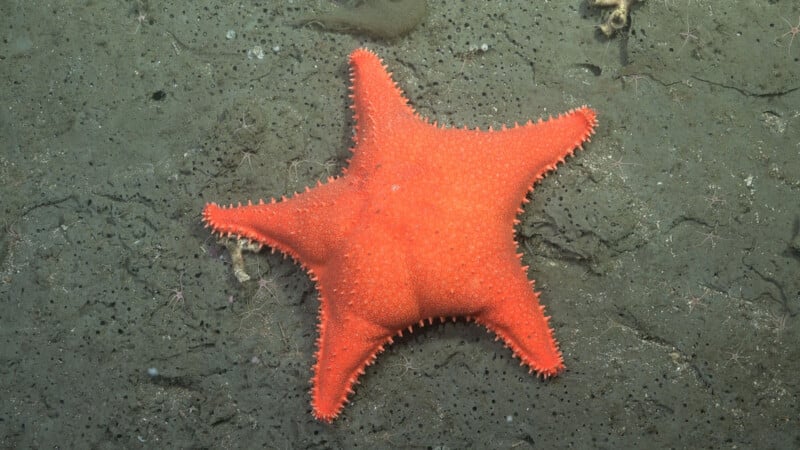 While not new, this deep-sea sea star was a fan favorite during last year’s expedition thanks to its resemblance to Patrick Star from Spongebob Squarepants. | Image credit: ROV SuBastian / Schmidt Ocean Institute
One standout new species is Peniagone sp., now commonly known as “Loki the Sea Cucumber.” This striking sea cucumber has prominent horned appendages and is one of up to 10 new holoturian species discovered during the expedition.
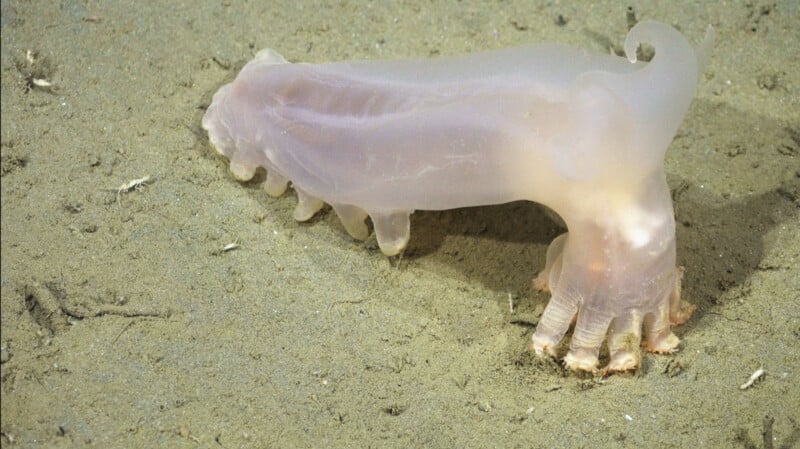 ‘Loki the Sea Cucumber’ (Peniagone sp.) | ‘A standout discovery of the workshop, this striking deep-sea holothurian (sea cucumber) was named ‘Loki’ for its prominent horned appendages, reminiscent of the god in Norse mythology. Captured in high-definition in-situ video and images on the seafloor of the Mar del Plata Submarine Canyon, it represents one of up to 10 new holothurian species uncovered during the Argentina workshop.
’ | Credit: ROV SuBastian / Schmidt Ocean Institute
‘Loki the Sea Cucumber’ (Peniagone sp.) | ‘A standout discovery of the workshop, this striking deep-sea holothurian (sea cucumber) was named ‘Loki’ for its prominent horned appendages, reminiscent of the god in Norse mythology. Captured in high-definition in-situ video and images on the seafloor of the Mar del Plata Submarine Canyon, it represents one of up to 10 new holothurian species uncovered during the Argentina workshop.
’ | Credit: ROV SuBastian / Schmidt Ocean Institute“Discovering 57 new species and five new genera in just two weeks demonstrates the speed and power of collaborative taxonomy,” explains Dr. Michelle Taylor, Ocean Census Head of Science.
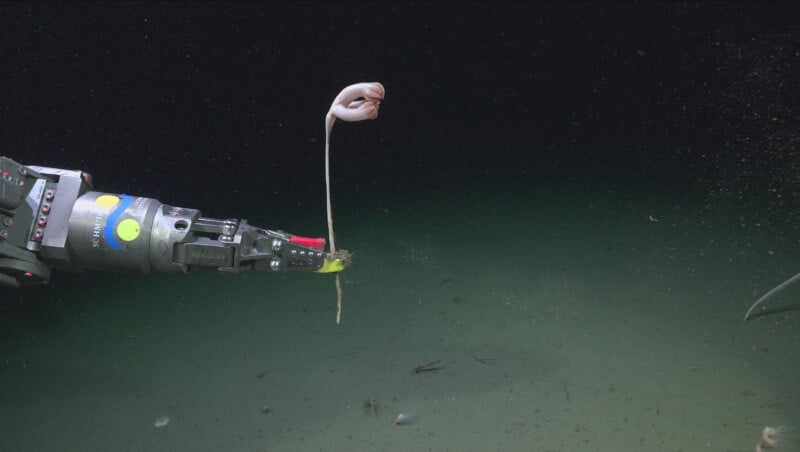 ‘Sea Pen,’ or Pseudumbellula, is a colonial coral and one of 14 new cnidarian species identified during the August 2025 expedition to Mar del Plata Canyon. | Image credit: ROV SuBastian / Schmidt Ocean Institute
“The deep sea holds some of the least understood ecosystems on Earth. By bringing Latin America’s scientific expertise and international experts together with, as well as connecting them to the open-access Ocean Census NOVA platform, we are drastically accelerating our understanding of marine biodiversity,” Dr. Taylor continues.
There is still so much left to discover in the ocean. PetaPixel previously reported on 31 new deep-sea species in June, which SuBastian and the Schmidt Ocean Institute also photographed. The same institute photographed rare deep-sea species like the Casper Octopus and Spaghetti Monsters and quite possibly the world’s cutest bony fish in 2024.
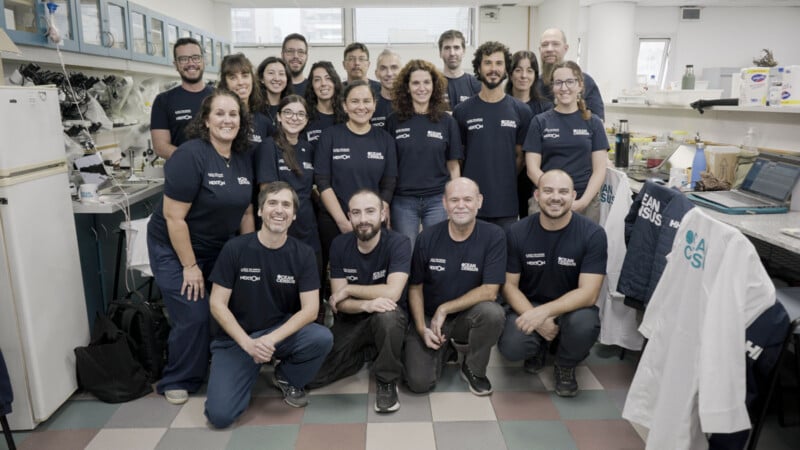 The Argentina Species Discovery Workshop team | Image credit: The Nippon Foundation-Nekton Ocean Census / Schmidt Ocean Institute
As many discoveries as there have been in recent years, Ocean Census believes up to 1.75 million ocean creatures may still be undiscovered.
Image creditsSchmidt Ocean Institute
Affiliate Disclosure PetaPixel articles may include affiliate links; we may earn a commission if you buy through one.
What's Your Reaction?
 Like
0
Like
0
 Dislike
0
Dislike
0
 Love
0
Love
0
 Funny
0
Funny
0
 Wow
0
Wow
0
 Sad
0
Sad
0
 Angry
0
Angry
0












Comments (0)