

4 Affordable Compact Cameras, From a Used Sony ZV-E10 to the Lumix L10
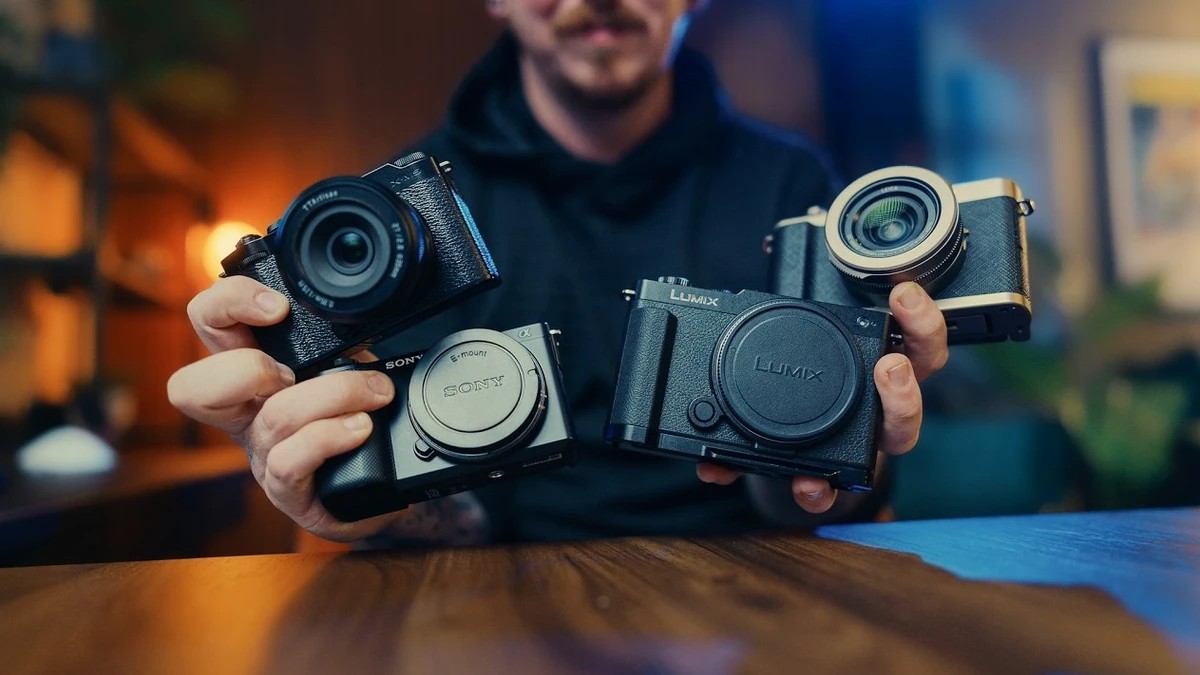
Every small camera between $500 and $1,500 gives something up, whether that's stabilization, battery life, a viewfinder, or a mechanical shutter, and the Sony ZV-E10, Fujifilm X-M5, Lumix S9, and Lumix L10 each make a different sacrifice. Picking the one whose weakness you rarely run into is what separates a camera you carry every day from one you regret buying.
The cheapest way into the group is a used Sony ZV-E10, and Thomas J McClure puts a firm ceiling on what to pay for it: under $500, ideally around $400 to $450. Plenty sell in the $500 to $600 range, which he considers too much given what a few hundred more dollars buys. The specs show their age, with 4K capped at 30 fps, 8-bit color, and no in-body stabilization, so smooth handheld video means reaching for a gimbal. What you do get is sticky autofocus, a mechanical shutter, a decent screen, a comfortable body, and the E-mount, where the lens selection covers almost any kind of work you might want to try. Moving up later to something like the Sony FX30 keeps all of those lenses in play, so a cheap starter body doesn't lock you into starting over. If buying used makes you uneasy, McClure points you toward his second pick instead.
At around $800 new, or closer to $900 once U.S. tariffs land on the price, the Fujifilm X-M5 is McClure's choice for anyone shooting stills first. It records 6.2K open gate video in 10-bit, which makes it far more future-proof than the Sony for video, though it also skips in-body stabilization. He values it more for the mechanical shutter and the color, even though he still edits raw files most of the time. The body fits in a jacket pocket or a pair of cargo pants. That size comes partly from a small battery, so budget for a few spares. Lenses carry across the entire X line up to the Fujifilm X-H2S, since every X body shares the same APS-C sensor size, and only the far pricier GFX medium format cameras need different glass.
Compact cameras have had an unusual few years. The Fujifilm X100VI sat on long backorders after its 2024 launch, Ricoh's GR III and GR IIIx have been hard to find at times, and used prices for older digital point-and-shoots climbed as younger shooters went looking for something that feels different from a phone. McClure's point about the mechanical shutter lines up with that shift. A phone already produces sharp, well-exposed images, so much of the appeal of a dedicated camera comes from the physical act of using it: the click, the dials, the feeling of taking a photo on purpose. A practical way to sort these options is to start with the limit you'll hit most often. If you shoot long events, battery size will frustrate you before sensor size does. If you film handheld while walking, stabilization matters more than resolution. If most of your work is stills outdoors in bright sun, a viewfinder can outweigh both.
Video shooters get a different answer. The Panasonic Lumix S9 puts a full frame sensor and 6K open gate recording into a tiny body that McClure says you can often pick up for around $1,000. He calls its in-body stabilization good enough that it keeps him in the Lumix system over every other brand he has tried. He also argues that Lumix autofocus, from the Panasonic Lumix S5II onward, now holds its own against Sony for video. The S9 uses Panasonic's full-size battery, but it has no mechanical shutter, no viewfinder, no hot shoe, and no fan, so he warns that it overheats more readily than something like the ZV-E10.
The fourth camera, the Panasonic Lumix L10, is the first fixed-lens camera McClure has owned. It carries a Leica-branded 24-75mm equivalent f/1.7-2.8 zoom, a viewfinder, a hot shoe for a mic or flash, and the same large battery Panasonic uses in its full frame bodies. At $1,500, it sits at the very top of his budget range, and its size has drawn some argument about whether it counts as compact at all, which he answers by pointing to that battery. The bigger drawback for him is stabilization. The L10 has no in-body stabilization, and the lens and digital stabilization it does have aren't good enough for handheld video, so he shot his L10 footage on a gimbal. He sees it as a photography-first camera for someone who wants one capable body without buying into a lens system.
McClure ends the video by urging you to check the used market before buying a couple of these new.
What's Your Reaction?
 Like
0
 Dislike
0
 Love
0
 Funny
0
 Wow
0
 Sad
0
 Angry
0











Comments (0)