

Scientists Warn Wildlife Photographers’ AI-Enhanced Bird Photos Could Threaten Research
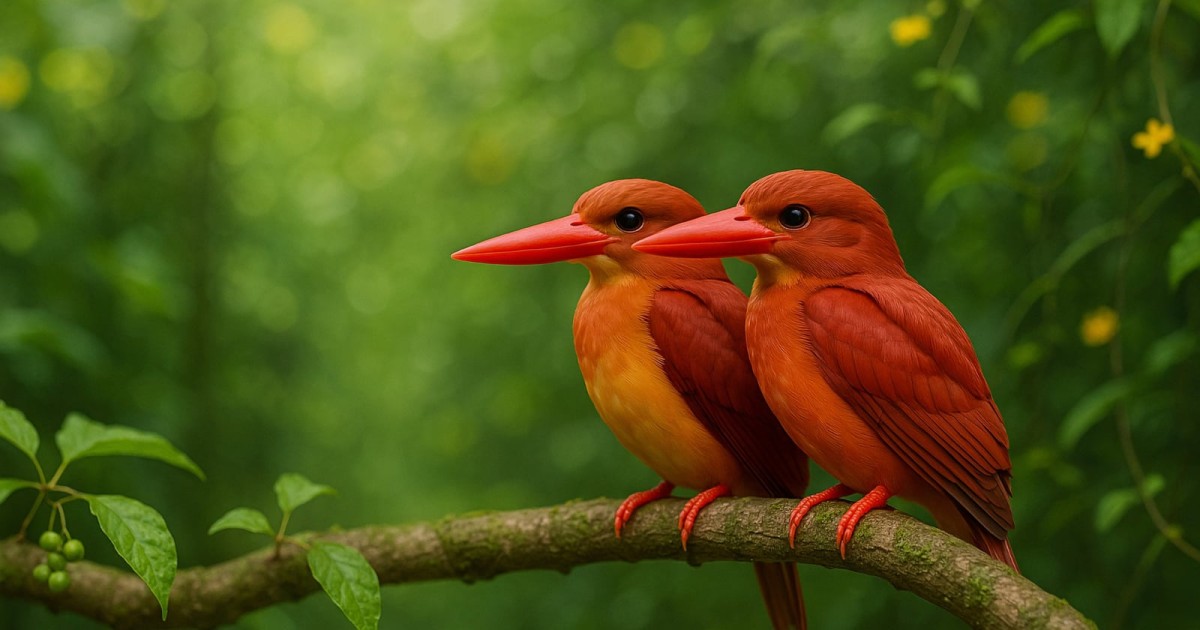
 AI generated image of a male and female ruddy kingfisher
Scientists have warned that the increasing use of AI editing tools by wildlife photographers seeking the perfect image could threaten the reliability of bird research.
According to a report by The Guardian, researchers are urging wildlife photographers to be cautious when using AI to edit images shared on birding platforms and online forums. Scientists fear that the AI-enhanced photos could undermine the credibility of widely used citizen science databases, including iNaturalist and the Macaulay Library, which help researchers track species distributions and changes in habitats.
In a recent commentary published in the science journal Nature and cited by The Guardian, researchers warned that hundreds of fake images have already been identified on popular species-recording databases. However, they say that the full extent of the problem remains unclear, as many altered images may not be detected and could affect records collected by members of the public.
‘Obsessed with Getting a Beautiful Photo’
The growing use of generative AI tools has contributed to a rise in fake and modified images of rare and notable bird species across wildlife photography communities. While some users create entirely artificial images, others use AI tools to make small edits, such as removing branches or leaves blocking a bird in a photograph. These changes can unintentionally alter important details within the image.
“Wildlife photographers can be quite obsessed with getting a beautiful photo, but there’s a risk that the image might actually cause problems down the line when AI has been used to edit it,” Dr Alexander Lees, an ecologist at Manchester Metropolitan University who authored the journal article, tells The Guardian
Lees highlighted the case of a false sighting of a red-winged blackbird in central Brazil. The species is typically found in North America and had never previously been recorded in that part of Brazil. The bird was later identified as an epaulet oriole, a common New World bird species, but the photographer had asked an AI platform to make the image “look better.” During the editing process, features of a red-winged blackbird were added to the image, creating a false record..
“My experience of looking at Facebook these days is that a huge volume of wildlife photos now are simply AI-generated imagery,” Lees adds. “The idea that we could maybe use those photos to help us understand where species are in space and time is very difficult.”
Citizen science organizations are still trying to determine how widespread the issue is. On iNaturalist, a social network where nature enthusiasts can record observations of plants and animals, only 1,400 of the platform’s more than 610 million images have been flagged for AI use so far.
Image creditsHeader photo licensed via Depositphotos.
PetaPixel articles may include affiliate links; if you buy something through such a link, PetaPixel may earn a commission.
Love PetaPixel? Go Premium.
PetaPixel is the world’s largest independent photography publication and we’re only able to continue our work with your help. Become a PetaPixel Member now and support our mission to bring you regular, high-quality reviews, features, news, and more.
- Remove banner ads
- Gain access to full-resolution RAW and JPEG Sample Galleries
- Get 5% off orders from KEH.com
- Get a $15 coupon to spend at Moment
- Get 10% off lighting equipment from FJ Westcott
- Get 10% off film development, scanning, and printing from Blue Moon Camera and Machine
What's Your Reaction?
 Like
0
Like
0
 Dislike
0
Dislike
0
 Love
0
Love
0
 Funny
0
Funny
0
 Wow
0
Wow
0
 Sad
0
Sad
0
 Angry
0
Angry
0







Comments (0)