

Sex, drugs and amoebic dysentery: the 20 best making-of documentaries – ranked!
20. Document of the Dead (1985)
Behind-the-scenes footage from Dawn of the Dead is the highlight of this aficionados-only affair, which follows the 1979 satirical zombie horror all the way through to distribution. Director George A Romero, makeup maestro Tom Savini and the occasional zombie actor shoot the breeze in the deserted shopping mall that provides the movie with its incongruous central location.
19. The Death of “Superman Lives”: What Happened? (2015)
Imagining what might have been if Tim Burton’s Superman Lives had got off the ground, documentary maker Jon Schnepp cosies up on screen with his interviewees and insinuates himself unforgivably into the story. The material is almost good enough to transcend his vanity: there is test footage of lead actor Nicolas Cage in his Man of Steel duds, plus interviews with Burton, original screenwriter Kevin Smith and producer Jon Peters, who was adamant that Superman should fight polar bears and a giant spider.
18. Becoming Bulletproof (2014)
A group of actors with disabilities form the bulk of the cast of the short western Bulletproof, shot in the California desert courtesy of the inclusive arts project Zeno Mountain Farm. Crucially, Bulletproof itself isn’t about disability, but rather an attempt to highlight the lack of on-screen representation – and plug the gap. This affectionate documentary tracks the film from preproduction to premiere.
17. They’ll Love Me When I’m Dead (2018)
Orson Welles spent five years shooting what became his final film, The Other Side of the Wind, with three years elapsing before its star – director and sometime actor John Huston – even stepped in front of the camera. After all that, the footage ended up impounded by the Iranian revolutionary government. A version eventually premiered in 2018 and is now on Netflix, along with this scattershot documentary, presented by Alan Cumming, which strings together archive footage, new interviews and typically Wellesian stories of on-set bluffs, tomfoolery and procrastination.
16. Filmmaker: A Diary by George Lucas (1968)
A half-hour snapshot by Lucas of his new buddy Francis Ford Coppola, who is hard at work on his fourth film, The Rain People, and not too shy to argue with his lead actor, Shirley Knight. Contains one choice detail: in preparation for driving across the country shooting this road movie, all the men on the crew, Coppola included, shave off their beards to look more presentable for any hippy-hating officials they might encounter along the way.
15. Boorman and the Devil (2025)
In declining The Exorcist but taking on Exorcist II: The Heretic, John Boorman perhaps displayed a preference for poisoned chalices over champagne flutes. He is candid and good-humoured, if still a little shell-shocked, as he recounts the experience of filming the sequel once derided as “the stupidest major movie ever made”, and the despair that led him to contemplate self-immolation on Hollywood Boulevard. Sand-related illness, a sozzled Richard Burton, locusts and tap-dancing: this has it all.
14. Doomed! The Untold Story of Roger Corman’s The Fantastic Four (2015)
Filmed in a rat-infested studio on sets recycled from the Jurassic Park rip-off Carnosaur, with special effects entrusted to a local outfit called Mr Film, this cheapo superhero adventure was made in a rush to prevent the rights to The Fantastic Four reverting from producer Bernd Eichinger to Marvel. (“That movie was never supposed to be shown to anybody,” said Stan Lee.) This heartening documentary, which shows the crestfallen cast refusing to let their film die, feels even more pertinent after Warner Bros recently shelved some movies as tax write-offs, including Batgirl and Coyote Vs Acme, the latter rescued only by the skin of its teeth.
13. Jodorowsky’s Dune (2013)
In trying to adapt Frank Herbert’s Dune in the mid-1970s, cinematic shaman Alejandro Jodorowsky (Santa Sangre, El Topo) bit off more than he could chew, just as David Lynch would when his version came to painful fruition in 1984. But Frank Pavich’s documentary proves that Jodorowsky’s intention to make “a film that gives LSD hallucinations without taking LSD” was not too fanciful. Among those in his corner were the artist HR Giger, who went on to design the monsters in Alien, and a cast including Salvador Dalí, Mick Jagger and Orson Welles, with the latter being bribed to take part with the promise of having his favourite chef on set.
12. Lost Soul: The Doomed Journey of Richard Stanley’s Island of Dr Moreau (2014)
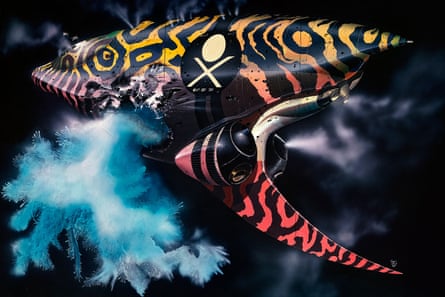
When the studio New Line tried to ditch South African director Richard Stanley from his own HG Wells adaptation, he asked a warlock called Skip to pull some cosmic strings. That did the trick for a while, helping Stanley to charm the film’s star, Marlon Brando. But black magic was no match for cast member Val Kilmer, who demanded a 40% reduction in his own shooting days, then spent his time on set playing power games. There was nature to contend with, too, in the form of wild animals (a puma pisses on Stanley’s tailored suit) and a hurricane that ravages the location in Cairns, Queensland. Finally replaced by curmudgeonly veteran John Frankenheimer, Stanley refuses to leave Australia, which is when things go from mad to worse.
11. No Frank in Lumberton (1988) / Blue Velvet Revisited (2016)
Two behind-the-scenes Blue Velvet documentaries from one director. Peter Braatz was still a film student when David Lynch, with whom he had been corresponding for several years, invited him to Wilmington, North Carolina in 1985 to chart the making of what would become his twisted masterpiece. Braatz marshalled just under an hour of the resulting Super-8 material into his 1988 documentary, which straddled the line between orthodox and experimental. He then reshaped it into a full-on ambient head-trip for the 86-minute 2016 version, which mixes flickering footage and crisp black-and-white photographs with a woozy score and the voices of Lynch, Dennis Hopper and others to form an ethereal audiovisual collage.
10. The Sweatbox (2002)
Disney had high hopes for Kingdom of the Sun, a Prince and the Pauper-style animated musical drama set in the Inca empire. The studio sent Lion King co-director Roger Allers on a research trip to Peru and commissioned a suite of new songs by Sting. But it was back to the drawing board after a calamitous screening of an early rough cut; Allers and Sting were given the heave-ho, and the movie was retooled as the larky comedy The Emperor’s New Groove. Sting’s wife, Trudie Styler, charts every disastrous step in a documentary that Disney has done its darnedest to suppress.
9. From Darkness to Light (2024)
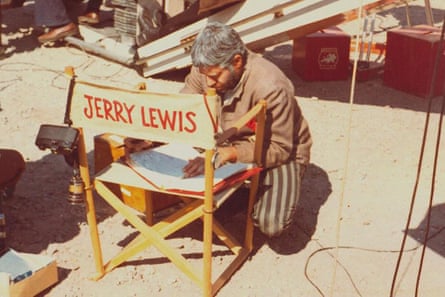
A 10-a-penny title for an account of a once-in-a-lifetime film-making folly: Jerry Lewis’s abandoned, incomplete 1972 Holocaust drama The Day The Clown Cried. Directing himself as a former clown who entertains children in a concentration camp, Lewis made a misguided bid to be taken seriously. “It was bad work,” he admits here. It wasn’t only the dubious material that defeated the former Nutty Professor: unbeknown to him, the option on the script had expired, rendering the entire project illegal. It was his decision, though, to hire a repentant former concentration camp guard as part of the crew. “He was a human being!” Lewis protests.
8. Poultry in Motion: Truth Is Stranger Than Chicken (2008)
Seventy-odd fans of horror exploitation studio Troma worked unpaid on Poultrygeist: Night of the Chicken Dead while living in a deserted church in a rundown corner of Buffalo, New York, with one cold shower between them. Meanwhile, the chicken-themed zombie flick was shot at a nearby abandoned McDonald’s. This documentary captures all the on-set horror, from the sexually disinhibited auditions to the hourly cast-and-crew bust-ups. Actors walk off, burst into tears and throw punches; a zombie extra accidentally sets himself on fire; and bilious co-director and Troma boss Lloyd Kaufman proves both lackadaisical and tyrannical.
7. Shirkers (2018)
When budding film-maker Sandi Tan met the enigmatic Georges Cardona, he cited Fitzcarraldo as his inspiration and claimed to know crew members from Apocalypse Now. Those pictures – famously troubled productions that spawned their own jaw-dropping documentaries – look like red flags considering what came next: Cardona directed Tan’s indie road movie Shirkers, swallowing up $10,000 of her savings when he ran out of money, then vanished with the resulting 70 reels of unprocessed film. She didn’t see the footage until decades later, when those reels were returned to her by Cardona’s widow. Tan’s sobering 2018 documentary attempts to make sense of the betrayal.
6. The Peddler (2010)
“Good film directors will notice many mistakes,” says prolific camcorder auteur and 67-year-old Santa Claus lookalike Daniel Burmeister. “But I like what I do: making hand-crafted films.” In exchange for a month’s food and accommodation, Burmeister sets up shop in a remote Argentinian village to bring the community together by shooting a movie from one of his own scripts. His budget may be nonexistent but his resourcefulness is boundless: in place of a dolly shot, for instance, he sits on a blanket, camera on his shoulder, while being dragged across the floor. This delightful, deeply humanistic portrait of grassroots DIY cinema has all the charm and idiosyncrasies of a Jared Hess comedy.
5. Lost in La Mancha (2002)
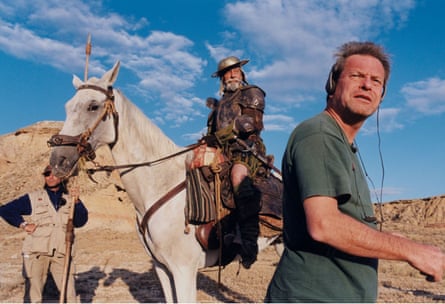
Terry Gilliam was happy to have documentary makers Keith Fulton and Louis Pepe on set for The Man Who Killed Don Quixote after being impressed by The Hamster Factor, their behind-the-scenes film on the making of his earlier 12 Monkeys. The anguished result shows exactly why Quixote was abandoned after six days’ shooting in Spain in September 2000. Takes were rendered unusable by the roar of F16s from a nearby Nato base; Jean Rochefort, co-lead opposite Johnny Depp, fell seriously ill; and the equipment was destroyed by a merciless storm. Gilliam’s on-set catchphrase sums it up: “We’re fucked!” (When Quixote was eventually made in 2018, Fulton and Pepe documented that shoot, too, in He Dreams of Giants.)
4. Henri-Georges Clouzot’s Inferno (2009)
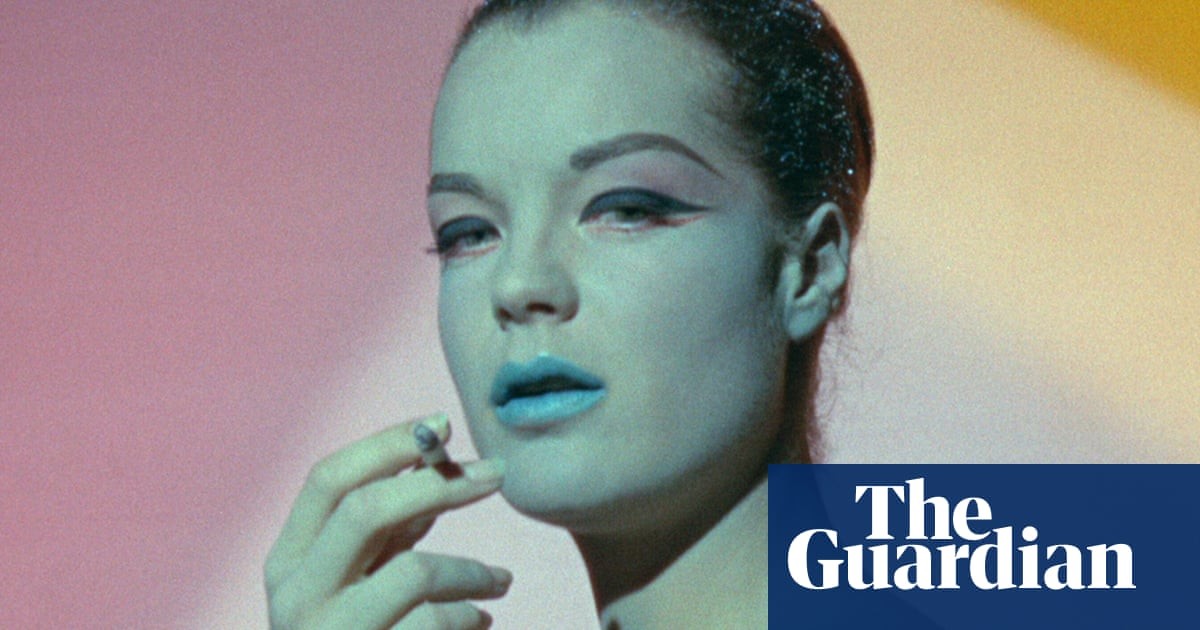
The subgenre of documentaries about unfinished films stretches back to the BBC’s 1965 The Epic That Never Was, which investigated Josef von Sternberg’s planned version of I, Claudius starring Charles Laughton and Merle Oberon. But it reached its apotheosis with Henri-Georges Clouzot’s Inferno, Ruxandra Medrea and Serge Bromberg’s ravishing reflection on an early-1960s Proustian psychological drama from the director of Les Diaboliques. Lavishly funded by Columbia, Clouzot’s vision was impossibly ambitious, with three crews and a trippy array of complicated in-camera special effects. The director, who could not be dissuaded from shooting time-consuming test footage, suffered a heart attack three weeks into the 18-week shoot. The fragments of his vision, cherrypicked here from 15 hours of unseen footage, are intoxicating: where else can you see Romy Schneider covered in glitter, cellophane and olive oil?
3. Burden of Dreams (1982)
Deep in the rainforests of South America, Werner Herzog battles mud and misery, along with his leading man Klaus Kinski, to make Fitzcarraldo, about one man’s dream of building an opera house in the Amazon. Les Blank’s documentary, which is arguably more compelling than the movie it’s about, enables us to watch in disbelief as a film about a lunatic mission turns into one itself. Herzog’s initial footage has to be abandoned when the lead actor, Jason Robards, falls ill with amoebic dysentery and co-star Mick Jagger is needed on a world tour. Up and running again, the production is forced to relocate more than 1,000 miles away due to a border war, while Herzog’s plans to move a steamship up a hillside provide a textbook example of madness eclipsing method.
2. American Movie (1999)
Mark Borchardt, a Milwaukee junkyard poet with a mullet and plateglass specs, may be best suited to factory work or serial killing, according to his brother, but he positively glows with a passion for cinema. Lacking the funds to finish his feature debut, he instead tries to complete a short horror film, Coven, undaunted by his inability to pronounce the title. More Wiseau than Welles, he has optimism and indefatigability to burn. Not to mention a crew of colourful collaborators, including his mother, whom he enlists as an extra despite her protestations that she needs to go shopping; his bleary, poodle-haired pal and former acid-head Mike; and the gnarled, trailer-dwelling Uncle Bill, who needs 30 takes to deliver four lines. Director Chris Smith (who later made the priceless Fyre festival documentary) rightly portrays Mark as one of cinema’s most inspiring heroes – even if he still hasn’t finished his first feature.
1. Hearts of Darkness: A Filmmaker’s Apocalypse (1991)
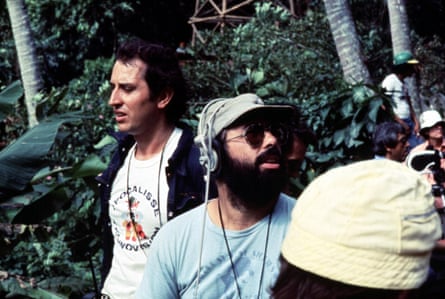
Megadoc, the forthcoming behind-the-scenes film about Francis Ford Coppola’s $120m passion project Megalopolis, is directed by Mike Figgis, though earlier Coppola-related documentaries tended to be family affairs. The director’s late wife, Eleanor, was responsible for Making Marie Antoinette, released later this month, about their daughter Sofia’s 2006 historical fantasia. And it was Eleanor, too, who co-directed the extraordinary Hearts of Darkness, which draws on her 60 hours of footage and 40 hours of audio recordings, as well as her own diaries, all from the turbulent 238-day shooting of Apocalypse Now. The film reveals her husband arguing on set with Dennis Hopper, frantically typing new scenes just moments before the cameras roll, and negotiating with Marlon Brando, who has piled on the pounds but neglected to learn his lines. “I’m thinking of shooting myself,” the director confides. “This is one crisis I can’t pull myself out of.”
What's Your Reaction?
 Like
0
Like
0
 Dislike
0
Dislike
0
 Love
0
Love
0
 Funny
0
Funny
0
 Wow
0
Wow
0
 Sad
0
Sad
0
 Angry
0
Angry
0






Comments (0)