

Shadows of Beirut review – chaos and crisis as woman goes back to birth city in fractured Covid-era drama
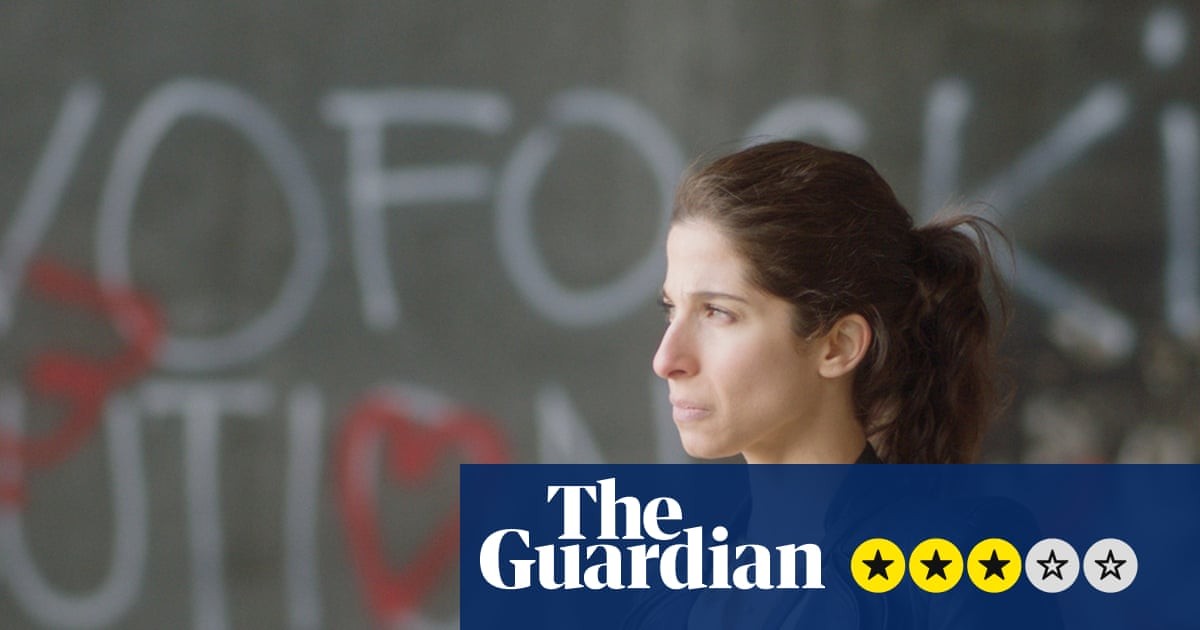
This somewhat overwrought drama was apparently shot during the Covid-19 pandemic, partly in the city of the title and partly on sets in a Bulgarian studio. Its higgledy-piggledy production schedule perhaps accounts for the film’s fractured, frenetic quality and the feeling that the characters are perpetually in motion. Mind you, to be fair, the shredded editing might also be meant to reflect the distraught mental state of protagonist Lana (Tala Calil, also co-writer and producer) and the energy of the city itself, a municipality ravaged by wars that also has some of the most chaotic traffic in the Middle East. There’s even a scene where Lana’s new friend Sirine (Flavia Bechara) is driving and wants to take her coat off so she makes Lana take the wheel, much to Lana’s terror and distress, a nonchalance about safety believable for a city where traffic lights appear to be only a suggestion.
That said, Lana has a lot going on so she’s easily rattled. She left Beirut 25 years earlier, and has only come back to see her biological father of whom she has only negative memories, from a childhood blighted by his alcoholism and violence. These days she lives in London with her boyfriend Ben (Michael E Rodgers) and her mother, but the former relationship is also rocky due to Lana’s OCD. She’s obsessed with wearing as much sanitary PPE kit as possible, including not just an N95 (in UK FFP2) mask but one of those full-face clear plastic ones, too. However, she suddenly finds the strength to stop wearing all the gear when she gets back to Beirut and reconnects with her cousin Rami (Assaad Bouab). She starts to open up a bit more, and befriends the aforementioned Sirine, who helps Lana when she’s having a panic attack at the hospital. By slow degrees she works up enough fortitude to face her father before he dies, but that means confronting some family secrets she never knew.
Honestly, there’s so much going on here and the somewhat stiff line readings suggest that the actors aren’t completely committed to the material, at least when they’re speaking English. But director Tina Gharavi gets more out of her cast when they’re speaking Arabic; there are all sorts of interesting micro performances from characters around the edges of the main action, from some men hanging out in a ruin chatting, to a robust scene where Rami’s haughty wife humiliates him with a stream of invective as a whole party of relatives look on, aghast. The film’s world certainly feels lived in and beloved, despite all the problems with ruined housing stock, financial insecurity and unhappy families.
What's Your Reaction?
 Like
0
Like
0
 Dislike
0
Dislike
0
 Love
0
Love
0
 Funny
0
Funny
0
 Wow
0
Wow
0
 Sad
0
Sad
0
 Angry
0
Angry
0








Comments (0)