

Sony RX10 V Review: Sometimes the Best Still Isn’t Good Enough
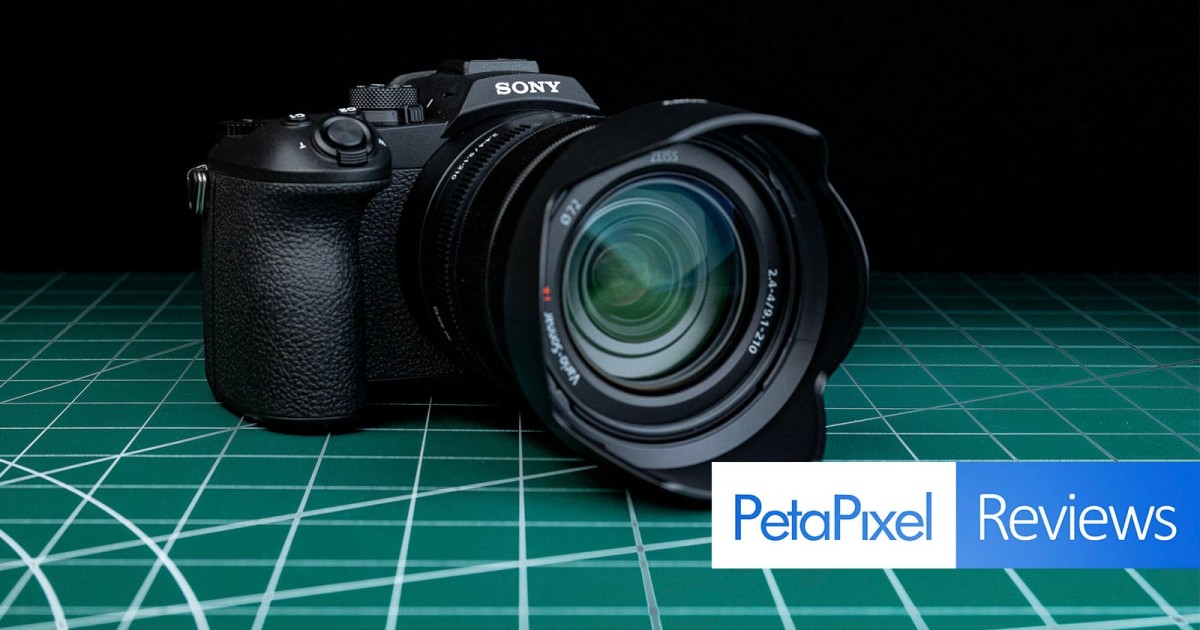
Nearly nine years after Sony unveiled the Cyber-shot RX10 IV bridge camera, the company is back with its long-awaited successor, the RX10 V. Much has changed in the photography space since 2017, but unfortunately, I cannot say the same about the RX10 V.
The Sony RX10 IV has attracted a huge audience since its 2017 debut. The camera’s winning combination of a reasonably competent stacked 20-megapixel Type 1 sensor, an expansive and versatile 24-600mm-equivalent f/2.4-4 Zeiss lens, and an Alpha-inspired design has made it a go-to bridge camera option for photographers seeking a camera that can just about do it all without fussing with interchangeable lenses.
To its credit, the RX10 V offers the same benefits and still fulfills its predecessor’s promise to be good at an impressively wide range of photographic tasks. However, where the Sony RX10 V comes up short is that what perhaps felt impressive nearly a decade ago is not quite so now. Despite a redesigned body and an array of new features, the RX10 V doesn’t feel unquestionably modern. In fact, it feels decidedly old-school in some meaningful ways.
It’s not all bad news, of course. There is still a lot to like about the RX10 V. So let’s dive in, see what’s new and analyze what works well, and, more importantly, identify what doesn’t.
 105mm equiv., f/8, 1/640s, ISO 100
 383mm equiv., f/4, 1/1000s, ISO 100
Sony RX10 V Review: How it Feels
We’re actually going to get off to a positive start here with the RX10 V, as its redesigned body and overall handling are, by and large, a strong point for Sony’s newest point-and-shoot camera.
While the RX10 IV had a perfectly fine design, it was quite old feeling even at the time of its release. In stark contrast, the redesigned RX10 V looks and, even more importantly, feels like a modern Sony Alpha camera.
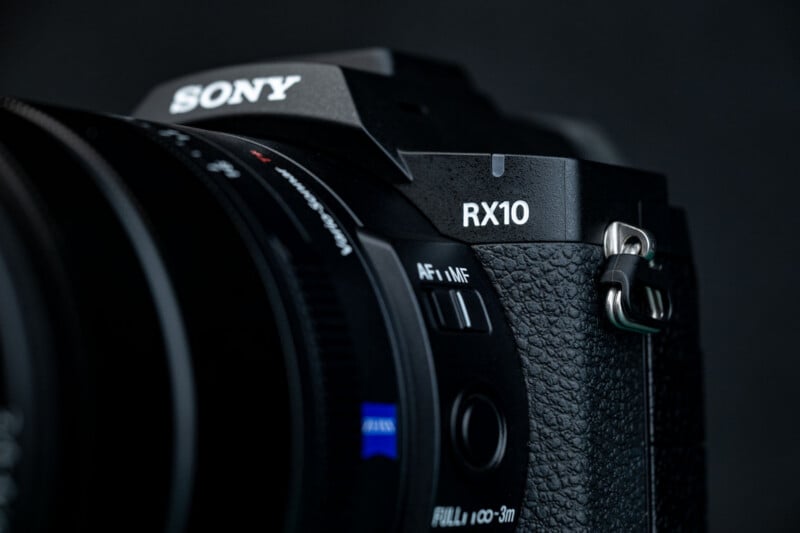
Aside from the large built-in lens and relatively short viewfinder protrusion on the top, the RX10 V looks a lot like a Sony a7-series camera at first glance. It has many of the same controls as well, and those are located in similar spots. For example, one of the biggest improvements here is the introduction of a dedicated autofocus point sub-selector joystick on the back of the camera. It feels and works like the same type of joystick on something like an a7 V.
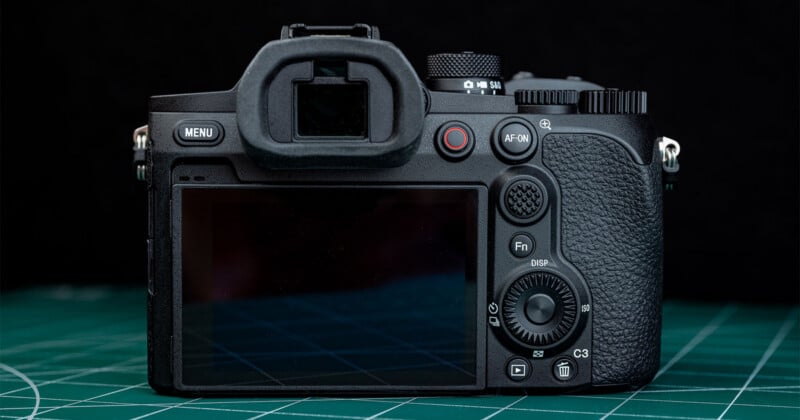
Likewise, AF-ON and Fn buttons are in familiar positions and the camera’s rear directional pad with its rotating dial has dual functions, like pressing left for drive mode and self-timer, right for ISO, and up for your display options.
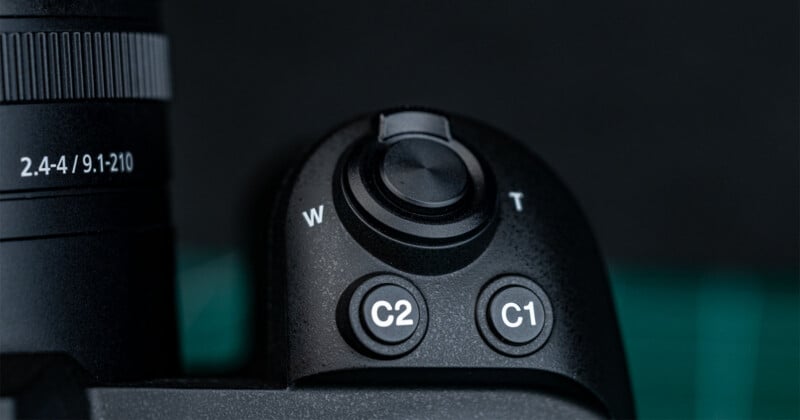
The top of the camera has a very typical mode dial with a secondary rotating control for swapping between photo, video, and S&Q modes. There are a pair of command dials, including one that locks, custom C1 and C2 buttons, and a rocker around the shutter release for controlling zoom. There’s also a rather unusual power switch. It’s not bad, it’s just different than most cameras.
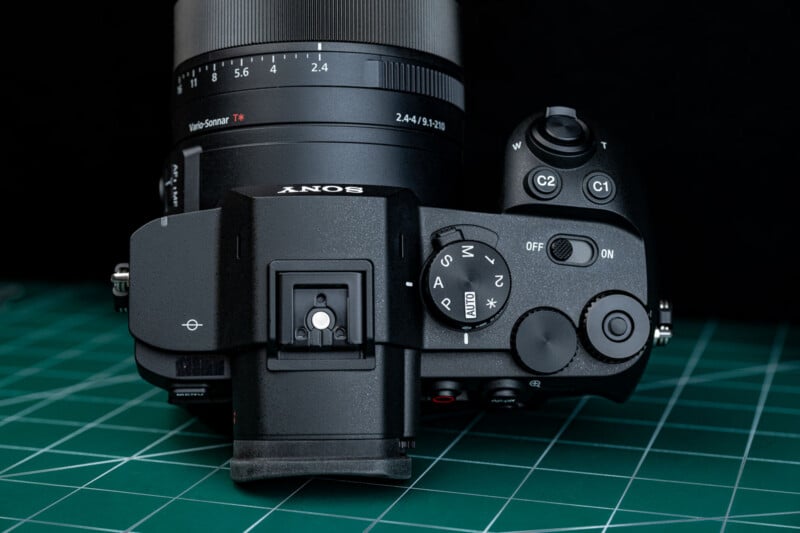
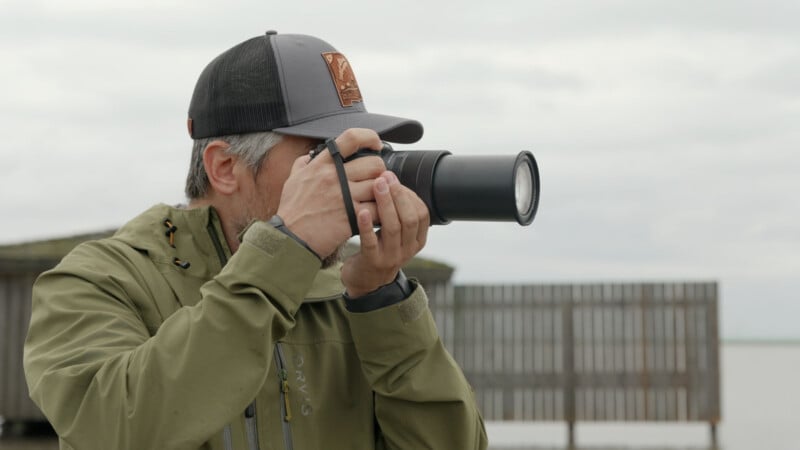
Speaking of controlling the lens zoom, I found the rocker switch around the shutter release to be, by far, my preferred way of changing the focal length. While you can change the zoom directly from the lens with a powered zoom ring, it is really slow and requires a lot of rotation. It’s not like the zooming mechanism is that fast when using the rocker switch either, but it’s definitely swifter.
What’s definitely a more pleasant thing is the aperture control ring on the lens. While you can certainly control the aperture via the camera body itself if you want, I do like the direct aperture control on the lens, similar to many of Sony’s E-mount lenses.
Another big change is the move to a new, larger, higher-res electronic viewfinder. The EVF has gone from a 0.39-type 2.36-million-dot unit with 0.7x magnification to a 0.5-type EVF with 3.69 million dots and 0.78x magnification. It’s a good, sufficiently large, and sharp new EVF, and I’m a big fan. It also has a faster 120 frames per second frame rate and blackout-free shooting, but more on that later.
The camera’s other display, the rear three-inch 1.62-million-dot panel, is technically new as well, although it’s not all that different in terms of resolution, increasing from 1.44 million dots. The screen has also moved from a 4:3 aspect ratio to 3:2. Like the RX10 IV, the RX10 V’s screen tilts, but does not swivel. I would have loved to see a fully articulating display here, but that’s a relatively minor quibble.
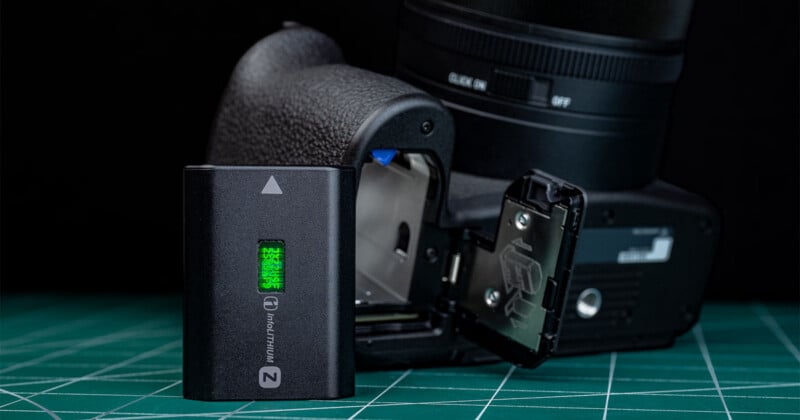 The Sony RX10 V moves to Sony’s NP-FZ100 battery. This is a big improvement compared to the RX10 IV’s NP-FW50 battery.
There’s another big change to Sony’s camera system since the RX10 IV hit the scene: a wholesale menu redesign. Fortunately, the RX10 V, like Sony’s other new cameras in the past few years, benefits from this improvement. The UI is essentially like any other Sony camera launched lately, and it’s easy to navigate.
Overall, while the redesigned RX10 V has gotten a little bit beefier and a smidge heavier than its predecessor, I really enjoyed carrying it around. It never felt excessive.
Sony RX10 V Review: How It Shoots
This is where things start getting significantly more complicated. On paper, there are some changes, but in many fundamental ways, the RX10 V feels a little too familiar and, by extension, outdated.
The camera’s 20-megapixel Type 1 stacked Exmor RS CMOS sensor, effectively the same as before, is paired with an upgraded, more powerful Bionz XR processor. This new processor, previously featured in the Sony a7 V late last year and the a7R VI just a couple of months ago, incorporates a dedicated AI processing unit. In theory, this should drive meaningful improvements.
 101mm equiv., f/4, 1/1000s, ISO 100
In practice, the RX10 V doesn’t actually perform like I expect a modern camera to — at least not in all the areas I was hoping.
Image Quality
Let’s get one thing out of the way first: the RX10 V’s image quality is fine. In some situations, it’s even very good.
When light is sufficient and ISO can stay low, the RX10 V can deliver some sharp, colorful photos with reasonable enough dynamic range given the sensor’s size. The dynamic range is a far cry from Sony’s APS-C and full-frame cameras, of course, but it’s perfectly serviceable in this product segment.
 522mm equiv., f/4, 1/1000s, ISO 100
 549mm equiv., f/4, 1/500s, ISO 250 | Photo by Chris Niccolls
Unfortunately, I was not able to test out the RX10 V’s RAW files due to a lack of beta support in Sony’s Imaging Edge software, but low-ISO JPEGs are entirely satisfactory. The camera will lose shadow and highlight detail faster than any modern interchangeable lens camera on the market, but photographers have accomplished a lot with much worse sensors. I expect that RAW processing will be versatile enough to correct for minor exposure errors and recover some missing detail.
Where the problems arise is when the going gets tough, which is something of a pattern with the RX10 V. In low light, the RX10 V struggles. Even at ISO 800, image quality noticeably degrades. At ISO 1600 and 3200, fairly normal ISO settings for most cameras in 2026, the RX10 V has a hard time.
 600mm equiv., f/4, 1/800s, ISO 3200
 81mm equiv., f/3.5, 1/60s, ISO 6400 | Photo by Chris Niccolls
I’d love to be able to see what I could do using manual noise reduction on a RAW file, but with JPEG images, the camera’s noise reduction is excessive. Photos get a muddy, overly smooth look. High ISO photos are, frankly, unpleasant to look at.
There’s also one more thing worth mentioning. While eventual RAW editing support will solve this issue, the RX10 V’s automatic white balance (AWB) is iffy, at best. In mixed lighting or low-light situations, I found the camera consistently delivered images that were too cool and a bit flat. While recent Sony cameras have improved by leaps and bounds in terms of AWB performance, thanks largely to AI processing improvements, the RX10 V doesn’t really follow suit.
Autofocus
The move to the new Bionz XR image processor comes with significant changes to how the RX10 V autofocuses. For example, there is now Real-Time Recognition AF for a wide range of subjects, similar to that of other recent Sony cameras.
 600mm equiv., f/4.5, 1/1000s, ISO 125 | Photo by Chris Niccolls
The RX10 V has 575 autofocus points that cover nearly 71% of the image area. It has all the expected focus-area mode settings, such as four different spot sizes, custom framing, and full-area AF.
 Sometimes the autofocus is pretty good, even in a relatively tough backlit scene like this. | 600m equiv., f/8, 1/1250s, ISO 320
The biggest improvement here is that Real-Time Recognition AF can recognize and track humans, animals, birds, insects, cars, trains, and planes. There’s also an Auto mode that detects the subject in the frame, though I found it noticeably less reliable when photographing animals than when I manually set the camera to the appropriate subject detection mode.

 Sorry, no ‘Boat’ mode. But that’s not a problem for regular ol’ autofocus modes. | 351mm equiv., f/4, 1/500s, ISO 100
Speaking of unreliability, I admit I expected better autofocus performance from the RX10 V overall. Sometimes the tracking was very good, quickly locking onto a bird or a small mammal. However, when light levels dipped even a little or the background got just the slightest bit busier, the camera could really struggle. At its best, it’s very good. At its worst, though, it’s frustrating.
 And sometimes, it’s really not good at all. | 600mm equiv., f/5.6, 1/1000s, ISO 800 | Photo by Chris Niccolls
The insect mode was similarly inconsistent. There were times when I was very impressed by the camera’s ability to pick out a bug among a relatively cluttered scene, and then other times when a large insect was front and center, entirely unobscured, and the camera just refused to pick it up.
 600mm equiv., f/4, 1/1000s, ISO 100
 600mm equiv., f/4, 1/1000s, ISO 100
One area where the RX10 V seemingly doesn’t miss a beat at all is when photographing people, for what it’s worth.
 136mm equiv., f/4, 1/160s, ISO 250
When the autofocus works, it really works well. It can be quick and decisive. However, I didn’t find it all that reliable, and certainly not up to my standards for today’s camera technology. I think that for people who aren’t necessarily looking to photograph small, fast-moving critters, the RX10 V could prove highly capable.
It’s when it is even the least bit challenged that the camera stumbles, and that is, unfortunately, also when I find myself the most frustrated. I know what Sony’s autofocus technology is capable of, and while I likewise know that the RX10 V is not a professional-grade tool, it costs $2,300, which is a serious chunk of change. I think it’s fair to have high expectations, and the RX10 V just doesn’t consistently meet them.
 202mm equiv., f/4, 1/1000s, ISO 100
 600mm equiv., f/4, 1/1000s, ISO 125 | Photo by Chris Niccolls
Performance
On the other hand, the RX10 V’s new Bionz XR processor is mostly good news for continuous shooting performance. The camera can shoot at 30 frames per second, entirely blackout-free, with AF/AE calculations. That’s great.
It does come with some caveats, though. This speed requires the electronic shutter, which isn’t surprising. But it also requires shooting lossy RAW files, if you want to shoot RAW at all. That’s a bit more surprising to me, and not ideal when I am trying to have great image quality and speed.
 600mm equiv., f/8, 1/1250s, ISO 250
 600mm equiv., f/4, 1/800s, ISO 100
On the plus side, the stacked sensor still delivers a usable dynamic range with the electronic shutter. That said, peak dynamic range isn’t particularly great anyway, but it’s nice that, in many ways, there’s not a big penalty for using the electronic shutter. That’s also true for rolling shutter, as it’s not really an issue with this camera thanks to the fast readout speed.
There is one pretty glaring omission in the performance department, though. Sony’s other two Bionz XR-equipped cameras have Pre-Capture, which lets you half-press the shutter to record a continuous stream of photos before fully pressing the shutter. This is really useful when photographing unpredictable subjects, like birds or athletes. The RX10 V would really benefit from this feature, and it’s a genuine shame it isn’t here.
 This is the exact scenario where Pre-Capture would really have helped me.
Shutter Speed, Aperture, and the Leaf Shutter
Like in the RX10 IV, the RX10 V has a mechanical leaf shutter. Leaf shutters are cool and enable flash sync at much faster speeds, but they do come with certain limitations. In the RX10 V’s case, like its predecessor, these limitations are apparent when using certain shutter speed and aperture combinations.
When using the camera’s mechanical shutter, any shutter speed faster than 1/1000 second means the aperture stops down to f/8. That’s a very slow aperture for a camera with a relatively small image sensor, ushering in unsightly diffraction that softens images. It’s also a slow aperture in terms of depth of field.
 The RX10 V’s bokeh can be really nice. | 600mm equiv., f/4, 1/400s, ISO 100
 600mm equiv., f/4, 1/1000s, ISO 100
 600mm equiv., f/4, 1/800s, ISO 100
 600mm equiv., f/4, 1/1000s, ISO 200
 490mm equiv., f/4, 1/250s, ISO 200
The RX10 V can actually deliver really pleasant out-of-focus backgrounds at its maximum aperture, which ranges from f/2.4 at the very widest end to f/4 at 100mm (equivalent). While f/4 may not blow you away, when you’re at equivalent focal lengths like 300-600mm, it can create a nice, soft background in favorable situations. Sometimes the RX10 V’s bokeh punches far above its weight class.
But that is not the case at f/8, no matter what you do. So if you want to shoot at 1/2000 or 1/4000 second and f/2.4, f/4, or even f/5.6, you’ll need to use the electronic shutter. And again, while the electronic shutter is good in many ways, it’s not quite as good as mechanical in terms of image quality.
Sony RX10 V Review: The Best Bridge Camera for Video
The Sony RX10 V is a surprisingly impressive hybrid camera for those seeking an all-in-one, versatile camera.
The camera records at 4Kp120 with a slight crop, 4Kp60 at the full width of the image sensor, and supports 4:2:2 10-bit All-I. It also has Sony’s Multi Interface (MI) Shoe, S-Cinetone, S-Log3, LUT support, and slow-motion recording. For those who want to live stream, the RX10 V supports that too at up to 4Kp30.
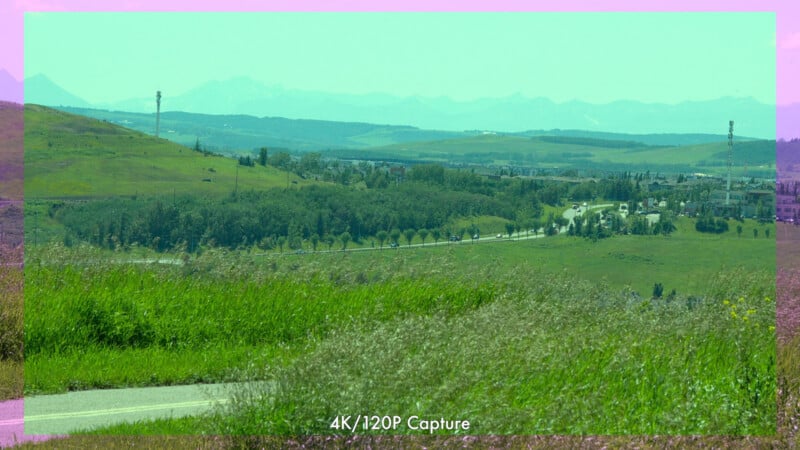
Add in the fact that it has things like Active Mode image stabilization, Auto Framing, (mostly) competent autofocus, and an extremely expansive built-in zoom (plus digital Clear Image Zoom), and there’s an awful lot here to like.
While I can safely say the RX10 V did not meet or exceed all of my photographic expectations for a $2,300 bridge camera in 2026, the same cannot be said for its video features and performance. It’s the best in its class by a country mile.
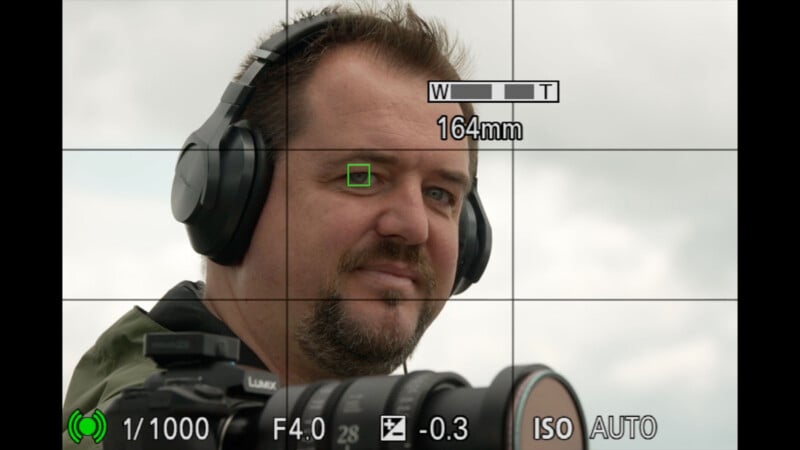
In our video review above, Jordan Drake goes into significantly more detail, but the main takeaway here is that it’s a well-rounded video tool with relatively few drawbacks. As Drake says, the RX10 V “beats the pants off” its competitors and is better than any similarly priced camcorders.
I Understand Why People Will Love the RX10 V, but I Just Don’t
All the same reasons consumers have tripped over each other trying to grab a Sony RX10 IV for the past eight years still hold true today with the new RX10 V. It remains a very versatile, mostly capable camera that does a pretty good job at just about everything.
The tradeoff is that to have a wildly versatile camera like the RX10 V and its 24-600mm f/2.4-4 equivalent lens, the typical photographic experience tops out at “pretty good.”
Pretty good image quality, pretty good autofocus, and pretty good operability at a pretty premium price. Sorry, but that doesn’t seem good enough to me.
 It’s pretty great to have a camera that can go from this 24mm equivalent shot
 To this 600mm equivalent one within just a couple of seconds.
If I had to sum up my experience with the RX10 V, it’s much like when I went hands-on with the RX10 IV back in the day: I constantly feel conflicted.
It’s so easy to see the appeal of a bridge camera like the Sony RX10 V. But I must admit, I expected that with eight years of technological advancements and a new processor, the RX10 V could smooth out more of the RX10 IV’s rough edges. I don’t think it does, at least not all of them or to the degree that it should have. Therefore, the RX10 V falls short of its potential.
 The RX10 V is a very compelling travel camera | 81mm equiv., f/4.5, 1/800s, ISO 100
 70mm equiv., f/3.5, 1/800s, ISO 100
 600mm equiv., f/8, 1/1250s, ISO 160
 302mm equiv., f/4, 1/250s, ISO 160
When my subjects were against a blank background in bright light, everything was smooth sailing across the entire zoom range. The RX10 V felt great, and I experienced what makes it a special camera and what made its predecessor one of the most celebrated and popular cameras of its type ever made.
But when the real world reared its complex head and the photographic situations became more challenging, the RX10 V felt frustrating instead of fantastic. There were more compromises than I’m comfortable with.
For a specific example, I spent a little over an hour camped out on a series of very uncomfortable, slimy rocks on the coast, waiting for some adorable young mink to emerge from their seaweed-covered home. And they did: they played, they ran, and they hunted. It was a really special experience that, on paper, the RX10 V is fully equipped to handle.
 600mm equiv., f/4, 1/250s, ISO 125
 600mm equiv., f/4, 1/800s, ISO 3200
 600mm equiv., f/4, 1/250s, ISO 800
Instead of excelling, though, it stumbled. Focus was indecisive, forcing me to manually zero in on a small, swift subject. Low-light image quality is poor, meaning that many moments that looked great to my eyes in real life look much less so in photos. My hit rate was not where I expected it to be.
There’s no question that I put the RX10 V in a difficult situation, one that I would have fully expected its predecessor to fumble in 2017. But it’s not 2017 anymore, and a prevailing thought I had after it got dark and the mink went back into hiding was, “I wish this camera did a better job.”
That’s not what I ever want to think after taking photos of a subject I really enjoy.
And then there’s the price of it: $2,300. While that is quite a lot for most photographers, it’s also important to consider: Could I have done better with a $2,300 camera kit comprising an interchangeable lens camera and some sort of telephoto zoom lens? Probably not, no. But I’m not going to give a $2,300 camera a free pass just because it does something unique. That alone is not enough for me to put on blinders.
Purely on the value side, the RX10 V’s proposition is attractive. And I believe that for many people, the Sony RX10 V will be an excellent camera that does everything they want and more.
I’m just not one of those people. I want more, and I think that is a reasonable demand.
 600mm equiv., f/5, 1/1000s, ISO 100
 272mm equiv., f/4, 1/400s, ISO 100
Are There Alternatives?
If you can find a used Sony RX10 IV, it’s a perfectly viable alternative for users who just want a versatile bridge camera that can do a lot. The RX10 V’s redesigned body is definitely better, as is its much-improved longevity thanks to the switch to a Sony Z-type battery. But I believe some users, especially photographers, would be well served by a cheaper pre-loved RX10 IV. Just don’t expect to pay all that much less for it, though. Maybe the introduction of the Mark V will result in lower Mark IV prices, but at the time of publication, they’re very high.
For those who really prioritize zooming and don’t necessarily care a lot about image quality, the Nikon Coolpix P1100 is over $1,000 cheaper than the RX10 V, and it has a 24-3000mm equivalent built-in lens. Yes, that’s right, 3000mm. It has a much smaller 16-megapixel CMOS sensor, the lens stops down to f/8, and the camera itself is plasticky and big. Still, it’s a very reasonable choice for those who care most about documenting wildlife, especially birds.
Another compelling choice is the super-affordable Panasonic Lumix FZ80D. It has a small 18-megapixel sensor paired to a 20-1200mm equivalent lens. The image quality is nowhere near as good as that of the Sony RX10 V, but Panasonic’s superzoom is just $450 right now and offers extensive reach.
In terms of bridge camera image quality, feature set, and video performance, the Sony RX10 V is the clear winner. It’s really not even close. It just comes down to how much you want to spend and how much you value extreme focal length range. 600mm is a lot, but you can certainly get more if you’re willing to compromise in other areas.
 217mm equiv., f/6.3, 1/250s, ISO 160
 600mm equiv., f/4, 1/250s, ISO 200
 62mm equiv., f/3.5, 1/400s, ISO 100
 600mm equiv., f/4, 1/800s, ISO 100
 372mm equiv., f/4, 1/640s, ISO 100
Should You Buy It?
I have been wringing my hands over this all-important question. Ultimately, I must cop out a bit here. The answer is “Maybe.”
As critical as I have been of the Sony RX10 V and as much as I wish it were better than it is, it’s also the best overall bridge camera, bar none. So if that’s what you want and you are willing to accept the costs, literally and figuratively, the Sony RX10 V is an impressive and attractive option.
Additional credits: Product photos by Erin Thomson
What's Your Reaction?
 Like
0
Like
0
 Dislike
0
Dislike
0
 Love
0
Love
0
 Funny
0
Funny
0
 Wow
0
Wow
0
 Sad
0
Sad
0
 Angry
0
Angry
0










Comments (0)