

Space Shuttle Endeavour stacks up nicely for new California exhibit
OFFBEAT
Full launch configuration recreated ahead of Samuel Oschin Air and Space Center's November opening
The California Science Center has unveiled its Space Shuttle Endeavour exhibit, featuring the retired spacecraft mounted in launch position with the familiar orange external tank and twin solid rocket boosters.
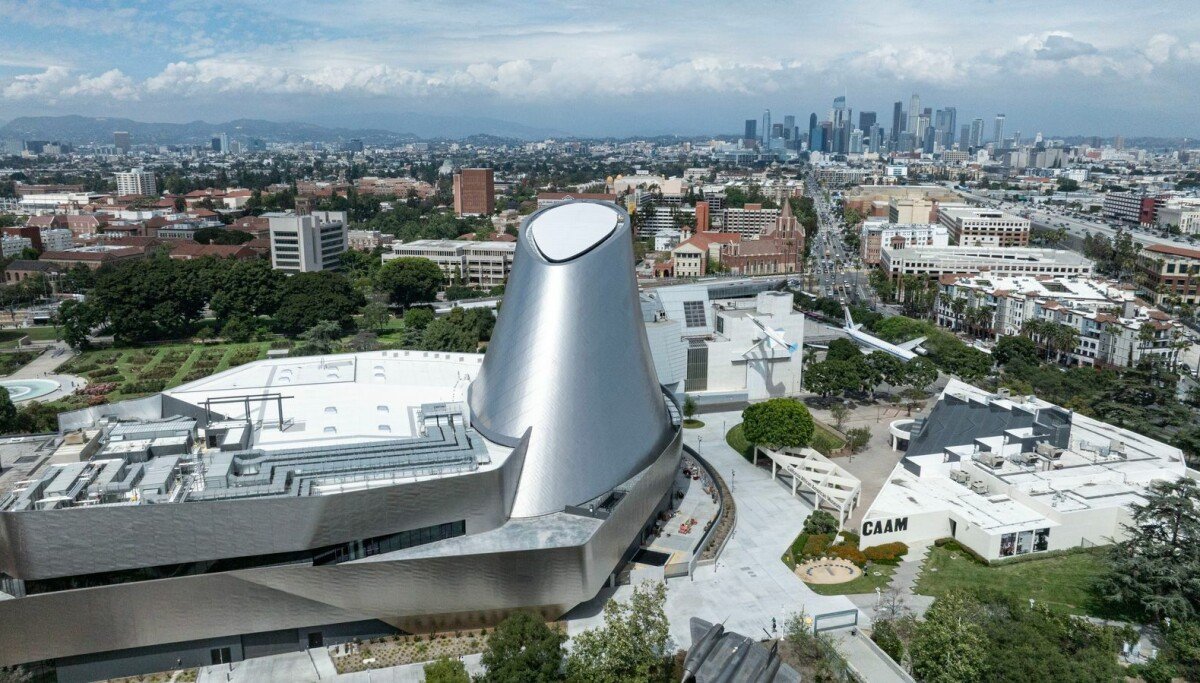
The exhibit will be housed in the Samuel Oschin Air and Space Center, which is due to open on November 13, 2026, after a multi-year construction effort. Endeavour arrived at the California Science Center in 2012 after an overland journey from LAX. Following several years parked in what can best be described as a jumped-up hangar, it has now been moved into a vertical position with the tank and boosters attached.

The Space Shuttle Endeavour is shown mounted vertically with its orange external tank and solid rocket boosters inside the California Science Center exhibit hall. Image courtesy: California Science Center
The museum isn't quite done. Although the Space Shuttle is now in place, months of artifact and exhibit installation work remain before visitors will be welcomed to view the vehicle.
Prior to the installation, Atlantis at Kennedy Space Center in Florida was the de facto Space Shuttle exhibit, showing the vehicle as if on orbit with payload bay doors open. The California Science Center has upped the ante with a view of a Space Shuttle as if it were ready for launch.
According to the museum, as well as admiring the stack, visitors will be able to ascend 140 feet alongside the vehicle in a gantry-style elevator, "evoking the experience of astronauts preparing for launch."

California Science Center in Los Angeles. Image courtesy: California Science Center
The tank, ET-94, is the last remaining flight-qualified external tank and is mated to "real solid rocket boosters," the museum says. The earthquake risk posed by the 185-foot-tall stack has been addressed with a hefty concrete slab, approximately eight feet thick and weighing 1,800 tons, supported by six triple pendulum isolators.
As construction got underway in 2023, Dennis Jenkins, a former NASA space shuttle engineer and director of the science center's Endeavour display project, told collectSPACE.com: "There is a 3-foot (0.9-meter) moat around the floating concrete slab so it can move three feet in any direction.
"We don't dampen vertical motion, so whatever vertical motion the earthquake gives us is what we get, but horizontal motion we can move three feet in any direction."
Jenkins also noted that the flight loads the vehicle was designed to take during launch meant that the hardware would likely survive "without permanent damage."

Space Shuttle Endeavour stands upright with its orange external tank and twin boosters inside the California Science Center exhibit hall. Image courtesy: California Science Center
Discovery, the most-flown surviving Space Shuttle orbiter, is currently at the Smithsonian's Steven F. Udvar-Hazy Center in Chantilly, Virginia. While Endeavour is now in launch position, and Atlantis is displayed as though on orbit, Discovery's ultimate fate remains unclear as lawmakers argue over whether and how it should be transported to Houston, Texas – a logistical challenge that could make the California Science Center's achievement seem like child's play. ®
What's Your Reaction?
 Like
0
Like
0
 Dislike
0
Dislike
0
 Love
0
Love
0
 Funny
0
Funny
0
 Wow
0
Wow
0
 Sad
0
Sad
0
 Angry
0
Angry
0










Comments (0)