

Why SD Cards Now Cost More Than CFexpress Type A Memory Cards
I'm a professional photographer and videographer, and for years I shot exclusively on SD cards. Not because they were the best or the fastest, but because I'd been using them for years, I already owned the cards and the readers, and I didn't see a reason to switch. Then a friend who shoots video for a living watched one of my videos and asked me why in the world I was still shooting on SD cards.
My answer was that I buy the expensive V90 cards, the fastest SD cards you can get, and they work fine. His answer was that they're slow and they cost too much. I pushed back on the price, because the last time I looked, CFexpress Type A cards were roughly triple the cost of SD. He told me that hasn't been true for a while, and that he shoots exclusively on Novachips cards, a brand I had never heard of in my life.
The Price Gap That Made No Sense
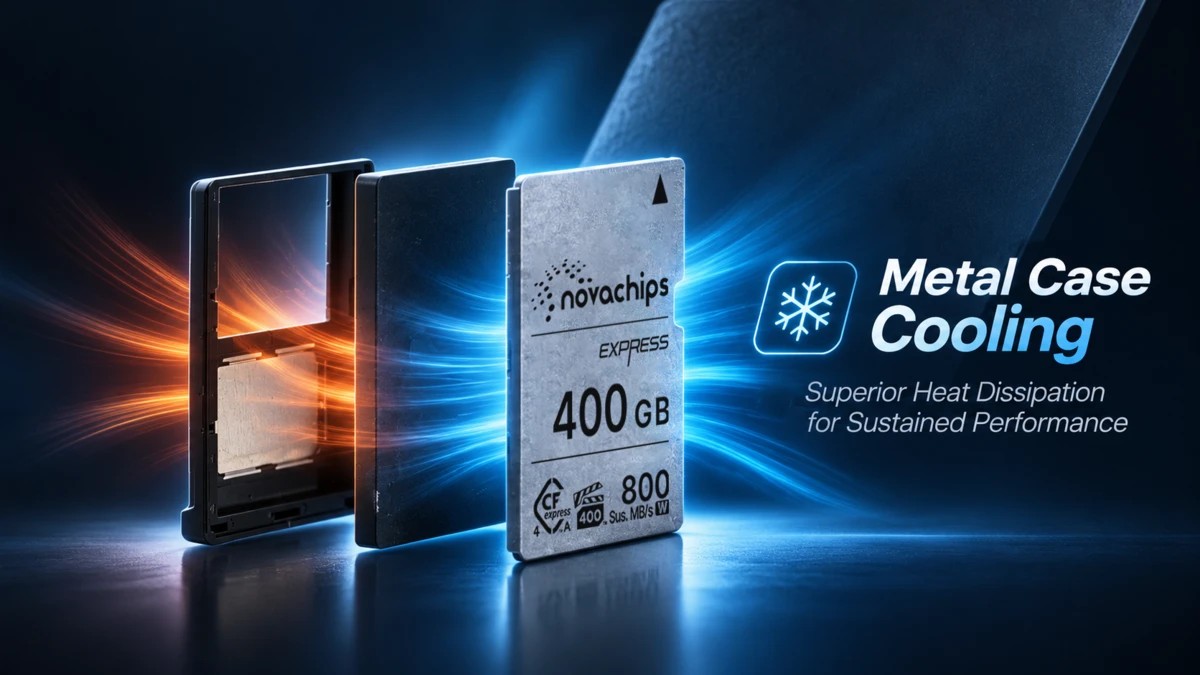
So I put two cards side by side. The SanDisk Extreme PRO 256GB UHS-II card is a V90 card, which means its guaranteed sustained write speed is 90 MB/s, and it was on sale for $360. The Novachips 400GB CFexpress 4.0 Type A card holds more, sustains 800 MB/s writes, and costs $239.
You could argue that I'm comparing a premium name to a brand most people haven't heard of, and that isn't fair. Novachips settles that argument itself, because it makes SD cards too. Its own 256GB V90 SD card is $299, more than its 400GB CFexpress Type A card. Same company, same access to flash memory, and the older format costs more while holding less. Both of the cameras I shoot with can take a Type A card or an SD card, so I wanted to know how a newer card that's faster and larger could be so much cheaper.
A 1999 Design That Kept Getting Patched
SanDisk, Panasonic, and Toshiba created the SD card in 1999, and the biggest card you could buy then held 2GB. Over the next decade, the cards got bigger. SDHC arrived in 2006 and raised the limit to 32GB per card. SDXC followed in 2009, and the UHS-I bus that arrived with the next spec update topped out at 104 MB/s.
UHS-II came out in 2011 and added a second row of pins. To keep those faster cards backward compatible with older slots, the format couldn't start over, so new features were added onto an old design. UHS-III was announced in 2017 with double the bus speed, but as far as I can tell, those cards never really came to market.
Meanwhile, the other family of memory cards took a different path. CompactFlash turned into XQD, and XQD turned into CFexpress, which was announced in 2017. CFexpress is built on PCI Express, the same technology behind the SSD in your computer, which gives it a completely different and much newer foundation than SD.
Why the Older Format Costs More
A CFexpress card is basically a tiny SSD. It speaks the same PCIe and NVMe language as the drive inside your laptop, and that industry ships hundreds of millions of drives every year. The controllers are mature, the volume is enormous, and that scale is what brings the price down.
SD has the opposite problem. You can put the fastest flash chip in the world inside an SD card, but the bottleneck isn't the memory itself, it's the controller and the bus. UHS-II tops out at 312 MB/s on paper. On top of that, nearly every SD card sold today is a cheap, slow card for everyday devices. The fast ones I need for video on cameras like mine are a small, specialized product, and the few people who really need them will pay almost any price.
Price per gigabyte makes the gap plain. At this month's prices, the SanDisk card works out to $1.41 per gigabyte and the Novachips SD card to $1.17. The Novachips 400GB Type A comes in at $0.60 per gigabyte, and its 320GB CFexpress 2.0 Type B card, at $189, comes in at $0.59.
Build Quality
Novachips sent me two cards, the 400GB Type A and the 320GB Type B, and the first thing I noticed was how much more robust they feel than an average SD card. I recently cracked open an SD card, so I know how thin that plastic shell is. The Novachips Type A card is made of metal, and it doesn't twist or bend at all.
The metal body isn't only about toughness. Novachips says the metal case is there to pull heat away from the card, so it can hold its speed during long recordings, which is exactly when a card that slows down costs you footage.
Sustained Speed Is the Only Number That Matters
The only memory card speed that matters is the sustained write speed, because that's what decides whether a card will work correctly with your camera. SD cards make that number hard to find and understand. It hides behind the V rating, so my V90 card has a minimum write speed of 90 MB/s and will never drop below that. The packaging leads with a maximum read or write figure instead, a number the card only hits for a split second before it slows down anyway.
Novachips does exactly what I'd want every brand to do: it advertises sustained speeds only, and it gives both read and write. These are the ratings for the two cards I tested:
- Novachips 400GB CFexpress 4.0 Type A: 1,700 MB/s sustained read, 800 MB/s sustained write
- Novachips 320GB CFexpress 2.0 Type B: 800 MB/s sustained read, 700 MB/s sustained write
The Type B card is a bit slower than the Type A, but it's still many times faster than the 90 MB/s floor of my SD card.
The Speed Test
Novachips also sent two readers, a 40Gbps CFexpress Type A reader and a 10Gbps combo reader that takes CFexpress Type B and SD cards. I used them to run Blackmagic Disk Speed Test on the fastest SanDisk SD card money can buy and on the Novachips Type A card, which is larger, faster, better built, and cheaper.
The SanDisk card wrote at about 305 MB/s. The Novachips card wrote at about 1,154 MB/s and read at about 1,555 MB/s. Disk Speed Test measures a short run rather than the guaranteed floor, but the gap between the two cards is hard to miss. To see numbers like these from a Type A card, you need a fast reader on a fast port; the Novachips Type A reader is a USB4 design, so plug it into a USB4 or Thunderbolt port.
What About Reliability?
I've had a great experience with SanDisk. The one SanDisk card that ever failed on me, about 10 years ago, turned out to be a fake, and no genuine SanDisk card I've owned has ever failed me. So reliability was the question I cared about most with a brand that was new to me.
All of Novachips' CFexpress cards are VPG-rated and officially listed by the CFA. VPG stands for Video Performance Guarantee, a standard from the CompactFlash Association, the industry group that writes the CompactFlash, XQD, and CFexpress specifications. A VPG card is guaranteed to hold a minimum sustained write speed so video never drops frames: 200 MB/s for VPG200, 400 MB/s for VPG400, and 800 MB/s for VPG800.
That rating is harder to earn than most of the logos on a memory card. Most CFA standards are self-certified, but VPG isn't. A manufacturer tests its card to the CFA's specification on a CFA-approved, tamper-proof tester, then submits the report to the CFA for review and certification. Certified cards go on a public list that camera makers use when they recommend cards for video modes that need VPG. When I checked the list this month, it included 13 Novachips cards across Type A and Type B.
Beyond that, read what other people who shoot with the cards say, the same way you would for any brand. Fstoppers' Nicco Valenzuela tested the 400GB Type A card on his Sony a7R V and measured speeds close to its sustained ratings with the Novachips USB4 reader.
Who Should Make the Switch
If your camera has a CFexpress slot and you're still buying top-tier V90 SD cards, you're paying a premium for less storage and slower performance. Type A and Type B cards are different sizes and aren't interchangeable, so check which one your camera takes before you buy. If your camera only has SD slots, a fast SD card is still the right tool for it, and a UHS-II V90 card remains the card to get for heavy video on those bodies.
My Verdict
After doing a ton of research, I've come to the conclusion that SD is simply old technology. It's so old that we're now at the point where we pay a premium for less storage and slower performance. As far as I can tell, CFexpress is better in every way that matters for speed and price, and I also believe it should be more reliable.
It's funny, because I do this for a living. The last time I looked up prices for these cards, they were double or triple the price, and I had no idea that for the last few years I'd been paying a premium for older technology. I feel like I'm converted. I'm going to start filming all of my videos on CFexpress Type A cards, and if anything goes wrong, I'll absolutely let you know. So far, it's an easy decision.
Novachips CFexpress cards are available across major US retailers, including B&H, Adorama, and District Camera.
What's Your Reaction?
 Like
0
 Dislike
0
 Love
0
 Funny
0
 Wow
0
 Sad
0
 Angry
0










Comments (0)