

Steven Conrad Knew ‘DTF St. Louis’ Was a Hit When He Heard a Stranger Say They Didn’t Like It
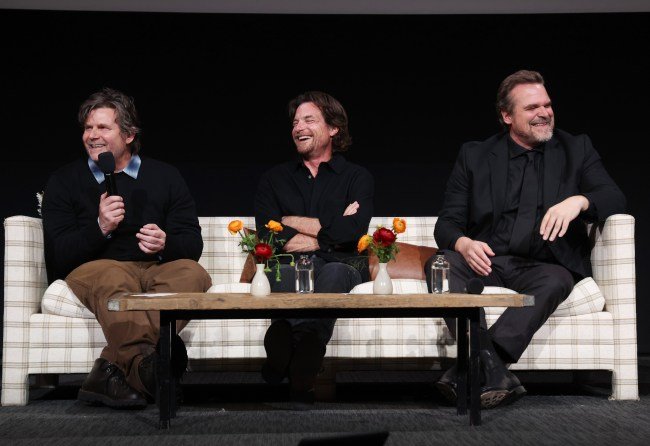

Welcome to It’s a Hit! In this series, IndieWire speaks to creators and showrunners behind a few of our favorite television programs about the moment they realized their show was breaking big.
[Editor’s note: The following interview contains spoilers for “DTF St. Louis,” including the ending.]
It may sound obvious, but “DTF St. Louis” creator Steven Conrad knew he was onto something special as soon as he saw his cast embody their characters. The writer and director behind “Patriot” and “Ultra City Smiths” hadn’t worked with David Harbour, Jason Bateman, or Linda Cardellini before, and each of their roles faced individual challenges beyond his HBO limited series’ tricky tonal balance overall.


Bateman had to perform the first scene in the show and the last scene in the show on the same day of shooting — the first day. Harbour also started at the highest difficulty level, spending his first day on set delivering a critical speech to his stepson, while Cardellini had to tackle the “weight placement” scene in her first week — “the most intimate sexual scene,” per Conrad.
“‘DTF’ was kind of a new thing for me because I had come off of two other TV shows that largely used the same ensemble,” Conrad said. “I was on year four of working with people whose process I knew intimately. What I could do every day to give them the best chance to be great, this was all understood by me. Not true of my relationship to any of the cast of ‘DTF St. Louis.’ We were all strangers. And the first thing that goes when you’re trying to make a plausible schedule is all that rehearsal time.”
Conrad did the only thing he could: He trusted his collaborators. He knew these actors were “routinely excellent” in everything they’d made before “DTF St. Louis,” so there was no reason to doubt them now. Still, he was blown away by how quickly they took to their scenes.
“Their first instinct for the volume or the dynamism of how to read these lines, it was really just right on,” Conrad said. “Inside of that accomplishment, I could hear that it seemed real and it seemed funny when it was supposed to be funny. … When I saw the comprehensive performances, I felt like, ‘Oh, there’s a chance now. We don’t have to score any of these jokes. We don’t have to over-score the tension, you can feel it all.’ When you get performances that are tense and light, it allows you as a filmmaker to really step back a little bit, which is a gorgeous place to be.”
“So that cast was just a gift,” he said. “I knew the first week that, if I didn’t mess it up, there was a chance we could have traction with an audience.”
“DTF St. Louis” indeed found its audience, averaging more than 6.5 million viewers per episode when the finale first premiered, generating strong reviews, and courting early awards buzz. In addition to nominations for Cardellini and Harbour, Conrad won Best Limited Series at the Gotham TV Awards in June. The TCA Awards also nominated the series for Outstanding Achievement in Movies, Miniseries, or Specials and Harbour for Outstanding Achievement in Drama.
Below, Conrad spoke to IndieWire about what motivated him to make a murder-mystery, why he chose to set the narrative in St. Louis, and how it feels to make a TV show that’s connecting with a wide audience after making too many that feel like they “never existed.”
The following interview has been condensed and edited for clarity and length.
IndieWire: From the start, “DTF St. Louis” was always meant to be a murder-mystery, right? That was in your pitch to HBO?
Steven Conrad: That was part of the plan from the very onset. It’s just a genre I wanted to try my hand at. It was really the reason I took on this set of themes and this particular project at HBO. I was wanting to make something that had that question posed that we could explore episode by episode and then reveal in our own way: What was at the heart of that loss of life? I took the job to try to get my head around that genre and then maybe contribute something to it if I could.
So what were some of your big takeaways?
Well, one way or another, ultimately, desperation is kind of it — it’s what you uncover as the reason behind someone taking someone else’s life. In a story that deserves your attention, there’ll be some sort of desperation involved. It’s Hitchcock primarily, who didn’t exactly do whodunits, but the sort of desperation to put the lid back on something, or the undoing of a terrible mistake, became part of the way he organizes his narratives. I thought, “Well, the opportunity to do that for seven hours is very, very exciting.”
[Questions] that weren’t there to provide any greater understanding of the character seemed to be the thing to try to avoid. Making the audience wonder who was capable of [murder] without just doing head fakes seemed to be the challenge; figuring out which characters could present that way, where if you watched it a second time, you might say, “Oh, we have mistook Carol’s fierceness as a mom and as a person just struggling to raise her kid, we mistook that fierceness for darkness.” And Clark, with his effort to have a private intimacy — and to not have his wife find out about it — that desperation could lead to a really terrible decision, too. The worst act that Clark committed was to be dishonest, but you could see if there were a couple of other twists of fate where he might’ve been capable of killing Floyd.
So making them all plausible, but then ultimately understanding that all they were really doing was the best they could, I knew that that was going to be an ending for me. These characters could be revealed as having made mistakes, but they were probably in a clumsy effort to keep their interior light on in their life and find some measure of happiness and peace.
 Richard Jenkins and Joy Sunday in ‘DTF St. Louis’Courtesy of Tina Rowden / HBO
From a cynical perspective, the stories Clark and Carol share with the police could be seen very differently than if they’re heard from an innocent, more empathetic perspective. How important was that balance to you? That if you look at this tale with a suspicious, judgmental lens, you might see it differently than if you just look at it as a human who’s just trying to be heard?
The thing that you just articulated is the difference between Detective Homer, who’s Richard Jenkins’ character, and Jodie Plumb, Joy Sunday’s character. Talking to a murder suspect was what Richard Jenkins was doing. Talking to a human is what Joy Sunday was doing. Jenkins’ journey was to go from listening with suspicion to listening with an open mind.
There’s a moment in [Episode] 2 where Clark says, “I shouldn’t be talking, but I have to talk.” And it really explains that the only way anybody was going to get out from under all of the darkness and shed any light on this at all, he would have to be understood. But one, it was too early to understand him, and two, Homer was incapable of it. [Clark] was going to ask quite a lot out of somebody’s imagination to believe that this all fell naturally on him that summer; that these events, decisions, and moments he shared with each of these people, they were all, in one way or another, normal. But it was going to take days and days and days of uncovering and building some sort of relationship with these investigators where they could little by little start to understand that this was a weird summer for normal people.
Because of that, it’s easy to picture a less interesting but more common version of the show where these cops and eventually lawyers, maybe even a jury, just wouldn’t be able to make the leap with Clark. They would just default to the more ordinary, cynical interpretation of who they think these people are, which could have turned the show into something completely different.
That’s cool, too. There was a line we cut from the show just because of time, but I wrote it and we shot it and it was a moment between Jodie and Homer in that bar where they do a lot of their thinking, and she was challenging him making these assumptions and she was challenging the consequences of making this arrest and filing these charges too early. She asked Homer, “Do you know what percentage of people who are accused of heavy crimes like this, what percentage of them are found guilty in a trial? Like, you make an arrest, you press charges, they go to trial, what percentage of people are found guilty?” Homer didn’t know — he guessed 75 [percent] — and in the state of Missouri, the answer is 99 [percent]. We made up a lot of stuff on this show, but that is true. She’s saying arresting them is the same as convicting them.
When did you settle on the opening credits?
That was me watching dailies. This is how fast TV happens: Our challenge was knowing that Clark was going to have that freak out, and it was going to be slightly karate-based. So the morning of [the shoot], I got up two hours early and did research into foolish-looking individual karate exercises. I found a dozen, and I was able to meet Jason and just say, “Well, look at this. These all feel kind of stupid enough to work, right?” Then he instantly picked his favorites and went off to build his own routine.
So then Jason comes out and he does it, but we filmed a special sequence with a handheld where he was in front of that big studio light, we were in slow-motion, and you could really see Jason’s face, which became my favorite part of this thing — his intensity. I watched that shot the next night, and I thought, “I want to see this more than once.” And then instantly I thought, “Oh, if we put it in the credits, we’ll see it seven times, and it also will exist as some sort of suggestion that Clark had a kind of weird exposure of his internal life; something happened where something that he was trying to keep bottled up came out,” which is true — it’s his sexual life.
But it was really me just enjoying Jason’s performance so much I just wanted to keep watching it. After making seven episodes and 15 cuts for the studio, I must have seen that sequence literally 300-plus times, so I don’t like it anymore. But I loved it that next day so much.
So why did you choose St. Louis? Of all places, why there?
I have never lived in St. Louis. So my St. Louis, it’s more Chicago than St. Louis because I lived in Chicago since I was 18 years old. [The show] might’ve been [set in] Chicago except I didn’t feel the juxtaposition of the DTF part with the city. Does that make any sense? Like, if it was “DTF Las Vegas,” I don’t know that you really feel tension because there’s probably a lot of that going on in Las Vegas. But “DTF St. Louis,” we mistake a city like St. Louis for being more normal than Las Vegas, which it’s not, but I know people make that assumption.
So finding a city to put after DTF that created tension was really the thing for me. It could have been San Diego. There’s any number of cities that you think, “Oh, people are destroying their lives here, too.” It had a little meter ring to it, and the Midwest I felt like I could kind of sink my teeth into and feel some confidence.
I liked the use of St. Louis in part because I live in New York now, I lived in Los Angeles for nine years, but I grew up in the Midwest, and one of the things that always annoys me is when people use the term “flyover states.” It’s dismissive. It implies a kind of boring normalcy, like whatever is down there isn’t worth looking at.
Absolutely, yes. New York or Los Angeles, neither of those two places felt like the right introduction to a limited series that’s going to be about disclosing the secrets of your intimate desires to your neighbors.
 Jason Bateman, Linda Cardellini, and David Harbour in ‘DTF St. Louis’Tina Rowden/HBO
What’s your approach to reactions? Do you seek them out or just put a wall up?
I put a wall up. I don’t live in Los Angeles or New York. I live in Chicago, and the fate of a movie or TV show, it’s not something anybody talks about here. Reviews, that kind of thing, you just aren’t exposed to them. But you can feel it in the world — I’ll give you an example. We made a TV show called “Patriot” for Amazon, and I just never met anybody who had ever seen it. I never saw anybody watching it on a plane, never bumped into anybody who asked me what I did who even knew what it was. It just happened in the dark, like so in the dark, it’s almost like it never happened. Over the years our audience has grown, so it happens now — 10 years later it does happen — but for the first three or four years, it’s as if it never existed.
But I knew that “DTF” had a different fate. I was in my favorite bar in Chicago with my banker just having a beer and, in a quiet moment, I heard the bartender talking to two people about how much she didn’t like “DTF St. Louis.” And, Ben, I went, “Yes!” It didn’t matter that she didn’t like it, she was talking about it! So I just kind of knew that there were people on the other end of this show, one way or another, which was a brand new phenomenon for me.
I could tell that “DTF” had reached a significant enough audience that, even in Chicago, you could hear people talking about it. Good or bad, I was indifferent to that fact because it had never happened to me before. So as much as you try to wall yourself off, it creeps through somehow.
How important is that to you? The impact of your work, the availability of it to audiences?
Well, my takeaway on the finished thing, whether it’s “Patriot” or “DTF St. Louis,” is that you can expect once it’s out in the world that it represents the best you could do at the time. And that’s a lot to ask out of a piece of art or commerce: to just feel like it’s out in the world speaking on your behalf. Now, whether that means it’s speaking well of you or ill of you, it’s really immaterial. If you feel like it is speaking for you, then that is a success because those stay there and they do that.
Both of those shows and another show we did at Epix, “Perpetual Grace Ltd,” I work with a tight group of people and whenever I mention any of the accomplishments, if there are any for these shows, it really references about 12 people who have been together from the pilot of “Patriot” through the last episode of “DTF.” This work that is out there, it’s a success for me if I think it reflects well on those people and their efforts. So far, I think it’s true with the TV stuff. With the stuff that I had a hand in with films, it’s very kind of hit or miss, and there’s a lot because I’ve been doing it since I was 21.
But whether our shows had audiences or not, we got the occasion to really try to make something that felt close to us, dear to us, something that we could feel good about. Whether it drew audiences or not, that’s just dumb luck. And you just have to make peace with that as a grownup; that idea that you got lucky this time. If you say, “Man, we got lucky,” that’s OK because then the next time if it doesn’t click, you say, “We just weren’t lucky.” It’s a terrible thing to have to shake hands with that and go, “This is going to be a part of my life — luck, fate.” But that challenges you just to not quit because every once in a while you’ll get a lucky streak or something. So you just go, “I have to just keep doing this no matter what because everything that can happen will happen if you can just keep going, good and bad.”
Is there anything you can say about what you’re doing next?
Well, we were working on “DTF St. Louis” 10 days before the finale came out, and it was four years for me, so I just took a break. I’m writing a novel for Audible. Some filmmakers do these Audible dramas and I have one coming out that I had to finish. So the next thing for me is an audio novel. And other than that, I don’t really have any set plans on what’s going to be next, but thank you for asking. I appreciate that.
Just so it’s on the record, I loved “Ultra City Smiths.”
[Laughs] Man, talk about a show nobody’s ever seen before. Thank you. That one, I talked about those other shows as if they didn’t exist, but I think “Ultra City Smiths” literally does not exist. I don’t think you can watch it. You know how that’s going right now, where they’re writing things off [for tax reasons] and they just keep getting bought and sold and who owns what. But I don’t think you could watch it if you wanted to even. I think it was one of those fates.
[Editor’s note: At the time of publishing, “Ultra City Smiths” is available to stream with a subscription to AMC+, as well as via The Roku Channel, Philo TV, and Plex.]
But thank you. That one was dear to my heart. That was a COVID show that we just made around that kitchen table that was painstaking, and it was a lot of fun in the details, but a lot of details. So I really had high hopes that that show was going to land. But I’m glad you liked it. I wish we were still making it. I had to write a second season of it, so I know how it all sort of ends. It’s frustrating. I never get to share that.
“DTF St. Louis” is available on HBO and HBO Max.
What's Your Reaction?
 Like
0
Like
0
 Dislike
0
Dislike
0
 Love
0
Love
0
 Funny
0
Funny
0
 Wow
0
Wow
0
 Sad
0
Sad
0
 Angry
0
Angry
0







Comments (0)