

Surface Laptop Ultra targets 110W TDP for RTX Spark Superchip — Microsoft reveals power budget of its high-end 15" system in hands-on session
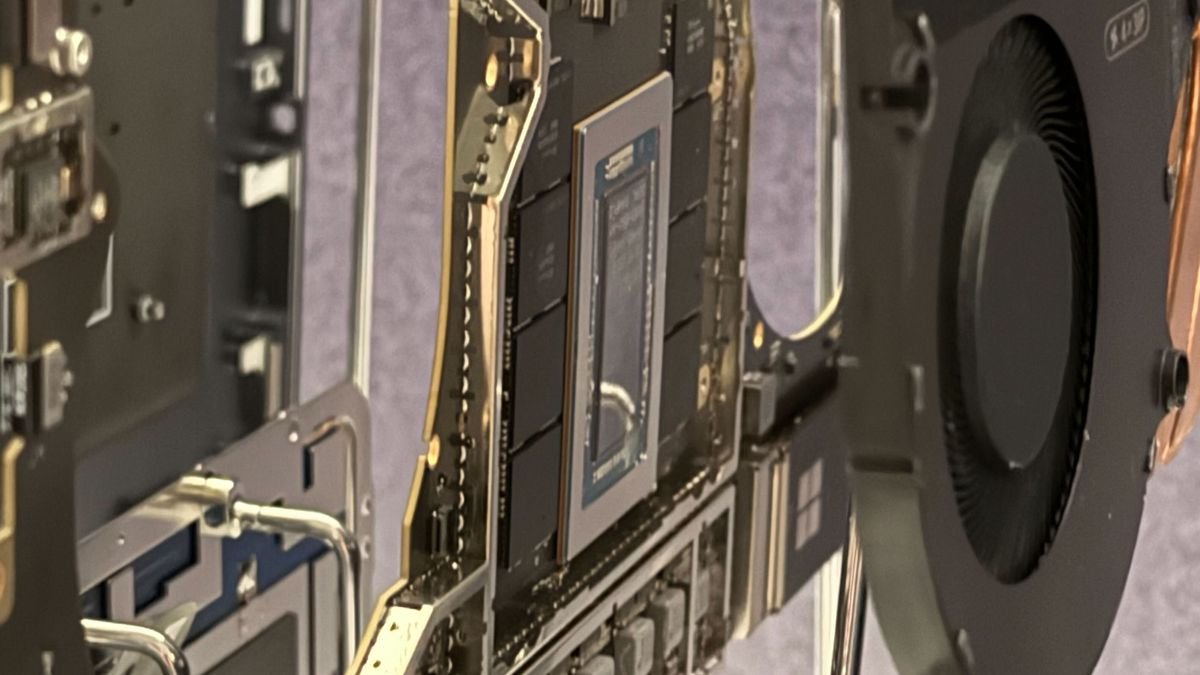
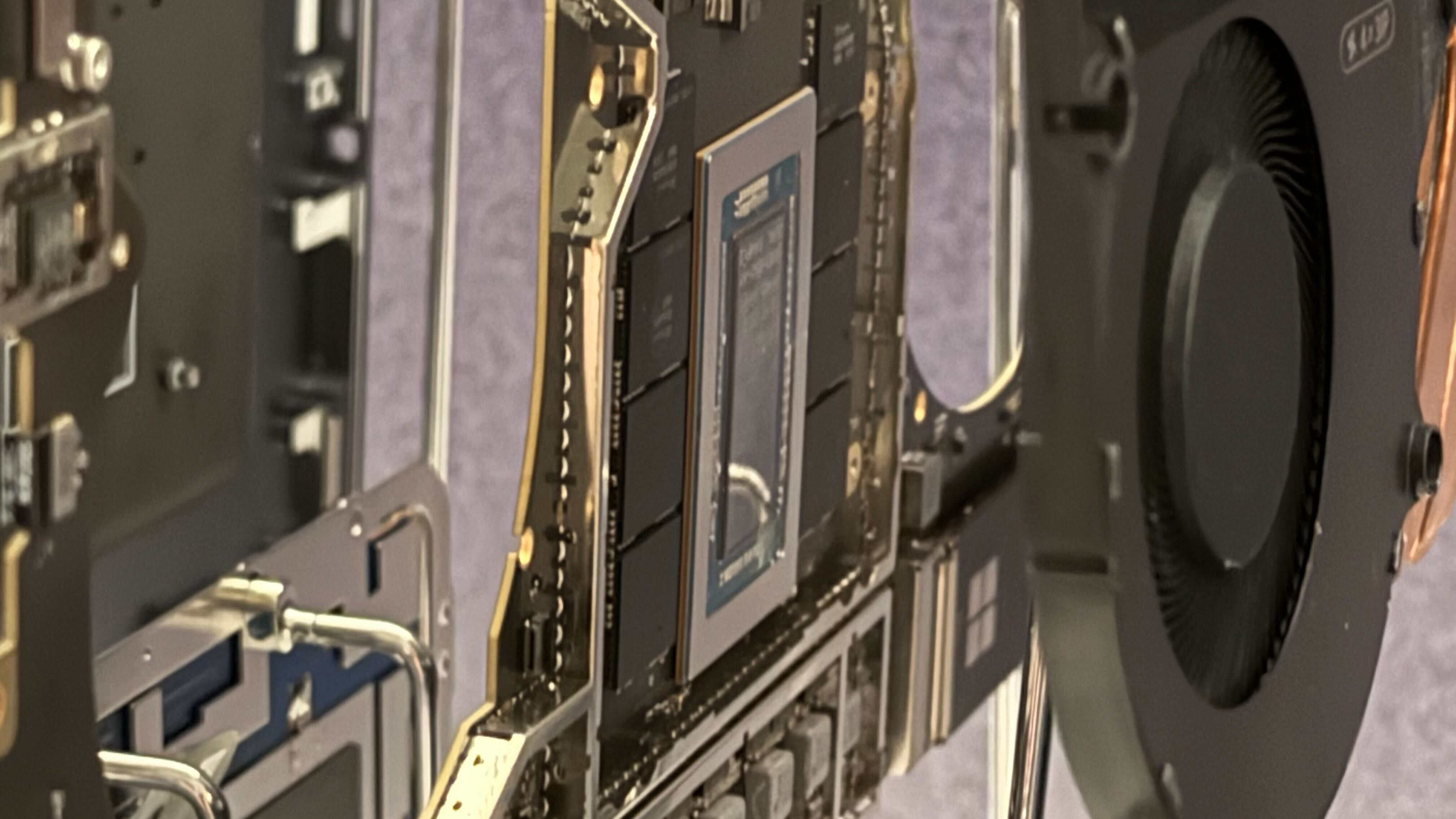 (Image credit: Future)
The consumer tech industry is still absorbing the aftershocks of Nvidia's seismic RTX Spark announcements this week at Computex 2026, and there are still many questions around the platform regarding performance, power, and battery life.
One of those questions is the thermal design power (TDP) of the RTX Spark Superchip that's powering the high-end laptops revealed this week. That power budget is everything in a thermally constrained chassis that has to dynamically share power between the CPU and GPU.
A higher power budget in such a system generally translates into higher performance (albeit not necessarily linearly). And if you know the power budget of one platform, you can better reason about its performance compared to other chips with a similar TDP.
Tom's Hardware's Paul Alcorn and I attended a series of lightning-round hands-on sessions with Nvidia's core laptop partners this week, and among other standard questions, we asked representatives from those companies what the power and thermal budgets of their systems were. Unsurprisingly, those partners generally declined to answer.
But Microsoft's reps freely shared that the Surface Laptop Ultra, at least, is designed around a TDP of 110 W for the RTX Spark Superchip.
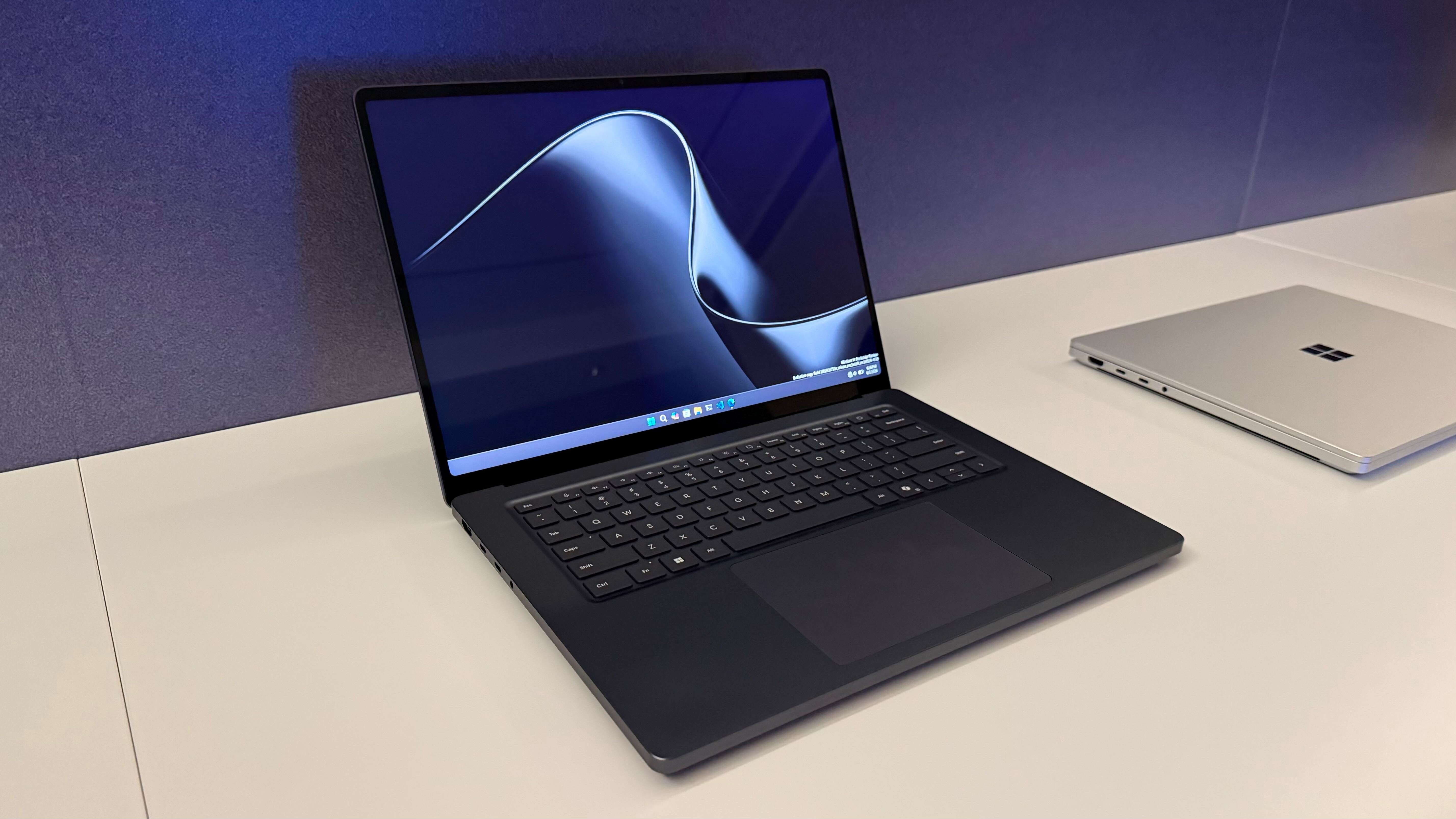
That figure makes sense, given our experience with the compact DGX Spark mini-PC. That system has an SoC TDP of 140 W, so it's no huge surprise that even the relatively large and well-ventilated Surface Laptop Ultra is designed to dissipate around 80% of that power at peak load.
As a laptop, the Surface also has other components it needs to power, including a screen and any peripherals connected to its USB ports, so extra headroom is required for that purpose. (Other OEMs did disclose that they were including 140W chargers with their devices, so consider that an interesting data point to this end.)
Get Tom's Hardware's best news and in-depth reviews, straight to your inbox.
In any event, the enterprising reader might be tempted to extrapolate from our past DGX Spark performance testing and conclude that 20% lower power equals 20% lower performance. But we'd caution against that reasoning.
Chip power and delivered performance generally have a nonlinear relationship past a certain point, and we have no idea what the behavior of the voltage-and-frequency-scaling curve is for the RTX Spark Superchip in the range we're discussing.
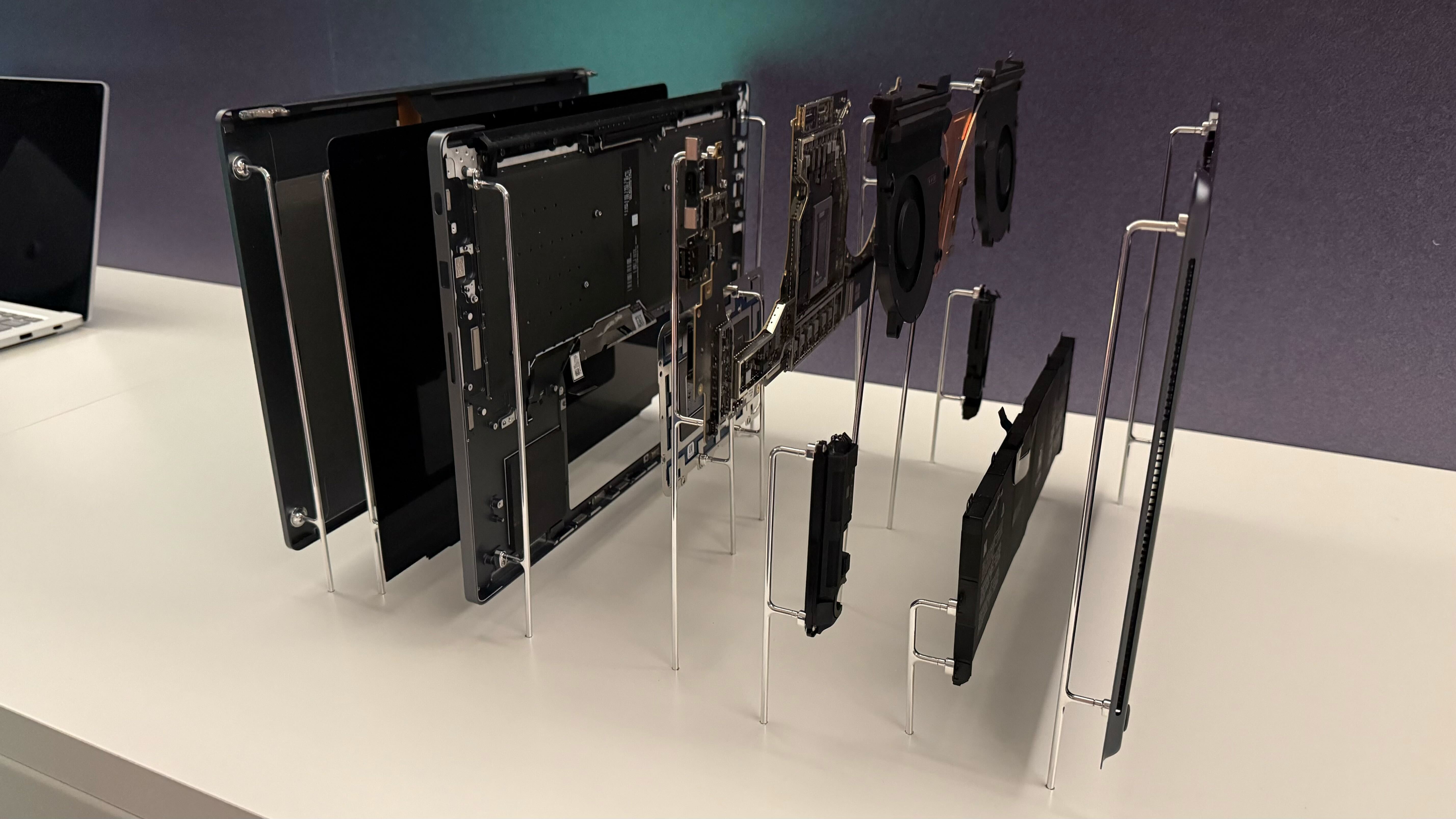
We also don't know the full power and thermal management behavior of the RTX Spark Superchip. Modern laptop SoCs (and all chips, really) opportunistically take full advantage of all available thermal and power headroom at the start of a task, so they'll boost up close to the limits of their TDPs while the system is cool before dialing back clock speeds and power to achieve a steady state that avoids overwhelming the system's heatsink and fans. It's not clear how quickly and to what extent the RTX Spark has to clock down to operate within those limits for long-running tasks.
And in a mobile device that has to share power between the CPU and GPU, performance is also going to be highly dependent on the character of the workload. A game, for example, is going to heavily stress the GPU but might not fully occupy the CPU at the same time, while a highly parallel CPU-dependent task like code compilation might fully load the CPU cores without involving the GPU much at all. If you have a (rare) workload that loads down both of those functional units at once, overall performance is likely to fall further than with one that only demands one type of processing resource or the other.
It's also worth remembering that every laptop is different, and power envelopes are carefully tuned for each chassis to best balance design constraints between SoC temperatures, skin temperatures, and noise, among other factors.
All that said, from what we've seen, Microsoft's 110W target seems likely to be typical of the 15"-16" laptops that other OEMs plan to introduce. Logically, it's also likely that we might see lower power budgets for thinner or smaller systems.
But the short version of all this is that there's a lot we still don't know about the RTX Spark platform, and we're still a long way from the launch of the laptops with this chip inside. We expect to learn more about this platform, its design targets, and its behavior in the coming months as we lead up to Nvidia's projected fall launch. Stay tuned.

Follow Tom's Hardware on Google News, or add us as a preferred source, to get our latest news, analysis, & reviews in your feeds.
As the Senior Analyst, Graphics at Tom's Hardware, Jeff Kampman covers everything that has to do with graphics cards, gaming performance, and more. From integrated graphics processors to discrete graphics cards to the hyperscale installations powering our AI future, if it's got a GPU in it, Jeff is on it.
What's Your Reaction?
 Like
0
Like
0
 Dislike
0
Dislike
0
 Love
0
Love
0
 Funny
0
Funny
0
 Wow
0
Wow
0
 Sad
0
Sad
0
 Angry
0
Angry
0









Comments (0)