

The best cameras for travel in late 2026
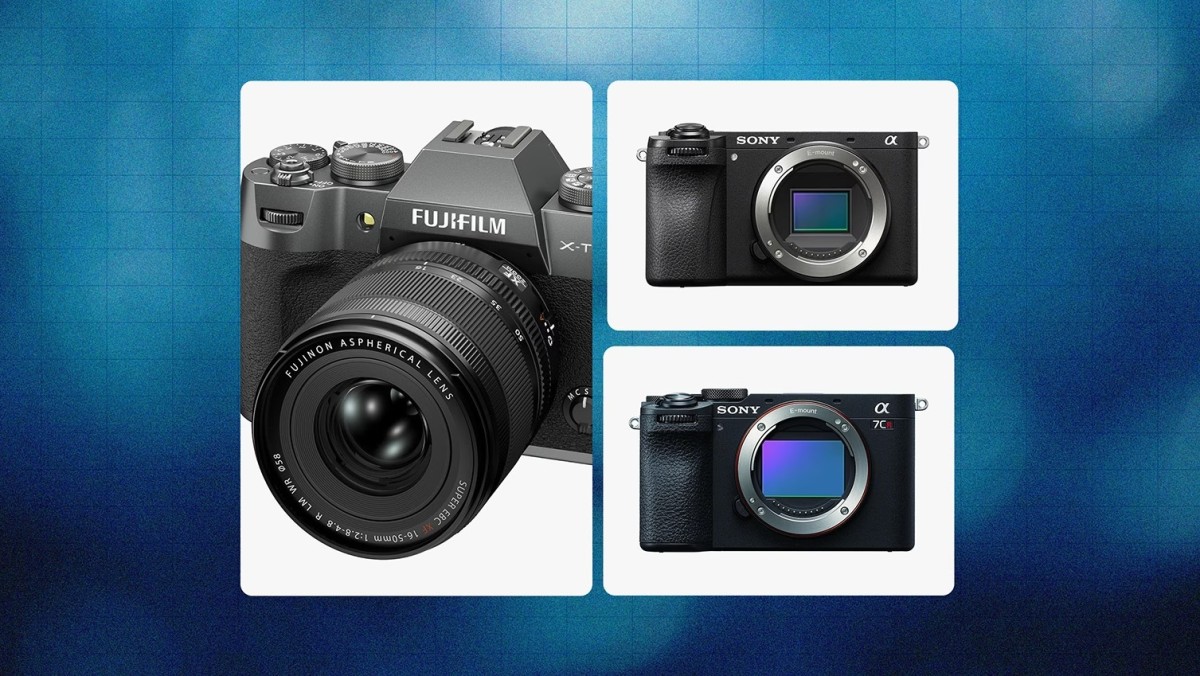
What’s the best camera for travel? Good travel cameras should be small, versatile, and offer good image quality. In this buying guide we’ve rounded-up several great cameras for travel and recommended the best.

Updated October 12, 2026
Travel can expose you to once-in-a-lifetime sights and experiences, and a good camera can be the perfect way to preserve those memories. We’ve looked at a range of models that offer great image quality, good autofocus and excellent video, so you’ll be prepared to capture whatever you run into.
One important consideration is what kind of travel photography you’re doing. If you’re traveling to a place, and wish to document your trip, you may be best served by a system with a Four Thirds or APS-C sensor, which allows for smaller and lighter lenses. However, if you’re specifically traveling to a place to photograph it, it may be worth considering a full-frame camera, since it offers the potential for even better image quality, and the size of the lenses will be less of a concern if photography is the main purpose of your trip.
Our recommendations
- Portable full-frame: Sony a7CR
- All-round packable capability: Sony a6700
- The fun-to-use compact with a zoom: Panasonic L10
- The genuinely small ILC: OM System PEN
- Best pocketable travel camera: Ricoh GR IV
- The portable option with a ton of reach: Sony RX10 V
- The best video camera for travel: DJI Osmo Pocket
Portable full-frame: Sony a7CR
 Richard Butler
Pros
- Big camera features in a small body
- Outstanding AF performance
- Auto Framing video mode
Cons
- Small, low-res viewfinder
- No joystick control
- No fully mechanical shutter
The Sony a7CR is a relatively compact full-frame camera with an image-stabilized 61MP CMOS sensor. You sacrifice the convenience of an AF joystick and get a pretty small and basic viewfinder to keep the camera’s size down, but there’s little else that delivers this much image quality in such a compact package.
You’ll need to pick your lenses carefully to keep the camera portable but the a7CR’s autofocus means it can respond rapidly to just about anything you encounter on your travels. If you’re going to a place to take pictures of it, you’d be hard-pressed to find a better option.
Read our full Sony a7CR Review
Loading gallery…
A more affordable option
Nikon’s Z5IIC also aims to be a relatively small full-frame option, though it’s bigger and heavier than the Sony, despite lacking an EVF and having a substantially lower-res (though still solid) 24.5MP sensor. However, if you’re willing to deal with the extra bulk, there’s a big upside: it’s less than half the price of the a7CR, and still substantially cheaper than the a7C II, while still being easier to slip in and out of a bag compared to a traditional SLR-shaped body.
All-round packable capability: Sony a6700
 Richard Butler
Pros
- Front and rear command dials
- Excellent AF in stills and video
- 4K/120p capture (with crop)
Cons
- No AF joystick
- JPEG sharpening can be aggressive
The Sony a6700 is built around a 26MP APS-C-sized sensor. Its excellent autofocus performance means it excels at both stills and video capture. There’s a good choice of relatively compact lenses available, too. We’d suggest avoiding the really small 16-50mm F3.5-5.6 though: it’s not the lens to get the most out of this camera.
Fast, dependable autofocus with a selection of subject recognition modes means the a6700 will help maximize your chances of capturing the unexpected moments on a trip.
Read our full Sony a6700 review
An alternative with a lovely kit lens
If you’re looking for an APS-C camera that’s just a bit more engaging to use, and that has a very nice kit lens option, it’s also worth considering the Fujifilm X-T50 with the company’s 16-50mm F2.8-4.8. It offers a great balance of weight, range and image quality, and while the X-T50’s autofocus isn’t as good as the a6700’s, some people will find it nicer to use with its dedicated controls for shutter speed and “Film Simulation” color mode.
The fun-to-use compact with a zoom: Panasonic L10
 Mitchell Clark
Pros
- Very good image quality and DR
- Autofocus mostly accurate and easy to use
- Ambitious zoom lens is versatile
- Extensive battery life
Cons
- Controls won’t match everyone’s tastes
- Not particularly pocketable
- Lens can be sluggish to zoom
The L10 takes a lot of what the Ricoh GR IV and Fujifilm X100 VI get right – it’s relatively small, engaging to use, and has great image quality – and pairs it with a zoom lens instead of a prime one. While primes definitely have their place, it can be hard to tell what you’ll run into while traveling. If you want the experience of a compact but the flexibility of a 24-75mm equiv., the L10 is the camera to pack.
Loading gallery…
A smaller, cheaper option (theoretically)
If you want a compact camera that’s meaningfully smaller than the L10, and which comes with a lower price tag, Canon’s G7 X III fits that bill nicely. However, likely in part due to its wild popularity on social media, it’s been very difficult to get at MSRP for a long time now. It’s rare to see it in stock at most retailers, but if you get lucky and find one, it’s worth considering as a travel companion.
The genuinely small ILC: OM System PEN
 Richard Butler
Pros
- Good balance of size and controls
- Interesting color modes
- Decent battery life
Cons
- Slightly quirky autofocus
- UI gets complex/inconsistent in places
- Video modes
The PEN is quite good for travel and everyday carry, as it’s relatively small, offers an engaging shooting experience and has a variety of lovely color modes that you can play with while shooting, or after the fact with its Raw converter. This makes it easier to get the look you want straight out of camera, rather than having to break out a computer or tablet for editing. There are also a number of lenses available for it that don’t add much to its bulk.
Read our review of the OM System PEN
Loading gallery…
The more premium Micro Four Thirds Pick
If cost is no option and you don’t mind a camera that’s a little larger and heavier than the PEN, OM System’s OM-3 is worth considering. It has a stacked sensor, which is costly, but gives it blistering burst rates that will allow you to capture pretty much anything you encounter. It also comes with a more robust IP53 rating, is more capable when it comes to video and has overall better performance, with much faster processing for its multi-shot modes and, in our experience, more reliable autofocus.
Best pocketable travel camera: Ricoh GR IV
 The Ricoh is a pocketable compact with a large APS-C sensor.Richard Butler
Pros
- Great image quality
- Well-considered controls
- 53GB of built-in storage is extremely convenient
Cons
- Dated autofocus performance
- Pricey (even more with flash)
- Battery life is just okay
The Ricoh GR IV is the latest entry in the company’s series of classic compact cameras with large APS-C sensors and a 28mm equivalent lens. It’s not the most flexible camera, but it has engaging controls and is one of the most pocketable models with a large sensor, which is probably why the GR series has built up a dedicated following of photographers who find it a joy to shoot with.
Our one concern with using the GR IV for travel is that some users of the previous generation model reported dust getting into the lens. Ricoh has said it’s made a few changes that should help prevent that, but still doesn’t make any claims of weather sealing, so it may be worth keeping it in protective bag and putting it away in particularly unpleasant weather.
If you like a tighter field of view (and don’t mind the occasions where it might be too tight), it could be worth waiting for the upcoming GR IVx, which will have a longer, 40mm equivalent lens. Ricoh also sells a GR IV Monochrome, though a camera that only shoots black and white probably wouldn’t be our first pick for travel photograph.
The crowd favorite with extras
While the GR IV’s size is what makes it so great, you may find yourself wishing it were just a bit bigger to accommodate features like a built-in flash and EVF. Thankfully, that camera exists in the extremely popular Fujifilm X100VI. If you can get your hands on one (which is no small task), its hybrid optical/electronic viewfinder is a joy to use, and its 35mm equiv. focal length is more to some people’s tastes than the wider one found on the GR series.
The portable option with a ton of reach: Sony RX10 V
 Richard ButlerRichard Butler
The Sony RX10 V is built around a Type 1 (116mm2) 20MP Stacked CMOS sensor, and features a far-reaching 24-600mm equiv. F2.4-4 lens.
For many of us, traveling somewhere and looking at faraway things is a big part of vacationing. And with its 24-600mm equiv. zoom, blistering fast burst rates and best-in-the-business autofocus, the Sony RX10 V is the perfect tool for photographing things in the distance (while still being engaging for capturing nearer subjects). It’s not the smallest compact ever, but almost anything else with this kind of reach would be much bigger, heavier and more expensive.
While we haven’t completed our full review of the camera yet, we’ve used it enough to know that it belongs on this list. It provides good image quality, is engaging to use, and features Sony’s latest autofocus tech, which is still among the best in the business.
Loading gallery…
The best video camera for travel: DJI Osmo Pocket
 Richard Butler
DJI’s Osmo Pocket series of cameras feature a stabilized handheld vlogging camera, designed for on-the-move vlogging. The main cameras on them are built around a type 1 (13.2 x 8.8mm) sensor mounted on a tiny gimbal, meaning it can deliver stabilized footage with smoother motion than any conventional camera or phone.
When you’re traveling in an unfamiliar place, there are a million things to focus on; the Pockets let you capture it all, without requiring much effort on your part. It can also natively film in horizontal or vertical, which can be useful if you’re looking to share footage from your travels on social media.
The reason we’re referring to multiple cameras is that the Pocket’s availability will vary depending on what region you’re in. If you’re in the US, the latest version you have access to is the Pocket 3. In the rest of the world, though, the Pocket 4 is now available, adding integrated storage, high framerates and better controls, along with a few other improvements. There’s also the Pocket 4P, which adds a second 60mm equiv. camera with a Type 1/1.28 (75mm²) sensor and features better dynamic range on its main camera, and Insta360’s Luna series of cameras are very similar to the Pockets, with the single-lens “Pro” and dual-lens “Ultra.”
The Pockets’ small sensors mean they works better in well-lit situations, though a reasonably bright F2.0 lens on the main camera mean they’re usable indoors, too.
It can shoot 4K 16:9 video or, by rotating the screen into the upright position, 3K vertical 9:16 footage. A small joystick lets you control the camera’s movement, and tapping the joystick button flips between the camera pointing toward you or away from you.
The older Pocket 3’s reliance on contrast-detection autofocus means its focus can be prone to hunting, though the cameras’ face-detection mode works well enough that this is rarely a problem when talking to the camera.
The video quality isn’t always the highest, and the autofocus can occasionally lead to frustration, but overall the quality and convenience of the Pocket as a package is really hard to beat.
Read our hands-on impressions of the Osmo Pocket 3
Why you should trust us
This buying guide is based on cameras used and tested by DPReview’s editorial team. We don’t select a camera until we’ve used it enough to be confident in recommending it, usually after our extensive review process. The selections are purely a reflection of which cameras we believe to be best: there are no financial incentives for us to select one model or brand over another.
Want to stay up to date on the latest product news and releases? Add DPReview as a preferred source to ensure our independent journalism makes it to the top of your Google search results.
What's Your Reaction?
 Like
0
Like
0
 Dislike
0
Dislike
0
 Love
0
Love
0
 Funny
0
Funny
0
 Wow
0
Wow
0
 Sad
0
Sad
0
 Angry
0
Angry
0










Comments (0)